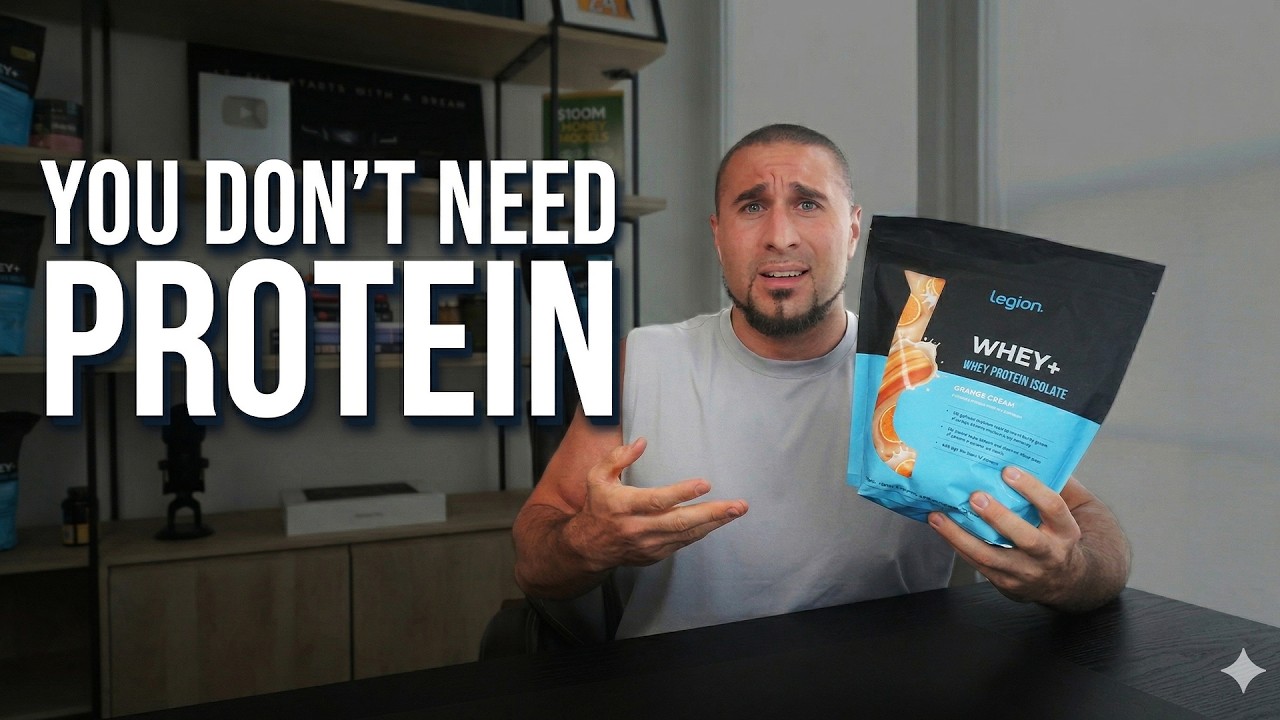
In this video, fitness coach Eric Roberts challenges the common online advice that increasing protein intake is the key to building muscle. Drawing on his experience coaching over 25,000 clients, he argues that muscle growth is limited not by protein but by proper training programming (progressive overload and training close to failure) and sufficient carbohydrate intake to fuel those workouts. He uses a house‑building analogy: protein are the bricks, progressive overload and near‑failure are the blueprint, and carbohydrates are the construction crew that moves the bricks according to the plan. Roberts shares his personal transformation after increasing his carb intake to 600 g per day, noting dramatic improvements in workout energy, strength, and muscle gains. He provides concrete guidance on daily macro targets via a free calorie‑macro calculator, and outlines pre‑ and post‑workout carbohydrate timing (30‑70 g before, 50‑150 g after, adjusted for body weight). Finally, he encourages viewers to watch a follow‑up video on effective workout design.
Chapters
Every video online is telling you eat more protein to build muscle. After coaching over 25,000 clients with their fitness journeys, that advice is the reason most people never change how their body looks. Because what actually separates the people who build muscle versus the people who just look the same year after year has nothing to do with protein. And let me show you what I mean. Think of building muscle like building a house. Is your bricks. And right now, every video on the internet is just telling you to buy more bricks. But a huge pile of bricks doesn't make a house. So, what's missing? Well, if you actually want to build a house out of those bricks, you need 2 things. The first is a blueprint. And let me show you what I mean. Without having a blueprint, nobody knows where to place the bricks, how high to stack the bricks, And for building muscle, the blueprint is composed of 2 things, and they're called progressive overload and going close to failure. And no, I'm not calling you a failure, so calm down. Progressive overload just means you're lifting more weight or doing more reps over time, and going close to failure just means the last 1 to 3 reps of every set that you do should be heavy, hard, challenging reps where you can barely do the last couple. Those 2 things are the plan that tell your body where to put the bricks and how to build the house. And without the blueprint, your body has no reason to build anything new. But this blueprint isn't the thing that replaces protein for building muscle, because in order to execute the blueprint, You need one last component to building your house: the crew to actually lay and place the bricks. It's the one thing you've been afraid to eat for the last ten years, and that is carbohydrates. Carbs are the construction crew. They're the ones who actually pick up the bricks, read the blueprint, and build the walls. Without enough crew on the job site, it doesn't matter how many bricks you bought or how good the blueprint is. Nothing gets built. And I'm speaking from experience because for years this was me. I thought eating more carbs was gonna make me fat, make me bloated, but year over year I never ended up building any muscle or changing the way my body looked. Then I started eating 600 grams of carbs per day, and what happened was my workouts completely changed. I had way more energy than before. I could push myself way harder, lift way heavier weight, do more reps. And over the following months and years, I had built more muscle than the previous 2 to 3 years combined. So you more than likely don't need more bricks, you need more construction crew. And that crew runs on carbohydrates. And now you might be thinking, well, Eric, how many carbs should I eat per day? How much protein should I eat per day? How do I figure all of this out without gaining fat? And don't worry, Let me give you the exact numbers you should be shooting for. I'm going to link here in the description of the video below my totally free calorie and macro calculator. This is the same calculator I use with my online coaching clients who pay me, so I'm not holding anything back from you, I promise. Just put in your information and it will tell you how many calories, protein, carbs, and fats you should be eating per day. And once you get Those numbers, there's 2 last things I want to advise you on so that you can make the most of the carbohydrates that you're eating to build the most muscle. And that's going to be pre-workout and post-workout. These are your 2 most important times to eat carbohydrates. And that's because before your workout, your body and your muscles will use those carbs to put towards your workout. Where you'll be able to lift heavier and push yourself harder, which will help you build more muscle. And after your workout, because your body just used the carbs to lift heavy weights, your muscles need to be refueled and refilled with the carbohydrates. So a good rule of thumb for you to follow is 30 to 90 minutes before your workout, eat 30 to 70 grams of carbs. And after your workout, within 30 to 90 minutes, eat 50 to 150 grams of carbs. The exact number is going to depend on your body weight and how many calories you have available. For example, somebody who only weighs 150 pounds, they may only need 40 grams of carbs before and 70 grams of carbs after. But myself, for example, I weigh 260 pounds. So before my workout, I have about 120 grams of carbs, and after my workout, I have about 170 grams of carbs. And this is how you eat more carbs without gaining fat or being bloated, because your body will immediately use them to push into your muscles. Now that you know you should be prioritizing your carbs, you should probably also make sure the workouts that you're doing are actually going to build muscle. So watch this video here next on everything I wish I knew before I started lifting weights.