The Easiest Way To Lose Fat In 2026
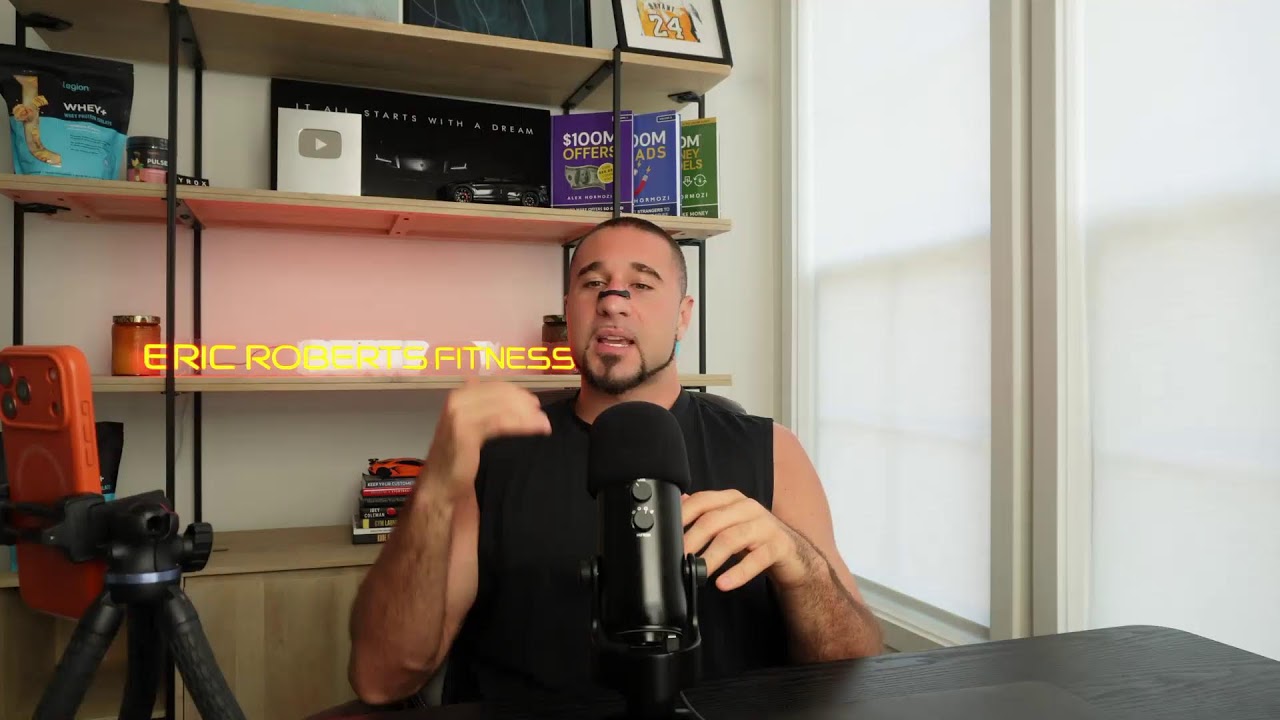
In this 45‑minute live YouTube session, fitness coach Eric Roberts outlines a practical, three‑pillar fat‑loss system tailored for busy professionals. He begins by framing the system around three core pillars—nutrition, workouts, and consistency/sustainability—explaining that neglecting any pillar stalls progress. For nutrition, Roberts stresses building a plan that fits the individual’s lifestyle (work schedule, food preferences, family obligations) rather than forcing a generic diet, eliminating the “good vs. bad food” mindset, and focusing on hitting two simple macro targets: daily calories and protein. He advises realistic calorie goals (often higher than people think) to avoid hormonal hunger spikes and binge cycles, and moderate protein goals (lower than the common 1 g per pound rule) to allow sufficient carbs and improve recovery. He also recommends a repeat‑meal routine to reduce decision fatigue and improve adherence. On the workout side, he advocates three 30‑minute sessions per week (lower‑body, upper‑body, full‑body) with high intensity, arguing that total weekly volume (≈90 minutes) is sufficient and that daily step count should be maintained separately. He suggests reallocating excess workout time toward nutrition tasks for better overall results. Consistency is reinforced through a simple tracking system: a physical calendar marking days that meet calorie goals (green check) versus missed days (red X), plus regular monitoring of waist measurements, progress photos, and strength gains—arguing that the scale alone is an unreliable metric. Throughout, Roberts intersperses client anecdotes from his 10‑year, 25,000‑client coaching experience, promotes his free calorie‑protein calculator, and invites viewers to join his paid 8‑week fat‑loss challenge. The session ends with a brief Q&A covering protein recommendations for a 53‑year‑old woman, upcoming creatine flavor release, and a humorous question about a daughter’s baking.
Questions this video answers
Roberts did not provide a specific number; he requested the woman’s activity level and body weight and directed her to the free calorie‑protein calculator in his bio.
Roberts said he hopes it will be available in the next 3‑6 months, possibly by January.
Roberts responded humorously that adoption is a bad idea and not a solution.
Chapters
who are busy in school, whatever the case may be. So hopefully this will be able to help you out as well. All right, so give me one quick second here and we'll get started because I'm also going live on YouTube. Um, give me one second here. What's up guys, happy Thursday to all of you. Uh, I feel like I don't go live as much as I should, so If you guys follow me and my content, I really appreciate it. Um, give me one quick second here. Actually, I might have to hop off and then hop back in. I need to put this on Instagram. Give me one second, you guys. What's up, YouTube? I hope you guys are doing super well. Sorry, I feel like I forgot I was live for a second. Um, I was trying to get, uh, get my link on Instagram. All right, we're good with that. We're gonna pop back over to TikTok. I feel like I lost some people on TikTok, but we are back. All right, you guys, so what we are doing in this live here is 2 main things. So the first part is going to be, I'm going to walk through how I think about an easy fat loss system for people who are busy. And I've coached myself and my business combined have coached over 25,000 clients in the last 10 years. And a lot of them have been busy professionals, people who don't have a lot of time to work out, meal prep, they're social on the weekends. And so I want to kind of use my knowledge here to hopefully give you an easy fat loss system that can help you lose fat, build muscle without it taking over your entire life. So I'm going to run through that first. And then second, we'll answer some Q&As at the end. So this will probably end up being about 30 to 60 minutes. I don't have a script. I'm not like looking over anything. This is going to be just Straight from the dome. So this is live, raw, unedited, purely just my brain for the past 10 years. And so for all of you guys who are joining, thank you so much for being here. I see a ton of people on TikTok. Hello, Amika, how are you? And if you're here on YouTube as well, let me know if you're here on YouTube and let me know if you can hear me properly on YouTube. So let's kind of get things started after I take one more swig of caffeine. All right. So easy fat loss system for busy professionals. I think of this in 3 main pillars. So the first pillar is workouts. The second pillar is nutrition. And the third pillar is consistency slash sustainability, because anybody can do a diet for a short period of time and lose some weight. I think most people here who are watching have lost some weight before, but keeping that weight off and truly turning it, turning it into a lifestyle change can be difficult. So I think of these 3 pillars kind of like an engine in a car. If even one of these 3 parts is missing, the car's not going to go anywhere. It's just going to stay stuck. Maybe it slightly starts up and then it just fails and it dies. And that's like most people's fitness journey. You kind of start something for 1 or 2 weeks, but then inevitably you fall off. And especially for people who are busy and short on time and have other responsibilities and fitness is not your entire life, it's usually because the plan that you are following is not realistic and sustainable. So we're going to walk through these 3 main pillars, and I'm just going to kind of quite frankly, brain dump everything I have experience-wise coaching 25,000 clients in the last 10 years and just give you everything I can to hopefully help you be successful. So we'll start with nutrition because that's, I believe, where most people struggle the most. Nutrition really, in my opinion, comes down to building something that will be sustainable for you. Now, you may have heard that before, but how do you actually put that into action? There's a couple of ways that come to mind for me that I have seen work for a lot of people, which is number one, you have to look at your lifestyle and you have to build the plan around your lifestyle versus trying to fit a plan into your lifestyle, that's never gonna work. So for example, when somebody gets onboarded as a client of ours, we'll go through an onboarding process and we'll ask them, hey, what foods do you like? What foods do you not like? What does your schedule look like? What time are you up? What time are you out of the house? Are you commuting an hour to work or are you working from home? Do you cook for your entire family with kids or do you just cook for you and your spouse? Do you go out on the weekends? Do you not go out on the weekends? Do you have kids' sports? All of these things will then determine where and how your plan is built. Because, for example, you may see somebody online say, oh, this is what I eat in a day. Those always tend to somehow go the most viral. People love to see what other people are eating during their day. But you're failing to understand the person you're watching. They're probably, quite frankly, like me. They're probably an influencer. They probably do fitness and social media for their entire career. So they get to work at home. They get to stop in the middle of the day to cook food, to then make pretty pictures and videos of it, and then edit it and put it in their social media. You might not have the opportunity to do that. So their what I eat in a day might be working for them, but how do we know that's going to work for you in your life? Because you might not be able to stop in the middle of the day and cook chicken and rice and ground beef and potatoes. You may have to, for example, have a quick breakfast. This might look something like a protein shake and a piece of fruit or overnight oats and a piece of fruit. And then for lunch, you may have to go out to eat. If you go out to eat, what are we ordering? Can we go to Chipotle instead of doing McDonald's? Or even if we can't, even if we have to do McDonald's, do we find things on the menu that are specific calories that will fit into our calorie range? And then could you like bring a snack for the way home from work so you're not starving when you get home? When you get home, are there easy things that you can purchase and kind of assemble together that don't require a lot of time to like actually cook and put together. So this might look something like you might have a salad bag. I know right now people are kind of shitting their brains out over salad bags. I eat them every day and I've been fine. So who knows? But this might be a salad bag with rotisserie chicken and a side of avocado. Like that entire day of eating would take you maybe 10 minutes max of like meal prep time. between everything I just said, but that would give you good quality proteins, good quality carbs, good quality dietary fats. It'll hit your calorie goal, and most importantly, it fits for your lifestyle. So the first thing when it comes to nutrition for busy professionals and people who don't have a lot of time is stop trying to fit your entire life around fitness. Stop trying to fit your entire life around what you think you should do or what you think is going to be the best for you, and instead get realistic about what will be best for you and then just build the plan around that because that's what's actually going to fit into your life. It's like the analogy of I wear a size 13 shoe. If you wear a size 8 shoe, when you step into my shoe, it's not going to fit and vice versa. If I were to try to get into your shoe, it's not going to fit. fit. So that's the first part. The second part is removing the thought process of good and bad foods. And I say this is like a tactical thing. It's kind of like a mindset thing, but it really is a tactical thing because I have found a lot of people struggle to stick to their diet because the minute they eat a food that they deem is bad or they deem as off limits, they think they ruined their diet. They think they fell off their plan. Anytime that you think you fell off your plan or ruined your diet, well, what do you do? You're not going to stick with it. You're not going to keep going with it. You're going to say, well, screw it. It's already Thursday. Today's Thursday as I'm recording this. It's already Thursday. I'm just going to say screw it until Monday and I'll get back on track then. So you're on track for a couple of days, you eat something bad, and then everything has to restart on Monday. I've seen that kill more people's fitness journeys than most of what I could tell you, to be honest with you. And so this is why I teach and I preach about calories and protein. If you hit your calorie goal and you hit your protein goal, If you do those 2 things, yes, we would love to get the majority of your food coming from nutrient-dense, whole food, typical clean and healthy food. But that may not be realistic for you, especially if you're short on time, or especially if you have to travel one day, you have to go straight to your kid's soccer practice after work one day. You might have to stop off at a gas station and get a protein bar or a fast food restaurant. And guess what? If you hit your calories and you hit your protein, you're going to be fine. So I would say remove the good and bad foods. Truly just try it for 4 weeks. Just try it for 4 weeks and just focus on hit my calorie goal, hit my protein goal. And a lot of people think, oh, well, it can't be that simple. No, no, it can be that simple. And I can show you literally tens of thousands of clients that we have worked with To prove to you that this works. If you want to see the clients that we have worked with, you can just— if you're on TikTok, you can click the link in my bio. If you're here on YouTube, you can click the link down below. But I have an 8-week fat loss challenge where people go through and you'll see the testimonials and the progress pictures and all that great stuff. But I say that not to like, yeah, sure, you can join my program. But I say that to encourage you, it's possible. And it can be that simple. It doesn't have to be as complicated as most people are making it. So that would be kind of point number 2 under the nutrition kind of leg for the entire plan. Point number 3, when it comes to nutrition, would be— it's an unpopular opinion for some, but that would be finding a routine that you can replicate, especially with food, Day over day, week over week. And I know a lot of people are like, I don't like eating the same things every single day. Do you like being fat? I'll just say it like that. Do you like being— do you like being fat more? And one might argue, well, Eric, you just said sustainability is the most important thing. It's not going to be sustainable for me to eat the same food every single day. I hear you. But, comma, I'm sure there are foods you like more than others, correct? For me, for example, every day for dinner, I have either chicken thighs or ground beef with either regular potatoes or sweet potatoes with a side salad. I have that every single night. Why do I have it? I love eating that every single night. Truly, I look forward to it every single night. So for me, that works. Is there something like that for you? Even if you're like, I can't do it every day, can you do it for a couple of days in a row? Can you do it for a week in a row? Can you do it for a couple of weeks in a row, a month, then switch things up? Or do you know that you love— I'll just use chicken thighs as the example. Chicken thighs. Maybe one week, could you use Lemon pepper seasoning. And the next week you could use barbecue seasoning. And the next week it could be teriyaki seasoning. Could you change the seasonings of the foods that you enjoy? Could you change the way that you cook them? One week it's on the pan, one week it's in the oven, one week it's in the air fryer, next week it's on the grill. Could you change that? But the reason I say finding a routine with food that you can consistently just repeat over and over, especially for people who are busy. Number one, it takes out the guesswork. You don't have to think about it. And right now, think about how many things you do have to think about in the day between work, between kids, between your everyday life, between bills, between the social events on the weekends. If you can remove this part of your brain kind of having to think about it, It'll just make it automatic. And when we talk about not only seeing results, but being able to maintain those results long-term, the more automatic it is, the less you have to think about it, the more likely you are to stick with it. And when it comes to a pure calorie perspective, you'll know what you're eating every single day and you'll know you're in your calorie limit. You're not eating all these crazy different foods where you may have to weigh it out all these different times to figure out exactly what you're eating. If you eat the same portion sizes with the same foods day over day, it makes sticking to a calorie deficit much easier. So eat the same. There's a reason, I don't know how many people know this, but I have a podcast. It's called the Eric Roberts Fitness Podcast. And we bring a lot of our clients on the podcast. And the most— whenever somebody comes on the podcast, we'll talk about what made them really successful. And I would say 8 out of 10 times, they're like, I eat the same foods every single day, every single time. So there's got to be something to that. So I would really encourage you. And I would also say, if you're one of these people who are like, well, I don't like eating the same foods. There is also a concept of sometimes you just got to push through this initial discomfort or this initial pushback to then realize it's not that fucking bad, man. It's just, it's really not. And also, if you see results from it, if you tend to like those results more than you dislike eating the same foods every single day, This will outweigh that, so to speak. So that's number 3 on nutrition. And then number 4, what comes to mind for me is a bit more tactical on calories and protein, which would be setting your goal to be more realistic than what most people try to do. And I'll touch on that after I take a swig of caffeine. So I have found from experience Most people set a calorie goal that is too low and set a protein goal that is too high. So whenever somebody comes to work with us in my online coaching program, in our 8-week fat loss challenge, we typically flip those 2 things, right? We increase their calorie goal and we decrease their protein goal. I know for a lot of people watching this, they're going to be like, What are you talking about? Like, all I've ever heard is calorie deficit, eat more protein. So let me explain this in a way hopefully that will make a lot of sense to you. Let's say your calorie goal is 1,200. Just use that as the example. Monday, you eat 1,200. Tuesday, you eat 1,200. Wednesday, you eat 1,200. Thursday, you eat 1,200. By the time Friday rolls around, Not only physically are your hunger hormones completely out of whack because the bigger your calorie deficit is, the more your hunger hormones get dysregulated. So the more out of whack they become. So physiologically, you are much hungrier coming Friday, Saturday, Sunday. What also usually happens on Friday, Saturday, Sunday for most people? It's the weekend. You're going out. You're out of routine. So those 2 things combined on top of eating 1,200 calories, I think we can all agree is quite restrictive. So now you're physically hungrier and mentally you've been like, no, I can't have this food. No good and bad foods like we mentioned earlier. No, I have to stick under this super low calorie goal. And then Friday, Saturday, Sunday, what happens? You go off track. You eat easily 3,000 calories, 4,000 calories. And you, you fuckers that are watching this, you may not think you're doing this, but you're also not tracking those days. You're not going to lie to me because I know what the fuck I'm talking about. I've done this for 10 fucking years. You're not going to bullshit me. You're eating 3,000, 4,000 calories per day on Friday, Saturday, Sunday. So by the time the end of the week rolls around, you're like, I'm eating 1,200 calories and I'm in a calorie deficit and I'm not losing weight. You're not eating 1,200 calories because the 3,000 calories you're eating on Friday, Saturday, Sunday is actually making your calorie intake for the week at like 2,000 calories on average. So you're eating more calories by trying to eat less calories versus if you set your goal to something that is more realistic and sustainable and you increase your calories and you ate 1,600 calories every single day, all 7 days of the week, you wouldn't have the hunger, you wouldn't have the restriction, you wouldn't have the days of overeating. And so now your weekly calorie is actually 1,600 calories, which would be less than if you tried to eat 1,200 calories and then overate every single weekend. Does that make sense? That's also why if you ever hear somebody talk about, I increased my calories and lost weight, that's why. Because they actually didn't increase their calories. They actually just increased their calories, which made them more consistent. consistent with that slightly higher calorie intake, which then made them actually be in a calorie deficit as opposed to just restricting and then binging every single week. So that's why I would increase your calorie goal. And typically you have to eat more than what you think to lose weight. If you want to use the same calorie calculator that I use for our online coaching clients who pay us money, Just click the link. If you're on TikTok, you can click the link in my bio. If you're on YouTube, you can click the link below. There's a free calorie calculator. So that's part 1. Now part 2, going into your protein goal. Most people set a protein goal that is too high. You may have heard before, eat 1 gram of protein per pound of body weight. Like, I had somebody email me who used my free calorie calculator and she was like, Eric, my trainer told me I should be eating 170 grams of Protein per day. And she was like 5'2, 140 pounds. I'm like, what the fuck are you talking about? Like, no, you do not need to eat that many calories per day. And so the problem with a too high protein goal is a couple of fold. Number one, it's just gonna feel like you can never hit it. It's just gonna feel like you can't stick with it. And anytime we as humans feel like we are consistently failing at something, why would you want to keep going? Why would you want to keep trying? You wouldn't. You'd be like, I can never hit this. What's the point? And that then pushes people into, well, screw it. I can't hit it. I might as well just eat whatever I want. So it causes people to be inconsistent. That's number one. Number 2, when you set it too high of a protein goal, you also miss out on other foods and other nutrients that could benefit you. So I'll take this from 2 different perspectives. The first one is restriction. I'll tell you a quick story. I had a client one time that was coaching with us and she was like a newer client. So we were kind of trying to figure things out. And she sent a message where she was like, or I looked at her food log and it had one piece of bread, which with like the other stuff that was supposed to be on a sandwich. And I'm like, why did you only eat one piece of bread? Like, did you make a sandwich? Like, was it an open-faced sandwich? Like, tell me a bit more. And she was like, well, no, like I wanted to eat a full sandwich, but I feel like I just, I couldn't fit the other piece of bread in because I had to hit my protein goal. And I was like, okay, that's fucked. Like, that is not going to be sustainable long-term. And I think her protein goal was like, 140 grams per day or something. And so we were like, hey, just if you had a goal of like 115 grams per day, like, would that be more realistic and better? And she's like, oh my God, I would love that, please. And it's like, cool. Like, you're not going to see that much of a difference between 140 versus 115 grams per day. But for her, that allowed her to feel like she wasn't as restrictive with her diet. Which then allowed her to be more consistent with both her calorie and protein goal, which means she saw more results. So that's one part of it. And the second part of it is if you're having such high protein and you're somebody who's working out a lot, whether that be cardio or lifting weights, what will end up happening is you will deplete something called your glycogen. And glycogen is just Like stored carbs in your muscles. So when you deplete this glycogen, your body needs to replenish the glycogen. And if it's always— if your fuel tank is always low, your body's going to say, hey, we need to refuel this as quickly as possible. So what is the quickest form, digesting form of carbs? Does anybody know? Actually, before I keep going, Drop down if you're here live. Drop down in the chat. What is the quickest form of carbs that digest in your body? I'm gonna see if anybody can can get this right. I'm gonna wait for some answers to come in. I like this live format, actually. I hope you guys can also see if you're here live. This is just me just kind of spitting, spitting from the head here. All right, let's go. On TikTok, we got Naya says sugar. Somebody says fruit, simple sugar. Somebody says glucose, rice, bread. Somebody says fruit. Yeah. So this is really interesting. Thank you guys for— somebody says dextrose. Yep. So thank you guys for playing along here. I appreciate it. Yeah. The quickest form of carbs is sugar. So if you're somebody who always has a lot of sugar cravings and you're like, I like sweets, I always crave sugar or junk food, And you're trying to set up, you have a protein goal that's fucking way too high. You're not eating a lot of carbs. You're doing a lot of workouts. Well, this all makes sense. It's not that you lack discipline. It's not that you lack willpower. It's physiologically what's going on inside of your body is off and no amount of willpower or discipline or watching motivational videos or Locking in again is going to fix that. You have to fix it with your nutrition and changing your plan, which is why I'd recommend slightly dropping down your protein goal to be able to increase the amount of carbohydrates that you can eat while still being in the calorie deficit. And you will find more times than not, you'll have way less, if not cut out your sugar cravings, and you'll actually be able to recover better from workouts, push yourself more in workouts. And stay on track with your calorie deficit a lot more. So that was a lot for nutrition. I could keep going on this, but I want to move on to workouts now. But that was just one part of the 3-legged stool for an easy fat loss system. So again, for those of you who are maybe joining, who are new, easy fat loss system for busy professionals. Number 1, nutrition. Number 2, workouts. And number 3, Consistency. So we just covered the nutrition side of things. I now want to talk about the workout side of things. And when it comes to working out, people think more is better. So you may see people online who are working out for 2 hours. Yeah, I went and did an hour of strength training and then an hour of cardio, and, and I'm looking lean. And you see their physiques and you think That's what you have to do. It's not about how long you spend in your workouts. It's about what you're doing in the workouts. And are you working out in an effective manner that is going to produce results for you? Somebody could work out for 2 hours and somebody could work out for 30 minutes. And the person who works out for 30 minutes is going to see, excuse me, more results than somebody who works out for 2 hours and is just BSing. Because if that person is really being intentional with those 30 minutes, they're going to build more muscle. They could potentially burn more calories as well. That's not the main goal of our workouts, but that could happen if you're pushing with more intensity and the person working out for 2 hours is just kind of fucking around. So there's a concept that I like to think about, which is 90 minutes. 90 minutes. Most people think one workout has to be 90 minutes. But a lot of the clients that we coach online who have lost 30, 40, 50, 100+ pounds, they work out 3 times a week for 30 minutes each time. And that's 90 minutes across an entire week. So a lot of you guys just say, I don't have time to work out, where it's at, my schedule's really busy. I got to commute to and from work. I have to wake up early. I work a 9 to 9 to 5. I have kids. If you can't find 90 minutes a week to work out, you do not have a time problem. You have a time management problem. You don't know how to manage your time properly if you can't work out for 90 minutes a week, or you're just fucking lying. That's the other option. You're just lying to yourself, and I can only do but so much to fix that for you. And so 3 times a week, 30-minute workouts. How would I set this up? The way that I like to approach this is lower body day 1, upper body day 2, full body day 3. That is a simple workout program where you can hit your muscle groups 2 times per week, which is going to allow you, without getting too in-depth into all the nerdy science of working out, going to allow you to hit the adequate amount of volume over the course of a week, which is like how many sets you do per muscle group, will allow you to hit the adequate volume and see the results that you would like. And you can send 2 signals to your body each week for muscle protein synthesis and muscle growth, which can also be beneficial for more muscle growth and more toning, if that's the word you would like to use. And so 3 times a week, 30 minutes. And little hack for you. We have a lot of clients who, like I said, they're busy professionals. They have kids, they have a job, and the weekdays are kind of crazy for them. But the weekends, they tend to be a bit more lax. And so we've had a lot of people who will work out Saturday, Sunday, lower body, upper body. So that's 2 days already knocked out. 30 minutes each day. Wake up fucking earlier. Stop sleeping in so much. Get your ass up before your kids wake up, before the day starts, before you have to run your errands. Get your ass up and do a 30-minute workout. That's 2 days a week you've already gotten done. Now, over the 5 days of the work week, all you have to do is 1 workout. for 30 minutes, and that would get you your 3 times a week 30-minute workouts. It can be that— again, it can be that simple. You do not have to work out 5, 6, 7 days a week to see progress. The caveat here is, while I am saying you don't need to work out 5, 6, 7 days a week, you should Get your daily steps 7 days a week. But that doesn't mean workouts because your daily steps are just more steps throughout the day. So this could be you're going to take a walk after breakfast. You're going to park farther away when you are commuting to work. So if you're normally parking in the front row, park all the way in the back. Or if you're going to the gym, park all the way in the back and get more steps. This could be taking a walk at lunch if you're taking a phone call. Realistically, what I should be doing right now, I should have my walking pad out and I should be walking as I'm doing this because this is just like if you were on a meeting, for example, if you're on a Zoom meeting or Google Meet or Teams or whatever your company uses, invest in a walking pad. Probably the best investment you can make besides signing up for my coaching program, of course, but invest in a walking pad and get some extra steps while you're on meetings, while you're on phone calls. Take extra walks. If you're going to take a walk after dinner, that's awesome. That would be one of the best things you can do for so many health benefits. And so you should hit your daily steps every single day, but you do not need to work out every single day with some intense workout. So really, when it comes to working out, I like to keep it that simple. 3 times a week, 30 minutes. Now, can you work out more? Sure. We have clients who work out. They Maybe 4 times a week or 5 times a week, but especially if you are somebody who's just struggling, man. If you're struggling to stay consistent, not just with workouts, because here's another thing that a lot of people won't tell you, but I can tell you since I've coached over 25,000 clients in the past 10 years. People will say to me, my nutrition is my struggle. It's my biggest struggle point. And I'm like, cool. Like, they're like, I, I work out 5 days a week. I, I can do that. And I'm like, okay, what if we took those 2 workouts that you're doing? You're spending an hour each time doing those workouts. What if we took 2 workouts, we didn't fucking do them, and we took that same 60 minutes each time that you were going to work out and dedicate to your fitness anyway and put that towards meal prepping, put that towards your nutrition. Do you think you would be more consistent with your nutrition? Do you think you would have the tools to be more on track with your nutrition? You were going to spend that same hour on your fitness. But if you struggle with nutrition the most, wouldn't it make more sense to spend more time on nutrition? And you wouldn't decrease your results in your workouts. If anything, you would increase your results in your workouts because now you're actually on point with your nutrition more. So you're losing more body fat, you're eating more protein, you're building more muscle, you're recovering better. Something to think about. We do this so many times with our online coaching clients in our 8-week fat loss program. People will come to us working out 5, 6, 7 days a week and we're like, we're going to go to 3 or 4 days a week. We're going to use the same time. That you were going to work out. You already carved out the time. You were already going to do it. You're just going to put it towards your nutrition. And no, it's not as fun. And no, it's not as sexy. And no, it's not as like— I get it. But do you want to just keep doing the same shit you've been doing and not getting results? Or do you want to get results? So that would be another part for the workout side of things that is, I'm an advocate for You don't have to work out as much as you think and you spend more time on nutrition. So that would be point number 2. And then point number 3. So again, the easy fat loss system. I'm looking at my computer battery here. The easy fat loss system would be 3 pillars. Like we said, number 1, nutrition we covered. Number 2, workouts that we covered. And then number 3 would be overall consistency and sustainability. I want to say a couple of things on this, and then if I have some time left over, I'll answer some questions for you guys. So before I go into point number 3, if you're liking this, if you're enjoying this, you know, if this sounds like something I can help you out with, again, we do this online for all of our clients every single day. So I run an initial 8-week fat loss challenge. If you're on TikTok, you can click the link in my bio. If you're on YouTube, you can click the link down below to apply for the 8-week challenge. I will say we do not accept everybody. Actually, yesterday I told 2 people that we would not be a good fit for them. So this is not just about like taking your money. It is actually about making sure we're a great fit. So if you're interested in getting some personalized help, you can click the link down below. And then now the 3rd part of the system would be the consistency and sustainability aspect. And I have something that I think you'll find pretty interesting. As my first point, which is what I want you to do. Get a calendar, like a physical calendar. Every day that you hit your calorie goal, you're going to give yourself a red X. Every day that you don't hit your calorie goal, you're going to give yourself a black check mark. What you're gonna do over the course of the month, you're gonna check this every single day, whether you hit it, your goal, or not. This does a couple of things. Number one, it actually makes you aware of what you're doing. Awareness creates change. You cannot change something until you're aware of what needs to be changed. So when you document your consistency, you will actually see in front of your own two eyes how consistent you're actually being. And this is important. A lot of the clients that come to us for coaching, they'll say something like, you know, I feel like I'm being consistent, like I'm just not seeing the progress that I want to see. And when they join our coaching program, And we actually track their calories every day. We're on top of their ass, so to speak. We're looking over their food logs. They quickly realize, oh, I thought I was being consistent. Because it's all you think about, right? You are in a calorie deficit mindset. All you think about is losing weight. All you think about is a calorie deficit. But when it comes down to it, you don't track your dinners consistently. Maybe you track breakfast and lunch, but after lunch you don't track. Or maybe you track Monday through Thursday, but then you go out to eat on Friday. You're out and about running errands on Saturday, so you don't really track those days. Sunday is a family meal, you don't track. So you would have to force yourself to see out of 7 days, you're only actually hitting your goal 3 or 4. And then over the course of the month, out of 31 days, you're actually only hitting your goal 13 days out of 31. You won't wonder why you're not seeing progress then. You'll clearly fucking realize, I'm not being consistent enough. And then once you realize that, what do you do? You change. And that's the second part of this, is when you see yourself getting these red X's in a row. What will you want to do? The human brain will want to keep going. You will want to keep stacking up these red X's. You will want to keep the streak going. Think about any time you're like, you have a streak of something, whether it's a step goal, whether it's you're closing your rings on your Apple Watch, whether it's a consistency amount of your— I don't know, you're showing up at work, whatever it is. If you have a streak, you want to keep it going. So then that would now make you aware that you are staying on track and you'll stay on track more because you want to keep the streak going. So with our online coaching clients, I actually built my own app where inside of the app we have a calendar that shows them how consistent they're being. And so it'll have a green on the day you hit your goals and then it'll have a little red on the days you don't hit your goals. So the consistency aspect is huge because You just thinking you're doing everything right, or you just thinking that you're being consistent enough, it's not good enough, man. So that would be the first part of how to actually— and which, by the way, when you do this for 1 month, for 2 months, for 3 months, for 6 months, for 12 months, you do this month over month. Do you think you will build more habits or less habits? Do you think you'll change and make all this become just automatic, or do you think you won't? Like, of course you'll turn this into a more lifestyle change for yourself if you just stack up these months over months of consistency. So that'd be the first part. of it. The second part of it is you have to track your progress accurately. And if there's one thing I'm going to tell you, please listen to what I'm about to say. What do most people do when they're trying to lose fat? They track their body weight. You want to lose weight on the scale. I get it. But what if I was to tell you Tracking your weight on the scale is the most inaccurate, least dependable way to know if you're losing body fat or not. What if I was to tell you that? Well, that's what I'm going to tell you, and I'm going to tell you how to fix it. Give me one second though, because my computer is about to die. I need to plug it in and charge it. I'm getting old. I am getting old. So if you don't want to track, if the scale is a bad way to track, what is a good way to track? Well, there's multiple good ways to track your fat loss progress. And before I tell you the exact ways, why would we want other ways to track our fat loss progress? Let me ask you a question. If you know that you are making progress, would you want to keep going or would you want to stop? If you can see that you are clearly making progress, would that motivate you to keep going or would that motivate you to quit? I think the answer is quite rhetorical. You would probably want to keep going if you know it's working. If you only go by the scale, you will not know if it's working because the scale only tracks your body weight. That's it. And your body weight is encompassed of water, muscles, bone, fat. It can fluctuate and read differently. There's more or less food in your stomach. It can fluctuate for so many reasons. But if we track other things, We'll have more data points to track to show if we are making progress or not. What are these other data points? The first one, waist measurement. So you get an old school measuring tape and you just track right below your belly button. You track your waist measurement because I can't tell you how many times somebody has come to us for coaching and their scale might not be going down a ton, But their waist measurement is going down a ton. They've lost 2 inches on their waist in a month, but maybe only lost 1 or 2 pounds. That would be huge fat loss progress because if your body is losing inches on your waist or centimeters for those people outside of the US, the only way that's happening is if you're losing belly fat. That's the only way consistently over time. If your waist measurement is going down, The only answer to that would be losing belly fat. So even if the scale isn't going down, but you track your waist measurements, you will know you're losing belly fat, which is motivating you to keep going. The second part is progress pictures. Once again, can't tell you how many times— actually, I just got a progress picture from one of our online clients recently, and her weight had only shifted like 2 to 3 pounds. But her progress pictures side by side, like, blew me away. It was like you could tell her stomach was so much closer into her body. She had lost so much body fat, even though the scale was only down a couple of pounds. And why is that? Well, she's doing what we call body recomp, losing fat, building muscle at the same time. If we weren't taking her progress pictures, we would not have known this. So you should also be taking Your progress pictures. The third thing, you should be tracking your workouts because if you can also clearly see your strength is going up in your workouts, you're lifting heavier, you're doing more reps combined with your waist measurements are down, your progress pictures look different, your strength is up. Once again, clearly the only answer would be you're losing fat and building muscle at the same time. This is also why a lot of people ask, well, Eric, do I do a DEXA scan? What about the scales that have the body fat percentage? I don't give a fuck about any of that stuff. Track your body weight, look at the average, track your waist measurement, track your progress pictures, and track your strength in the gym. Those 4 things are so much more accurate than a DEXA scan or a scale with a body fat percentage on it, or the handheld body fat percentage tracker. Like, none of that matters. If your waist measurement's going down, your progress pictures look different, your strength is going up, your weight is trending down over time on average, I don't give a fuck about your body fat percentage test you did. You're going in the right direction and your body's clearly changing. So that is I'll be very honest. Most people won't fucking do this. I'm just gonna be real. I know you guys won't, but like maybe one of you will, and maybe one of you will actually take this advice and use it. But this, like there's a there's a reason we make all of our clients do this because I know number one they're not gonna fucking do it on their own. But number two it works. Like you guys, I've been on this live for forty-five minutes. I don't make any— like, I'm not making money from YouTube for going live or TikTok for going live. Like, I have no reason to fucking lie to you. This shit works. So like, if you want to implement it and you want to see better progress, I, you know, that's why I'm giving this to you. So that's the 3 pillars: nutrition, workouts, consistency, and sustainability. If you do those things, there's just no way you are not going to make progress. Bottom line, hands down, just please go execute on it. And like I said, having the information is one thing, but actually executing on the information in a personalized way consistently is a whole nother thing, which is again why I have my 8-week fat loss challenge. So if you're interested in getting personalized plan made for you, Getting paired up with a one-on-one coach, holding you accountable, checking in. If you're on TikTok, click the link in my bio. If you're on YouTube, click the link down below. 8-week fat loss challenge. All right, it was 45 minutes just straight from the dome. There's— I don't have any, I don't have any, any script. I don't have any, any, any, uh, what is that thing called? Um, teleprompter. Straight from the dome. All right, all right guys, I got about 5 or 10 minutes here, um, for some questions. And so if you guys do have some questions, please drop them down below. I'll try to get to as many as I can. Again, I got about 5 or 10 minutes here before my next, uh, call that I have to hop on. So if you got something, or if you just want to, you know, if you found this helpful, if you found this, um, intriguing, feel free to let me know down in the chat below. And like I said, I'm happy to answer a couple of questions for you right now. All right. Stacy from TikTok says, what is a good protein goal for a 53-year-old woman who's 5'3? I don't have enough information to answer that question. I would need your current activity level and I would need your current body weight. So I don't have to give you an answer. Just go to the link in my bio. There's a free calorie and protein calculator. Like this goes for both YouTube and TikTok. If you want to know your calorie goal, your protein goal, your carb and fat goal specifically for you, just use my free calorie calculator. It is the same one that I use with our online coaching clients that fucking pay me for free. Okay? Go fucking use it. All right. It's the first question. All right, let's see what we got on YouTube. Oh, wow. We got a big chat on YouTube. Sorry, YouTube. I wasn't answering questions throughout the entire time. I apologize. Let's go. I don't know, man. I do not know when the creatine flavor is coming out. I'm hoping in the next 3 to 6 months, maybe 3 months, but we will see. I'm hoping by January at the latest. All right. All right, guys. Cool. Any other questions that I can answer for you guys who are who are here live? If so, I am more than happy to. And if not, that is totally fine as well. Wow! Somebody asked, "I'm trying to lose pounds. My daughter is constantly baking cookies. Should I give her up for adoption?" I think that'll make your journey easier, though I do not think you should do that. I think it's a bad idea. I also hope your daughter's not watching. Watching and listening to this. Fair enough. Cool. All right guys, um, I don't have a ton of questions nor do I have a ton of time here, so I'm gonna pop off. But I do appreciate you guys joining. I do appreciate you guys tuning in. I hope this was helpful for you. If you caught the live a bit late, there will be a recording you can go watch as well. So feel free to watch the recording. And like I said, if you're interested in having myself and my team help you one-on-one If you're on TikTok, the link's in my bio. If you're on YouTube, link is down below. Thank you guys for tuning in. Thank you guys for listening, and we will chat next time. All right.










