The Weight Loss Advice No Trainer Will Give You
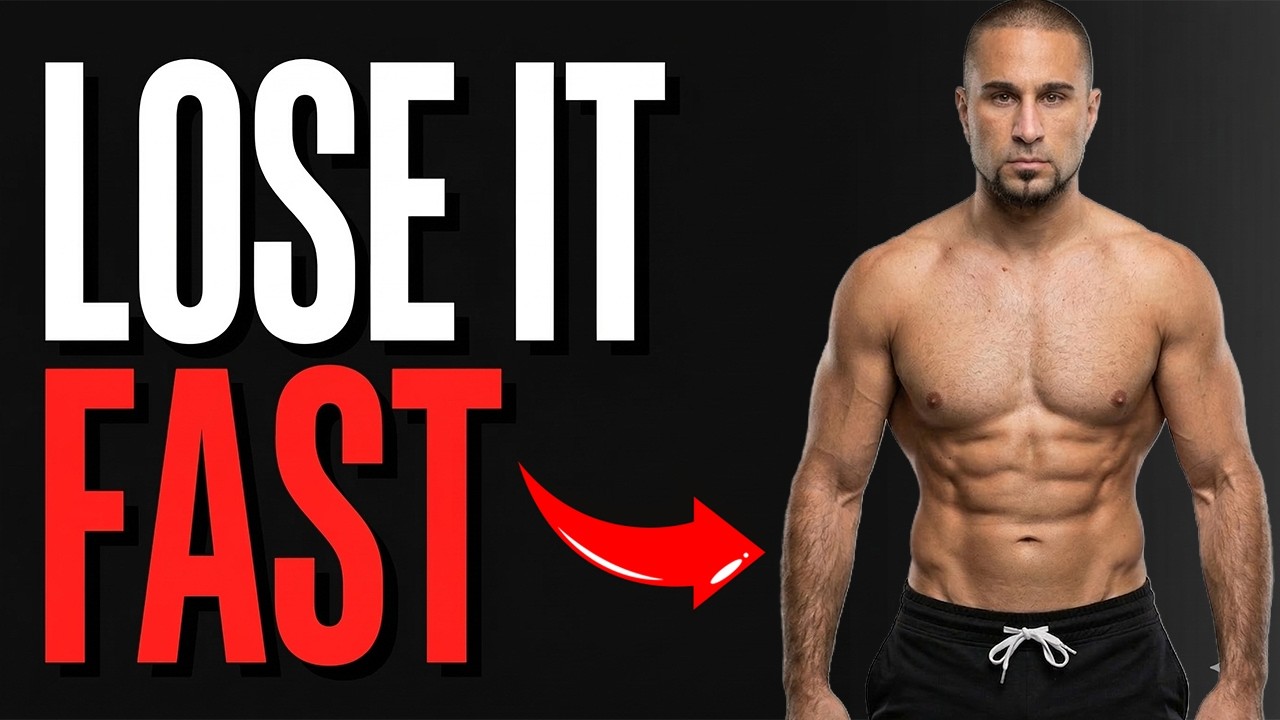
In this video Eric Roberts challenges the common fitness advice of slow, steady weight loss, arguing that it often leads to loss of motivation and eventual quitting. Drawing on his experience coaching over 25,000 clients, he introduces the "Launch Pad" approach: an initial 2‑4 week phase of an aggressive yet safe calorie deficit (500‑750 kcal below maintenance) combined with high protein intake (≈0.8 g per pound of goal body weight), at least 8,000 daily steps, 3‑4 weight‑lifting sessions per week, and a minimum of 7 hours sleep. This front‑loaded “full‑throttle” phase creates visible results (typically 8‑15 lb loss) that spark momentum and sustain long‑term adherence. After the launch pad, the plan transitions to a milder 300‑500 kcal deficit while keeping protein, activity, and sleep constant, allowing the new habits to solidify without the risk of muscle loss or metabolic slowdown. Roberts illustrates the method with client stories (Kathleen and Dan), warns against crash diets, and promotes his coaching program and a free calorie calculator. The core message is that rapid, visible early results fuel motivation, making sustainable weight loss achievable.
Chapters
Every fitness expert online is telling you to lose weight slow and sustainable, and it's the exact reason why you keep quitting. After coaching over 25,000 people, I can tell you the ones who tried to lose weight the right way— slow and steady, making small changes— most of them quit within 2 months. So in this video, I'm gonna show you why slow weight loss is setting you up to fail and the exact approach I use with my clients to lose weight fast with without wrecking your body. And here's the thing, I'm not talking about crash diets, and I'm not talking about starving yourself. I'm talking about something I call the launch pad. And it's the reason my clients who lose weight fast in the beginning are still in shape a year later. But first, let me show you why the slow and steady advice is actually working against you. What everyone tells you is to cut 300 to 500 calories, make slow and steady changes, And just be patient. And that sounds smart and safe and sustainable, but here's what actually happens. You might start tracking your calories. Maybe you start walking and getting more daily steps. And week 1, you feel great, but the scale barely moves. And then weeks 2 and week 3, you look in the mirror and you look the exact same. And then by weeks 4 and 5, somebody asks you if you're working out or if You're getting your diet together. And they're asking because they can't tell by looking at you. And now your motivation is gone because you did everything right for a month and you have nothing to show for it, even if you feel better. So you quit and you feel like a failure, but you're not a failure. You just had some bad advice. Here's why this keeps happening. Think about starting a fire in a cold fireplace. You need the small stuff to get the fire started, something that catches fast and burns really hot. That initial burst of heat is what gets the bigger logs going. But the slow and steady fat loss, that's like skipping the little stuff that sparks the fire and just putting 2 giant wet logs on a fireplace. Nothing catches, there's no heat, there's no flame. You're just sitting in the cold, wondering why it won't start. And that's what taking too slow and steady of an approach to your fat loss can do. It won't have enough results to keep you motivated. For example, one of our clients, Kathleen, and one of our clients, Dan, both came to us having tried the slow and steady approach, and they saw some progress, but they couldn't really tell it was working, and they weren't motivated to keep going on their journey because it was too Slow and steady. And like most people, they would start something, not see the results, quit, fall off, and keep restarting over and over. The number one reason people quit their diet isn't because of hunger or cravings or lack of discipline. It's a lack of visible progress. When you can't see it working, your brain is telling you it's not working, and then you stop. That's not a willpower problem, that's a strategy problem. So if slow and steady doesn't work, does that mean you should just crash diet, starve yourself, Eat 1,200 calories and pray for the best? No, that will wreck you even faster. But there is a middle ground that almost nobody talks about, and it changes everything. And this is the Launch Pad. So if slow fat loss kills motivation and crash dieting destroys your body, what's left? The Launch Pad is a strategy that changed everything for Kathleen, Dan, and thousands of clients that we have worked with. So let me ask, have you ever tried to push a dead car Up a hill, when the car is completely still, it takes maximum effort just to get it to move up the hill, even just a couple of inches. In the first few seconds when you start pushing, probably not much happens. But once you get the car up the hill and you can get it on the other side, once it starts rolling, once you get the first couple of feet of movement, it takes Way less effort to keep it going. Now imagine pushing that same car with one finger. That's what a tiny calorie deficit is. You're pressing against a car with one finger and wondering why it won't budge. The launch pad is about putting your full body weight behind the push for the first two to four weeks. Get the car rolling, build the momentum, and then once it's moving, you ease off and let momentum do the work. So when Dan first. Came to us, here's what we did. Instead of a 250-calorie deficit, making small sustainable changes, we put him on a 500 to 750-calorie deficit. It wasn't extreme, it wasn't dangerous, but aggressive enough that his body had to actually respond. We kept his protein high, around 0.8 grams per pound of his goal body weight. We bumped up his steps to at least 8,000 per day and had him lift weights days a week. In the first 4 weeks, he lost a little over 11 pounds. His wife noticed, his coworkers noticed, and he noticed. And you know what happened? He didn't want to stop because for the first time in years, it was actually working. He could see it, he could feel it, and that feeling, that momentum, is what is more powerful than any meal plan or workout program you could follow because the car was actually rolling. And by the way, if you're like, Eric, what should my calorie and protein intake I have a free calorie calculator in the description below of this video that you can use. It's the same one that we use with our online coaching clients. The fastest way to make fat loss sustainable is to make it visible first. When you can see your body changing, your clothes fit different, people start asking what you're doing— that is the fuel that keeps you going. Not discipline, not willpower— results. Motivation doesn't start the process, results do. And the faster you see results, the more motivated you become to keep going. But now here's where most people screw this up, because losing fat fast only works if you do it the right way. If you do it wrong, you'll lose muscle, tank your metabolism, and end up worse than you started. So let me show you exactly how to set this up so that doesn't happen. I want you to think of it like an airplane taking off on the runway. The engines are at full throttle. Maximum power, maximum speed. The plane needs that initial burst to get off the ground. But once it's in the air, it doesn't stay at full throttle forever. The pilot pulls back, the plane cruises, and it uses just enough power to stay at altitude. If the pilot kept the full throttle the entire flight, the engine would explode. But if the pilot tried to take off at the cruising power, it would never leave the ground. Oh, I see. You need full throttle to take off, then you pull back to cruise control. That is the launch pad. Phase 1 is the full throttle phase, and this is the first 2 to 4 weeks. For your calories, you're gonna run at least a 500, if not a 750 calorie deficit, and this means you're eating 500 to 750 less calories than your maintenance calories. Number 2 is protein, and this is a non-negotiable. You have to get at least 0.8 grams of protein per pound of your goal body weight. So if you want to weigh 150 pounds, that would be 120 grams of protein per day. This protects your muscle while your body burns fat. If you skip this, your body is going to eat your muscle instead, and you'll end up looking skinny fat, which I know you don't want. For your cardio, your daily steps need to be at least 8,000 per day. Day. You do not go below this. And for your weightlifting, you're going to lift 3 to 4 days a week following a lower body, upper body workout split, usually 4 to 8 exercises per workout, 2 to 3 sets in the 5 to 12 rep range. You should be trying to lift heavy and pushing yourself close to failure. And this will tell your body again, hey, we need this muscle. Do not lose muscle while you're going through the fast fat loss phase. And the last note, sleep. Get 7 hours minimum. And I know it's boring, but if you're sleeping 5 hours a night, you have a higher likelihood chance of your body losing muscle and holding on to body fat. And that's it. That's the full throttle phase. It's nothing crazy, it's nothing dangerous, it's just aggressive enough that your body's not going to be able to ignore it, much like you probably can't ignore this nose strip on my face right now. And most people will lose somewhere around 8 to 15 pounds during this phase. And that's the magic, because you'll notice that, other people will notice that, and you will actually want to keep going. But here's where it gets critical, because this is the part that nobody gets right. And if you miss this window, all the progress that you made during the Launch Pad will disappear in 2 weeks. So section number 4 is the switch— when to pull back and how. Because the people who skip this step are the same people who lose 10 pounds in a month, but gain it all back and then some the next month. You watching this, you've probably lost weight fast before, but it didn't stay off because you didn't do what I'm about to tell you. And before I tell you, if you are somebody who has had trouble losing weight and keeping it off and you want expert one-on-one help, that's exactly what I do in our online coaching program. You can click the link in the description of this video below to learn more and apply for our one-on-one coaching program. Now, I want you to think of this like a rocket launch. A rocket burns 90% of its fuel in the first couple of minutes just trying to escape Earth's gravity. But once it reaches the orbit, it cuts the engine and it coasts because gravity isn't pulling as hard anymore. If the rocket never cut the engine, it would fly past the orbit and burn up. And your diet works the same exact way. If you try to stay in the full throttle mode forever, And you get greedy because you're like, well, this is working so fast and it's going so well, I'm just gonna keep going, I'll have the discipline. You will crash. So after 2 to 4 weeks in full throttle and you complete the Launch Pad, here's what you do. You bring your calories back up slightly. So if you were in a 500 to 750 calorie deficit, Now you transition into a 300 to 500 calorie deficit. You keep the protein the exact same, you keep your lifting the exact same, you keep your steps the exact same, but you give your body and your nutrition some breathing room. And here's why this works so well. By the time you've hit this phase, you've already lost 8 to 15 pounds. You've seen the change, you're motivated, you're bought in. So when I tell you that you're going to eat a little bit more, you're going to be more flexible with your nutrition. And even if you don't see the scale go down as quickly anymore, you're not gonna be like, this isn't working. You know it's working because it's already worked. And now you can have the slow and steady sustainable habit changes approach without quitting because you don't see progress. And if you remember the cold fireplace, this is how the Launch Pad fixes it. The aggressive phase is the kindling that sparks the fire and gets it going, and that heat is what lights the big logs on fire. And once the big logs are burning, you don't have to keep putting more kindling on it. You let the fire sustain itself, and that's what the transition phase is. The big logs are your new habits, your new relationship with food, your new consistency and commitment to working out. And once those are lit, they will continue to burn forever. So remember, sustainability isn't about starting slow. It's about building enough momentum you don't want to stop. Nobody wants to quit a diet when it's working. Nobody wants to quit when they look in the mirror and see a bunch of progress. People quit when nothing is happening. And if you only go slow and steady, that is the fastest way to make nothing happen. And like I said, if you want someone to build you this launchpad approach and hold you accountable to it every single week, And know when to make these adjustments, click the link in the description below of this video to apply for our one-on-one coaching program. But now that you know the Launch Pad strategy, you're probably wondering, how long is it actually going to take? Like, when will I see my abs? When will my belly fat disappear? Well, I made a video breaking down the brutally honest timeline, and it's just the truth about how your body loses body fat phase by phase. You can click right here to watch that video next.










