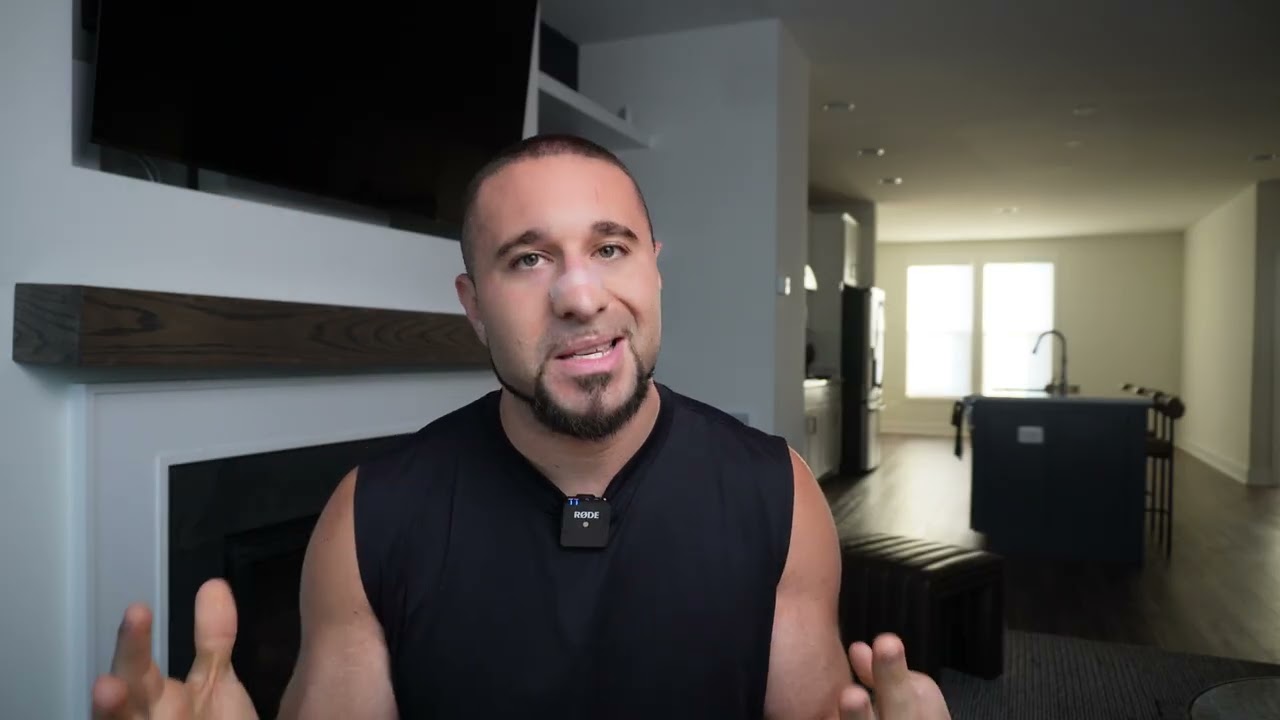
In this YouTube coaching video, Eric Roberts outlines the four key phases of a typical fat‑loss journey and warns viewers about the "worst stage" that often leads to quitting. He begins with the "honeymoon phase" (weeks 1‑2), where new diets, workouts, and motivation feel easy and results are not yet visible. He then describes the "invisible stage" (weeks 3‑4), a period where clients continue healthy habits but see no visual progress, causing discouragement and the temptation to abandon the plan. Using a client anecdote about "Billy," Roberts illustrates the emotional toll of this plateau. He explains the physiological reasons for temporary water retention—muscle damage, glycogen storage, and cortisol spikes—that mask fat loss, leading to the "whoosh effect" after week 4, where 3‑6 pounds of water weight are shed and scale numbers finally drop. This is followed by the "butterfly stage," a sudden, noticeable transformation in clothing fit, mirror reflection, and overall leanness. Roberts backs his claims with data from coaching over 25,000 clients and his 8‑week fat‑loss challenge, where participants typically lose 10‑20 lb. He offers practical strategies to survive the invisible stage: keep consistent, use progress photos, set realistic expectations, and avoid unhealthy social‑media comparisons. The video concludes with a call‑to‑action to join his personalized 8‑week challenge and a link to a follow‑up video on building muscle while losing fat.
Chapters
The worst stage of fat loss is what happens after the honeymoon phase. I've coached over 25,000 clients with their fat loss journey, ranging from people losing 10 to 15 pounds versus losing 100+ pounds. And every single time, people go through this worst stage that almost makes them quit. That stage comes after the honeymoon phase. And the honeymoon phase is the first 1 to 2 weeks when you start a diet. You're eating clean and healthy. You're getting your walks in. You're doing your workouts, and you feel pretty motivated to do so. It almost feels pretty easy, pretty light for you. This stage is the easiest stage, and most people can get through this stage. But then you hit what I call the invisible stage. This stage is where you're doing all the things still— still eating healthy, still tracking your calories, getting up, getting your workouts, going for your extra walks. And you're also still maybe saying no to some of the extra drinks, some of the extra snacks. You're trying to look up the menu when you go out to eat to make sure you order the right thing. But despite all of this, you're not visually seeing the results. With your body yet. And this is very tough for people because it's so easy to get discouraged. I was talking to one of our clients, Billy, yesterday who signed up about 4 weeks ago. He's working with his coach and I checked in to see how he's doing. Mind you, I can see his progress in our app and he's down a couple of pounds. He's losing some inches on his waist. He's getting stronger in his workouts. But when I asked him how progress is going and how he feels, he was actually a little bit discouraged. Not to the point where he's gonna quit yet, but he felt like he was working so hard. He had made changes with his diet. He's getting up early in the morning to work out before work, carving out extra time during his busy day to get walks, to get meal prep in. And he acknowledged he was seeing some progress, but he felt for the amount of effort he was putting in, he wasn't seeing as fast of or as much of visual progress that he wanted to see. And right here is where most people get discouraged and say things like, why am I working so hard? This isn't even working. I might as well quit. And that will spiral into Maybe on the weekend you say, screw it, I'm gonna have a couple of extra drinks. I'm gonna have the chips and nachos when I go out to watch the game on a Sunday. I'm not gonna track calories for a little bit. I'm not gonna get those extra steps or walks in. Because you feel like you're working so hard, but you're not making progress anyway, so who cares? And then you do this. This sets you back, ruins any progress that was being made. which there usually is, you just can't see it, hence the invisible stage, and then you're right back at square one. And that certainly won't get you closer to your goals, now will it? But this is why it's called the invisible state. If you just keep going through this stage, despite not feeling like you're making progress, despite those feelings and emotions you're telling yourself of, this isn't working, I should be losing weight faster, you get to what I call the butterfly stage. I don't know if this is right with my hands, but when it'll almost seem like overnight you'll wake up and you'll notice a difference. The scale might drop 3, 4, 5 pounds overnight. You'll put on a pair of jeans that didn't used to fit that now fit. You'll walk past a full-length mirror, do a double take, and say, oh, I, I can see myself getting a little bit leaner, having more muscle definition. And now you're gonna be like, oh shit, this was working the entire time. Time. It's almost like if you've ever had construction done on your house, or if you've just seen construction and buildings being built, how many times have, have you been like, wow, they just started working on this, this place looks like a dump, there's like so much stuff, and then like within a week you feel like these buildings are done, these new apartments are already up? They just started building them. The entire time there was progress being made, you just couldn't visually see it. But you can't quit during that invisible phase Because if you do, you'll never get to the butterfly stage. So if this is happening to you, this is your sign that you need to keep going. There's no other option. You will get to the butterfly stage. And you'll probably now ask me, okay, this makes sense, but tell me, give it to me straight, Eric. How long do these stages last? And when am I going to get to this butterfly stage? Well, good thing I can tell you because we've coached over 25,000 clients in my coaching program. So I run something called my 8-week fat loss challenge, and in this challenge, on average, people end up losing about 10 to 20 pounds in those 8 weeks. Everybody is a little bit different. What happens for most people is something like this: the first 1 to 2 weeks, they go through the honeymoon phase where they sign up, everything is super good. They're motivated. They want to hit their calories. They want to get those workouts in. It feels easy to stay on track, but it's only been a week or two, so you're not gonna visually see that much progress yet. This is where weeks 3 to 4 usually become the invisible state, like Billy I was talking about earlier. You might feel discouraged that things aren't happening as quickly as you would like. Side note, a lot of the time when feel discouraged, things aren't happening as fast as we want to. You're also basing that off of unrealistic expectations. You see people losing 20 pounds in a month on social media, and they're doing that by cutting out all of their carbs, eating 1,000 calories, doing 3 hours of cardio per day on top of taking weight loss drugs. And nothing wrong with taking weight loss drugs, but their situation and what they're doing is vastly different than than what you are doing, but yet for some reason you compare your progress to those people, which doesn't make any sense. So you should stop doing that. But I get it, you're a bit discouraged and you also might not be able to really feel or see a difference yet in your body. And this is the danger zone for most people, including the people who coach with us. But after week 4, a lot of people first have what we call the whoosh effect. Let me explain this. When you go into a calorie deficit, and you're lifting weights, your body is going to store extra water weight. Why? Lifting weights, especially on a good strength routine, if you haven't been on one, is going to create muscle damage and inflammation inside of your muscles. Both of those things lead to short-term water weight storage. Plus, lifting weights is also going to put more carbs, put more glycogen, the energy for your muscles, inside of your muscles, which will also make you store some short-term water weight. Plus, being in a calorie deficit does increase your cortisol levels a bit. This is necessary for you to lose weight, but that short spike in cortisol is also going to lead to some short-term water weight. These 3 reasons are why if you are on a calorie deficit, you could be losing fat, and you will lose fat, but the short-term water weight might mask any of the actual scale weight loss. So if let's say you're holding on to 3 to 5 pounds of water, you could go 2 weeks, 3 weeks, 4 weeks losing a pound or 2 of fat per week. But the scale wouldn't show it because of the short-term water weight. But it's short-term. So after 3 weeks, 4 weeks, 5 weeks, you'll have what we call the whoosh effect. Where you will lose 3 to 6 pounds overnight. And that's a mix of this entire time you were losing fat, you were just storing some extra water weight. So now you'll drop the water weight and you'll see the fat loss that was happening the entire time. And that's how you'll see a big drop on the scale. But again, if you quit, you will not get there. So that happens after week 4. And for our clients, we'll put their progress pictures Side by side. The person I talked about earlier, Billy, he had not taken his progress pictures yet and put them side by side. So when we do this, you are actually going to see a difference in your body because you can't visually see a difference when you look at yourself every single day in the mirror. Imagine if you walked outside right now and just stared at your lawn, you stared at your grass, would you really be able to notice the grass growing day by day? No, it's just gonna be normal to you. But imagine if you took a 4-week vacation, which if you did, I love that for you. I want to have your job. You took a 4-week vacation and you didn't cut your grass the entire time. When you came back, you'll be like, dude, this thing, like, there— this grass is very tall. I need to cut this immediately. Because you don't see it like that every day, you're not staring at it, you'll notice a difference. And your progress pictures and your body are the same exact thing, which is why every time that we put those progress pictures side by side for our clients, they're like, oh, I can tell this is working. I can see a difference. Maybe I couldn't see it myself, but when you do this, I can clearly tell. And then they see it working. And what happens then? They had the whoosh effect. The scale's now down. Their clothes are fitting better. They walk past that full-length mirror and go, oh wow, I'm noticing some muscle definition. Because I've dropped some of the water weight, I've been building some lean muscle mass. And then they get motivated to continue to stick with it. And that's how motivation actually works. You don't just get motivated in the beginning and then you take some action and motivation falls off. You're gonna be motivated if you're making progress, right? Right. But if you quit before the progress actually shows, no, you will not have the motivation to keep going. But this is why in that 8-week time frame, that we have for our 8-week challenge, people will end up losing 10 to 20 pounds because they got through the honeymoon phase, they got through the invisible phase, and they got to the butterfly stage. And that can be you too. You just have to make sure you have the right plan and you stay consistent with that right plan. And if you want to apply to join my 8-week fat loss challenge where a coach on my team will build you a personalized plan to follow, plus check in all throughout the week, make plans for the weekends, and actually hold you accountable so you finally stick with it this time, tap the link in the description of this video below to learn more and apply for my 8-week fat loss challenge. And if you're someone who you don't just want to lose fat, but you actually want to build muscle and change how your body looks along the way, I made a video giving you an exact step-by-step plan you can follow to do that based on where your body is at right now. You can click this link here to watch that video coming up next.