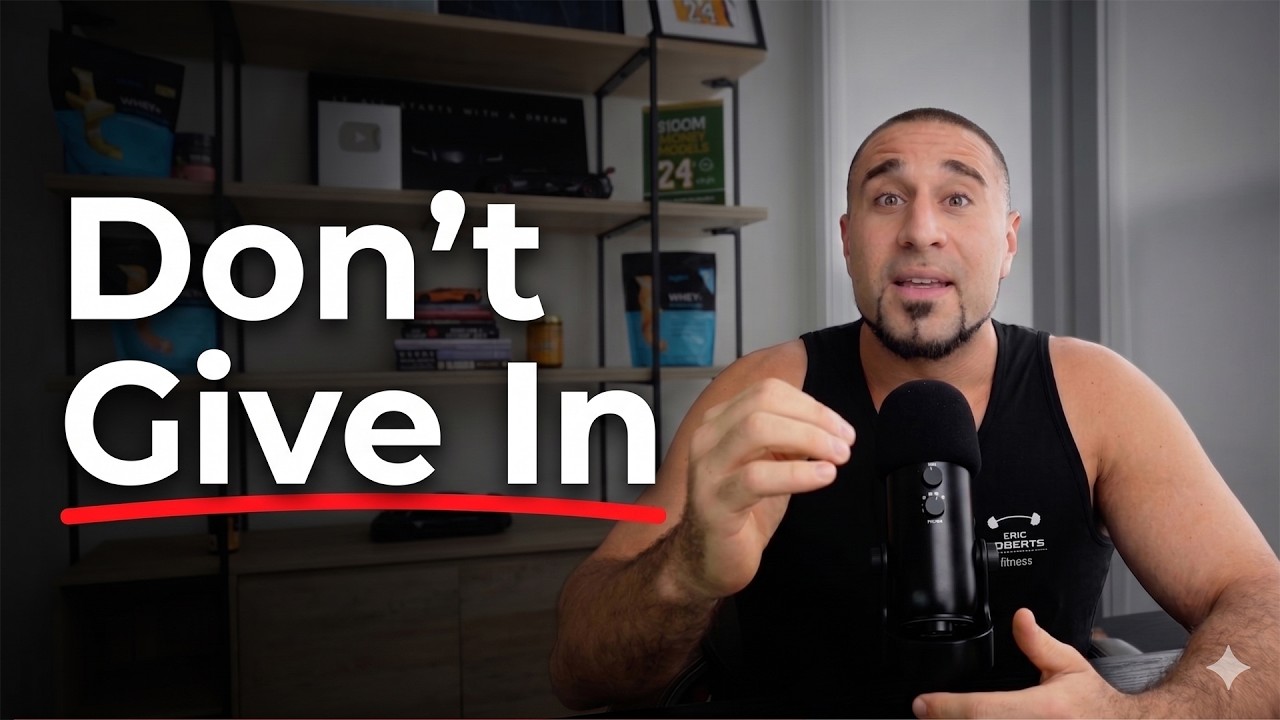
In this coaching video, Eric Roberts explains why most people fail at dieting despite strong willpower and outlines three critical moments that precede overeating. Moment 1 occurs in the mind when a person labels a food as “bad” or off‑limits, which makes the food more tempting (the “locked‑door” effect). He illustrates this with a client, Nirja, who spent a year on Whole30 but kept slipping because of this mental labeling. The solution is to stop labeling foods and instead label portions, focusing on total calories rather than food type. Moment 2 is a physiological craving that builds pressure in the body when a person denies themselves for too long. Roberts compares it to shaking a soda can; the pressure eventually forces an “explosion” of overeating. He shows how a client, George, learned to use a “release valve” by scheduling small, regular indulgences (e.g., a scoop of ice cream on Wednesday) instead of a cheat day, preventing the pressure from building. Moment 3 happens in the two seconds after the first bite of a “bad” food, when the mind decides it has already “blown it” and spirals into further overeating. Roberts advises to stop after the first bite, continue with the regular meal plan, and repeat this response until the brain no longer treats the slip as catastrophic. Throughout, he promotes a free calorie calculator link and offers one‑on‑one online coaching for those stuck in the cycle, and references a related video on belly‑fat loss signs.
Chapters
This video can stop you from ever overeating again. After coaching over 25,000 clients, I have seen the same thing over and over. There are 3 moments that happen right before you fall off your diet, and once you spot them, you can stop it. But most people miss all 3 and then blame their willpower. So let me show you what all 3 moments The first moment happens before you even see the food. Nobody notices it, but the second it happens, the clock starts ticking on your next fall-off. It happens when you're scrolling on social media and you see a post about how seed oils are killing you, or you follow some fitness influencer who tells you you should only be eating clean, and you go, okay, you know what, that's it. On Monday, I'm I'm cutting out all the bad food and I'm taking control of my diet. That feels like discipline, but it's actually the first domino in overeating. Because the second you label something bad or off-limits, your brain automatically makes that food more interesting, more desirable. Think of it like if you walked into a house with 10 rooms. Nine of the doors were open, and you could walk in the rooms. But there was one room that was locked with a sign that says "Do not enter." Which room are you thinking about? Not the nine open ones; the one locked room. And you don't even know what's in there. It could be nothing. But now that it's off limits, your brain won't stop trying to figure out. And that's what happens when you label a food bad. A perfect example of this is one of our coaching clients, Nirja. She came to us after doing the Whole30 diet for over a year straight. And that's a full year of no sugar, no bread, no bad foods. She was just white-knuckling with her willpower. And then one day she snapped and she just felt like she couldn't stop overeating, especially all of these bad foods. And then of course she would feel guilty. She would try to reset on Monday, but then just end up falling off by the weekend again. And she was convinced she had a food problem, But she didn't. She had a locked door problem. And now, Nirja is eating her favorite foods every day throughout the week, and she's still losing weight. So stop labeling foods bad and start labeling portions. Eating bread isn't bad. Eating a whole loaf of bread in one sitting is bad. But those are 2 different conversations. The food is never the problem. The portions and the overall calories is. And once you unlock the door, you'll be able to stick to those calories better. And by the way, if you need to know how many calories you should be eating per day to lose weight, you can click the link in the description below of this video to use my totally free calorie calculator. But unlocking the door is only moment 1. There's a second moment that comes, and that's where people actually break. Moment 1 happened in your head, but moment 2 happens in your body, and you can feel it building if you know what to look for. And it looks like you've been good all week. You track your food, said no to the office donuts on Tuesday, eating your perfect meal prep. But by Friday afternoon, you just kind of feel tight. You're not hungry, you're just tense. You're restless. You're standing in front of the fridge, opening it 3 times, just looking for something to have. And most people confuse this with hunger, or worse, weakness. And it's neither. That feeling is a craving. And a craving that you fight is like a can of soda. The first day you say no, you shake it up and it's no big deal. The second day, the third day, the fourth day— every day you say no is shaking that can up longer and harder. That's what she said. And from the outside of the can, nothing has changed, but the pressure is building Inside, and when you finally crack the tab open, and you will because nobody's can stays closed forever, it's an explosion. You end up eating all of it in such large portion sizes. But the explosion was never about the specific food or craving; it was about the pressure that was getting built up. And this would happen to one of our coaching clients, George. The way he used to. Be good on his diet was not eat any bad foods during the week. But then eventually by the weekend, he had shaken up the can so much that he would end up overeating. And the fix is what I call a release valve. You let out a little bit of pressure on purpose before it builds up. You plan the food you actually want to eat into your week, not a cheat day, not as a reward. It's just a normal part of the plan. A scoop of ice cream on a Wednesday night, 2 slices of pizza on Friday. Because when it just becomes a regular part, the door isn't locked and you haven't shaken up the can. And that's how George would turn his weekends from eating a whole box of pizza to eating 2 slices, sticking to his calories and still losing weight. But here's the thing, even when you unlock the door and release some of the pressure, there's a 3rd moment coming. And this one is actually the hardest of all 3 because it's not about the food. At all, the label of bad foods builds the pressure, and the pressure leads to the crack. And the crack is the moment you finally eat the food. But here's what nobody tells you: the overeating doesn't happen during the first bite; it happens in the two seconds after the first bite. And where most people go wrong, you eat clean for a couple of weeks, and then when you have the bad food, the thought arrives of well, I already blew it. I might as well full send it. And keep going, and that thought is the crack. The cookie wasn't the problem. The cookie's 200 calories. You could eat a cookie every day and still lose weight. The problem is what happens next. Once you've decided you've already blown it, you don't just eat the one cookie; you eat four, and then chips, and then pizza. And one cookie at 200 calories turns into 3,000 extra calories. If you got a flat tire on your car, would you get out and slash the other three? No, you would call a tow truck. Truck, have it fixed, and move on with your day. And the craziest part is we only do this with food. If you miss one workout, you don't quit the gym forever. If you overslept by 20 minutes, you don't never get out of bed the rest of your life. But somehow one bite spirals into 3 full days of overeating. And the only way you actually stop this spiral is by eating the cookie, stopping at the cookie, eating your normal dinner 2 hours later, and then waking up the next morning, not doing anything to make up for it, and just following your regular plan. And the first time you do that, your brain won't fully believe it. You'll probably still feel guilty, but you got to tell your brain to shut the fuck up. And the second time you do it, it'll feel less scary. The fifth time, it'll feel normal. And by the tenth time, you'll still probably feel that I blew it. But you don't believe it anymore. And that doesn't come down to willpower. That comes down to reinforcement of you stopping labeling foods bad, releasing the pressure valve to eat these foods throughout the week. And when you have them, don't freak the fuck out and just keep going. And if you've been stuck in this cycle for years and you want some help breaking through it, that's exactly what we do in our one-on-one online coaching. There'll be a link in the description of the video below. And if the overeating is stopping you from losing your belly fat, then you should probably watch this video here where I give you the 4 main signs that your body is going to give you right before you lose all of your belly fat.