Total Abs And Core Workout | Best Exercise To Lose Belly Fat
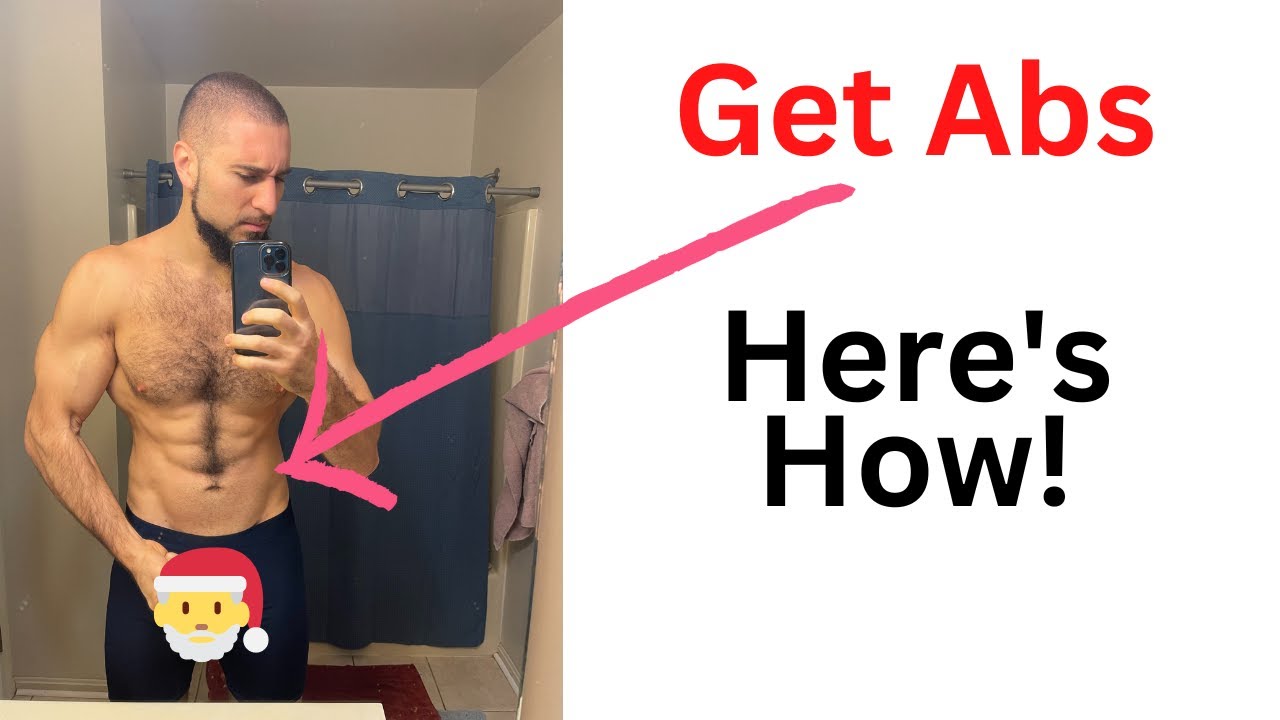
In this instructional video, Eric Roberts explains why consistent core training is essential for stability, lower‑back protection, and strength in compound lifts, while also addressing the aesthetic goal of visible abs. He emphasizes that abs are built in the gym and revealed through a calorie‑deficit diet. Roberts then demonstrates a complete core routine consisting of four main exercises: weighted cable crunches, reverse crunches, Pallof presses (anti‑rotation), and front‑rack farmer’s walks. For each movement he provides detailed form cues (spine flexion vs. extension, hip positioning, breathing, tempo, and avoiding arm assistance), set and rep schemes (typically 3 working sets of 10‑15 reps for crunches and reverse crunches, 8‑12 reps for Pallof presses, and 2 sets of farmer’s walks), and programming guidance (use 1‑2 core exercises per workout, integrate them into warm‑ups across 3‑4 weekly sessions rather than a dedicated “abs day”). He also discusses common mistakes, the importance of reaching near‑failure while maintaining form, and how to progress weight or difficulty. The video concludes with a recommendation to read a detailed article on his website for deeper programming insights.
Chapters
YouTube, what's going on? In this video, I'm going to be taking you through an entire core and ab workout for both aesthetics and core strength, core stability, keeping your lower back safe, all of those good things. Now, you also might hear a few different opinions on whether you should train abs, whether you should not train abs, that abs are built in the kitchen. And here's what I would say. Number one, you should You should typically always be training abs throughout the course of your week for at least some sort of core stability, keeping your core strong and protecting your lower back. Because a lot of people who have lower back pain do not have a strong enough core, which is why their lower back has to take over. And then number 2, if you're somebody who does squats, deadlifts, RDLs, overhead presses, chin-ups, your core strength is a massive factor in getting stronger in those bigger compound lifts. And then third, we can quickly touch on the aesthetics part as well. Now, people who say abs are built in the kitchen are somewhat right, because unless you are at a low enough body fat percentage, you could do all the exercises we're going to do today in this workout and you will never see your abs, because you have to be a low enough body fat percentage in order to see your abs. But that doesn't mean you shouldn't train abs, because your abs are a muscle just like any other muscle on your body. If you train them, they can become more defined. So as you lose body fat, if you are doing exercises that help you get a more defined core, then you will have a more defined core. So they both go hand in hand. Abs are actually built in the gym, whereas they are revealed through the kitchen and through eating in a calorie deficit. And that somewhat answers the question of— I get often, which is, should you train abs even if you're overweight, if you have 40, 50, 60, 70 pounds to lose? Yes, you should absolutely still train Your abs. So with all that being said, let's dive into the workout that I'm literally about to do right now. And again, this is going to be for both aesthetics and for improving your core strength and core stability. All right, so the first exercise that we are going to be performing— well, maybe you're doing it with me, but at least I'm performing it— is going to be simply a cable crunch. And by the way, I'm going to be using this cable machine But you could easily use bands as well for all of these movements I'm going to be using the cable machine for. So don't ask me in the comments, what if you don't have a cable machine? You can use a band. Now when we talk about the aesthetics of your abs— and again, aesthetics just means seeing your abs a bit more— one form of training your core is going to be training your core through spinal flexion movements. And all of that means is you are flexing or rounding your spine almost like into bad posture. You always hear about you want to keep a neutral spine and keep a flat back. When you're training abs, if you actually want to train your abs the right way, you are going to have to flex your spine. And a cable crunch is a great way to do that because you are going to be able to flex your fine, like I'm going to show you right here. But then you can also add some extra resistance and extra load. And remember, if you want to grow your glutes, for example, how do you grow your glutes and make them more— look more defined? Well, you build your glute muscles. If you want to get your abs more defined, you need to build your ab muscles. So being able to do that through exercises like a weighted cable crunch is going to help you do that. Now I'm using just one resistance handle right here. You can use like a rope, or you can use— again, you can use bands or whatever you want. But I'm going to grab onto this cable machine right here. I'm then going to think about kind of tucking my hips up under me, because again, I'm going to want to flex my spine. If your spine is right here, you want to Flex and round your spine. You're really trying to think about bringing your rib closer to your belly button, bringing these 2 points as close as you can with having bad posture and rounding your spine. So it's going to look something like this right here. See how I'm actually rounding my spine? I look like I have bad posture. I'm not doing this thing where my hips kick back, that's not going to work your core at all. You need to try to keep those hips tucked up under you and then bringing the top of your rib down to your belly button. And again, whether you're holding on to a handle or you're holding on to a rope or a band, you don't want to pull with your hands. This is not a hand exercise, this is a core exercise. Your hands in this exercise are just hooks. You are just trying to hold on to it so that your abs have something to pull on as you are going down into this movement. Another key tip here is, as you're doing the movement, try to forcefully exhale on the way down because that is going to actually help activate And flex your abs that much more. Don't try to keep your breath in as you go on the way down. Exhale hard through your mouth. You will feel your abs that much more, I promise. I've done enough talking. I gotta actually do a set now. I do one set and my abs are on fire. Tells you how much I do abs. Okay, so I just did one warmup set there, and I like doing at least one warmup set just to kind of like— you'll probably hear this, you've heard this term before— activate the muscle. I just want to make sure I feel the right muscles working, I feel my core working, I'm doing what I'm supposed to do. Also, really quick tip: on the way up you do want to be able to make sure you almost go into A tad bit of actual spinal extension to make sure you can fully stretch the muscle as well. Because remember, let's say you're doing a bicep curl, you know, fully squeezing the muscle is squeezing your bicep really hard, right? Fully lengthening the muscle is coming back down to let your biceps stretch out. When you get to the top of this cable crunch, if you stop right here, You're not letting your abs actually fully stretch on the way up. So instead of just stopping right here and then coming back down like this right here, let your abs kind of stretch on the way up and then come right back down. All right, so now I'm going to get into my first working set. I'm probably going to do 3 sets total, so let me get this done really quickly. Man. Okay, so if you watched the last couple of reps of that set right there, do you notice how the last couple of reps, as I was trying to go on the way down, were getting more difficult? They were starting to like slow down those last couple of reps, right? If you've watched any of my other content on any of my social medias— Instagram, TikTok, Wherever. You will know that I said I did a working set. A working set is where you take the set 1 to 3 reps shy of form failure. So I'm not like absolutely trashing my form to get more reps, but I was keeping good form and the reps were starting to slow down. That's how I know my muscles, my core muscles in this particular exercise are going closer to failure. So when I say I'm doing 3 working sets of cable crunches, I'm doing 3 sets that are taken very close to failure. All right, second set right here. All right, that was my second set and I'm getting a little gassed, I'm not gonna lie. So I hope you can also see as well, it can be very easy to use Your arms to help you pull and make the rep a bit easier. We don't want to make the rep easier by using our arms. So really make sure before you go on the way down, you're really trying to think about grabbing onto that weight with your core and then using your core to move through that range of motion. That's what I like to think about, is if I'm grabbing onto the weight and then keeping that weight with my core the entire time. And if you haven't seen as well, I've been doing roughly 10 to 15 reps. So I'll be doing 3 working sets for roughly 10 to 15 reps. Trust me, if you do that and they're working sets, that will be enough. I promise. Alright, I got my 3rd working set and I'm finally done with this exercise. Let's get into it. All right. And that was 3 working sets of cable crunches. And again, remember, to work more of the aesthetics of your core, you'll still work some strength, but to really work like the ab muscles you can see, you should be doing some spinal flexion exercises. Now we're actually going to go into a second spinal flexion exercise. And it's probably one you've seen before, which is going to be the reverse crunch. So I like to anchor myself against something whenever I'm doing these reverse crunches, not to like help pull me. Again, I'm not trying to use my upper body to help me do the movement. I'm just kind of anchoring myself against something so I can have a little bit more stability. But what you're going to do is get set up with your back on the ground, Knees start off bent. Again, remember how we talked about at the top of the cable crunch, you kind of want to let your abs extend a bit? When you're doing these reverse crunches, start with your abs a little bit extended, almost like a slight arch in your lower back. Slight arch. And then from here, we're simply just going to work on bringing our knees to our chest and then right back down Let your abs stretch at the very bottom there. Come right back up. Slowly lower back down. 2 of the biggest ways people fuck up this movement is, number one, they go incredibly way too fast. Remember, this is not about the quantity of reps you're doing. This is about the quality of reps. Because if you just go too fast, you're going to end up working your hip flexors, not working Your core, which then you'd just be wasting your time doing your workout, which why the hell do you want to do that? So make sure you keep a good tempo and control the entire time. I would rather you do less reps with really good control as opposed to more reps with shitty control. And then number 2, people move their legs so far away from their body when they're doing this move. If you're going like this right here, that looks like some weird sex move. And I would just strongly encourage you instead, keep your knees a bit more bent and tight to your body. All right, cool. So now, as I lay here and take a break, I'm going to do about 3 working sets of probably 10 to 15 reps once again. I'm probably not going to do a warm-up set for this exercise because it's just bodyweight And my core is actually already working, and I can feel it working to begin with. So I'm just going to jump right into my working sets. All right, so I think I did 12 sets there. This is where, again, people try to tell me that when they're doing reverse— that's too easy. Doing a bodyweight reverse crunch is too easy. If you think doing a bodyweight reverse crunch is too easy, you, my friend, are not doing reverse crunches correctly. Remember, notice how throughout that movement I was slow and controlled the entire time. I wasn't slinging my body around. And then number 2, also you probably might have picked up on the mic that I was exhaling throughout the movement, really trying to think about actively bracing And— excuse me— actively contracting my abdominal muscles. Remember, this is not just about moving from point A to point B. This is about using your ab muscles. Because why do the exercise if you're not actually going to work the ab muscles? So I think I did 12 reps right there and my abs were literally screaming, burning, on fire. If yours aren't doing that, I challenge you, slow down. Take the ego out of it and actually try to move through the range of motion with your ab muscles, not just doing the exercise. All right, set 2. Oh, Billy. Again, that was 12 reps. And my abs are screaming. Remember the same kind of thing I talked about with the cable crunch. When my legs are extended out away from me, I'm really trying to think about almost kind of like grabbing my legs with my core. So as I start the movement, I'm trying to actively think about bracing and activating my core, my abs, and keeping that activation, keeping that contraction the entire time. And I'm starting to sweat doing abs. What a world we live in. All right, I got one more set of these reverse crunches, and that will most likely round out the aesthetics and the spinal flexion part of this core workout. And remember, when I'm doing this exercise, I'm actively trying to flex my spine and round my back. You don't want to round your back during a deadlift, but when you're doing reverse crunches or cable crunches or these spinal flexion exercises, yes, you should be trying to round your back and use your core. All right, last set. Let's hope I don't die. All right, that rounds out the spinal flexion part of the core workout. Now I'm going to take you to probably one of my favorite, if not my favorite core stabilization exercises. All right, one of my favorite, if not my favorite, core strengthening and stabilization exercises is going to be a Pallof press. And again, you can use a cable machine or you can use a band if you wrap it around something and use it like I'm going to show you with the cable. All right, so you're going to grab the cable and get it to somewhere around that, like, middle of your body to lower chest to belly button area, somewhere Around right there. And what you are going to do is you are going to grab it with the side that is closest to the machine, wrap your hand around the other part, and then you are going to take about 1 to 2 steps away from the cable machine. Now you should already feel your core working to not let yourself turn back in this way because the resistance is coming from this way So it's going to want to pull you this way, but your abs have to work to make sure you do not rotate. This is called an anti-rotation, or anti-movement exercise. So get it in the middle, and now all we're simply going to do is make sure to keep our core braced, make sure to keep your butt squeezed like somebody's trying to stick their finger up your butt, but you definitely don't want that, do you? And then you're simply just going to punch out. Come right back in. Punch out, come right back in. Notice how as I'm punching out, the weight isn't moving this way. I'm keeping this one straight line the entire time. You should feel the side of your core, your obliques, your core stabilizers. You should feel these muscles working as you're doing this movement. All right, so I'm going to do— so that was just my kind of first like warm-up set. Now I'm going to get into some working sets. I'll probably do anywhere from 8 to maybe up to 12 reps. And yes, you do both sides here. So I'm going to flip around and do the other side. Man. So again, the side closest to the cable or the band is going to try to grab because you want to make sure that's the side That is resisting that movement. Also, I want you to notice the tempo of the speed that I just went with. It wasn't like a— whatever, this is like a dance move, I think. Come out, stop and pause for a second, especially out here because that's where it's the hardest, and then slowly come back in. Come out and pause, slowly come back in. That was my first working set. I'll probably do anywhere from 2 to 3 3 working sets right now. And you don't have to go super heavy when you're first doing this movement, but I will say, as you get more advanced, I actually really like this movement to go a little bit heavier, obviously where you can still keep really good form and that kind of stuff. But I like kind of challenging how much weight I can resist going side to side. So right now I think I have 90 pounds on there, so we'll see how this goes. Man, those Pallof crushes really light up the sides of your core. All right, so I'll probably do one more set here, and then we will probably move on to the final exercise of my core workout. All right, so we are 3 exercises in. I'll probably do one more exercise. And listen, there are millions of exercises you can do for your core. And actually, at the end of the video, after this last exercise, I'll kind of tell you the way I like to do core exercises because I typically do not like to do an entire day of abs. And I'll talk about that at the end. All right, so the last exercise I'm going to do here is going to be just 2 simple sets of some front rack farmer's walks. So all you're going to do for this exercise is get 2 heavier dumbbells or kettlebells, rack them up on your shoulders so you're holding them elbows tight to the body, and you're just going to see me walk back and forth. Again, this is going to look like it's easy, but what I really want you to think about is the entire time you're going to see me walking back and forth, I'm keeping a nice tall posture. I'm keeping my core nice and braced the entire time. And I'm not trying to lean side to side. So it's going to look like this right here. The entire time I'm trying to brace my core. I'm trying to actively brace my core, keep my elbows tight. Even when I'm walking back, again, elbows are tight, core is braced, not trying to lean side to side. Again, if you're doing this right, this should not be easy. And that's why I say you probably want to grab some heavier weights, and the entire time you should think about just bracing your core like somebody's going to punch you as hard as they can. This exercise is a little bit uneventful, so I just did 2 walks back and forth. Well, I went back, forth, back, forth. That was 1 set, so I did 2 sets of that. And guys, that's it for a core workout. Now I'm going to be honest with you, I typically don't usually do core days where one entire day is dedicated to core and ab workouts. What I normally do is I normally throw 1 to 2 of these exercises I just showed you— I throw 1 to 2 into our warm-ups in the programs that I write for all of our clients, all of our Clubhouse members, for the workouts I do with myself. Because let's say you're working out 3 to 4 days a week. If you're working out 4 days a week and you do 1 to 2 core exercises in the warm-up section of all of those workouts, you'll do 8 overall core exercises for the week, and that will be more than enough to see change in your ab development and your ab strength. If you want even more in-depth on how to possibly program core workouts, I wrote an entire article on my website, ericrobertsfitness.com. You can— I'll link that here below. You can go check that out if you want to. And if you have any more specific questions, feel free to drop them below. Like the video, subscribe to the channel. I thank you for watching. Hope it helped.










