Ultimate Guide To Successful New Years Resolutions (2026)
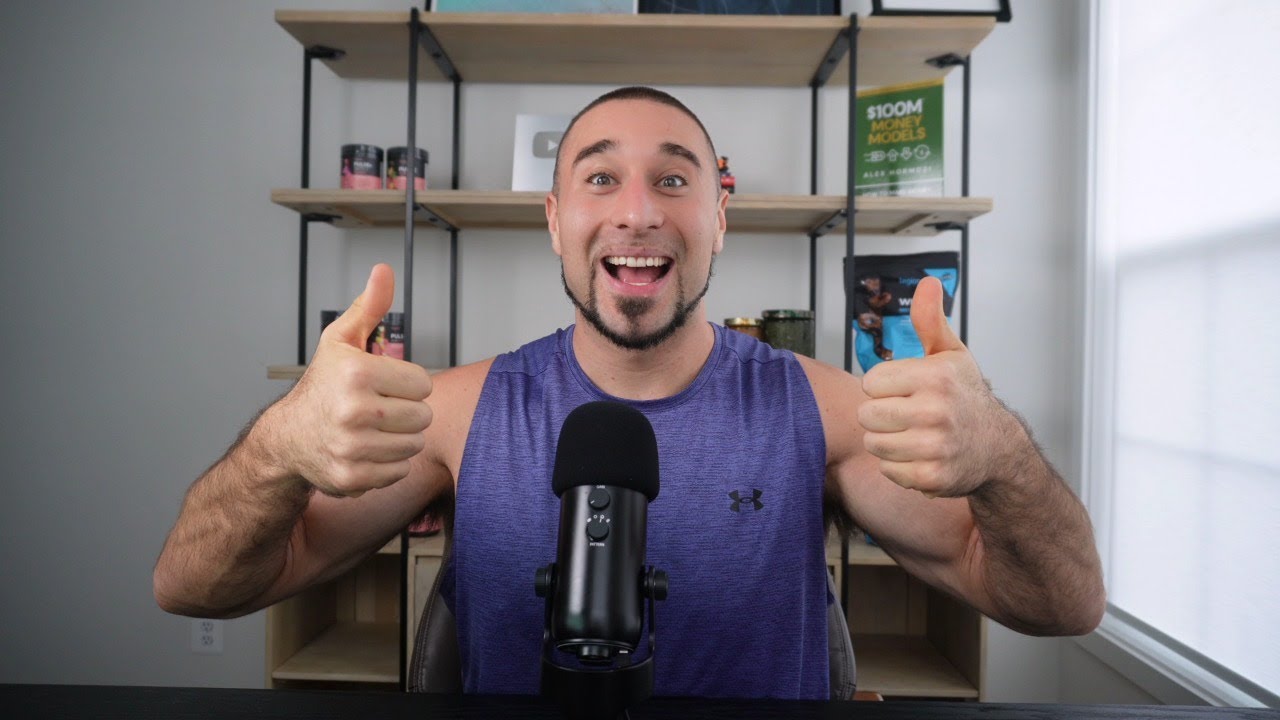
In this 90‑minute live YouTube stream, fitness coach Eric Roberts walks viewers through why most New Year’s resolutions fail and presents a concrete 5‑step framework to make 2026 resolutions stick. He begins by highlighting common mistakes: waiting until January to start, focusing on outcome‑based goals, relying solely on motivation, neglecting environmental cues, and trying to willpower change without altering surroundings. He then outlines his five‑step system: (1) start now, even imperfectly, by picking 1‑2 small habits; (2) shrink goals into "laughably doable" action‑based targets; (3) build identity‑based habits that align with the person you want to become; (4) design your environment and schedule to reduce friction for good habits and increase it for bad ones; (5) create accountability and track data (steps, calories, weight, measurements, progress photos). Eric discusses how to plan for setbacks using a "dimmer‑switch" mindset and a bare‑minimum plan, and he provides a concrete 7‑day starter plan. Throughout, he engages with live chat, answers specific questions about nutrition, perfectionism, and practical tips, and promotes his coaching services and Black Friday deals. The session blends motivational storytelling with actionable, system‑focused advice aimed at fostering consistent, sustainable behavior change.
Chapters
This camera needs to be— there we go, there we go. We are live on the tube. Share live stream. I don't need this. What's up, YouTube? Hope you guys are doing well. We are back with another live today and we're going to be talking about New Year's resolutions and how to be successful with your New Year's resolutions. I was looking— I need to look at the camera. I'm gonna let everybody know that I'm going live. Yes, 2 lives in a row. Um, hey AMX1Z, hello, how are you? What's up? Uh, Samir, what's up? Yep, 2 lives in a row. I enjoy the lives. I want to start doing more lives. I've just decided we're doing more lives. I want to let everybody else know that we are live on YouTube talking 2026 New Year's resolutions. There we go. We're going to get started here in a second. Thank you guys for tuning in. I appreciate it. I appreciate you. And give me one second here. We're going to get rocking. Hope you guys' Thanksgiving week is going well thus far, those of you who live in the US. And if you don't live in the US, I just hope that you're having a great Tuesday. All right, cool. Oh, all right. I do love you guys. Thank you, my friend. I'm hoping that there will be more gems dropped today because We're gonna be talking about New Year's resolutions, how to be successful with New Year's resolutions. And yeah, it's gonna be a jam-packed, uh, jam-packed show. You could call it a show. We're live, so we'll call it a show. How about that? If you see me look off to the side a little bit, I have some notes that I want to hit on and that I want to get into. So give me one second. There we go. That's a little bit better. That's a little bit better. What's up, Annalise? How are you? Uh, Ira. I, I, I, uh, are, are you— sorry if I say your name incorrectly. I am apparently a moron, but nonetheless. All right, we ready, guys? We're ready to get started here. Why is my mic off-centered? I feel like I'm gonna center this a little bit better. There we go. All right, ready? 3, 2, 1, let's get it. 90% of New Year's— damn it, hold on. 90% of people have have already broken their New Year's resolution by January 15th. Most people set up big goals that inevitably you do not stick with and follow through. So in this video, I'm going to show you how to set New Year's resolutions that you'll actually follow through with and you'll actually be able to change your life and reach your goals with. And since we are live right now, for those of you in the chat, you can feel free to drop your 2025 goal below in the chat and be honest. How long did you stick with it? Don't lie. There's no shame here. Drop it in the chat. What was your 2025 goal and how long did you stick with it? So now I wanna dive into the couple of biggest New Year's resolution mistakes that people will make which stop them from reaching their New Year's resolution goals. And the first one is good because you're watching this right now before January. And the number one mistake I believe is, I'll start in January. People will delay and essentially do nothing for the rest of this year to go all in and start strong and change their entire life in January of next year. And in my opinion, what this does is number one, creates massive pressure on yourself that you don't need to be giving yourself that much pressure. And number two, it almost creates this magical thinking. Like for some reason, from December 31st to January 1st, something magical is going to change where all of a sudden you're going to have all the willpower, you're going to have all the discipline, you're going to change all of your habits just because it's into a new year. And don't get me wrong, the new year can be a very motivating time and I want you to take advantage of that motivation, but we can't be naive and think something magical is going to change in a day. So because of this, because you're waiting until the new year, December becomes a free-for-all. And it also becomes this, well, I know in January I'm going to get really strict. I'm going to really dial it in. I'm going to go all in. So I might as well have all of my fun now in December. I might as well drink as much as I can, eat as much as I can. It's okay if I'm a bit more lax on my nutrition and my workouts because I'm going to go hard in January. And what this ends up happening is When January 1st rolls around, you are now 10, 15, 20 pounds more overweight than when you started, especially if you throw in Thanksgiving on top of that. We're all going to gain some weight on Thanksgiving, but you just dig yourself a deeper hole that you're going to have to get out of eventually. You can think of it like that, or you can think of it as, let's say you were in a race. You're on the track and you're in a race. Everybody's starting at the same start line. In the new year, if you don't do the things you're supposed to do, which we'll talk about later, but if you just kind of take the rest of 2025 off, if the starting line was here, you're now starting back here. You're starting 5 steps, 10 steps behind the starting line. Do you think it's going to help you in January or it's going to hurt you in January? Also think of it like this. Imagine you have a jar of marbles. There's 31 marbles in that jar. Imagine if 4 of those marbles were red and the rest of those marbles, 27 of those marbles, were white. Would you say the majority of the marbles were red? No, that wouldn't make any sense. The majority of the marbles are white. There's 27 white ones and 4 red ones. So why do you think just because you might take off Christmas Eve, Christmas, maybe New Year's Eve, maybe you have a Christmas party you have to go to. If you take off 4 days in December, that doesn't mean the other 27 days all have to be a waste. Those 4 days are not the majority of December. The 27 days are. So you can still crush it 27 or 26 or 25 of the days. And if the 4 or 5 or 6 days are off track, that's not the majority. So you can still make progress and you can absolutely at the very least build momentum in the month of December so that in January you're starting with a head start. Again, if we think about the starting line, Everybody starts here. Starting line is here. If you do nothing, you start back here. But if you start now, you start up here. You get a head start in January. Is that going to make it easier or harder for you to win the race? And at the very least, complete the race. It's going to be easier. So you want to make sure you start now. And that doesn't mean you have to be perfect now. And we'll talk about that. a little bit later. All right, chat, are we enjoying this thus far? I saw some goals. Samir said, that was me before. I love your calendar idea of tracking the days that we met our goals. Yep, exactly. I just brought that up. I find it to be very motivating. Awesome, Karen. Love your approach to everything. Thank you so much, man. I appreciate that. 2025 goal was drop body fat and build muscle. Goal accomplished thanks to your coaches in the clubhouse. Let's go, Annalise. I don't know if you'll see this or respond, but what do you think about precooked citrus grilled chicken from Publix? I think it's great. Yay, caught you live. Let's go. Thanks, Josh. Cool. All right, guys. So we're going to go into the second part of the mistake people make with their New Year's resolutions. And that one is setting outcome-based goals versus action-based goals. Most people will start off the year and you'll have a goal like, I want to drop 50 pounds. It's a pretty big goal. Or you'll have a goal of, I want to be healthier. I want to work out 6, 7 days a week. I want to hit 10,000 steps per day. I'm going to cut out all of my sugar. These goals are so big and they require such drastic change and they require such drastic action that maybe you last 1, 2, 3 weeks if you're lucky, but inevitably life happens and you're not able to stick with it perfect, which then makes you feel like a failure. And that's why most people end up There's actually something called the National Quitters Day. It's like January 20th or something like that. Like 2 to 3 weeks into the new year, 90-plus percent of people have already quit their New Year's resolutions. And one of the main reasons is these big outcome-based goals are so big and they're so drastic that you are not able to stick with them for the long term. And The outcomes you are trying to achieve. I understand you want to lose weight, you want to feel better, you want to drop your blood pressure, you want to do all these things. But the greatest college football coach of all time, Nick Saban, said something that I want to read word for word for you. He said, outcomes are a distraction. Focusing on the process of which you have to do to get the outcome is the most important thing you can do. I'm going to read one more time. Outcomes, losing 50 pounds, is a distraction. Focusing on the process of which you have to do to get the outcome is the most important thing you can do. And we'll talk about more of these action-based goals later on. So that's number 2. And if you're in the chat live, feel free to drop below if you have found yourself overly focusing on outcome-based goals before, because I know I have and I know we probably all have. Mistake number 3 going into the New Year's resolutions is relying on motivation instead of systems. So inevitably when January starts, like I mentioned, you have motivation, you have the spark, and that's okay. You should take advantage of that. But the mistake is you think it's gonna last forever. You think you're gonna always feel that way every day when you wake up. And let's be honest, it's easy to do what you're supposed to do when you're motivated. But what is your plan for busy weeks? What is your plan for low energy days? What is your plan for traveling, chaos at work, your kids get sick, God forbid? Motivation is the spark. It's the thing that like starts your engine in your car, but it's not the engine. Your systems and your discipline is the engine that actually keeps your car going. And if you're solely relying on the spark, you'll start and then you'll stop. You'll start and then you'll stop. And we're going to talk about how we can fix that today a little bit later in the video. Mistake number 4, not changing your environment and just trying to white-knuckle your way through. Most people, when they're trying to make a change in their life, they're trying to willpower the way through the same routine that you've had. You're expecting a different result, but you have the same routine. You're trying to willpower your way through the same schedule. You're going to bed at the same time. You're waking up at the same time. You're trying to work out at the same time, which didn't work in 2025, but we're trying to do it again. You have the same friends you're hanging around. You're going to the bars. You're going out to eat and drink. And yet we're trying to just willpower our way through and stay on track. You're keeping the same foods in the house that are trigger foods for you that you know you're typically going to end to overeat on. So we have to be able to understand our environment has to change. It's not just, I'm going to go on a diet, I'm going to lose weight. Everything around us has to change, which is scary. I understand. But is it scarier to make that change? Or is it scarier to keep living your life the way you've been living it, feeling how you've been feeling, looking in the mirror how you've been looking? Both those 2 things are scary and there's no accountability. Nobody's checking in. Nobody's seeing if you're quitting or not. Nobody's seeing if you're actually sticking to your goals or not. It's just you. And for anybody, myself included, that's very hard to do when it's just you on your journey. So in the video, I'm going to show you how to build friction against bad habits that make doing the right thing easier. It's almost like the default option, if that makes sense. Okay, cool. Chat, let's go, let's go. We're still live in the chat. Before I found your channel, I always say I'll start on Monday. Not anymore. I have sabotaged myself with lofty goals instead of focusing on progressive approach. Very smart. Getting into a mindset that it's a lifestyle change and not an endpoint was when it started to click for me. Bam. Man, we got the chat rolling right now. Let's go, guys. I'd love to see this. Cool. Okay, so let's talk about— I want to now go into the 5-step framework to actually make 2026 resolutions work. So step number 1 is start the resolution now, not January 1st, and you can start them imperfectly. Pick 1 to 2 habits. Our guy Joshua in the chat here just said when he focused on a lifestyle change, Pick 1 to 2 habits that you're going to improve this week and heading into the month of December. It could be getting 7,000 steps per day. That could be just doing 3 workouts a week. That could be just incorporating more protein at breakfast. It could be incorporating 1 extra water bottle per day. Literally anything. And I don't think people understand this. So let me explain to you anything more than what you're doing right now, excuse me, is a positive step in the right direction, which builds momentum. And where people go wrong is they hear me say this and they're like, well, that's not going to be good enough. Eric, how am I going to lose 50 pounds just from drinking an extra water bottle per day? Well, let me explain to you how, Cheryl, or whoever else says this. You drink an extra water bottle per day. Number one, you're gonna feel mentally like you're moving in the right direction. You're gonna feel like you're doing better. That will motivate you to want to do more and want to do better. Number 2, physically, it'll make you feel better. You drink more water, you have a bit more energy, you're less hungry, you stick to your calorie deficit better, you see the scale drop, and now you're like, all right, cool. I'm seeing results because I took an action. I'm seeing some results and that motivates me to keep going. So when you think this isn't good enough, I have to do more than this, you're not doing anything right now. So doing something is always better than doing nothing. Do more than what you're doing. Take a progressive approach. You will build up to the things that you want to do, but you have to start somewhere. It's just like in the gym. When you go into your workouts, Do you go lift 5 pounds one week and then 500 pounds the next week? No. Like on side lateral raises, for those of us who do those side lateral raises, you're probably still lifting 7.5 pounds. It takes time to progress. So that's number one. Start now, not January 1st. Step number 2, and this kind of coincides with what I just said, shrink the goal. down to what I call like laughably doable. So take the big outcome that you want. We talked about outcome-based goals versus action-based goals. Take the big outcome. You wanna lose 50 pounds and you break it down into laughable doable goals. So what I mean by this is, again, You want to lose 50 pounds. To lose 50 pounds, you have to hit your calories. Okay? Got to be in a calorie deficit. You make a goal to say, 5 out of the 7 days, I'm going to hit my calorie deficit. And that could be 5 days, 4 days, 3 days. But you almost want to say the goal out loud and make you feel like, of course I can do that. That's like, that's too easy, Eric. Or I'm gonna walk at least 5,000 steps per day every day, no matter what. Or I'm gonna have protein at breakfast no matter what. You break it down into actionable goals that you know you can do. And it's almost too easy because guess what? If it's too easy, you're gonna actually stick with it this time. And if you actually stick with it, You're gonna see more progress than if you didn't. You will see more progress sticking with something too easy for the entire month versus setting something that's so high you only stick with for a week and then do nothing. Do you understand? So set action-based goals that will lead to the outcome and stick with me here. If you're hitting your calories and hitting your protein and getting your steps and getting your walk, don't you think you're gonna reach your goals? You have to lose weight if you hit your calories consistently and hit your workouts consistently and get your walks consistently. You're not gonna lose it as fast as you want to. That is something we could argue, but you're going to hit it. What I said earlier, outcomes are a distraction. Do not think about outcomes. Just think about actions. What do I have to do today? You wake up tomorrow. What do I have to do today? Because those actions will add up. And again, especially if you're somebody who struggles with consistency, make your goals laughably doable because then you'll actually stick with it. That's number 2. Step number 3. You guys liking this in the chat? If so, please feel free to drop in the chat. Let's go. Like to have a 3-day split. Yep. There you go. I like that, Karen. I'm in Body Recomp. My goal is eating more protein. There you go. Cool. Okay. Step number 3, you guys, build identity-based habits. This one's really important. So hopefully you can stick with me here. You need to shift from, I want to lose weight To I'm the person who doesn't miss my Monday workout. You need to shift from I want to eat better to I'm the type of person who eats protein at every single meal. And here's why this is so important. I always refer back to sleeping. We all love sleeping. Can we agree? What happens before you go to sleep? You have to lay down, close your eyes, and act like you are sleeping. And eventually you go to sleep. So you want to be the healthy person. You want to be the disciplined person. You want to be the person who's in shape and is consistent. You have to take the actions of a person who would do that. Before you actually become that person, just like you have to act like you're sleeping before you sleep. So when you think about what goals you want to have, again, you don't want to lose weight. You want to be the person who doesn't miss a workout. You want to be the person who is going to stay on track on the weekends. You want to be the person who hits their protein goal and hits their step goal. You need to shift your identity into the person who's already healthy. Ask yourself, what would the healthy person do? What would the in-shape person do? And that's the identity that you need to start taking, because then your actions will be of that person. And even if you're not that person yet, if you take the actions long enough, you will become that person. Really important. Really important. So I would challenge you, and you can put this in the chat right now. You can put it in the comments if you're watching this back. Put it in the chat right now. Write down 1 to 2 identity statements. And the framework I would use for this, I'm the kind of person who blank, even when blank. So for example, I'm the kind of person who works out, Even when I'm tired. I'm the kind of person who sticks to my calories even when I don't feel like it. I'm the type of person who meal preps even when I'm tired and it's Sunday and I don't feel like doing it. I'm the type of person who blank even when blank. Okay, write those down. Put it in the chat if you're here live. Build identity-based habits. Step number 4, design the environment and your schedule. So I said earlier, we have to change our environment if we want to change our outcomes and our results. So for your environment, I want you to think about, for example, removing trigger foods at the very least from your reach, If not from your house in general. How much harder is it going to be for you to stick to your calories if when you get home, all on your kitchen counter, you have chips, you have cookies, you have these great apple cider donuts. It's that time of year. You have some pumpkin pie. It can be harder. There's more temptation, just like any other drug, which by the way, food can be a drug. So removing trigger foods. On top of that, instead of having the trigger foods, maybe you put out fruits, protein bars, veggies, protein shakes. You make it easier to default into the healthy option. Maybe instead of trying to wake up early in the morning and figure out what you're going to wear to the gym, and then you have to prep your clothes for work as well, maybe the night before, You lay out your work clothes, you lay out your gym clothes, you know exactly what you're gonna do, what you're gonna wear, you know a workout plan you're gonna do. So all you gotta do is get up, put the clothes on and go. No thinking. You set your environment up for more success. The less friction you can have for the right option, the better. The more friction you can have for the not right option, the better. So I want you to think about these things as you're going through your day. And it could be something incredibly simple, even just how your fridge is set up, how your pantry is set up, going from, I'm usually going to go home and then go work out to, I'm just going to go work out right after I get off work. That way I don't have the option to go home, mess up, not go to the gym, get tired. Set up your environment and your schedule as well. I've said this before, but you need to lock in your calendar. If you show me your calendar, I will show you your priorities. If you go on your phone, Do you have the meal prep on your calendar? Do you have your workout slot on your calendar? You have work, you have dentist appointment, you have your kids' stuff. What about you? Are you prioritizing what you need to do from an action perspective? Going back to actions, you need to prioritize these things, put them in your calendar, make them a non-negotiable. If you don't prioritize you, and your goals, if you don't get a little bit selfish, you're not going to take the actions that are necessary to see the results that you want to see. Okay, and one last thing here: pre-planning busy days. And this kind of goes into— we're going to talk about how to kind of overcome some obstacles here in a second as well, but pre-planning busy days For example, what is your floor? What is your minimum? What if all else goes to shit? You have to get this one thing. You have to do these 2 or 3 things. And as long as you do that, that's a win. So we'll talk about this a bit later, but pre-planning what busy days are gonna look like. Excuse me. And then step number 5, hopefully you guys in the chat are still rocking and rolling. We got some good chat going on. What's up? What's up? What's up? Delete the DoorDash app. Yep, that's true. That's a great point. Set up your environment for success. Step number 5, build accountability and data. So this is something we do with our clients all the time. And this is simply just track your data, track your body weight, track your measurements, track your calories. If I go For those of you who don't know, I have my own fitness app that I built. So we track our steps. I don't have many steps today. I've just been working all day. So I only have 500 steps, but we track our steps. We track our nutrition. We track our calories. We track our workouts. We track all these things for a couple of reasons. Number one, it automatically makes you more aware. When you track something, you're more aware of it. And the more aware of it you are, the more change you create around it. And then step number 2, it holds us accountable. Like, if I'm wanting to get this 8,000-step goal that I have, even though it's 12:40 and I only have 500 steps, I know I need to get my ass in gear and get some extra steps today. I know if I'm tracking my calories and I'm trying to stay under a certain calorie goal, Then I have to make sure I'm more accountable to it. I'm not going to say we're going to be perfect, but we're more accountable. And that's the goal here. So if you are not tracking measurements, tracking body weight, tracking your calories, tracking your progress pictures, tracking how much weight you lifted in your workout, you need to be. And the third part of this is it allows you to see your progress. So many people feel like they're not making progress. I can't tell you how many clients that we've worked with who have come to us and they feel like they're not making progress, even when they're coaching with us. And then we show them, your waist measurement is down an inch and a half in a month. We show them your body weight has trended down 4 pounds this month. We show them their progress pictures. We show them you're lifting 30 more pounds than you were at the beginning of this program. It forces you to see progress. And when you see that progress, you say, well, shit, I guess I am doing something right. I guess I am moving in the right direction. I guess I will keep going. It just helps you not quit. And every day that you don't quit is a day closer you get to your goals. All right, so that's the 5 steps. To the framework of actually making resolutions work. All right, going to the chat really quickly. Grocery delivery is a game changer, Sarah says. If you don't go into the store, you don't have to walk past the cookie aisle. Sarah, you are 100% right because you know what? Literally every single week I use the Instacart app and I get my groceries delivered every single week, every single week. So I could not agree more. And also you'll save money. Not buying shit you don't need. Tomorrow Never Knows. I can't stick to my calories on leg day. I'm always really hungry and overeat the other days of the week. So this is not necessarily a Q&A live. That being said, I would just eat more calories on those days if that is what is happening to you. That's totally fine. Cool. Number 3, how to plan for setbacks so you don't quit. So the mistake people make is thinking there's not going to be any setbacks, thinking you're going to be perfect. You're going to go all in in 2026 and be perfect. I'm going to tell you right now, it's not going to fucking happen. So get it out of your head. You're going to fall off track. You're going to have days over your calories. You're going to have missed workouts. It's going to happen. And it's okay because you don't have to be perfect to be consistent. So the first thing I want to mention is Approach setbacks in just your journey as a dimmer switch versus a light switch. So on a light switch, turn it off and turn it on. That's what most people do. All in, all out versus a dimmer switch. Sometimes you're going to turn it up and it's going to be brighter. Sometimes you're going to turn it down and it's going to be dimmer, but it's never off. And that's how I want you to think about your journey. Heading into 2026, even if you can't hit 10,000 steps, at least get a 10-minute walk. Even if you can't get your 60-minute workout, get a 15 or a 20-minute workout. Even if you're going out to eat and can't track your calories perfectly, prioritize protein. Dimmer switch versus on and off light switch. And by the way, if you're having a week where shit's crazy, And really all you can give is 60%. If you give 60%, that's actually 100% of what you can give. Because some weeks you're gonna be on it, everything's gonna go right, you're gonna have a perfect routine, nothing will happen. So you'll give a— you have 100% to give and you give 100%. But some weeks Things are gonna go crazy and all you have to give is 60%. But if you give the 60%, that's 100% of what you can give. Does that make sense? So that's number one. Number 2, we talked about this, but pre-decide your bare minimum plan. So if I am sick, busy, traveling, stressed, my bare minimum plan is I'm gonna get at least one workout this week. I'm gonna get at least 5,000 steps this week. I'm not gonna have a meal without protein. I'm gonna do at least 6 hours of sleep per night no matter what. It's different, can be different for you, but you need to decide your bare minimum, your floor. Everybody tries to set this Raise the roof. Everybody tries to set the ceiling. I don't need you to set the ceiling. If you hit the ceiling, kudos to you, you're a rock star. But I need you to hit the floor so you don't fall through to the basement. Okay? And again, there's no badge you're going to earn for being perfect. Nothing happens for you And perfection is the enemy of consistency. The reason you're not being consistent is because you're trying to be perfect. Also, if you're not trying to be perfect and you understand it's a dimmer switch and you understand it's about consistency, you never have to restart or reset. I hear this all the time. I'm gonna restart Monday. If you weren't trying to be perfect, you'll never have to restart Monday. You just keep going on track and some of it's more consistent, some of it's less consistent, but eventually, as long as you keep going and don't quit, you will get there. So if you're tired of restarting or resetting, stop trying to be perfect. All right, cool. This is good. I feel like I'm liking this. Cool. Let's go. A couple more points to make, guys. I do Apple Fitness. I'm going to hit the chat really quickly. I do Apple Fitness competitions with friends. There you go. That's accountability. Hey, Eric, Cameron here from South Africa. I must say, I love your videos. I'm a complete perfectionist and often leads to me faulting and sometimes going into depression. Cameron, number one, thank you for following from South Africa. That's incredible. And number two, Trust me, man, you're not the only one. But the fact that you're even aware of it is a great sign. And it lets me know that you're going to be successful because most people just live in denial or they take the identity of, I'm a perfectionist. Anybody who says I'm a perfectionist, I can almost guarantee is not going to be successful with their fitness journey because they'll never be consistent. It's always going to be on and off, yo-yo dieting. You work out really hard. You don't work out at all. So you're already aware of it, which is awesome. And by the way, unpopular truth, but being a perfectionist is also you just giving yourself an excuse to not do something. Because if you're like, well, I only do it when it's perfect, how great of an excuse is that not to fucking do anything? Just saying. 4th part of the video here, guys. I want to give you just a really quick, just kind of like 7-day start now action plan. Even if when people are watching this, Thanksgiving is coming up here in the States, nonetheless, I want to kind of give you a 7-day action plan you can think of to implement. Okay? So day 1 through 2, pick 1 to 2 Changes, resolutions, goals, whatever you want to call it. Pick 1 to 2 of those max and make sure you shrink them down into those laughable, doable goals, into those daily habits that you want to do. Set those bare minimums. Set those goals where you're like, of course I can do this, Eric. This is way too easy. Because then you'll actually do it. So that's day 1 through 2. Day 3 to 5, start to clean up your environment. Clean up your pantry, clean up your fridge. Start to set your clothes out the night before for your workout. Start to wake up in the morning and go directly down to your workout area or go directly to the gym. Don't spend an hour drinking your coffee in the morning. Go right to the workout. Whatever it is for you, set up your environment for success and start tracking something simple. Steps, calories, protein, body weight. That's day 3 to 5. And then day 6 to 7, start to review a little bit. So you've been doing some things in the past couple of days. What went well? What didn't go well? What should I keep doing? What should I stop doing? And then commit to doing that same plan the next week, maybe with a slight adjustment or 2. You don't change the entire plan. You don't throw everything out of the window. Commit to doing that same plan next week. And I promise if you do that, you're gonna start being more consistent. You're gonna have more confidence in yourself. You're gonna overcome the all-or-nothing perfectionist mindset and you're gonna get yourself going in the right direction. And speaking of getting yourself going in the right direction, for those of you live watching this, and for some of you who will be watching this after, I do have a couple of Black Friday deals that are going on for our online coaching. So if you want some help losing fat, building muscle, staying more consistent, getting more accountability, having a structured plan, click the link in the description of this live or in the description of the video. to check out some of our Black Friday deals that we have going on. These deals end Monday, November— Monday, December 1st. So check them out and a portion of our sales will be donated to the charity Feeding America. Cool. Check those out. And I've got a couple, maybe about 10-ish minutes here, guys, if we want to roll through some Q&A. So now I'm going to open it up to those of you who are live in the chat. If you have questions, it could be about New Year's resolutions, could be about anything fitness-related, mindset-related, consistency-related. This is your opportunity to ask some of your questions live, and I will get to as many as I can here in the next 10 to 15 minutes. Cool. Cool. What's up, Kathleen? How are you? Patrizio says, true, true chains. Love this advice. I try to be such the perfectionist. You've given me permission to just be consistent. Yeah, it's something that a lot of people struggle with, man. So for those of you who are live watching this and for those of you who are going to watch this back, it's just the perfectionist mindset has probably served you well in some areas of your life. Maybe it's helped you with your work. Maybe it's helped you with school. Maybe it's helped you work really hard. But I can sit here and very confidently say people who develop a perfectionist mindset with their fitness either, number one, are never consistent, or number two, you almost like put yourself in what I call fitness prison, where like it's not even fun. You're so anxious about missing a workout. You're so stressed about eating a bad food or going over your calories. Even if you are perfect, the stress you're causing yourself is going to kill you sooner than just getting some extra sleep one day or going over your calories one day on Thanksgiving, God forbid. So the perfectionist mindset, It's something that is not beneficial for most people. All right, cool. Thank you, Annalise. I appreciate that. How can we consume high protein foods while keeping our calories down for a deficit? Well, you find lower fat versions of protein. So you pick 96/4 ground beef over 80/20 ground beef. You do egg whites instead of whole eggs, turkey instead of maybe chicken thighs. So you pick lower fat options. But also, if your calories are so low or your protein goal is so high that the calories from protein are messing with your deficit, I would probably say either your calories are too low Or your protein goal is too high. Typically speaking, those would be 2 things I would also look at on top of that because so many people try to eat their body weight in protein. Maybe you've heard that before. You need to eat your body weight in protein. If you're trying to lose body fat, take your goal weight times 0.7, and that's your goal weight in pounds for those of you outside the US. Goal weight in pounds times 0.7. That is the absolute minimum that you need to be hitting per day in protein. Now, if you eat more than that, awesome. Again, you're a rock star. But what do we say this entire time? We've talked about setting laughable goals. We've talked about setting goals that you know you're going to be consistent with. So do that. And then all the other protein on top of that is just extra credit at that point, if that makes sense. Cool. Cool, guys. Listen, not that many questions today. So I hope you enjoyed the live. I hope you enjoyed hopefully the New Year's resolutions. I hope you can take this heading into the New Year's resolution or the new year and implement it into your own life. And I hope this was helpful for you. So if you guys enjoy these kind of lives, like I said, let me know. I am more than happy to try to keep doing them as much as I can. And yeah, like I said, if you want to check out some of the Black Friday deals, feel free to click the link below. And that's all I got for you guys today. All right. I love you guys. I appreciate you guys. If I don't talk to you before Thanksgiving, Have a great Thanksgiving with you and your family. Calories don't count on Thanksgiving, so please just enjoy yourself and, uh, we will chat next time. All right, bye guys.










