When should you stop your diet I Should you stop dieting
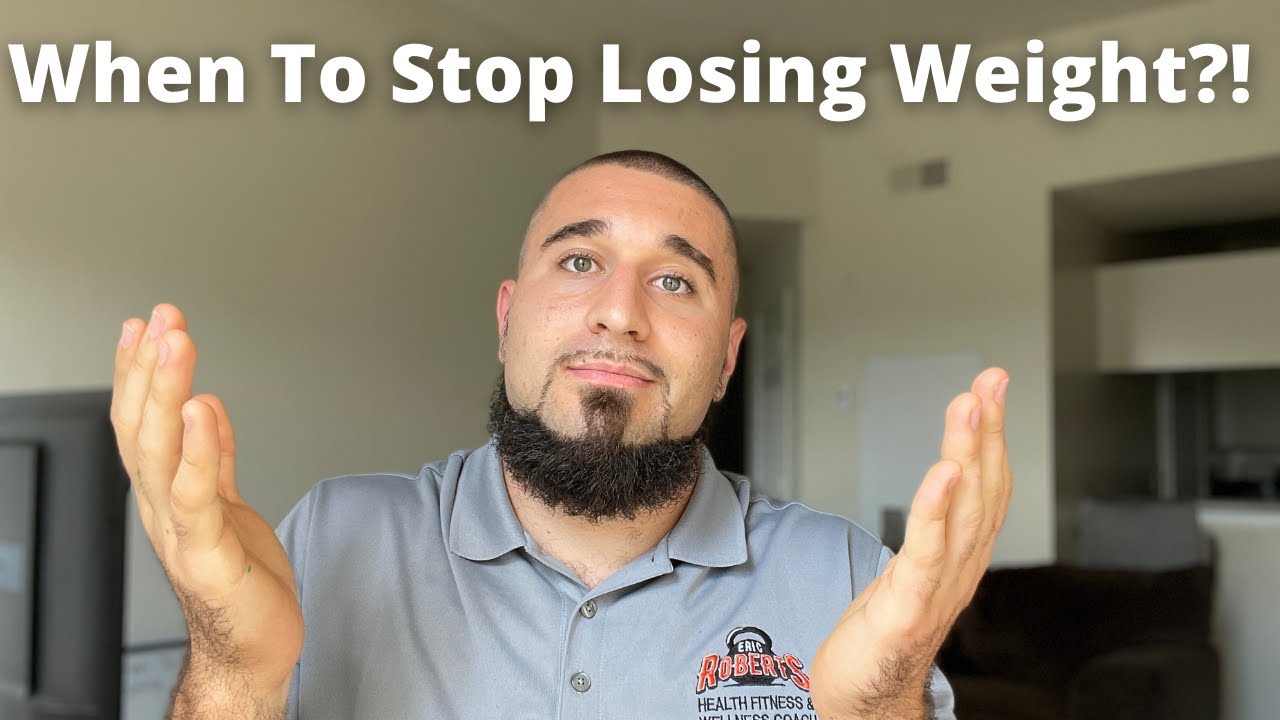
In this instructional video, Eric Roberts discusses the signs and reasoning for when an individual should stop dieting and cease weight loss. He outlines four primary considerations: (1) reaching a pre‑set goal body weight, (2) feeling confident and looking good naked regardless of the exact number on the scale, (3) negative biofeedback such as loss of menstrual cycles, low energy, poor workouts, or unsustainable lifestyle, and (4) a shift in fitness goals from fat loss to muscle building or performance‑based objectives. Roberts critiques the obsession with a specific goal weight, emphasizing that minor differences (e.g., 4‑6 lb) often do not justify extreme restriction. He shares client case studies (Carson and Mary) illustrating goal transitions. The video concludes with actionable post‑diet strategies: reverse‑dieting to gradually increase calories back to maintenance, maintaining at maintenance calories, or adding a modest surplus (200‑300 kcal) for muscle definition or performance goals. Throughout, he encourages viewers to prioritize health, sustainability, and personal satisfaction over arbitrary numbers, and ends with typical YouTube calls to action.
Chapters
YouTube, what is going on? Welcome to the video. Welcome back to the channel. Got my haircut today, feeling pretty good. In this video, we're going to be talking about when to stop dieting, when to stop losing weight. When is it going to end? When is it over? Am I ever going to not diet? You should be not dieting, yes. And we're going to talk about why and how and what in this video today. So first and foremost, we're going to talk about some things to consider when looking at the question of You know, when do I stop dieting? When do I stop losing weight? We're also gonna talk about your goal body weight more in depth. That's why there's a star. Normally when there's a star next to something and it's like different than everything else, it's very important. So if you're going to watch one part of this video, I would make it that. Watch the whole video, please. I would love it if you did, but please, by God, watch that part. It's very important. And then we're gonna talk about what to do if and when after you decide you need to and/or want to stop dieting, stop losing weight. Okay, so first and foremost, the first reason of why you would want to look into stop dieting, stop losing weight is if you reach your goal body weight. If you set out a goal and you said, hey, I started at 200 pounds, I wanted to weigh 160, I have now reached 160, that would be a phenomenal reason to stop Stop dieting and stop losing weight. I think people, when you get to that point, it's almost a shock, right? 'Cause it's like, oh wow, like whether you've been overweight your entire life or maybe you've tried time and time and time and time again and never, you know, never got it done and whatever the case may be, you get to that point and you're like, I didn't know if I was actually ever gonna get here. I hear that a lot from my clients. I'm like, I didn't know if I was actually gonna do this. And when you actually do it, it's like, oh well, hell, what do I do now? And like, so obviously we're gonna talk about that later, but— That is the first and most simple reason as to why you would stop dieting is if you reach your goal body weight. If you reach your goal body weight, if you wanna look the way you wanna look, which we'll talk about here in a second, but that's the first reason. If you reach your goal body weight, cool, you can stop dieting and stop being in a calorie deficit and stop losing weight. Like, that's okay. There are other things to life than just dieting and losing weight, I promise you, and we'll talk about some of those here in a second, but that's number one. Number 2, naked. Yeah. Um, so this is kind of piggybacking off of your goal body weight. So for example, let's say your goal body weight was 150, but you get to 162 and you're like, oh shit, like looking pretty good. Like how I'm feeling right now with my haircut. You're like, damn. You look in the mirror, your clothes fit really good. You feel really strong. Like you just feel fucking good. Yeah. You look good naked. You feel good naked. You feel good in clothes. You just feel good. Cool. Stop dieting. Stop losing weight. Just because you didn't reach 150 when your goal body weight initially was 150, don't get too hung up on that. If you get to a point where you're like, man, you know what? Fuck this. I feel pretty good. I feel really good. I'm having really good workouts. I have a very good relationship with food. Um, I can see myself maintaining this and sustaining this and I don't have to do anything crazy. Like, Cool. Stop dieting again just because you didn't reach your goal body weight. You feel great. You look great. You're having great workouts. You're having you know you're able to enjoy food in moderation. Like everything checks the list. Just because you didn't check that one goal body weight list doesn't mean you have to keep going into the abyss. Like and again, I think some people get really hung up on this sometimes that yeah, well, I feel great, but like I don't you know I don't weigh 150. I'm like. Who the fuck cares? Like, you look good naked, you feel good, everything's good. So keep going. Like, you're good. Like, keep going into the next part of your journey. Like, you don't have to keep going losing weight. Like I just said, there are other things to life than just losing weight. So if you get to a point where— again, I don't know what the weight will be, whether it's 158 or 162 or whatever the case may be— if you get to a point where you're like, I'm good, like, screw this, I'm good, perfect. There's nobody— Pointing a gun to your head saying you have to reach 150, like, that's an arbitrary number you put in your head that you, I don't know, weighed in fucking high school or something. Like, it doesn't make any sense. So, if you look and feel good, you can stop dieting right there. Stop trying to lose weight. It's okay if you didn't reach your goal body weight. It's totally fine. Now, number 3, your biofeedback. What would happen if you got to a point where You're asking yourself, should I stop dieting? Should I stop losing weight? If you have gotten to a point where, for example, I'll use females for example, if you have lost your period, that is a point of either number one, you're eating too few calories, or number two, you have reached too low of a body fat percentage and that is no longer healthy. Your metabolism is telling you, hey, we don't have enough body fat on our body, nor do we have enough calories coming in. In order to maintain and sustain our reproductive system. So we need to keep you alive. I don't care about your reproductive system. We're not making other people if we can't keep you alive. So what your metabolism in your body does is it shuts off that part of your, of your body that shuts off that part of your hormones because it's more work that your body has to do. And if you're too low of a body fat percentage and you're not getting enough calories, your body's going to say, I don't need this. We need to keep this person alive. They're barely fucking, you know, giving us the fuel we need, let alone like doing extra things like reproductive system or building muscle or having good energy. Like, we just need to keep this person alive. And so if you are a female who has lost your period, or if you're a male who has, you know, your sex drive is next to nothing, and male or female, you have no energy, your workouts suck, like you're not— Also, I'll say this, on top of biofeedback, if you have gotten to a point where You can't sustain what you're doing. And I think oftentimes we have this goal in our head of like getting abs and getting a super low body fat. And like, it's great, it's cool, like shoot for the stars, I'm all here for it. But that's not always realistic or sustainable. Like myself, for example, I don't walk around all year round with like a shredded six-pack. Like I can see my abs, but like I could be leaner than what I am right now. I am not going to have a shredded six-pack all year round because what it is going to require to keep a shredded six-pack all year round. I don't want to do that. It's not fun. It's not. It is not fun to be shredded six-pack all year round. It's not. You're gonna have to eat fewer calories, more restriction on your diet. And remember, when I say restriction, I do mean certain food groups and going out to eat, but also just overall total calories because you have to maintain a lower body weight so you can't eat as many calories. And so If your biofeedback is shit, like your sleeping is shit, you've lost your period, you have no sex drive, your workouts suck, you're not getting stronger, you know, all those things are pointing to negative signs. Or if you're getting to a point where you're like, yeah, you know what, like, don't know if I can sustain this. I had a client one time, we went through this. She got very, very, very lean, very lean. She, she looked great. She looked great 10 pounds heavier or 10 pounds lighter, but she looked great. But she came to me and she was like, Listen, dude, I don't think I can do this. Like, I need more food. Like, I wanna have better workouts and I wanna be more active and I wanna have more flexibility going out on the weekends. And I was like, perfect. Like, I'm not gonna sit here and tell that— tell my client, nope, you got super lean, you need to stay there. Like, no, if it's not sustainable, it's not sustainable. So what's the point anyway? So if you get to a point where you're like, you know what, I really can't sustain this, I can't keep doing— I can't keep living this certain type of lifestyle, eating this many calories, so on and so forth, To maintain this, then you need to stop dieting and increase your calories 'cause it's not gonna be sustainable anyway, so what is the point? And so, that is the third part, biofeedback/sustainability. If you are— if your biofeedback is shit and you know you can't sustain what you're doing, stop dieting, stop trying to lose weight, do what we're gonna do when we talk about in the end of this video. So, that's number 3. And number 4, if your goals change. And I'm gonna bring up 2 examples. Um. Number 1, if your goals change from losing body fat to building muscle, I'm going to put a picture of one of my online coaching clients here, Carson. Carson is the exact T of what this looks like. Carson went through an extended period of time of fat loss. She lost a significant amount of body fat, as you can tell, and then she got to a point where we both said, hey, you know, she got around her goal body weight. She felt pretty good. She looked pretty good. And then she said, you know what? I want to go build muscle now. I want to build strength. I want to build muscle. I want to see more muscle definition in my arms and my legs and my glutes. So she changed goals from losing body fat to building muscle. That would be a time period where stop dieting, stop trying to lose weight. And I told her, and she was very— she's— Carson is very logical. Um, but I told her, I was like, hey, listen, like the scale might go up. She's like, yeah, yeah, it's fine. It's fine. It's fine. I don't care about that. Cause she already, she already got to her goal. Like she reached 145. Sweet. So like whether she goes to 145 to 147 or 148, like, Her goal right now is not to lose weight anymore. Her goal is to build muscle. So she's going to do what it takes in order to reach her new goal. So if your goals change, you don't have to have losing weight as your goal every day of your life, 24/7. And I know that might sound foreign to you because you might be coming from a place where you've been overweight your entire life, or all you know is dieting and all you know is trying to lose weight and you haven't reached your goal body weight yet, or whatever the case may be. I understand, but just Realize your goals can change and you don't have to only lose weight forever. So that's the first scenario. Second scenario is going to be if your goals change from, let's say, losing fat to performance-based goals. A perfect example of this is one of my clients, Mary. Mary had an extended period of time where she lost body fat, as you can see, and her goals changed. She said, hey, I want to move into building muscle, but also workout performance. Mary is one of the most intense workout— Intense. Uh, she has some of the most intense workouts I've ever seen in my entire life. She pushes herself so hard. So not only is she building muscle, pushing herself super hard in workouts, she's also very avid in, uh, ninja obstacle courses. And that's what she loves to do. So she wanted to make sure like, hey, I need to make sure I have fuel and energy so I can perform good in my workouts. When I go do my ninja stuff, I need to perform good. So Mary's goals changed from fat loss goals to performance-based goals. And by the way, that's okay. Once again, you don't have to only have one goal of losing body fat and then there's nothing else after that. Like, no, you can have so many goals: losing fat, building muscle, improving workout performance, getting better with your mile times, so many things. So if your goal has changed from losing fat to building muscle and/or losing fat to increasing workout performance, that would be 2 reasons why stop dieting, stop trying to lose weight. And one last one on Mary. Again, Mary's weight has gone up just like I think Carson's weight stayed right about the same thus far, but either way, Mary's weight's gone up and she's like, cool, it's fine. Like, I don't, it's not a bit, it's not a big deal. I think she gained like, I don't know, maybe 5 or 7 pounds. Nothing crazy, but like she has more calories, more fuel, and actually a bit more slight, very, very slight, um, but a slight bit more body fat percentage in order to have better workout performance. 'Cause that's her main goal right now. Her main goal is not to step on a bodybuilding stage. Her goal is to have a strong physique, be strong physically, and have good workout performance with workouts and with her ninja obstacle courses. And so, you know, being 3 extra pounds is fucking okay. So that is why and how and what— why you would stop dieting, why you'd want to stop losing weight. Now I want to go into this part right here, which again I told you is the important part. I touched on this a few times already, but I want to really go in depth. Goal body weight. If there's one thing I want to strangle people with more than anything, it's this goal body weight shit. Seriously. I have seen people for years of their life, not throwaway years, I don't wanna say that, not throwaway years, but I've seen people torture themselves for years of their life Trying to get down to their goal body weight, and they weigh like— they want to weigh 150 and they weigh 156, and they spend years, countless years, weekends, weeks, everything trying to reach this 6-pound fucking difference. Who fucking cares? Fuck your goal body weight. It's not that serious. So many people think that if they don't reach Their goal body weight they set out to, that they're a failure or they have to reach that and it has to be done. Listen, I'm all for you setting out goals for yourself and crushing those goals. I'm here for it. Do it. But if you're getting to the point where you're 4 pounds away from your goal body weight and you're like starving yourself and trying to eat such few calories and just, it's never happening, maybe you don't need to fucking weigh 4 less pounds. How is 4 pounds less going to impact your life at all other than weighing 150 instead of 154? Do you really think somebody's going to look at you and say, oh, you know what? I can tell today you're weighing 154 and not 152. Wow. I can really tell in the clothes there, Cheryl. No, nobody's going to give a fuck. And I don't even care about anybody else. Yourself. How is your life going to be different weighing 4 pounds less or 6 pounds less? Seriously, good and bad. Because some people say, oh well, I'll feel more confident in my clothes, which listen, 4 pounds, whatever. But like, okay, like, but what you're gonna have to do in order to lose those 4 pounds? Restrict calories more, stop going out to eat with your family on the weekends, not indulge on things like ice cream or alcohol and those kind of things, cut calories super low, do more cardio. It's a give and take. It's a give and take world. I talked over here about I don't have a 6-pack shredded abs all year round because I don't feel like doing that. I know I'd have to eat less calories. I know I'd have to restrict my food choices a bit more. I know what it takes. I don't want to do that. So you have to play this game of stop— people obsess over that number, that goal body weight number. Like I said over here, if you get to a point where you feel good, you look good, you look good naked, you have good workouts, you feel strong, you have good energy, you have a good relationship with food, who fucking cares if you weigh 156 instead of 150? I seriously urge you to ask yourself that because, and again, piggybacking off that, cool, you can weigh 150, but like I told you the story about my client, it might not be sustainable for you. And if you've been trying for years and years and years to get it, it might be because it's not sustainable for you. So even if you do achieve it anyway, if you can't sustain it, then who cares? Then what's the point? So please keep that in mind. It's not just about a number on the scale. And also I'll add to that, we talked about building muscle over here. I would say 8 out of 10 people at least who come to me and are like, Eric, I gotta hit my goal body weight. I'm 7 pounds away. And I'm like looking at their physique and I'm like, you don't need to lose any weight. You need to build muscle to change the way your body looks. And that's a very important thing because Again, I don't think you necessarily want to weigh 150. You might, but I think you want to look good naked. And you think losing 7 more pounds is going to get you to that point. When in reality, it's not about losing 7 more pounds. It's about building more muscle. Because until you build more muscle, you are not— excuse me— going to look the way you want to look. So it's not about the number on the fucking scale. It's about building more muscle. Which means change goals, change your goals to build muscle. Stop focusing on just that number on the scale. So really passionate about that topic. And I hope, I hope to God you watched that. And I hope to God it helped you because I know so many people struggle with this. And if you needed to hear that, let, let me be your permission to allow yourself to stop focusing on for the rest of your life, trying to reach 150. It's fucking okay if you weigh 154 and Last note, by the way, you're never gonna weigh the same weight every single day. Your weight's gonna fluctuate no matter what. One day you're gonna weigh 150, and then 153, and then 151.7. You're never gonna weigh the same weight. So get that out of your head as well. So goal body weight, fuck your goal body weight. That's number— that's number whatever it was, 2. Now, last— very amped up from that. Last part of this video, what to do now that we have possibly decided you're going to stop dieting, stop losing weight. What I would do, number one, if you are looking to maintain, what I would do is reverse diet. I'm going to link a video here above I did on reverse dieting as well as an article I wrote on reverse dieting below. So feel free to check those things out. But basically what reverse dieting is, is you're eating 1,500 calories as your calorie deficit and your calorie maintenance is 2,000. You're going to slowly work your way back up to 2,000 calories because now we are done trying to lose weight. We want to now maintain. Our weight. So you're going to reverse your calories back up. A diet is cutting calories. Reverse diet is adding calories. You're going to work your calories back up to maintenance to where you will be able to sustain and maintain the progress you have now made. Most people get to the end of their dieting phase and again they're like, well, I've done this my entire life, what do I do? This is how you can kind of get out of that without gaining back fat or gaining, you know, losing all your progress. Reverse diet back to maintenance and And you're good to go. If you want to go more into a muscle definition phase, you could stay right at maintenance, or you can go to maintenance and then add 200 to 300 calories extra from your maintenance calories. That's what we did with Carson that I showed you earlier. We got her to maintenance and then we just added about 300 calories from her maintenance calories. So let's say for example, you've reached your goal body weight, you're good, and now you want to go into a muscle definition phase. Find your maintenance, reverse diet like I told you. Get to maintenance and then add 200 to 300 calories from your maintenance calories, start building some muscle, crush your workouts in the gym, and just be a badass. So, those are really the 2 main things there. And I guess performance-based goals, that would be eating right around maintenance and/or calorie surplus as well. So, any one of those 3 things there: maintenance, calorie surplus, maintenance once again. That is what you would do after you have decided you're going to stop losing weight, Stop dieting and get yourself back to not in a calorie deficit. And so, guys, hope you enjoyed the video today. If you did, please feel free to leave a thumbs up, subscribe to the channel, click that notification bell, wherever it is, to get notified that there's gonna be new videos coming up. And other than that, if you have any questions, let me know. Drop 'em below. Let me know, drop 'em below. Dropping rhymes here at the end of the video. Have a great day and we'll talk soon. Bye.










