
Episode 5: Building an Audience with Non-Traditional Social Media Strategies
Eric Cook and John Siracusa show how community banks build audiences beyond Facebook posts. Citizens Bank of Edmond drew 15,000 people to a community event and generated new loan business. They stress storytelling over platform choice, consistent publishing, and tracking actual leads instead of likes.
Chapters
Well, greetings everybody.
Welcome to the 5th episode of my Banker Education Series webinar show. This is Eric Cook, and I am with WSI Digital Marketing, where we work with businesses and organizations in helping them better understand and leverage the power of the internet as a strategic business tool. You can see we've got the Banker Education Series screen showing on the monitor right now, and for those of you that are joining us as a result of a tweet or a LinkedIn update or a Facebook post, I want to remind you, if you're interested in getting more of these Banker Education Series episode notifications down the road, please feel free to go ahead and click on this little link right here that says sign up for email reminders, and that way you'll make sure to get show notices as well as updates when the recordings are made available. Also, as just kind of info, you can see other episodes are available, and you can go in and click on the green buttons here, and those will give you an opportunity to take a look at past shows. It's kind of interesting, we've got a Joe Sullivan connection today as a result of the guest who was a guest on our episode 4 last month talking about branch strategy. John and I were talking before the show got started, and He actually just interviewed Joe for a podcast. So kind of interesting how all of us in the banking sector kind of play off of one another. So a couple housekeeping items that I want to share before we go ahead and officially get started with today's presentation. We do record all of these sessions, and they will be made available here on the BES page. So please feel free to check back, and if today's session is one that inspires you and you'd like to share it with a friend or a colleague or a coworker, Feel free to go ahead and do that, and we'll make sure that the link is available. And lastly, we also want to make sure— and one of the reasons we started a little bit later than 3 o'clock Eastern is because John and I got talking and we had this conversation going on. We would very much like to extend the conversation with all of you that are listening live. So please feel free, as we're going through today's session, if you have a question or a comment or an observation, Type it in the chat window, and I'll go ahead and monitor those. And then if we can get a word in edgewise, we'll go ahead and make sure to ask your question for you. So with that, it's my very good pleasure to welcome John Siracusa from Motion Marketing to the show, and officially being my 5th guest on my monthly banker education series. So I'm going to go ahead.
Hi, John.
and work the magic of GoToWebinar. I'm going to send John the actual presentation controls, and while that is actually coming up, just to provide a little bit of backstory, I think it was Joe Sullivan that initially introduced the two of us, and I've had the pleasure of actually being a guest on his Bank on It podcast. And John's been in the banking marketing arena for a number of years, also does a lot of writing and blogging on a variety of different sites like The Financial Brand and Bank Marketing and other places. So he's a very well-written, very well-read individual as it relates to the world of banking. I think both he and I have kind of made it our life's passion to try to get our banking friends comfortable with and engaging new digital technology and how to influence and build a brand and remain relevant and attract customers I'm really excited about today's show because we're going to talk about how to do that with some non-traditional ways and share some of the things John's using in his business and how that's getting him some exposure and kind of wrap it back in on how community financial institutions may be able to do something very similar. Being a podcast guy, I did force him to put some slides together so we have something to look at because I'm a webinar guy, so I appreciate you indulging me. There's going to be a lot of conversation during today's show, and I'm really excited to get into it. So with that somewhat long-winded introduction, John, welcome to Banker Education Series webinar, and thanks for being my guest this month.
Well, Eric, thank you so much for having me on today. I appreciate being a podcaster, actually having to use pictures and stuff, and someone else can see it other than myself. So I appreciate that. And I'm glad to be on today. Eric is— we follow each other on Twitter, and we do a lot together in regards to social. And I've learned a lot from Eric myself. So, and again, also everybody that's on today, I want to thank you for being here listening to us just kind of talk. Because Eric and I can literally talk for hours straight. So this webinar may not end at 4:00. It may end somewhere around midnight. So feel free to stay on if you like. Exactly, exactly. So this is really— go ahead, I'm sorry.
Nope, I'm just going to say let's go ahead and jump into it because I know before we know it, the top of the hour is going to be here, and I don't think there's going to be too many people that are going to want to stick around until midnight.
Okay, great. So there's actually 4 things that I hope that everybody learns today, and I wanted to put them up there in plain white so you can see a black and white that is These are the 5— 4 things that I would actually want everyone to learn today. And if you feel that I'm not addressing those points, please feel free to ask. Obviously, you can put information or questions in the chat window of the GoToWebinar, but also I'm going to show you some ways on Twitter to where you can join the conversation that we're having today. And that will be coming up very soon. But the one thing that I try to do with my podcast, or at a conference that I speak at, or even just a webinar like today is I would like the banking industry to learn not just how to do things, but to learn how to think in this new social world, because it's not just about technology and tactics. The whole way that people actually think about marketing today has to change. So, I'm hoping that you can learn how to think different in the way that you market yourself through social media. And when I say different, I also want you to understand that, you know, don't just say you're different, be different. You know, one of our— well, actually, a good friend of mine and the keynote speaker at our conference that I'll be going over shortly, he's the bestselling author of a book called Brandscaping. His name is Andrew Davis.
Hi, David.
And, you know, he said over and over in his book not to just, you know, say you're different by tweeting out or putting a post on Facebook, but actually really being different so people can tell the difference. I would also say, as marketers, you know, we try to automate everything, right? You know, we're busy, we have, you know, different platforms and different directions to go, so we try to automate everything. I would say that To definitely not automate any of the relationships. You can automate certain things, but don't try to automate the relationship. If you are using social media, don't try to automate it, especially if you are trying to build relationships, because it doesn't work. And I will say that no matter what, everything tells a story. If you are sharing information on a social channel or anywhere, even your website, it's going to tell a story. And whether you like it or not, people are going to share it. That story based upon what their perception is of what you're sharing. So those are the 4 major points that, you know, I would like to go over today. And obviously, again, if you feel that I'm not hitting those points well, please make sure to ask a question, and Eric and I would be more than glad to answer that question for you. So that's me, by the way. You know, that's my picture that I use for all of my social media channels. So please follow me on all of those. Thank you, Eric. If you connect with me or follow me on LinkedIn or Twitter or any other channel, that's the picture you'll see. And you can join the conversation now by also, you know, just going into Twitter and using the hashtag #WSIVES. And we have people from my team actually covering and be able to answer questions or be able to ask me a question so that if I'm not answering it during the webinar, then you can also go to Twitter as well beyond just the chat area. within the GoToWebinar. And this is one of my brands called Bank Social. I will go into more detail on them shortly, but that is Bank Social, a bank social media conference. And Bank On It is my podcast. And Mozaic is our consulting agency. So those are the 3 brands that we currently own and run on a daily basis. And of course, I'm definitely going to go into more detail on how we market in that area and some of the content that we put out there. And I can share with you examples so that you can obviously learn, you know, from this session today. So yes, that's me, and feel free to say hello to me on Twitter if you'd like to. My Twitter account is @JohnSaragusa, which you'll see shortly. So I, as Eric mentioned earlier—
It's also just Just a point of reference, it's also important to note that it looks like we go to the same barber.
Yeah, actually, I made a joke about Eric a few weeks ago. If you notice on his Twitter account, he looks like an MMA fighter. So he looks like a really tough dude. But yeah, I think we do go to the same barber. And by the way, Eric, when he first introduced me, he talked about some of the areas that I that I actually write for. One of them is the Financial Brand, American Banker, CB Insight, and BAI, among multiple other banking news sites. I get contacted from reporters, whether from American Banker and so on, and they quote me on a few articles that they write. Most recently, there was one on Bank of America's use of a hashtag. I had a One of the reporters from American Banker contacted me to get a quote. I do write for almost every single major publication, and these are some of the bigger ones. I enjoy writing my articles on there as well. I've spoken at many conferences, even American Bankers Association, Oregon Bankers, and these are just a few that I've actually spoken at. My topics are always around social media and banking, and I've been doing it for a long time. Well, a long time in the world of social media is since 2006. So I really enjoy and love what I do on a daily basis, and I was very grateful when Eric asked me to be on today because I love to talk and I love to teach people how to do things and win big time. So these are some of the conferences that I've spoken at. And so I want to start off with doing this. And by the way, again, you can join the conversation right now by just going into Twitter and using the hashtag #WSIBES. And we have people from our team that are actually monitoring the conversation or any questions there. So one of the things I wanted to first go over are my goals, right? So I would say probably one of the most important goals of a manager of social media marketing or anything at a bank or credit union or any organization is to have powerful goals. Now, the other day I was interviewing NASA, the NASA, the actual government agency. And I was on the line with them for a few hours. We were interviewing and talking about NASA social media. NASA, by the way, if you didn't know, has over 500 social media channels, and they only have 10 people that manage it. So just think about that for a second, a government agency that has 500 channels and 10 people managing it. It's quite amazing. We were talking about the Mars rover, You have them on the rover doing selfies all the time. It was really cool and a great conversation. But the one thing that I asked as a question, and this is what I look at myself whenever we build gold, is 1961, John F. Kennedy said we were going to safely send a man to the moon and back before the turn of the decade. And in 1969, that's exactly what we did. We sent astronauts to the moon. They got off. They landed on the moon, and they got back in, and they came back home safely. So the reason why I bring that point up is because that's how important goals are. If you have very powerful goals, and they're the right goals to have, you can accomplish things beyond your wildest expectations. And that being one of them is— For going to the moon in the 1960s was No one had ever done that before. It was just a crazy goal, and we did it. So you can do anything you believe in, as long as you believe in it, and that you actually know the right things to do in order to accomplish them. So I wanted to share with you what my goals are for my brands as it relates to social media. So first and foremost, I try to create brands that actually create conversations, whether I'm in them or not. I'll give you some examples. So, Bank On It podcast is a podcast where I interview people that are either influential in content marketing or certain aspects of content marketing, or people that are influential in banking and do social media. And so, you know, one of the examples I have for Bank On It is that I interviewed someone. His name is Leo, and it was my last episode that recently came up, and he was talking about influencer marketing. And by the way, this is a skill set that every marketer should know, is how to actually market and connect with influencers in the markets that you're trying to, I guess, get more market share of, or just get a bigger audience in. And we were discussing it, and he actually shared a lot of great information. He actually speaks around the world at many major conferences where Google is, or Facebook, or any kind of social media channel like LinkedIn as well. He speaks at lots of conferences. And there was another person that I asked to be on in the next few weeks as my guest, and his name is Mark Schrappenhagen, so I'll be interviewing him soon. But he is like the foremost expert on Google+. Like if you go into Google and say Google+ experts, this guy comes up like crazy. So one thing I noticed, I logged into LinkedIn one day recently, and I saw that Lee And Mark Traphagen were having a conversation in an area where Mark actually shared my podcast and started to talk about Lee, and Lee came in and he started talking, and these 2 people are influencers in social media, and they both were talking about his session on my podcast in an update for my podcast. So I get a lot of people to— I try to get and build brands that Allow people to have a conversation whether I'm in it or not. Now, if you go over even— and Bank on It, by the way, I get tons of conversations just like the one I mentioned, because I get such great people as guests, and they listen to it, and they get inspired, and they know the other people that are there, and it's just truly a wonderful scenario. Now, going to a little bit to the left, you see Bank Social, #BankSocial. That's a conference app. We have coming up on April 7th and 8th of 2016, of which Eric Cook will be speaking at, and I'm excited about that as well. So again, thank you, Eric, for speaking at the conference. And, you know, so with Banks Social, I can tell you right now, so we're looking at— we'll probably hit about over 800 attendees, and we're looking at a place to where, you know, the audience members can use whatever social channels they want in order to interact. So we'll probably have hundreds of people starting around maybe February or January of 2016 are going to be having tons of conversation on a conference that we created. So I allow them, I try to not allow, but try to build them an area to where people can have a conversation on social media. So Bank on It and BankSocial are brands that people actually talk about whether I'm there or not. And that's the one thing that I will share with you as well today, is that if you are embarking on social media and you're the only person talking about your content, you're probably going to fail in regards to getting any results whatsoever. Now, all of our brands, my goal is to make a place to where people can actually go to somewhere and have a conversation. And certainly they will. I can just imagine ThinkSocial and somebody watching Hey, Eric Cook speaking on his session, and somebody is using Periscope to share that experience. And it's not someone from my company or not one of the speakers. It could be just an attendee. So that's the optimal scenario, is to get people talking about your content whether or not you are in that conversation or not. So to start off as well, a lot of banks when I meet with, we do consulting and we have different brands as well that obviously the Bank on a Podcast, the Bank Social, but you For most of that, we do some consulting, and a lot of times the first thing that we look at is how that bank is having a conversation through, say, their social media channels. And a lot of times, there is no conversation. It's just somebody doing a post about a branch grand opening, or, you know, today we're closing at XYZ time because of whatever electricity is out or inclement weather and whatnot. And it's not a conversational piece. I mean, it's an update.
Right. For sure.
And I'm sure the information is important, but it's not a conversation. Nobody can respond to that. They may say, thank you, I appreciate it, I was about to go down, and since the branch is closing, you let me know on Facebook, then I'm not going to come down. So I mean, that's not a conversation, that's just an update. Those updates can easily go on a website, not necessarily through a social media channel. So again, when I try to build brands, I try to build brands that people can have a conversation upon, and allow them to be themselves, and utilize social media to be effective. So the second thing that I'm looking for, so I only have 2 goals really. The second goal is to gain subscribers. I'm going to show you an actual image that we use when we are trying to figure out the value of a subscriber, because I can tell you right now, not all subscribers are equal. So we will go into that shortly as well. So the first thing is, So give a place where people can have a conversation. And second is to gain subscribers. And the type of subscribers that we generally look for are ones that are subscribed to our blog with their email address, or they are subscribed to my podcast, or updates on the VangSocial event, and so on. So that's what I was going through. Those are my 2 goals. And just to give you an example of the kind of results we get, so let's just talk about Most of our consulting piece, right? So, I used to get, say, an example of maybe 10 leads a year on banks and credit unions that may need help with social media. We now get that about almost every single week. So, you know, that's something— that's the power of social media when done correctly, is that even if you— so, say if you're a bank or credit union, you start to build a presence that people actually care about. you'll start to get a lot more leads because people care about your content. That's the most important goal. I think it's to build content that people actually care about and want to join the conversation in. Those are my 2 goals, and I wanted to share that. I don't know if Eric has any questions that I should be able to answer, or should I just keep going?
One of the things that I just want to mention, and I know the challenge, as you can tell from John's bio and his background and his passion for the industry, I don't think it's any surprise that we literally could stay on here until midnight, but I want to make sure we go back to the title of today's presentation where we talk about building an audience and getting customers. I think John's done a good job of setting the stage about why that's important from a conversation perspective, because in the banking sector, really any sector, you do business with people that you know and that you like and that you trust. That know me, like me, trust me process is one that can only take place when you have an opportunity to hear people, to see people, to read what people are saying. And I think maybe we jumped into this a little bit kind of midstream, but kind of going backwards, I think a lot of people that hopefully are joining today's session are familiar with some of the common, you know, you got to have a Facebook page and you got to post content, but they're not taking it to the next level. Figuring out ways that they can foster communication channels. And John and I ended up calling it non-traditional social strategies, because we're talking about things like following a conversation on a hashtag. There's a couple of banks that I've seen that have done that really well, where they've pulled people in, but that's not really something a traditional bank is doing yet, I don't think, in social media. And John's also mentioned his utilization of podcasting and being able to interview people like NASA and others Community banks know a lot of really interesting people in the communities that they serve, and so podcasting is an area that I consider non-traditional from a banking perspective. And then the conference, I think, is another area where a lot of times we may not necessarily see a lot of business opportunity as bankers when we attend conferences, but from a non-traditional way of figuring out, does the event have a hashtag, who's going to be there, what networking opportunities for maybe other vendors or service providers or other bankers that are doing a really good job and figuring out how you can connect with them and learn. I just want to be really careful that we don't get off of the goal or the mission of what today is, and that's talking about non-traditional elements beyond just having a Facebook page and posting community updates and pictures of us doing Habitat for Humanity builds. And helpful tips on financial planning and financial literacy. So hopefully that helps because I felt like we were going a little bit off the reservation there. I just want to make sure we roped it back in a little bit more so that we keep that on track. And hopefully that was helpful. But as far as formal questions from the group, I don't see any yet and everybody's still hanging in there and I know very interested. So With that, maybe let's move on to the next portion of what we're going to talk about, because I know you've got some great examples of these nontraditional social strategies.
Yeah, absolutely. And you see actually one of the points that I'll make, even on this screen right here with social bank on it, those are not traditional. So I do utilize Twitter. And we do have a Facebook page and so on. One of the things I notice mostly with banks is that the first question that they ask when we are starting to either start a social media campaign or not is, should we use Facebook, Twitter, or LinkedIn, or those 3? And I can tell you that that is not necessarily the right question to ask, because the first thing that has to be done is to really understand what your content strategy is. And I would say probably that is the number one thing. Because at the end of the day, when using a platform, say like Facebook, Twitter, or a non-traditional platform like Meerkat or so on, it's very important to understand that, well, the actual platform that is utilized is not as important as the actual content itself. So, you know, I know that, you know, I brought up, say, BankSocial, and there's actually an example of a bank that I can Show you how they use this. So for BankSocial, if you notice, there is a hashtag. It says #BankSocial, and the logo itself is a conversation. And that is in fact content that's being shared, and it's nontraditional in regards to banking. Because obviously when most banks or credit unions start to think about social media again, they talk about Twitter or Facebook. And I'm saying that that is not as important as the content itself. So, and to give you that example again, so with Bank Social and BankOnIt, all of our content is being shared through multiple channels via, you know, whatever, whether it's Facebook or Twitter, and people are having those conversations. And I'm going to show you here, I'm going to go out of screen for just one second and show you a bank that has taken that and used it exactly. So this is Heard on Heard. This is Citizens Edmond, Oklahoma. They have multiple Twitter accounts. In fact, Joe Castillo, who is the CEO of Citizens Bank of Edmond, and Ann Chen, which used to work at the ICBA and now is the social media manager at the actual Citizens of Edmond, they created this event. This is an event that Citizens Edmond actually runs. It's called Heard on Heard. I think they just had one a few weeks ago. And they actually— Ann told me during the interview that they got 15,000 people to attend this event. Now, in the same example as what I was talking about with BankSocial, what Citizens Edmond did was actually create a nontraditional area for people to create content. You have 15,000 people at this event, all of which are sharing content about the event. And they are talking about the bank as well, because obviously they created the event. So they are utilizing channels like Twitter and Facebook of course to continue the conversation. But the content that they created is through this conference or this event that they have here. And citizens of Edmond Joe Casilla actually is CEO of the bank, and she gets a ton of interaction through social media. And Chan gets a ton of interaction through social media, and so does the whole bank in general. And Eric and I actually were discussing before the webinar started, and Eric said that it converted to a pretty large number of new business loans and whatnot. And this is the kind of stuff that really works well in social media. When we say nontraditional, I mean obviously every single day there are new platforms that come out. I mean we have platforms like Meerkat, and Periscope, and so on, and podcasting which is actually not new. It is pretty old. It has been around for a long time. But it is not necessarily the platform that you use that is important, even though you may feel that a new place like say Periscope or whatnot comes out that has to be used. That's not as important as the content itself. So let's say an example with CitizenM here, that 15,000 people come to an event. That's a lot of people and a lot of content being shared. Probably drew a lot of traffic to their website, to their social channels and whatnot. And now they have all this new interaction that they can start to measure the effectiveness. Because I think that most brands Start to try to measure too early their content marketing efforts. They go into channels like, say, Facebook and whatnot, and try to look at insights and find out what the results are from there before they even have enough traffic to really do so. So when I think about nontraditional, it's not necessarily about the actual channel itself. It's about the type of content that allows conversations. And this is what I was discussing. And this thing, by the way, If you've ever seen Citizens of Edmond and you follow them, they're only a $250 million asset bank. So it's not like they're $5 or $10 billion. I've heard so many banks say, well, you know, we don't have a 50-person marketing department like Chase does. But this bank is actually very small, $250 million. I mean, compared to other banks, even on the East Coast, that could be in the billions. So they understand it, and then they utilize it correctly, and they engage. And it causes their bank to actually grow. So with that being said, that's what I mean specifically about nontraditional social media marketing. So I'm sure that there are a lot of people that use Periscope and Meerkat while at that event, and this event allowed them to really have their market interact and share content on their behalf. And that's what I think is the most important thing that I would like to get across today, is the fact that It's not necessarily the channel that you use, although there are a lot of great channels that are new, and new channels for social media come out every day. But it's most important to understand what is your content, what do you want to share, what's your story, and can other people talk about that story other than yourself? And that's what makes the biggest difference. And then you can start to see things like, if you have a lot of users that are using, say, Vine or Snapchat or whatnot, then you can start to figure out those are the channels that we should get on. In order to connect with our market. But first, you have to build something that allows people to talk on your behalf. So then when you start plugging channels in, they can be more effective. So an example of this too. If I were to say to everybody today, I want you to go on Meerkat, set up an account, and use it, you'll probably get very little to no followers whatsoever, because it's really— it's hard for you to connect to those people or get them to see You are me or Kat and whatnot, unless you build something that actually builds a lot of traffic and builds a lot of content as well. So that's one of the things that I think are vital to understand, specifically when creating a social media channel— I'm sorry, a social media strategy, to understand what is the content that can get enough people interacting so that we can utilize the channels that are available today. So So the one thing is social media tells a story. So how are you going to tell it really? So it's not just what channel you are going to tell it on, but how are you going to tell it? And will other people be interested in telling it too? And that's the key to going from saying traditional, if you want to say traditional social media like Facebook or Twitter, to other channels. We don't start to plug in really different types of channels until we figure out how it can fit in with our content marketing strategy. If it doesn't fit in well, we don't think that we're going to actually get a lot of interaction, then we don't necessarily use it. Just because it's there doesn't mean you need to use it as well. So if you're going to get into any nontraditional social media strategy or tactic, you need to understand how to use it so that you can get the most amount of people to follow you and get interaction so that you can start to measure effectiveness. And then really start to figure out how to ramp up or get off of a certain or typical tactic or strategy. So again, it's very important to understand how will you tell your story, and will other people be interested in telling it too? And again, if you don't have other people that are interacting with your content, then it's probably going to lack in the area of results. So one of the things that I notice that's very good with social media is being able to utilize PR, social, and have a website. And when I say website, I mean destination. And for us, that destination is either my podcast or our website that they subscribe to, or our blog. And it's actually to me, thanks social. And PR and social and website, I've interviewed many people on my podcast, and many of them are experts in public relations. And we discussed ways on how to connect social media in order to gain great PR. And the one thing is that yes, so we can discuss about new channels like Periscope and so on. But again, when you are using a channel, you either have to be very effective at it so that you get a lot of followers, and that people can actually interact with you, or you have to just do it for a very long time And sometimes you may set up your own podcast, right? I remember my first podcast, I had 12 people that downloaded it, right? But today I get at least 3,000 or 4,000 people that actually download a new podcast. So it takes a lot of time, and it has to be— And one of the good things about banking is that most banks are very methodical, and they plan well, and that's terrific. And I think that that is a benefit to going into social media, especially if you are a bank, because you can specifically be methodical and plan and put together powerful strategies. The only problem I see a lot with most banks or credit unions that set up a social media account, let's say through Facebook or Twitter, is that they try to measure effectiveness way too quickly. It takes time to build an audience. And I'm going to show you a screen shortly that actually shows the value of different types of subscribers. And that will be coming up, I think, in a slide or two. But if you're using social media as well, you should definitely try to plug your public relations and a destination that people can go to. I know for most banks, that destination is to register or sign up for a mortgage or do an online mortgage application if you have that. But one of the biggest problems that I've noticed— we work with lots of banks, and obviously everybody that's listening today probably knows that website, if they get 50,000 views or visitors a month, about 49,500 are going to their homepage. Why? Because most of the homepages of bank sites have, you know, banking, online banking logon. And so nobody is really going to other areas of the website other than just the homepage. So to go back again, when you're thinking about your website and how it interacts with whatever channel you use, whether it's a new channel, Or a channel that may not be so new, that you should send them to a destination, but you have to build an audience first. And you should definitely plug in public relations and social into it. A lot of the times we get a lot of public relations. And going back to Citizens of Edmond, they get a lot too. They get a lot of interaction with the news because of a lot of the stuff that they do. So what they do is very effective on social, and very successful in public relations. And to go back to what the point of this webinar is today, is that it's about nontraditional. And what Citizen Development is doing is clearly nontraditional. But yet they get a lot of interaction through all their channels, no matter what channel that they use. They can plug in new channels into that. And they also get news to follow them and cover them. So it does start to feed on itself and do it correctly. By the way, if you don't know how to use Meerkat or Periscope, it's a 2-second Google just to go, how to use Periscope and how to use Meerkat. And in fact, I'll show you a video that Periscope has created on trying to drive new people to utilize their services. And we also use lots of images. And a lot of banks use a lot of images, because if you take a look at, say, even Twitter, you're only allowed 140 characters. But if you want to get more data or information into that one tweet, you can use images to actually put more than 140 characters if you want to get something across as well. So images like infographics, and if you don't know what an infographic is, it's literally just telling a story. There is a report that every bank should read which is called The Zero Moment of Truth by Google, and they actually talk about how many sources of information that consumers use, but they also utilize infographics really well in the report. So, I'll provide that report to Eric if he doesn't know about it himself, or if he doesn't have a link to it, and so that everybody can see it and understand how people and consumers make decisions on banking products today and their use of images. Obviously, we've all seen infographics and images through Twitter and Facebook and LinkedIn and whatnot, and it does tell a story, and you can do it effectively. That you have to understand first. When you get a lot of traffic to your sites, then it is much easier to measure the effectiveness of your storytelling and of your infographics. Because if you have 2 followers and one of them clicks on a link, it doesn't necessarily mean that the image is good. It just means that one of your followers thought it was great. But when you start to get into say 30,000 or 40,000 visitors and viewers of a tweet, and you see that 20% of those people actually clicked on it, then you can start to see that your infographic is doing better. So the one thing is you have to build an audience, and once you do, you can do A/B testing. And I'll go into this a little bit down the next few slides, but when you get a lot of traffic, it starts to make a big difference on measuring. So are there any questions at this point right now?
Just a point of clarification, and I know I'm guilty of it as well. I just want to make sure we keep an eye on the time, because I I know that you said you had a lot of slides, but I think we've mentioned Periscope and Meerkat a couple of times, and I know even at the conference that I was at this week down in St. Louis, not a lot of anchors raised their hands when I said, have you guys heard of Periscope or Meerkat? So I just want to make sure everybody's familiar with these 2 platforms, which are basically live video streaming applications that you can launch from your mobile phone. So if you wanted to basically do a broadcast and create your own TV channel that people could look at you and watch you while it's happening, yeah, there you go. There are 2 new platforms that have come out, not a lot of bankers hear about them just because they are somewhat non-traditional, but you know, the example that I've given in a conference has been you can invite and create a live channel And do a live demo of how your remote deposit capture machine works, or explain how to log in to online banking and do cash management services, or create an ACH transfer. But using your mobile device literally as a television camera to launch your own public TV channel. Very non-traditional. Yes, bankers that are on the live show that are probably saying there are security risks and compliance risks. I get all that, and that's what your risk assessment is for and making sure that you've got that as part of your review process. But those are 2 apps that I know John's mentioned a couple of times that are starting to become very, very much of interest to the general consumers. And, you know, things like Snapchat and even others that are somewhat non-traditional. That I just wanted to make sure we define that for everybody. So thanks for pulling that website up.
Yeah, I'm actually going to play the video real quick. It's a quick video.
Here we go.
We're on Koh Samet Island in Thailand. Hey guys.
Yep. Yeah, so go ahead and pause that because I know video sometimes doesn't work real great over a webinar, but a lot of what led to this type of communication channel started, in my opinion, with the creation of Google Glass when Google came out with its product that you could wear on your face and stream live video. It kind of freaked people out a little bit, and it wasn't exactly the most attractive thing to wear, but it started the process of creating instantaneous, in-the-moment, real-time social content sharing. Periscope and Meerkat are 2 that— doesn't mean your bank has to start using them today, but think about, are there things that you do in the community or as part of your daily life that people would be interested in coming in and interacting with you on a real-time basis and building your relationships? and building your reputation and getting to know you personally, even if they are doing it from a distance. Cool. All right, let's continue on.
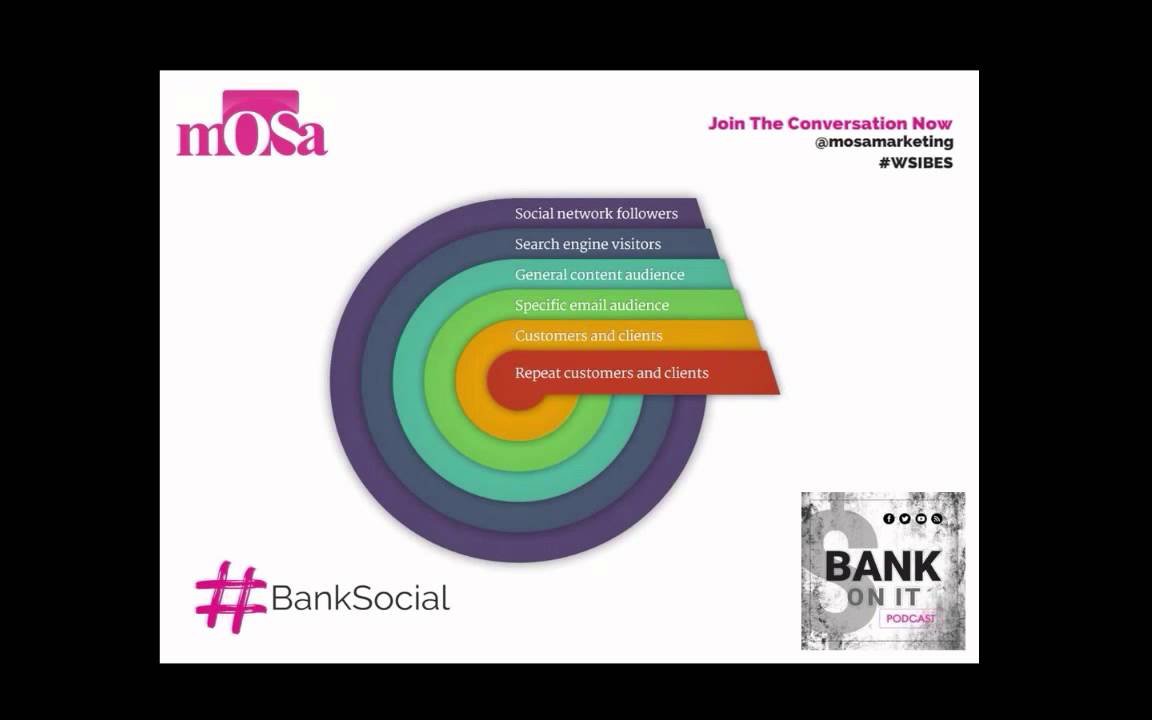
Sure. Again, things like those channels there, Periscope and Meerkat and Snapchat, there are hundreds and hundreds of them that come in. It's just the way people communicate today, and I think that Right now, most banks are probably struggling with— and by the way, I have seen a few banks that use Periscope. I wasn't sure if it was Periscope or Meerkat, but on our blog, we actually have it as an influencer. And I think it was TRIMEX Bank, if I'm not mistaken, and they actually utilize Meerkat and Periscope. But now, so what I have up there right now is this is the way that we look at subscribers. And I can tell you that When you're building your social channels, there are different temperatures of people that care about your brand, and different temperatures of subscribers. And again, not all of them are created equal. So, you know, we look at things like, you know, our social network followers and our search engine visitors are probably not the— they may not be the most engaged or hot. But when they start moving down the Down the line, like saying general content audience, people that subscribe to our blog, and specific email audience, people that actually subscribe to our newsletter. And this is the same thing with any bank that has done the same thing as we are doing today. I know Citizens of Edmond looks at it this way as well. And then customers and clients, and repeat customers and clients. So when you are looking at subscriber, by the way, and say if you are looking at Facebook as a like as being a subscriber, A lot of the times, those people are not the most engaged people with the brand. And also, when Facebook changes their algorithms so that organic reach drops drastically— I know if anybody on the call today is actually a user of, say, Facebook, and they have a Facebook page, you can start to see that organic reach has dropped drastically. So if you have 10,000 followers, I think it's about 4% right now of organic reach. So it's a very small number compared to the amount of followers. So by having people subscribe to say a blog, or a podcast, or a nontraditional area of social media, you start to actually get people that get you updates regardless of where Facebook or Twitter goes, or even LinkedIn with their algorithm. And they change them all the time. Facebook is trying to increase revenues. And by doing so, they want you to pay for reach, not just organic. So this is why we look at, and what all banks and brands should be looking at in regards to subscribers, is not just Facebook likes, an example of a subscriber on Facebook, but looking at people that give you their email addresses. And we find that the more valuable they are as they start to move down into becoming customers. We found that the more people that interact with our content, start to actually utilize our services more often. So, are there any questions at this point? We'll move on.
No, the question area is clear.
Great. So today, you know, so if you look at, like, so an example of BankSocial, one of the things that we did in a nontraditional way was to actually get some of the best speakers in the world content marketing to speak at. And these people are all working together to put content together to make a conversation outside of the conference itself. And this is something again that Jill from Citizens Bank does so that people can start communicating and talking prior to an actual event. And so events which may not be highly technical in regards to like say Periscope or Meerkat, But it's a very nontraditional way of getting people to interact with your brand before an event actually happens. So one of the things again that we did was get some of the best minds in the world to be able to work together with us to put together a social media strategy that's very effective. And so, same thing with our podcast. I interview some of the best in the world in regards to content marketing, specifically nontraditional as well. And they help us figure out strategies and so on, and share content so that other people can enjoy a conversation outside of the podcast, or the conference, or whatnot.
Right.
So now one thing that you are going to start to notice, this is probably one of the biggest things, if you are deciding to go into truly nontraditional like a podcast, YouTube video series, or say things like utilizing Periscope or anything, there are going to be production issues. One of the biggest things I found even with our podcast is that you need to really edit effectively. You need to have a team of editors, or at least just one person that can edit video and sound. You need to be able to make sure that you can continually pump out great content, because I see it all the time. There are a lot of podcasts or even blogs that start to create something like a weekly show, and in some ways stop doing it because the production of it can bog you down. I mean, it takes at least 7 hours on our end to edit a podcast, to record and edit and get it live. So, and right now we have probably 10 or so in queue. It's a lot of work, but we have a good production team, so we are able to do it. And that's one of the things that if you decide to go into nontraditional, And I think this is why most banks go to Facebook or Twitter, and why most brands do. Well, because in Twitter you can go to, say, read a Wall Street Journal article and just click tweet this out or like it on Facebook, or share on Facebook. It's very easy to do, because you don't have to really do anything. You're just sharing information from, say, the Wall Street Journal or whatever else is out there, a publication that you read. But when you start doing nontraditional, you really do have to address the production value, because it's really tough. But going back to building like a podcast or even an event, it takes a lot of time to actually make sure that everything is edited correctly so that you can be effective in those channels. So I'm just going to keep moving along. So now the one thing is in regards to measurement, right? This is where I guess the most confusion comes in, is how do you measure effectively? How do you measure ROI? Why, and all those things. The one thing is that if you have a very good strategy from the beginning, no matter what channel you use, the measurement becomes very simple. On our end, I look at things like subscribers to our blog, subscribers to my podcast, and attendees for the conference. And that's a lot of stuff that you can do as well. And I think a lot of banks, they look at, say, how many new likes they have on Facebook and whatnot. And I think that that is a a measurement that may not be as effective unless you have really a way of figuring out how effective that like really is. So, today I said I was going to share a secret, right? And I do have some stuff, but I wanted to share one quick secret about BankSocial to kind of explain and give an idea of integrating social media, search engines, and everything together. So, if you notice, the BankSocial logo is a hashtag BankSocial. Now, if we do any PR, or if anything shows up in a search engine, or if anybody shares any content, they automatically get engaged in the conversation. Because as you know, in most social media channels, a hashtag is literally a way to join a conversation. So we built the ability of conversation into the actual logo itself. And why is this valuable to anybody? Because when you start to create content in traditional or nontraditional ways, or however you decide to create content, most companies build silos. So Facebook stays within Facebook, Twitter stays within Twitter, and they don't really try to integrate everything together, whether it's a webinar or again, Periscope or any other of those channels. And when you do integrate them well together, you will start to notice that it's a lot It's easier to get a lot of people talking about that particular brand or whatnot. And if somebody does research on your particular brand and you have an effective use of a hashtag, people can look back in a far distance to see what are some of the other content that you have shared. I'll give you an example with myself. I've been working with and following some Fox News anchors and so on. I sent him an email traditionally to pick up a story. And one thing I did was I noticed that when I was on Twitter, I saw somebody share a video of something that this one news anchor covered. And I mentioned him when I retweeted the information. And he actually followed me, favorited the tweet, retweeted the tweet, and then looked at my history and started to see hashtags that I followed. And he started to— share hashtags that I've shared in my past of my tweets, and was able to now jump him into the conversation and get everyone interacting in that one conversation. So that's a very big thing. Even Bank of America, I was interviewed by American Banker on Bank of America's use of a hashtag. And they've optimized it so well that if you put their hashtag into Google, You'll start to see Facebook, Twitter, and Pinterest results, because that is the new search engine optimization. Many banks are looking at search engine optimization, and nontraditional content with nontraditional channels that effectively utilize a hashtag can be very effective at continuing a conversation. And by the way, for any of the audience today, If you utilize and you go to register for Bank Social, we have a coupon. We have a voucher code Eric Cook WSI. You can see I'm scanning it out, and you get to save over $100 if you go to the actual conference itself. And you can see Eric speaking. I'm very interested. I can't wait to see Eric speak when I interview him on the podcast. I mean, he is a very smart individual in regards to marketing and social media marketing, and he understands banking deeply. I know he makes a joke about himself that he's a recovering banker, but he understands the industry so well. So I wanted to just provide this for everybody that's on today if you register. It's good till the 28th, and we don't actually have any coupon codes out there. This is the only one that's out there right now, so I hope that you're able to utilize it. So I wanted to just have a discussion. And see if there's any questions that I could, you know, answer. I know we're coming towards the end, so I wanted to see if anybody had any questions that we can answer or anything you wanted to discuss, anything I missed. So please, if not, then Eric, if you have any questions. Yeah.
Well, just as a reminder, if you've got a question or a comment or you want to go back and have a point of clarification, please use the chat function in your control panel, which is probably floating on the right-hand side of your computer monitor there. And I've got my eye on that, and I'll go ahead and make sure that I relay those for you. One question that I do have is, let's say a financial institution is doing some of the traditional things. In your opinion, assuming it's a community bank, you know, maybe take— I know Citizens of Edmond is a little bit unusual because their CEO is hyperactive on social media.
Right.
So let's say you've got a smaller community bank, what would be one of the first things that you would maybe suggest they give consideration to as a non-traditional social channel to help them, you know, build some influence or maybe get outside of the box a little bit? Maybe the easiest to implement, the lowest cost, lowest technology barriers to entry. But, you know, if somebody wanted to make a move into this non-traditional area, where would you see that logical move, next step?
That's a great question, and I would answer it this way, right? So I've heard, obviously if you've ever heard a social media expert talking about Facebook, they'll say, well, you know, you have to be where your customers are. There's 1.5 billion people that are on Facebook, and so you should be on there as well. And that makes really no sense to me. Because, you know what, I could use a statistic that there are 7.5 billion people on Earth. You should market there. And it doesn't make any sense. So if you start to move into, say, nontraditional social media, whether it's a podcast, or a conference, an event, or whatever that may be, the one thing that's the most important thing to understand is, what is your story, and who's going to tell it other than yourself? So an example is if say you utilize a podcast and you decide to just talk about your bank, or you talk about your— maybe not products, but maybe you talk about culture or whatever it is that you decide you want to talk about within your podcast. I would say probably the first thing to figure out before deciding the channel is what is it that we want to share? What do we want to be known for? And what type of stories do we want to put out there? And then once you figure that out, and you talk with whatever a stakeholder, whoever a stakeholder may be at your bank, it's very important to understand first what content do you want to share that the actual market you're trying to attract cares about at all. And then once you figure that out, then you can start to plug in channels, whether traditional or nontraditional. Say if you want to do a podcast or a monthly webinar or whatnot, it's very easy to figure that out once you've figured out first, what is it that you want to get across? What story do you want to tell? What content do you want to share and whatnot? So if you are going to say production issues, when you go into things like video and you go into things like podcasting that is a lot more long-form type content, there are production issues. I mean, people have said that you can utilize your iPhone to take video and then you can build a channel from that. It really doesn't work that way as effectively as you think it may be. So there are a lot of times where people use their iPhones for videos and they go viral and whatnot. But if you are building a channel as a brand, you need to get production. That must be of utmost importance. Let's say for example you build a podcast. Again, it takes about 7 hours to put together just one show. But it starts to become easier and easier as you go along. But if you are doing anything nontraditional, then the first thing you have to understand is obviously again the content that you want to share on it. But the second thing is the production values. How are we going to produce this? And who do we need in order to produce this correctly? And once you answer those questions, you have to figure out what is the timeframe in which I can utilize and build these whatever posts, or podcasts, or whatnot. And what timeframe can I release one and do it every single week? Now I will share this as a very, very important part no matter what platform you are on, is that if you want to build an audience, you need to have a hook in regards to saying, we share every Tuesday morning on your way to work. And you have to be able to do it every single Tuesday morning. I know Eric does it with his webinar which is a monthly series. Because people today are fragmented when it comes to Content, people today just don't pay attention. I mean, there is so much content out there, it is very hard to pay attention to content that may be not as interesting as other content. And so it is very important to build an audience, but you have to do broadcasting. So in history, if you take a look at any television shows like Breaking Bad on AMC, or Walking Dead, or Game of Thrones, and all these things, you have to be able to say every week, every Sunday night at 8 PM, 8 PM we are going to do something, we are going to do a new episode of whatever it is that you are doing. So you have to think like a movie producer or a television producer and build an audience by doing it over and over again. The number one thing is consistency. You are going to make mistakes when you start no matter what you decide to utilize. And you have to learn that you are just going to get better. And then as you get better, you learn, and you become better, and better, and better, and you start to build better audiences as well. Everything has a cost to it, right? And some things are harder than others. Like I said earlier, Facebook and Twitter is very easy. You could just share a post on Wall Street Journal or wherever else you are looking, or Forbes or whatever you may read. But building content is a whole different world. And as you start to build content like webinars, videos, and podcasts, it is going to take a lot more production values in order to do so. And you really need to figure out Who can you put in place to be able to help ease the cost and timeframe of editing? So like today I told you that it takes about 7 hours for each episode, but now I'm down to about an hour. We got so good at it that I record better so that there is less editing that needs to be done. And so now we can edit an episode within an hour. So anything you do from now is going to be hard. Any nontraditional content creation is going to be hard. But just understand that as you get better at it, you'll start to cut lots of time. And I can tell you that as you get better and you start to cut time and it makes it quicker to release episodes, and you do it every Tuesday or every Wednesday or whatever day you want to do it, and you do it at the same time, you'll start to build an audience more effectively, especially if your content is very good. Eric, did I answer your question?
Yeah, and then some. I think you and I fall victim to the same dilemma of it's difficult to answer just one question because a lot of times our mind thinks that there's so many different layers that are part of the answer. And so, yeah, so you, I think, addressed that as well as a couple of other things. So I am looking at the clock and I see 4:01 Eastern time here, which means, as I suspected, the end of the hour was coming and it got here much, much faster than I think We anticipated, but you've shared a tremendous amount of helpful information today, and I certainly appreciate you taking time out of your day to be on the show. One thing about a live webinar is you have to be done in 60 minutes. Podcast, I think we talked for probably a good 2 hours, and you boiled it down to like 45 minutes. I don't know how you did that, but that's where your magic of editing comes in.
Thank you.
The joy of a live show is it starts at one time, and it ends at the other. We are at the end. I want to encourage everybody, I don't know if you want to go back a slide, just if you go to banksocialmediaconference.com, you do have that coupon code which is available through the end of the month. If you'd like to take advantage of it and come out to the conference next year and maybe get to meet me in person and John and be part of that, there's a lot of really great information. It's just banksocialmediaconference.com. You can check out some of the other speakers. I am humbled because I've looked at the list and there are some incredibly awesome speakers that have written books and done a lot of really, really great stuff. And, you know, I kind of pale in comparison, but some really good stuff there. So hopefully we'll be able to meet you in person next year. So anything else in close that you want to mention? And then we'll go ahead and we'll wrap it up and call it a day and get on with the weekend.
No, I mean, I think that, you know, obviously we covered a lot, and you brought up a lot of great points, and, you know, I was grateful for that as well. But I think that, well, if I could just end it off this way by saying, one of the biggest challenges that brands face today is figuring out how to utilize social media correctly. And again, I can tell you that I know it's very basic, and I understand that. And I know I know that obviously the point of this session was for different technologies and platforms and so on. But I wanted to address the point that once you understand your voice, and your story, and what you want to share, you can plug in any technology as long as you know you can be effective at it. So the most important thing is to understand what you want to do to tell your story, and what kind of content you want to share, and then start to figure out what platforms need to be plugged in, whether it is again Facebook or Twitter, or Meerkat and whatnot. So, I mean, that's one of the things that I found, even for myself, a lot of the speakers at the conference are people that I look up to and have taught me a lot, like Eric Cook actually as well, and people like Andrew Davis, which is the keynote speaker and bestselling author. So I wanted to share what I learned with the industry that I serve, which is banking. And so Again, I think that that's probably goal number one, is to figure out what your voice is. And I hear a lot of times banks ask a lot of questions about compliance, and regulators, and so on. And I can tell you that again, that is not the biggest challenge that banks face today. I mean, there's a lot of technologies out there, and if you get a compliance person that's great, it's very easy to put a process in place to build a powerful brand. Building a powerful brand is the hard part. Doing compliant, make sure you're compliant, is not that hard once you put it together. I know it's a challenge and it's not something that could happen overnight, but that's one of the biggest, most important things. And then you can effectively utilize any platform that you'd like to once you figure that out. So that's one point I wanted to just get across. And thank you, Eric, for asking about that. Good, good, good, good.
Well, that's a wrap, as they say, I guess, in the business. Appreciate you being with us today and sharing your insights. And again, if you'd like to stay on the list, make sure that you go to the BES page and click on that email list, get added. And when the next show is announced and our topic is released, we'll let you know, and hopefully you can join us next month. So until then, by the way, look forward—
Yes. Oh, by the way, I wanted to just recommend— I'm sorry, Eric— that if you look Joe Sullivan is one of the best, I mean, in class. I watched the webinar that Joe Sullivan was on with Eric. If you haven't watched that one yet, it's a must-watch. I think that Eric, did you put everything on YouTube?
Yep, it's on YouTube and there's a link on the BES page for the brand strategy, whether you keep, close, or transform. And that plays off of the whole social and the digital consumer and, you know, what should people be doing with brick-and-mortar I know that's a really big concern for a lot of bankers that we talk to, so that definitely, that's a good one to go back. Not to take credit away from any of the others that I've done, but most recently, you know, that's definitely one worth going back and taking a look at.
So good point. Cool. Well, that does it.
We'll go ahead and close the show. Hopefully see you next month, and everybody, since this is a Friday, you Everyone have a great weekend. So thanks for joining us. Take care.







