
Generating Demand Online for Your Product or Service
In this recorded Free Webinar Wednesday, host Eric Cook welcomes guest Gabor Marcus (Switzerland) to discuss practical tactics for generating online demand for products and services, as part of the promotion for the third edition of WSI’s Digital Minds book. The conversation walks through the full demand‑generation funnel, emphasizing paid search (Google Ads/PPC) and how keyword intent drives bottom‑of‑the‑funnel leads. It then expands to social platforms—Facebook, Instagram, Messenger, LinkedIn, Twitter, and YouTube—detailing demographic targeting, look‑alike audiences, geotargeting, geofencing, and the role of user‑generated content and social proof. The hosts explain how paid campaigns can inform organic SEO, the importance of subtitles for muted video ads, compliance constraints for banking/credit advertising, and the power of remarketing/retargeting across all channels. Throughout, they stress the need to match the right message, person, and moment, and they provide concrete tool suggestions (e.g., iOS Clips, Android AutoCap) and real‑world examples (Mercedes‑Benz geofencing, Papa John’s Twitter interrupts, TikTok music‑only ads). The webinar ends with a Q&A, contact details, and a teaser for the next episode on personas.
Chapters
Well, greetings everybody. Welcome to the Wednesday, January 15th, 2020 episode of Free Webinar Wednesdays. This is Eric Cook with WSI Digital. We work with our customers on helping them better understand and leverage the power of the internet as a strategic business tool. You can learn more about us online on our website, and I know I've mentioned this a couple of times, but we are very close to having our new site launched. fully supportive of our lovely WSI World corporate brand over at poweredbywsi.com. So keep an eye out, and, uh, one of these shows I'm gonna say we're actually live, and you can stop out and check it out. We've got a bunch of blogs and other sorts of cool resources that we're excited to share. Today's show and all shows are recorded, and those of you that are attending live, we certainly encourage and appreciate interaction. Although if you are listening to this show on recording, you're not going to see the control panel sitting over on the right-hand side of your screen. But those of you that are attending live, if you've got questions for our guest today or comments regarding our topic of discussion, I would encourage you to use that, reach out and say hi, or just share some thoughts, and we'll go ahead and take those as the show continues. All shows are recorded and made available at freewebinarwednesdays.com, so you can certainly hop back out and watch the replay, or certainly share it with a friend or a colleague and help spread the word about the Free Webinar Wednesdays community. Today's show is a continuation of a series of several shows announcing and talking about WSI's 3rd edition of our bestselling book called Digital Minds. And today we have Gabor Marcus. Who is joining us all the way from Sweden, or no, Switzerland, the other S country. Sorry, I totally butchered that. I gotta read what I wrote. I was thinking Sweden for some reason. Switzerland, Geneva, who's just coming off a rather rambunctious birthday soiree for his daughter. And we've got a little time zone difference here with him being over in Europe and us here in the States. But Gabor was selected as one of the 12 authors for the Digital Minds book, and we've talked in past shows about video and competitive assessments and SEO and social, and today we're going to talk about the power of paid search and just advertising and just generating demand and gaining visibility. I am going to work a little webinar magic and send the presentation over to Gabor while he gets his presentation around, and I'll ask him to say hello to everybody and introduce himself and make sure he corrects me on what country he actually is joining us from today. And then we will dive into his presentation and talk all about how to generate demand for your products and services. So Gabor, we're seeing your slides. Thanks for joining me here on the show and welcome to Free Webinar Wednesdays.
Hey Eric, hey everyone. Thank you very much for this nice introduction. So my name is Gabor. I'm based in Switzerland.
Not Sweden.
Not Sweden. It's further south. We have actually also cold weather and some snow here, but Switzerland is famous for 2 things, I think, especially for the Americans. One is for the chocolate, and second is for the banking system. So, and I'm pretty sure that you know some about this industry here.
We've had a number of chit-chats at conferences and over Skype on banking, so we share that in common for sure.
So first of all, I would like to apologize for my accent. I'm sorry, I'm not an English native speaker. Although we speak 4 languages here in Switzerland, English is not one of the national languages. I have more of a French accent, so if you cannot hear me well or if it's not clear, don't hesitate to interrupt me. Eric can tell me to rephrase it.
I'll do my best to potentially translate, or maybe I'll do some paraphrasing today.
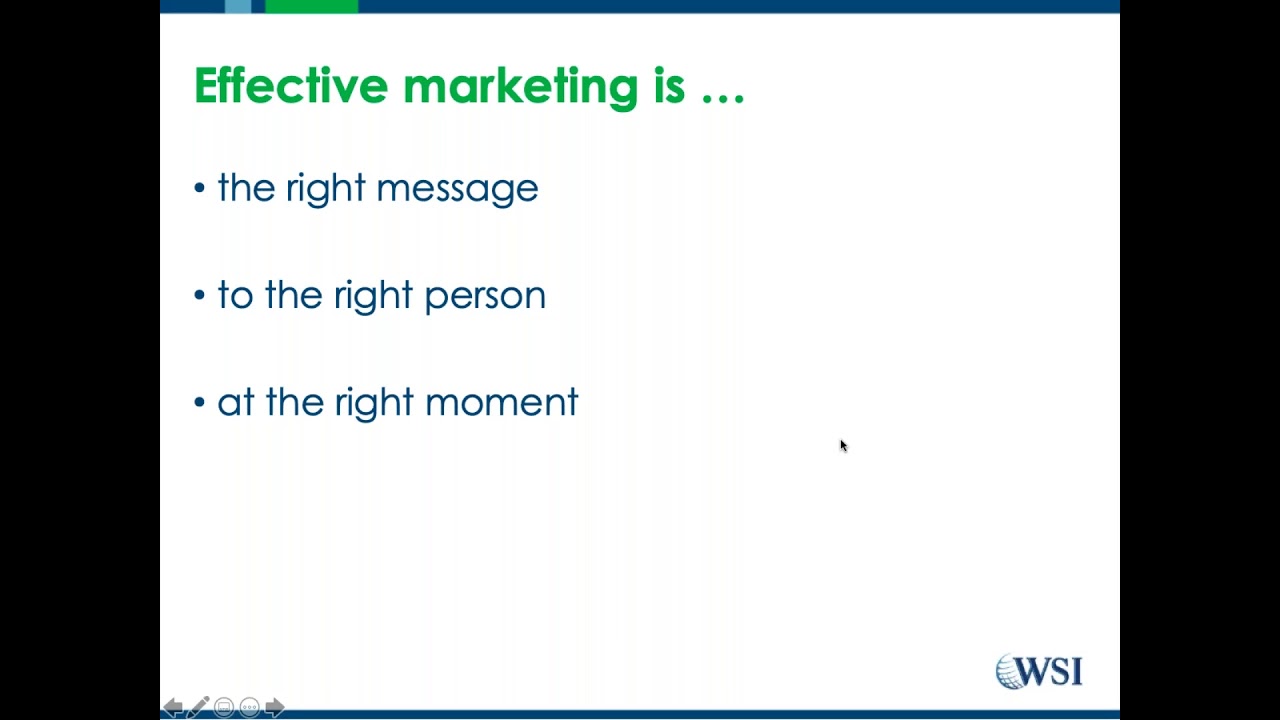
So we call it Franglish, you know, it's a kind of mix between French and English sometimes. So, so I've been with Double SI now since 2017. It's gonna be 3 years. Prior to that, I worked 15 years in the aerospace industry building aircraft for Boeing and Airbus and also some other jet fighters. And now I'm really happy to be in this digital field. And as you said, I was happy to contribute to this Digital Minds, especially chapter 4, which is about generating demand for products and services. So what I would like to talk today is to make an effective marketing. I'm sure you already touched on these topics in the past few webinars about Digital Minds, but an effective marketing is usually sending the right message to the right person at the right moment, right? And there are different techniques. I don't know if you already mentioned the concept about persona while you were reviewing these digital minds chapters.
We've touched on it a little bit, but actually next week's show with Cormac, who is also across the pond— and I'll get this one right because he resides in one of my favorite towns that I've never been to, but they produce Guinness— over in Dublin. So he's gonna be talking more specifically, although you do run a close second with chocolate, I'll give you that. But he's gonna be spending more time talking about personas and really dissecting and understanding your customer. But I know all of this, and that's the great thing about the Digital Minds book, even the first and the second one, is the chapters really blend together because no digital strategy really can stand alone by itself. You're going to have elements that are going to cross over. So if we touch on personas a little bit here, that's fine. We'll probably talk a little bit about social. We'll probably talk a little about organic, competitive visibility. Those are all things that certainly play a role in getting found online. So we're cool with that.
Okay, so just allow me to give you a brief description of what we call persona. Persona is actually your target person, the target customer you would like to have. I don't want to go too much in details, but what we try to do when we develop a persona is to understand the key needs and the key message we need to send to our target. Customers, prospects. And so I will leave you guys to explore that further next week. But here, what we will try to figure out with generating demand and mainly with paid search tactics, with paid tactics, is to leverage the knowledge we get with different source of information. And so what we can do is usually start with what we know already about the customers. And so we developed at WSI this kind of chart, which I'm going to show step by step during this presentation, is what do we know about our prospects. So one thing we can know pretty easily is what is their intent, and a very good platform to know what's the intent about our targeted people is Google. So usually when someone types in Google, he would put either his pain or his needs with a request, which is based from what we call keywords. And now we know also that these keywords are getting longer since the vocal search is getting more and more important. So what I did here, I took the example of free webinar since I'm participating in this great Free Webinar Wednesday. And what you will see at the top of the page, of the Google page, is what we call the ads. And these are paid ads for given keywords. And these techniques work with bidding. And so it's very powerful because when the— Internet user type is the keyword. He's clearly stating what is his intention, right?
Yes.
So what we know with this tactic called pay-per-click, because you pay only once the internet user is clicking on your ad, it gives a very strong and high quality, what we call, bottom of the funnel leads. Is that something you think the audience would be familiar with? Bottom of the funnel leads, or is it something like—
Yeah, let me just— because we've also got, I think, a little bit of data loss quality as the signal goes either under or over the ocean. So I think, uh, for those of you that couldn't hear that, we're talking about the bottom of the funnel, where you think of a lead generation funnel being very, very wide at the top because you're pouring— if you think of leads being water, basically you're pouring a lot of leads in, and you're maybe very generic in nature because at what's referred to as the top of the funnel, we're going to get a lot of people that enter that process that might realize, oh, I'm really not interested in attending a free webinar. I really want to find a webinar platform that's free that I can host webinars or something along those lines. So as you further get down that funnel and it gets skinnier and skinnier and skinnier, if you think of it as an inverted triangle, the bottom of the funnel is really where those that remain are much more relevant to what you want to serve. And that's where I think what you're talking about is with paid search, being able to select the keywords and the phrases and being more specific so that the people at the top of the funnel don't even get into the process because you're targeting those that really are, you know, almost at the buying or at least the decision-making step. in that purchase process. Did I do a good job of translating it? Wasn't there an F in there or something like that?
I think you did an excellent job. Yeah, thank you very much for that, Eric. So basically, we're looking for people who are searching a related item and where we think there is a likelihood that they will convert Right? So, and this tactic is pretty straightforward and easy to— in their design. And usually we can drive quite a lot of traffic out of the search engine directly to our landing page, to our website, to try to convert this internet user in a prospect or even better in a customer. One other great advantage of this tactic is for a fixed amount, for a fixed budget, we can we can see in the forecast in advance what would be the cost of acquisition of new leads. And another advantage of this pay-per-click tactics is that we can also target by location by adding the location as a keyword. Here we would say free webinar for Michigan or Switzerland, and we can really target to specific Perfect. So the next thing we can do also based on what we know about the customer is for the topic of intent, is to do with great content. So we can create content that seeks to answer the question that the internet user is asking. And if we still stay in this top-of-the-funnel marketing approach, the concept is to write content that would trigger a purchase and by informing to make the right decision, right? And so once the customer is ready to make the purchase, if it's now or later, they will remember your content and they will come back to your website.
One of the other things, and I don't, I don't know if you're gonna mention this as well, but because the pay-per-click ads are appearing as a result of keywords, and you mentioned already that the keywords that you select, when the ads are clicked on, that's when you're actually making the payment to Google, in this case for the pay-per-click. But one of the things that's also a benefit of this is in Google Analytics, most of the keyword search data is now hidden due to privacy. And if you've got access to Google Analytics and you've looked at your organic visits to your website, you'll notice that most of it is not provided, close to 98, 99% of it. One of the advantages here is because you're paying Google to put ads out based off of what people are searching for, You could almost use pay-per-click metrics as a proxy to help you refine an organic SEO strategy, which touches on a little bit of what we talked about with Mark Jamieson last week, and know what keywords are actually getting clicked on more and getting searched for more compared to others. And to use a banking analogy, for example, which you're familiar with, the, the whole concept of a mortgage loan versus a home loan, which one of those is really a search phrase that indicates buyer intent versus someone that's just doing a little bit of research? And you'll know that if you're doing ads and keyword bidding on each of those to determine when you start talking to your customers through your blog or social media, you might want to talk about getting a home loan because the term home has more of an emotional connection to somebody that's getting ready to buy a house Whereas the term mortgage might very well be more of a term that people associate with just interest rates and fees, and they're doing their research, but not really quite ready to settle down and put their family into a house. So I don't know if you've got any other insight on that, or if that's gonna be touched on later, but that was another thing that I thought would be relevant here.
No, I think it was relevant. And to continue your Your explanation, I think one great advantage of paid search compared to SEO, what you touched last week, is also that the fact that it's instantaneous. So you will get the traffic immediately once your ad is live, whereas if you do SEO, you will have to wait some weeks or even some months before getting a real measure of your ROI or success.
Yep. You turn that faucet on and turn it off when you're done.
Yeah. And I think that's all what I wanted to say about the intent and Google Ads. And the next way to know what we know about our prospects is who they are. And here the perfect platform is the Facebook platform. And here you can gather a lot of information about the demographics. So if you're targeting for— since I had the birthday of my youngest daughter today, you can maybe target happy dads looking for the perfect 6-year gift for their daughters, and Facebook would be the right platform to go after. And one thing I would like to highlight with Facebook is like this concept of the iceberg. They do much more than what you can see basically with all the data they're collecting and the way they cross-link all this information there, you can laser— have a laser target with laser precision, right? So why is that? Because Facebook has more than 1.5 billion people logging on every day, and they know a lot about our hobbies, interests, also about the profession. And but one key difference compared to Google, it's not based on intent, it's not based on keywords, it's really all about demographics. So if you're looking to use Facebook, well, you can make paid search tactics based on the 3 different stages of the funnel we were talking previously, which is the awareness. So if you want to raise the awareness of your product and services, Facebook will be right. Also the consideration phase is when they will evaluate your solution, and the last one is the conversion. So what I wanted to show here is how it looks like on a Facebook page, and what I wanted to highlight with this arrow is one very strong aspect or advantage of this social media advertising is that you get this social proof. So you will see that you have an ad because it's highlighted as a sponsor here on your newsfeed, but you will also see that in my case here, Daniel and Erica, they already liked this ad, this post, and that is pretty powerful. Don't you think so, Eric?
Absolutely, and the fact that people that you know are already engaging with the brand. Certainly Facebook is, you know, not being shy about that. They know that if you know Daniel and Erica and you trust them and they're colleagues of yours or friends, or you just, you know, think that they know, um, a thing or two and they like SEMrush and you're thinking about using SEMrush, there's that comfort in numbers, if you will, that you know that you've at least got friends. And if you're ever wondering, you could, you know, send Daniel a little note and say, hey, I see that you like Semrush, what do you know about them? Um, but the ad itself is sparking that conversation to get you to actually dig in and learn a little bit more about their company. So I think it's, uh, yep. You just got to make sure you're looking for that little sponsored, because when you see that in Facebook, some people realize it, but others still don't pay attention to those things. That's presenting because of the profile that Semrush, it knows Gabor is a digital marketer and likely interested in cool digital marketing stuff like what they produce. And, uh, you know, somebody that is an attorney probably wouldn't see that advertisement because that's not their target market. Um, so they're using that and you're not going onto Facebook searching for cool marketing research software. You're just going onto Facebook to check out what your friends are talking about and catch up on photos, and they're interrupting that process with a targeted ad based off of the persona and who they want the message to be seen by.
Right, right. Yeah, so the social proof is a really strong trust factor, I guess. Well, I believe—
Absolutely.
And what you can see also on the right-hand side column is that you can have different display, and here it's kind of more obvious. It's not like in the native feed that it's really ads. But since Facebook is not just Facebook, it's much bigger than that, I wanted also to show 2 other examples. Here on the left-hand side, you will see what is the chat from Messenger. And here between the different conversations I have, so Christine is my mother, then Kathleen is my Cousin, Sophie is my sister. Just here I highlighted with the red box is you have an ad with Santa Claus, you know, and it's written traffic and funnels. So it's a tool for doing what we call this top of funnels techniques. And that's pretty interesting that they will interrupt my conversation, my discussion, but I will come later on this. And on the other side, you will see a screenshot of my Instagram. And here again, it's exactly the same approach where you will have a display right in your feed as a sponsored post. What do you think about that, Eric?
Well, the left side of the window has me very excited because the chapter that I wrote for the Digital Minds book is all about messengers, AI, conversational marketing, and I talk a lot about that one-to-one communication. And if you were to engage with that traffic funnels, maybe you visited their website, you asked them for some information. There's a couple of chatbot tools that I also follow that send me valuable information, and I will read that more likely than I will if I subscribe to an email, or more likely if, uh, than if I see it in a feed, um, because I've opted in But now there's even the ad and the targeting capabilities. And the messaging popularity between individuals is not showing any signs of slowing down. So if you can get the right message to the right person at the right time, like you said right at the beginning of the presentation today, my suspicion is you probably would be interested in Traffics and Funnels because it fits your industry and it's relevant to you. I'm curious, did you click on that to learn more? Did that get you to click?
Not this one, not in this special case, but other ones. So just before Christmas, while I was looking for the Christmas gift, I found 2 of my gifts on my Messenger window. Yeah, I did.
Nice.
Yeah, and what about the use of Instagram for the banking or your financial industry? Popular yet?
Certainly from a storytelling perspective, and you know, anytime you're dealing in an industry that's somewhat compliance-sensitive, so medical, legal, financial, they're probably not going to embrace, but I am seeing more and more institutions becoming comfortable with being able to cross over, and Facebook certainly makes it possible, although Just a side note, I'm still amazed when I listen to podcasts and the surveys of the number of consumers, particularly the younger ones, that don't realize that Instagram is part of the Facebook ecosystem. They think that they're, you know, thumbing their nose to Facebook and mom and dad's social network, and they're just going to hang out on Instagram, but they don't even realize that it's really all part of the same platform. But It definitely is a popular network and worth some time if your demographic is there. That's the key, because you got to go fishing where the fish are swimming. If you're going after customers that don't spend time on Instagram, you probably don't want to be advertising on Instagram or you're going to waste your money. So it goes back to that persona discussion that you touched on at the beginning to figure out where people are hanging out.
Exactly. Yeah.
Yep. Yep.
And another great feature that Facebook launched, I think it's already 10 years ago, is this lookalike engine. So here basically it's a kind of segmentation tool which is available on all social platforms from Facebook. So you have it on Instagram, on also on Facebook and Messenger. Yeah. And it will find a user who has same demographic and internal interest than your existing followers or customers. So what I'm showing here in this small graph is that you have a database with different emails, you put this information into Facebook, then they will have an algorithm, their own feature, who will try to match this list with the people which have a similar behavior and interest than your existing database and it will help you to get a much bigger audience and people which are more alike to convert than your existing customer base. And that was a huge differentiator for Facebook at the beginning. And meanwhile, most of the platforms have taken over. So Google has it, LinkedIn has it, and all the big players. But I still believe that the Facebook lookalike is the best. best-performing one. Would you share that point of view?
So the lookalikes are very powerful. The challenge for our banking friends that are either attending live or might be listening to this recording— last year Facebook rolled out under some scrutiny as it relates to privacy. Some functionality has been removed if you're advertising and your target audience deals with anything on the extension of credit for money. Anything related to housing, so whether that's a mortgage loan or just looking to rent an apartment, and then anything related to employment. So in those 3 areas that are considered hypersensitive, some of this lookalike and profiling data may not be available just due to the fact that they want to keep it very, very sensitive or respectful. I don't know what the right word is there, but Uh, but for other industries that maybe don't touch into those 3 areas, this lookalike can be a very powerful entity. You are not going to know who those people are that are the match, but the matches are going to see your message either in the feed or in the ads on the side or on mobile. Um, and it'll just get your message out there to more people that look like the type of people that you want to do, to be doing business with.
Right, right. I was not aware of this restriction. Okay. So it hasn't come to Switzerland yet as far as I know. That's also another interesting thing to know is that not all the rules are applied to every country in the same way. So in order to sum up what we just discussed here for Facebook, I wanted to give a few tips when you're advertising. So usually the user-generated content wins. So if it looks like more user-generated content, it will feel native to the feed, and it's pretty good. As you mentioned already, it's also easy to ignore. Some people don't see when it's written sponsored. So what you need to make sure is you will have to get the user attention and the The rule of thumb is 3 seconds. There are also more and more use of videos, so I think you talked about it for the first Digital Minds webinar, and here what you need to consider is that most of the videos are watched on mute, so you will have to use subtitles. And we also discussed that about the social proof, that the comments and shares increase the reach of your So a couple thoughts on number 3 there as it relates to videos.
And I just learned a few things, and I know this is one of the, the joys but one of the challenges of working in this industry, and I'm sure you experience it yourself, is just when you think you know everything, you listen to a podcast or you read a blog post and something new gets released and you're like, oh crap, I didn't even know that, so now I gotta learn something new. The video issue of being muted and being able to use subtitles. I was browsing Instagram and I found someone that did a video that had some really nice subtitles that flowed. And when I turned the audio on, they synchronized and appeared but had a little bit of stylization to them. And so I reached out to the individual and asked, and he said he was using an iOS app called Clips. CLIPS, and that will allow you to upload a video, and you can go through and you can allow it to recognize what you're saying, and it'll bring the, the video and synchronize it with texted overlays. For Android devices, because I have an Android, I got to be difficult, I found a service called AutoCap, which is an app that does the same thing. So as you're producing those videos and you're sharing that content, if you just want it to be maybe you telling a story and explaining something or offering a description of a new service or something that you've learned, either of those in conjunction with your mobile device will give you a really good way of ensuring that if somebody does see your video and they don't have sound turned on, they'll still know what you're talking about. So clips and auto-cap. And then the other thing that I learned from the folks over at Social Media Examiner is they had a guest that was talking about Instagram Story ads. And since you already talked about Instagram, Instagram Stories and stories and their popularity is certainly no secret to those of us in the digital space. But people listen to stories with the audio turned on. And while captioning and subtitles still are a good thing to do, if you do an Instagram story ad, chances are when somebody comes across that in their stories feed, they'll actually hear the, the audio, they'll hear you talking, and subtitles aren't as required. And that was a, that was a relatively new discovery for me just within the last couple of weeks. So I don't know if you've heard of either of those, either the apps or Instagram Stories, but certainly plays off of what you're talking about related to Facebook and social media.
Well, I have an iPhone, so I have an Apple freak, and for me the story is muted, so I think the subtitles Also applying to stories on Instagram and Facebook.
Perfect.
Well, but then there is another one. I don't know if it's a— but since I have 2 teens at home, they use a lot TikTok. And here you cannot put really much subtitles. So it's all about music and that's a great one. And yeah.
So there's a question in the chat that is wanting us to dive a little bit deeper in what you refer to as user-generated content versus created, or maybe more of the paid. Do you wanna maybe take a stab at talking about user-generated content and why it wins, but what actually maybe better defines user-generated content?
So user-generated content is content generated by users, and so you can easily recognize it because it doesn't look so professional. It's more kind of real life than very polished content, pictures, and all that. And in some cases, for some industry or services, the people are more trusty of this kind of content. And it looks like also often these kind of type of contents are getting more engagement and getting this famous social proof. That's how I define it, right?
I would see it almost along the lines of organic Where maybe it isn't even a paid ad, it's just somebody shares something and then somebody makes a comment on it, and just through the conversation it generates awareness. But then users are participating in that, that gains visibility as opposed to just allocating budget. But there certainly can be a combination of that as well. You place an ad with budget, and then if you get comments and feedback, And that also then is user-generated validation that the ad that you produced has resonance with the audience and is of interest to folks.
Well, maybe I wasn't clear. So what I usually— I have user-generated content and then I take it over and then I sponsor it. So you can boost it, you know, you have the function boost.
Boost your post.
That's how you can really leverage this user-generated content and putting some budget behind it will help you to get a better reach and control that message.
Perfect. That's another really good point. So good. The other question, as long as I'm on questions, let me just go back to one when we talked a little bit about Google Analytics and the search terms when we were talking about PPC. I want to make sure I didn't misspoke and confuse folks, but there was a question with regards to Google Analytics volume being negatively impacted by privacy concerns. That's not what I meant. What I meant to say there was your— the volume and the activity is not going to be visible. That doesn't necessarily mean that your search activity is going to decrease, although I would suggest going back to last week's show because Mark Jamieson talked a little bit about page zero organic visibility as it comes to SEO with things like rich snippets and instant answers. That content from your website, from an SEO perspective, may just show up right on Google in the search results, and somebody might not ever even visit your website but get the information they need from you. And you might see traffic decrease, but your actual visibility is, is still very powerful. You're just not recognizing any visits to your website because Google thinks you've got awesome information. It's just putting it right at the Google page. So Mark's conversation talks more about that, but that was also somewhat related to this question, so I just wanted to mention it here. Thank you. Cool.
All right, looking at the time, I would like to speed up a little bit. So I think we have to finish on the clock, right? Yeah.
So that means you want me to be quiet? Is that what that means?
Sorry for that. So another way to leverage information we know about our prospect is what they do, and here it's meant from a professional perspective. And one of the best platforms for this is LinkedIn. And here I have a screenshot, an old one from Dan, where you can see the different types of ads. So on the top of the page is like kind of PPC type, this is search ads. Then on the feed, you see on the bottom of the page, it's sponsored. So it was a post and then you can sponsor it to boost the reach by giving a budget. And on the right-hand side, you have also the display. And the great advantage of LinkedIn is it's very suited for business-to-business. So if you're in a B2B business vertical, So that's the great best platform because you can advertise all your professional services and that's also what the people, the users of LinkedIn are expecting. And so if your persona is a B2B buyer type or a decision maker of a corporate company, I would suggest to try go for LinkedIn. And so what you can do there is to differentiate and increase the awareness of your brand at scale. And you can also increase the number of followers of your company page in order to reach more professional decision makers or influencers targeted by specific industry type or job titles, seniority. I think that's all what I wanted to say about LinkedIn. Anything else you wanted to add on? And I think that would be something strong also for your vertical you're interested in, the financial and the banking.
Yeah, I think the, especially the B2B for like a commercial loan officer or business banker, but for professional services, definitely having a solid LinkedIn profile and spending time. One, that's where people are going to be hanging out. So advertising there is a good idea. But also building relationships and carrying on conversation is a good thing. The thing that jumps out at me is the fact that Mr. Monahan has 676 messages in his LinkedIn message queue, so I'm hoping he has had time to get caught up on all those messages from the time he took this screenshot. I'm sure he just returned from an event and probably was getting some accolades or comments from a previous presentation, but I think that's one of the highest numbers of outstanding messages I've ever seen. But I know Dan's a pretty popular guy, so it doesn't surprise me.
Yeah, I picked this screenshot from his presentation back in 2015, so I'm pretty sure he caught me.
Yeah.
So the next thing, what we know about our prospect is where they are. So here you are. There are 3 different types of identifying your prospects on the position they are. So the first one is called geolocation, and this is where you can leverage either the IP address, the location of a Wi-Fi server, or GPS data. So it's targeting based on the location of the device. You can do also geo-targeting, and we briefly touched that when we were talking about Google Ads by the fact of adding a location like Michigan, New York, or Switzerland. You can narrow down the geographic to that. And another tactic which is very interesting is called geofencing. And in order to explain that, I will take an example of one of my biggest customers here in Switzerland. It's a Mercedes-Benz dealer. Dealers, and his tactics to send the right message to the right people at the right time, he put the fence. So it's a digital fence, the virtual fence around all the main competitors to Mercedes-Benz. So he will fence the other dealers like Lexus, BMW, Ferraris, you know, this type of guys. So when you have one of these customers getting out of these other competitors' dealers, as soon as they will leave this fence, they will be targeted with ads about Mercedes saying, hey, you can have your Mercedes 20% cheaper than a Lexus or Jaguar or whatever. And that's what the geofencing technique is about. Did I explain that correctly?
You certainly did, although I wasn't sure what you initially said until you started Drawing examples of competitors and then I said, oh, Mercedes-Benz, gotcha. I had to translate that one again, sorry about that. You know you taught me a new word now, you're never gonna live that one down, I'm just saying.
Looks like it. Okay, next tactic is what they are saying. So we touched on this briefly when we were talking about Messenger. But I think one of the best platforms for doing this is Twitter. And so there is an example here where Papa John's, they made this nice display. And in fact, they were interrupting every discussion as soon as a word like hungry, pizza, starving was showing up. And they will interrupt the discussion thread, and they will put this nice display. And they made a huge business because for cost per acquisition, which was around $0.75, they had a conversion rate of 35%, which is huge. And that was a really nice way to generate demand and reaching the right people at the right moment. And another good way to use Twitter is for TV programs. If you can combine your TV audience with one of your products using a hashtag, I think that's a very good way to leverage Twitter. Is Twitter used for the financial business in the US?
I think it's getting used more and more. I think one of the powerful components that Twitter has is it's one of the few networks that plays nicely with other networks. Such as LinkedIn, where you can connect your Twitter account to LinkedIn. And even if you're not an active Twitter participant, it's an area that some people like to do research on because there is very much a conversational, instantaneous back and forth, where in Twitter you can reach out to practically anybody on the planet and, you know, have that conversation by mentioning them and and whatnot. But if you're posting information and sharing content through LinkedIn, you can still distribute it to Twitter, and that might spark a conversation. It doesn't hurt. There's no additional cost or expense or effort required as part of that distribution, you know, effort. So we typically encourage folks that we work with to at least get that set up. And then a lot of it comes in with teaching them how to filter some of the clutter that exists in Twitter. So understanding things like lists and hashtags so that they can actually find what they're looking for instead of feeling overwhelmed, because that's probably the number one reason why people stay away from Twitter is there's just too much. It's too much like the fire hose and they get very quickly overwhelmed and give up. But with a couple of quick little simple tips, you can very easily navigate through Twitter to find what you're looking for and have that conversation and know what people are talking about right Right.
Thank you. Yeah, very good.
Yeah, I'm trying to keep my comments short because I don't want us to go over.
You're good, you're good. What they're watching, so I'm sure you already touched that, that we expect that 80% of the bandwidth of internet in 2020 is going to be taken by video. Content. And so since video is going to be so important, there is also a very good platform where you can put ads, and it's on YouTube. And the fact that YouTube belongs to the Google ecosystem is that you have a lot of synergies between PPC ads, so pay-per-click with keywords, as you can see here on the right hand for the Grammarly ads. Also here on the screen, on the video, and that's good. But with the videos, you can have a short introduction of your video as a pre-roll at the beginning of another video or during a video. So here, and that was what I wanted to highlight it here, it's a video watched by one of my daughters about a toy, and they were 2 minutes in the video and then they get these ads, right? So I, I really think that YouTube is going to be one of the biggest ad platforms in the near future.
Now, one of the things that is still yet— because in this instance, if this is really your daughter watching a surprise egg pop out, she may not necessarily be the target market for for something like Tableau, which is a visualization business intelligence dashboard solution. But she was obviously using your computer to browse around, so Tableau was looking at the profile of the computer and it was thinking that Gabor was doing surprise eggs and lollipop. I don't even know how to say some of those things. I don't have children. We have dogs, so they don't get into those things, and if we did, they would be quickly devoured and become chew toys. But the algorithm behind YouTube targeting your device for this advertisement is not hitting the mark here with your daughter being the viewer, but you can understand why it's presenting it when you, when you dig in and you look behind the scenes. Tableau might need to do a little refinement to what types of videos because you may not necessarily be the person, or maybe you're the one that's running the video and you've got your daughter on your lap and it just shows you the ad and you just, you dismiss it. So in that case, it might be working.
So I, I have this video in the history, you know, I was just going through the past videos watched on my profile because my daughter is using my iPad And so I clicked on the video she watched the day before, and YouTube was smart enough to understand that was not my daughter watching this video, but it was me. That's why you get this great targeting.
Yeah. There we go. Mystery solved.
Yeah. I was pretty amazed to see that because this is not the typical video I would watch on YouTube. I would check Neil Patel's video about SEO or Google Webmaster or you name them.
Not surprise egg cartoon toys? No? I'm not going to see you showing up at the next global convention with a bag full of little pop-up eggs that you're handing out to all your fellow consultants?
Yeah, maybe that wasn't a good example to show here. I'm sorry for that.
Yeah, well, if you show up to a conference with a bag full of goodies to hand out, I would suggest you just bring some of that nice Switzerland Chocolate, and I'll be happy to see that.
Yeah, would you— you like dark chocolate or milk chocolate?
Yes. How's that for an answer?
Yeah, that's good.
Not picky. So, all right, I know we're rounding the bend here and on the home stretch. So now we've got the remarketing and retargeting with the Tracking where they've been. So let's talk about that.
Yeah, so you made several tactics and you managed to drive traffic on your webpage, on your landing page, on your website, but for some reason they didn't convert. So what you want to do is to put again your message and maybe give an incentive. So what you do here, remarketing, what we call the secret weapon, is that someone comes to your website, this prospect is now tracked with little cookies, and he's leaving your website, and as soon as he's returning on the internet, you make sure that your message will appear as a display with a stronger message, with a strong incentive to come back to your landing page and to try to convert that. And what we have seen over the years is by a small increase of the cost of your campaign, which is between 15% to 20%, usually you can increase the performance of your paid campaign by 50%. And on top of that, since you're paying only once they're clicking on the ads, you have a very powerful branding impact as a bonus. And that's one of the beauties of this tactic which is called remarketing. And this is running on every platform, so I wanted to show here. With the WSI banner on a regular webpage, or you will have also this on the other platforms like LinkedIn or Facebook for retargeting the prospects who clicked on your ads. Yeah, that's the 7 tactics I think which will help you to generate demand by reaching the right person at the right time with the right message. And if you can have the right combination, the right mix of these different tactics, you will have a very effective marketing.
Excellent stuff. So those that are either listening live or catching the recording, if they'd like to follow up with you or get connected, do you have a social network of preference? Are you More of an Instagram guy or a LinkedIn guy or Twitter guy or all of the above? How can somebody get connected with you?
Well, the best way to reach me is either through LinkedIn or on my Facebook page, and otherwise you can go to my website, which is wsi-gabs.com.
Gabs.
Gabs is the Is the short name of Gabor. Yeah.
Perfect. Very cool. Good. Well, let's take a quick little look and make sure that I've answered all the questions that have come through. But while I do that, I just want to say thanks again for taking time to share your thoughts and certainly for being part of the 3rd edition of WSI's Digital Minds book. I know I'm really excited to get that officially released and get a couple of boxes. I've already got customers and friends that have said, hey, can I get one of those? So I've got a list of shipping instructions ready to go as soon as they get here. So it looks like we talked about the Google. Yeah, one other comment when I chatted a little bit about some of the industries being a little bit more sensitive than others, uh, related to housing, uh, extension of credit, and employment. One of the big drivers behind that was the fear of discrimination and making sure that people were getting treated fairly. Um, there's regulatory requirements in the banking space here in the US that do similar things to make sure that banks are treating everybody fairly and advertising in specific areas. So when you talk about Geofencing and whatnot. Those are certainly elements that are included as part of all the bank campaigns that we do, because we want to make sure we're covering a good geographic area that gives all residents of the banking community an opportunity to see the ads. So certainly discrimination is a concern, and Facebook's taken a proactive step to help reduce the possibility of that happening. So. That looks like that is the, the end of questions and comments. So I again wanna thank you for joining us today on the show. Those of you that are live and those of you that are gonna catch the recording, be sure to visit freewebinarwednesdays.com for future shows. Sign up to get notified for— you can join live and then catch all the replays. From great authors like Gabor and others that are sharing their insights and had taken the time to author chapters to help us release our third book. So, Gabor, I will let you go, and I know it's evening time for you over there. So thanks for taking your dinner hour and being part of us.
Thank you very much for the opportunity. Yeah, thanks.
Excellent, good deal. All right, we'll look forward to seeing everybody next week. Again, we've got Cormac Farrelly going to join us for the show on personas and understanding your customers. So until then, make it a great week everyone, and we'll see you online at freewebinarwednesdays.com. Take care, bye-bye. Bye.







