
Having a Conversation About the Future of Conversations in the Digital Age
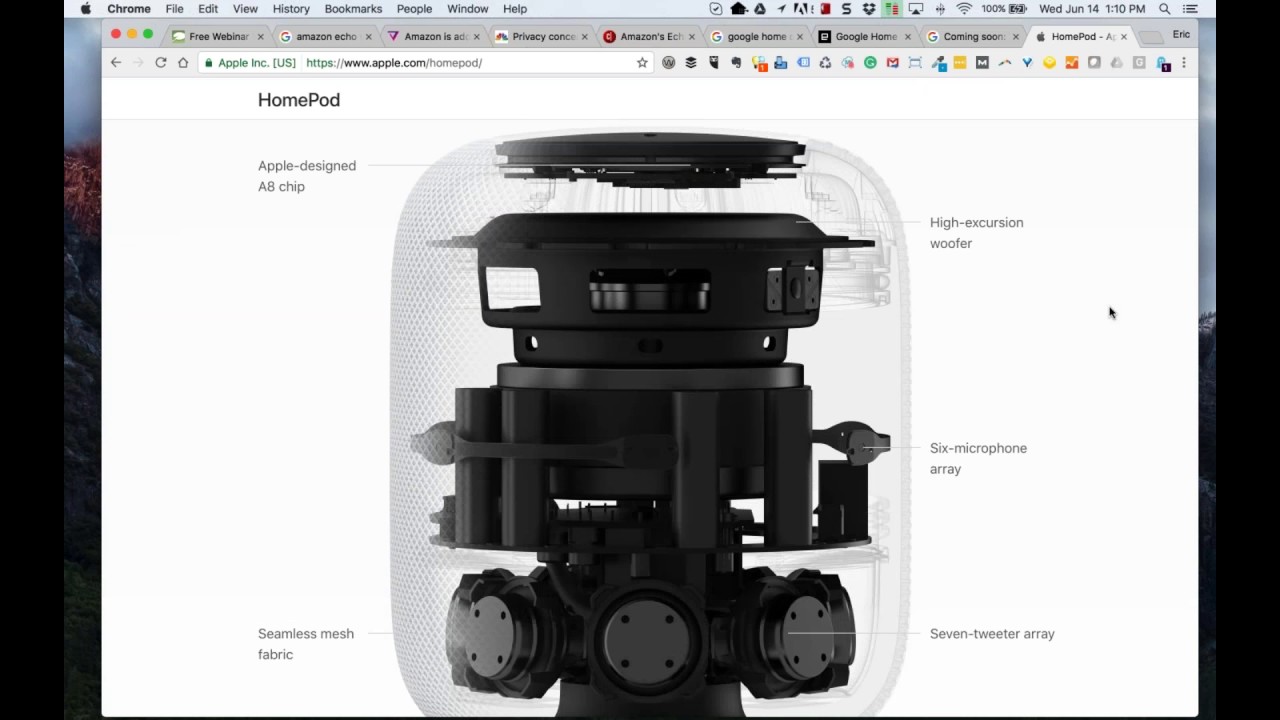
Eric Cook, Jeff Simpkins, and Greg McPherson compare Amazon Echo, Google Home, and Apple's HomePod, examining voice-calling features that are still early-stage and debating whether they're useful for business. They weigh privacy trade-offs of always-listening devices against the convenience of voice commands.
Chapters
Greetings everybody, welcome to the Wednesday, June 14th, 2017 episode of Free Webinar Wednesdays. This is Eric Cook with WSI Digital, and we work with businesses and organizations on helping them better understand and leverage the power of the internet as a strategic business tool. Hop online and learn more about all the cool stuff we get to do here at WSI at poweredbywsi.com. With me this week is my good friend and Free Webinar Wednesday partner, Mr. Jeff Simpkins. Jeff, say hello to everybody out there in Free Webinar Wednesday world.
Greetings everybody, this is Jeff Simpkins. I'm with Community Bank Consulting, Inc., and you can learn more about me and Community Bank Consulting online at www.communitybankconsulting.com.
Cool. We have probably the, the most frequent flyer guest of all time with us today, and I'm very excited because it's been a while since Greg and I have even chatted. You think living in the same town we'd like get together a little bit more often than this, but Greg McPherson is with us. And Jeff and I have already prepared ourselves because like any other episode that Greg has joined us on, Even though it's not the intent, usually there's some little nugget that he throws in with a gadget or a device or something cool that ends up costing me money. Not that I'm complaining, because I've gotten a lot of cool stuff, uh, over the last several years at recommendations that came out of this guy's mouth. But, uh, I'm pretty excited that Greg has joined us today. So Greg, welcome back to the show. We're glad you could join us.
That's quite the introduction. I, uh, I appreciate it. I think it is. I always appreciate the opportunity. It's, uh, it's great to talk with you guys.
Cool.
Yeah, so, uh, here's Greg. He's gonna cost you money, so hang on. I should have just said that. It would have been a whole lot shorter, but I wanted to make sure it was complimentary.
I appreciate that.
Yeah, so cool. Well, before we officially jump into the show, I just want to A couple of housekeeping items for everybody in case you're listening new and if you're catching this on the recording. But today's show and all shows obviously are recorded and made available at freewebinarwednesdays.com. So you could hop out there and you can do a search for Greg McPherson and see all sorts of other cool shows that Greg has been a guest of ours on. And also, if you are attending the show live and have a question, comment, thought, or just want to share something, feel free to use your chat functionality. in the control panel for the GoToWebinar system, and we'd love to hear from you. So today we are going to continue our conversation about conversations, and we've touched a little bit on this in prior shows a number of times, kind of all leading up to wanting to get Greg on the show. I know, Jeff, you had said you and Greg had actually done some test calling back and forth. When Amazon made the announcement that you could basically call devices with the virtual assistant whose name starts with an A, but we shall not mention on the show, otherwise all of our devices will just take off. But I think we all know who we're talking about. And so having a conversation about that device being a smart home device, and all 3 of us having— using those and have used those for over a year. So how are we using them, if that's going to change the way we're going to communicate with others. And then Google's device also is there. Maybe some would argue maybe the Home device isn't as common as the Echo device, but certainly when you compare Google's user base to Amazon, I think there's some debate that Google's maybe got a little bit more of a hand up on that. And then lastly, for those of you that don't know, I kind of consider Greg my go-to guy for anything and all things Apple and Mac related. And so while Jeff and I talked a little bit about their Worldwide Development Conference last week, we didn't really get into the HomePod, which is, I think, their quote-unquote Echo version, and what that does or doesn't mean, and kind of getting some of Greg's thoughts. So all of that teed up. I don't know if either one of you want to kind of kick things off about any of the conversations that you've had between your Amazon Echo devices, what you liked, what you didn't like. I think, Jeff and I, you've had maybe 2 or 3 conversations together, but I've not really played around with it a whole lot. So, but I think you guys did some testing. So Who wants to start? Pros, cons, goods, bads, concerns.
Well, I muted my Alexa device so I can actually use the word.
Cool. I think I might do that too. Now she's red, so I can say Alexa. Cool.
Greg, you want to kick us off?
Sure. I mean, with regards to the Alexa, I mean, you know, I was like you guys, making calls back and forth. Honestly, that's probably not of a great amount of interest to me. It's convenient, you know, but if, you know, I think what they're doing is, is it's kind of Leading more into the new device that they've recently launched, which is, it's got the video screen so that, you know, they're trying to tie it in so that you can take video calls with, you know, with little effort. I can see where that would be appealing, you know, to young families and kids and grandparents. It's kind of finally the phone of the future, maybe with the focus on the video aspect. Doesn't really do much for me as far as, you know, level of interest. I mean, it's nice, but it's probably something that, that's not overly practical in my day-to-day use. You know, I think that the Alexa hardware and software is amazing. I think that they really were the kind of the first ones to kind of put this kind of a project together and launch it. with a lot of success, you know, and honestly what it does, I think it does well. The purpose that it serves for me, I use it to control my lights. I use it to, you know, if I wanna turn music on quickly, I use it for that. I do use it to order things from my Amazon list. I'll, you know, say reorder this and, you know, it'll automatically verify that I, you know, purchased razor blades a month ago and did I wanna do that again? And 2 days later I have 'em. I use it for timers for, you know, cooking or whatever. I just— it's there if you have a quick, you know, trivia question, you know, how long is a movie, or who wrote the song, or who won an Oscar, all that kind of stuff. It's an amazing, robust piece of hardware, and I think that— As a store, I think it does an amazing job. The counterpart to that, Google, Eric, I'll kind of let you talk more on that with authority because honestly, you know, I haven't had a hands-on experience with it. You know, to me that seems more of a home controlling device. And again, Eric, I might be wrong and you can clarify that, but to me, you know, you can control, you can listen to music, and that's kind of the extent of it. So. I feel like the Alexa platform might be, you know, have a bit more offer to offer in that field. I'll go ahead and say one more thing and then I'll turn it back to you guys. But now, you know, bringing in this new product that Apple's bringing forth, I really do feel, you know, you guys both know I'm probably the biggest Apple guy you'll find. I've been disappointed in recent years and I know this is kind kind of cliché. People talk about Apple's losing their innovation, and I really don't want to ride that bandwagon, but I am quite surprised that with as much money and R&D as they have, I really do feel like this product is coming to the market late. You know, it didn't need to be the Cadillac. You know, they could have spearheaded something and kind of got their foot in it. And, you know, I just, you know, to me what this is, is it's Alexa And it's hybrid with, you know, Sonos. And obviously, as the both of you know, Sonos is an amazing wireless speaker system that sounds fantastic for somebody who, you know, is looking for nice, clean, easy-to-install speakers around the house. So Apple's claim, you know, is that they're gonna be the cross between those 2 things, Alexa and Sonos, and be a better solution than both. And as much as I love Apple, I think that's a pretty bold claim. And we'll see. But I don't— you know, there are some things about it that are interesting. I know it's going to allow you to tie into their HomeKit, which will allow you to control the house and do the things like Alexa does. It's supposed to make adjustments in the acoustics like Sonos does so that the speaker sounds amazing. As far as it having The Siri feature, that might be nice in the effect that I can say, Siri, set an appointment for me tomorrow at 2:00 PM. And it goes ahead and it curates that through all of my Apple devices. That's, I guess that that is also appealing, but I don't know, at $350 for one speaker, it's cumbersome, at least for me to justify. And I'm a guy that'll run out and spend— money, you know, being an early adapter and, you know, kind of, you know, you know, I enjoy that process. But the— I don't know if you guys talked about this last week because I didn't see last week's show, but the announcements that Apple put, you know, on the table were pretty lackluster in my eyes. And I kind of thought it was a little bit embarrassing. And you guys can give me your professional opinions on this. When they talked about the speaker, I mean, literally they just put it on a, you know, a projector and talked about all the things that it would be capable of. And, you know, they didn't even have a working demo there. And it just— I understand it's a speaker and, you know, you're not going to be able to hear quality sound and so forth. I know that they did demo it later, you know, in the workshops, you know, without all the cameras and so forth on it, but It just seemed like it was underbaked, you know, to me. And I don't know, we'll see, time will tell. But as it stands right now, you know, I think that the Amazon Alexa serves my purpose for some sort of an intelligent, you know, home control system. And I'm in love with my Sonos speakers and I can't, you know, can't see myself ever leaving that platform. So, um, yep.
Well, and so Jeff and I did touch base a little bit on, uh, the Sonos and the fact that the people that this HomePod in particular, I guess in my thought, would be with the, the folks like yourself that are a little bit more on the technophile side, interested in good quality sound, interested in voice control, and You know, whether they're going to make the switch, and I would suspect the majority of people that are the demographic that would be interested in the HomePod would have already probably picked some sort of a wireless speaker solution because they didn't just now become interested in music quality or convenience or wireless distribution.
Right.
They may be of the disposable income segment Where another $350, you know, I've seen reports that the average Apple user has, you know, more disposable discretionary income. You know, whether that's true or not, but, you know, Apple's never been an inexpensive solution to anything. And so, you know, maybe they're betting that, okay, well, maybe Greg does have an Echo and he does have Sonos, but maybe he'll spend another $350 just to get one of these and try it out. and see what he thinks.
Um, you know, I'm sure that you guys will have me on the show next year and I'll tell you how much I love this thing. You know, who knows?
You know, I'm not so sure about that. I hadn't heard the, uh, I hadn't heard the price quoted before.
You hadn't heard what?
I hadn't heard the price quoted before.
And yeah, $199, $299, and $399, I think, for Jeff, you can buy 2 Sonos speakers, the starter kit, which are the— I don't know what— Play:1s, I think.
And 2 of those are $350.
$350 stereo sound. And you know as well as I do, they sound amazing. Now, you know, if you've got just a real refined ear and, you know, like, you know, you are an audiophile, My guess is you're probably not going to use wireless speakers anyway. My guess is you're probably going to have some hardwired speakers, old school. But again, I'm going to mind my words here because I'm sure I'll sound like a hypocrite in a year and tell you guys, wow, this is the best thing ever. But I'm telling you right now, I just don't, I don't see it. I don't see, uh, I don't see that happening, but time will tell.
Well, in the, the, I guess the observation on the WWDC from last week's show, you know, Jeff and I kind of walked through several of the announcements. I don't think anything really jumped out to me as earth-shattering. Uh, I know in the pre-show conversation you and I were talking a little bit about the Apple Watch. And we talked about that. Jeff doesn't have one. I don't have one. I wear Garmin because I'm more interested in the fitness tracking, sports, synchronization with Strava cycling, kind of that type of feedback. Not necessarily how can I get a bunch of cool apps on my, you know, screen that remind me all too often that my eyes are needing reading glasses. And I don't need to give my wife any more reason to jab me that I'm joining her in the I need reading glasses club. So It's more, it's more the situation of the fitness elements. So, and I'm sure, Jeff, you could probably razz me and welcome me to that club as well, because I know we've had that discussion.
I'm just chuckling because about a month ago I went out and got the bifocal contact lenses. And, you know, they're great for seeing the dashboard, but you still need those reading glasses for restaurant menus that Or in dark atmospheres.
Yeah, that is a, uh, that is a great analogy though. Uh, this HomePod, or yeah, HomePod, which is another, you know, I don't know who comes up with the names of these things, but that's not a very sexy name in my mind, but HomePod it is. Anyway, uh, the, the watch, the Apple Watch, um, you know, is, uh, I have one, so I'll be the first to admit that. I bought a first-generation one because I did, like I've always said, You know, I do invest in technology. I do invest in Apple stock, you know, and so I do, I like to buy these things, look at them, you know, form my own opinions and try to get an idea, you know, is where is this going? Are we going in the right direction or not? Honestly, I took it back. I bought it at Best Buy for that purpose because I did not want to get stuck with it. I just, I could not see of any redeemable value. Did it do what it was supposed to do? I guess. But I really didn't need to see a text come through on my wrist and then one on my phone simultaneously. So the newer generation came out and it was a little bit more independent of the phone. And I had an opportunity to buy one at a discounted price. And so I thought, you know what, I'll take another runner on it. I will say this, and I think I've said this on your show before, the biggest shock for me was when I was going to buy the watch, I thought that You know, it would not be a very comfortable watch, but the technology would be interesting. And the inverse was true. I don't find the watch all that interesting as far as the technology, but it is probably the most comfortable watch I've ever worn. And so my point on all of that is I feel very similar about this speaker. You know, will I buy one and try it out? I don't know. I might if I'm bored and I want to play with a new piece of technology, you know, sure. But for me to try to justify like, okay, this is gonna be the new solution, I just don't think so. I just don't see that it's coming to the table with something, you know, that is, you know, it's just like when the iPhone came out, you know, anybody that really, nobody could dispute that this wasn't something that was completely new and different. You know, people would actually say, well, okay, it doesn't have a keyboard, Or, you know, the battery life that they're projecting is not going to, you know, is not gonna be the case because no one had seen a screen the size and make the kind of claims that they had made for that first generation. You know, but when you could take a picture and put it on your phone and blow it up and take, you know, have a camera and so forth, it was truly, you know, a unique item where you could say, okay, you know what, I'm gonna step away from the BlackBerry, platform. I'm gonna step away from the flip phone. There was a reason that if you wanted to pay the premium, you could justify it in your mind. This HomePod, I guess maybe if I was a millennial and I hadn't set up any kind of a system yet, would this maybe appeal to me? Maybe so. And I'm sure that's where Apple's going with it. But I, you know, I also think though that it's probably the older segment of people that have the disposable income, you know, that would be the ones that would be able to buy something like this. I don't know that that's necessarily the case on the, on the other spectrum. So time will tell.
Yeah, one thing that wasn't present in any of the HomePod stuff that I've seen that is present in the Amazon, which is kind of the whole I guess topic of today is the conversation around conversation. It's interesting that the HomePod, while it has some home automation, some other stuff associated with it, and maybe it'll play off of iMessage, but still that stays within the Apple ecosystem. And if Jeff wanted to talk to me through his, his HomePod, he couldn't because I don't have an iPhone. Now we can communicate with one another because we both have the Echo device, but one of the interesting plays that I thought was kind of cool With regards to Google Home is, well, I don't think by itself it's this awesome speaker, and it probably isn't going to stand the audio quality test like what the HomePod does. Google took it to the next level and said, we don't care if you got a Google Home or not, we're going to allow you to call any phone number in the US and Canada directly from Google. And they've started, and I think all of us are using, or at least had used in the past, Grand Central, and that evolved into Google Voice. And so I think leveraging all of the technology and the data that they've had throughout the years with Google Voice, that is coming into the home device and making this available as a calling function. And while it's not necessarily a landline, because you don't necessarily need a landline coming into your phone— most people have ditched that and they're just using their cell phone— The concept of Google introducing calling from a device that's not necessarily a portable— you're not going to stick Home in your pocket and take it with you— having a device almost like the replacement of the next-gen of the telephone, but having it stationary. And I would suspect at some point you'll probably be able to register this device and get its own Google Voice number. So now all of a sudden you could have a home phone number again. And somebody could call you at your Google Home. So you could use that and talk. And, you know, and they're talking about tying the home device not into a screen like what you saw with the Amazon and being able to bring in, you know, a device that has a screen built within it, but tying it into their Chromecast. And, you know, you just go ahead and span it to your monitor or your TV with webcam enabled. You know, video conferencing, and this just becomes kind of the conduit to it. But of the 3 devices, the Google Home is the only one that is wanting to step outside of its, you've got to have my device to— we just want to make it easier for people to communicate, and here you can make a phone call to anybody in the US and Canada using it. Knock yourself out, talk all day, no charges, no costs.
I predict the Amazon Echo will get that feature sooner than later.
You think so?
I do. I, uh, yeah, you know, the 3 of us have been using Echos for, well, me the shortest time of any, and we're all like, yeah, Yeah, so you've added calling. That's nice.
Yeah, exactly.
So I was just gonna ask, going to accomplish anything, they're going to have to make the feature more robust.
And do you guys actually have phone call conversations? I mean, that's a legitimate question. Do you guys actually talk on the phone? And when I say on the phone, whatever that device is— cell phone, Uh, FaceTime audio, you do?
Yeah, I would say primarily more for business purposes.
Yeah, I was gonna say I would prefer never to have a spontaneous phone call with anyone outside of my immediate family and a few friends. Sure, I'd be okay with not ever having that happen again.
I—
my preference is when I'm on the phone for it to be a scheduled event. For business purposes, at least.
And I think that that is, you know, I think if anything, you know, like the younger generations, I think that they're even more reluctant than we are. Meaning I think everybody's kind of tired of, you know, that was an old kind of way to talk. Now people want things in quick sound bites, you know. Yeah, they want a text, you know, pick up these groceries, be home at 5, you know, stop by and grab the, you you know, the kid at soccer, and then you get home and there you are. You know, you can have that conversation and, you know.
Yep.
And distances with the internet and all of the things, you know, the technology that we've had, it's gotten, you know, much smaller. You know, meaning the world is a smaller place now just because of the advancements and the ability to communicate. I don't know, like, you know, we're talking about all of this, hardware and, you know, you know, trying to improve upon that. But I mean, is this like you guys said, business-wise, of course I'm on the phone all day long, but, you know, I just don't— I don't know where they're really going with all of this R&D. I like Alexa, for example. Okay, I can take a call, great, but I just don't know Is that really a feature that, that's worth all the trouble? Is it? I mean, do you guys really see yourself using that? That's a legit question. I mean, okay, I don't either. I don't, I don't think it—
So, so here's the— here's an opportunity that I'll just kind of throw in the conversation, Greg. I, I really like using text messaging, and I think Eric and I said last week, you know, 10 years ago we were like Text messaging, why would I ever want to do that? And now I'm like, text messaging, I can't do without it. But the challenge with text messaging is, well, I'll just tell you, I was in an automobile accident last year and someone bought my car because they were on the telephone. So right now, text messaging while I'm driving a car is the last thing I'm going to do.
Yeah.
And hopefully that'll be true for life.
Now, Jeff, let me jump in here because I want to make a point on that. This new platform that Apple is introducing, this iOS 11, they've just created a new feature which you have to opt into, but when you get in your car and you start driving, it pops up and it says, would you like us— and I don't know what they call it, but would you like us to—
Smart Response or something like that. Yeah.
But basically—
Yeah, we talked about that last week.
It will kill any kind of incoming message, text or otherwise.
Yeah, which I would like to use.
Yeah, I agree.
So, so the opportunity here is there still is not a good solution that I found that while I'm operating a motor vehicle or anything that I need that same type of attention, how to communicate in that situation besides voice calls over the Bluetooth.
Yep. Yeah. And I agree. I mean, if I'm going to talk with somebody that's not business related or if I need to have a conversation, it's obviously going to be when I'm driving. So, and I can give my Google command just like you can do your Siri command and voice recognition has gotten so good. I know if I tell it to call Jeff on his mobile, it's going to connect me. Boom. I'm good to go. So, I don't even need to look at my phone. to be able to take my hands off the wheel. And I think everybody's pretty comfortable with that. So I think where this play is going to make more sense is going to be for, you know, those of us that have parents that still have either a landline or they're used to the traditional, you know, when you give mom and dad a call down in Florida, I can either call them on the cell phone. Or I can get them an Echo and we can go ahead and do an Echo call. You know, I got them to migrate over to an Ooma device because they still wanted to have their terrestrial phone number, but somewhat cut the cord from AT&T and the $60 a month for the bare minimum to have a regular phone line, but they wanted to have a phone number that their friends could call them on. I think this device is going after more of the mature market because they're the ones that are going to be more likely to want to call people. What's the best time? What's that?
Which device are we talking about?
Well, any of the devices. Oh, okay. That have the, the, the calling feature, like you said. You know, who wants to talk? If I'm going to chat, it's going to be text messages until I convince Jeff to get on Snapchat because now I'm addicted to Snapchat. So thanks to my niece and all of her younger friends that have pulled me in. So that's a whole nother show.
I will say this, I am fickle about texting, and, and here's what I mean by that. Like, I do want to text if you and I are talking and, you know, there's information that needs to be exchanged, then, you know, I do prefer that. But there are points where somebody will try to tell you some complicated— and it's like, why won't you just call me instead of spending—
Pick up the damn phone.
Exactly.
You know, I mean, this could be a minute and a half conversation or a 45-minute text, you know.
Yes.
Tour de France. So it is, it is funny because, you know, I do, like I said, I prefer the texting, but there are certain things where, you know, if you can't text back and forth 2 or 3 times and be done, then maybe, you know, maybe pick up the phone and just, you know, tell me what you had to say.
Yep, I would, I would agree. I, um, I catch individuals in my family doing that where they're back and forth and then they're like, what do you think she meant by that? And I'll be like, hmm, I don't know, maybe like press that little button and call her or call him and ask. And then they text back and then they text this way and then they text that way. And I agree with you. And when you said shopping list or, you know, hey, pick up, I had my phone in do not disturb. It was in my pocket. I went to the grocery store, returned back home, was asked, did you get the yogurt and the whatever? And I'm like, nope. And love my wife, but it was, you know, well, I sent you a text. It's like, if yogurt was that important to you, you should have called me. So, unfortunately it wasn't, but, you know, those are, you know. And I think it's just the— we have almost too many options now, and we have to not only think what our preferred means of communication is, but what the recipient's preferred means of communication is. And I think a lot of times we forget that second step. I mean, I know that there are people that if I want to get their attention, there are certain things that I should do. to jump in front of them, and that'll get me an immediate response. There are other ways— well, I might think it's more convenient for me— that I know if I do that, I'm probably not going to hear back from them for a while or at all. And so I think people need to have that awareness on both sides of the communication equation. And those are things we didn't have to think about 10 or 15 years ago, because if you wanted to talk to somebody, You called them on the phone, that was it. You didn't have an option. You know, you could have pressed, you know, BB AAC 11446 and tried to text message that way, which is impossible. Um, so maybe this is serving more as a public service announcement to those that are listening to pay attention to both sides of the communication equation. And with that, we're done. Quietness. I love uncomfortable silence. So anyway.
Well, I mean, I know I agree with everything that you said. I, you know, again, it's communication. It's just, I guess for me, it's just a matter of seeing these companies, you know, and they're coming to the table And again, with Apple, you know, obviously they're probably one of the richest companies in the world, and their R&D has to be pretty much unlimited. And it's just, it's surprising to me to see them kind of limp to the market. It seems to me late with some of these products.
Yeah.
You know, it's, it's just, it's strange. It really is. I, I don't get it. I know they're a bigger company, and the bigger a company is, you know, sometimes the harder it is to navigate. But, you know, again, they are a tech company. They create most of their own computer chips for their computers and so forth. I just— it just seems strange to me that we haven't seen their offering on a, you know, a speaker like a, you know, like what they just brought out.
Yep.
How did Amazon beat them to that? You know, Sonos has been around for a significant amount of time, so They definitely had to jump on the wireless speaker angle, but it just goes on and on. It's just like some sort of a smart TV. I know people shrug on that, and there's a lot of different manufacturers out there, but the TV is the same complicated mess that the cell phones used to be. You get a different TV, you get 3 different types of remotes, everybody's got their own approach to a remote, you know, and so you pick a franchise or a brand that, you know, you think, okay, this is what I like, and somewhat you remain true to it for the most part unless, you know, a cheaper, better technology comes together. But it's just, it's been a little strange to me that they can't take the technology that they have, you know, learned under computer screens and and so forth. And it doesn't need to be a 73-inch TV. Why don't they have something that does have the security baked into it, does have a camera in it so that if you want to go ahead and introduce it to the Apple platform so that you can FaceTime or whatever you might do with that. It's just odd. It's just surprising to me that— and if they could sell it at a price point that would be obscene, You know, because it would be, we know, you know, if it had enough features that would make sense, you know, at least it would get something people to consider. A TV that, you know, was simple, that, you know, would tie in with the rest of an Apple platform that, you know, you could use all of your Apple content with and then, you know, pull in other features via applications, which is what they're trying to do right now with the Apple TV. Box. So if you subscribe to, you know, ESPN or whatever through these different applications, they're trying to curate this all into one app so that you can, you know, watch it through one app and not 15 different apps. You know, Netflix and so forth. But I don't know, I mean, I'm sure they got a lot more, you know, I'm sure they have a lot smarter people than me trying to, you know, make decisions like that. But again, that's why I just feel so strongly about this, this HomePod. It just feels I don't know, it just feels like an afterthought to me, and we'll see.
Yeah, I'm chuckling around our discussion of TVs. For those folks listening, the guys that you hear talking on this broadcast are in our 40s and early 50s, and my parents are 70, around in their mid-70s. They came and visited about a month ago, and in the bedroom they use, I've made this big poster and I put at the top of it, Alexa. And then I listed all of the commands that they need for turning the lights on and off and things like that. And as I was preparing to parent-enable my home, I realized I couldn't even let them watch the TV in the bedroom because it was just, it was just too hard. There was no way I could—
What remote do I use? How do I get access? Do I press source once or twice? Is it HDMI or TV input? Ah! Just trying to turn the dial.
We laugh, but I'm telling you, I did the same thing when my dad got older. You know, his health kind of deteriorated and he had a big remote and it had 1,000 buttons on it. And he would just— I mean, seriously, he would just, you know, his mind was kind of, you know, getting sketchy. And so I had to literally go over and I tried to like, you know, tape off all the buttons that he wouldn't need. And ultimately I ended up going and buying a, like, a programmable remote that had like 4 buttons on it.
Wow.
So that, you know, turn it on, channel up, channel down, volume up, volume down. So yeah, and that was it. That was what he used, you know, ultimately for, you know, for the rest of that. But I just, you know, the TV is this platform that no one has really created a universal approach to, and it's— I think it's rife for somebody to do something like that, but You know, I also recognize that, you know, television is also somewhat of a dying— you know, a lot of people just watch shows on their computers now, on their laptops.
Yep.
You know, so, you know, yes, if you're gonna watch a sport, you know, and so forth, the 70-inch probably comes out at that point or whatever. But, you know, maybe, maybe that's the idea behind it, is that Apple knows that there are more eyes on mobile devices, you know, that are in their pocket. than spending the money to develop something that hangs on a wall. Maybe that's the answer.
I think where Amazon is really missing the boat on TV is not connecting the Fire Stick with the Echo devices with Alexa. Are located throughout the home. The one thing that I've read over and over in terms of disappointment with the Echo devices, Alexa, are people bought it assuming they could use any of their Echo devices to control their Fire Stick TVs, and it— You can't do that. You can only use it if you have an Alexa-enabled remote with your Fire Stick. Hopefully that'll change.
Uh, I don't— I thought you were gonna make this point, but then you pivoted on me.
Uh, no, no, no, no.
And that's, that's— I'm just saying that, uh, I thought you were gonna say something different. The premium Apple con—
excuse me, the premium Amazon content, Prime content, uh, they're like the Amazon channels and so forth.
They're gonna, based on what the announcement was, which I'm sure you guys saw, that will be coming to the Apple TV. So, you know, that's interesting.
Yeah, I did see that, and we talked about that last week. That has been what I consider one of the biggest shortcomings of Apple TV is the fact that the rivalry between Amazon and Apple has been so intense in the past. They haven't allowed Amazon TV to be on the Apple TV. I'm glad to see that's changing.
Yeah, and then, you know, I don't— maybe you guys heard more about this. I've heard it, but I didn't take the time to research it. I heard Bezos say something to the effect that he didn't see why Siri could not be on the Alexa. And unless I misunderstand it, I really— it kind of made me take pause. But, you know, I know he was talking about the HomePod and so forth, and then it You know, I literally thought that he made it sound like, you know, that the Surrey could, you know, also inhabit their hardware. And I knew about this new agreement with regards to the content and so forth and making it available. So, I mean, it seemed like an odd thing. And again, maybe I misunderstood what he was trying to say there, but I thought, hmm, that's strange. You know, because obviously that's gonna cannibalize somebody's platform, whether it's Apple's or, or, you know, Amazon's.
If I had to choose between Alexa and Siri on my Echos, it would be an easy choice. Alexa works 10 times, if not more, better than Siri in my experience.
Absolutely, I agree 100%. Yep, the only thing I was disappointed in, and this is stupid, but The other day I was walking through the house and I said, you know, Alexa, how's Tesla stock doing today? And it does not give stock. It does not give stock. I couldn't believe it.
Have you researched to see if there's a skill you can enable?
Well, there probably is, but the skill's annoying me, to be honest with you. You know, that you have to say, Alexa, ask, you know, skill set X to, you know, ask my stockbroker.
Yes.
It's like, no, just tell me what stock's doing.
But it is weird because I could literally say, Alexa, who won the, uh, you know, Best Actor in 1973 for, you know, whatever? And it'll go, Gene Hackman. And, you know, I mean, it's just, it's instant. And then I said, Alexa, how's Tesla stock doing today? And it was like, I'm sorry, I can't help you with that. And I was like, what? You can tell me the distance to the sun, but You know, how long it's gonna take me to get to Georgia, but you can't tell me, you know, from where I'm at, but you can't tell me what the stock price is as of the moment. That one surprised me a little bit.
Eric, it looks like you're gonna talk about YouTube Red.
Well, there were 2 other things that kind of jumped up as I had a scrolling news video that was kind of talking about privacy concerns. And once we start introducing voice— and I know that there's been conversations way beyond us talking about why not put one of those devices in my house that's always listening— and there's been reports of devices that have been subpoenaed where a robbery or a murder has taken place. And I was listening to a podcast just the other day from This Week in Google And Stacy Hickenbotham from the IoT podcast, Internet of Things, she made a comment and she said, if you were to compare Amazon knowing all your stuff versus the NSA and the government knowing all your stuff, she way trusts Amazon and would rather have an Amazon device and not worry about, I guess, asthma. that worry about that. Does that come into the picture for either one of you as it relates to privacy and security at any of the levels?
I've got a comment. I have a comment on that.
I—
if the question is, do the devices have the ability to do that, I think there's no question. Absolutely, they have the ability. If you elect not to use a device like an Amazon Echo, Google Home, you know, fill in the blank of your favorite device of that type because you have privacy concerns. Bottom line is you also need to remove all of the voice over IP phones from your home if you have any. You need to get rid of your smartphone because the smartphone can be programmed to listen in the same way. So it's not a simple, oh, if I don't get an Echo, Then I eliminate privacy concerns. So, you know, that's just kind of a general statement. In terms of me personally, Eric, you and I have said this tons and tons and tons of times over the last several years. I've gotten to the place that, you know, I want to have privacy, but I also recognize that our ability to just say, this is outside of what I'll tolerate. for invasion of my privacy is more limited than we realize. And I'm not doing anything that I have to worry about someone listening in. So I like the technology better than I am concerned about the risk of privacy.
Are you on Facebook?
Yeah. Yeah. Yeah.
Oh yeah.
I just want to make sure.
Yeah.
There was, uh, you guys, are you guys, uh, do you have Gmail?
Oh yeah.
Okay, of course I use the enterprise version for Google Business Apps, so you know they're not harvesting any of my data.
There you go. I mean, they're also not harvesting your data in Drive, you know.
Exactly.
When people are going to draw this line with regards to listening, and it's fine, it's intrusive 100%. That, you know, it's just interesting that the new technology—
it's—
no, it's not that. The new economy, that's the key here. We're talking about technology. The new economy is based on the collection of information, and that's where we're at in today's world. I mean, you know, uh, you know, Facebook, all the stuff that you put into Facebook willingly and voluntarily and You know, you get to connect with other people and view their pictures for free, and all it is is just a hotbed of data— who and where and who's talking to who and, you know, family tree lines. And, you know, I mean, it's just information that people willingly give away, and to them it seemingly has no value. And I mean, clearly, I mean, check the stock price, it has value. Same thing with Gmail, you know. And again, I'm not a conspiracy Conspiracy or not, you know, I have— I'm on Facebook. I don't use it, but I have it. And Gmail, I got Gmail accounts. You know, they've got, you know, algorithms that they'll tell you are harmless, and, you know, but they'll just data mine things so that if, you know, they see you mention something, you know, that's pertinent, then you get an ad that pops up and, you know, that hopefully, you know, makes you willing to consume. Whatever that ad might be. So I don't know. This is just— it's just another step forward into that frontier, you know, having, you know, something in your home. Now, am I saying it's recording all your information and it's gonna be using that?
No.
But I'm saying that if you are willingly putting the device in your home and you're using it for turning on your lights and ordering things from Amazon, and, you know, you're kind of willingly entering into that agreement, just like people do when they— They do that with Facebook or Gmail or anything else.
Yep, yep. And I agree, I don't dispute any of that. And I just kind of tossing that out there since we are kind of going down the rabbit hole a little bit. The other platform that was mentioned during that podcast was a Russian app called FindFace, and they were talking about using that app.
That is unbelievable.
Yeah, you put a face in there, it'll go back and find the— you have to translate the instructions because they're all written in Russian, but it will find you online. And yeah, so I think the privacy cat is out of the bag. And just because you've got an Alexa device doesn't mean jack these days.
I don't know if you've talked about that, but at some point you should. You can literally be on the subway someplace in another country, take your phone, snap a picture of somebody, run it through that site, and you, within a matter of moments, will know who they are. You'll have their Facebook profile, their Twitter profile, any— you'll know this guy is John Smith, looks like he lives in Norway. I mean, it just, it's unbelievable.
Yep.
I don't know if the two of you have I've read the releases on this, but Dropcam is about to introduce, if they haven't already, the latest version of Dropcam that will have facial recognition technology built into it so that when specific people walk into the Dropcam field of vision, it will alert you of who it is that's walking in.
Yeah, I actually have Dropcams for just security purposes at some of my offices and stuff. I like them, but this, you know, first of all, that's interesting, the whole thing. But you know what, we don't have time to even go into all this. Yeah, yeah, it's— that would definitely be a subject for another episode. Yeah, exactly.
Yeah, how to freak out your neighbors knowing all sorts of interesting privacy, you know, tips and nuggets. So maybe that'll be I don't know, I'll have to figure out exactly what the right title for that show would be, but certainly that'd be an interesting discussion.
So I don't know.
You have to figure out how to write the report.
Privacy, yeah, exactly. You know what, uh, you know, the last 10 minutes would probably, you know, the collection of information, you know. I mean, it's, it's definitely— like I said, it's not really a technology, it's an economy for sure.
Yep. So the The last item, somewhat related to the Googleverse, somewhat related to the television and cutting the cord. And Jeff and I spent a little bit of time on a prior show, didn't realize how much Jeff knew about cord-cutting options like Hulu and other streaming platforms. But I saw this YouTube— I'm already a user of their Red service, which is their paid YouTube service that's tied into the Google All Access Music channel. But now Google Television or YouTube Television is now making it possible to be able to watch live shows, cloud-based digital video recording capabilities. You can see you can have up to 6 different accounts, and you get all of the things that I think we come to think we need as it relates to a TV, because if we think DVR, we think satellite, we still go to the television that has the satellite box next to it, and we can watch Big Bang Theory or any of the shows that we like, because some of those may not be as easy to get, or if those other services are available, they're not recording it. So this just is kind of the— and I've heard people reference this as being kind of like a Goliath slayer as it relates to YouTube now getting into the streaming television market. So I just wanted to make sure people knew that this is is coming and it's got some pretty amazing things along with it. So—
Are you using the service there?
I'm not. I just kind of discovered it last week and we're still leveraging the satellite service and continuing to use that. But as that bill continues to get more and more and more— I don't see Comedy Central like I have my Tosh.0. So I'm addicted. I'm addicted to Daniel Tosh. I got to say it. So, um, so I'm sure they've expanded this.
When they introduced, uh, YouTube TV, I did look into it and it wasn't available in my market.
Yeah.
They had a very limited number of markets initially. I'm not sure if— well, I see on the screen it says available in select US cities. So Probably for most people, this is not even an option yet. Yeah.
So anyway. Sweet. Well, we, we kept it mostly on topic, which is good, uh, but we did tend to go on some tangents, which is also good because that's kind of what we do here at Free Webinar Wednesdays. So we get to talk about what we want to talk about. But suffice to say, the whole concept of communication is shifting and And, you know, trying to figure out exactly the right ways, don't hesitate to pick up the darn phone and make a call, which always doesn't hurt. But there's options out there. Play around with it. Check them out.
So— So just a comment relative to cutting the cord. We're doing this show live on Wednesday, June 14th, 2017. And I did notice on the promos for Marketplace, the show on NPR, this afternoon's edition, which in most markets comes on between probably 6:00 and 6:30 PM, they're doing the main feature story is cutting the cord for TV and satellite providers today. So if anybody has an interest in that—
Interesting.
Might be a good show to pick up. And they— of course, it's available on podcast and replay. I think the website is marketplace.org.
Yep. Well, very cool. So good. Well, Gregory, thank you so much for joining us and carving out an hour of your busy day. I know you got a lot of stuff going on, so getting you for 60 minutes is certainly a plus, but we appreciate your insight and love it when you have a chance to join us. Thank you, thank you, thank you.
I always appreciate the opportunity to speak with you guys.
Cool, so good deal. All right, well, that wraps today's show. Thanks to those of you that were listening live. Hopefully you got some good ideas, maybe gonna try some of these things out.
Maybe I'll get a—
when I take my Alexa off of do not disturb, maybe I'll get a phone call from you on your Alexa device. So this, this has been fun. So we'll look forward to seeing you on future episodes. Until then, visit us at freewebinarwednesdays.com for updates and archives of past shows. And with that, have a great week, everybody. Take care. Bye-bye. Bye.







