
The Changing Face of SEO and What it Takes for Google to Notice You
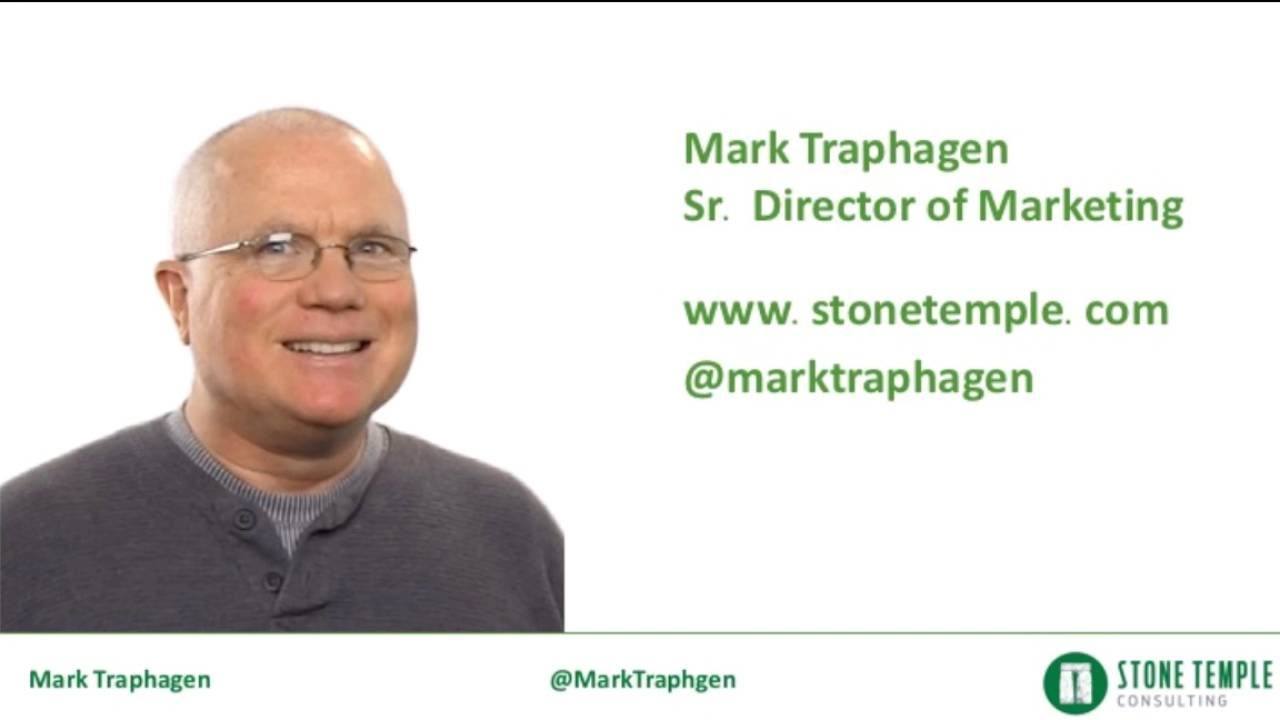
Mark Traphagen from Stone Temple Consulting explains Google's 2016 shifts: featured snippets that steal clicks, RankBrain's machine learning that can't be gamed, and mobile-first ranking. Links and quality content still matter most. Guest posting works if it's not spammy.
Chapters
Greetings everybody, welcome to the Wednesday, July 6th, 2016 episode of Free Webinar Wednesdays. This is Eric Cook with WSI Digital Marketing, where we work with businesses and organizations on helping them better understand and leverage the power of the internet as a strategic business tool. You can learn more about me and WSI online at www.poweredbywsi.com. With me this week, and we are back after a couple weeks off, but we're excited to be back and have a formal show is my good friend and Free Webinar Wednesday partner, Mr. Jeff Simpkins. Jeff, say hello to everybody out there in Free Webinar Wednesday world. Hello everybody, this is Jeff Simpkins. I'm with Community Bank Consulting, Inc., and you can learn more about me and Community Bank Consulting online at www.communitybankconsulting.com. Excellent. I don't know about you, but when I said July 6th, It just seemed really weird, like the summer is flying by and we're half over, and it seems like we're going to be thinking about the white stuff, at least for us that live up here in the northern climate. I know you Southerners don't get a whole lot of that, but time sure has been flying by. It has. We're in July already. I know. Hopefully you and all of our Free Webinar Wednesday fans and followers Had a great Independence Day for those of you that are here in the States. I know we do have some outside of the United States, from Canada and some folks from the UK. We do a lot of work with a partner of mine who's in the UK, and I tease him and say, we're celebrating our independence from you this weekend, so have a beer for me. Of course, they've had their own Independence Day recently with the separation from the European Union, so they're still trying to figure that all out. I don't know. It's kind of interesting. But so before we jump into it, just a couple of— see some new faces in the audience, which is great. A couple housekeeping items, and then we'll let Mark actually say a thing or two, and we'll get on with the presentation. For those of you that are joining us live, we love to have interactivity, questions, and comments. And please feel free to use the chat function in your control panel, which is probably floating to the right-hand side of your computer screen. So when we go through today's session, if we've got questions or comments, we'll take periodic breaks and we will certainly ask those for you. And today's session and all sessions are recorded and made available at freewebinarwednesdays.com. So if you would like to go ahead and pull those up when the session is over, that would be great. And then lastly, if you are dialing in on a telephone, you just want to double-check and make sure that you're calling the United States number if you are from the United States. The default because WSI is a Canadian-based organization and this is a corporate account with them. I've not figured out how to get them to switch the default from Canada to the good old US of A. So if you're here in the States and you don't have international calling, you may inadvertently be dialing up a Canadian number. And as Jeff can attest, you might get a bill and it is Free Webinar Wednesday. So we don't want this to cost you anything. So if you are not dialed into a US number, feel free to go ahead and disconnect. You can go to the additional numbers function in the audio panel and scroll to the bottom and get the United States number, and that'll take care of it. So with those out of the way, while I work the magic of GoToWebinar and I send Mark Traphagen the presentation controls, it is my great pleasure to welcome Mark from Stone Temple Consulting to Free Webinar Wednesdays. As it indicates in the write-up for today's show, Mark Mark and I had the pleasure of meeting one another earlier this year at the #BankSocial conference, which was the first of what will probably be many more to come, social media conferences dedicated to the banking industry. And while Jeff and I are recovering bankers, I don't believe Mark has that in his pedigree, but he actually sat in on a panel of experts that I facilitated on what was referred to as a bank hackathon, and we had 4 financial institutions bravely volunteer their website and social media channels to be picked apart on stage in real time. And so Mark and I worked together on getting access to each of these institutions' Google Analytics accounts and reviewing some things, and he offered some really good insight on how they could be doing things a little better, and I thought it would be great for him to join us on Free Webinar Wednesdays and share some of his insight on search engine optimization and how to be found and all the other fun things that are shifting in the world of Google.
Awesome. Alright, well, let's, let's launch in, and, you know, feel free to jump in, of course, at any point. This is your show, so if you have questions or want to know more about something I'm talking about, or questions coming from the audience, we'd be glad to take those, of course. Alright, so just to introduce myself again quickly, I am Mark Traphagen. I'm the Senior Director of Marketing for Stonetemple.com or Stonetemple Consulting. We are a 70-person-plus digital marketing agency working with medium to large-sized brands. We're based in the Boston, Massachusetts area, but we work with companies all over North America, and I have probably the joy of having the most meta job in the industry because I market the marketing agency. But the fun of our marketing department that I run is that we get to be the lab, we get to eat the dog food as they say at Google, we get to test out the content marketing and SEO strategies that we then pass on from our own learning to our customers. So thanks for having me today, let's plunge right in. Again, just, we're a full-service digital marketing agency, this is some of the stuff that we do. But let's get into the good stuff.
here.
So what we're going to do throughout the next little while here is we're going to cover some of the newer things that are happening, particularly in Google, but other search engines are imitating some of these features, just to make people aware of them, some of the opportunities and challenges that they present. And overall, they draw a picture, I believe, of where search is going. It's, it's been going in quite a different place to what most of us probably think of it having grown up with it in the last number of years. So the first thing we're going to look at is something called featured snippets. And right there, now running into, into buzzwords already. Featured snippets is a feature that we didn't know what Google called it, so we called it rich answers, we called it direct answers, all kinds of things. And then Google let slip a little while ago that internally they call these featured snippets. But what those are is, first of all, a rich answer in general or a direct answer. You've probably seen these in search when you type in certain queries, you get a box at the top of your search results which has the answer to your question. If it's something as simple as like, you know, what is 3 times 5, Google will tell you the answer right there without having to go to some site with a calculator or the time or temperature and all sorts of things like that. But now more complex questions, you know, how to bake a cake All these sorts of things are coming up where the answers are showing directly in search. And those are growing over time. This is something Google started a little over 2 years ago. We've been tracking them at Stone Temple Consulting. We have a set of 855,000 search results that we follow— queries, this is— that we follow in search. And we regularly kind of dip in there and see what those are doing. One of the things we do whenever we dip in is look for these special features. In search. So this is growing, and it's something to pay attention to because it means that more and more people don't always have to click on something to get what they're searching for. Google— one of the most important things to always remember about Google and search in general is that Google does not exist to benefit your site. Now, obviously most of what Google does is refer traffic to our websites, and we love it for that. But that is not their primary function. Their primary function, if you look at their founding motto, is to organize the world's information and make it accessible. And that's their mission. That's when they have happy users who keep coming back to their site and obviously seeing their advertising, which is where they make their money. So if they can give an answer directly without sending someone to your site, they're going to do it. And by the way, I'll note before we move on here, the URL down there, the short URL, stonet.co/stcstudies, I'm gonna be showing you data from a number of our studies that we've done, and you can access them all on that page. Unfortunately, not right at the moment, just because I'm doing a live webinar, our site decided to go down. Our techies are working on that at the moment. Have patience, you should be able to get into that later today. All right, so rich answers are growing.
No, I just wanted to offer a word of, I guess, sympathies, but I guess misery loves company, 'cause the gremlins, as you can tell, kind of bit us today as well. Seems like something's floating around the internet. Yeah, they're out there.
I don't have a chart for this, but I suspect if we studied it, we'd find that gremlins are growing as well.
Yeah, I bet they would be.
Rich answers are anything where Google answers a question. So it might just be the time, the temperature. There's a lot of generic information. A new one that they're— they've been doing it for a year, but now they're rapidly expanding it. Is showing song lyrics. So if you ran a song lyric site, you might be in trouble there because they're now for many, many songs. Google's bought the licenses and they're displaying the lyrics right in the search results. So these— but a featured snippet is when they actually take the information from your site and they provide a link to it. So it might be if you were, you know, if you had a page on how to apply for a loan and you have step-by-step instructions on that. So now that might be jumped up to the top of the results, be in a box all by itself, and it would show the steps. Now we're going to talk about a little bit later why that can be bad news. The bad news is probably obvious. If people see all the steps, they don't need to click through to your site. You lose that traffic and that opportunity to market to them. But it can be good news and is often more than people think. We'll talk about that in a little bit. But the first piece of data here is just that these, these results have been churning greatly. And by what we mean that is that Google is constantly testing this. So sites that get put into a featured snippet box don't necessarily stay there. In fact, we saw in our huge sample that 55% of the featured snippets have a new URL since we tested it a year ago. So they're constantly churning that. Not only are they adding more of these rich answers, but they're also churning who even gets in that if it's a featured snippet. So it looks to us like they have a, what we're calling a featured snippet machine. This is kind of the cycle that we imagine. This is not from Google. This is just what we kind of see. That they, you know, that they're scanning sites constantly and they're looking for possible featured snippets. If you provide information or answer a question in a really good and clear way, then that site might be put in as a featured snippet showing at the top of search. But it's, it's always as part of a test. So then they're probably looking at the overall SERP— search engine result page— metrics. Are more people clicking on that? Are they liking it? What's the user behavior around it? If it's— if the results fall below a certain threshold, they're not getting the results, then they'll either take this, the featured snippet away, or they'll pop in a different site and try that out. We've seen that kind of volatility going on all around here. Now, I said the bad news earlier. You know, it seems like if you get a featured snippet, it's kinda like Google is stealing from your site, right? They're scraping information from your site, putting it in the search results. Well, there's 2 things that could be good about that. Even if it is the complete answer and most people don't click through, You're at least getting some branding. And by the way, you don't have to be the number one result to get this. It's not based on ranking. We do find that you need to at least be ranking on the first page of Google for the search query, but you could be down 7, 8, 9, 10 on the first page and get popped up to number one. So you're at least getting that branding. People see your name associated with that answer. But even better, we find that a lot of these featured snippets actually do drive traffic. So that typically happens a number of cases. One is even though Google will scrape the answer, the step-by-step or whatever it is off of your site, or just the answer to the question, they only have so much space in that box and they often don't display the complete answer. So it might be just the first 3 or 4 steps, or it might be just part of a paragraph of your definition of something or your answer about something. And when they do that they have a more link at the bottom of it and people are going to click that, right? Because they want to see— you don't want to get halfway through baking a cake or halfway through applying for a loan and not know what else to do. That's one way. We've also seen where sites that we've been watching on this where sometimes it'll be a complete answer but it's a topic about which people are inevitably going to want to know more than that simple answer or sometimes even the title tag that the site has used that shows up as the Google link suggests that there's more information on that page that might be useful, and so people will still click through. In fact, that was the case with this site that we're showing right here. This is a site of a friend of ours who noticed in his analytics this page that he built 2 years previously all of a sudden had this huge jump in traffic that you see there. And he went to the search results, started searching around, and realized that he was getting the featured snippet. And even though it was a complete answer, in this case it was a definition, it was, you know, people were searching what is an RFP and he had a real nice definition of an RFP. He was jumping ahead of the Wikipedia result for that. It's really hard to beat Wikipedia on that type of information. So that was awesome. But it was even more awesome because even though he gave the complete answer, his title tag that showed up as the link on the featured snippet said, you know, what is an RFP and all you need to know about it, or something like that. So people were clicking that and he got this huge increase in traffic. It lasted for about a month and then he got experimented out. Google threw another site up in there, but he's had other pages come up in it. So the takeaway here is there's not a lot that you can do to guarantee that you'll get in one of these featured snippets, but you increase your chances greatly if you have content that you're able to rank for at least to the first page of Google. And then you provide content that very thoroughly and completely answers a particular question that people might be asking among your users, among your industry. And you— if you see a sudden jump in traffic for one of those pages, you want to go to the search results, search your main keywords, and you might see that you got in one of these featured snippets. Guys, any questions about that before we move on to the next feature here?
You proactively answered my question because I was going to see if there's anything that an owner can do to increase the likelihood or to tell Google that it wants to be listed as a featured snippet. And as I suspected, you're kind of at the mercy of Google coming, seeing, checking, trying, moving on.
Yep, yep.
So—
But we've had, like even on our own site, we've run some tests. We deliberately created some content that was answering common questions that we know our audience has about technical SEO. We actually created a series of videos we called the Digital Marketing Classroom. Our CEO Eric Enge, who is the author, the lead author of The Art of SEO, now in its 3rd edition, he prepared these videos, little short videos, but we transcripted the videos, turned them into pages on our site, and sure enough, we created 5 in a row. 3 of the 5 got featured snippets within a few days. So they were just the kind of content that Google was looking for, for that. Those were fairly brand new pages. Now they've gone in and out, you know, because of these tests, and it changes all the time, but whenever we get a page in the featured snippet, the traffic goes way, way up. So it's, you know, it's like getting the free first spot, getting promoted for free to the first spot. You can't guarantee it, you can't say that there's a certain formula to it, but again, in all of our testing, what we've seen is, you know, have something that you know you can rank for, that's a kind of information that people would be looking for, and create the best possible answer for that you can. Alright, let's move on to RankBrain. This is something that some people in the audience may have heard about and wondering, what is this? It was just announced almost kind of offhandedly by Google, by a Google engineer in an interview last year. He said, oh yeah, we've got this new thing and it's at the top of all of our, you know, it's right at the top of our whole ranking algorithm. It's called RankBrain. It's been out there, it's been running for several months. And similar to something called Google Hummingbird that came out a few years ago, it was a similar type of thing where Google announced it and everybody in the SEO world was taken by surprise. We haven't seen any changes, like we didn't even know anything new happened, but you're telling us this has been running for months. Let's dig into what RankBrain is. It's really fascinating because it has a lot to indicate with where Google is going for the future. Alright, so here's a type of query which would have been just not that long ago very difficult for Google to handle. Now admittedly, this is a kind of extreme example, but it says, what is the label of a consumer at the highest level of a food chain? It's not the way we would normally say that. Some people in the audience may have already decoded it. We're really asking here, what's the name of the animal that's at the highest— at the top of the food chain? So, you know, that's a normal question. But people, especially with the advent of voice search now more and more on mobile devices, people are asking questions now in natural language. And they're using their own words and their own ways of expressing. We've seen stats on the fact, like, every day 15% of the queries that Google sees are first-time queries. Like, nobody in all the history of Google, nobody has worded a query exactly that way before. 15%. So RankBrain, its main job is to stand between those queries and the ranking algorithms. And it's a machine learning algorithm that learns language. It learns how people express themselves. And it, you could say, it translates the query into something the regular Google algorithms can understand. Here's another example. In SEO, there's something we call stop words. And these are words that Google considers not main words, not important in something, so it ignores them. And actually a lot of negative words were until now ignored by Google because Google wasn't sure that it would be able to understand what was meant by them. So here's an example that was provided to us by, by Gary Iyash of Google. Can you get 100% score on Super Mario without walkthrough? Now before, Google was ignoring the without, which totally changes the meaning of the query. Because without the word without, you're asking, can I do it with a walkthrough? And for those non-gamers out there, that means where you get to kind of preview the level ahead without actually doing it. So that you know, like, where I got to jump here, I got to avoid this thing there. But can you get 100% score without that is a significant difference. And now Google understands that. And returns more appropriate results. So we wanted to test, and we were in a unique position to test, could you actually see any difference? Because SEOs were saying, we're not seeing any real big changes in the rankings from this. What difference is it making? So we took our— we had this database of 500,000 queries from Google and Bing Suggest that are informational types of queries, and we went through them. It was quite a project. We went through them by hand to suss out the ones that most likely were difficult to understand, the kind of queries that RankBrain might operate on. And so we selected those out, and then we, we pulled results from 2 different dates. We had already a set of results, search results, from before Google told us that RankBrain was in operation. So we pulled those in June to July of 2015. Then in January of 2016, when we knew RankBrain was in full operation, we ran the same queries again. And we saw a difference on some of these. Almost 50% of the queries that we looked at that were difficult to understand queries had better results, more relevant results after RankBrain was in effect. Here's a great example. The question, the query, why are PDFs so weak? And these, these are the actual search results from July of 2015. You're looking at that and everything in there is about PDFs that are about weak things. But they're not about PDFs being weak. It's obviously not serving. Google's not able to understand the intent of this query. And so it's not giving the results that somebody's looking for. But here's that same result now. When you type that in, the top result, while some of the results still are about other things that are PDFs that are about things that are weak. The top result is actually about the intent of the query. What security scheme is used by PDF password encryption? That's about the weakness here the user's looking for is PDF security weakness. And now because of RankBrain, Google's able to understand that and return a better result. So what does RankBrain actually do? It continually analyzes language used across the entire web. And by the way, Google's told us that it's operative in every language now that Google serves. And analyzing how that language is used. And then it improves the understanding of languages for that. Basically, it gives every word in every language a number that's called a vector. It understands the relationship between different words by those vector numbers. And it's able to translate. But it's a machine learning algorithm, which means that it's continually learning from its own experience. And machine learning algorithms are the first level of artificial intelligence. They're becoming a bigger and bigger part every year of what Google is using to analyze, which is why the— one big reason why the old SEO tricks no longer work. We'll get into the practicals of this in just a bit here. Let's move on. So user makes a query such as that one we saw before about Mario. It goes into RankBrain. Because RankBrain has gained this better understanding of language. It improves the relevance matching. And by the way, in our conversations with Googlers that we've had, we've been told that not only does it translate the query, but it also has some activity in choosing what parts of the Google ranking algorithms are best for this query. So it improves everything, all the algorithms together. All right. So before we move on to the mobile updates that Google's been doing and the whole important area of mobile, let me just sum up about RankBrain. You can't optimize for RankBrain. So you might say like, why did— okay, Mark. So this was just fascinating stuff, but it really has no practical application. When I say you can't optimize for RankBrain, you can't optimize for RankBrain itself. The way that it's operating, it's— there's no way to trick your content into doing better in RankBrain. It's way more complicated than that. However, you can optimize better for Google search in general because of RankBrain by improving your content, by making sure your content is very thorough. That doesn't necessarily mean that it's all longer, but, you know, go back through your content, or as you're creating new content It's no longer good enough just to settle for, oh, we're going to slap a bunch of words up on a page and make sure it has the keyword that we want in it. Now you've really got to be thinking about what would be useful to the user. What would a real person coming to my site, how would they evaluate this content? Would they find it useful? Would they say like, ah, that's so good. I'm so glad XYZ Bank, you know, I went there because they showed me, they answered my question. Good for them. That's the same kind of thing that Google is trying to do. Now the next area that we're finding interesting that we're tracking is Google's emphasis on mobile. Google itself years ago began what they call a mobile-first initiative. This is in-house. With all of their Google products, you're seeing, whether you're looking at search or chat or whatever you're looking at in Google, you're seeing this simplicity of design coming forth. That's not just a design consideration. It's intentional that everything is being built around mobile now. So last year, Google announced that they were going to have a mobile ranking update. And they actually announced this publicly, which was significant because they rarely announce these updates in advance to us. They wanted us to know, we're going to start boosting sites in mobile search. That means people searching from a smartphone or similar type of device, we're going to start boosting results for sites that we find to be mobile-friendly. And that means simply that in Google's judgment, your site displays well and is usable on a small screen, on a mobile device. So people are able to read it well without having to do a lot of maneuvering around on their device. They're able to access the navigation menus and do all the activities that they need to do on a smaller screen. So we want— when we heard this, we wanted to be able to test and say, how much effect is this really going to have? And by the way, Google hates the term Mobilegeddon. SEOs tend to be negative and see anything coming from Google as potential disaster for their clients. So the SEOs out there were calling this Mobilegeddon expecting, you know, their clients who were not mobile-friendly going to have a big hit out of it. And of course, Google does not like that title. They prefer to call it the mobile-friendly ranking update. But we went ahead last year before the update went into effect. We analyzed over 15,000 queries, took a snapshot of those, and we did it again after we knew that the, the ranking update had gone into effect. And we looked at the top 10 results for each of these 15,235 queries. Well, here's what we found. It made a significant difference. Non-mobile-friendly pages in our query set almost 47% of them lost position. Now you might be asking, why would any of them gain if there was an update? Because no ranking factor in Google, or no update, operates independently. There are hundreds of different factors, and they can be brought into play to varying degrees on any given query. So it's never a blank slate. It's, it's never completely clear. But there's enough difference here to say Yes, it did make a difference. If you did not have a mobile-friendly site back in, in early 2015, you had a very good chance of losing position in Google mobile search. And by the way, if you haven't heard this, last year during 2015, Google told us that for the first time in history, searches of Google on mobile devices passed desktop devices. And that is never going back. The difference will only grow in the years to come. So now this year, in March of 2016, Google announced we're going to do another update. We're going to have a second update. So again, we tested, did the same similar type of test before and after, looking at this time over 18,000 search queries. This time we didn't see as big an impact. Still, you know, non-mobile-friendly sites lost more than gained, but certainly not as significant as the first one. So what does that mean? Does that mean that it really is now not that big a deal? No, it's probably a couple things. One is a lot more sites now are mobile-friendly, so Google's intention in this is working. They are— you can call it scaring people into it, but Google wants the web to be mobile-friendly, and so they're actually holding out a carrot and a stick to say, you know, get on it. And a lot of sites are reacting to that. But the other thing is that there's evidence that during the time that this update happened, several other significant algorithm updates happened, some of which may have somewhat nullified the effect of the mobile update. But the more important thing is that Google is going to keep doing this. They've already announced there's going to be another update coming sometime in the coming months. This one's going to focus on page speed for mobile, how quickly you load, which is more critical on a mobile device than anywhere else. And so they are, they're telling us, they're communicating clearly, this is the future, and it will probably have more and more impact as we go on. So the takeaway here, I hope, should be obvious. If you have not made your site mobile-friendly, find out what that is, get on the stick and get, get that done. Because very likely a lot of your users, an increasing number and maybe even a majority already of your users, are accessing your site via mobile. You don't want to be frustrating those users. Now let's get finally here to the heart of SEO, what most of us who are involved in search engine optimization have traditionally thought of as the, the real meat, the real heart of things. And that is links. So with all this going on, with Google finding different ways to rank, RankBrain and machine learning algorithms and content analysis, all the stuff that they're doing, we might wonder, are links just not as important as they used to be? Well, here's what we decided to take a look at that, and I'm gonna show you what we found. Alright, first of all, This was an online Google Hangout that was conducted with Andrei Lipotsev, who is a Google engineer, and our Eric Enge. You can see him in the lower right-hand corner there in the thumbnail of the screen capture. He was on this, and Amon Johns, another friend of ours, a great SEO from the United Kingdom, asked, we heard that RankBrain is the 3rd most important signal. That's what the Google engineer had said in that original interview, contributing to the results. Would it be beneficial to us to know what the first 2 are? And Andrei's answer was, yes, absolutely. I can tell you what they are. And this is like, you could almost hear the collective gasp across the several thousand people that were watching this Hangout because Google never says what its ranking update algorithms are, how they rank, or what's most important. He said, it's content and links going into your site. Content and links. Now a lot of people ran with that and said, we know, we now know the top 3 ranking factors is RankBrain, links, and content. Well, it's not that simple, simply because when Andre says content and links here, we don't know all the details, but we do know each of those is really kind of a placeholder for a lot of different individual factors. But the main thing we want to take away here is that Links are still very, very important to Google. So we did a test. We did a very extensive test looking at thousands of sites and their rankings in Google and correlating that with the number of links coming to those sites. We want to see, you know, does the number of links that you have still impact that? And here's what we found. We did find a significant correlation. The link— first one is the links per ranking URL, much higher than, as an indicator of ranking, than domain or page authority. And just quickly, for those not aware, domain authority is a measure that we take from Moz that tries to evaluate the overall search authority of a site. Page authority is the authority of any individual page on that site. So as important as those are, as important as having authority is, links in our test at least showed that they're still much more highly correlated to ranking than just having high authority. And we also have to remember that search is a very noisy system. If there's any message that you're getting out of today's webinar, it's probably this, that, you know, nothing is as simple as people think it is. For instance, in this set that we looked at, we found that at least 6% of the results came from different algorithms. What that means is that we could see that clearly— we're not saying we know specifically what these algorithms are, but that these were definitely being affected by things outside of the normal just links. So the things— here's some examples like that. Local results. When Google thinks that a query has a local intent behind it, that gives you a whole different set of results. Query deserves diversity. This is where for some particular queries Google is not really sure. It could be something that, that people could be looking for a lot of different things. Or it also applies where Google thinks you might benefit from seeing sources that normally wouldn't maybe rank very high. So maybe you're searching like a current event or a news story or something like that. And sometimes Google will pop up a site that normally wouldn't be, doesn't have much authority, but Google thinks, hey, you know, they wrote something significant about this event or whatever it is. We're going to pop it up in the search results for a while and see what people do with it. And then in-depth articles, which is a special feature in search, it's harder to spot than it used to be because it doesn't it isn't labeled anymore. You only spot it by lower down the results, usually after result 7, there'll be a really thin gray line, then 3 search results, and another thin gray line. This is where Google will pick out articles that it thinks go into more depth on the topic you're searching for and actually pumps them up in this little sort of box into the first page where they normally wouldn't be there. So what we're saying here is that We're looking at all of this. We're analyzing this. There are things beyond just links and authority that can affect the search results. These snippets that we talked about at the beginning is another one of those. And then, of course, remember that Andrei Lipasev said that the most important things are links and content. So Google is getting better and better at evaluating quality of content on Is and feeding this into the group of highly trained tools, real search. These people are trained in evaluating what humans makes a quality piece of content or a quality page. Access services to the page. A simple example, if you have an e-commerce page, does it have a link to your privacy policy? Does it have a link to your shipping policy? That sort of thing. So people evaluate that, and their evaluations are not fed directly into the algorithm for those sites they evaluate or the search results, but rather it gives Google a yardstick, a measurement, a Okay, we're doing really well here, but over here we're not really doing a good job evaluating. How can we tweak our algorithm that analyzes site pages to look at them more like a human does? And they're getting better and better at that all the time. So those things like content quality, relevance, they also factor in, in addition to links. Here's another interesting thing, and by the way, these results that I'm showing you, aside from the attendees of SMX Advanced in Seattle, last 2 weeks ago. You are the first folks seeing the results of this study. This study will publish around the 20th of July on our blog at Stonetemple.com. So you are among the first in the world seeing these results. So here we looked at when you bring links and domain and page authority into mix together, what's the effect? So earlier we said the correlation is 0.21 By the way, a 1.0 is a perfect correlation. When you get to nearer to 0.3 you are, the nearer you are to a significant correlation. And so here we see that domain authority, page authority correlated about 0.21. We start bringing in link authority along with that, or we start playing with how much— actually, I'm sorry, this is not the link authority. But this is looking at the mix of how much of domain authority, how much of page authority. We find that as we increase the domain authority, the linking or the ranking correlation does go up. So the better the overall authority of your site, but only up to a certain point. We get up beyond a 45% mix of the domain authority, then it starts to decrease again. So what's the takeaway of the message here? Is that both are important. That you've got to, you know, you want to be working on developing the overall authority of your site. But you've also got to have pages on your site that on their own have really good authority. And that comes from earning good links from good relevant authoritative sites. Having, you know, the kind of content quality that Google is looking for. That's something you really should be working at. We also looked at commercial versus informational terms. A commercial term is where someone is searching for something, it's pretty obvious they're looking to buy something. They're either in the research phase or they're ready to purchase something. So an informational term is where they're just looking for information. They want to know about something, they want to learn something, they want to answer a question. And this is the difference between here and the effect that links had. Notice how much higher the correlation is. It's, it's beyond the 0.3 point of real significance for informational over commercial. So tells us that, you know, Google puts a lot more weight into links that go to informational pages. So if your site only has commercial pages and no informational pages, That's something that you need to get to work on. You need to have content on your site that's providing useful information. And that's also the kind of content that's more likely to get linked to. Outside sources are not going to link probably to your sales pages or your, you know, your sign up for this pages. But they would be more likely to link if you are providing really useful content that is useful to their users and confirms things that they're trying to tell their users. So here's from our own clients. This is obviously anonymized, but this is, this is actual data that we've done where we've invested in content marketing. Central to what our agency does is using content marketing for SEO. That's a combination of helping you produce the right content on your own site, but also getting the opportunity to place off-site content on high-quality relevant sites that links back to your site. So creating links to your site, but not just going out and— not at all going out and buying links or just willy-nilly trying to beg for links here and there, but rather giving content or pitching content to quality relevant sites who want that content because it's useful to their readers and it builds their own traffic, but it also has an SEO benefit because it links back to your own site. So Here's some examples of, for certain important keywords for these clients where they were ranking around 18 or 6 or 20 and they're all ranking number 1. And what we do is we approach this very scientifically. We have a whole analysis process to try to determine how many links we need to get placed out there to drive you to where you want to be in the search results. Now we don't certainly get to everybody the number 1 for every keyword we do, but we've been very successful in increasing that. That's a strategy you can apply. Do the analysis. Look at the— do the competitive analysis, find out for those who are ranking above you for a certain keyword, what are the links that they're getting and what would it take for you to beat that? What kind of links would you need to get and earn out there that would move you up above those people? So that's all I had to cover. Thank you very much and let's see if there's any questions from From you guys or from anybody that's been watching out there?
You say that's all I have like that wasn't enough. There was some tremendous information.
Well, thank you. I know it might have been a little mind-boggling, but actually part of my purpose here is to boggle some minds. So we've got to be more creative in our thinking. We can't rely on tricks and gimmicks. anymore. We've got to be thinking like real marketers and real companies, and that's actually what works for search engines today.
Yeah, so a couple of, I guess, observations from us, you know, within our office. One of the things, we had folks that had seen some of the updates, and of course when the general consumer or the small business owner catches some things that fly around the news media, and I think you even mentioned it in your write-up, that There's some things that sometimes get misinterpreted. There was a notification that went out last year sometime that said guest blogging is going to get penalized because— but yet you just flipped it around in one of the last couple slides that you shared that if you are sharing relevant, good content on other people's sites that's helpful, that can actually be beneficial for you.
Yeah, we're still doing it.
Yes, so I'm curious how you explain that no, guest blogging is not bad, but the difference between legitimate guest blogging and cheesy spammy guest blogging, I guess, is the big thing that people need to understand. So how did you explain that?
That's a great question and a very, very practical one. First of all, just a little bit of history on that. It was actually in 2014, Matt Cutts, who was at that time kind of the face of SEO for Google and the face of Google to many people. One of the most best-known people probably outside of Larry Page and Sergey Brin from Google. He had just gotten so fed up with seeing so much link spam out there. And just quickly, what we mean by link spam is obvious examples of where people are just placing very low-quality, low-usefulness content just to get links. just to get links to their site. He got so fed up with it, on his personal blog he wrote this rant, and it was a rant. I think the title of it was something like, the original title was like, Stick a Fork in It, Guest Posting is Dead. Within an hour it set off a fury, just an alarm across the SEO world. Everybody was like, it went to the top of Hacker News and there's all this commentary. And people jumped on that, and unfortunately the headline goes out, right? And everybody says like, Google says guest posting is dead, don't do any more guest posting, it's done, it's going to be penalized. First of all, it really wasn't. If you read his whole post, it really wasn't what he was saying there. And later in the day, he changed the title, he toned it down a little bit, he changed a few lines in the post to make more clear. What he was really talking about was bad guest posting or spammy, low-quality guest posting. Is what he was done with. So what do we mean by that? It's where it's obvious to any reader who goes to the piece of content, looks at it and says, you know, this is poorly written or it's very thin, it's not giving me any new information, it's not really helping me, and, you know, all it seems to exist for are these anchor text links that are on there. By anchor text link, I mean a link that has a significant, maybe even a commercial keyword in it, like buy Jiffy socks would be worked somehow into this guest post article, and that would of course go directly to the Jiffy socks purchase page or e-commerce page. Obviously just there to try to get the better Google rankings, and that's what Matt said they were going after, and that is what they have gone after. Their algorithm, their penalty algorithms have gotten very good at sniffing out that kind of content and devaluing the links that come from it. So here's what's not dead and very much alive, and we do it to great benefit for our clients every day. What we do when we are working with a client and they say, hey, we've got this keyword, you know, we're on maybe page 2 for it. We'd love to move that up. It would be really important for us. We think creatively. Okay, what kind of content could we create that would be relevant to that keyword and actually useful to people and good, high-quality piece of content? And then we have great experience in going out and doing outreach to significant sites. We research, you know, what sites are out there who publish content from outside authors. who would be relevant to our client in some way. An example might be one of our clients is a major home— I want to say like not just home decor but home improvement type of store. It's one if I mentioned it everybody here would know it. We did work for them, we actually got placed a regular column on a very popular and well authoritative home decor site. So now our author has a regular column there in which she's able to write about great topics that, that the home decor site loves to have, its readers love, and in each one she works in a mention to some product that you can get at Home Depot. It's editorially consistent. It goes with the flow of the article. It makes sense for that link to be there. As long as you're doing that and you're providing good quality content, guest posting is not only fine, it can be a great strategy for building a good link profile to your site.
What do you say to maybe an old-school client, and maybe you say, get over it, this is the way it needs to be, but sometimes there's a fear that, well, we want the information on our site first. If we're going to write great articles, we want it on our site, but then If we want to share it and put it over on somebody else's, then that's okay, but we want it to be on our site first, or we want to make sure that it's on our site. There's that risk of duplicate content. Does it really need to be on your site, or is it okay that it stays outside of your site and then points back? What are some thoughts around that?
That's a good question too. I'll deal with the duplicate content issue separately in just a moment. Moment. But first of all, nothing wrong with wanting good authoritative content on your site. You should have it. Really, you need to be doing both. I know it's easy for me to say, right? But double the content output. But you need to have great content on your own site because that, first of all, helps Google understand, you know, more of what your site is about and what it should rank for. And if it's really good content, it can attract links and the other signals that are major ranking signals to Google. So you need to have that, but it's also good, as I said, to place this guest content out on other sites pointing back to your site as a way of creating good relevant links that also help your site to link better. So really, both can be a strategy and probably should be part of your overall content strategy. Now, there's a worry about duplicate content. Let me quickly— try to quickly describe what that means. Duplicate content is when— that can happen on your own site, by the way, and it can be the biggest problem when it's on your own site— where you have multiple pages that have virtually the same content. This tends to happen a lot on large e-commerce sites. You know, they have product descriptions, and the product descriptions might be under different categories, so they show up, you know, in multiple pages, but it's basically the same description, the same content. And it's not really a penalty involved here, it's just that the search engines like Google don't know which page should rank, and it may not be the page that you would prefer. So, you know, that's, that's one problem. But off-site duplicate content, again, could be— there could be harm in saying, like, we take this great piece of content and we put it on another site. We publish it on our site, then we publish it on another site as well, if that site is more authoritative or that page on their site gets more links or whatever, it might outrank us for that. Well, if that's the concern, what you can do— if you do— this is called syndicating content, which is legitimate to do. It's not necessarily what I was talking about earlier. I was talking about producing truly original content both on your own site and as guest posts. But if you do syndicate content out, meaning you take a piece that you've already published on your site and then you publish it also on some other site, just provide a link back. And Google can usually— the link back, Google can usually tell where the content originated. To make it even more secure, if you are able to on another site, you tag the link with a tag called rel=canonical. And your users can search on Google to find out how to use it. But rel=canonical indicates to the search engine that the link that it's— the page that the link is pointing to is the canonical or the original, the one that should rank. So to go over that again quickly, you syndicate content out to another site, you have a link, you know, maybe it just says originally published on xyz.com, and that link is tagged rel=canonical. Now even if Google sees that page on the other site, and even if that site has more authority, Google will see that link and say, nope, but the original is over here on ABC site. That's the one that should rank in the search results. Does that answer the question?
Yep, that does certainly. So very, very well said.
Cool. All right. Anything else?
I was just going to say I'm just checking the question and answer area to see whether we've got any others, and it looks like that does it. Jeffrey, any thoughts or observations on your part? This was excellent. My head was kind of spinning the whole time because I was learning the whole session. Great information, Mark. Thanks for sharing it with us.
Thank you. My intention was to make heads spin a little bit, so that's good.
Yeah, Jeff, I do see that there's a question in the questions area, but I'm not able to get to it. Are you able to pull that up and read that off before we go ahead and close for today? Yeah, this one, Mark, is if you have a page on a website which is a lead-in page for a short white paper or informational Word doc, Does Google link through to the content and consider that content as part of the website, or does Google only travel through the lead-in sentence shown on the website page?
That's a good question. As far as we know, first of all, we do know that Google can access content that's public on a PDF that's on your site. So if you post a PDF and the page where the PDF is hosted is not, has not been tagged to be blocked from being indexed, Google can go into PDF or even Word doc type of content and index that. However, as far as I know, that page will be indexed on its own. So it's not, it doesn't contribute to the topical authority or anything else of the lead-in page, the landing page that links to it. So that page will be just judged on its own content. So if you want that page to link, you want to have— obviously you don't want to give away the whole contents of the PDF. You want to have enough explanation in your teaser content, if you will, that it's clear to Google what this page and what the content is about.
Makes sense. We get that question often in the banking industry. Although it's starting to change, but we used to historically see a lot of institutions just want to provide information that's part of a brochure that they've created for handouts and all the product details. And then, you know, visit our website and download our checking account brochure that has all of our checking account information. And, you know, while that might seem like a really easy way to provide all of your info, and if you're updating your PDF and you make changes, you can just re-upload the PDF. It's not as good as having the native content out there on the site and making sure that the right information is there. Definitely.
You're missing out on a lot of potential benefit from search engines and people finding— they're not going to find that content. It's not going to get as ranked as easily if it's hidden down in an image or a PDF or something like that.
Absolutely. Cool. We've hit the top of the hour mark, and this has been great. As I expected it would be, some really good insight and observations, and it's exactly what you gave the audience when we were in New Jersey at BankSocial. You did not disappoint, and certainly appreciate the opportunity to have you on the show. sharing some of their thoughts with us. So thank you very much.
Oh, you're very welcome. I enjoyed it and would be glad to do it anytime.
Perfect. Well, careful what you wish for. So, well, that concludes this week's episode of Free Webinar Wednesdays. We'll go ahead and get the recording out, so if you'd like to share it with colleagues, friends, or others out there on the wonderful World Wide Web, you can do so. Keep an eye on freewebinarwednesdays.com when the video is ready and you can check it out. Until then, we'll look forward to seeing you. I say next week and every week, although the schedule has been somewhat sporadic, but when we have a show and Jeff and I are both available, we certainly hope that you're able to join us. Until then, have an awesome week, everybody, and thanks for joining us. Take care.







