
The Collective Power of a Mastermind Group
Eric Cook and Jeff Simpkins break down how mastermind groups work, tracing the concept to Napoleon Hill's Think and Grow Rich. They walk through a seven-step meeting framework: opening invocation, sharing wins, negotiating time, presenting problems for timed feedback, committing to goals, gratitude, and accountability reports. Groups work best with 3-5 members meeting 60-90 minutes.
Chapters
Greetings everybody, welcome to the Wednesday, August 10th, 2016 episode of Free Webinar Wednesdays. This is Eric Cook and I am with WSI Digital Marketing where we work with businesses and organizations on helping them better understand and leverage the power of the internet as a strategic business tool. You can learn more about me and WSI and all the cool stuff we get to do in our workday at www.poweredbywsi.com. With me this week, and we are back after a week off of travel, is my good friend and Free Webinar Wednesday partner, Mr. Jeff Simpkins. Jeff, say hello to everybody out there in Free Webinar Wednesday world.
Greetings everybody, this is Jeff Simpkins and I'm with Community Bank Consulting, Inc. We work with community banks on efficiencies, implementations, technology selection, You can learn more about me and Community Bank Consulting, Inc. online at www.communitybankconsulting.com. Sweet!
So the reason that we were absent last week, at least for me, I was in the mountains of Pennsylvania spending a little quality time with me and my mountain bike, or my mountain bike and me, however you want to I guess phrase that, if it's grammatically correct, to probably put the mountain bike first. But riding the trails in Pennsylvania, and I won't bore everybody that has joined the show with my GoPro video, or videos I should say, of my handlebar mount camera flying through the trails. But suffice to say that if anybody decides to do that, make sure that you tighten that little puppy down because Funny story, I finished what I thought was going to be an epic downhill mountain bike trail with really cool footage because it was really flowy and had some neat jumps and some berms. And I got to the bottom of the trail and realized that at some point I bumped the camera or I landed and the camera got jostled and I captured the trees and the leaves because the camera was facing straight up in the air by the time I got to the bottom of the trail. So I'm surprised it didn't just shoot straight up my nose as I was going down the trail. So a little public service announcement for any of you that might have GoPro cameras. I know there's all sorts of, you know, crazy downhill mountain bike people that listen to the show— not— but that was kind of cause for a chuckle because you know me, I love my gadgets, and I was all ready to dial this in and get some really cool footage, and I got to the bottom of probably the funnest trail there, which isn't even grammatically correct, but I did say funnest. And it apparently wasn't tightened very tight. So anyway, but so that's what I was doing last week. So apologies for not making the show live, but we're excited to be back. And we're going to chat a little bit about the whole concept of mastermind groups. And as you can see in the right up there, Jeff and I have actually been participating in a mastermind group together. Because once a week, gosh darn it, just isn't nearly often enough for you and I to talk. So we get together every couple weeks and participate in a mastermind group, and Jeff was really kind of the impetus for that group. So I'm going to have him kind of share some of it around. He was gracious enough to invite me to participate, and I've been getting a lot of value out of it, and it's actually gotten me to think about some new things. And so we'll explore some of those when we kind of get into to the show. But before I kick in and do the general housekeeping, anything you want to mention that's going on in your world, Mr. Simpkins, that you'd like to share with the audience?
I think I'm ready to jump in and talk about mastermind groups. There you go.
So cool. Well, the, the housekeeping items that I was referring to— if you are new to Free Webinar Wednesdays, welcome. And if you're listening to this on a recording, Probably not going to be able to ask questions, but if you are attending live, we do love and encourage feedback, so feel free to use the chat functionality in your control panel and let us know what you think. And as I alluded to earlier, the show and all shows are recorded and will be made available at freewebinarwednesdays.com so you can check it out. So if there's something Jeff and I talk about that you want to go back and revisit, or maybe we've, uh, maybe piqued an idea or a thought that you'd like to share with a colleague or a friend, feel free to share the post out, and we would love for you to help us spread the word. So with that, we're gonna go ahead and jump in and talk about the mastermind group. And so for those folks that are joining us that may not be— I'm sure everybody's heard of the concept of a mastermind, but maybe, Jeff, you can provide a little bit of a background around the mastermind process as you've been a part of it over the years and some of the components that are part of the group that you created, and, and we'll kind of maybe dig in from there. But why don't you give us a little bit of an overview?
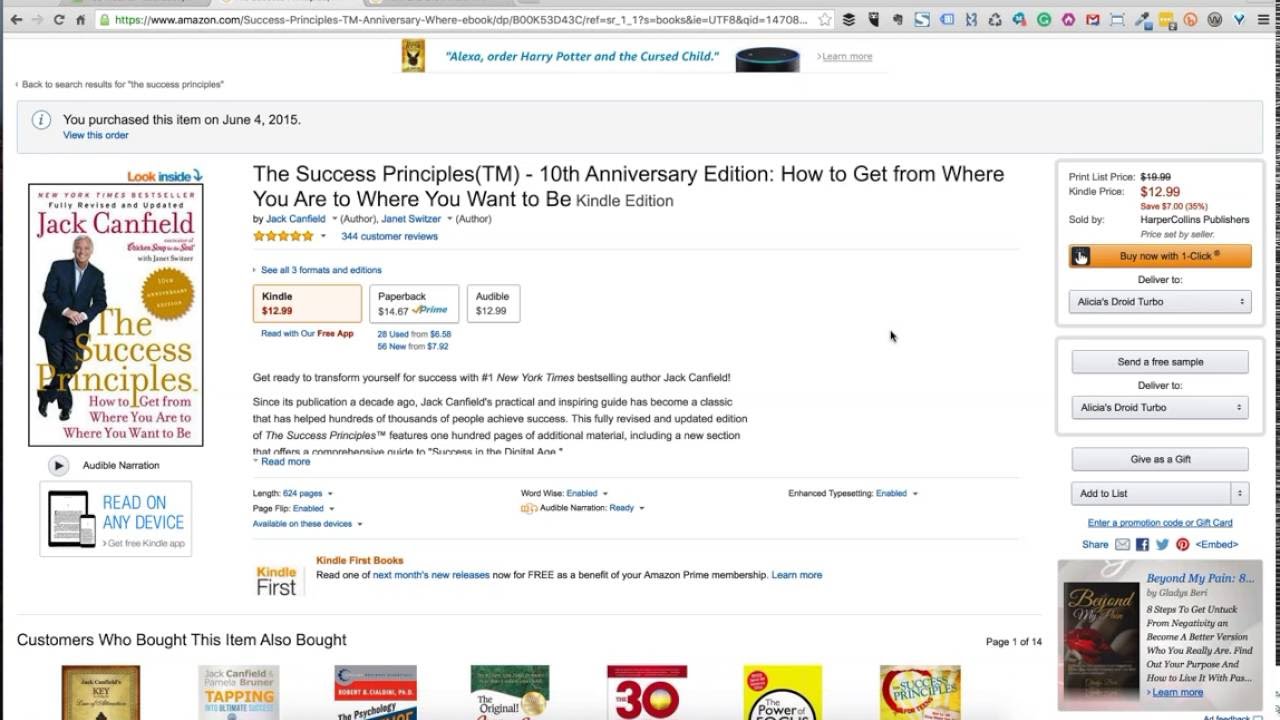
Sure. How about if you open a tab on your browser, 2 separate tabs to Amazon. Okay, let me get you to bring up the book The Success Principles. The 10th anniversary edition is fine. Hi, Jack Canfield.
Love it. Eric Switzer.
Okay, the reason I asked Eric to bring this up for our visual is I actually originally became familiar with the concept of a mastermind group when I read this book back in 2004 when it was first published. The concept of a mastermind group— many of you— I'm going to just use a term that everyone is likely familiar with. Many of you will equate it to a type of brainstorming session. The thing about a mastermind group is it's a structured brainstorming session, and I recommend mastermind groups have a specific purpose. The mastermind group that Eric and I are a part of right now. I actually brought a group of people together that sell into financial institutions, so banks, credit unions, finance companies, and things like that. And the reason that I wanted to become part of such a group was that there are things that are unique when you are selling into financial institutions, and I wanted to have a group of people to come together to, to brainstorm or mastermind through things that, that I'm trying to come up with, with ideas or solutions to. So in the book, The Success Principles, there is an entire chapter in the original version of the book. It's chapter 46. And actually, it's principle 46 in both versions of the book. And the name of that chapter or that principle is Mastermind Your Way to Success. And this actually outlines the process, the purpose and process of a mastermind group. Mastermind, to the best of my knowledge, was introduced by Napoleon Hill in his book Think and Grow Rich. So Eric, if you'll pull that up in the other tab, we'll give a visual of that. And Think and Grow Rich is a book that was written by Napoleon Hill. It was released in the 1930s, the original version of the book, and there are a number of editions available of Think and Grow Rich, updated editions and so forth. If you have not read that book and are interested in reading it, I highly recommend that you get the original unchanged text of the first volume of the book. The language will be a bit dated, obviously, since it was published in the 1930s. But I like reading the book with the concepts unchanged. Some of the updated versions of the book, I think in modernizing the language, the concepts lost some of their— some of the intent that I think Hill intended. Chapter 10 in Think and Grow Rich is called Power of the Mastermind: The Driving Force. And that, that actually gives you a good background if you're interested in learning more about where the mastermind concept originally came from. I highly recommend the success principles if you're looking for some ideas on how to form a mastermind group and the format to use in a mastermind group. So I'm going to pause there, Eric, and just ask you if you have things you want to add or, or items that you feel like would be important for us to discuss.
Love both of these books. I know we've talked— we've actually done a couple of shows dedicated to certain elements of The Success Principles. And Jack Canfield, you know, he's the Chicken Soup for the Soul guy, but The Success Principles is one you can see I own the paper copy, and I think I've shared this with our audience before, but when Jeff was one of the few people that were on my inner circle of confidants when I came to the decision to leave the banking industry, which wasn't an easy decision because my father was president and CEO for a number of years, and banking was kind of in my blood, and it was kind of my destiny. So, I really had to be careful who I shared the fact that I wanted to go play on the internet for a living with that I could trust. And so, when I consulted with Jeff and kind of shared with him some of my thoughts, one of the books that he suggested that I pick up to help me kind of further frame what I wanted to do when I grew up was The Success Principles. And so, I think I've publicly thanked you before, but I'll do it again since the time is perfect now. And I went back and it was probably right around June of last year when we talked about this, and I said, I just need to pick up the Kindle version. So I snagged that, so you can see I purchased this item on June 4th, 2015, which probably corresponds to a show on Free Webinar Wednesday's website. But there are some tremendous lessons in this book, mastermind obviously being one of them. But a lot of really good stuff. So Mastermind is obviously the topic of discussion for today, but this is one that if you bought it and put it on your shelf and don't read it, shame on you. There's a lot of really great information in here. And I do also have a copy of Think and Grow Rich, and, you know, the concept of, you know, someday you may have $100,000 The big numbers that they share and the magnitude of financial wealth in that book and some of the things that are referenced certainly are interesting, but there are some correlations because it was written right around the time the stock market crashed, and there were definitely some correlations when I read it to the financial services industry in 2008, '09, '10.
Yeah.
kind of going through its area of change. So even though the size was smaller, the lessons that I think it talks about were very much on point. So those are—
The original Think and Grow Rich was published in 1937. He spent more than a decade doing the research. Andrew Carnegie was actually a significant Influence and contributor to the success of the material in Think and Grow Rich. And one of the things I like to point out when I reference any work that, that I feel like Think and Grow Rich is a good resource for tying into that work is the word rich does not necessarily have to coordinate— does not necessarily have to correspond to money or dollars. One can be rich in ways that are not associated with money. So if you think of it as Think and Grow, fill in the blank with whatever you happen to believe rich is or the type of riches that you're seeking, it's a very appropriate book for sort of a basis for moving in any direction that you like. I want to pull a quote from The Success Principles.
Yeah.
This is actually the quote that Jack Canfield uses when he opens Principle 46, or Chapter 46 of the book, and it's actually from Napoleon Hill. It says— and this is a great description of what a mastermind concept is and what it can accomplish— When 2 or more people coordinate in a spirit of harmony and work toward a definite objective or purpose, they place themselves in position through the alliance to absorb power Directly from the great storehouse of infinite intelligence. And when I read that quote, Eric, I think very much about what's happening with the mastermind group that you and I are participating in now. What are your thoughts on that?
Absolutely. Well, I'll, I'll be brief and not steal any more of the conversation. But yeah, that's very on point. I would agree.
So let's actually take a minute and let's, let's walk the audience through the process of conducting a mastermind group. Now, those of you that own the, the 10th anniversary edition of The Success Principles might find at the end of that chapter that Jack Canfield actually refers to a professional That he considers an expert on leading mastermind groups, and his name is Robert McPhee. Eric and I were very fortunate. Robert McPhee is actually someone that's in my professional network, and to get our financial industry mastermind group off the ground, I wanted to bring in someone that would be a guest facilitator so that, that all of our efforts could be focused on participating in the mastermind process. So Robert McPhee actually guest facilitated for us our first couple of mastermind meetings. But the actual process that Napoleon Hill outlines in his text and Jack Canfield has captured in The Success Principles is at the beginning of each meeting, step 1 is to ask for spiritual guidance by delivering an invocation. We actually have approached this a couple different ways. When Robert was leading our group, we would begin each of our calls, and we actually— our group is located in various parts of the United States. We actually meet on a conference line. Robert would use a focusing exercise where we would just spend about a minute, maybe a minute and a half, sitting wherever we are, closing our eyes, and really just getting into Getting into the mastermind process, taking a moment to mentally step away from everything that was going on in our office or whatever environment that we happen to, happen to be involved in. Eric, you want to comment on the getting focused in the beginning?
As somebody that doesn't like to sit still, Very much. The focus part is a little bit of a challenge for me, but being a good, I guess, a good player in the process, I've really tried to make sure that that is done. And he talks about eliminating distractions, so I actually close my computer lid, I put my phone on do not disturb, not even vibrate, just so that it's totally silent, because if it vibrates, it still gets my attention. And making sure that at least for that hour while we're in the mastermind process, I have some dedicated time to helping others that are a part of the meeting, but also obviously, you know, trying to get some feedback for myself. So it's probably not something that I do nearly often enough. And I know that I've listened to a lot of podcasts that recommend, you know, Meditating for, you know, 10 or 15 minutes in the morning, concentrate on your breathing, you know, that's not something that I tend to do. So at least once every 2 weeks I'm getting an hour's worth of pure focused effort, which actually when I say that out loud it sounds pretty bad, doesn't it?
All right, step 2 in the process is share what's new and good. So we go around the group and each person picks one thing, maybe 2 if you've really got a lot going on, that's new and good since the last time we got together. And the real point of sharing new and good is to start off the process, start off the meeting on a positive note. Come into it with a frame of mind that facilitates thinking of possibilities. Thoughts on new and good, Eric?
I like that because I think there's a lot of, you know, a lot of times we're so focused on I gotta fix this and this customer needs that, and it makes you kind of take some time to think about what you're thankful for. You know, I think in one of my prior meetings I said that I was thankful for, you know, having an awesome wife that supports me in what I do. And I was traveling a lot, and my spouse is a very independent woman that is very comfortable, you know, not needing me around and supporting me. She also helps out with the business. And I did that without any ulterior motive because she'll probably never hear this, and she's certainly not part of the mastermind calls. And then this morning during our call, the, the new and good was being back in Madison, Wisconsin at the Graduate School of Banking, where I had the privilege of being a student when I was a banker. And now I'm on faculty, and I'm so grateful that I get to come back here and share my enthusiasm for the whole world of digital marketing and social media with community bankers from around the Midwest. And it just feels good to say that out loud, but it's also cool to hear what other people are thankful for. And to kind of share in their excitement. So I like that part.
I can tell you that this is something that I have used with a number of financial institution clients when I have not necessarily been facilitating a mastermind type process, but when I have been leading or facilitating a meeting. If the folks come into the room and it seems that their minds are somewhere else, they're thinking about what's going on back at their desks or various things like that, I actually have used new and good as a way to bring folks into the current environment and shift their thinking process to— I like to think of it as a way of opening possibilities. So before we'll start the meeting, I'll say, okay, we're going to go around the room and everybody's going to quickly share something new and something good that's going on in your life. It doesn't have to do anything with work. It's a really, really good technique for really making meetings more productive.
I know there's some families that will actually— sorry, I know that there's some families, we don't have children and I can ask what's new and good to my dogs and they'll just look at me and go, give me a bone. There are some families that I know, when they get together for dinner, they'll go around the table and say, what new and good happened today? It's kind of cool to think about how to do that from a business perspective.
I can ask my dogs what's new and good as well. I can consistently, when I ask the question, get a big tail wag.
Yeah, exactly. I'm just happy to be here. Oh, pet me, rub my belly. That's my dog voice.
Alright, step 3 in the mastermind process is to negotiate for time. If you're working with a mastermind group that is going to meet every couple weeks or a couple times a month, it's good to have 4 to 5 people if you are trying to keep it to a 1-hour to 90-minute timeframe. I can tell you the last couple Mastermind meetings that the group Eric and I are participating have, have had, there have been 3 people that have been present in the meetings. And that's really kind of not enough, but it's been perfect in terms of the amount of time. If you have 5 people that are participating in the group, you probably want to go about 90 minutes for your meeting if you're getting together a couple times a month or every 2 weeks. And then the negotiate for time process— I actually have another mastermind group that I'm part of that's not focused specifically on the financial industry or industries that work with financial type things. That mastermind group I've been part of since, I want to say, 2005. So we've been together for 11 years, actually 11 years this month.
Wow.
And that, that particular group, there are times that started as a group of 5. And with that particular group, it's actually gotten down to a group of 3 people. We get together twice a month. And we've made the conscious choice in that group to leave it at 3 because it's working so well. Occasionally, there are just 2 of us. That group has worked well enough that at the times that there's just 2 of it, it continues to work. I still will put it out there that I don't really recommend a group of just 3 because it's really helpful to have 3 to 5 people that are part of your brainstorming session. But I use that group as an example because there are times when someone in the group really doesn't have anything significant going on, and they may decide that they don't need any of their time. We tend to give each person, if everybody takes the same amount of time, the group that Eric and I are in, in our last meeting, each of us had 12 minutes. And 12 minutes goes by really, really quickly. I can tell you that nobody had—
Yep.
Too much time. And if they'd had 30 minutes, they probably would have filled it. But the point is that you really want to structure this so that there's not so much time that things get drawn out and you have a lot of unnecessary dialogue. The real value in a mastermind group is to get as many new ideas as quickly as possible. Or to get as much new information as quickly as possible. So you go from negotiating for time where the group says, okay, I'm fine with the regular amount of time, or somebody says I need more time, or I don't necessarily need as much time. And then the next step is you go in where each of the individual members speaks with the group. So, Eric, do you mind kind of role-playing and just giving our audience an example of something that you might, when it's your turn to speak individually to the group, the way you might introduce what you're looking for from the group.
Sure.
I'm going to put you on the spot, but I know you're such a power speaker, it won't be a problem. Oh, yes.
Let me flex my muscles here. Hold on, I've got to roll my sleeves up. Just a second. I know you're getting a visual. No, I'll be happy to share an example actually from our last meeting. It was very powerful for me. So, it came to me, and this is another one of the areas where I know when you go into the mastermind process, it forces you to think of a challenge that you would like to get assistance on. And as somewhat of a solopreneur, I know I'm part of a very large organization with WSI being around the world, and I've got colleagues that I collaborate with. But, you know, I don't have a lot of people in the office per se that I work with. And even now I've got Mark in the office, but that's even more of a virtual because with me traveling, I don't really see him much. And so it forces me to think about something that I need assistance from somebody else and get out of the I got to do it all myself mode. And so one of the challenges that I had that I shared with the group was Our niece is interning with us this year, this summer, in between college years. And I was talking about a challenge where she was referred by another client to a prospect directly because she'd done a good job. And how do I position this where it's really not her It's the business, but make sure that it—it's a good learning experience for her, and keep her excited about it. Maybe have her meet with the prospect, but recognize that the only reason that she is being asked to do this is because she's doing a good job. So there's some recognition and acknowledgement of success there. And so while I was kind of sharing this information on how to do it, and the fact that you know I would just meet and kind of go through and ask. Questions, there was a lot of discussion about, you know, we'll give her some ideas, some questions to ask, and then the light bulb went off, and within WSI we have a variety of services and tools and guides that will help brand new consultants in the WSI network to frame questions when they meet with a prospect and to uncover the needs for a client, and I didn't even think of kind of going into that resource. I should have. So, I reached out to some of my colleagues in WSI and our corporate office and got a bunch of stuff. And her and I had probably one of the best conversations we've had ever as an uncle/niece, but it was about business. And she got to hear some of my thought process, and we went through some of the forms and kind of gave her some insight into how to take what she's learned in the books at school and frame that into a legitimate conversation with somebody that owns a business. And it was really beneficial to the point that she even made a comment to my wife that she was excited about the conversation she had with Uncle Eric and was kind of a big girl now, and she was going to meet with her first prospect. And so she had that meeting and it went well, and I shared kind of some of the results during today's mastermind call. Process. But it was, you know, how do I take this and use it as an opportunity? And when I say it all out loud, it almost seems like, well, of course, that's what you would have done. And now that it's all kind of in the past, it makes total sense. But I needed that mastermind kind of discussion dialogue to get me to think outside of my little Eric box as to how this would actually play out and work for her. So hopefully that is kind of along the lines of what you were expecting me to share, Jeffrey.
Absolutely. An important thing to remember, and I'll tell you, I'm about to share another concept that I use when I'm leading meetings or facilitating groups that we're not necessarily doing a mastermind, and that is using the timer. In our last mastermind Group with the financial institute or financial industry services group. We each had 12 minutes. I was facilitating the group, so I set the timer for 8 minutes and then 4 minutes. And that's really important because a lot of people, even introverted people that can speak very succinctly, can get lost in the details of describing the situation. And the real power in the mastermind group is when your time comes, saying exactly what you're looking for or putting the information out there as quickly as possible. Once you put the information out there, closing your mouth, picking up your pen or sitting at your keyboard and capturing the information that the others provide. A lot of people that either don't participate in a facilitated mastermind group or don't get as much value out of the mastermind process as they could fall into the trap of saying to the group what they're looking for. And then as they're getting feedback or information from the other participants, they tend to defend their position or provide unnecessary feedback when it's time for the other members of the group. It's really, really important if you want to get the highest value to put out the information you're looking for or the feedback that you're looking for and then be quiet and capture the information. Eric, do you want to comment on that?
That has been difficult, I will tell you. And if you have listened to even a part of this show, you know I'm not afraid to talk once the microphone gets handed to me. So forcing myself, and I think it was beneficial for me in the first mastermind not to go first because I think that's the natural tendency, and I got the benefit of hearing somebody else spend a majority of their time explaining the situation and not allowing enough time, I think, to get feedback. So when it came to be my turn, I tried to be as succinct as possible in saying, here's the problem that I'm experiencing and the challenge and what I'm hoping you get out of it. And then the sit down, shut up, grab your pen, and listen is very important because it's almost like brainstorming. You know, when you brainstorm with a group of people, you really don't want to take any of that time to debate or discredit things. It's more about getting as many ideas up on the board as possible. And even though you could debate every single one of them, You're going to limit the amount of information that you're able to generate if you do that. Being able to just be quiet and let the information roll in, and then if there is a need or a desire to follow up on something individually, you can always share those conversations offline or go direct to an individual on a follow-up call or schedule it for the next meeting.
That's a really important point. With every mastermind meeting that we have had with this financial industry, industry group, the first 2 meetings— we had our first, our third meeting this week— the first 2 meetings, each of those, during my time for sharing and asking for feedback from the group, there was some information that I captured that I needed more detail on. And rather than taking my time away from getting feedback from the group, I said to— it was Eric in one case and another member in another case— I said, is it okay if I follow up with you after the call? And in both instances, sure, it was okay. That's part of the value of the group is being able to get back with the group even when you're not in the mastermind meeting. Another thing that I want to share is this, this little secret, and I'm doing air quotes, of timing. I use that a lot when I'm working with clients. Many clients that I go in to work with, they have the challenge of getting lost in meetings. They'll go in meetings with the best of intentions, and they'll just leave an unlimited amount of time available for discussing a specific item or working through a certain, a certain process, they don't put any time limits on it. And some of you are probably thinking it seems kind of harsh or kind of limiting to put time limits on. Well, you've got to be very, very clear on what it is you intend to accomplish. So I'll use this technique when I'm working with clients. If we're going into a meeting And we have defined well the point or the purpose of the meeting, I'll set a specific period of time that we can discuss. And as the facilitator, I'll be very careful to make sure that, that a person or a couple people in the group don't monopolize all of the time. And I'll use the timer as a tool for getting as many ideas on the table as possible. Now, I will point out, when, when we're in brainstorming mode, getting as many ideas on the table as possible is important. And generally, that's, that's where you start in the mastermind process. It's important that you reach a point where you look at all of the options that you have available, you pare them down, and then you start limiting and talking about a smaller group of ideas. In the mastermind process, that may be something that you take offline, you go out of the mastermind group, you pare down the ideas, make your decisions on your own, and then go back in your next mastermind meeting and say, here's what I've decided to do out of the ideas that were presented here, and ask for feedback on those. Eric, thoughts?
I think kind of wrapping it up, because I think that's— and I don't know if we Did that this morning because I know we're a little pressed for time, but I know in the last couple of meetings there was a time at the end for wrap-up of, you know, what is your next effort going to be as a result of what we talked about today? And one of the other meetings we were on, I had the light bulb go off that I use Jing a lot to do video capture and screen capture of things for clients. But when I try to explain things, again going back to using our niece as an intern and trying to make sure she knows how to do things, the light bulb went off. And you know, why don't I do video Jing movies to show her how to do different things instead of trying to feel like I have to type out instructions? And when I had that conversation with her, she's like, oh, Yeah, actually, I really like those videos, and those would be really helpful to me. So giving some sort of a feedback loop as part of the process so that everybody kind of gets validation, because I know that the the woman that was part of our group that gave that suggestion, I'm suspecting it was nice for her to hear that her suggestion rang true with me and was something that I would actually be able to implement in my business and. You know, made her feel good that she contributed something of value to the discussion that I was going to implement right away.
Good point. So the next step, this is the 5th step, is to make a commitment to stretch. And this is pretty important. A commitment to stretch is where you go around the group, and this can actually be You can either do this as a standalone piece of your mastermind meeting, or you can incorporate it into the end of, of each person's sharing and brainstorming time. But it's where the person says to the group, by the time we get together for our next meeting, I will have— and you outline something that you will have completed by then. I'll use myself as an example. I've got some communication outreach that I'm working on. And my commitment in our last mastermind group was that I will have completed my communication outreach and will have contacted X number of people before our next mastermind meeting. Eric, you want to offer an example of one of your commitments to stretch?
Yeah, so one of the things we talked about today was, I guess, some of the challenges that exist. You know, if you're a salesperson, I understand, and I do it myself, not every email that you send to a prospect will get responded to. So you send multiple messages, and multiple messages don't Sometimes get responded to, and so as a consultant slash salesperson slash I like to think of myself as somebody that's just trying to help people. I I really don't want to sell somebody something that they don't want because that's not a good long-term solution. So trying to get either I guess closer to the no where and I and I do no as N O not K N O W. So I would much rather have somebody that maybe had expressed some interest that I reach out to come back and say, you know what, I'm not interested. That's fine. You know, I've got enough stuff to keep me busy, no problem. And I'd rather know that than feel like I'm pestering you. But the frustration that I get, and I'm sure others that listen to this might also get, is when you send an email or you leave a voicemail and you don't get any sort of a response. And it doesn't have to happen right away, but at some point it'd be nice to know, hey, got your message, now's not the right time, auditors are here, got a big project, we're doing a core conversion, touch with me next year, whatever the case is. But to not hear anything is somewhat of an uncomfortable feeling. And so I was expressing some concern on that, and there's a few projects that I've thought I've been doing a decent job of following up on. And so one of the gentlemen that's part of the mastermind said one of the things that we've done is we've actually— and I don't think he called it like a termination notice, but we basically crafted an email or a letter that just says, you know, we've tried several times to contact you, you know, things may have been busy or maybe it's not the right time, but this is just a letter to let you know We're actually taking this out of our active pipeline, and we'll no longer be reaching out to you. It's it's it's still an interest of ours of working together, but it doesn't appear that now is the right time. And at some point down the road, if you should like to resurrect these conversations, please feel free to do so. I'm sure it was worded much more eloquently when he said it, but basically it's we're leaving you alone, and if you want to talk to us. Give us a call, but we're not going to bug you anymore. And he said that a lot of times when he does that, it's like the the person on the other end will come back and go, "Oh no, wait! Yeah, so we do want to talk. It just hasn't been good. So let's schedule something for October." But the thing that that does that I guess I've been missing is the closure on my part, because if I don't hear them come back and say no. I feel if I'm not doing a continual job of trying to keep in touch with them that I may be dropping the ball. And, and so my stretch for this was to take basically the template that he was going to share with us and send that to a few folks that we have been kind of doing the dance with and had some really good initial conversations, but things have just gone quiet. And then I can at least let them go. And I know that I've been the one that's kind of gotten the last word and still said, I'm still here if you need to talk to me, but I'm done hunting you down. I'm done trying to convince you to work with me. We do a great job, and I think that I can bring value to your organization, but if you need help, get in touch with me. And the risk there, the whole if you love something, set it free, and if it comes back, it was meant to be, or whatever that cliché is, Kind of doing that from a business perspective. There's a handful of folks that my goal between now and our next meeting is to send some of those emails to, to make sure that they understand that I still want to work with them, but I'm not going to pursue them further and allow them to make the decision on their own. If they want to come back, then great. So that's, that's my stretch goal.
So the next step in the process, step 6, is to end with a moment of gratitude. And this is really important. Very, very often when you're part of a mastermind group, the natural thing to express gratitude for at the end of the meeting is either a specific member of the group or all of the members of the group for the willingness to share the information that they've provided and things like that. Keep in mind, we started the meeting by sharing something that's new and good. So we started the meeting on a positive note. We're almost— or we're about to finish the meeting. Actually, this is the last step in the formal meeting process where we're expressing gratitude for something maybe that occurred during the meeting, something maybe that's occurred in the past. It doesn't have anything to do with the mastermind group.
This may have been the point in the meeting when I referenced my appreciation for my wife.
It was.
Yeah, I'm thinking as you're saying that, I'm like, oh, wait a minute, no, that wasn't what I said earlier. But yeah, it's nice to be able to again finish on a positive note. So you open positively with something, you close positively, There may be some negative or some challenges or frustrations that you share or talk about during the middle of the meeting, but I think it's important to give it nice positive bookends on the front and the back of the meeting so that you finish in a good mindset of thinking of things that not only you're thankful for, but again, I go back to my comment that I made earlier, it's nice to hear what other people are thankful for. You know, I think I made the comment about, you know, my wife being awesome and supporting me, and I think there was one other individual that, you know, also kind of was like, you know, I probably don't say that to my wife as much as I should either. So, you know, they kind of got that little hint and decided they were going to take action as a result of that. So who knows, maybe a little marriage counseling took place in the process there.
So step 7 in the process, which really it's not the 7th thing that you do in a mastermind meeting, but step 7 is listed as be accountable. I'll tell you the way I recommend that you use step 7, be accountable, and that is when each person has their opportunity to share with the group at the next meeting that they give a very brief report on their stretch goal from the last meeting. So if Eric's stretch goal at our mastermind meeting this week was that he was going to do some communication outreach to some people that have been in his prospect pipeline to either move forward or put a bow on it. Then at the beginning of his time at the next meeting, he might take 30 seconds to 90 seconds to say, this is my stretch goal at the last meeting, and this is the status of what I've done. Really, that's just to keep you moving forward. The idea is we frame things in a positive manner. We give you an opportunity to state what you wish to accomplish, and then we give you the opportunity to be accountable to the group. It works really well. Eric, you actually gave a really nice report on accountability at the beginning of your most recent time. Do you want to talk about that briefly?
Are you referring to the follow-up with regards to our niece and what she had done as a result of Is that, is that what you're referring to?
Uh-huh. Yep. You spent about a minute, maybe a minute and a half, uh, just bringing the group up to speed. And, and that really was outstanding because it was an illustration. You made a commitment at the last meeting. Uh, you briefly reported back on the status of that at this meeting. And I kind of like to hear, you know, did doing this in the mastermind In the form of a mastermind group, did it make you move? Do you feel like it encouraged you to take action more quickly since you knew there was some accountability?
I would say yes to all of that. So I did report this morning that, you know, about the conversation I had, the documents that I gave her, the prep that we talked about. And I don't think I mentioned this earlier, but she had a meeting with the prospect on Friday and I offered to join via her cell phone because I was out of town, but I said, you know, once you get there, if you've got any questions, if you want to call me up and put me on speakerphone and I'll sit through the meeting with you. And she says, nope, I'm clear, I got it, I'm good. So she went into it very confidently, had a nice conversation. She called me afterwards, kind of gave me a summary. It's not going to be a huge project, but it'll be one that will be a good learning opportunity. We'll look for You know, some basic templates that she may be able to present to this prospect. But it was nice to see it come full circle. And I can tell you, without the mastermind discussion, we probably still would be trying to figure out when to meet with this person when I'm back up north, which is where they were located, and wouldn't be nearly as far along in the process and wouldn't have been a real good learning experience. It was a good culmination of this process actually doing what it was supposed to do and seeing how it works.
Perfect. Let's talk about some ways that I have used the mastermind process in the past that I found really significant success with. When I started Community Bank Consulting back in 2008, I left working with a large software company that worked with community banks, credit unions, other types of financial institutions. And I was trying to figure out what's a way that I can stay connected to the industry and keep some contacts alive. So at that point, I actually started— I want to say 5 different mastermind groups that I facilitated.
Wow.
For community banks. And the way I structured that was I had a mastermind group that consisted of CEOs and presidents of community financial institutions in non-competing markets. I had a mastermind group that consisted of CFOs or people that perform those roles in community financial institutions, again, in non-competing markets. I had a group of people that were in charge of marketing for community financial institutions. I had a group of people that were in charge of operational responsibilities on the deposit side for community financial institutions. And my 5th group was a group of people that were in a senior lender or senior loan operations position for community financial institutions. Each of the groups had about 4 or 5 different financial institutions represented, and we met twice a month for 90 minutes, I believe. One of the things that I'll point out, and Eric, I'm going to ask you to comment on this after I say it, and that is it's critically important that when you form a mastermind group, That you are upfront with people that make the commitment to participate in the group, that unless there is an absolute unusual emergency, the expectation when they make the commitment to be part of the group is that they show up for every meeting. Be very clear about when you're having your meetings, how long the meetings will last, and Try your very, very, very best to really, really stick to your schedule, to not, to not go over, to honor everyone's time. The reason that's so important is number one, if you really participate in the mastermind process, you're going to take a lot away from the process. Number two, if you're going to take a lot away from the process, in my mind, you've got responsibilities to give back as well.
Eric? Yes, to adhering to the schedule, I knew that this was coming up. I also had something— I'm in Madison, Wisconsin this week, and I mentioned earlier, going to be teaching tomorrow and Friday, but I was out, but knew that this call was coming up, so I made sure, at least at the time when the call was scheduled, I found a quiet place where I could dial in on my phone and participate in the discussion. And it would have been very easy for me to say, ah, you know, I had a breakfast meeting and no big deal. But, you know, I got value out of the last 2 meetings with, you know, good ideas. And it was important for me to be a part of this. And today I'm glad that I did because I got another great idea. And one of the other individuals is going to be sending me a template that I'll be able to use to at least clear things out of my pipeline and make room for some positive stuff instead of worrying about why nobody is responding to some emails that I'm trying to send them. So it definitely— and again, if you can't do it, just say no. Don't say you're going to do it and not show up. Just say, nope, it's not for me, and let somebody else step in. But this is one of the things that I've got on my—
You're doing a digital a disservice to yourself and to the group if you make a commitment and then don't do it. It's, it's critically important to the success of the group and your personal success to either be in or be out.
Exactly.
So a couple closing comments. I've been part of— well, as I mentioned, I facilitated a bunch of mastermind groups. Primarily for the financial services industries, banks, credit unions, and that— those type groups. It's a great forum that will work if your bankers association or credit union organization is interested in offering something to members. And in this instance, I'm using members of the organization, not members of a credit union organization, but organizations that support credit unions or support community banks. It's a great forum that organizations like that can offer to its members as a very effective way to learn, work through some challenges, and really come up with some great solutions in a pretty cost-effective, both from time and money standpoint. With mastermind groups, I told you one of the groups that I'm a part of, and I'm in 2 mastermind groups right now, one of them has been going for 11 years. I can tell you that that is the exception and not the rule. Typically, a mastermind group, you know, you agree to do it for a specific period of time. And at the end of that period of time, you evaluate if it's still working. If it is, Move forward. If it's not, that's just an indication that it's time for the group to end. In the beginning of many mastermind groups, people will come with lots of things that they want to ask, lots of things that they want to contribute. Don't have anything today. That's a sign that it's probably time. That group has probably, probably lived its, lived its life, and it's time to end that group and And figure out, you know, do you take a break from it or do you try to find another group to be part of? The other thing is the people that are in the group. The people that are in the group are going to click and they're going to work well together. If you get a group of 5 people together, I can almost guarantee you that not everybody will stick with the group. That's why it's really important to be clear on the commitment to be part of the group in the beginning. If people don't work in the group, talk about it and figure out, you know, what's the solution. Do you want to leave the group? Are you not making the commitment to the group? Is this not the right time? But it's really, really important for the success of the group in general to address issues like that. And with that, Eric, speaking of honoring time commitments, I'm going to send it back to you and thank everybody for participating today.
Cool. Good, good. Um, I guess one of the things, and I don't want to put you on the spot, Jeff, but, you know, you are pretty knowledgeable in this area. I would just kind of throw it out there as a suggestion if anybody that's listening would be interested in kind of further brainstorming the idea or maybe getting a mastermind. And I can tell you You know, Jeff facilitated the one today and did a great job. I would encourage you to reach out to Jeff and just have a conversation about what you may want to mastermind about, what sorts of things you would like to discuss. And as he said, he's facilitated these in the banking industry for different segments. I think Jeff would do a very good job. I also know Jeff is a very modest individual and probably wouldn't say that about himself, but I will tell you. This is something that I think he would do a very good job for you or your organization. So there's a little unpaid plug. Chuck doesn't even pay me to say nice things about him. I just do it because he, because he does a good job.
Thank you.
Yeah, you're welcome. So that concludes today's Free Webinar Wednesdays. I want to thank everybody for joining us live, and if you listen to the audio, thanks for listening to the audio and feel free to share the session with others. It's been certainly a pleasure to be part of the mastermind process with you, Jeff, and I'm looking forward to our next conversation, but looking forward to our next Free Webinar Wednesdays together as well. So until that happens, we wish you all a very prosperous and enjoyable week, and we'll look forward to seeing you at Free Webinar Wednesdays Every Wednesday at 1 PM Eastern time. Take care, everybody. Bye-bye.
Bye.







