
The Evolution of the Bricks and Mortar Delivery System with Joe Sullivan
Joe Sullivan, CEO of Market Insights, explains how banks and retailers are reshaping physical locations around three pillars: Place, Processes, and People. Smartphones and omnichannel shopping are forcing consolidation and demanding staff training. Walgreens, Best Buy, and Wells Fargo are adapting by letting customers move between online and in-store seamlessly.
Chapters
Well, greetings everybody. Welcome to the Wednesday, February 4th, 2015 episode of Free Webinar Wednesdays. This is Eric Cook, and I'm with WSI Internet Consulting, where we work with businesses and organizations to help them better understand and leverage the power of the internet as a strategic business tool. You can learn more about me online at our newly updated and Freshly renovated www.poweredbywsi.com. With me this week, and we are both glad to be back after a couple-week break, is my good friend and Free Webinar Wednesday partner and all-around great guy, Mr. Jeff Simpkins. I'd almost say you're probably one of my BFFs, Jeff.
T-Y, Eric. I know.
We had a little pre-conference chatter talking about acronyms, and I just had to throw that one in there. So here's my BFF, Jeff Simpkins from Community Bank Consulting. Say hi to everybody out there in Free Webinar Wednesday world.
Greetings everyone. As Eric indicated, my name is Jeff Simpkins. I'm with Community Bank Consulting, Inc., and we work with community financial institutions on Taking advantage of technology solutions available, among other things. You can learn more about me and Community Bank Consulting online at www.communitybankconsulting.com.
Awesome.
So in our tradition of weather discussions, Eric, let's tell everyone where you are this week.
Yeah. While normally I'm joining you from the chilly north, and it's probably negative something up in Michigan, and I know at least 20-plus inches of snow, I'm actually joining from sunny Florida this week. So I had the privilege of being selected for a conference last week down at Key West. So that was a tough tour of duty, especially as the blizzard of all blizzards this year came rolling through. I was posting pictures on Facebook of chickens running around and beautiful scenery, kind of the whole Key West thing. To say that I got more than a few unfavorable responses from my northern friends would be an understatement, but it felt kind of good to actually be someplace warm. I would dare say probably warmer than you, which is very uncharacteristic for How does anyone have a conference in Key West?
I've been to Key West a number of times, and I've never found the time to do anything conference-like, nor the environment in Key West.
Well, it's probably not surprising. They have morning sessions, and then after lunch, you're kind of off to do your own thing. Went back to the room and actually worked, but I know that there were a lot of people that chose to go do some sightseeing, and it was a nice little break. A lot of bankers were from Maryland and kind of the northeastern part of the United States, so they were doubly glad to be out of the cold and someplace nice and warm. So it was good. Perfect. Hey, let's get rolling. Yeah, well, one thing I just— also a couple housekeeping items. I see that we do have one individual that may be dialed into the telephone, and as we have talked a couple of times, the default number— I think it actually shows up as Australia now because we have all the phone numbers available because we do have people from around the world that join us. If you didn't go in and actually click on the additional numbers, you should be seeing like a 312 number for the United States. If you didn't do that, you may have accidentally dialed the international number, and we certainly wouldn't want anybody to incur long-distance phone charges. So if you are dialed in on the telephone and not voice over IP, just double-check and make sure that you were able to go ahead and actually change it over to the United States. Today's webinar and all webinars are recorded, so you can go out to freewebinarwednesdays.com and check out past recordings of not only this show once it's ready, but other shows. And then a last thing is we do want these to be interactive. And you can see that Jeff and I, and I know Joe is of the same, we're a chatty bunch and we like to talk and we like to have interaction. So while Joe is actually going through his presentation, we certainly would love to hear questions or comments from you. And type that into the chat box and Jeff and I will monitor those and ask your question when there's a break in the action. So while I work the magic of GoToWebinar and I flip the screen over to Joe and he's able to— there we go, looks like we are good to go. It's my pleasure to welcome back, because you have been a guest before, so we love repeat guests, Joe Sullivan, CEO for Market Insights. And Joe and I run into each other quite often at banking conferences and conventions. He's one of my favorite speakers, and we are excited to get him on the show. the last time and even more excited that he had a good enough time where he wanted to come back. So Joe, welcome back to Free Webinar Wednesdays. We appreciate you joining us.
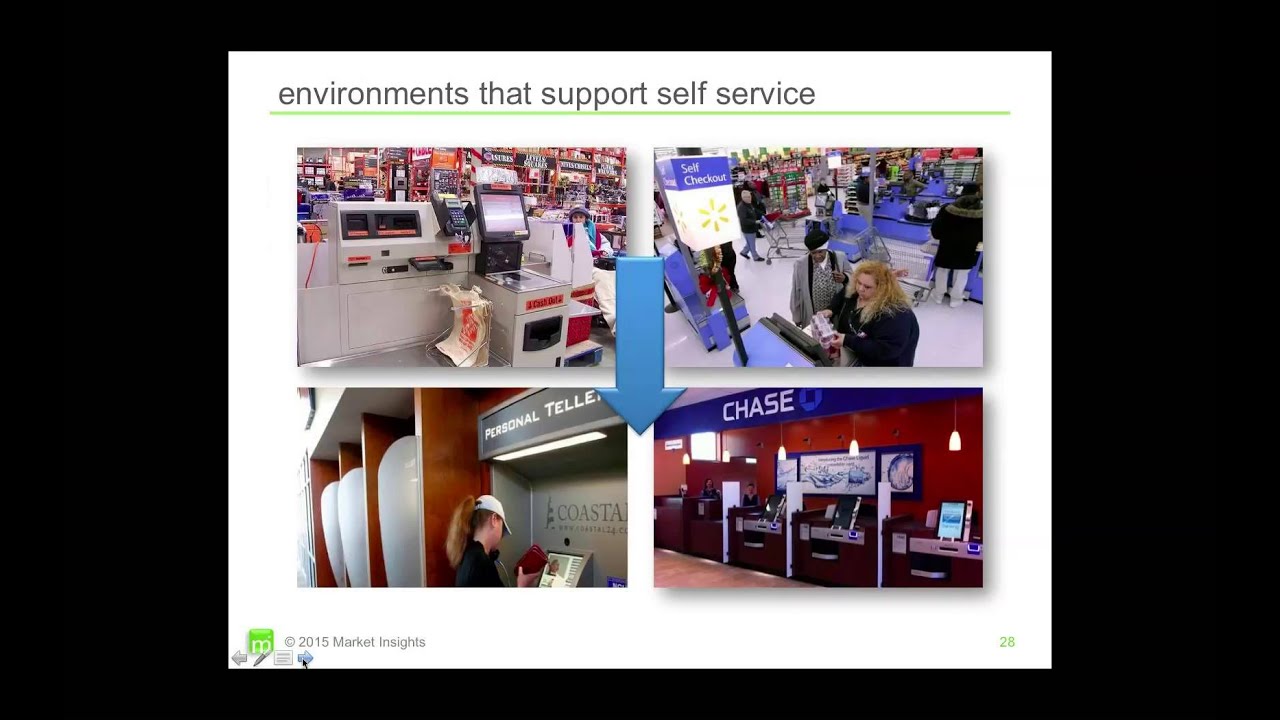
Eric and Jeff, thank you. And I figured with you two chatting, I wasn't going to chime in at that point because you poor unfortunate souls that are going to have to listen to me off and on for the next hour. So thank you for your patience. And Jeff and Eric, again, thank you for inviting me back. I am Joe Sullivan, as you know, CEO of Chicago-based Market Insights, but for the grace of God, I am not there this week. I'm out in Seattle, so it's 52 degrees and rainy here. So if you're in the Midwest and you're in that 20 inches of snow and 20 below zero, I feel for you. So anyway, with that, let's spend some time today. And again, I know as Eric already said to you, interaction. The more questions that you ask, the more you might help your fellow listeners online today as well. And I want to tell you, evolution of the bricks-and-mortar delivery system. I want to tell you how this presentation, no pun intended, evolved. Originally, I started this out as a presentation for bankers and what they're going to do with their bank branch. And in so preparing, really what I had to do is really draw on non-bank examples of what other retailers are doing and consumer behavior and technology and demographics. That is how this presentation evolved. Some of my examples will be bank-related. Some of them will be non-bank-related. What I want you to do is really say, how does this apply to my institution? I'm going to give you a construct, a way of organizing your thinking about how do we evolve and how do we go from here. All right. Now let me figure out how to control the screen here. There we go. Our time here together, here's what we're going to cover. We're going to get acquainted. I'm going to tell you a little bit about me and a little bit on the humorous side. I'm going to talk to you about some of the key trends, and by trends I'm going to talk demographics here, technology, and what bricks-and-mortar retailers and bricks-and-mortar banks are doing to address this issue of people are coming to our store or our bank or our credit union or our small business for different things than they were 5 years ago. So we're going to talk about the 3 Ps, not to be confused with the 3 Ps that I talked about last time, but we're going to talk about place, processes, and people. And I'm going to call you to action and ask you, what are you willing to do? What are you willing to take note of here today and go back to your institution, your business, your consulting firm, and take action on? So a little bit more about me. I'm a consultant and a writer and founder of Market Insights out of Chicago. Our work is about 75% with the financial services industry and a quarter with retailers and real estate developers and things like that. We're best known for the market study and demographic analysis and strategic planning and branding and marketing. I'm also a writer and a blogger. I write for The Financial Brand and the Financial Management Society most frequently. I'm a speaker and facilitator. I'm also a licensed psychotherapist, and I often tell the story of having been in my own business since 1993. Around 1996, I went back to school and did the only thing I could do after consulting with financial institutions after that many years. I became a shrink. So I'm a licensed psychotherapist in the state of Illinois. I'm also a yogi, so I do a lot of yoga, and I'm a trained yoga teacher as well, a 10-time marathoner, and a self-professed coffee lover. Regardless of where you are, whether you're in warm climate or cold, I do believe in one construct, and it's this: life is about moving from one highly caffeinated experience to the next. There's yours truly up in there. 6 years ago or 8 years ago now, we opened an office in Seattle, so I spend time in both cities. It really came across an interesting conversation that Eric and Jeff and I had on the front end of this, that the concept of place and where we call office, at least for Eric and I and Jeff, is almost irrelevant. It's what we bring to the client and the experience that we help create with the client is what matters. Evolution, what is it? Evolution by the very nature of the word means gradual, progressive change or development. Hopefully that's moving in a positive direction. I want to point you to 2015 here. You see a graph and you see on the left side you see an iPhone. And on the right you see a cover of Time Magazine. And nothing else in recent history has impacted our daily lives as much as the confluence of those 2 things, the Great Recession and the first iPhone developed in 2007. It has fundamentally changed our worldview of what we want from a retailer, from a financial institution, or any business that we deal with. It has fundamentally changed how we shop for information. how we shop for goods or services, and it is the great disruptor of all time. And these are the things that, you know, as we do more things mobile, and 61% of us, of the 90% of people in the United States alone that have a phone, 61% of us have a smartphone, and we continue to do different things with those. And what I'm going to talk about is how that's influencing what retailers and what banks are doing to change their bricks and mortar, not only the experience of it, but the physicality of it and what happens inside it. So some things that I would like you to keep in mind as we go forward here, what I call the basics. Know your market. You cannot begin to say, do we need to change our technology platform? Do we need to change what the inside of our store looks like or our bank branch? Or do we need to change our training requirements unless you know the market. So I'm going to lay out some major shifts going on demographically in the market. And the second thing is that your degree of evolution and the things that you must do at your business, your bank, your credit union, your consulting firm, whatever kind of business you are on this call today, it's got to be based on the market. It's not a blanket one-size-fits-all. You might have to evolve certain locations more because you're in markets that demand that. Also looking at how technology is supporting self-service. We have been going to self-service scans at supermarkets for 10 or 12 years now. We go to Home Depot and we don't want to stand in line behind somebody. We'd rather go to the self-checkout and do it our own way. This continues to get redefined, and we're in a time of what I call we keep taking first steps, and the only time that we get stuck is if we do nothing. So that leads me to my next slide. I recently— I'm a big follower of Seth Godin, one of my favorite bloggers, and every day at 3 AM or whatever, I get the email that says I posted something new. And on January 31st, excuse me, he posted something called The End of Geography, and I thought, oh my gosh, this is it. And he said, you know, some of the most important inventions in the last 100 years Take air conditioning as an example, which made it possible for people to do productive work in any climate across the country or the world. Credit cards, which enabled transactions to take place at a distance. The television, which homogenized more than 150 world cultures into just a few. Federal Express and container ships, which made the transport of physical goods both dependable and and insanely cheap, and the internet which moved information from one end of the world to the other as easily as you and I walking across our living room or our office, and of course cell phones which cut the wires literally, metaphorically, and figuratively. And so if you're still betting on geography or winning merely because you're local, I hope that you have a special case in mind. And I'm quoting him directly on that one. So we see many institutions that talk about being local, and while there's some important attributes to that, that is not going to be a differentiator that keeps your business alive or helps you figure out what to do with your bricks and mortar necessarily. So the next slide, on slide 8, I want to talk about some of the bigger challenges and priorities. Now while this article and this graph is positioned from the standpoint of a bank or a credit union, It's really not, because what we— and what we see across our client base is the idea of disappearing loyalty, of regulatory pressure getting stronger and stronger, that digitization is blurring the lines between industries, and it's not just banks. It's how all of us use our smartphone to gather information, decide what we're going to buy, and potentially go to a store or not. and buy that, and product innovation and digital channels are top priorities. So while these might be financial institution priorities, they're also retailing priorities and small business priorities, because most of the planning that we do, we are seeing clients tell us these same 4 characteristics over and over again. So let's take a look at some shopping centers here, and I pulled this image from an article. I think— I don't remember. I think it was the Huffington Post. And it was talking at the time about the Macy's and Macy's and their store closings and their announcement of however many stores they're closing and all the bad press around that. But it's happening everywhere, and these are just a few of the retailers mentioned in that article that are planning store closures in 2015. They're dealing with digital integration. It's happening faster in the retail side than the non-retailing side. So all these retailers that I mentioned here, and maybe Barnes Noble is having trouble more than the rest of these ironically enough, but you know, you got to give Sears some credit, and God love JCPenney for trying as hard as they can, and Staples and Office Depot. They're all also addressing digital integration. We've moved from a concept of what they call showrooming, where it used to be that you and I would go into a physical store to look at something and then go buy it online. Now it's the other way around. Now it's called web rooming, where we go online first, we research, we do our information, and then we go buy. Sometimes we buy at a store, or sometimes we buy it entirely online. 70% of people with smartphones do their research before going to a store, while only 50% do showrooming. So we also have lots of different technologies that I'll talk more about as we go through here. We have beacon technology. That is a GPS store tracking device where if I walk into a great big Walmart store, I can get the GPS navigator right on my phone that tells me where the milk and eggs are, where the shoes are in the store. Bricks-and-mortar retailers are using the technology to engage and interact with their customers when they do come to the store. We have stores and Macy's, and the point of this article was this: that Macy's, among other retailers like Best Buy and Walmart and The Gap, their stores are becoming, or at least a sample of their stores, are becoming online fulfillment centers. So they're converting square footage in their stores specifically for people that are buying goods online and would prefer not to pay the shipping and want to come in the store to pick them up. And stores are also facilitating the sale of goods for things not actually in their store. So we're going to talk more about these, but I want to say we cannot necessarily write all these retailers on the screen for dead. But we do know, based on the vacant shopping center behind it, there was a highly publicized closure of a regional mall in South Suburban Chicago that had been there for decades and decades. And basically, they chose not to compete anymore. So you are going to see store closures. You are going to see malls closing or being reconfigured. And at the same time, you are going to see retailers, some of those on this screen, that are using digital to engage the customer in a new way and repurposing their bricks and mortar. So it doesn't matter if you are a small retail convenience store, a coffee shop, a bank, a credit union, All of these concepts apply. So you never change things by fighting the existing reality. To change things, you build a new model that makes the old one obsolete. Now, I don't think we could say that any better than if we look at Walgreens, Apple Pay, or GoBank, which is a venture of Walmart. And I want to talk mostly about Walgreens here because I think that It's something the majority of you probably have one in your market regardless of where you are. If you're in London, then you have Duane Reade, which is a Walgreens brand, so they have a global presence as well. The interesting thing about— I have many things to say about Walgreens, and it all ties back to digitization, changing need for real estate. In Chicago, right near our office, there is a new— well, relatively new. It's been open more than a year now— Walgreens store. That opened in a former Borders bookstore location. It is that big. It is 2 levels. And when you walk into this Walgreens, I can of course do everything that I can do at a traditional Walgreens. I can fill my prescription. I can talk to a pharmacist. I can buy goods and services. But I can go to the juice bar. I can buy sushi. I can have coffee with my neighbor. I can do some other things online. I can get my flu shot. And what Walgreens saw was shifting demographics. Walgreens said, we have an aging baby boomer population that's going to need more and more pharmacy services. We have the Affordable Care Act that is changing how healthcare gets delivered. We have, you know, obviously more and more online. We have Walgreens that purchased in, I think, 2009 or 2010, drugstore.com. And so we have the confluence of a different need and a different purpose for why people would come into their store these days. But it's driven by demographics. It's driven by customer needs. It's driven by changing use of technology. So some of the other things that Walgreens is doing is they formed a partnership with a group called Aisle 411, which again is the GPS in-store tracking that I mentioned that can basically help you navigate your way through the store, get you to the goods and services that you are looking for, and make suggestive cross-sells based on your previous buyer profile and things like that. You can also use their Express Refill to scan the UPC code on your prescription bottle into your phone and get the Walgreens prescription already in the process going right then and there. So all of these stories about Walgreens is to prove or just demonstrate the point that again, not only the demographics that I mentioned previously, but the use of technology and finding different ways to engage with the consumer Bricks and mortar is not dead, ladies and gentlemen, but it is evolving, and so must all of us. So a quick bank thing, and I just want to mention— and this is a bank crediting an asset share that's just showing the level of consolidation. Consolidation is going on not just with these financial institutions that I mentioned, but with those retailers that you see on the previous slides, because what we are faced with is consolidation to again develop scale to be able to pay for the technologies to deliver the kinds of goods and services with the customer experience that people want. But industry consolidation is across almost everything these days. You know, pharmacies, department stores, grocery stores, coffee chains. And being where I am up here in Seattle, there's been a few of the longtime locals. One of those that has not fared so well so well called Tully's Coffee that of course Starbucks was trying to buy and it was sold to an investor group instead. But again, this idea of if my business model says I need more technology, the changing face of what people come to my store to do, do I need to look for people to consolidate to strengthen up our position? These are things that are not exclusive to, ladies and gentlemen, to banking in any way. But what we do know at a fundamental level is that shopping habits are changing so quickly that they barely have time to become habituated before we morph again based on the idea of a new app or a new idea. I recently had a bank client of ours say to me— and the mobile banking is obviously very big with financial institutions— and he said, we looked at their mobile app and we said, there are several things that you cannot do in here. You cannot open an account online. and things like that. You cannot deposit your checks mobile, which seems rather antiquated. And the technology head said to me, Joe, why should we do this investment in this technology when it's only going to change 18 months from now? Shopping habits are changing so quickly. Our expectations as consumers are changing so quickly that if we do not make a commitment to continually refining and updating our technology suite, our customer experience, the training of our staff to be able to deliver that customer experience, we will get to a point of no return where we can't catch up and we become irrelevant and maybe have to close our doors. And that's the last thing I'm sure that any of us want. So I want to talk to you a little bit about some of the demographics. There are some tectonic shifts. Boy, that's 2 hard words to say in a row. I want to talk about the idea of— and sorry for those of you that are not in the US on this listening in today. I'm going to talk about this relative to the US, and I'm showing a county-by-county map of the United States. And what this shows is the change between the 2000 census period and the 2010 census period, and everything in green shows growth, and everything in purple shows decline. And I think you can see what's happening. Is that we are a patchwork of a nation. We are a patchwork of states, and we have this idea that people are moving away from rural areas, and you are seeing store closures and bank branch closures and credit union consolidation disproportionately coming into these rural areas as younger people move away toward urban areas in search of a better job or a job and so forth. 70% of us right now in the United States and 68% of us worldwide live in an urban area. And that trend is only going to increase as the population ages and people want to be near urban core so they can walk to services and so forth, as the jobs are created disproportionately in high dense urban areas or within 100 miles of there. All of these kinds of trends play out in the retail space, in the banking space, in the credit union space, in the small business space, and it's our job as as people involved with these businesses, whether we own it, work for it, or consult with it, to know what these trends are. And so, conversely of that, here's a map showing it the other way, that rural counties cover 72% of the landmass in the United States, but only 15% of US residents live there. So, what you can see is obviously a realignment of demographics, a realignment of priorities. If I'm a national retailer, and I'm a JCPenney, or a Macy's, or a Bank of America, I'm going to look at some of these rural areas and say, if I have greater population density and greater opportunities in urban areas, or within 100 miles of an urban area, why wouldn't I take that and deemphasize, in order of priority, some of these smaller rural markets? Then you might be saying, yes, but if I live in one of these small and rural areas, I need the connectivity, I need the mobile app. I need the technology because I still want to interact with my bank. I still want to go to Walgreens.com. And so the investment in technology probably has its greatest benefit in some of these rural areas where people are leaving. So there's no one prescription that fits all this, but it's seeing how these demographics and the confluence of some of these things impacts our business models. And there's another graph on slide 16. I won't show you that, but the urbanization trend in the US and for the world for that matter continues to move toward greater urbanization. You have areas of China right now that not only urbanization that is growing, but you have areas that are returning to desert where the farm culture and so forth can no longer survive. There's not enough infrastructure there or people there to have that continue. Now the elephant in the living room for all of this, for all of us, is mobile. And it's really interesting because not too many years ago, even like in say 2005 to 2008, many people thought that 50% smart use was way too aggressive. Well, right now 91% of the US population has a cell phone. 61% of those are smartphones. It is estimated that 1 billion smartphones will be sold this year, which is double the estimates. And if you look at areas like China, and India, and Brazil where you have emerging economies where they never went to the landline thing, they are going right to the smartphones. And many of the global brands and global companies know this, that there is managed growth in the US, but there is exponential growth in some of these other countries where getting a mobile phone in the hands of a household or a domicile of sorts opens up the door for them to do all the shopping at all those brands and everywhere else that I just mentioned. So our comfort level as consumers, and one of the things that I often say to people is, remember first and foremost that you too are a consumer. So when you think about how you shop, how you evaluate, I just recently was shopping for car insurance and of course doing all that online. And look at the last bit of travel. Better yet, let me ask this question. Take a look at what you've done in the last 30 days with your smartphone. I don't know about you, but I bought plane tickets. I checked in numerous times with online mobile boarding passes. I shopped for insurance. I checked in, went to Facebook, did a variety of things, and we all do that far more than we did even 2 years ago. The other part of this, is that we are leveraging the trust of digital brands. And while this graphic has to do again with banking, it is an undeniable fact that we trust Google. We are comfortable with it. We are comfortable with Apple and iTunes. We are comfortable for the most part with Facebook. And an interesting article, I just read it yesterday, that Google which is a major investor in Uber is now looking at developing their own individual ride service. Now can you imagine with the muscle of Google getting into that business and having their own cars, and in the not too distant future those cars will be pre-programmed and driving around your neighborhood with nobody at the wheel? So my point in saying things here is that as we become so comfortable as digital and mobile consumers interacting with these brands on the left side of the screen, It would not be at all surprising for any one of those if they got into the banking business, or the car share service, or the medical service, or the digitized medicine service, or anything like that. We trust the brand, and with the brand and our trust of that, they can again take us places as a consumer that we never thought we would go. I don't mean just physically, but metaphorically. And the same thing goes here, that is speaking a little bit banking here, but PayPal and Google and Amazon and Apple and Walmart and so forth. Again, the biggest competitive threat on the banking side is not whether Bank of America is going to buy the bank in your town, but whether these 5 brands are going to continue to leverage financial. And of course, you know, we know how that's all working out with Apple Pay and GoBank by Walmart and PayPal spinning off into a separate company. and a variety of things like that. So the Google Wallet hasn't necessarily worked out, I think, how they planned. But this is to say again, investing in your brand, investing in the digitization of your brand, it will impact your overall what they call omnichannel experience of what people do with you bricks-and-mortar, and what they do with you via your mobile app. Now, 70% of branch visits— this is bank-related here— are because we funnel people in based on compliance costs, not because they love coming in. And this is where retailers are ahead of the game. Retailers have generally been ahead in terms of redefining the customer experience, and that's where we are at here, of completely redefining the customer experience. Now, channel innovators. Again, sorry for the banking example here, you guys, but it's, it's It applies to all of us here. Mobile investments, our comfortability— or comfortability, boy, that's not even a word. Sorry about that, you guys. Our comfort level with doing things mobile, whether it's making mobile payment, shopping for information, shopping for goods and services, getting airline tickets. Again, 75% of banks, and not too less than that on the retail side, believe that mobile is definitely the way to go. And now Starbucks is even getting into the banking business with their mobile app. And we have the investment in online, and we have the investment in the bricks and mortar. So this is again, when you hear the word and you read about things like omnichannel, and KPMG, the big consulting firm, just did a really interesting analysis of the store and the bricks and mortar store and how it required investment really in all 3 of those realms. to make it all work collectively. Having said all that, that was a long way to say let's set the stage about what's going on. Now I want to delve into this construct that I mentioned with you, and I want you to say in your own head, if you were standing in front of me or sitting in front of me, I'd have you all stand up in an audience and I would have you repeat after me: place, processes, and people. And if you think about everything that we just talked about in the previous slides and discussion, and we say, how do I need to evolve my sense of place? How do I need to evolve our processes? And how do I need to evolve our people? And that is where you can draw out some tangible things that you can do. So I'm going to talk about things, some retailers, some banks, and what they're doing But it all starts again with what I mentioned at the beginning, that you have to know your market. So the demographics, the psychographics, and by psychographics I mean people's behavior and what they are likely to buy, and which media channels that they prefer, and how they pay their bills, and which mobile apps that they like to buy things, and whether they will buy coffee or order pizza from the Domino's Pizza app, and looking at the competitive environment. Assessing, first of all, the purpose. What is the purpose for your bricks-and-mortar? That might seem like a very fundamental question, but it gets at the root of it. I want you to ask yourself, pick one store, one credit union branch, one not-for-profit center that we have, and say, what is the purpose for this bricks-and-mortar, and why is it that we pay rent every month, and do we need it? Now, in some cases it's about demographics and obviously reassessing the locations and focus on interiors. And what I want to talk about here is focusing on zones of engagement. So we will talk about that a little bit in some of the examples ahead. The first thing I want to mention here on slide 24 is the segmentation analysis. Major retailers understand the importance of big data, and successful retailers do 3 things. They manage that data, they interpret that data, and they take action based on that data so they can make decisions, define some metrics and performance indicators, and so forth. But many retailers will again, just like many banks or many credit unions, will do the same thing. They will pen their customer records. with data of predictive behavior based on life stage. So what I've laid out here, and I'm not going to go into a lot of detail here other than to say that you can take the data records that you have regardless of the industry that you happen to be in, and you can append information on it to define people based on what they buy, how they shop, how they engage with the brand digitally, you know, the media preferences that they have, and that will allow you then to say, what is it that I need to be doing with my bricks and mortar and so forth? A gentleman from Wells Fargo said it this way. He said, it's not our bank branch itself that's dead, it's the workflow and the technology that's dead. He said, we want to invest in the new technology and the new workflow to make our stores more relevant and valuable to our customers of the future. The reason I pulled this quote out is that I think that it makes sense again regardless of what type of business that we work in, that is what we're looking at. And so the workflow is that processes, that second P that I mentioned to you just a few minutes ago. So just a few examples and some things that I want to point out to you about this. These are some interior shots. These happen to be banks. We'll get to some non-banks in a minute. But one of the things that I want you to think about when you look at your space, Do I have areas of customer engagement? Do I have areas in my store for self-service, for self-exploration where a customer can go up to a kiosk and get information and perhaps buy something that we sell as an entity, but we don't physically stock in our store? Because this is what JCPenney or Sears or Barnes Noble or any one of those companies that are, albeit challenged, are starting to do. And do I have an area, if I'm a bank, for more complex transactions? And a more complex transaction might be in a retailing sense is obviously, do I have a fitting room to be able to try things on? The irony of all of this is that location becomes more important, not less. When we're dealing in a digital world, if we commit to the bricks-and-mortar theory, then we need to make sure that the bricks-and-mortar that we do have is in the best place, is our physical landing page for our brand, and represents us well out there. So it's got to be well located, well designed, well merchandised, and so forth. And the idea of universal specialist— that's a banking term, but in the non-banking term, in the retailing term, what it means is that investing in people and defining what you want the customer experience to be about is going to be critical going forward. And you will see more and more of budgets of institutions, of retailers going towards staff training and development, because they are the ones that will help deliver this experience. So I'm going to skip ahead to the slide on 28, which shows again Home Depot and the self-service checkout at Walmart and a person standing at a personal teller talking to a video screen. But one of the things that I thought, and I want to share this Chase Bank example with you. I recently walked into one, and see in the lower right-hand corner of your screen, that happens to be a Chase Bank branch in Seattle in an area called the Silicon Canal. It's an area of high-tech in the city, not too far from Amazon, where you have Google and a variety of other tech companies that are now clustering. And I walked into this branch, and I was surprised to see that those were not video-enabled kind of bank tellers there. Those were traditional ATM screens, and I said, why is it that you would have something so low-tech in such a high-tech area? And this branch manager said to me, he said, our community resisted us, so what we did is we built the technology in when we reconfigured the teller line that we can make the switch and turn that into a completely tellerless technology experience. My point in saying it is this: that we have to look at our market and again how our customers are going to receive this message and are they going to be comfortable with the technology that we're using and what kind of staff training might be needed in order to do that. You know, when you stand in line at a checkout at a Home Depot, there is obviously a person there to help you if you need it as well. Now what I find most interesting, I referenced Walgreens earlier in the presentation here, And again, being able to scan my prescription bottle if I'm looking for a retail refill, excuse me, and to then to be able to go in the store to pick it up or to have it delivered to me, I think is a great thing. I recently personally went to another pharmacy recently here in Seattle to get a prescription filled, and of course I either had to call and make sure that my doctor had called it in Anyway, to make a long story short, they had none of this kind of technology available. I went to the store, it was not available. Of course, you can imagine that I was not a happy camper. But this imagery here is showing that Walmart, with its virtual Toy Star, they are making the connection between what our customers do with us online, what they do in the store, and they're looking at that as one experience across many different kinds of channels. And so that's when you see— and it's not just the national retailers that are doing this, but they are making the investment to say we've got to invest in the technology, but we've also got to invest in how people want to interact and engage with us in the physical world as well. So I'm going to skip through some of these examples on slide 30 of teller configurations, and on 31 of a small branch that is actually a PNC Bank in a shipping container that is 8-foot wide by 20-foot long, but suffice it to say this: the banking sector, the retailing sector, there is a period of experimentation with how we interact and how we engage with customers. Second, processes. And really what I just described is processes of being able to go and to fill my prescription at a Walgreens by scanning it into my phone. But the best way to think about this is delivering the desired customer experience that you want to have. So do we have the talent? Do we have the technology? Are we leveraging the big data? And do we have the alliances or partnerships in place to be able to do this? So in other words, it's kind of organizing the stuff under the hood to say, it's not just about remodeling our store or our credit union brand so that it looks more hip and innovative. It's about analyzing what people do when they come in, and what do we require them to come into a store to do versus something they can do online. So whether it's opening an account in the banking world, whether it is shopping for something, shopping for a clothing item and being able to try things on digitally online and then coming into a store to buy it or what have you. These are the kind of under-the-hood things that we must address. that are even more important than physical changes, in my opinion, in what the store might look like. So you cannot restructure a bank or any business for that matter, according to Chris Skinner, and this is related to a banking model, around customer data if you have that customer data locked up in old computer legacy systems that are product siloed and channel handcuffed. Translation, in the land of big data, we are capturing the data And as I mentioned earlier, using that data effectively, businesses that do so will be the ones that win. So it's about having obviously the systems in place to be able to capture and analyze and take action on that data. And the 3rd P in the process of place, processes, and people is just that. It's looking at the staffing, and first of all, training to a desired customer experience. What is it that we want our customers to experience when they walk into our physical space, when they log on to our website? So again, in the banking world, that has translations into what people do when they come to a bank branch. In Walgreens' world or in Best Buy's world, it's again, have people been webrooming on our website and explored the different versions of winter coats available if you're in a JCPenney's or what have you, before they come here. But the idea of blowing up last year's century staffing model, or last century staffing model, is again not assuming that because we're in a store, we need a retail clerk or a cashier, or if we're at a bank or a credit union, that we need a teller. It is about saying, what kind of engagements and interactions are we going to be having with customers in this new kind of space given the fact that so much of what they do before they get to us is done online on our website and via the technology. So it might mean that you need people that are heavily cross-trained in different product lines at your store, heavily cross-trained in products at your bank, so a more universal person with a cross-degree of knowledge. Now what does that look like when we don't evolve? It looks like the screen that we see on 35 where you see a lady standing in a teller in 1913, and it doesn't really look too much different in 2013. And this is where banking and financial institutions are catching up to retailers. But again, the evolution of people is what makes the magic of this all work. We empower our store managers, says Lenny Hayward, EVP of Creative for Umpqua Bank. We bring to life what's most important in the local communities. So what this institution did is they call themselves a retailer, but it is a bank that was one of the first to apply core retailing principles of customer experience into their stores. They focus 2 things about how they manage and hire people. They empower people, store managers, with authority to make pricing decisions, product decisions, and the same would go for, again, a retailing environment. And what we want to do is empower people to make the decisions so they can continue the process of engagement with customers. And obviously this bank is well known for their engagement in the community overall, but the words that I want you to remember from this are empowerment and engagement. And are we giving our team the training that they need Are they empowered to make decisions, to take care of a client situation if they come in, if they log on, and are they trained to be able to engage with customers in the new environment? There's a great example that I read recently of thanks to smart tags and things like that, there's companies like Gap, Burberry, and Nordstrom that are experimenting with computer tablets attached to the outside of fitting rooms where if I'm inside and I need a different size of blue jeans that I'm trying on instead of having to put my clothes on, walk back out. I go out there. Instead, I engage with a person who's working that end of the store via the iPad that's on the door. So again, technology, but what it requires is a different kind of training to make that all work. And some examples here. This happens to be some bank-centric data on branching and what I call efficient yet engaged, and nowhere in there do you see tellers. So what I want you to do is, as we start to wrap things up, and then we'll open it up if there's any questions, Eric, but I want to just mention number one in terms of stop viewing the bricks and mortar, whether it's your store or your bank branch or your credit union branch, as the single most important revenue driver. It is part of it, but we are moving again away from that idea that the bricks and mortar is the most important place where we're going to see revenue growth, because that is not necessarily the case. But what that bricks-and-mortar might be for you is a way for you to introduce your brand and to make sure people know who you are. It is your physical landing page. Now you might say, look, I have 20 store locations, 50 bank branches, 3 Crediting Union locations, 87 coffee shops, whatever it is. Where do I start? We say that the evolution, the speed at which you evolve, is dependent on the markets that you're in. If I'm in a high-growth urban area with a demographic of well-educated college professors or whatever, I might be doing one thing. If I run a store or a coffee shop in Silicon Valley versus Bentonville— maybe not a good example, but some town in Arkansas as an example— I might be looking at changing things in Silicon Valley first. Just like what Macy's did where they decided store closures were based on markets with lack of density, lack of sales growth, The speed at which they're evolving, on the other hand, is they're making the changes in the stores in some of their most important markets. So what you need to do is to prioritize which markets have the greatest potential for you to grow your particular line of business. Third, knowing or perhaps re-engaging with your market is your first priority. Once you've established that set of priorities that goes with bullet point 2, as I mentioned, whether you break it down to years 1, 2, or 3, kind of get a developed priority list of what you've got to do, when you've got to do it, implement it sequentially if you can, and communicate and keep everybody in the loop. Remember, one of the most important things in this process is that evolution is not about the old metaphor of just when you get there, there disappears. It's a diet, or it's a lifestyle, not a diet. It's an ongoing commitment to keep making changes, keep fine-tuning, keep understanding what customers are engaging with you for in your bricks-and-mortar, what they're going online with you for, and recognize that you've got to keep fine-tuning it over and over again, that it's a non-step process. So before we open up to any Q&A, if there is any, I want to just again repeat the construct that I laid out at the beginning here, what I called the 3 Ps: place, processes, and people. And if you take a critical look at your organization and say, once I know my market and where it's headed and what the changes are likely to be and what they've been, what changes incrementally can I make in my place, in my bricks and mortar, my credit union branch, my coffee shop, and so forth? Second, what are the processes that need to change internally? Because maybe people are engaging us more in the digital space on our website and webrooming with us, that by the time they come to our store, they're here to pick up something. So is it more about we're a fulfillment center as opposed to a retail showroom? And third, people. What level of training? What level of empowerment? What needs to change with how I hire? And so forth. And are we— first of all, have we defined what we want as the desired customer experience? And are we training, staffing, and hiring to deliver on that experience? So as Seth Godin says, again, my favorite blogger as I mentioned to you, he says, soon is not as good as now. With that having been said, I want you to write down one action step under place, one action step under processes, and one action step under people that you are willing to commit to in your organization or get started on in the next 30 days. Eric and Jeff, I'm just going to check in with you on time here and see if there's any questions.
We have about 6 minutes remaining. And Eric, do you want to pose that question that's in the box?
Let me take a look here. I was having a sidebar conversation with one of our attendees, so hold on just a second. Do you think that the intent of Amazon— let me see. Do you think that's the intent of Amazon in buying the closed RadioShack stores?
I've heard a rumor of that. I've heard no confirmation of that, and I read an article about them opening up a store in New York that was all rumor. However, I do not think that if Amazon does choose to open up a series of stores in the country, that it would be about connecting the digital and people, what people are doing online, and the concept of webrooming and being able to physically purchase a good. But I think it would be more a fulfillment center if they did that.
Yeah, I would agree. I know one of the things not a lot of people are aware of, but I used it quite often because we've got a Best Buy right in Battle Creek where we live, is I will a lot of times go online and find stuff. And like you said, I'll use the internet first, and a lot of times it's on my mobile device or my tablet as opposed to my laptop. But I'll go online and I'll find stuff first, but then I check to see if it's available at the Best Buy, and I will go in there because they have a policy where if you actually show them the price someplace else, they'll match it. They'll match it. And I think that's a really untapped secret, and I think that's one of the ways that some of these, you know, you look at what happened with Blockbuster. If they had gotten to the point where you can either come in, you can browse the movies, you can look at everything, or embrace more of the Netflix Whereas if you don't want to come in, don't worry about it. You can still rent online. They may still be around today. And the whole concept of— and this is kind of cheeky— but clicks and mortar as opposed to bricks and mortar, where you've got kind of the best of both worlds and figuring out ways that you can leverage that. I think Walgreens is a good example because a lot of the stuff you can do digitally, but you want to come in almost for that hands-on personal experience. And think of ways that you can serve, because when you go into a Best Buy, they've got all the giant televisions. You can sit and watch them, you can look at them, you can touch and feel, but then you can actually walk out with a product. And even with Amazon, you know, 2-day shipping, you know, there's nothing like actually taking the product out with you right then and there.
Instant gratification.
Yeah, absolutely.
Well, and also, like, Best Buy is a good example too. In any one of those, those retailers no longer carry in most of their stores the number of products that they did because they don't have to, because they can still address and allow you to buy something. They're putting kiosks in stores that will allow you to look at the inventory of things that they sell online but not in the store. Just like if you go to a furniture store, Room and Board, I was in there recently, and it's like, you know, 3/4 of their inventory is something that is not in the store physically, but they bring you to a kiosk to show it to you, and they still sell it to you.
Right.
What it also translates into, Eric, is that it means that the square footage needs— I didn't really reference this— it's going to mean that the store, they're going to be smaller, and there's going to be less need for real estate. Folks in the UK figured that out a long time ago due to the cost of real estate being so high. But these national retailers here in the States, again, if they can stock fewer items in a store, use less square footage, that'll be able to positively impact their bottom line. So all these pieces are connected.
There's this Yahoo in the chat room called— his name is Jim Perry. I don't know if you know him or if you recognize him.
Yeah, I think I might have heard that name before, yes.
I say that somewhat facetiously because I know Jim is a colleague of Joe's, and Jim has actually been a guest. But he went and actually shared Bloomberg Business is kind of predicting that If Amazon were to use retail locations primarily as a showcase for e-readers and tablets and smartphones, and then maybe even a pickup spot for online orders, so if somebody wanted to go in and snag it. Of course, as opposed to having a drone drop it off your front porch. We need to make sure we caveat that as well.
Well, Amazon is also— pardon me, Jeff?
I was just gonna say that makes a lot of sense for a A pickup spot. I was in Austin, Texas, oh, at some point last year, and I was in, I think it was a 7-Eleven, and there was actually a bank of lockers in the 7-Eleven that were Amazon pickup spots.
So yeah.
And that was actually what I was going to reference, Jeff, is they have those around the country. And I live about 3/4 of a mile from the Amazon headquarters, which is a really interesting thing. And so when those first, those drop-off boxes came out, which is another way to again avoid shipping, but they also originally approached like the UPS store chain in the United States, at least some of them here that I've chatted with, and UPS really didn't want to get involved with that with Amazon. So yeah, I think that all of this is redefining what bricks and mortar is going to be about, especially in the retailing space.
Yeah, being a digital marketer, of course, this is right up my alley. You know, Ali, because we've been preaching this for a number of years, and you can't discount the importance of a physical location. But particularly in the banking space, what we're seeing the more progressive financial institutions think about is considering their website and their digital presence as an office, as a physical location, but think of it more virtually. And the reason that I think that that's important is you think of when an office, or when a bank particularly, opens an office, They hire a branch manager, they bring in customer support people, they bring in experts that understand loans or deposits. You know, they have a decision maker that's there to answer questions when customers or members come in. And that is really what's happening now, because if banks particularly, or any business really, look at the traffic that's coming to their website, they're probably getting more traffic, more visitors, more activity at that quote-unquote virtual office than they are in any of their physical offices, yet it's the most understaffed location that any of these institutions have. Well, I can accept that. Because they have one person in IT, or maybe the marketing director every once in a while updates the website, but thinking of it as an actual banking center or a profit center, you know, I think it's going to be interesting to watch the banks that get that Really evolve and pull the resources to see what they can do with it because you can open accounts, online chat, secure, I mean you name it.
We have one client in particular here that we helped with setting up their virtual branch in terms of— but again, what it is, it was a commitment in the mindset to okay, this is a branch. I think that the metaphor, if that's the right word here, is that if we can lay out a new construct in a filter that they already understand.
Yeah.
And so in the banking world, in the retail world, they say this is a store, and so we know that a store has to have accountability, it has to have inventory, somebody's got to be responsible for it, it's got to have a P&L to it. And so part of the way we evolve is we introduce these new concepts which are so heavily influenced— retailing influencing banking, and even to some degree banking influencing retailing. But introducing the changes that need to take place with your board, your senior management team, based on a construct that they already understand. Because yeah, believe me, in our work in the banking sector, we're involved with all kinds of institutions with opening and closing of locations and justification, and can they rationalize that process. And the one thing that we say to them probably above all else is this is not a design issue. This is not about going in and putting a coat of paint and sugarcoating something with a new fresh look. It's changing some of that under-the-hood stuff that I talked about, and whether that means the website and developing it as a P&L center, and we could go on and on about that. But it's a bricks-and-mortar issue that I think is across industries, across this nation and this world, that has been disrupted by the mobile and what we do online and with our mobile phones. And we have to constantly keep asking ourselves, how does this mean— what does evolution look like today, almost?
Cool.
Well, we are just a tick over 2 o'clock Eastern time. Jeff, do you have any other closing thoughts that you'd like to offer? I think you're on mute.
Oh, there we go. No, I'm not on mute. I'm thinking.
Oh, okay. Thinking.
Good information.
Thank you.
I enjoyed it.
Thank you both for inviting me on here today. Again, I invite any of you on today. I have my contact information on slide 40 there. You can reach me on Twitter @mi_sullivan or my email jsullivan@foremarketinsights.com. If you want the slides, if you have questions that you want to ask me directly, go ahead. My contact information is all there. I'm glad to take your call or your email or have a discussion with you Again, thank you both for inviting me here today. Again, I appreciate it.
Excellent. Yeah, it's hard to wrap this because there's so much other stuff that I think I would love to talk about, but we'll save that for maybe a round 3 down the road. Maybe we'll even do a special bankers-only version and we can really geek out with banking stuff.
We can do that.
Like you said, the stuff that you're sharing today really is relevant whether it's banking or coffee shops. Everybody needs to be thinking about this stuff. Well, that concludes this week's episode. Again, Jeff and I are glad to be back. Sorry we took a couple weeks off, but we are back and look forward to seeing you all next week and in future weeks. Keep an eye on freewebinarwednesdays.com. We'll have this uploaded there, and if there's anything that you'd like to catch again or share with friends or colleagues, by all means do so. But until then, thanks again, and we'll see you next week here at freewebinarwednesdays.com.
Thanks, Eric.
Have a good week, everybody. Bye-bye.
Thank you. Bye-bye.







