Crack These 6 Leadership Styles—Or Lose Your Team
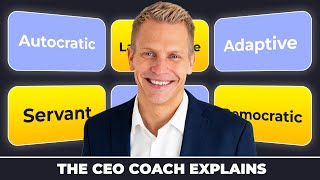
Eric Partaker breaks down six leadership styles: Transformational, Servant, Democratic, Autocratic, Laissez-faire, and Adaptive. Each comes with real examples like Steve Jobs and Satya Nadella, plus when to use it and how to put it into practice.
Questions this video answers
Eric Partaker
October 10, 2024
Transformational; Servant; Democratic; Autocratic; Laissez-faire; Adaptive
Steve Jobs (Transformational); Herb Kelleher (Servant); Indra Nooyi (Democratic); Gen. George S. Patton (Autocratic); Warren Buffett (Laissez-faire); Satya Nadella (Adaptive)
Chapters
Have you ever wondered why some leaders are more effective than others? Or perhaps why a certain leadership approach worked brilliantly in one scenario, but failed in another? Well, that's exactly what I'm going to be talking about in this video. Today we're diving deep into six common leadership styles. We'll explore what each style looks like in action, when it's most effective, and how you can add the style to your leadership toolkit. Oh, by the way, if you're new to the channel, I'm Eric Partaker. I'm a CEO coach to 30 of the world's leading CEOs. From multi billion dollar companies to rapidly growing startups and scale ups. And I've also recognize as the CEO of the year. But before we get into it, what exactly is a leadership style? Simply put, it's the way you lead others. This encompasses how you communicate, make decisions, motivate your team and handle challenges. Each style has its own unique set of characteristics, advantages and challenges. And why is this important? Because there isn't a one size fits all approach to leadership. And knowing how and when to match the right leadership style to the right situation can significantly impact your effectiveness. So let's dive in with our first style training. Transformational Leadership. Transformational leadership. This is a style where leaders inspire and motivate their team through a strong vision and enthusiasm. And they're aiming to transform their followers into leaders themselves. So the characteristics of this style, Transformational leaders are known for their charisma, their strong sense of vision, their ability to communicate this vision. And they're also characterized by their ability to listen, encourage and promote an environment of curiosity and creativity. Now, the advantages of this style. So one of the main strengths of transformational leadership is its power to drive significant changes within an organization by aligning the team's values and goals with a clear vision. This in turn creates a strong sense of purpose, which further boosts engagement and motivates team members to reach beyond what they thought was even possible. However, transformational leadership can be challenging to maintain long term without burning out both the leader and their team. And it may also lead to an over reliance on the leader for inspiration, potentially stalling initiatives, and if the leader is not present. So when should you use it? This style is particularly effective during periods of dramatic change, such as during a company restructuring, major shifts in market dynamics, or maybe when a new vision is just needed to push the organization forward. So how can you properly deploy this style? Well, here are a few things you can do. First off, you can develop a clear vision and relate it to actionable goals. So work on articulating a clear and compelling vision that resonates emotionally and intellectually with your team. You see, you want everyone to not just feel the excitement, but but also understand more rationally why your future vision is exciting. And to ensure the transformation still feels achievable, it's incredibly important to break it down into actionable and understandable goals. Then, as the team powers ahead, regularly relay ongoing work and projects back to these goals to maintain motivation and a clear sense of purpose. The second thing you can do is foster open communication. Transformational leaders thrive in the flow of ideas and energy between themselves and their team members. So you want to encourage an environment where team members feel safe to express their thoughts, ideas and concerns because that open dialogue is going to fuel innovation and engagement, which are both essential components of any transformation. And last but not least, lead by example in innovation. So to truly inspire, you must show that you're willing to push boundaries and pioneer new projects. You know, take the lead on projects that innovate and break from tradition and show your team that risks are acceptable and can lead to breakthroughs. Now here's a great real world example and we all know this person, Apple co founder Steve Jobs. He's a classic example of a transformational leader. Jobs was not just a visionary. He inspired his team to innovate and push the limits of what was possible. And it led to revolutionary products like the iPhone and the iPad. Now next up, let's move on to servant leadership. A style where the leader prioritizes the needs and growth of their team and organization above their own personal agendas. So, characteristics Servant leaders are empathetic, attentive and committed to helping each team member develop and perform as highly as possible. They lead more from behind, focusing on nurturing and empowering others. Now, as you can imagine, this style has many advantages. It's known for building strong, long lasting relationships within teams, which leads to high trust levels and enhances team loyalty, which all in turn fosters a positive organizational culture and high employee retention rates. Now, servant leaders may sometimes struggle with decisiveness and assertiveness, which can be critical in high stakes or time sensitive situations. So when do you best use it? Well, it's especially effective in organizations where value is placed on collaboration, mentoring and long term employee growth. So what are some of the top ways you can implement this style? Number one, sharpen your active listening skills. Now I know active listening is important in any leadership role, but it's particularly critical in servant leadership where the leader is extremely focused on the needs of the team and removing any obstacles in the way. So really focus on what people are saying, try to listen before you speak and in that way you'll be able to better support their needs. Number two, promote transparency and openness. So be transparent about decisions in the state of the organization. This openness will build trust and encourage a similar level of honesty among your team members. And lastly, place team development on equal footing with goal achievement. Here you want to be very aware of how you structure projects and responsibilities so that it promotes leadership and skill development within the team. A great real world example here, Herb Kelleher, the co founder of Southwest Airlines. So he was a servant leader and his leadership style helped create one of the most loved and profitable airlines in the industry. In his own words, your employees come first and if you treat your employees right, guess what? Your customers come back and that makes your shareholders happy. So start with employees and the rest follows from that. I know I have a lot of early stage entrepreneurs, founders and CEOs in my audience and if you're one of them, you need to start consciously crafting your leadership style. And I've built a free crash course to help you do exactly that. In my ultimate leadership guide, you'll learn the five big mistakes every new leader makes and how to avoid them, and how to make high stakes decisions with confidence and win back 10 hours a week. You can gain access for free in the description below. Let's dive into the Democratic leadership style next. So this style involves leaders who place extra emphasis on engaging team members in the decision making process, underscoring the importance of collaboration and consensus. So you can think of democratic leaders as facilitators. They encourage open dialogue and ensure that all team members have an equal opportunity to contribute to discussions. And they especially value collective decision making. Now as you can imagine, such a leadership style enhances team satisfaction and motivation because team members feel their opinions are always heard and valued, so kind of makes sense. And it can also lead to more innovative solutions and mitigate risk because of all the different perspectives that are collected. Now, all this said, with all of those inputs, the potential downside is a slower decision making process, which could be especially harmful in urgent situations. So when to use the style? The democratic style generally works best in environments or situations where the decision making process especially benefits from varied input, such as creative fields, strategic planning or organizations with a flat hierarchy. So how can you implement this style? Well, here are my top three suggestions. Facilitate inclusive discussions Use structured discussion techniques that ensure all voices are heard, such as roundtable feedback where each person has a set time to share their thoughts without interruptions. Also, promote inclusiveness in decision making. So encourage participation from all team members, especially those who may be less inclined to speak up by directly asking for their input and affirming the value of diverse perspectives. And last but not least, implement training sessions on consensus building techniques. This is where you're going to help team members learn how to negotiate and compromise effectively, which is essential for making this style work. So a real world example here, Indra nui, the former CEO of PepsiCo. She's often cited as a proponent of democratic leadership because she actively sought the opinions of her team on key decisions, which not only boosted morale, but also led to more rounded and robust business strategies. Next up, we have the autocratic leadership style. And this style involves the leader making decisions independently with minimal input from team members. It's characterized by direct control and really quick decision making. So autocratic leaders are known for their decisiveness and command, as you can imagine, and they set specific guidelines and expect prompt execution, providing stability and clear direction, especially in critical situations. Now, as you can imagine, this leadership style is highly efficient in situations that require fast action and where there's no room for ambience ambiguity in the instructions. But the challenge is, you know, so the downside can include decreased innovation and engagement from the team members who might feel that their contributions aren't valued due to the lack of involvement in the decision processes. So when best to use this style. So this style is best used in high pressure environments where quick decisive action is needed, such as in emergency responses or when the team needs clear, direct leadership to meet extremely tight deadlines. Some actionable tips here. So number one, establish rapid feedback loops. You want to create mechanisms for quick feedback so you can continuously monitor the impact of decisions and adjust quickly if needed. Next up, you want to promote efficient communication channels. So implement efficient direct communication channels that facilitate swift information flow and quick clarifications. This ensures that all team members are promptly informed of decisions and any subsequent changes. And number three, you want to outline specific protocols for different scenarios that require quick decisions. And then you want to ensure these protocols are well understood by the team so there's no hesitation when it comes to executing. So a great real world example here, General George S. Patton. So General George S. Patton was a great real world example here. He really exemplified autocratic leadership during World War II, where his ability to make swift, decisive decisions was a critical success factor. Next up, let's talk about the laissez faire leadership style. And this style is characterized by minimal supervision and grants a lot of autonomy to team members in terms of making decisions and managing their work. Now the key thing here is that laissez faire leaders trust their team members to perform their tasks without much oversight and they provide the necessary tools and resources, of course, but allow for significant freedom in how the work is completed. Now this approach is particularly effective with highly skilled, motivated and self sufficient teams, and it can also lead to high levels of creativity and innovation. As team members, you know, as you can imagine, they're going to feel very empowered to experiment in and take initiative. All that said, the lack of direction does risk potential inconsistencies in work quality or team cohesion, and it also might not work well with less experienced team members who, you know, maybe require a little bit more guidance. So if you think the conditions are right for this style, here are some important tips to ensure that it delivers. Now, while you provide autonomy, it's crucial to establish clear expectations and outcomes to ensure alignment and accountability are still happening with this style. So define what success looks like and let your team figure out how to get there. You also want to regularly monitor progress, so implement a system for regular check ins that allows you to monitor progress but without micromanaging. And this could be through simple weekly summaries, monthly meetings, or you know, maybe like a project milestone review. Lastly, with this style, you just want to make sure that people are fully aware of the resources and the support that's available. So ensure your team has, you know, access to to all the necessary tools and resources to perform their tasks efficiently. Be available to provide support or guidance when asked, and you might even maintain an open door policy where you encourage team members to seek help when needed, perhaps on certain days of the week or times of the day, not like literally keep your door open all the time. Now Warren Buffett is known for his laissez faire approach to leadership within Berkshire Hathaway. He sets the overall goals for the company, but then he allows the managers of his various companies significant freedom to run their operations as they see fit. And given his wealth, it certainly seems to have worked for him. If you're enjoying this video, you'll love my best selling book the Three Alarms and I'm currently offering it for free to my YouTube audience. Among other things, you'll learn how to build your antifragility and turn stress into strength, how to avoid the five most common traps to reaching your full potential, and how to overcome procrastination and become super productive. So get your free copy in the description Below. And last but not least, let's talk about the adaptive leadership style. Now, this style emphasizes the leader's ability to quickly adapt to changing circumstances and to foster that same adaptability across their team members. Characteristics. Well, as you might have guessed, adaptive leaders are flexible, responsive, and capable of managing a high degree of complexity and certainty. They're also quick to recognize when changes are needed and encourage rapid innovation and problem solving within their teams. So, you know, in that sense, it really makes sense for adaptive leadership to be a go to style and rapidly changing environments, you know, where teams need to pivot quickly in response to new challenges. And one of the nice byproducts of adaptive leadership is that it promotes resilience and continuous learning almost by default. However, it can be very demanding on both leaders and teams because it requires constant diligence and the ability to see around corners and think ahead. And all of those frequent adjustments can lead to uncertainty within the team if they're not managed carefully. So when is this style best used? So if you're in a sector where change truly is a constant, such as in many tech sectors, then it's a crucial style to stay ahead of the game. And here are three actionable tips or ways in which you can successfully implement this style. First off, you want to encourage a culture of learning and innovation. So foster an environment where team members are encouraged to learn continuously and experiment. And you want to offer resources for professional development and create opportunities for learning, such as workshops or cross training. The next thing you can do is stay proactive by regularly assessing team processes and strategies. So you want to be prepared to make changes if certain approaches are no longer effective. And you got to use feedback loops to gather insights and inform any necessary adjustments. Another top implementation tip with this style is to develop flexibility in team roles. So you want to encourage team members to develop skills outside their primary areas of expertise. And that will not only enhance team versatility, but also aid in the personal growth and job satisfaction of your team members. Now, a great real world example here is Satya Nadella, CEO of Microsoft. He exemplifies adaptive leadership. Under his leadership, Microsoft has shifted its focus significantly. So these days they're embracing cloud computing and open source projects, which were kind of once considered outside of what Microsoft would even consider. And Nadella's ability to adapt and realign the company's strategies to the evolving tech landscape has led to significant growth and innovation for the company. So remember, the best leaders are not those who rigidly adhere to one style. Instead, they're flexible and adapt their approach based on the needs of their team and the demands of the situation. And knowing these styles, understanding where they're most effective and recognizing which ones align with your natural inclinations can transform your leadership and significantly enhance your team's performance as a result. So I hope that helped. And be sure to subscribe so that you don't miss future videos. And also check out my free newsletter and leadership training. You'll find links in the description of this video. Thank you so much for watching and we'll see you again soon.










