Leadership Lessons from Former General Electric CEO - Jeff Immelt
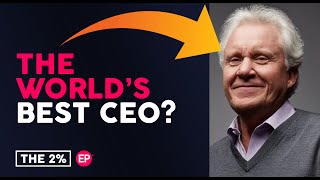
Jeff Immelt led GE through 9/11 and other crises as CEO from 2001 onward. He describes the $2B earnings hit from the attacks, his crisis playbook of absorbing fear and communicating dual truths, and three questions every leader must answer: how fast can I learn, how much can I give to others, and can I take a punch.
Chapters
You have to answer three questions in your career. Right. How fast can I learn? How much can I give to others? And can I take a punch? And if you can answer those three questions, you can do almost anything in your life.
Welcome, Jeff. Great to have you on.
Hey, Eric, thanks.
Great to be here.
Great to meet you. And I look forward to the conversation.
Yeah.
And just right off the bat, let's give people an appreciation for the scope of what you were leading. I mean, ge, give us some numbers. Like, what was, you know, market cap at the hike during your 16 years as CEO? Number of employees, maybe? How many geographies were you in?
Yeah, look. So, yeah, you know, it was kind of like the classic industrial and financial conglomerate, so.
Probably at its peak market cap, close to $400 billion. 185 countries, 330,000 employees. We would do everything from jet engines to media to pet insurance. We had 26 countries that we had more than a billion dollars of revenue.
Probably the most highly regulated company in the world.
Yeah, no, it was like, incredible scope. My predecessor said to me when we were kind of going through a transition, he said, jeff, look, you're never going to go home because your work is done. You're going to go home because you're tired or you want to see your family or you're stressed out. But for as long as you do this job, you will never have a minute that you're not going to feel stress.
Yeah.
You know, after 16 years, I can say he was 100% right. He actually underestimated how stressful it was.
Yeah. And I think a lot of people might know the predecessor that you're referring to, if you wouldn't mind naming.
Yeah. By Jack Welch was my S.O.
In.
So I basically took over for him in 2001.
Yeah.
And as we were going through the transition, he was voted by Fortune magazine as the best manager of the previous century. Right.
So you're taking over. You kind of sit there and say, well, those are. Those are. Those are interesting shoes to fill.
Yeah, well, yeah, but, you know, you were also, by Barron's name, I think, three times. Right. The world's best, you know, amongst world's best CEOs. Right.
Yeah, no, it's. Look, it's. You know, Eric, as. You know, like, you're never as good as they say, your best day or as bad as they see you on your worst day. So you're better off just keeping your head down, taking shit when you have to take shit and just keep doing your job. I mean, that's really what life is all about.
Right? Amazing. So before we hit record, we were talking about how we're doing quite similar things at the moment in that we both have our kind of advisory and investment portfolios and focused on helping these smaller companies and CEOs and leadership teams kind of scale up their businesses. And when we were talking just now, you mentioned how, well, I like to just only invest and stick to what I know. And then it just dawned on me when you talked about the scope of ge.
All those different businesses, how did you feel comfortable managing so many different. As a conglomerate, so many different types of businesses like that?
Yeah, look, so I never really viewed that we were kind of a classic holding company, so we were more of an operating company than a holding company. So I knew a lot. You know, I knew, at the end of the day, I knew a lot about a lot of things.
But you had to pick really good people. You had to really stay focused on talent and capital and risk and things like that. But look, you know, to a certain extent, we were in too many things when I became CEO. And you never know that, you know, Eric, until.
Things get choppy. In other words, in the late 90s or when things are good, like they've been the last, let's say, five years, right? Not today, but the last five years. You confuse tailwind with good management.
You confuse when things are good and.
Then when the shit hits the fan, you sit there and say, gosh, I really don't know as much about insurance as I thought I knew.
I don't know as much about media.
As I thought I knew or things like that. So I think you always have to test yourself. Right. With respect to, like, do I have the best people? Do I really know as much as I think I know? And so I'm pretty good today, you know, of like, really testing for, do we really know the domain? Right? Do we really have the right talent people and things like that?
Yeah, yeah. I like your comment about, you know, the choppy waters. You know, I relate it to parenting. It's, it's. You can't really judge your own or someone else's parenting ability until you see how they handle the children when they're having a tantrum. Right. You know, because it's easy to parent when the kids are well behaved. It's a lot harder when the kids are all over the place. Right? So.
Yeah, yeah, no, no, it's, you know.
I say frequently, every job looks easy till you're the one doing it. Right? So now there's probably 15 GE CEOs that are within 50 miles of where I sit right now, right? And I look at them going through troubles right now, and I grab them by the arm and say, look, it.
Looked easier when I was doing it when you were criticizing me. It looked a lot easier than it does now that you're doing it in the middle of a recession and things like that.
So I think it's just, you know, as, you know, like, management is so much just about learning, observing, learning, making mistakes, getting better, staying humble. And it just is such this thing of, you know, I say to my business school students that you really. You have to answer three questions in your career, right? How fast could I learn? How much can I give to others? And can I take a punch? Right? Can I take a punch and get up? And if you can answer those three questions, you can do almost anything in your life. But, you know, most people can't answer those three questions, right? Most people stop learning. They're not. They don't treat other people well. And when they get hit in the nose ten times, they finally say, I just can't do this anymore. Anymore.
You know, that's enough. I quit.
Yeah. The last point is that, you know, especially important, you know.
We know Mike Tyson's quote, right? Everyone has a ton of get punched in the mouth. And what you're saying there is that, you know, in a way, it's like Marcus Aurelius in his journal, Meditations. He says something along the lines of, it's not that you have to avoid the knockdowns in life. It's. It's the game to play, is how quickly can you stand back up? You know, it's like the knockdowns are going to be inevitable, Right?
Yeah.
And that's a good segue to day two. You take over as CEO. We're going back now to the year is 2001. And you even talk about this in your incredible book, Hot Seat, which is your memoir about leadership in times of crisis. So, yeah, Jeff, what happens day two? What goes on?
So, Eric, I wrote my book really, for two reasons. One is to really memorialize what it felt like to lead through crisis. And the other one was that I've just been often criticized and the company's been often criticized, and I wanted to show leaders that, look, you can be accountable for criticism, but you don't have to hide. You can learn and you can get better, and you can be honest, and you can add conte. In fact, you should add context on behalf of your team. And that's really why I wrote the book. So day two.
I basically, for the first 20 years of my career, I had been through recessions, but I'd really never had a bad day. In other words, I had really never seen terrorists or things like that. And then While I was CEO, I saw 9 11, the financial crisis, Fukushima, nuclear disaster, just kind of wave after wave. And I think I learned some important lessons about crisis, that in a crisis a leader has to learn how to absorb fear, that you have to, you can't be a multiplier of bad things. Right. You need to be transparent, but you also need to show people a way forward. You need to kind of triage dysfunction. Right? If, if people are pointing fingers or things like that, you need to kind of stop that and you need to kind of put a rope around that. You need to simplify everything. You need to simplify metrics and kind of work on getting one kind of win at a time.
And can you take us through specifically the crisis that you had to endure on that second day of taking over the field?
Yeah, so, so on the second day, so we had.
On the, when 911 happened, you know, you weren't sure that the commercial aviation business would ever survive again. Right. So you didn't know that planes would ever fly again. And at that moment in time, we had a 50% market share of aircraft engines. We owned 1200 aircraft through our leasing business. We insured, we had 100% of the insurance on World Trade Center 7.
Right.
And we owned NBC who went without commercials for an entire week. Right. So we were like in the middle of every disaster you could imagine.
And what did that tally, that bill?
Probably.
$2 billion of operating earnings just from the get go. And another probably $7 billion of potential write offs if airlines went bankrupt and things like that. You begin the triage process, you begin to say, okay, let's get the write off for World Trade Center 7 established. Let's get a working team with the airlines. Let's start meeting every night at 8pm and deciding how we're going to treat the airlines around the world. How much money can we lend them, how do we keep them supported? Who's going to go to the government to try to get a bailout for the airlines? What we communicate to the teams around. In other words, the healthcare business was fine. Call the CEO of the aircraft business and say, or the healthcare business and say, don't call me for a month.
Because I got 17 other problems.
You're not one of them. So you begin to triage.
The crisis, and you kind of learn over time.
What the problems are and how best to communicate. I think at the end of the day, you want to hold two truths. You want to say things can get worse, and you want to describe to people that things can get worse. And at the same time, you want to say there's going to be a future and we want to be part of the future. And probably a year after 9 11, then SARS happens. So then kind of the precursor for Covid, which was called sars, that also set the airline industry back. And at the very same time, Alan Mulally, who kind of ran Boeing's commercial division at that very moment, he launches the 787, which nobody in the industry wanted to do. Right. But it was his way to say there's going to be a future. I'm going to design a modern airplane that can fly Sydney to New York City nonstop. And it was almost like a symbol that said this industry is going to be back on its feet again. Right? So absorb fear, triage, get immediacy around the experts that know what's going on. You know, embrace an imperfect team. Like investors were immediately saying, why do you own so many aircraft? Well, you weren't asking me that question the week before 9 11.
This guy that's running your aircraft business, he's a jerk.
You should fire him. Well, that's not really true.
He's actually excellent. That team's going to help us work our way through this. They're actually heroes.
They're not terrible.
Who could have predicted 9 11, right?
And, you know, so it's, it's, it's. You have to kind of embrace in a perfect.
The last thing I would say, Eric, is the difference between being an operator and an investor. You know, in Covid, I'm on the other side of the table. I'm an investor now. And you hear investors say to their CEOs, cut deep and cut once. Okay? I grab the CEO after the meeting and say, don't listen to that.
Okay, interesting. Why do you say that?
See what's going on? Because if you cut, you know, get more information, see what's going on, this may bounce back fast. You know, the reason why we don't have enough chips right now is because people cut deep and cut once.
Everybody cut deep and cut once.
So we can't. We don't have enough cars.
We don't have enough refrigerators.
We have shortages on everything.
I think what you really want to do in a crisis is you want to make those decisions you have to make. When you have to make them.
And I think this goes back to. Because I really like what your point from a communication point of view of saying.
Gathering everyone and saying, hey, this is going to get worse.
But we will, we will rally ourselves to a future.
There's a future.
It will get better. And so you're kind of opening up, you know, scope for not having to cut once, you know, and cut deep, you know, because things could get worse and you might have to revisit this, Right?
Yeah, that's what that would say. You know, when Lehman Brothers went bankrupt in the financial crisis, there were just like seven waves of horribleness, Right. So if you would like the day Lehman Brothers went bankrupt, if you said to your team, cut deep and cut.
Once, you would miss the tidal wa that was going to come over here. What you really have to say to your team is get ready to cut 72 times. And I don't know what the. I don't know what the next 70 look like, so just get ready. What you really have to say to people is stay flexible, stay calm.
We're going to learn more. And as we learn more, we're going to adapt and change, but we're going to work on this together. It doesn't matter how we got here. Okay. We're going to learn as we go along. It doesn't matter. We're not going to point fingers. We're going to sort our way through this. We're going to get through it, but we're going to learn and get better and make the decisions we need to make when we need to make them?
Yeah. And I think just communicating over. Communicating with the team. Right. It's just critical, especially in this crisis time. So I'm super curious. I'm sure some of the listeners. Listeners are too. How does one go about becoming, you know, the CEO of a company that's, you know, at the time worth in the hundreds of billions? Like, can you take us? You know, was this. Was it always your dream to, you know, be leading an organization of that size and, you know, what were the steps that you took to make that happen?
You know, it was never my dream.
It was always like. I think I decided early in my life, or let's say when I was graduating business school, I decided that I was going to try as hard as I could. You know, I decided I was going to give everything I could to be as good of a business person as I could be and let that take me wherever it could take me. I happened to join GE and it was a really magical time. And I had a tremendous, you know, managers. And what did you join as? I joined as.
In the GE's plastics business as a product manager. So I spent the early parts of my career in the plastics business and sales and marketing jobs and things like that, you know, so it's. It's.
Like, what was that journey like? So you joined.
So I was in the plastics business for like seven or eight years, and then I was in the appliance business for four years. Then I was back in the plastics business for four years. Then I ran the healthcare business for five years. So again, I did various jobs. I learned kind of how to do a function and how to run a business.
I learned globalization, I learned technology.
But there's no. And I'd been through cycles and all that stuff. But, you know, Eric, there's no prep for how to be a CEO. You know, in other words, you do the best you can. You get different experiences, you get good, well trained. You know, you get good training and you get good experiences. It's just the difference between running a division and being CEO is just such a. Such a dynamic step. So, you know, you need a good board to kind of help you through it, and you've got to have.
You know, some good peers and a little bit of luck to make that step.
What are the top skills in your mind to be a successful CEO? What are the things that you need?
You know, so for the last.
The last five years, I've taught a course at Stanford, where we've had.
12 CEOs each year come in, six legacies, six startups, and I'd say.
Conviction, you know, that whether you're running a startup or a big company, you've gotta. You've gotta have a real sense for, you know, who. Who you are, what you do. Yeah, you've gotta have connection. You've gotta have the ability to.
You know, connect with people inside and outside the company. I think really critical. You've got to be focused. In other words, you just can't. If you sit and listen to. We had, like, Ed Bastian, who's the CEO of Delta, and he's talking to 80 business school students and he's talking about running a really complicated airline. But what comes out of his mouth is like, three things that are important.
And the students hear that, they actually, like, it's just 100 words, but really, like, three things that he's working on that are important. So you got to be focused.
I think.
Which of the skills of.
What you've mentioned so far. Which, which, which, which were the ones that, you know, which was the one that you had to work on or develop the most personally?
Oh, I, I think.
I always think that focus for me was the hardest.
Yeah. And when you say focus, focus for.
Me again, just like, do you mean.
On a day to day basis?
No, but how do you keep a new idea, particularly with a big company. How do you keep a new idea from coming out of your mouth?
Or how do you say, I decided that George.
Needs to get fired, but if I fire him today, it's going to be more disruptive for the organization. I should wait nine months. Sometimes I was just too impulsive. Sometimes I was just too impulsive. And so I just think I always had conviction. I was always pretty humble. I was really well connected in the organization. I was pretty transparent with the organization. But sometimes I was just too impulsive.
And that can lead to a lack of discipline. So if I would flaw myself, if I would criticize myself on things I see other good leaders do that I, I'm envious of, that would be, that would be the piece that I'd say I see in other good leaders that I wish I was better at.
And so how did you, how did you remedy that then?
Like, how did you gotta surround yourself with people that come walk in your office and say, hey, shut the fuck up.
You're confusing people, you're confusing people.
You're all over the place.
It's like with too much shit. Right. You're confusing people with too many things. You gotta start. So the.
I think that's true with everybody.
Like there's nobody that's really good at.
Like all five things that it takes to be great.
Yeah.
And so you, you've got to have somebody that can. And by the way, there's some people.
That aren't good at any of the fight. You know, I've had some CEOs my class who you sit there. So I always spend the first 15 minutes of the next class critiquing the CEO they just saw as part of the learning.
But I put a positive spin on it.
Like there's sometimes to say like, what do you see that you like the no hands go up, right? Yeah. And you kind of sit there.
So but, but sometimes.
You know, and I would say like the most fatal flaw is no conviction. Right. So in other words, you just cannot lead if you don't believe in anything. You just cannot.
And unfortunately, sometimes you don't see that until.
It'S too late. So some of these are fatal, but.
I think all people.










