Academic Fraud is Destroying Science | Live Players w/ Samo Burja and Ben Landau-Taylor
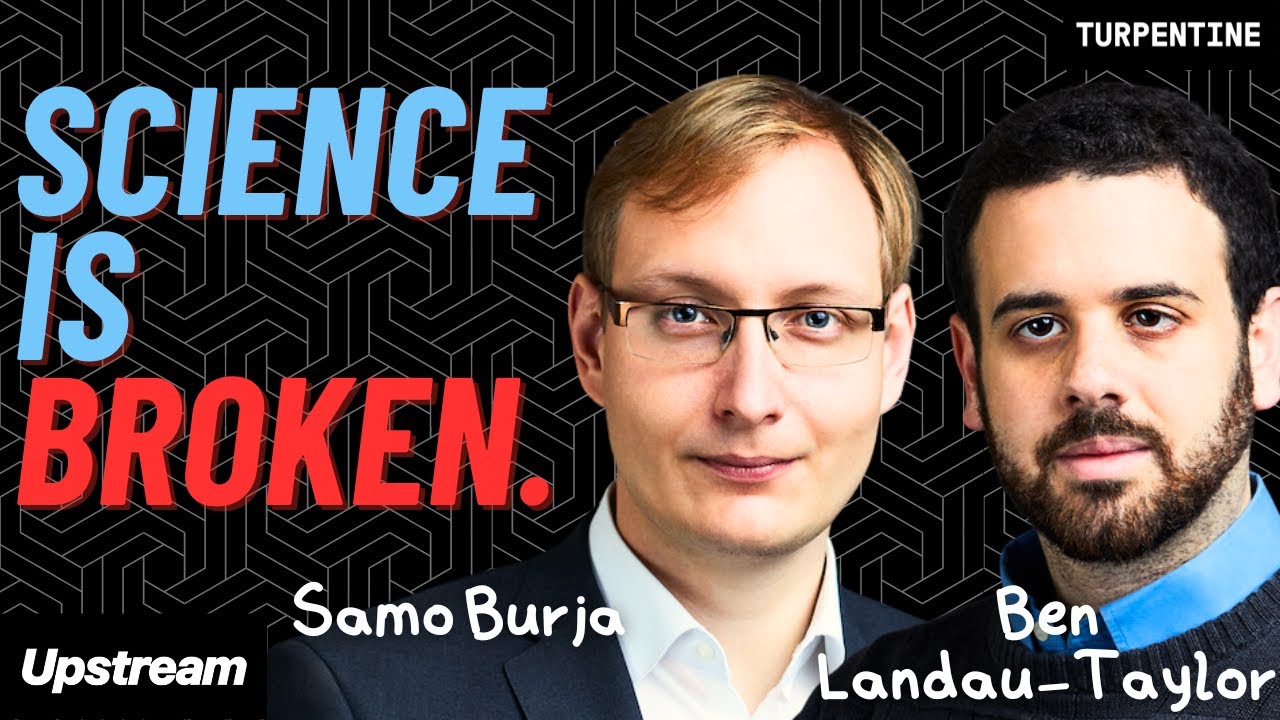
In this episode of Live Players, host Erik Torenberg and co‑host Samo Burja interview Ben Landau‑Taylor, a senior analyst at Bismarck Analysis, about his Palladium Magazine article “The Academic Culture of Fraud.” The conversation traces the prevalence of outright data fabrication in academia—especially in medical research such as the amyloid‑beta hypothesis for Alzheimer’s—highlighting high‑profile cases (Sylvain Linné, Dan Ariely, Marc Tessier‑Lavigne) and the systemic failure of peer review, university investigations, and career incentives to detect or punish fraud. They contrast modern university‑driven science with the earlier “Republic of Letters” era when independent scholars could gain prestige by debunking false work. The hosts argue that bureaucratic incentives now reward publication volume over truth, creating a culture where fraud is tolerated and even protected by prestigious institutions. They explore external remedies: investigative journalism (e.g., Theo Baker’s exposure of Stanford president), regulatory action by the FDA and SEC, and the idea of nonprofit or private watchdogs funded by philanthropists to hunt fraud. They discuss the limits of legal penalties—suggesting jail for clear data fabrication but not for p‑hacking—and propose learning from financial regulation. The episode also touches on degree inflation (30‑fold increase in US PhDs per capita) and the broader impact of fraudulent science on public policy and health. Finally, Ben briefly describes Bismarck Analysis’s consulting work, emphasizing rigorous, citation‑backed research for clients ranging from nonprofits to governments.
Chapters
Hey, Upstream listeners. This is Natalie, a producer at Turpentine, the podcast network behind Upstream. This week, we're excited to share an episode of Live Players, a weekly conversation between Erik Torenberg and Sam Oburia, About the movers and shakers shaping the world. On this episode, they're joined by Ben Landau-Taylor, who works with Samo at Bismarck Analysis. They get into the alarmingly bad state of academic fraud and what a way out might look like. We'd love to hear your feedback. You can email me at natalie@turpentine.co or leave a comment to let us know what you'd like to hear more of on Upstream and which guests you're most interested in. One last thing before the episode. In case you missed it, we released an episode of an exceptional show with 4 big-picture thinking VCs earlier this week. And no, it's not the podcast you're thinking of. Check out This Won't Last with Kevin Ryan, Logan Bartlett, Keith Rabois, and Zach Weinberg in the Upstream feed or at the link in the description. Without further ado, please enjoy Erik, Samo, and Ben.
Samo, I'm excited for our first episode with a guest today. One that you know very well. We've been talking about universities for a while now, hinting at an episode dedicated to it, and you thought Ben would be great to bring on for this episode. So why don't you briefly introduce Ben and then the article as well, and we'll pass it on to Ben.
Yeah. Ben is a colleague, a senior analyst at Bismarck Analysis. And more than that, he's just been a friend and an intellectual collaborator for over a decade. Uh, Ben's recent article titled The Academic Culture of Fraud, published in Palladium Magazine, I think was an incredibly good starting point for this deeper critique and reevaluation of the university system and, uh, the reimagining of science that I hope we will dig into over multiple episodes. So Ben, I'm just gonna let you talk a little bit about the thesis of the article since you will introduce it much better than I will.
Yeah, thank you, and thanks for having me on. So the article is essentially— so it's mostly about the fraud in medical research, but I think it's a problem that's pervasive in many, many, many fields within academia. Some are better, some are worse, but there's just so many cases where Someone has just, you know, we're not talking about like p-hacking or like overstating results. We're talking about just completely making up data. And when they eventually get caught, and what's notable is it takes a long time for them to get caught. You would hope that the peer review process, the point of reviewing it is you're going to find if someone is just pulling their data about this new Alzheimer's medication out of thin air. In fact, Peer review never catches this. The fraud always gets through peer review. And then sometimes, we don't know how frequently, sometimes this will then get uncovered by other researchers like 5 years, 10 years, 15 years later while they're reading through. They'll be like, this image in your paper is obviously doctored. If you have a good sense of these things, you can tell by looking. To get to report this, they basically have to fight against all the academic bureaucracies for multiple years. More often than not, if you're trying to report this, you will get threatened with vexatious libel lawsuits. Sometimes you will actually get sued and, you know, get dragged through court.
Are there cases of people getting sued in the process of trying to basically demonstrate fraud in already published scientific papers?
Yeah, there are. It does happen. I think it happens a lot more often that they'll threatened and not actually go through, but sometimes yes, the people you are accusing of fraud will sue you for libel. And if you go through all this and like spend years pushing on this, you can get the papers retracted. But the people who actually committed the fraud, there is never any action by the universities to do anything about it. So the one that got me really incensed, just completely furious and got me to write that article was Sylvain Linné. Was a senior researcher, was behind one of the big papers about the cause of Alzheimer's, the amyloid beta hypothesis. And his work from the early 2000s was like one of the big pieces of evidence that was used for this. And in 2022, it was discovered that a bunch of, I think, 7 different papers that Linné was a major, like the primary author on, all had just completely fraudulent data in them and like ended up getting retracted. And so this, which ended up driving about $1 billion worth of U.S. federal government research grants on this hypothesis, that was in large part because, because of this study that Linné did that made it look promising. Just so much money got allocated to this. Eventually it was discovered It was all fake, or his research was fake. There's a lot of other research on the amyloid hypothesis. Some others have been proven fake, most haven't. Who knows if it's true? I mean, who knows how— what fraction of the fraudulent research we've even caught? But the thing that gets me is that to this day, there's just been no consequence whatsoever for the guy who was actually doing the fraud. He's still employed at the University of Minnesota.
They like Conducted—
they said the university said they conducted an investigation and found that he was innocent, which he definitely isn't. But he's just still there, still getting government grants, and for all I know, continuing to just make up fake data.
It seems striking to me of just how the bureaucratic incentives of modern academia do not reward catching fraud. And that in a way, the reputation and social networks of 18th or 19th century science did incentivize it. If you could prove someone else was a fraud in the era of the Republic of Letters, well, you know, guess what? Debunking is sort of a route to personal prestige even today. So the social incentive is there, but the career incentive seems to have vanished, right? And I wonder whether this is a direct consequence Of this, let's call it a late-stage research university, where basically people are expected to keep up with impossible publication deadlines. The best careerists are not the best scientists, so fraud slowly becomes normalized. As long as you are saying something that is roughly in line with the scientific orthodoxy that best benefits you and the careers of your overworked, underpaid, but highly prestigious colleagues, well, they turn a blind eye. So I think that this is starting to reach the point where they are protecting each other, right? And they protect also their university's reputation. Because think about it, as a prestigious university, you don't want one of your star researchers to be understood and acknowledged formally as having committed fraud. That makes your university a fraud. And I, I think that that is a strong point against academia as the correct home of science. I think we might actually, as a civilization, want to explore really different models of sustaining scientific research and how to restore, I think at this point, a scientific culture that's greatly lost. I'd be curious, I mean, I of course read the article. But I'd be curious how much— where you would agree or disagree with, with this kind of analysis that I would just give on the first cuff.
Yeah, I think it's completely right. I think that basically it becomes down to the type of person who is doing science, where you're talking about the Republic of Letters days. And if you go and read the work from those people when they were, you know, out there like trying to break down the chemical composition of water and how air pressure works and, you know, dissecting animals and inventing microscopes. Like, these people are— they just think really differently from, like, the sorts of bureaucrats and administrators that you will find in, like, making grant-making decisions in colleges today, or, like, conducting fake investigations into, you know, Mark Tessier-Lavigne or Sylvain Lanay or any of these other frauds. Because the people In the Republic of Letters, the reason you would spend all of your day drinking way too much coffee and like, you know, dissecting worms and writing letters about it to your weird friends in Vienna, like, you will do that if you are on a sort of spiritual quest for truth, if that is the thing that you want to do with your life. And that kept, you know, for hundreds of years, that was the type of people who were were in control of universities, who were making the decisions, who were really driving science. And then now—
Well, a lot of the science wasn't even at universities, right? Many of these were private gentlemen, even just outside of universities, conducting their research and doing their work and so on.
Yeah.
And then it very slowly, over like a period of like a century, a couple of centuries, kind of got folded into the universities. And Darwin was kind of the last of the really great gentleman adventurers. After that, you'll see much, much more of it happening inside the universities because the universities really did carry—
By the late 19th century, it was rare for someone to be doing science outside of a university context.
Right. And like Einstein was, and the universities could still get the science from him, but that was like unusual and surprising in his day. And today, I don't think they could accept the contributions from an Einstein who was outside of the system at all.
So if a patent clerk today actually came up with better theory of gravity, they probably would not recognize it.
Yeah, like they'd publish on weird blogs and like after 4 years some guy with a PhD would rewrite the thing and then they could take it seriously. Like we saw this happen with Alexei Guzy's refutation of that book Why We Sleep was this big, you know, very prestigious academic book about how sleep works. Turns out it was like just based on really bad and shoddy science. And then Alexei Gusey went through and like basically completely demolished the science in it and was like, here's all the nonsense graphs, here's where the data makes no sense. And he just wrote this up on his blog. He's just some guy. And his arguments are just completely irrefutable. Like he just totally destroyed the book. And I don't think academics have ever, you know, it's not an official publication. It's just a book which is published to, you know, thousands and thousands of people. It's just a bestselling book. It's not in a journal. So it's outside of the academic system. But you saw this on Wikipedia that like Wikipedia couldn't cite Goosey because he's just some guy. And then what's the name of the statistics professor who eventually basically just rewrote, wrote a blog post?
Oh, yeah.
Quoting Guzzi at length, but because he had a PhD in a completely unrelated field, Wikipedia could now take that in. And you see the similar things in like academia can only recognize people who are wearing the right hat. If you just come in with a bunch of correct arguments, then maybe eventually—
It doesn't get admitted to the record, right?
Right.
It, it, they almost like look at it like it's missing the point to, to have like an information-based approach.
Right, like Eliezer Yudkowsky was doing all this philosophy of artificial intelligence, and he was, you know, just some guy out on the sidewalk with a sign saying, the end is nigh, until Nick Bostrom and Max Tegmark, who are professors at Oxford and MIT— well, Bostrom's no longer at Oxford— when they said the same thing, then it could— then the academic system could deal with it, but only because someone else was willing to, like, stamp their name on it. They couldn't just take the arguments.
To read from Wikipedia, Gouzet's criticism was also discussed by Andrew Gelman, a statistician at Columbia University. And here it's notable that Gelman is someone who is very much predisposed to interact with the blogosphere. If I remember right, he was in this live discussion conversation in the early 2000s. So he's definitely already an intellectual outlier to even explicitly cite it. With regard to Nick Bostrom and Yudkowsky, does Nick Bostrom in his book explicitly credit Yudkowsky with the relevant ideas? The book Superintelligence? It's super interesting though, because whenever I now read these reports, people tend to attribute it to Bostrom. They don't attribute it to the person that Bostrom himself attributes it to. And I think this shows something very interesting where I think credit always flows in the direction of prestige and officially stamped legitimacy. And I think, as a personal measure, I've written actually a long series, basically a sequence of essays on intellectual authority and intellectual legitimacy and what this means for the history and future of science and what it means for personal intellectual strategy for anyone who is trying to develop and maintain a field of knowledge, either in the academic context or outside of it. And I don't know, did you, I think you read or cited these essays at several points.
Oh yeah. They've been a pretty big influence on my thinking about this. Highly recommend them to our listeners.
Yeah. And the thing is that the core sort of smallest observation is that it's just such intense complexity. to understand and deal with the world. Almost everyone relies on an intellectual authority of some kind, whether they recognize it or not on a conscious level is the key question. And then sort of almost the task of a personal epistemology is to continually reevaluate your intellectual authorities. It's not to flatter yourself and think you don't defer to anyone, because obviously you do. I, to this day, still do actually defer to physicists about what muons are and how they work. I never went to the level where I could have a contrarian opinion, but I ascertained some things for myself, like any of the basic physics experiments that you would do in undergrad when you're getting started on a physics degree. So everyone actually defers to others to a greater or to a lesser extent, or to the reputation and trustworthiness of a great historian. You know, both of us have a strong interest in history, so we're very keenly aware that, you know, historians can just write lies. No one can stop them. And you have to decide whether this person's like motivated to lie in a certain way, whether their reasoning as they describe it is accurate and so on. One of the best things about Herodotus is that he's, you know, completely trustworthy in reporting what people say. He's not trustworthy in the sense of he will even at times report that, oh, people say that this is the origin of cinnamon. But, you know, I don't know. Here still, I'm reporting what the Arabs told me about the origin of cinnamon. And then tells you this completely insane story about like birds and so on, or tells you the story from India about ants collecting gold. Turns out it's like a corruption of like, like a, a mammal. There's some mammals, like I think they're gerbils or something like that, that literally burrow in the mountains. And sometimes, yes, there's gold in their borrowings. And then the word for that in Persian sounds a lot like ant. So by the time it reaches Herodotus, it's a story about ants digging up gold, right? And, you know, I think it's very easy to make fun of that, but actually it's super, it's much more honest than a pure assertion of this is how it is. It's like you say, okay, I saw this. This is what the Arabs told me. This is what the Persians tell me. And then if you know that, then in a way, you know, Herodotus is not being that tricky. at you, right?
It's—
he's not trying to deceive you. So be it history or physics, we rely on intellectual authority as a shortcut for dealing with the complexities of the world. And I think we have to perpetually reevaluate them. And the second big piece in these essays is that often institutions accumulate a reputation for intellectual excellence. Let me propose something. Most of the time in any given society, The institution that is highest in intellectual and epistemic prestige is actually already not the best, right? Because it takes a long time after a good reputation is established for the reputation to wear off. I think it'll take 200 or 300 years of complete fraud for the universities to wear down this 1,000-year intellectual legacy and 200-year scientific legacy. I think it's going to take that long. I think people will just continue trusting them even as they ratchet up in corruption. And there are very few bureaucratic reasons for them to fix that. At the end of the day, I would not be shocked at all if people are still debating 100 years from now, the sort of extent to which, you know, psychology should be receiving billions of dollars of government spending. Even though if you think about it, how much of public health policy, how much spending has already gone from the purse of, say, the EU or Sweden or Britain or America based on fraudulent or disproven psychological research? Like public health policy under the term mental, you know, mental health, right? Mental health crisis. That's already been shaped by it. So there's even a disincentive. There's sort of like, you want to publish stuff that is convenient for your political allies, and that actually makes you more powerful as an academic, not less. And I think when you have government backing, that slows down intellectual decay, especially since, and I'm going to invoke COVID-19, There were multiple points during COVID-19 where if you relayed accurate medical information online, you were banned or on the grounds that you're spreading medical misinformation. And it was explicitly epistemically authoritarian. It's like, okay, legally speaking, these are the experts. You cannot contradict them. If you do contradict them, it's misinformation and it's grounds for old Twitter or Facebook or Instagram or whatever to take down this stuff because allegedly you're harming public health. But truly, who harmed public health here? I think it was, it was actually clearly the medical establishment. They were at least too slow and then at times just lied about facts that were known to them about the efficacy of the vaccines and the danger of the disease and what are effective and what are not effective countermeasures for controlling its spread, not to mention possibly creating it, right? With the lab leak hypothesis, I think we're now at the point where one is no longer banned for saying it. Let's say it's like, I would say it's 70%, that's a Wuhan lab leak from gain-of-function research. And that's kind of crazy.
Why did we start spending so much money We'll continue our interview in a moment after a word from our sponsors. Venture capital is widely seen as one of the most lucrative asset classes in the world. Go look at the S&P 500. Nearly every major tech company on that list was once funded by venture capital firms, producing billions of dollars in profit in the process. The hard truth, however, is that the biggest venture funds are almost entirely funded by institutional investors. So unless you knew a guy who knew a guy, you and 99.9% of individual investors did not get to participate in the pre-IPO growth of any of those blue-chip companies. And it's happening again. Look at the biggest names in AI, for instance. Almost all of them are still private, just out of reach of your portfolio. The Fundrise Innovation Fund is finally changing that. It's a more than $125 million fund. It holds some of the most exciting pre-IPO tech companies in the world.
And it's not just tech.
And it's designed specifically for individual investors. This time, you can get in early at fundrise.com/upstream. Carefully consider the investment material before investing, including objectives, risks, charges, and expenses. This and other information can be found in the Innovation Fund's prospectus at fundrise.com/innovation. This is a paid advertisement. The tech world turns to the Brave browser for its unbeatable privacy protections. But did you know that Brave also has a private ad platform? Brave Ads offers first-party targeting, and it's been cookieless since day one, so you can relax while third-party tracking cookies disappear from the web. Today, millions of people turn to ad blockers to avoid being tracked and pestered online. But Brave's new ad model aligns incentives for users and advertisers. Users earn rewards for viewing ads, which they can save, spend, or pass along to their favorite creators. And advertisers score points for respecting user privacy, generating ROI without invasive tracking. So whether it's high-impact announcements on the new tab page or keyword-targeted ads in Brave Search, Brave Search offers diverse, private, future-proof ad formats for all your business goals. Join the future of advertising at brave.com/ads. Mention Turpentine to get 25% off your first campaign.
I, I'm curious, what are some other examples of like scientific fraud? Like that, that you found like investigating for this article or that you've seen, even if you didn't mention them in the article?
Yeah. So if you're, you're bringing up the whole COVID-19 thing, and that was based very strongly on all of these, you know, sort of like Cass Sunstein nudge ideas from academic psychology. And, you know, academic psychology is just, you know, Kind of a cesspit. There's, you know, everyone's heard of the replication crisis, the idea that the work in academic psychology just doesn't replicate, which is a way of saying that it's just all various types of fake. Some of it is, you know, just—
Honest mistakes and/or hypotheses that turned out to not be the case.
Right.
Some of it's hypotheses that turned out to not be the case, but that people did a lot of like p-hacking and like statistical massaging to make it look like they got a positive result unless you read very closely and redo all their math. Some of them are things that like, you know, hold up the— like are internally coherent, but they're just using terms in ways that are so confused it doesn't really teach you anything. You know, there's— but a lot of it is also just, again, just totally made-up fraud. So Dan Ariely, who is probably the most famous psychologist alive today, was caught once that he was just completely fabricating. It was so ironically, it was a paper on dishonesty.
Maybe it was a meta-honest paper.
I don't know.
Let's, I'll let you continue the anecdote. This is fascinating.
You know, they were working with, you know, like auto insurance and it was some intervention which was supposed to test whether you lied about You know, the, the how you were driving in order to get a better rate or something kind of similar to that. And just, yeah, like Ariely just fabricated this massive Excel spreadsheet full of fake data in order to get the result that he wanted. And he did it really clumsily of just like, you know, you know, you would, you would, if you were to look at the data, you would always see something that looks kind of like a normal distribution of like how many miles people drove. But the data was just made up in a way that, like, you would see people reporting completely implausible patterns of, like, you know, no curve, just a flat line of, you know, the sort of thing if you actually look at the data completely, like, that's completely impossible for actual driving patterns to look that way. But they got the result that he wanted. And this was a paper that he was one of 5 co-authors on. The other co-authors, optimistically, they never looked at the data of the thing that they wrote. They just didn't ever check in order to see that it was fraud, because if you ever actually looked, it would have been very obvious. Could be that they did look and didn't say anything, but like, honestly, I think it's pretty likely that they just never really checked and didn't look at it. So like, there's all these layers of bullshitting, of not really caring, of not Looking into whether the thing is true so long as it gets you a sexy result. And that goes along with just—
And gets you a citation, right?
Oh, absolutely. Yeah. And a co-authorship with Dan Ariely. Who doesn't want that?
You're credited on a paper.
But a lot of it is based off of just stuff that's completely made up. And again, Ariely, after this was exposed, like nothing happened to him.
So he still has his academic position and he, he is continuing his intellectual career. Okay.
Yeah.
And yeah, so it was really funny actually where he claimed that like, oh, the university did an investigation and cleared me of any wrongdoing. And then reporters checked that with the university and they're like, we can't confirm any of this. Like, we're just not going to say whether any of that is real or not. So maybe there was some secret internal thing there, or maybe he just made up the internal investigation. I have no idea. It's completely bizarre. But again, like, he's still just this, just absolutely leading academic figure. He's been caught doing explicit fraud once. Most likely he's been doing it a bunch and only one time was the data available and people willing to risk. The people who revealed that, like, they were too scared to do it under their own names. They—
They were fearing professional consequences in the academic context?
Oh yes, absolutely. There's so many backchannel reports of people. not saying stuff about these because they're afraid of professional retaliation. And these people ended up—
I mean, as a grad student, like, your odds of getting a job in academia at this point are pretty abysmal, right? You can't afford to have even one or two strong enemies in a department.
Right. Like, I just have probably, like, I don't know, 8 or 12 friends of friends who I've personally heard leaving grad programs because it was demanded that they do fraud and they just didn't want to do it. They didn't want to, like, go public, have a huge fight, suck up 4 years of their They just wanted to like go do something else.
I find it very interesting that so few people, so few writers or journalists seem interested in this, right? I think that it's, it's an interesting question why there has been so little oversight on academia to try to keep it more honest. If these bureaucratic incentives of like, you know, always maximize the prestige of your university, always try to, you know, be friendly to the establishment in your field, whether or not it's fraudulent, whether or not it's correct. These just seem like such crushing incentives that I, I wonder what's even pushing the other way, other than, of course, the occasional honesty of the individual scientists. But as we hear, sometimes they'll just resign rather than pick a fight that they would lose. So I, I don't know, what, what do you think are good counters to this? What are good solutions?
Yeah. So the best solutions we've seen have not come from inside academia at all. They've come from the sort of other core institutions putting pressure on academia from outside. So there's the case of Marc Tessier-Lavigne, who was the president of Stanford until a year or two ago when he got thrown out because it was uncovered that he had done like a lot of medical research fraud, including some stuff on the amyloid beta hypothesis that was the same thing they got Sylvain Lainey for. But the interesting thing about Tassir Levine was that the guy who sort of spearheaded the big push, sort of like took it from the sort of obscure blogs talking about it to like actually getting the guy fired, was Theo Baker, who is a— well, a Stanford student who is the child of 2 prominent journalists. So like his father is currently the New York Times White House correspondent. And like his parents have worked together on a bunch of journalism projects and published books together. So like, this is a family that is like presumably teaching him how to do investigative journalism from a really young age and has a bunch of like all the right media contacts. And so when he was a student at Stanford, he was able to take this public and make a huge stink about it and end up getting the guy actually fired from being the president of Stanford because of just completely making up fake medical data type of thing, which like I think should be— this should be the sort of thing that like you do not leave jail after you're caught doing this. Like body count in the tens of thousands probably.
But anyway, in terms of people, uh, just dying that didn't need to die.
Yeah, like You're basically ripping medicine out of the hands of people with Alzheimer's disease. He got fired from Stanford.
So it's at least as bad as stealing grandma's savings.
Yes, it's mass manslaughter.
If you're a Wall Street criminal, it's worse.
Yeah, like this is worse than Sam Bankman-Fried by a lot. Just caused way more harm to the world. But he got hired. The guy who did this got hired a year later by a new billion-dollar— well, he founded a year later a billion-dollar, like, medical research company, which presumably is going to be doing more fraud, I would probably guess, because, you know, seems to have been working well for him so far. But anyway, the notable thing here is that Theo Baker wasn't doing this from within the academic system. He was doing this as part of like the journalism system. And he ended up winning— what was it? The George Polk Award. Very, you know, very major journalism award like that. He's the youngest person to ever win. So by taking this scalp, Like this was good for him, not in the academic game. Like if he were going into medical research, that would be the end of his career. But like this is journalism. There's these days there are fewer cases than I'd like of investigative journalism actually doing its job. But this is one of those cases of journalism doing exactly what it's supposed to do. There is another case just sticking to Alzheimer's examples. Ho Yan Wang was a consultant for A drug company that was developing an Alzheimer's drug, which basically, you know, he was committing a lot of fraud. And the way this got revealed again was not because within the academic system, it was because a couple of other people within the other industry scientists could tell it was fraud and They did something really clever and really unusual, which they just wrote directly to the Food and Drug Administration, which, as far as I can tell, this is the only time that anyone has done that in order to bust medical research fraud. And the Food and Drug Administration ended up handing it off to the Securities Exchange Commission. The SEC is now going after the consultant who just made up a lot of the data about the Alzheimer's drug, Semaglutide, which I'm probably pronouncing wrong. So he is— was recently indicted by a grand jury. We'll see if he actually goes to jail. But again, this is by people who are just like, I'm giving up on working within the academic system and I'm going to go to these other major, like, power centers within society. And that way, like, you know, that is— that is the thing that can work. That is the parts of society. So I think like in the way that for, you know, we have the whole Securities Exchange Commission to be a watchdog over the financiers. And if you do, if you commit fraud in banking, then they will send you to jail. And if you're lucky, you'll get out in 30 years. And I think we need similar, you know, we need the federal government, we need journalism, we need the other power centers to be policing the academics because maybe the academics were policing themselves in the '40s or whatever, but they're clearly not now. So there are other parts of society which can and should.
Interesting. I mean, this, this solves some of the problems. It doesn't solve all of the problems, right? When there is, for example, like government collusion with science. The interesting question here is, I think the reason academia has not been surveyed or policed in this way is because 80 years ago, the untouchability of the universities seemed important for limiting government power. However, since then, there's been so much of an alliance. There's at least, let's put it this way, there's at least as much of an alliance between academia and government as there is between finance and government. And it doesn't make sense to think of the universities as politically independent. It hasn't for a long time. But I think we're running on fumes of this perception, right? There was this perception, it wasn't quite as strong as the wall between church and state, But there was some important sense in which the universities were supposed to be deeply autonomous. And in most of Europe, that's not even financially true, right? Most of the universities are publicly funded universities. And the US is a bit different. It has a large set of private universities that are very well funded. This is very different than, say, Germany or France or Italy. But even those, all their connection to power, people like Larry Summers, there's clearly a revolving door there and between government, finance, and the tops of the most prestigious Ivy League universities. And also so much of the scientific funding, so much of the public funding going to scientific research is carried out by the universities. So I think the regulation argument makes more sense today. than it would have 80 years ago, because the problem that the autonomy of the universities was supposed to solve, that is to prevent universities from being politically captured and optimized, that already happened. But the universities are already politically compromised. That already happened. We might as well check them for fraud in this very narrow sense. So the goal here is not And this would have to be disciplined very, very closely to build like a functional institution of this type would be, you know, it would be definitely like a live player move. One would definitely need to be a very competent administrator, but it would have to be this very sharp understanding of criteria through which the fabrication of data is what is wrong. It is not reaching any given conclusion from data. So I think that's where I would—
draw the line.
Would you agree or would you have other definitions?
Yeah, I think that makes a ton of sense. And if you look at the way— part of the reason why the Treasury Department and the SEC and the FDIC and all of these watchdog agencies in finance work so well is because of the revolving door, because the people in there have so much overlap with finance. They know how it works. They know what is considered Like, you know, what is considered inbounds, what is considered out of bounds, and like how people think. And so this makes them actually quite able to interface with that culture and cause the changes in it that they want to because they're part of it. So I think that if you were to do this, you would want someone—
Well, there are of course people, Ben, might push back and note that, you know, finance is not always optimally regulated.
No, but it's regulated a hell of a lot better than academia is today. They will send you to jail if you commit fraud. So it's, it's not like, you know, the perfect thing, but I think that—
It would be an improvement.
It would be an improvement, and there's a lot to learn from how it works. So I think if you were to find someone who is an academic and who has demonstrated ability to maneuver well within that, and also has the sort of like really, you know, sacred approach to the truth that you would find in those Republic of Letters guys where like They just want the correct answer and they're fine if it comes out this way or that way, but like, they're just really committed to the process.
Or at least if, you know, you get to make your career, if you get some scalps, if you get some scalps, I think the, the sort of like, is it my job to produce great research or is it my job to debunk great, to debunk research in event science that way? Or is it my job to not even evaluate the research as a whole, but merely investigate it for fraud? And then the question is, is this fraud in like the medical context? Would you make a distinction between medical and non-medical science here?
I don't think so. I think if you're taking public money and just doing fraud— so there have been 2 times—
Well, in some cases, in some cases, no one dies, right, from In some cases, it's just public money has been wasted.
We'll continue our interview in a moment after a word from our sponsors. Hey everyone, Erik here. In this environment, founders need to become profitable faster and do more with smaller teams, especially when it comes to engineering. That's why Sean Lanahan started Squad, a specialized global talent firm for top engineers that will seamlessly integrate with your org. Squad offers rigorously vetted top 1% talent that will actually work hard for you every day. Their engineers work in your time zone, follow your processes, and use your tools. Squad has frontend engineers excelling in TypeScript, React, and Next.js, ready to onboard to your team today. For backend, Squad engineers are experts at Node.js, Python, Java, and a range of other languages and frameworks. While it may cost more than the freelancer on Upwork, billing you for 40 hours but working only 2, Squad offers premium quality at a fraction of the typical cost, without the headache of assessing for skills and culture fit. Squad takes care of sourcing, legal compliance, and local HR for global talent. Increase your velocity without amping up burn. Visit choosquad.com and mention Turpentine to skip the waitlist.
So there have been 2 cases where they put people in jail for defrauding the National Institutes of Health. Which is the federal agency that gives out a lot of money. There was one in like 2006, Eric Pullman, and in 2015 was Dong Pyo Han, were the 2 people who went to jail for massive medical fraud. In Han's case, it was research into HIV. But he was not put in jail for mass manslaughter, although I think he was guilty of mass manslaughter. He was put in jail. for defrauding the National Institutes of Health and getting $10 or $20 million of research grants on the basis of lies. If they were to also put the medical frauds in jail for, like, killing people, I think that would be great. But the legal precedent would work just as well on Dan Ariely.
Okay. Interesting. Interesting.
I do think you would— it would have to be very narrowly scoped to only literal data fabrication. I think that even like p-hacking and stuff, those people should merely be thrown out of academia and should not be put in jail. But like, you do not want the government—
I mean, even if you're talking about being thrown out of academia, this is like so far away from current consequences. It almost feels like ungentlemanly to besmirch someone's reputation for p-hacking. I think that there is a corruption of default academic culture that's already at play.
Yes, and it's, you know, it's very easy to see when you look at what someone would do who actually cared about this stuff and actually was trying to build an institution that could track towards truth and just come up with the very minimal things of, you know, look at, look at how, you know, when Claudine Gay, the president of Harvard, was caught for plagiarism, the only reason why she was eventually like— why that was enough to throw her out was because of The massive political force behind it because of the whole, like, you know, Israel-Palestine controversy. Without that, I don't think that finding that the president of Harvard was a plagiarist would have been enough to actually eject her.
And that's already, I think that's a, that's an indictment of academia. I think you're correct. I think that's an indictment of academia that it would not have been enough.
And like, it certainly wouldn't have been uncovered because there had been a few people talking about it anonymously on blogs who are too scared to go public, and that it was because people who wanted to use it as a weapon in the, you know, Israel controversy, that some of that— I think it was Chris Rufo— picked it up and made a lot of noise about it. And that never would have happened if there wasn't this outside political motivation.
Well, I guess that's like kind of like a culture war adjacent type of phenomena. Yeah, I mean, I, I think we struggle as a society, in my opinion, to come up with a way for capitalism to do science, because we do have big R&D labs that can do good science. And we struggle with ways to have democracy result in good science, because the default for democracy is that you kind of fund things everyone agrees are good. And then you have the final step is we struggle to make science work with bureaucracy where the career incentives go against truth and go towards coalitional games. So I really think that this is kind of a case where we have almost a missing social technology, where perhaps science has persisted for much longer than makes sense because of the fumes of this sort of sacred quest for truth and honestly just very nerdy guys showing off to each other for status, right? Like, that's a little bit of what was happening in the 18th century. Hard to deny that. And, but the two of them going together, like that goes pretty far. And I think we do not know how to recreate that competitive dynamic because again, let me be very explicit in the bureaucratic context, legible steps, things that can be evaluated by administrators who do not even understand your science. Those are the things that get you funding. Those are the things that get you your positions. And it is competitive. Maybe it's competitive in showing how smart someone is, how well polished they are, but it's not competitive in the sense of it is a race for truth. And the first one to find truth gets immortal fame, right? The Nobel still has like a small element of this, though even the Nobel Prize, team Nobel Prizes are given out. More and more, which you know in a way is good because you acknowledge all the team members that contribute to result. But in a way, it's bad because being included on the group Nobel becomes something that people politic over, right? No, no, really. It's much it's much harder to politic to be the Nobel Prize winner than to be included on the team where you plausibly contributed to the Nobel Prize. So I think even that's like a corruption.
More sense than I'd like.
I know, right? Yeah, yeah. And I think I think what we strive to do here is there is no per. tool, but we are striving to develop better tools to solve these systemic scientific problems. And each of these could be a whole episode. I'm glad that in this one we talked about data fraud. And, you know, at the, at the end of the day, there have been movements to reform science, right? There was the, the movement to make all scientific data funded by public institutions be available. And published and open source, that you're supposed to just have the data be open source for everything that gets published. But it seems like journals have not really picked this up as a standard.
There was a really funny one where a few years ago someone was like trying to get data from scientific publications, and he ended up finding that people who had made a bureaucratic commitment, as they were required to by some of these journals, to provide data upon request were less likely to provide data when he requested it. than people who didn't write that, than just like random publications.
So Ben, would you think that a— what about a nonprofit center funded by, funded by someone who has the desire to support science and publishes and hunts for fraud? I mean, it can't imprison anyone, but would that be a positive? As far as I know, I don't think I've ever heard of a nonprofit where they would just pay scientists to find scientific fraud by other scientists. Like fraudulent data. I've only heard of like people trying to disprove things for basically, you know, partisan reasons or whatever, right? There's like, you try to disprove your ideological opponents, but not like a pure, just focus on finding fraudulent data in non-politicized areas.
Yeah.
So there are some good projects that work on like collecting that sort of data and like making it available. So Retraction Watch is a wonderful database. Data Collada is a blog that does a lot of this, and they were willing to host anonymously the people who found the Arielli one. But I don't know of any that just like fund people to just look for fraud in a completely, you know, nonpartisan way, not as part of any other crusade. And yeah, I think that could be— So I think there's a separate question of upon finding it, do you have a mechanism to do anything with that other than just discredit academia itself? But I think if academia is in fact not worthy of the credit, then that alone could be very valuable, even if you're not like actually able to damage the inside academia careers of the fraudsters you catch.
Well, of course, but also on the margin, the consideration of, hey, we don't want to be, you know, the San Francisco Institute for Discovery of Fraudulent Data. Let's make it up. Let's say some Some, some excellent, highly philanthropic, you know, tech billionaire who cares about science. I can actually think of 4 of them, which is probably way more than any Wall Street guys that care about science. I think George Soros actually kind of cared about science in his own way, but he never funded any of it. So I can think of 4 billionaires in Silicon Valley who are more interesting than the normal cookie-cutter software guy and like deeply care about science in their own right and are intellectuals, et cetera. Let's say one of them funds that institute, right? And you pick people who are not little weasels. That's the most important part. You can't hire a nonprofit of 10 weasels. You know, the kind of like hyper-agreeable, eager to please, young careerist academic. No, don't hire that. Hire, I don't know if you could literally Guern from guern.net and hire 3 angry crackpots. who have a totally incorrect theory that got them ran out of academia, but they have good credentials. Maybe they're, uh, ran out of Harvard or something. And then tell them, no, we will never publish you advocating for your theory, but we will publish you proving that the fraudulent stuff is fraudulent. And then they'll enjoy and endorse their extremely cranky side. I think if you hired like 10 people of this type and then maybe like a moderating voice of reason, like a Tyler Cowen, for example, I think that would work super well because now top academics would start thinking, well, what do I put in my book? Do I want these guys on my back when I do my book tour? I don't. Right. So, so it, it's not as strong an incentive as like literally locking people up for fraud, but merely being an annoyance. I think that would already be an improvement and can be reached more easily than as a first step, perhaps before. One argues that there should be a federal institution dedicated to that.
Yeah, well, you can start doing it privately and then get deputized like J. Edgar Hoover and the FBI.
I mean, Ben, I'd suggest we just go around because we've not talked about this idea at all, just literally on the show. I would suggest we start going around and pitching people, but I feel like we're already running too many organizations and projects, and that's kind of the curse, right? Like, if you're interested, in social technology and how politics works, how economics works, you end up having way too many, like one has way too many basically good ideas and too little time. And it takes like 10 years of a life to really build a new organization that's like of a different kind than other things. And I think people really, I think this is why I so immensely respect some of these other alternative scientific projects. Like, you know, the Vesuvius Prize, I immensely respect because it's producing scientific research by recruiting talent, saving them from needing to jump hoops and trying to solve like a concrete, technically tractable way to unlock classical antiquity. I dunno if you two have been following it, but now we've reached a point where they're like paragraphs, right? We have paragraphs from lost works and it's like some Stoics and so on. But I wouldn't be shocked. I wouldn't be shocked if, you know, given that this is a library with a lot of Greek works and it's around about the right time period, I wouldn't be shocked at all if, you know, we could get a— if it would be possible to get a sort of like text by Archimedes or whatever. And I honestly think that other good examples I can give on sort of the supply side of science, right here, we're sort of being— we're critiquing you know, basically scientific fraud. But I think the supply-side funnel is pretty broken too, because both bureaucratic and democratic incentives push towards funding things that are defensible, things that look responsible spending, because everyone already agrees they're good. And that actually results in like a very— this results in the best scientific experiments not being funded because they're the ones that would have controversial results. Or the ones that only a minority would think are actually excellent. So I think that new science funding mechanisms must be found and new error correction mechanisms must be found. And I think this has been a good look at some possibilities at the error correction. Yeah, I'd also serve Erik. I want to ask you, have you ever, and you can't, you don't have to say anything like specific, but I know you've been, you were an investor, our investor.
Yeah.
for many years. Did you ever encounter a case where it just like turned out that the science that, say, a startup was based on was just like wrong? I'm not saying that the science was like fraudulent, that they got fooled by the PhDs, but just the scientific thesis didn't work out. Does that happen?
I've had examples of business fraud, not, not science fraud. That said, the, the 2 examples I've had of business fraud were longevity biotech companies who we couldn't quite, like, you know, say with confidence what exactly— we couldn't diligence them in the same way that we could for internet or enterprise SaaS company. So, and it turned out that— so yeah, I wasn't able to thoroughly diligence to what extent the science was fraud, but it's possible it was because the business was— the management of the funds seemed to be fraudulent. Now, what happens in venture often, at least at the early stage, is because the dollars were, you know, it was $500K, $1 million, that's not enough to sue for. And so you kind of let people get away with it a little bit. Not everyone does. There's some seed investors who do sue, but the FTXs of the world, the examples in which the companies or investors sue, it's because there's a lot of money on the line. But the, I'm surprised, honestly, there's not more fraud going on at the earliest stages because venture investors, the dollars are so small that they're not incentivized to do so because they worry about their reputation. You know, no one wants to be known for being a VC that sues founders. That said, there are some, there are some who will, and there are examples of seed investors who, or seed founders who get sued and some that even go to prison. So, but anyways, it's been mostly on the concentrate on the business side in, in my experience.
I mean, often it's the case that we have mechanisms to sort of punish misbehavior, not because those mechanisms are actually what compels everyone to behave well. It's just to put like a ceiling on what the rate is of like dishonest or fraudulent or antisocial behavior to tick up. Right? You don't, you know, the things keeping Singapore and Sweden safe on a, on a day-to-day level, or maybe just Singapore, right, is that it's kind of a high-trust society. And like people, you know, they would do it, they would just feel absolutely awful if they committed a crime and they don't want to. But then what keeps the people feeling that way is that crime is rare and that when it does happen, it's punished. If you stopped punishing it, Eventually that pool of trust would be run down. But presumably, like, you know, once you, once you have this society, maybe even Singapore is actually like, you know, too strict and you can actually be more nuanced, kinder. And I think crime perhaps is actually a great analogy. I think various industries go through cycles of being filled with high-integrity people where people do not take advantage even of loops or Loopholes or like problems with the enforcement mechanisms. And then they go through times when you just have to clear house. And I think we're slowly boiling the frog on it's time to clear house with academia. And it's time for us to stop, you know, dude, we're printing PhDs. We're printing PhDs almost as fast as we're printing dollars. And just as you print dollars, you devalue the dollar. By printing too many PhDs, you devalue the PhD.
From 1900 to 2000, per capita, the number of PhDs in the US went up by 30 times per capita.
Okay. Well, doesn't seem like a world where we have 30 times as many super smart people. So I'm going to call that inflation, degree inflation. Well, Ben, thank you so much. I'd love to have you again on the show and we can talk about some of the wonderful work that I know we've done together and that you've done in economics and And politics. I'd love to have you, by the way, we'll maybe ask Oberon, you and Oberon for the machine tool paper that you published at Bismarck a few years ago. That'd be great. Yes.
And Sam, while I have you guys for just a few more minutes, but can you give us just more of a preview of the kind of work, the kind of consulting? I know, you know, some of it is very confidential that you do at Bismarck, just because a lot of our listeners are curious. It's a really fascinating organization.
Oh, totally. Yeah. Basically, we are often approached by clients who want to deeply understand other organizations. Sometimes this could be a report on competitors. Sometimes it could be a report on an entire industry. And sometimes it's research for how you can intervene on like some notable problem in the world. So for example, what could a nonprofit do to intervene in global AI regulation was a question that would've been relevant a few years ago, right? Now it's sort of crowded. There are specialized organizations. Than do it. But we're often sort of the first principles thinkers that can help solve those, solve that sort of question for a client. And it's sometimes it's high net worth individuals. We've done work for various nonprofits. Sometimes it's governments, right? Governments might be interested in an external voice because in every government you have the problem of being surrounded by yes-men of your civil service at times will tell you one story. You want to hear not just the A story, you want to hear the B story. You want to hear the red hat or the white hat hacker evaluation. And I think that's a good reason to hire external researchers. And, you know, it is, it is again tricky economic and political research is something that is provided also by like much larger consulting organizations such as McKinsey, Bain, et cetera. But you know, there you might get a team of geniuses, but their incentives are always going to point towards telling you to build the line and taking your money. And if you're much smaller, then you really have to rest on your intellectual reputation, right? We're often also hired to sort of survey the global strategic landscape where, you know, if you imagine a cryptocurrency company, geopolitical questions become relevant pretty quickly. And then who are you going to hire? Like a DC hack who's going to take your money, or are you going to Have someone that is evaluating and thinking about this stuff directly, right? And yeah, I, I find it immensely good work. If people want to have an idea of the kind of research that we do, I think the Bismarck Brief is important to check out. Just this week, we launched a new section of it called Public, where we release some things out of the paywall to the public. So if you've not checked out Bismarck Brief before, You can now go to that tab and read like, I think, 2 dozen of them on everything from the Chinese space program to photovoltaics to, you know, TSMC. And then you decide for yourself. We give all our citations. We never make up a citation. I would definitely fire someone if they made up a citation. We have every single brief as, you know, I contribute a lot to every single brief, of course, but it is always a collaboration of multiple people. So we balance each other's perspective. And, you know, I only hire— I joke I only hire geniuses. So, you know, Ben, Ben, thanks again for coming to the show and demonstrating some of that talent.
Yeah. Thanks for having me. This was a blast.
Yeah. Great discussion. Until— excited to have you back, Ben. Until next time, guys, take care.
Thank you.
Upstream with Erik Torenberg is a show from Turpentine, the podcast network behind Moment of Zen, and cognitive revolution. If you like the episode, please leave a review in the Apple Store. Hey everyone, Erik here. At Turpentine, we're building the first media outlet for tech people by tech people. We're the network behind the show you're listening to right now. We have a slate of hit shows across a range of topics and industries, from our AI and investing cluster of podcasts, to shows that drive the conversation in tech with the most interesting thinkers, founders, investors, and influencers like Econ 102 with Noah Smith. We're launching new shows every week and we're looking for industry-leading sponsors. If you think that might be you and your company, email me at erik@turpentine.co. That's erik@turpentine.co and let's partner together.
More from Erik





Palantir CEO Alex Karp & Rep. Ritchie Torres on Innovation & The West | Hill and Valley Forum 2024


