[Bonus] Palmer Luckey of Anduril Industries on China, DefenseTech, and U.S. Policy
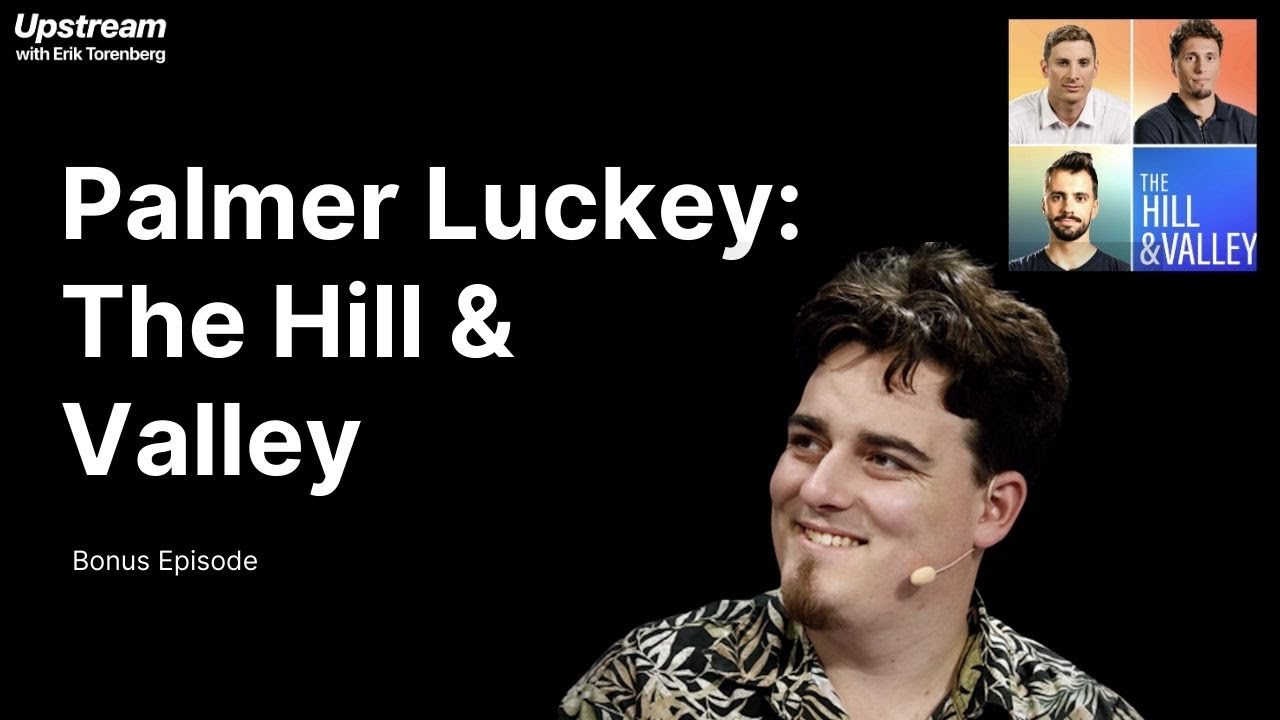
In this bonus episode of the podcast, host Jacob Helberg, joined by co‑hosts Delian Asparouhov and Christian Garrett, interviews Palmer Luckey, founder of defense‑technology firm Anduril Industries. The conversation begins with a deep dive into the evolution of U.S. Department of Defense (DoD) contracting, explaining how Anduril emerged from a small startup to a major supplier and how recent policy shifts have opened doors for more agile, venture‑backed defense firms. Luckey and the hosts discuss changing investor and talent attitudes toward defense work, noting a growing willingness to back and join companies that address national security challenges. The dialogue then turns to the broader U.S.–China strategic rivalry, covering scenarios such as a potential Taiwan conflict, the tightening of export controls, and the need for resilient supply chains. Luckey voices concerns about Chinese consumer apps like TikTok, arguing they pose data‑sovereignty risks, and he outlines proposed reforms to patent and export policies that would better protect strategic technologies. The guests also suggest concrete steps to increase competition in defense innovation, including faster acquisition processes and clearer rules for dual‑use tech. Toward the end of the episode the conversation drifts into a lighter but still policy‑relevant discussion about the Space Force’s branding—whether its satellite constellations should be called “Guardians” and if the service should adopt a naval rather than an air‑force identity. Luckey jokes about borrowing Star Trek aesthetics, noting the cultural and ideological symbolism such references carry. The episode closes with thanks to Luckey and a promise to return for further discussion.
Chapters
I think it's obviously a national security threat. But here's what I would actually advocate for. We don't even need to talk about the national security angle, because the economic angle is so much more clear-cut. Why would we allow Chinese companies to come to the United States and sell us ads and sell us, and sell us social media tools, when they prohibit us from doing the same in their markets? And people say, oh, well, that's just a censorship problem. It's because you don't meet their censorship laws. Well, first of all, we don't let many other people into the World Trade Organization that, uh, you— that say, oh well, no, we just have such extraordinary censorship laws that we ban all of your products. Like, that's not how free trade works.
Today we have a special new show to share, The Hill and Valley. is a podcast that offers an inside look into how tech and US government are starting to move closer together and pave the future of American technological leadership and national security. The show is hosted by Jacob Helberg, author and commissioner of the US-China Economic and Security Review Commission, Varda founder Delian, and principal at 137 Ventures, Christian Garrett. The guest is another huge name in tech, Palmer Luckey, the influential and outspoken founder of Anduril, The Hill and Valley lives up to its promise with inside details, unfiltered debates, and smart sensemaking around the business of defense. It serves as a great complement to the sociopolitical themes we examine on many episodes of Upstream, like American Dynamism with Catherine Boyle or the New World Order with Sam Avergia. Without further ado, here's the first ever episode of The Hill and Valley.
Welcome everybody to the first Hill and Valley podcast. This podcast is a running conversation with technology leaders and lawmakers on America's global technological leadership and the future of American national security. My name is Jacob Helberg. I'm the author of The Wires of War: Technology and the Global Struggle for Power. I currently serve as commissioner on the US-China Economic and Security Review Commission, and my podcast co-hosts are Christian Garrett from 137 Ventures and Dalian Asparouhov from Founders Fund and co-founder of Varda Space Industries. We're very lucky to have Palmer Luckey today, the founder of Anduril, join us for our very first episode. Anduril is a defense technology company last valued at $8.5 billion. Before founding Anduril, Palmer founded Oculus VR, which was acquired by Facebook. Palmer, welcome to our podcast, and it's great to have you.
No, I'm glad to be here.
Palmer, the place that I think we really wanted to start, you know, today was the sort of purpose of the Hill and the Valley, you know, sort of forum in this podcast is to basically show both how Silicon Valley and the Hill are starting to move closer together. And actually on both sides, you know, in some ways there's been a lot of progress over the last like 5, 7, 10 years. But, you know, there wasn't as much progress, let's say 5, 7 years ago when you guys, you know, were starting Anduril. And so I think it'd be interesting to start this conversation with like the Silicon Valley, you know, side of it in that, you know, as far as I'm aware, there are still certain, you know, tier 1 investors that in their LPAs effectively list like, you know, gambling, porn, and then defense as the 3 things that they're, you know, not necessarily allowed to touch. And so I'd love to hear some stories from like the early days of Anduril around how you were very much not the current thing. And then especially so how you've seen that, you know, sort of shift over the last like 5 years. And obviously you don't have to name names, but, you know, investors that previously like, you know, literally were maybe not even allowed to invest in things like Anduril versus now, you know, that might be actually, you know, significant investors. I'd love to hear how that shifted over time and how Silicon Valley is getting closer to being comfortable with defense.
Well, we definitely weren't the current thing in a few ways. One, we were a defense company. Two, we were an AI company. And I don't want to make it sound like, AI was not, you know, cool to some degree 6+ years ago, but it was nothing like it is today. And so people often look at our company through the lens of what's currently hot and imagine that we must have just had a really easy time. The reality was that AI was definitely still in kind of like early crypto or early VR era level of recognition where there were some smart investors who understood it was going to be big, but nobody knew when, nobody knew how. And it was definitely seen as kind of this long-term out-there bet, not an immediate near-term let's make outside of, of course, you know, kind of dumb AI, like, you know, like self-driving cars and, you know, kind of like these almost like high automation levels of AI as opposed to anything that we would consider AI in the broader sphere. But, but, but you're right, back then defense was not popular. There was this really popular idea among the elites that war was obsolete, that there wasn't going to be any more large-scale conflict. And so that spending your time building weapons was either a waste of time at best, because it's irrelevant, or actually bringing about these dark prophecies, you know, kind of increasing the odds of there being conflict, which of course there would not be otherwise. And therefore actually, you know, a real, real, real path to doomsday. That was kind of the worst case. And in fact, there were people who, who quit their jobs at Facebook after they bought Oculus, after they fired me, in protest of the way I was treated, who then never stopped talking to me after I started working in the defense space. So it's this very interesting dynamic where even the people who are inclined to really, really, you know, like you personally, will often have very strong opinions on this that I, I thought were not realistic. I saw great powers rising, I saw more and more and more unipolar world where you don't have just one power, the US, kind of dictating the terms. And it was clear that we needed to have good people working on weapons technology. There was no moral high ground in ceding this to Raytheon or Lockheed or Northrop Grumman or these companies that have been around for decades or a century plus. Now, the good news is, I'd say that over the last year, a lot of things have changed that have brought US tech companies closer to the US, you know, US military apparatus. Like, let's just rewind back in time. I mean, there's, there's the Google protests that everybody talks about. But you know, also Google bought Boston Dynamics, killed all of their defense work. Most big tech companies wouldn't work with the military, if only because they were trying to get into China, either because they were manufacturing there or because they wanted to get into China as a market. And at the time, China was kind of leading people along, making these tech companies think that they were going to get into China. And there were a lot of executives who made really big noise about how they were going to get into China, if you recall. And of course, granted, it's just important to look back in time, because that's not how things are today. But, you know, I realized that was a really bad situation. And, you know, imagine if pre-World War II, if our most innovative tech companies had refused to work with DOD, like Bell Labs, Westinghouse, General Electric, what if they'd said, you know, We think Imperial Japan is just a huge revenue opportunity for our investors, and so we can't really take sides in this. You know, Cold War—you can imagine if things things had gone that way, we would have lost for certain. The the good news about what's happening today is there are two big things that are pushing people closer to military applications. I think maybe three even, maybe even three. One of them is purely economic. A lot of other parts of the consumer industry are consumer industries are collapsing. And that means that people don't have the luxury of luxury beliefs. They can't, you know, just say, oh, well, you know, I'm going to work on just this wonderful world-changing thing without regard for where the market says the need is. And right now the market agrees that there's need for new defense technology. So that's one thing. Probably the more important ones though are one, the war in Ukraine, or I guess the invasion of Ukraine. The war has been going on for a decade, but Russia invading Ukraine, I think, made people realize, Oh, real power, you know, large-scale violence, industrial warfare, it's still alive and well. They recognize that that's going to happen most likely with China and Taiwan. And there's other rising powers that want to get into a similar situation. And then the other big one, which is actually where I think China miscalculated, and we can count our blessings on this, China finally made clear that they are not going to let US tech companies come in and dominate their tech industry. They strung us along for the better part of a decade more, if you count what they've done in the kind of the non-social media areas of technology, kind of hard technology. But it's become very clear that not only are they not gonna allow US tech companies into their market, they're gonna come and they're gonna eat our lunch in our markets. And so I think that was really the kick in the pants that made everyone realize they'd been had, they'd been taken for a ride. and that they needed to pick sides. Is that the right reason to come to that conclusion? Not really, but yeah, I'll take what I can get.
And you've talked about this shift, let's say, amongst like the investors and the elites. Are you guys seeing that also in terms of like the raw talent that's applying to you guys? Like you mentioned, hey, you had some like engineers that worked for you back when you did Oculus, but were not fans necessarily of you working on Anduril. Have you seen a similar shift within like the broader employee base that's interested in you guys?
Yeah, I think that, I mean, in my kind of personal network, I think everyone who stopped talking to me is talking again. I think the, again, it's the invasion of Ukraine by Russia was kind of, you know, real, real I told you so moment. So there's that. But then on the investor side, of course, I mean, there were a ton of people who, you mentioned people whose charters in their firms said they could not invest in defense. And I would actually even give those credit a little bit of credit for being forward-looking and realizing that that might be something they would look at otherwise. There were other people where it's not in their charter. There was no real— there was nothing preventing them from even doing it. You can't kind of blame it on the paperwork. Oh, you know, the paperwork won't let us is an easy excuse. Our LPs made us sign the paperwork. But there were a lot of people who could have invested and still they kind of had this idea like, man, why are you doing this? You're wasting your time or you're bringing about the apocalypse, one or the other. And that's, that's of course very much, very much changed. I think that's why you've seen Anduril from being this kind of true outlier to all of a sudden one of a couple dozen really promising new defense companies with very broad support from basically every VC firm that matters. And you said I didn't need to mention names, but like, there's, there's one particular VC who was— please, there was, there was one particular VC who was specifically focused on investing in government technology. And they have a headquarters in Washington, DC. And they were, they were ultra anti-Anduril even in public, like on Twitter saying, this is such a, this is such a terrible company. None of, none of their tech even works. It's absolutely ridiculous. We should be investing in government technology, but not— we should be investing in things that save people like cancer treatment, not things that kill people like Palmer Luckey. And it was like, they've now deleted all of those tweets and shut up. And now they've also invested in all of the other new defense companies. So Like, look, it's not the right— it's not the right reason, but like I said, I'll take what I can get.
Their LPs probably gave them a ring after that. Exactly.
It's possible. But, you know, this was also pre— this was pre-Russia invasion. So it was a little bit of a different world. So I don't even really want to name names and beat people over the head if they've come over to the light. You know, I'll focus on the people who are still kind of Uh, because there are still venture capitalists, by the way, who are hugely influenced by Chinese money. Uh, and so that's— and some of them have huge investments in Chinese companies. And so they really are— they're, they're actually probably— I'd say VCs at this point are more compromised than the US tech industry by our strategic adversaries, which is, which is unfortunate because that's, that's where the future comes from. As far as our hiring pool, it has really opened up the doors. There's a lot of But before, I would say we could only get kind of the contrarian types. And, you know, like you guys probably know, it's like the people who fit the, you know, contrarian investor mold where, you know, they're at Stanford and everyone throws vegetables at them and, you know, they prior probably writing for the Stanford Review and then they come to work in Anoril. Now it's actually become a very, very mainstream thing. And of course, we gotta be careful to not let that dilute our internal culture. But at the same time, it's nice that, you know, I call them the kids, the children, the ones who are freshly graduated from college. They, there's a lot of them who feel like they can work in a defense company and tell people about it and have people be proud of them. And that's what people want, right? They want people to like them. They want them to respect them. And, uh, and it was hard to find people who are kind of willing to give up the respect of their peers to work on something important. It's a lot easier to find someone who believes they will get the respect of their peers. And actually, I just saw something last night for the first time that I'll wrap up this bit on. I saw an autonomous drone company that's doing food delivery. And they announced that their new round of fundraising and it said, you know, I won't name what company it is because I don't want people to go after them just in case. But Uh, it said the, the co-founders are, come from, from Apple and Uber and Anduril Industries. I was like, oh, that's so cool. We're finally like a real enough company that, uh, that, that, that new companies are like, oh yeah, I'm from Anduril. Like that, that's a thing I'm gonna market. We, I came from that place. And we don't have that many people leaving, honestly, 'cause we've been a rocket ship for, for a while. Um, but the handful of people that were leaving, I'll tell you, like a year or two ago, the people who left were not going into their next jobs and saying, and I come from Anduril Industries and we're going to put that on our website and market it. So that's really the mark of being the current thing is when, is when people put you in the same breath as Apple and Uber as a bona fide.
Yeah, it's got to feel good to go from, yeah, contrarian to consensus to maybe to like flip to the other side of the equation. Let's say obviously, you know, we talked about how I think Silicon Valley has moved you know, a lot closer to being comfortable with defense. But it'd be interesting to, I think, talk about like the flip side of the equation, right? You know, 15 years ago, you had companies like, you know, SpaceX having to sue the Air Force to convince them to actually utilize the Falcon 9 relative to, you know, sort of other on-the-market rockets despite, you know, increased capabilities, cheaper prices. Yep. Obviously, your co-founder, Trey Stephens, at Palantir, they went through a similar experience of having to sue the US government versus, you know, now you have these like dedicated programs like, you know, AFWERX, SpaceWorks, et cetera, that are explicitly for engaging with, you know, tech startups. Varda obviously recently getting that sort of like StratFi-like contract. Can you talk a bit about how you've seen that sort of like shift within, you know, the DOD? Where do you think we are at in that timeframe? How does the DOD get even better at adopting these types of, you know, technologies? And how does that even in particular, it'd be great to also get your sense of like, with the timeliness of this conversation happening while, you know, China is doing these live maneuvers around Taiwan, how do you think that that will start to impact the, you know, sort of China-Taiwan situation?
The China-Taiwan stuff is interesting. And you might have seen that China announced that they are going to start doing doing inspections of cargo vessels inbound for Taiwan, which leads into my longstanding theory that they're going to enact their invasion first with a trade blockade and say, oh, they're violating Chinese tax or import laws, and therefore we're going to blockade imports in the harbor. My theory is that the US will not be willing to start a shooting war over what appears to be, you know, a non-shooting trade blockade. It's actually very interesting. It's a little bit like the plot of Star Wars Episode 1. You know, you got the trade blockade, you got the internal people in Taiwan who want to make it happen, if only to get more sympathy and more power for their cause on the international scene. It's actually a very lot of interesting, a lot of interesting parallels there. But sorry, what was the question before that? I got so distracted. Yeah, no problem.
Yeah, sorry, we should have distracted the China-Taiwan thing given that that's so timely, but more on the like DOD side of things. No, that's right.
So, right. Yeah. I mean, what? What the truth is, the Department of Defense has been a terrible customer for decades. They had centralized on a few big players. It was very centrally planned. There were only a few people who are allowed to win the prime position on major contracts. And I don't mean allowed legally, I just mean, practically speaking, they were not going to allow any new entrant to prime. It just was not going to happen. The incentives were set up wrong, the structures were set up wrong. The bureaucrats were afraid they would get fired if they did anything that was outside of the norm. even if it was inside of the law. Palantir and SpaceX were the ones who really broke the dam there. They, you know, they had to sue their largest customer, their largest customers and say, hey, you have to award us this contract because it's a product we've already built using our own money. The law says you cannot pay another company billions of dollars to redevelop something that we've already made that you can buy more cheaply in the first place. And, uh, that, that, that hadn't really been tested in, in modern times. And the fact that they both won was really what opened the door for Anduril and everyone else who's followed in our footsteps. Because without them proving that, there was a high likelihood we would invest our own money, build things, prove that they're possible, and then the government just gives a contract to another company to build the same thing but worse, or the same thing but slower, or the same thing but more expensive. And, or all of those things combined. And the fact that they made clear, no, no, we, there are mechanisms by which we can hold you to account, uh, you know, and hold you to the law and force you to buy the right thing. You know, it was basically legal enforcement of meritocracy, which is so often thought to be dead, but, uh, can be enforced when you're working with the government. You can't enforce meritocracy in tech, by the way. There's an, there's interesting dynamics where you see the wrong companies winning, you know, major SaaS contracts or support contracts because they're well-connected or because they're politically aligned with the leadership of a company. But the government can't afford to make decisions like that anymore because they need to pick the best stuff and abide by the law. So that was a really big deal for us. I don't think we would have started Enderal otherwise. And the other flip side of this is, in addition to kind of what Andrew Alt-Palantir did, which was forcing the government to do the right thing in a time where it was not cool to do that. Since then, it's become easier where the zeitgeist is on our side. People in government agree we need to change how contracting is done. They agree the system is broken. Nobody thinks that things are going well. Nobody in Congress, nobody in the Pentagon. Maybe not nobody, very few people, certainly. And that, that, that's very helpful to us because it means we're going in Where like the way we're doing things is, is, is radical and new, uh, but we're not having to go in and convincing them that their way is wrong. They know their way is wrong. They're open to kind of radical new, radical new concepts and how things are procured and developed on very rapid timelines.
Hey, we'll continue our interview in a moment after a word from our sponsors. Secureframe is the leading all-in-one platform for security and privacy compliance. Get SOC 2 audit ready in weeks, not months. I believe in SecureFrame so much that I invested in it, and I recommend it to all my portfolio companies. Sign up for a free demo and mention Upstream during your demo to get 20% off your first year. Now more than ever, startup founders need a safe place to put their cash. Mercury protects your money and also provides the streamlined user experience that great founders expect. Through partner banks and their sweep networks, Mercury offers up to $5 million in FDIC insurance, Which is 20 times the per-bank limit. They also make it easy to invest any cash above the FDIC-insured amount in a money market fund. 100,000 startups trust Mercury with their finances. I've been a happy Mercury customer and have found their team incredibly helpful and responsive. They even got an important wire out of purgatory on Christmas Eve. After all, your Christmas is my opportunity. Visit mercury.com to get started. Mercury is a financial technology company, not a bank. Banking services provided by Choice Financial Group and Evolve Bank and Trust, members FDIC.
And then, you know, beyond just the fact that obviously, you know, it opened up the avenue for meritocracy, which it really allowed for Anduril, do you think that there are like, you know, sort of immediate shifts you'd want to see over the course of the next 1, 2, 3 years beyond just that meritocratic, you know, let's say contracting process that you think set us up well for, let's say, future situations like the, you know, sort of US-China-Taiwan situation?
Oh, I mean, there's so many things. I mean, the most relevant there is export reform. We need like what we have, we have this weird, bizarre system where military systems are controlled extremely tightly, to the point where we don't want to export even to people that we've already given far more powerful weapons systems. But then at the same time, not only do we allow commercial companies to export technologies that are actually more strategically sensitive, Think on artificial intelligence, sensor fusion, you know, various kinds of algorithms, materials, composites. As long as a company doesn't work on military sides of those things, then all of a sudden, it's as if it is not of military relevance, and they're able to export it. So you see this all the time, American tech companies. And this is not like, I don't think they're doing this to be treasonous. It's just incidentally treasonous is they're basically have, they have a profit motive to export these technologies to China. Uh, and even worse, the— because, you know, they're not competing in the strategic sphere, they're competing in the consumer sphere. So if they can build something in China cheaper and better, then they're going to export that technology and do so. But it's actually worse than that. The US government actually requires our consumer and enterprise tech companies to disclose their most sensitive techniques, because that's what you have to do to get a patent in the United States. I've always called patents Chinese instruction manuals. You're just, you're just basically saying, hey, if you want to operate in the West, and if you want your tech to be protected here in the West, if you want to make money, we are going to force you to publicly disclose your most sensitive, valuable intellectual property for a strategic adversary to steal and use for military purposes. Would it just— it's just nuts to me. Now, people who are listening who are very familiar with the system might point out, but Palmer, there's a process by which you can gain classified patents. That's true. But those are, again, only generally applicable to pure military technology. It's very hard for a company to get, because of course, it's kind of against the idea of the patent system where you want to publicly disclose these things. You get your chance, your shot at commercializing it, but everyone else gets to learn from it. Classified patents are very hard to get if you are not working on a specific military program that's already classified. One of the things I think our government should do, and this doesn't really help Anduril make money, but it helps us beat China. We need to make it much easier and maybe even much more required to get classified patents, or at least sensitive patents where you get a patent, and it is available to US companies and US people to access, and they can learn from it. But there is some amount of information control on that. You can't just have a Chinese university siphon down all 6,000 Apple patents every year, and go through them and copy all of the best things that Apple is forced to protect, like That should not be possible. Let's at least make them work for it, right? You know, people say, oh, we're gonna get intelligence officers and they're gonna do it. Okay, let's, let's make them work for it. You know, we don't, we don't need any one person to have access to tens of thousands of patents in course of one afternoon that they can then scrape through. Another thing that the US could do is, you know, meritocracy is great. I think that another thing they could do is recompete a lot of these programs more often. There's no reason to recompete a missile program every 10 Or every 20 years when there's continuous innovation in the sector, I would like to see them say, you know what, the Hellfire missile is not a program, it's a standard. And we are going to release those standards to anyone who wants them. And we're going to allow a full recompete for every new batch of missiles every 18 or maybe 24 months. And the— who's the maker of the Hellfire missile? Well, hopefully it's changing every 18 months. Hopefully there's continuous competition and innovation where people are saying, hey, I've different type of seeker. I figured out a new composite body that's cheaper and lighter. And, you know, things like that. Now people will say, but Palmer, it's so expensive to certify a new rocket motor or a new warhead. Look, I agree. And it would be great if the government figured out how to make it cheaper to certify those things. But let's start by at least allowing you to compete if you're willing to spend all the money to certify those things. Like, I would be willing to, I have the money to do it. There's like 3 other venture-backed companies that could afford to do it. It's not, it's not gonna be a pure meritocracy. You're not gonna have the Palmer Luckey of 2012 and the Palmer Luckey of 2023. 19 years old, sitting in his camper trailer, building Oculus instead building a certified missile. But there's plenty of companies that could compete if they would just change the timelines they do these on. And the last thing they should do is more merit-based competitions. Like, don't, don't— I think that these competitions should be less prescriptive and more descriptive of the results. They should say, hey, here's what we need the weapon system to do. Here's the target it needs to hit. Here's the effect it needs to have. Rather than saying, it's gonna be a missile, it's 31 millimeters in diameter, the rocket motor will weigh 450 grams, the warhead will be 2.1 kilograms. That, that, that is a bad way to, to get competition. You should instead say, here's what we're trying to do, here's the effect we're trying to get, and let people come at it from totally different angles. We often say internally that our customers always know what their problems are. They never know what the solution is.
Aubrey, you know, you mentioned a few key points there for some changes you'd like to see come out of the Hill and the DOD. And, you know, even on the earlier point on how you're seeing more companies, not just the investor base, but more companies actually think about selling to the government, whether they're a traditional enterprise software business following the steps of a Snowflake or Scale AI, or whether they're trying to follow the SpaceX, Palantir, Anduril model and are a true new defense contractor. What does that motion look like? Like, can you detail sort of what does selling the government look like for Andrew Hill? And then what does it look like for you when you're sort of trying to lobby for some of these changes you want to see from the Hill? I think both sides, for whether it's a new entrant, or someone that's, you know, adding a new business line selling the government, many people don't know where to start, right? So what does it look like, whether it's on the government? What does it look like to lobby for these changes you want to see?
Well, the first thing I would say is, there's totally different processes for selling to the government if you're coming to the government incidentally, Versus your entire goal is to come in and build a next-gen defense prime. So like, let's talk about the more traditional way. Typically, a company builds around some technology that someone comes up with, they invented, or they come up with it when they're in school, they develop it, it turns into a company, they hire people to work on that, on that, on that technology. And then they look for applications of that technology. And that's actually how most of these smaller companies get into defense. It's, they have something else that they made for the broader market. And then they say, oh, how can I apply this to defense? How can I apply my laser? Company to defense? What problems does the DOD have where lasers could be some part of it? Or, you know, what part of the DOD could my, could my data flow management software be, be applicable to the problems that they have? And I don't have a, I don't have a beef with people doing this, they should do it. But their lobbying strategy is going to be very different in that they're going to need to basically doing a marketing campaign in addition to doing a lobbying campaign for why the government should even care about the problem that they're solving as a priority. Because it's so easy to just do nothing, to just let the status quo rest, uh, if, if something's not a priority. Now contrast that with Anduril. When we started Anduril, we did not decide we're going to do an AI defense company. We said, we are gonna do the next defense prime. And then we, we sat down the first day literally not knowing what products we were going to build. And that's, that, that's a very different angle, right? It's not, we didn't build it off a particular piece of tech we'd already made. It was just, what would we do from first principles, from Step one, if our intent is to build the defense company that is going to dominate the industry 100 years from now, if you're writing science fiction that talks about a defense company that dominates in the year 2100 in cislunar defense, you know, where would they have started? And the answer is, you know, probably artificial intelligence, autonomy, sensor fusion, you know, virtual reality and augmented reality. Not that— they certainly wouldn't have just started as, let's say, a manned fighter company like Lockheed did. It would be a very different origin story. And so for us, what we've done is started from the perspective of saying, where, what are the things that the defense primes are doing very poorly, that the government, like the Pentagon, believes are a top strategic importance, and that people in Congress who basically decide what gets funded, what do they agree is important? Because if you have something that the Pentagon thinks is important, but Congress doesn't agree, or vice versa, Very hard to make it go anywhere. If Raytheon's already doing a great job on a system, probably also not something you should build. In fact, if they're doing an even okay job, you probably shouldn't. So it needs to be something that we can do well, that everyone else is doing poorly, that is very important to the military, that's also a strategic priority to Congress. And if you do that, your lobbying job becomes a lot easier because you're not trying to convince people that it is a problem. You're trying to convince them merely that you are the best solution. And that I much prefer to have lobbying limited to that as a, like, I know a company that's building building a device that helps mitigate heat exhaustion in soldiers. And I won't get into exactly how because it's, because it's novel. And I don't want to give away their secrets. But the advice that I gave to them was, look, you're gonna have to convince them that they should even care about heat exhaustion. Yes, it is a real problem that we actually have a lot of people, more people injured due to heat exhaustion than getting shot. But you have like, this is not a strategic national priority, you're gonna have to convince Congress that it's important, then you have to convince Pentagon that it's important. And then you have to convince them that you're the best solution, even as they, if they're convinced, they'll go to everyone else and ask them for their take on it. So, uh, I, I would say Anduril's made our lobbying job a lot easier by limiting our lobbying to kind of the, the show and tell portion of, look, we're not coming up with money and we're not coming with a white paper and asking for money to make this real and convincing you that this is a problem. We're saying, we, we know you have this problem. We know it keeps you up at night. Here's the thing that solves it. We've literally already built it. And by the way, nobody can possibly do better. And that's made our lobbying job, lobbying life a lot easier. You just gotta get in front of people rather than worry that you're not gonna convince them.
I think that's really helpful 'cause a lot of times you have conversations with founders and one of the things that's interesting for folks to kind of understand is the lobbying effort is not just dependent on scale. So you have dollars to kind of throw at these things or a product that's obviously capable, but it's also very much dependent on timing, right?
And so a lot of other— Oh, 100%. I mean, if I had started Anduril 10 years ago, I'd be working on totally different problems. Not because I necessarily disagreed with, not necessarily because I would agree with those priorities, but like, I'm a practical guy. My job is to start the next-gen defense prime. I cannot make it my business to also convince the DOD to think my way on every strategic priority. Like, so yeah, you're right. It's a timing thing. You need to sell the things that they want in the time that you are selling to them.
And so you meant, you talked a little bit about competition with China as being the subtext for so much of what goes on in the defense tech industry and export control and the need to align with priorities that both Congress and the DOD has. There's a big debate right now going on in Washington with what should we do with Chinese technologies in the US in all of its forms. Obviously, a few years ago, the US government took actions to ban hardware technologies like Huawei and ZTE. And now we're in the middle of a debate about what we should do with software technologies like TikTok. But yep, 4 out of the 10 out of the top 10 most downloaded apps on the App Store in the US are all Chinese. So it kind of raises this bigger question. Where— I'm curious, where do you fall on that debate? I know that Anduril has obviously spent a lot of time thinking about ways of securing your systems and supply chains. So, you know, you guys have spent a lot of time thinking about the safety of foreign technologies in your systems. And so what is your general philosophy on that debate? And do you think that the US government should ban TikTok? Do you think we should ban Chinese software apps in general? All of Chinese technologies in general. What's your take?
Okay, so a few things. You know, obviously I'm a little L libertarian, so I'm generally anti-government intervention in general. But of course, like most libertarians, I'm compromised in my beliefs. And I'd say there's 2 sides to this. One is the Anduril side. You know, how do we protect ourselves? There's protecting yourselves on the software side. And then there's also protecting yourselves on the kind of hardware and manufacturing dependent side. And unfortunately, for both of those, there are government standards for protecting yourself in terms of, you know, making sure things are not dependent on supply, Chinese supply chain, Chinese materials, Chinese components. And then there's the reality of actually not being dependent. So it's actually much easier to say that you are off of China and meet the government standard for being off of China than it is to truly be off of China. And by really off of China, I mean, if China were to invade Taiwan and the West were to sanction them and block all exports from China, would you really be able to keep operating? And there's a lot of companies where they say, oh, legally, we meet the government requirements for not being Chinese. Nonetheless, you know, sanctions of that kind would destroy their company instantly. And so we're trying to really push beyond what we're required to do and go all the way to the end of, you know, really not being dependent on the, on, on, on the Chinese economy for either on the hardware or the software side. As far as TikTok, I personally— this is my personal beliefs that I'm not advocating for anything— I personally believe that TikTok and many of these other Chinese apps are huge national security threats, even if they're not working directly with the CCP. Now, you mentioned 4 of the top 10 apps are Chinese. Well, those are the ones that are consistently in the top 10. There's been a variety of apps over the last year where they kind of are flash in the pans, where, you know, like there's been photo filter apps and video editing apps where They basically have a flash in the pan, they get really big, everyone downloads them, they get millions of downloads, and then it falls off of the charts. But a lot of those people still have apps on their phone. And it's come out that many of these companies are more or less spyware companies. I don't think they're working with the CCP necessarily, but they're basically getting on your phone to get dumb people to allow permissions to do things that they don't understand. And now they're able to get data and sell data and do really interesting things. And that's without even getting into potential vectors that use that application install as a vector for an injection of code that does new things that you don't expect. And so I think it's not just about TikTok. TikTok is actually probably the easier one to control, just because there's so much focus that it's very risky for them to get away with very much because there's so much attention on it. But I wonder, I worry a lot about some of these other lower profile apps that nonetheless are on the devices of tens of millions, if not hundreds of millions of Americans in aggregate. So I think it's obviously a national security threat. But here's what I would actually advocate for. We don't even need to talk about the national security angle, because the economic angle is so much more clear-cut. Why would we allow Chinese companies to come to the United States and sell us ads and sell us, and sell us social media tools, when they prohibit us from doing the same in their markets? And people say, oh, well, that's just a censorship problem. It's because you don't meet their censorship laws. Well, first of all, we don't let many other people into the World Trade Organization that you say, oh, well, no, we just have such extraordinary censorship laws that we ban all of your products. Like, that's not how free trade works. But even if you give them that, they also require you to be in a 51% Chinese-owned joint venture in order to even operate in China with a hand. And they can't even claim that they're ideologically pure on that because they've given exemptions to Apple and Tesla. So they clearly have the ability politically and legally to let US companies compete in China, even within their laws. But economically, they choose not to. And the US has done a really good job of playing hardball over the last few decades in basically every other space. So agricultural commodities, industrial commodities like steel and aluminum, certainly cars— cars are the ever-present trade war. You know, we're negotiating over pennies in trade deals with Canada, with China, with Japan. Why do we then allow a much higher profit much larger industry to operate with impunity with regards to the US. I think this is a case where the government just fell behind, because it's easy for a congressperson to understand when China is selling us subsidized steel. And it's hard for them to understand when they are selling us subsidized social media products. And so I'd say on purely economic grounds, we should just say, hey, you want free trade, it needs to be free trade, you want to sell TikTok here, You need to let us sell you Google and Facebook and all these other tools. Oh, you don't like what that does to your censorship regimes? Well, that's too bad. If you want access to the global markets, that's what you're going to do. But everyone in the US and the EU is so afraid of pissing off all the Gen Z TikTok kids that they refuse to do this, which is, I think, I think actually not a good situation to be in. So although it is a national security threat, but we should ban it because it's an economic travesty.
It's a mockery of Pew Research came out with a poll that showed that actually, there's a margin of 2 to 1 of people in the US that now support a ban of TikTok. So you might start to see Congress respond to that.
I hope so. Of course, you know, that I, like I said, I think they're looking to kind of this, this Gen Z and millennial side as, as more important, which I actually also think is— this is separate from what's good for the country. I think it's political suicide for the Democrats to be doing this. Like, you've seen, you've seen the Democrats, in my opinion, go from being more the party of the working class, the laborer, to being seen certainly as the party of the elites and the party of the young, hyper-socially aware college kids. And for some reason, they just keep moving in that direction with their branding. And now you could argue, but Palmer, they do things for unions, they do this for that. Yeah, but, you know, perception is reality, then the, the marketing they put forward is certainly very aligned with this kind of actually ideological minority. And so I worry that like, oh, man, well, the Gen Zers, they say that banning TikTok is racist. And so we can't look racist. So we, we got to keep banning, we got to keep banning Chinese subsidized steel, but we got to allow TikTok. And that, I mean, that's, that's not a, that's not a great thing. But yeah, it's 2 to 1 now. Maybe we'll get, maybe we'll get 3 to 1, 4 to 1 soon. What I've heard from people when I talk to people who don't want TikTok banned, they're saying, oh man, but there's all these great creators and all these great communities. And my answer to them is, what we should actually do is if TikTok is banned, everyone will move to another platform, whether it's a new one or an existing one, like the US creators are not going to succeed or disappear. And so I think we actually need to— there's been kind of this push, I think there's a lot of people who are like, oh man, I can't wait for TikTok to disappear. 'Cause I hate all those people on TikTok too. I feel like people who are in that camp need to be more strategic in their marketing and say, hey kids, don't worry, you're gonna keep your stupid TikTok influencers. They're just gonna be on Facebook Reels or on Instagram, or hey, maybe Elon's gonna bring back Vine. That's what I want. I want Elon to bring back Vine and then everyone comes back to Vine the day that TikTok is banned.
Instagram will offer you plenty of videos of people sniffing glue and doing all kinds of—
Exactly, it'll allow all of these things. You know, minus the Chinese propaganda and, and, you know, the things that are intended to rot our youth's brains.
All right. So we're in favor of a ban on TikTok. Love it.
So yeah, we're 4 out of 4 here, right?
Yeah, yeah, that's right.
Look at this. We're in such an ideological bubble, a real monoculture.
Yeah. Well, you know, it's actually reflective of the US Congress. It seems like if you saw the hearing, I mean, it seemed like the same margin. You know, basically grills the CEO, and you know, we'll see if the Congress ends up moving on it. But it seems like now they're negotiating the outcome of the bill.
We'll see. I wish they could just focus on TikTok instead of this kind of oh well, this is really an opportunity for us to also heavily regulate U.S.-based companies and European companies because really, isn't U.S. aren't U.S. tech companies just as bad as CCP-run tech companies? Like Come on, like, let's solve—
let's solve the real problem here. Yeah, it doesn't make any sense.
I would love it if Congress had to, had to make their bills about one problem at a time. That's a recurring proposal people make. I, I really, I really love that idea. I know it's not popular with, with, with people, with, with a lot of people, because it's the way they get their pet stuff done is to attach it to more popular things. But man, I would love it if we got a, if we got one thing done per bill, because we can just ban TikTok. And then we can debate whether or not we should ban US tech companies.
So if you zoom out, how do you think the US should go about best competing with China in this new Cold War? And do you think in your heart of hearts that we can pull off a second Cold War victory?
I think so. There's a lot of things that we could be doing differently. A big part of this is we're already starting to make some of the steps in the right direction. They're just not big enough. I mean, people talk about the CHIPS Act and how it's $50 billion, and it's just once in a generation, you know, incentive for bringing high-end manufacturing to the US. But you have to remember that Apple, just one company, pledged to the CCP to spend $250 billion investing in Chinese manufacturing and education. So you've got one company pledging 5 times as much money to do the same thing opposed to the US. And that's a US company, and we let them do it. So I don't want to pat ourselves on the back too much over the CHIPS Act. Even if we have high-end chips coming off of plants in the US, China is going to keep moving forward and they might be doing it much cheaper, much better. And that's especially true if they manage to beat us on one of the kind of next-generation semiconductor techniques like optical computing or quantum lithography or one of these wacky sci-fi schemes that exists. Separate from kind of the ultraviolet lithography that's being used on a lot of semiconductors here. One thing that I think we could do to compete that has not been discussed enough is bringing back the word defector. This used to be a staple of the Cold War, a staple of the world of the world wars. This idea that we were going to heavily incentivize people in other systems that were opposed to ours. Breaking out of their system, coming to the United States, and helping us fight the system that forced them, that forced them to leave. And, you know, we did a great job of a great job of this during the Cold War, especially we basically stole a lot of Russia's best engineers, and their best scientists, we brain drained their whole nation into oblivion. And it was a very, very powerful technique. People will point to like the ex-Nazi scientists that we got, from Germany, but that was really post-war. It wasn't a successful in-war strategy, really. It was, it was, it was a post-war strategy that really helped us during the space race. So the dynamics there are a little different. I would love us to say, you know what, we're bringing back defectors. We are going to talk about them. We're going to encourage them. We are going to say, hey, you, you're, you're in China and you have really strategically valuable in, you know, talent on how to make high-end components. You're a manufacturing process engineer. We're going to make it easy for you to come to the United States on a merit-based visa, and you're going to get your citizenship here. Because one of the things that Chinese citizens do understand the value of is a US passport. Because unlike a Chinese passport, it gets you almost everywhere. The government isn't going to seize it from you. The government isn't going to force your family to remain in the country while you travel abroad and vice versa, because they're afraid of losing you like that. They— even the people who are part of their system in a way where they want to be understand that they are in a precarious position with Chinese citizenship, and even internationally. And there's a lot of people who would much prefer to get out of China and convert to the US system. And people say, oh, but some— you know, what about intelligence operatives? Those people are already coming over here anyway. They're already getting into our universities. They're already working in our companies. Like, so at least give them more out of it than the ability to be here short term. Give them the opportunity to become US citizens and go all in on the American dream. Not just see us as a place to come and rob of technology and then go back to China. So we need to bring back defectors. We need to be way more aggressive about it. We need to not only make it possible for them to come here ourselves, I think we need to be helping extract them because there's a lot of people in the Chinese tech community that are not allowed to leave China at the same time as their families. And I think the US can go in and of course, when I say the US, I mean, of course the US is not involved, but You know, but of course, a lot of planes start, you know, a lot of seaplanes start landing on lakes around the world that are, that are, you know, flying without any registration numbers on them. And people are getting into them and just flying out of China by the thousands every year until we've taken all of the people that give them a huge strategic advantage because China is very good at these things. But it's actually not a huge number of people that keep, keep everything running.
How do you think ongoing efforts to restore semiconductor supply chains are going and Are we well positioned if Taiwan— what happens if China actually carries out a blockade against Taiwan tomorrow?
Well, as you probably know, you know, skill-based immigration is very politically out of favor with, with a lot of people right now. And I think that's actually one of the reasons we haven't seen defector visas as a strategy this— in this particular great power competition, unlike in the past. In the past, there was— it was kind of obvious, like, yeah, obviously we should be taking their best people. We're going to kick these guys in the balls. We're going to take all their best people. And then their trains aren't going to run on time and the whole system collapses. But these days, to say we're going to allow people to come here because they are the most skilled, most, you know, most talented people in their, in their country, it's kind of the opposite of what's politically in vogue, which is to say we must bring the people who are the poorest, least educated people, because the real point of immigration is to rescue them from their country's incompetence and bring them to America where they will, where they will do better. I think we, I think we cannot save everybody in that way. Like, you need to have a stable international order. You want these other countries to do well enough that their people don't want to leave, and that in fact, they do better by staying. But in the meanwhile, like, I don't think we could afford to, for example, say, you know what, we're going to take, we're going to take in 1 million Chinese farmers. Like, I feel bad for those farmers under the rule of the CCP. But if we take a million Chinese farmers, they're going to be just fine. And they're going to become an even larger power, probably economically surpass the US. Whereas if we take a million of their tech people, I mean, that's it. You just wiped out their entire machine. You just decapitated the whole thing. So what I've tried to convince people in politics of is, listen, you need to market this not as merit-based immigration broadly, which you asked about, you know, how can we get more merit-based immigration? You know, what would that look like? I am for merit-based immigration. I suspect the only way to win this one is to not market it that way. You cannot market it as we're doing merit-based immigration because it's good for the US. It's pure red meat We're gonna kick these guys' ass. We're gonna steal their people. We're gonna ruin their entire military. And people, everyone, whether you're talking about kind of the, you know, the, the kind of the elites that want certain types of immigration, or whether you're talking about, you know, a blue-collar union worker in Chicago, they're gonna say, yeah, let's kick their ass. Let's, let's steal those people.
It's an anti-CCP work visa.
It is. And I think that's another thing about bringing back a defector visa. It's not like the accelerated high, high-skill strategic acceleration plan. It's like, no, you like, you need to be like, yeah, these people, they're traitors to their country because they hate what China is about. They hate post-communism revolution values. And they are the brave people who care so much about our way of life that they're willing to leave everything and to get away from what China is today. And everyone should be okay with that. Even the people who are not pro-immigration are like, Yeah, I love that. I love these immigrants who hate other countries.
And so how about ships? I mean, we see Xi Jinping in the last 2 to 3 weeks delivered 4 speeches telling his military to prepare for war. Yep. Obviously saw that he made an announcement that he wanted to do inspections of ships in the South China Sea. All signs point to a potential preparation and effort to make some kind of move against Taiwan. What happens to our economy and our companies if supply chain supply chains for chips get disrupted? And how do you think reshoring efforts are going?
I mean, making moves against Taiwan. They like you know have whatever you know forty you know boats and eighty planes flying around right now. Yeah. Yeah.
I mean, I will say if that happens, 2022 was the Palmer Lucky I told you so tour, and then 2024 will be the will be the the Palmer Lucky. I told you so tour part 2. Maybe hopefully my final farewell tour. But it would be really bad. Like there's a reason that China, or sorry, there's a reason that Taiwan is so strategically valuable to the US. I mean, what an incredible move for them to just think about how crazy it is that they picked basically the only thing on the entire planet Earth where a country of their size could become so relevant that all Western powers are willing to go toe to toe with their largest trade partner and their largest strategic adversary just to protect a little island on the other side of the world. Like, if they had gotten into cars, there's no way we would care. If they had become the world's best farmers, no way we would care. The only other one I've heard is like maybe if they had become like the Hollywood of Asia. Like if, if, if like there was tons of music and movies coming out of there, we all just loved them so much that we couldn't bear the thought of losing them all. But they, nobody's pulled that off. So, but they've managed to own in on high-end semiconductors and build their economy around them and make themselves so strategically relevant to the rest of the world. I think that right now we would be devastating. I think the estimates are something like a $20 trillion blow to our GDP. And the reason it's a fixed number and not per year is because we would rebuild those capabilities over time in Japan and Korea and in the US. But it's something like a $20 trillion blow to our economy if we lose access to those semiconductors. And that's just unthinkable. There's an interesting dynamic that's going on right now there, though, where I haven't talked about this a lot publicly, but I do worry a little bit for Taiwan that as the US and other countries see that $20 trillion threat and then diversify away from Taiwan, that in 10 years, you end up in a world where we like Taiwan, and we love that they're a democracy. And we want, we want to help them out in an abstract way, but we can't justify it because we've managed to wean ourselves off of semiconductors, and then you just see Taiwan fall. And so there's this interesting tension where, you know, Xi is saying he wants to invade in the next few years, more or less. I'm actually wondering if that could actually be that the net better outcome is to have this fight while we're dependent on Taiwan, rather than to have politically the US decide that it's not going to stand up for Taiwan, maybe even not going to deter an invasion. Because we, we want to keep the Chinese, the Chinese spice flowing. I'd say what we really need to do is get away from needing the Chinese spice more than we need to get away from needing the Taiwanese spice. That, that, that's how we'll be strategically independent.
If Xi Jinping does make a move on Taiwan in the short term, which he's kind of signaled he might do, right? And obviously, China, China's raw production capacity completely outstrips the US right now. Do you think that there's any realistic chance of the US being able to win a conflict like that?
Right now, yes, only because the reality is you go to war with the tools you have, not the tools you're researching and developing. Right now, the US military is not that dependent on long-term supply of advanced semiconductors that are born of Taiwan. Like, we've— they've— we would be very bad for the long-term development of weapons systems. But so much of our war machine is legacy, like it's legacy industrial warfare equipment. And that's if China were to invade today, that's what it would be fought with. And then Could we get a bunch of new computers? No, but we've got a lot of computers. Like we've got enough to take us through, let's say a 3-week campaign and not have any problems. Probably enough to make it through a 3-year campaign if we start, you know, in the same way we used to rustle up steel pots from people in World War II, we could probably start rustling up people's old Dell laptops and keep ourselves going a little bit longer on a lot of things. And there's actually some interesting, I've seen some interesting proposals to use large-scale consumer electronics as backbones for things like flight computers and data processing nodes. Like, you remember when people were making supercomputer clusters out of PlayStation 3s? There's people in the military who are looking at how would you take every PlayStation and every Xbox in America that already exists here and use them to kind of be the be the flexible computational backstop of new capabilities developed over a multi-year period in a war with China. So we've actually got a few wacky backup plans, but I think it wouldn't impact things all that much immediately.
Yeah, one of the things about in our world, at least in the tech sector and specifically sort of within sort of these new next generation of sort of defense tech companies, is you get to have these kind of fun conversations about geopolitics and an assortment of issues. The other thing that's also fun with these is you get to put a bit more of your futurist hat on. So the inner Kevin Kelly and Ray Kurzweil in you sometimes enjoys these conversations. Specifically, Palmer wanted to end with something fun where you and I have had fun conversations about some of the next generation sort of defense capabilities you'd like to see, whether it's Rods of God or hypersonics, which Delian obviously has a view on. I'd be curious, and maybe it's Rods of God, but are there any sort of next generation defense capabilities that you would sort of like to see, whether it's Anduril working on directly, or this is like down the road, it'd be great if we could as a country build these capabilities?
Oh man, I mean, there's a lot of things, honestly, a lot of the coolest things I can't talk about because they rely on technologies that I'm only aware of now and I can't publicly disclose. But like running down the list of some cool things, I think one thing that would be very cool for the United States and actually very strategically important is, as a very boring thing, computers that are made in America. That would be a huge one. Just, it's just like laptop and desktop and server computers that are made entirely in America so that we are not totally beholden to everybody. Now, that's not to say they'll be the cheapest ones or the best ones, but to have any capability whatsoever is light years ahead of the current zero. So that's a big one that's boring, but I think actually very, very futurist, you know, that the US would be able to make such a thing. Totally domestically. It's very, very retrofuturist, looking back to the time when we could do those things and do all up-integrated products that were not kind of globalized to a high level of abstraction. Another one would be rods from God. I think orbital weapons are a huge, huge interesting area. I think another really interesting area is actually the underground domain. So people talk about different domains in warfare, air, land, sea. Space, subsea. Now people are saying cyberspace is a new domain. Nobody talks about the underground domain. There's big— it's because there's nothing that operates underground, like, at all. Back during the Cold War, the Soviet Union and the United States both performed research into what were called subterraneans. They're submarines, but underground. That's what inspired the movie The Core, which you may have seen. That, like, that whole nuclear-powered You know, Earth-melter digger-mole train, that was a real US military program. That was not a— that wasn't just a crazy thing for that one movie. And the numbers—
Things stopped, Palmer. I mean, if you look at obviously the quality of sci-fi that's come out as well has dropped the same time.
Well, one of that is just the sad refrain that ended so many cool things. You can't do nuclear anymore. Just nukes are out of fashion. You can't do nuclear ramjet-powered space fighters. You can't, Do you know you can't do nuclear highway excavation through mountains? You can't do nuclear creation of new inland seas. It's just all of our civil atomic projects were were cancelled. All of our almost almost all of our new military applications were cancelled. We're still using basically the same reactor technology in nuclear naval vessels that was used 50, 60, 70 years ago. And our nuclear stockpile hasn't even been tested since then. So we're a— that's not true. The last detonation was 2 months after I was born in 1992. But you get my point. It's been a long time. These systems were all nuclear powered. It didn't work. You can't build a manned subterranean without it being nuclear. It just doesn't work on the numbers side. I actually think that autonomy is going to unlock the underground domain as a new warfighting domain. Because also in the past, you can't communicate with things underground very effectively, right? It's very hard to send radio signals through the earth, especially to deep depths. But it's also the ultimate place to hide. I mean, the sea is becoming ever more transparent as we get better sensors that can see submarines in the sea. And I won't talk about the particular technologies, but people who read even the open source literature out there, it's just becoming easier to find these things. But underground, I mean, it's completely unexplored. Finding mobile targets, small targets deep underground that are density matched with the surrounding terrain. Nobody has any idea how to find things like that. So I think that's my other prediction, very futurist. And I'm doing some early work in that area. And then I think another area is going to be biologics. Just, and I'm not talking about biological weapons so much. I'm talking about using biology as a tool to solve a lot of military problems because we have new advanced bioengineering capabilities. So one of these examples is actual biological, basically AI, AI, you can call it whatever you want. You know, people call it, you know, bioneuromorphic computing, but basically building brains that goes in machines is going to be a really big deal. Muscles that go in machines are going to be a really big deal. For example, building self- power scavenging robots that can, uh, you know, live off of grass out in a field. You know, I mean, imagine if you could have, imagine if you could have like radio relays that roam the plains and just eat grass and that's how they power themselves and they're very low signature. They can hide, they can hibernate. Um, there's actually a lot of interesting biology-derived systems where you can take that stuff in, have bacteria in a little bioreactor that puts out methane gas, which you then run a fuel cell with. It's really, really cool stuff. And then of course, the other big one is, you know, you guys are probably familiar with some of the companies out there doing de-extinction work of species. And I think there's a lot of species in the history of our planet where if we go back to the future, they're going to have excellent military applications. Like, you think that German Shepherds, they weigh 150 pounds, are really good canine units? Well, what about dire wolves? What if you have 600-pound canine units carrying 150 pounds of armor? I mean, that, that, that you're talking about something that weighs like all up 8 times more with 100 times more bullet resistance. And they're extinct now. But they don't have to continue to be. And you could imagine some really interesting stuff happening on, on, on that side of things. So I'm, I'm very, very excited about kind of, you know, I don't know if— and I don't— that sounds crazy. But I don't know if you guys know this, that the US military actually already has a lot of animals working in it. You have a lot of dogs working in the military. You have a lot of dolphins and seals that are working in the US Navy. And so it's not that crazy to imagine that we could be working with the best species that have ever walked the earth rather than— and of course, we'd customize them a bit too, you know, give them some better endurance, give them the ability to breathe at high altitudes, things they didn't have when they were on the Arctic tundra. But I'm really excited about, you know, engineered biologics for defense applications.
I'm imagining like Golden Compass styled armored polar bears that like, you know, arm the prison for all the—
And like that's actually not even that crazy. Like if you're going, like imagine that you are building, you know, installations up in the Arctic Circle, it makes sense that you would want to have, you know, probably not polar bears, but you know, you could imagine like you're probably going to have, want to have animals that like, imagine if you could have all of these survival characteristics of Arctic wolves, but with the obedience and trust and loving characteristics of domesticated animals. You know, of course, you can breed things like this over long periods of time with different levels of success. But what if you could really get it to be like, oh yeah, every, every, every canine unit we have in the, in the northern latitudes, they have the characteristics of the strongest Arctic wolf that ever walked the earth. And also they love to cuddle and do exactly what I say.
Yeah, no, I like the ideation around something like new domains. I feel like in this upcoming, let's say, this will maybe be the last question that we end on in this China-Taiwan situation. I assume maybe biological and underground probably won't quite make their way in this warfare, but it does feel like this upcoming situation is probably the first time where the space domain is truly a domain in warfare.
Yeah.
Where obviously we've done spy satellites even since the super early days, but it's never necessarily been a plane of active activity versus, obviously, Space Force and Air Force are constantly talking about, like, okay, how do we operate in a GPS-denied environment? How do we make it so that our GPS satellites are actually more resilient? How do we actually start to have more active movement in some of our LEO spy satellites? I guess, what do you think are some of the, let's say, sort of nearest-term military avenues for the militarization, you know, sort of of, you know, space and how that might actually, you know, affect terrestrial, you know, warfare in the very near term?
Well, you're looking at it in exactly the right way. And I think like a good comparison to the space domain in previous wars would be the Civil War, where we had air as a domain only in the sense that we had aerial observation balloons. You know, it was like, okay, we can, we can get in the air. We can look at stuff. That's literally all we can do with the air. There's no, There's no air battles. There's no, there's no force-on-force conflict. It was just a one-way reconnaissance thing. And now we're moving into where it is a domain. You're right. You're going to have active action back and forth. You're going to have things maneuvering in space, doing things in space. I think probably one of the biggest moves that the US could make would be to build a very large defensive constellation. The idea being the same way that we have ships that patrol the high seas and protect free trade. That we say, you know, we're gonna build a fleet of satellites, that's the job it is to protect critical communications satellites, to protect critical navigation satellites, to protect, yes, of course, critical national security reconnaissance assets. But I think I would actually love to see it framed as this is the, like, I want to see, I want to see a Space Force Navy that patrols the high seas of space to ensure freedom of communication, freedom of movement, and freedom of operation in space. And I think that that's something that we could justify pretty easily. And it gets around a lot of the weaponization of space concerns if you build certain types of effector systems. And of course, like one thing I would do, which this is a little counterintuitive from a military perspective, I would actually probably explicitly put large inherently, like inherent to the design radar reflecting features on it so that they're very obvious where they are. I wouldn't be building stealth defensive satellites. I'd say, Hey, look, like we're very clearly not trying to make things that can go roam out of their orbit and then come over to your thing and, you know, slice it up. We're going to build things where you know exactly where they are, you know exactly what they can do, and they're going to have a strong deterrent effect where you are not going to come and try and tamper with or destroy our satellites. I think that would be a really great move for the US that would bolster every other type of space application you talked about, because if we can't defend these assets, They're so expensive still. I know they're getting cheaper. And you're, of course, one of the people working on making that stuff, making that stuff happen. But as of right now, the big assets are too expensive to double down on and launch hundreds of billions of dollars of them at this level of defense. It would be like if we parked thousands of F-35s, like, in Compton, and we're just like, hey, we just got them, they're parked here, we have literally nobody watching them. And, you know, every, every 90 minutes, we lose contact with them completely.
Yeah.
Anyway, I hope nobody does anything to these. Like, that's the level of craziness we're in right now with our multi-hundred billion dollar fleet of assets.
And maybe in theory, we could call this constellation of satellites that are watching over everyone the Space Force Guardians, perhaps?
See, I think that'd be great. Although, you know, they're calling the people the Guardians. So I think we probably can't do that. I don't know. Like, I've always I've always been more a fan of Space Force as a Navy construct than Space Force. And I say this not in— I'm not talking politically in real Earth. I'm talking about fictionally. In my science fiction, I prefer Space Force to be a naval operation than an Air Force operation. It seems like it's not trending that way. It seems like it's trending more towards being an air thing. But, you know, what are you going to do? You can't— you don't always get the future you want. That's true. What would you call it?
Oh, man. I mean, you know, I actually, you know, I like the idea more of the constellation being called Guardians, and maybe they find some new name for the, for what they call the, you know, the people. Let's rebrand that.
But were that possible? I think, I think, yeah, they've made their announcement. That's it. The only thing that I think we might get on Space Force is, you know, right now they're using the standard uniforms because you need to be able to justify why you need a new one before you get it. It's a regulation thing. I think they do need to get some new uniforms that nobody has anything else that's even a little bit like. I don't know about the one people talk about, which is black with little white stars all over it. That probably looks too much like a nighttime onesie.
Yeah, exactly.
Pajamas. Probably can't do that. But I don't know, someone will come up with something. We can also just copy Star Trek. I would really like that too, because all of the communists should be really angry about that. Because they'd say, no, Star Trek is about socialism and post-scarcity. They're nothing like the United States. You're ruining it. And so that actually also is something I would like. I would like that it would be like, no, no, we're just taking Star Trek.
It's ours now. I mean, it was ours given that we produced it and shot it all. So it should be ours.
That's right. That's right. Well, we could do this conversation all day.
There's certainly a lot more to unpack. But we'll just have to have you back on and hopefully not on your second I, Told you so, Tamar. Thank you, everyone. The founder of Anduril, Palmer, thanks for joining us, and thanks to our listeners for joining the discussion.
Thanks, everyone. Thanks, Palmer.
Thanks, Palmer.
Secureframe is the leading all-in-one platform for security and privacy compliance. Get SOC 2 audit ready in weeks, not months. I believe in Secure Frame so much that I invested in it and I recommend it to all my portfolio companies. Sign up for a free demo and mention Upstream during your demo to get 20% off your first year. Now more than ever, startup founders need a safe place to put their cash. Mercury protects your money and also provides the streamlined user experience that great founders expect. Through partner banks and their sweep networks, Mercury offers up to $5 million in FDIC insurance, Which is 20 times the per-bank limit. They also make it easy to invest any cash above the FDIC-insured amount in a money market fund. 100,000 startups trust Mercury with their finances. I've been a happy Mercury customer and have found their team incredibly helpful and responsive. They even got an important wire out of purgatory on Christmas Eve. After all, your Christmas is my opportunity. Visit mercury.com to get started. Mercury is a financial technology company, not a bank. Banking services provided by Choice Financial Group and Evolve Bank and Trust, members FDIC.
More from Erik





Palantir CEO Alex Karp & Rep. Ritchie Torres on Innovation & The West | Hill and Valley Forum 2024


