Lina Khan's Antitrust Suits, Founder Mode, and Amazon vs Shopify | This Won't Last
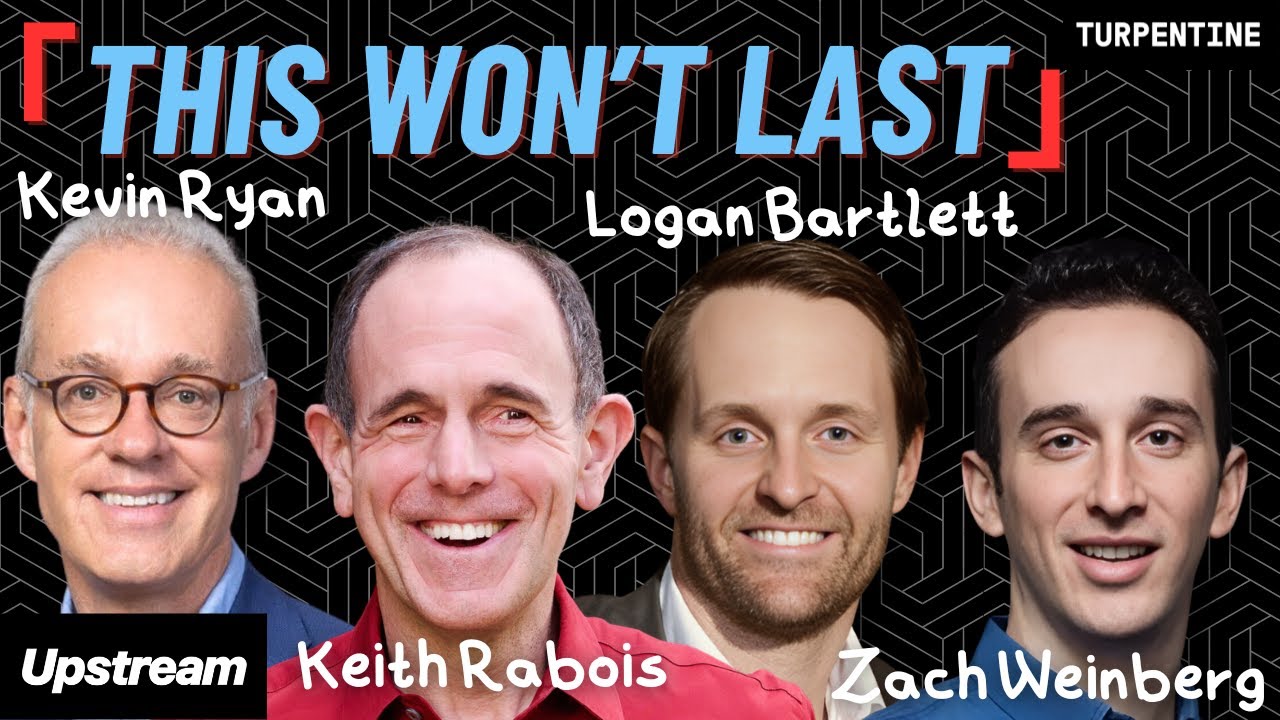
In this round‑table episode of "This Won't Last," host Erik Torenberg and guests Zach Weinberg, Logan Bartlett, Keith Rabois, and Kevin Ryan discuss a wide range of topics that intersect technology, economics, and public policy. The conversation opens with a critique of Paul Graham’s "founder mode" essay and a comparison of Amazon’s retail dominance to Shopify’s DTC platform model. They then turn to recent antitrust actions led by FTC Chair Lina Khan, focusing on a series of AI‑focused acquisitions (Microsoft‑Inflection, Amazon‑Adept, Covariant, Google‑Character AI) and the broader chill such scrutiny creates for venture investors. A substantial portion of the dialogue is devoted to the U.S. federal deficit, with particular emphasis on Medicare and Social Security as the primary fiscal drivers, the solvability of Social Security through benefit adjustments, and the need for higher tax‑as‑a‑percentage‑of‑GDP to address budget gaps. The panel debates the macro‑economic implications of inflation, growth, and asset allocation, arguing that equities and risk assets may benefit while cash and treasuries suffer, and noting that inflation disproportionately harms low‑income households. They compare U.S. health outcomes and life expectancy to Europe, attributing differences to obesity, opioid use, and violence, and discuss how these factors skew aggregate statistics. The conversation shifts to market concentration, contrasting high concentration in traditional sectors (telecom, banking, consumer goods) with a more competitive tech landscape where firms like Shopify challenge Amazon and startups like OpenAI challenge Google. The guests evaluate emerging AI tools such as Perplexity, praising its user experience while questioning its long‑term business model. Finally, they examine regulatory pressures on communication platforms, detailing the French arrest of Telegram’s CEO, encryption limitations, Russian access concerns, and the looming U.S. TikTok divestiture, tying these issues back to broader themes of free speech, geopolitical risk, and speculative investment in Chinese tech assets. Throughout, the participants blend personal anecdotes, speculative venture‑capital reasoning, and policy analysis, offering a nuanced, often skeptical, yet occasionally optimistic view of the intersecting forces shaping tech, finance, and regulation.
Chapters
90% of Paul Graham's writing is him discovering how the world works and thinking he's the first person to understand it. And then like writing an essay about it, leaving the general antisemitism that comes along with him aside.
Uh, uh, I, I do not agree with what Zach just said.
Yeah, we have to take a long-term perspective. I guess the question we're going after is, you know, Amazon managed to buy any company that was competing with it for a while. And so now, you know, has such a dominant share that no one—
But even that's, even that's false. Shopify has dominated Amazon in retail over the last decade. Like, Shopify is what powers every D2C brand created in the last decade, despite being right down the middle of the bullseye of what Amazon's supposed to do. Amazon has like zero monopoly power. It's like crazy. Shopify is kicking their ass in every possible way except AWS.
Not Sweden. Let's point to Norway. And you mean the giant oil field in Norway? Like, yeah. By the way, my favorite part of Norway, first of all, there's like fewer people than in, you know, like Brooklyn at this point in terms of the whole country, is they basically take the oil money that they get from drilling out of the ground. And invested in US tech companies. It's just like the most capitalist thing in the world. Hey, Upstream listeners.
This is Natalie, one of the producers at Turpentine, the podcast network behind Upstream. We're excited to highlight some of our best content from the network on this feed each week. Today on Upstream, we're dropping episode one of a brand new show called This Won't Last, also a part of Turpentine.
The show is a monthly conversation between Logan Bartlett of Red Point, Keith Rabois at Kosla Ventures, Kevin Ryan at Ally Corp, and Zach Weinberg, a biotech founder and investor. True to its name, the show will run for a limited number of episodes, so find the link in the description to subscribe. Up ahead, hear their unfiltered takes on Paul Graham. Founder Mode, Telegram, AI, and the future of venture. We'd love to hear your feedback.
You can email me at natalie@turpentine.co or leave a comment to let me know what you thought of This Won't Last or what you'd like to hear more of on Upstream and which guests you're most interested in.
Please enjoy the episode.
Just to give a little bit of background here, I guess, Zach, this was originally, uh, your idea. I think once upon a time I had asked you to do this and you were too busy fundraising. And then finally you were really motivated, what, 6 months ago or so, 3 months ago?
I guess fundraising was going well.
So yeah, yeah. So this was your idea. Do you want to give some color on what you originally thought this to be?
Yeah, uh, you pinged me to say, hey Zach, would you participate in something a little bit spicier? I don't know if that was the term you used. That's the term I heard, at least in my head. Uh, and so—
And you basically said only if we can get Keith to do it, right?
Yeah.
I just thought, why don't we go full spicy? Uh, you know, hot tamale. And Keith and I have been best friends for a few years now, so I thought this could work. And then to, you know, add, add additional flavor to it, to try and find somebody who is better and more accomplished than both Keith and myself. Uh, and so that's what Kevin's here for, uh, who I view as like the OG New York founder before being a founder in New York was cool. Which it is now.
Yeah, I'm just really old.
Yeah, that's, that was my subtle way of calling you old, actually.
Yeah, yeah.
Young in spirit though. Uh, just getting back from Burning Man, which I think you, uh, makes you the youngest or the only of us, right? Keith, you didn't do that, did you?
Hell no. There's no berries in the, uh, there's no berries, no air conditioning, no shower, and I don't do escapism.
Yeah, yeah, I'm the same way. It's a little too hardcore for me.
You're, you're missing out on so many things.
Uh, did you get stuck there? Wasn't there an issue? People got stuck this year?
No, no.
I mean, they, they closed down for about 8 hours, uh, the, the gate, but I, I had already left at that point and you can see it coming. So it's, it's, but it's, it's definitely, I mean, there are dust storms. It's not super comfortable, but yeah, you see crazy things. It's mostly music and art, creativity, just incredible engineering of art cars and things like that. It's extraordinary.
You're not going to gaslight me into thinking this is a good idea, Kevin. So I think we're going to try to do this once a month. We'll see how long we can keep going. I think we've committed to do some number of these together, schedules permitting and all that. So we'll see how it goes. Hopefully people like it. We'll try to focus on, I think we've kind of agreed we'll hit a handful of topics every month. We'll try to stay within the business side of things, and politics obviously intersects with business quite a bit, but I don't think we aspire to be a totally political show, but I imagine we'll find our way into that stuff as well. So hopefully people enjoy it and we'll take feedback and all that. And hopefully this will be the worst one you hear and we'll get better and all that stuff. So good.
Well, and the good news is if this one's really bad, we don't have to, we don't have to air it.
That's right.
Yeah, I guess that's, that's fair. This could be the first and only of the, of the bunch. Well, the first topic. So Paul Graham posted an essay, I think it was last Sunday at this point. We're recording this on a Friday. So a little bit close to a week ago. And it was about a concept that Brian Chesky had introduced called Founder mode. I imagine people have that are listening to this have probably read the essay, but if you haven't, giving a quick version of it here, and I'll read from it. What he said was essentially Brian Chesky gave a speech at a YC event, and it was about how what what he had been advised to do as the company scaled at Airbnb was was actually led to a lot of damage. And what he said was, as Airbnb grew, well-meaning people advised him that he had to run the company in a certain way for it to scale. Their advice could be optimistic. simplistically summarized as hire good people and give them room to do their jobs. He followed this advice and the results were disastrous. He had to figure out a better way on his own, which he did partly by studying how Steve Jobs ran Apple. So far, it seems to be working. Airbnb's free cash flow margin is now among the best in Silicon Valley. Paul went on to say, and after mulling it over for a bit, I figured out the answer of why this advice was bad. What they were being told was how to run the company you hadn't founded, how to run a company if you were merely a professional manager. But this MO is so much less effective that to founders, it feels broken. Uh, so it was very, um, I guess lauded among tech Twitter and seems like a lot of people appreciated it. Keith, I'd be curious your reaction of what, what you thought when you read it.
Well, it's pretty intuitive and obvious to me. I mean, obviously I've been working with Brian, in business with Brian, friends with Brian since 2010, so nothing he said surprised me. In fact, I remember when he was about to pull the trigger on this, uh, radical change, he summoned me to his house in San Francisco in December And I didn't know what was on the agenda. Getting summoned is always a little terrifying by really talented founders. And then he told me he was going to make all these changes to their process and all this stuff, and I was super excited and ecstatic that he was actually doing this. I've given a lecture previously in 2013 where I think I distilled a lot of the key concepts behind founder mode versus manager mode. Erik at Ramp tweeted out my lecture notes from 2013. So to me, this is very intuitive. I learned a long time ago from a mentor of mine who was older than Kevin, Pierre Lamon taught me a long, long time ago that there's, quote unquote, no such thing as a well-managed Silicon Valley company. So I think aspiring to be a well-managed company is itself broken and a sign of putting the carts and horses in the wrong order. Innovation drives success, not management.
What is the kernel of this in your mind that Brian sort of found and that you talk through? We can link your speech in the show notes as well, or your talk. But what do you think the kernel of this insight is?
The kernel is really straightforward, actually. The CEO is always responsible, period. There's no exceptions to that rule. You're the CEO of the company, you're accountable for everything. So once you understand that, then you're a lot less willing to delegate things and not inspect. Another old-school Silicon Valley principle that also is much older than Kevin and me combined probably actually derives from Andy Grove, which is High Output Management, published in 1982, which is this idea of task-relevant maturity. And so ultimately what you're doing is developing a relationship with each of your deputies based upon their prior ability and proven ability and experience doing certain tasks and certain kind of activities. And you're sampling at different ratios of time based upon the abilities, the proven expertise of different people on your team. So some people may be doing something that's new and novel and you may want to sample every day or every week. There may be people you've hired that have done this 3 times before, exactly what you're asking them to do. You may sample that quarterly. So it depends. So this is one of the frameworks in my lecture, but all this stuff kind of derives from basic Silicon Valley company building principles, from Intel and Andy Grove in 1982 to things, you know, at Apple, whether you refer directly to Apple or not.
Couldn't you sum the, like, whole thing up as Pay attention, right? Like at the end of the day.
Yeah, Zach. But the difference is what do you do when you have a VP or SVP or COO that says, I know what I'm doing and I'll be responsible for the output, right? That's where the rubber meets the road. And in founder mode, that is not an acceptable answer unless the person has a track record both internally and externally of delivering on those initiatives. And then you might sample then monthly or quarterly versus daily or Yeah, it's funny.
People don't like the flashlight when it's on them, right? They like the flashlight everywhere else, but when it's turned on them, they get very uncomfortable and that's typically a bad sign.
So worth pointing out 3 facts. One is that the stock price of Airbnb is lower than it was 3 years ago. The stocks you should have purchased were both Apple, where they replaced their founder and—
Well, he didn't get replaced.
He died.
Yeah. But he, He replaced the founder and 90%—
Final replacement is what they call that.
Yeah, I think Steve would still be doing pretty damn well if he was healthy.
It's very possible, but I do want to point out that 90% of the value has been created since Steve left by Tim Cook, and none of us thought that was necessarily going to happen. But then we can look at Microsoft where we did get rid of the founders or the founders.
Well, we did not get rid of the founders. Bill retired. There's a very difference when a founder retires or dies and you have to, you have a choice. You have to get somebody in the world, like there's 4 billion people, you got to pick one versus intentional Internally replacing a founder.
His co-founder Ballmer stepped in and that didn't work very well. So they'd been there from the beginning. Those are real founders. And now we have a manager who— and all of us are shocked at how well Microsoft has done. The point being that what we agree with is that good management, if we want to lionize and say that it has to be, uh, the founder, you can. I mean, I started a company, Mongo, and brought in a manager 10 years ago, Dave. We had $40 million in revenue. It's worth $20 billion today. He's done an incredible job. He wasn't a founder. So there are plenty of examples on both sides. I don't think enough— I mean, it sounds to me like, um, Brian is blaming other people's advice to him as to why he didn't do a good job as CEO. Fine, we can blame everyone else. Maybe he didn't do a good job and he's doing a better job now. I don't think that's linked because he's a founder. Uh, maybe he should have, uh, just managed better.
It's also Paul— it's also Paul Graham deciding this is like a really important insight. I always find like 90% of Paul Graham's writing is him discovering how the world works and thinking he's the first person to understand it, and then like writing an essay about it. Uh, leaving the general antisemitism that comes along with him aside.
Uh, but, but, but the key thing is the survivor bias.
As a very downstream investor that needs to play nice in the sandbox with everyone, let me say that I am not, uh, I, I do not agree with What Zach just said about Paul Graham, and I would like all YC investments to continue to go.
You like paying 40 pre for a demo that was created 3 days ago?
Yes. Yes, very much so.
Um, but there is enormous survivorship bias. This is like saying, it's not surprising to me that manager-led companies on average do worse. That's like saying people who go to the hospital, oddly enough, are sicker than the people who are outside the hospital. That's why they're in the hospital. No CEO steps down and leaves when his company is killing it, and no board replaces him. So there's always some change for some reason. And so it's not at all a, uh, a similar, uh, data set.
One of the things that I, I think is interesting in this is it's almost like the ability— one of the points that I think wasn't totally teased out in this is the founder has this ability because it came from nothing. You're willing to take chances and push things forward in a way that maybe a professional manager wants to just play safe between the lines on things. And so it's almost like you can have this founder mode psychology in some ways without actually being the founder, which I think Satya has done a very good job of, right? He was the one that brought Windows to the iPad. That was a decision that Ballmer was too rooted in his own way of doing things. And he was able to think far enough ahead about it. So I think the distinction of founder is an important one in some ways, but maybe not perfect in describing what the practices are.
Well, I'll give you an expression I learned from Peter Fenton, which is moral authority. Founders have a moral authority that other people don't have, and especially when you want to evolve in radical ways. You see Zuckerberg exercising this at scale. And yes, it's theoretically possible to hire someone who's so self-confident, who has enough social connections that they exercise that authority. But typically either they're afraid or there's an organ transplant issue if someone tries to who's not a founder. And that's probably the single best ability that a founder can deploy.
Yeah.
And that's what Dave, Kevin, by the way, but to your point, I think Dave's one of the best operators in Silicon Valley, the CEO of MongoDB. And he came in at a time in which there was a very good nucleus of a business. I mean, you lived it, so I don't want to speak for this, but, and he is such a confident, competent individual, maybe the best, one of the best operators out there that he was able to, Kind of refound the business in a lot of ways.
He came in early, very good technology. Sorry, go ahead.
He came in early for $40 million. I mean, early enough that he could still shape and mold and drive the culture.
And yeah, but it was actually after 7 years. Fair enough. Um, and so the technology was good, but the sales, you know, global sales network had not been built out. And, you know, he's just done a, he's just done a great, great job.
But he had been a founder. He wasn't the founder of Mongo, but he had the moral authority and the confidence of operating like a founder.
Yeah, and look at Satya, right? He's been in the organization for 10+ years. He knows how it runs. He's got the moral authority in a different context. It's just, I didn't love, I just don't love the brand. I mean, the branding is cool. I get people read it because it sounds, you know, like, you know, like a nice headline, but it's not a founder versus a manager. It's just like a good business operator at the end of the day.
Yeah. And we've all seen founders who didn't do a good job. We've seen managers who didn't do a good job. And the opposite. So each case to me is no different than if you said statistically, you know, people of Polish descent do slightly better than this. Maybe that's 5% true, but you're not gonna make a decision based on that. You're gonna look at the person and say, is this the right person or not?
Well, as a VC, you can. At Founders Fund, we ruthlessly and rigorously analyze this with proper methodology. And the returns for a VC are just completely different if you fund founder-driven companies that never make a change. Versus companies that don't have a founder CEO over 40 years. Like, the evidence is unequivocal. It's not— the slide is one of these slides you look at, it takes like a split second, you're like, duh. So I personally only fund founders. If I have any doubt that this person is going to be the CEO forever, I will not write a check. Now, I have partners at KV who will. I had no partners at FF that would.
But how do you— how is that not just survivor bias? Because you You generally don't invest in companies that are 10 years old, right?
Well, I don't care about survivor bias. I only need— there's 10 companies a year that matter, and I need to invest in a reasonable number of them. I don't care about whatever else happens in the rest of the world and in technology. I need to be the investor of choice for a reasonable fraction of the top 10.
Well, I think part of it too is like the reason to the survivorship bias. Those that build good fundamental businesses, it's actually easier to run them. At the end of the day. So you got a little bit of that going on. Like, the business itself is just— I mean, look at Airbnb. There's Brian himself saying he ran it poorly for a while, and yet what is it, a $100 billion company still?
Yep.
No, sometimes you just— it's like eBay.
Not as of today, unfortunately.
Oh, it's down. Okay.
Yeah.
No, eBay was an example that was, that was essentially never run by its founder for more than a year. I'm not even sure it was that well run afterwards, but it's such a good business model. That it was hard to screw up.
This is a great point, though. She did screw it up. Meg absolutely screwed this up when the rise of Google was happening. There were several people internally, and there was us at PayPal, Reed Hoffman included, very specifically who articulated that Google is a fundamental threat to the future of eBay. And she hired a bunch of stupid management consultants from Bain, and they they literally told I saw the report because we sold the company, so I got to see this. They literally told her, "Don't worry about Google," you know, blah blah blah blah blah. Founder at eBay, I don't think makes that mistake.
Yep. Yeah. And I, I think, uh, it was a great business and never well run. I never had a good interaction with them.
Yeah.
Some of them succeed in spite of their management.
Uh, well, you create a monopoly. I mean, obviously network effect monopoly businesses are wonderful. They're very rare. Unfortunately, it's really hard to fund just those, but you can get away with a lot of mismanagement for a long time. But eventually when there's a technology wave change, What happened to eBay will happen to you unless you have really talented executives.
Yeah. And the one that's coming that's interesting, everyone always talks about now, is just like, does Sundar have it in him at Google to do the basics? Like, hey, maybe show up to work more than twice a week, or, you know, the free coffee isn't always there. And we'll see. I, I tend to agree with you, it's not happening. But, uh, that, that's the one that needs it for sure.
Yeah.
I mean, you've seen the, the founders have gotten more involved there, and I Listen, I don't have any inside knowledge on this, but I will take a bet with anyone that in 18 months' time, he's not the CEO of Google. And there is that moral authority, and there's probably a personality type that needs to lead through this next iteration. And maybe it'll be the existing founders coming back into the saddle.
Yeah, it's a bit of the Ben Horowitz wartime CEO, peacetime CEO. And I think that also correlates a little bit more with founder mentality.
I don't think it's a perfect correlation, I'm not sure those founders are coming back.
Yeah, I'm under tips.
You have $70 billion. Do you want to go like, you know, deal with the workers union at Google? Like, that doesn't seem very fun to me.
Once you move to Fiji, it's all over.
Yeah, pass. Yeah.
Yeah.
Uh, we'll continue our interview in a moment after a word from our sponsors. Venture capital is widely seen as one of the most lucrative asset classes in the world. Go look at the S&P 500. Nearly every major tech company on that list was once funded by venture capital firms, producing billions of dollars in profit in the process. The hard truth, however, is that the biggest venture funds are almost entirely funded by institutional investors like endowments and sovereign wealth funds. So unless you knew a guy who knew a guy, you and 99.9% of individual investors did not get to participate in the pre-IPO growth of any of those blue-chip companies. And it's happening again. Look at the biggest names in AI, for instance. Almost all of them are still private. Just out of reach of your portfolio. The Fundrise Innovation Fund is finally changing that. It's a more than $125 million fund. It holds some of the most exciting pre-IPO tech companies in the world, and it's designed specifically for individual investors. This time, you can get in early at fundrise.com/upstream. Carefully consider the investment material before investing, including objectives, risks, charges, and expenses. This and other information can be found in the Innovation Fund's Prospectus at fundrise.com/innovation. This is a paid advertisement. The tech world turns to the Brave browser for its unbeatable privacy protections. But did you know that Brave also has a private ad platform? Brave Ads offers first-party targeting, and it's been cookieless since day one, so you can relax while third-party tracking cookies disappear from the web. Today, millions of people turn to ad blockers to avoid being tracked and pestered online. But Brave's new ad model aligns incentives for users and advertisers. Users earn rewards for viewing ads, which they can save, spend, or pass along to their favorite creators. And advertisers score points for respecting user privacy, generating ROI without invasive tracking. So, whether it's high-impact announcements on the New Tab page or keyword-targeted ads in Brave Search, Brave Search offers diverse, private, future-proof ad formats for all your business Join the future of advertising at brave.com/ads. Mention Turpentine to get 25% off your first campaign.
Cool.
Well, the next one we had is sort of a catch-all, but it was the state of the venture markets. We had to do our, some annual meeting type stuff for disseminating updates. And I'm sure you guys have to do this with LP letters and all that. And so one of the things that we'll end up doing is we'll share some slides. slides on what Series As and Bs and Cs look like for the peer set of businesses that we compete against and compare ourselves to. As you can see, the data here kind of implies at least Series As have been fairly muted over the course of the last, call it, 7 quarters or so, averaging at least for the peer set that we look at, which is inclusive of KV, maybe 35 to 45 or so investments in a given quarter. Whereas Series B and Series C have actually ticked up pretty materially. I think that's largely driven by AI when you actually look underneath the data. So I'm curious, I guess a high-level question, what people are actually seeing going on in the venture markets, given that's at least a part-time job of all of us. Keith, maybe start with you.
I agree with that. I think there's kind of a tale of two cities. Like there's the AI world and there's everything non-AI. And everything non-AI is pretty cool, but we're also looking for outliers. That's our job. And so if you find the right company, Series A, Kevin and I are working on one investment I just made. So we're investing very actively at KV, uh, in AI and non-AI. But unless you're an AI company, I think the market is kind of chilly and frosty right now.
Yeah, I pretty much agree. I compare it to 2 different trends. You know, there was a blockchain, uh, excitement and there's a bunch of people who are still very bullish on that. And there's a bunch of us who are not bullish on that and aren't convinced it's going to be a huge sector. This, I look at AI as almost like driverless cars, which is that none of us debate that driverless cars will exist. Where the market got wrong, our market, was that it took— it's taking longer than we all thought. I assume if we were here in 2016, we all thought that by now we'd see a lot more driverless cars, and it's going to be a 2030 thing, not a 2020 thing at scale. And AI, that's the risk for everyone, that it takes longer than we think. Uh, but it— I don't think anyone here is going to debate that this is going to be fundamental, huge. We believe in it. But many of us are just concerned that most of the things we see out there are Ridiculously priced. I don't know, risk-reward doesn't really come together.
2030. I mean, we could have a separate driverless cars conversation, but I think we might be more like 2040, 2050 for any of this to scale.
You think so? With driverless cars?
Like, who? I mean, there's one company, Waymo, who has cars deployed in like 3 of the world's best locations from a weather standpoint, which they have spent Hundreds of millions of dollars mapping every individual piece to running it, probably a negative margin would be my guess, with like a massive overhead. And all the others have struggled, failed, flipped over. I mean, Google's theoretically further ahead. Tesla's been announcing the same thing for 15 years and has none of it. So like, who's gonna do this? And, and I'm, I'm not convinced the Waymo model will scale from a financial standpoint. Now, Google may just burn $20 billion putting cars on the road, but is it like an actual scalable business model? I would, I would bet against it.
No, you could be right. I, I'm, I'm closer to 2030 than 2040, but, um, you know, I was— I would have been overoptimistic in 2016.
Yeah, me too, by the way. I mean, you kind of saw it coming and then you realize like, oh right, it's, it's the last 20% of edge cases that cause the 19 years. Yeah, yeah. Just like it has to— the car has to learn how to honk, it has to deal with, you know, rain coming in a weird angle, the guy on his bike who like You know, there's just a lot of nuance to driving.
Did you guys see the video of the Waymo cars in San Francisco all trying to park and they were like, you know, honking at each other and keeping up all the neighbors, uh, in their apartments and stuff? It was pretty amazing.
That's the least disruptive thing in San Francisco.
Don't worry about it.
Exactly. And this is where I think we're going to see in AI the bifurcation where what we've learned is when computers make a statement, a mistake, and someone dies, civilization is not comfortable with Even if it's a lower percentage than humans, they just can't deal with it. And so, you know, I think we're all optimistic probably that in, in diminishing the costs of processing an insurance claim, AI is going to be amazing. If it's giving, you know, health advice and you take the wrong drug, which will happen once in a while and someone dies, people are going to go crazy and that will be pulled back. We're years and years and years away from that.
The other analysis I haven't seen just on the car thing, I would love to see if somebody— hey, maybe Logan, get a future guest to come and explain the math to me. But What is the true variable cost of the driver in these cars?
Like the true—
because you have all this overhead and other stuff, right? It's got to get all priced in. And what we're saying is we're going to take the driver piece of that out. There's some margin in that. But by the way, we have to replace that driver with like a bunch of equipment in the car, you know, the guys monitoring from the factory. It's not like it just goes to zero. And like, what are we really talking about here that you can go and capture?
Plus the maintenance.
It is crazy expensive to maintain these vehicles, to deal with them when they come off the road, because it's owned centrally, right? As opposed to owned by the driver. And you have the whole other issue of this entire thing, which is like most of these municipalities are going to fight this stuff. So you've just got— the path doesn't seem as clean as I always thought it would start with trucks on the highway. And maybe that actually does really work because it's reasonably similar. But for true passenger-led stuff, I think this is just like a giant Google subsidy. We should love it while it lasts. I mean, it's great, you know, to ride in it, but business model, we'll see.
Well, and that number has to be about $30 an hour. I mean, it's not far off that for the driver.
I will say I did a podcast with, uh, Dara from Uber a couple weeks ago, and we, we spent a little while talking about at some point we're going to need to come up with what our tolerance is for deaths, uh, from, from, uh, autonomous vehicles. And we, we have a pretty high tolerance as a society. I think it's like 50,000 people in the US a year die from car accidents. And they're mostly healthy people that otherwise, you know, don't have comorbidities or whatever it is. But we're going to need to come up with, like, are we comfortable with AV killing 5,000 people a year? I mean, that seems pretty reasonable if we take it from 50 down to 5. I think that's amazing. But you can only imagine when this happens, when one person dies in Arizona, everyone freaks out, right? Which is a daily occurrence in every other state in the country.
Yeah. You know, it'll be a 3-year-old child and everything will shut down for 5 years.
Yeah. Yep. It's like the, uh, the best metaphor I've heard for this is like a little quip about if electricity were invented today, it would never be allowed.
Yeah, well, and it's— I remember going back, there's a book, uh, oh gosh, I can't think of it. I'll link it in the show notes. But it basically goes through all the different, uh, technological trends. And like when the railroad was being built out, people died all the time. It's just like people— the steam engines would explode and they would kill people. And like that We just don't have a tolerance for doing those big risky things and maybe we value life far better. And so maybe it's a good thing, but I don't know. I mean, we need some trade-offs to get these things done.
Going back to the AI company. So I'm, I think Logan, you were referring to me as the part-time investor because I do mostly work in biotech. Uh, but you know, a little side gig of pretending to be a tech investor. Uh, the thing that I think I've been surprised by, or at least like uncomfortable with on the AI valuations in particular. Is just you have so much of the revenue growth when you dig under the hood that looks like people piloting with very unclear margin profile on that revenue. And this like general fear, at least I think, of just pricing coming down as competitors enter the market because the underlying foundational models are going to be somewhat commoditized. We can define what commoditized means. I just, I wonder how people are paying 50, 100x top line for these businesses. And not really paying attention to like the quality of the revenue, if that makes sense. Now, I don't have time to like dig into these things anymore, unfortunately, but that's been my like, I don't know if I should be paying $300 pre for this company that, you know, started 9 months ago because the revenue quality is somewhat unclear.
The slope of the line is the, is the thing that I think people are theoretically investing behind. If you look at, we ran some of this data, but it's sort of, it's like 29 times is sort of what a Series B or C non- AI companies going for these days, and this is high profile. And then it's like 88 times trailing recurring revenue for AI businesses.
By the way, you know, Google is trading at 18 times earnings.
What are earnings?
I'm sorry, is that—
I don't know. It's when you spend a dollar and sometimes you get more than a dollar back. Yeah, it's crazy.
Yeah, that happens.
Yeah, that's wild.
Uh, yeah, I mean, some of this is circular, using even recurring revenue as the guiding metric. But the growth rates are significantly higher. Now, what does that mean from a quality of revenue standpoint? And the people definitely have some speculative AI budgets that are being thrown around on this. And so who knows how durable this recurring revenue is, quote unquote, but these companies are growing a lot faster when they hit a seam in the market. I know Kevin and Keith, I mean, you guys just, you did a Series A together in this sort of broader world, right? And I think some of the adoption curve of that you're seeing with that. It's just, it's unlike more traditional software companies.
Well, what I'll say is a global point first is anytime you have a hype cycle or a wave, the first thing that people forget about is quality of revenue. This happened collectively, let's say 2018 to '21, like a massive just ignorance of quality of revenue. So think about AI as a species of that. I think the quality of revenue and Kevin and, you know, our investment together is Quite strong. Um, so I'm very happy. Um, we can't talk about it because I don't think the company's announced the funding yet, but, um, fundamentally that was— it looks, you know, not like a pilot. It looked like there was very serious customers with real use cases.
Yeah, and we're, we're seeing cases where in, in an industry, in white-collar workers, you know, this is literally, you know, 1/10 the cost. And so that, that is a game changer. Now, Now, to Logan's point, is it possible there'll be other competitors that can do the same thing and it gets commoditized? Always possible. On the other hand, you need to manipulate data. There's, it's when you have complex data behind you, that's not in ChatGPT and using the proprietary databases in a company that combine with that. I think that's the thesis that we'll see, but can be interesting and can be a true, true game changer.
Yeah. Thing I think is the shift of actually from service, what otherwise would have been headcount or service revenue now, because we've always sort of had the thesis that, oh, software makes people more productive. But when you're talking about like a Kanban board or whatever, how much can you actually like demonstrate how much more productive it makes you in doing task management or something? But now you're actually changing it towards some means of production, some outcome in some ways. And so we're seeing companies start— I know Sierra, the business that Brett Taylor founded, they're actually pricing in an outcome-based way, I think, on the percentage of resolutions that they actually do for customer support ticketing. I think Zendesk now is talking about doing the same thing. And so this outcome-based pricing, they're clearly seeing a lot of seat-based reduction and price pressure there. And so that'll be an interesting thread to see what, you know, what people are actually able to realize.
So are you shorting Salesforce now?
I don't, I don't do shorts or longs in the public market, but I do think there's going to be a real compression of seat-based pricing. Everyone in my portfolio that prices that way are thinking about how they can capture value in a different means.
One thing I am concerned in this industry is that the, uh, the Salesforces of the world, you know, have real footprints and are very difficult to dislodge. So, you know, we'll have people have add-on products, maybe, but am I going to, you know, retrain 2,000 people in the company to move on to your product that has AI? I think Salesforce will get there first, copy everything they see, Uh, you know, this is not like the Time Warner that couldn't make the move to the internet and never really got it, never really believed in it, and which is late. I, I bet more on some of the large tech companies, not all of them, that they will adapt and, and keep it.
Yeah, and I agree, like, those with existing massive distribution are going to be major beneficiaries of this because the technical part of it you can theoretically commoditize or buy. I worry not that people— if I'm Salesforce, not that people swap me for some like AI CRM. Like that's obviously not going to happen at any scale, but just the seat volume comes down.
Yeah.
You'll go from 1,000 seats to 200 or whatever it is.
We'll continue our interview in a moment after a word from our sponsors. Hey everyone, Erik here. In this environment, founders need to become profitable faster and do more with smaller teams, especially when it comes to engineering. That's why Sean Lanahan started Squad, A specialized global talent firm for top engineers that will seamlessly integrate with your org. Squad offers rigorously vetted top 1% talent that will actually work hard for you every day. Their engineers work in your time zone, follow your processes, and use your tools. Squad has frontend engineers excelling in TypeScript, React, and Next.js ready to onboard to your team today. For backend, Squad engineers are experts at Node.js, Python, Java, and a range of other languages and frameworks. While it may cost more than the freelancer on Upwork billing you for 40 hours but working only 2, Squad offers premium quality at a fraction of the typical cost without the headache of assessing for skills and culture fit. Squad takes care of sourcing, legal compliance, and local HR for global talent. Increase your velocity without amping up burn. Visit choosquad.com and mention Turpentine to skip the waitlist.
I'm curious for you guys that have lived through the internet cycle and saw that firsthand, like, are there, what parallels do you draw? What parallels are people overextrapolating for this and what's going on now versus what happened then?
It reminds me when electricity was introduced and I was younger.
I was going to say, Alexander Bell, what was he actually like, Kevin?
You can read a great book by Graham Moore that talks about Tesla versus Edison and the adventure, you know, adventure.
Uh, but actually, what are there— are there things that, that, uh, you look at and say these are similar, both in a good way or a bad way?
I wouldn't be surprised if we follow the same hype cycle of, you know, everything's incredible and worth $10 billion, and then 3 years later, you know, like I was running DoubleClick at the time, we had 37 competitors Brutal pricing, incredibly shitty business. And then they all got weeded out and you were left with the 4 big players or 3 big players who then had amazing distribution, better cost structures. And it was, you know, a, it was a huge industry. And that those companies today, although they're part of other companies, are probably worth $50 or $100 billion. So it did work out, but it's rough getting there.
Keith, you, you, I remember even when there was a big pullback in '22 when the market really crashed, You were very loud and definitive that the benefits will accrue to the leaders in a meaningful way. And so I assume that we might be on the path, the early days of that, but ultimately there'll be retrenchment and the accumulating advantages will go to the leaders.
Well, it's classic, like, is it sustaining technology or disruptive technology? And I think that paradigm is really helpful, certainly as an early-stage founder or as an investor. I think that maybe you explain that point for people.
Yeah.
Like what the distinction is.
Anytime there's new technology, it can either help incumbents or it can be inconsistent with their business model or customer base. If it's inconsistent with their customer base, and you can read Clayton Christensen's work on this, on innovator's disruption, actually, if it's inconsistent, it serves low-end customers, it serves unprofitable customers, they're the last people to want to adopt it because they have to basically blend the pricing, blend the user experience, and it ruins their current business model, which is probably trading at a trillion dollars these days. So that's a great place to invest. It's a great place to found a company. But if you invent technology that's going to help Google make more money or help Apple succeed or help Meta succeed, that is not a great place to invest or start a company. Now, on the application layer, it's a little bit more interesting here. Are there applications with workflow? So let's play the Salesforce thing out a bit. Could I envision— I agree that nobody really wants to retrain their entire workforce. Sales teams are going to barf if you're like, hey, here's a whole new workflow for you. However, could you find sales teams that are ineffective or companies that don't have sales teams and teach them to be as successful as effective sales organizations with a different product? If you can do that, now you've got something that's very disruptive to Salesforce and is a problem, but that's challenging in its own right. But that's the formulation. I'm like sort of the lens I'm using as an investor, or if I was counseling an entrepreneur.
I wonder too, if you see just on the Salesforce example, You know, you have a company that's got X dollars in bookings they need to go and get. They need 20 salespeople to do it. Now maybe they need 10 salespeople to do it because their workflows are AI enabled. And, you know, Salesforce will come out with its own products to make people more efficient, but it has to cannibalize their seats. And that's going to be a weird, a lot of infighting, a lot of people's compensation tied to those numbers, a lot of salespeople's bonuses tied to those numbers. It's a big tough, like, human shift inside of a company of that size. And that's, that's not going to be pretty.
Zach, what are you seeing on the AI in biotech side?
Hype. Like, way more hype than, than is reality. And I think for— and I don't want to be one of these people that's like, you know, it's biotech, it's not going to work, it is going to work. I just— obviously the world doesn't work that way. But I think, like, one fundamental difference between atoms and bits, if you will, is just the training data and the volume of training data that we have for like pure digital applications, automated coding, automated email writing, whatever, like any of the use cases where it's like true native digital. I mean, the training data is like the history of written word of all time and every video ever created.
You know what I mean?
It's just like an insane scale. And in biotech land, where you're dealing with atoms, I mean, you're like 1/1,000,000th of the— I don't actually know the exact number, but the training data you have to train your models is extremely limited outside of a very few specific use cases, which already DeepMind is going after. And so we've done an analysis, I won't share it live here, of where do we think AI plays. And I always think, not to go too deep in biotech, but Drug discovery is like a 19-step process. It's like almost like a manufacturing process. And there are a few pieces of that process that I think AI will play. But is it going to like de novo design drugs? No, no, no. It's, it's, it's, it's a tool in the toolbox. It will help theoretically improve success rates and maybe drive down costs. But I think the whole, like, the AI designs the drug is fake. I don't believe it.
And it's not just the corpus of data that, that there is to train on, right? It's also like those, the coding and the email, they're deterministic in nature. So you can validate the feedback loops in a very short, uh, period of time.
Yeah, in biotech, you have to, you have to make it.
Yeah, yeah. It's like the feedback loops are long. It's not a yes or no.
It makes it, I mean, at the end of the day, right? AI, whether it's the new language models or the, the, the ML-driven stuff we had before, it's just making a prediction with like varying levels of confidence. Now, obviously, like the predictions are getting incrementally better, But you have to validate that prediction and feed it back in. And that's really helpful when the prediction is like, you know, which emoji do I want to type to my friends? But, you know, when it's like, hey, you should make this new molecule or this new ligand or whatever, you have to physically go and manufacture it and then you got to test it. And so that loop is slow and expensive. And so, yeah, I, you know, it's, it's a, it's a cool story. I'm glad people are interested in it from, you know, these people spend time in biotech at this point. But not a panacea in any way. And there will be exceptions, right? There will be one or two companies that just kind of get lucky and crack it. But yeah, we focus a lot more on like, is the fundamental biology thesis right? Is this drug capable of being made? Do we understand the value creation path? And like, if AI can help in pieces of those, that's great, but not a rip and replace kind of model.
I'm curious, like the people, I mean, it sounds like we all probably fall on the optimistic but skeptical lens. I don't know exactly how to phrase that, but there's some people that are just going so hard and indexing so many of these AI businesses. And I'm curious, your guys, I sort of take a cynical perspective on that, that it's being used to justify larger fees and, you know, AUM. And you can do it by, oh, well, if you get in the Facebook or the eBay or the PayPal or the Amazon or Yahoo, it all makes for everything else. But I'm curious how much your guys' perspective, do you sort of take the cynical side of this is just to justify large deployments of dollars? And that was the same thing with blockchain.
And now, you know, there's also one, and I'll let the actual VCs comment, but like, or in tech, but there's a little bit of plausible deniability when everybody's doing it, right? Because you can be like, well, we were all doing it. And so, you know, it doesn't affect your next fund. So you're not really out on a limb. And in a way, it's almost like an expression of what maybe LPs want, which is exposure.
I like the idea of starting a new fund and just being like, this is our AI fund. Because then you can, you don't need a, it's not going to get the Roman numeral of every, all the other funds you did. You're like, oh, we screwed that up. That was just our clean tech fund or whatever.
Yeah, no, I think, well, I think that specifically would be a terrible idea. So you get massive adverse selection in AI. Uh, secondarily, there may be, I think that would be really bad advice to take away if anybody's like, you know, one of these aspiring fund managers. Don't do that. I think the AI is real. We invest in AI probably more frequently than any other fund on the planet. That said, we also invested in OpenAI when it was raising its first round of financing, and that success and insight will allow us to continue to do this. We think we have an unfair advantage in investing in AI. So I'd say 40% of our investments maybe are AI-based. I would not have actually been able to invest in the company that I'm working with jointly with Kevin had I not had an AI team behind me because I know enough to be dangerous. I don't know enough about AI to pull the trigger, but they do. And so I could vet the technology, the differentiation, some of the points Kevin made about data advantages mixing with proprietary data, et cetera, with people who've seen the entire world and the entire planet of AI over the last decade play out. And so I could lean into what I do well, which is founder assessment, market opportunity, So there are real opportunities and we're going to continue to double down. But we have this one slide we love from our LP presentation, which is KV investments in a sector overall against general VC investments in a sector or overall. And we want them completely inversely correlated, and they have been for basically over a decade.
And that's for any industry, like you pick a specific industry?
I'll give you the simple one. The simple one Whereas, for example, during '21-ish to let's say '23, when people were leaning back, KV was leaning into more investments per year. Yeah.
And I think it's a bet on the sector. So I, I think, you know, what Keith is doing and what Sequoia is doing, Sequoia is deploying a lot of capital. I think 60, 70% of their investments are in AI. Assuming that we're all right in the thesis that AI will be important, they will be in many of the most important companies. You know, if you just invested in the 20 hottest internet companies in '98, You know, if you waited, you killed it because you had to only make one bet, which was that the internet was going to work.
Yeah. And yep, that's, that's right. I mean, that, that can work. It's kind of worked for a16z in crypto, right? They invested in every possible crypto company, and, you know, there are a few really important crypto companies. And so I'm sure the fund's returns are awesome. Secondarily, I saw a metaphor from another VC at Benchmark that maybe AI is more like the invention of the And I think there's some merit to that. Now, I wasn't old enough to be around in the invention of the transistor, so I'm actually going to go pull some books and read more about it. But that struck me as more likely correct than the mobile metaphor at a minimum.
What was the insight there? What's the distinction you're drawing?
Well, the world changed. Once there was a transistor, everything we took for granted about what was possible literally changed. And yes, took decades to play out and change everything, but it may be something like that. There's a kernel and that it literally over time transforms everything and that there's new forces of gravity that, or the forces of gravity that we've taken for granted just don't exist, whether they're human, human scaling, cost, all those things. So I really want to study that. Uh, you know, maybe I'll ask Vinod. He probably remembers that, that time.
A friend of mine is a, I wouldn't say skeptic, of just like the inherent value, but more of like the return profile of investing in AI. I think the distinction he made, which I really liked, is, you know, is this a massive capital expenditure line item for you or not? Because if you're in that like CapEx flow, right, you've got to deploy these like insane clusters and spend billions of dollars. The hurdle for you to return cash is insane. Like the amount of money that you are going to burn to get to that point in time looks more like You're like the railroad company or the airline back in the day, rather than the software layer. And as tech, we're so— I mean, most of modern venture is software layer, right? And so you don't have that same underlying capital structure. The OpenAIs, although catching it early always works, but those that have a few billion in CapEx, I don't know if you're getting that back over time. I don't love being in that layer of the stack, at least as an investor. I think it'd be great for humanity, but I'm not sure the dollars will, will be there.
Yeah, I agree.
Kevin, the next one, uh, I will turn it over to you. Unrealized capital gains. I know this is one of your, uh—
Are we, are we having a stupid ideas segment? Is that what's happening now?
Well, Kevin actually had something he wanted to, uh, share, I think, on this topic. Yeah, Kevin's very, very in favor of, of, uh, of the policy.
Oh God.
No, so, uh, I am in complete agreement that it's a stupid policy idea. I think what people are missing so far is that it's not at all going to happen. And so I'm pretty involved on Democratic Party side, and I don't speak for them at all, but I have a strong forecast, which is that you just won't see this mentioned again. And the proof of that is that the economic policy came out 2 days ago and did not mention it. So my guess, if I were part of the campaign, is I'd be saying, look, it's not a good idea. We don't want to announce that we flip-flopped. Yeah. So we're just going to pretend it never occurred, not mention it. And that's my guess as to what will happen. But I am in agreement probably with everyone here that it's just a non-starter idea.
It's really—
how did it get— the bigger question, Kevin, I agree with you, it's not going to happen. But the bigger question is, doesn't anybody have an antenna that either at the candidate level or the staff level to know that this is one of the stupidest ideas proposed in 100 years?
I don't think it was part of their official proposals.
Well, they stripped it out from the speech, but it was in the briefing materials officially.
Yeah. So yeah, I mean, I do find that perplexing and a terrible idea because it's— I don't understand.
It sounds good to stupid people.
Yeah.
I mean, I think that's just like as simple as that. Like, it sounds good to people who believe that like economics is a fixed pie. And if you think— if everything in your brain is like fixed pie mentality, then like, yeah, of course you want better redistribution. distribution because you kind of think like there's $5 for everybody and I got to go get a bigger chunk of it. Same thing we could talk about on immigration, right? Like if you assume fixed pie number of jobs and your brain changes and how you think about immigration, but that is not how economics works at all. It's not a fixed pie.
And look, I do think we have a taxation problem in the United States, which is that the wealthy don't pay enough tax and aren't taxed in the right way. So you can never persuade me that, you know, private equity investors should pay 15%, but that lawyers, you know, should pay 50% if they're in a state. So, uh, I— you will not persuade me that basis— like, my mother died, had $2 million in stock gains in her name. The next day it goes to my father. If he sells them, they pay zero tax.
Yeah, there's stupid policies there too.
I totally agree.
Although if you look at the actual, like, net revenue to the US government we're talking about and fixing those things, It's like Medicare's bill by lunch. It's just so tiny. It matters negatively. And we spend so much brainpower talking about these things that have no impact.
So we need to have just a—
Some incentives that can really matter. So I didn't realize this until last year. I was in Sweden speaking and my host was a VC and he said, you should move to Sweden. I was like, this is kind of cool. I like it, but why? And he said, well, we have zero capital gains tax. And I had this misimpression that Sweden was one of these socialist countries that sits around the Nordics. And he's like, nope, we have very high income tax, but we have zero capital gains. And then the light bulb lit off. That's actually a pretty smart policy because you want people taking risk, driving economic gains. And Sweden has actually a disproportionate share of successful entrepreneurs in Europe. So you can connect the dots and do things that are very different and have outcomes that might be better.
I think I'm going to quote a fake statistic I read on the internet, but let's see here. I'm pretty sure Sweden has a larger percentage of per capita billionaires than the It does.
That's actually true.
So it's like, you know, comes down to—
Plus it has a great berries program. It's got great EDM music, everything you need except the weather half the year.
Yeah. And then everyone's like, okay, not Sweden, let's point to Norway. And you mean the giant oil field in Norway? Like, yeah. By the way, my favorite part of Norway, first of all, there's like fewer people than in, you know, like Brooklyn at this point in terms of the whole country, is they basically take the oil money that they get from drilling out of the ground And invested in U.S. tech companies. It's just like the most capitalist thing in the world. And then they, people point to the safety net. It's like, where do you think the money comes from?
The trillion dollar—
They tried this policy though. Norway actually tried taxing unrealized gains and they wound up not only, they actually wound up with negative revenue because obviously the people who have the gains, 80 of the 400 people that were above the threshold moved out of Norway.
Yeah, US has less of that problem because if you keep a US passport, you pay US taxes. So we don't— that's why we never have flight of people. But still, we want to have a tax policy that keeps taxes as low as possible but allows us to collect enough money that we don't have an enormous debt.
The thing we've lost, we lost as a country, is this idea that growth, growth cures everything. All of society's problems are better when you're growing faster. And we've gotten back to this Like, how do we distribute the money? And what we forget is like the size of the pie is actually what matters. You know, 60% of a small number is a lot smaller than 60% of a very, very big number. And so like, can we just focus on the really big number here? And all of these things are just like this forest from the tree problems. Like, you gotta remember, like, the US government does not have money. We don't. And like, people think about like, oh, the US government has money. No, no, no, no, they don't have money. They have tax receipts. They borrow money, but like they have part of our money. And you know, if they had, if there was more going around, the federal government would have more and everything. And we just get lost in the like, it's unfair. It's like, oh guys, like this is not the problem. The problem is how do you make it bigger so we all win? And just getting, that's politics.
It sucks. Worth pointing out that in the '90s when the economy was growing faster and booming, booming, booming, our taxes were significantly higher than they So there's no correlation we're seeing between marginal tax rates lower in the U.S. and economic growth going up. We, you can't put that chart together.
Can you put the chart on capital gains?
So it's, it's combined the two. So I don't think so. I don't think that we saw when we've had tax decreases that tax revenues have gone up because they're so significant, the tax decreases, you know, require, You know, 20% growth to make up that difference.
I would study it though, just on the capital gains marginal rates and growth and like see how much correlation or lack thereof there is.
I mean, if you look at it, I agree.
I'm just looking at it now because I Googled it, uh, or I should have Perplexity'd it or whatever. Uh, you know, the, the cap gains tax rate for individuals and corporations has reasonably hovered somewhere between like 20% and 30% for a very, very long time. So you actually haven't seen like drastic changes in it. So I don't think you'd see anything, but that's the reality, right? Like, you know, you want cap gains taxes that are higher, just disincentivize slightly, you know, risk-taking. And the risk-taking is ultimately what grows.
I mean, I, yeah, but I just don't believe that in that range that people make a decision to start a company or not start a company.
I think they do on QSBS, like, which is effectively a tax cut on Tax cut on, uh, capital gains. Like, QSBS was probably a pretty successful policy. I don't know if it's ever rigorously been studied.
The other— I mean, look, the, like, the macro argument is, okay, maybe people don't make different decisions, but now you have more dollars available to take risk because fewer dollars are going to the US government. And then now you've got the US government doing your capital allocation and not private industry and, like, market-led stuff. Now, that's a little like trickle-down economic-y for people, and so they don't love it and doesn't sound great.
But I am curious, maybe for— I mean, we're sort of taking this as a, uh, as a well-understood thing because this impacts our life and we think about, uh, you know, realized versus unrealized and cap gains and all that. I don't know if someone wants to give the quick primer of, of why this is such a bad idea and the problems associated with it. Kevin, it sounds like you're close to some policy side of Sure.
We were just on the reason you don't want to tax unrealized gains is that you can have an entrepreneur that on paper has a $100 million gain, absolutely no way of selling it, and now has to pay, you know, $20 million in taxes. And so it was just a non-starter. But I use this example.
Even this policy was, wasn't it? I mean, there was some arbitrary distinction about liquid versus non-liquid and how it was going to get litigated was going to be a pain in the ass, but it was, this seemed to me mostly centered around public executives or founders and then maybe hedge funds.
But it's like, it's like, okay, so now all we're doing is incentivizing like illiquid investing because that's where you don't have to pay it. So, you know, it's going to like boom the real estate market. You want housing prices to go up even more? Like, yeah, fuck yeah, I'm going to park my money in real estate. It's never liquid. You know, so like the whole—
It's just, it just doesn't pass a fairness test. And I hate the fact that we we have tax policies that aimed at certain industries, which is really a reflection of good lobbyists who get that stuff done. I mean, you know, there are incentives to sugar and to oil and all kinds of things, and they never leave the tax code. Everyone should have the same tax policy. It needs to be based on when I get cash, I owe some of that to the government. You know, it's not any more complicated than that. You know, we, we have— I, I use this example. I was with the U.S. senator yesterday. I said, you know, why don't you introduce something that says that unrealized gains on everyone's house gets taxed. And everyone would be like, no, we can't do that. My tax— I bought a house for— my grandmother bought a house for $300,000. It's worth $3 million today. Is she going to owe a million in cash? No, that makes no sense. That wouldn't go. So we are the same thing.
It actually makes more sense on the housing side because it's less volatile. Like if you think about our company, it's like, I'll take, you know, company I founded, has traded everywhere from sub-a-billion dollars to over $14 billion just in the last 3 years. We have very volatile assets, you know, certainly in tech. You know, WeWork, we, we're taxing WeWork. Yeah.
And they're not screwing you up, by the way, when you pay the taxes one time, they're not coming back and saying, oh wait, you overpaid that last time, so we're going to give you a little bit of a break this time.
I think the other thing we don't talk about because nobody wants to address it is There's really only 2 things that drive the US federal deficit at this point. It's just Medicare and Social Security and kind of the military a little bit, but it's kind of nice to have that military around. And so I wouldn't chop. It's only those 2 things. And both of those are in deep, deep trouble, both structurally, because Medicare is designed literally as a pyramid scheme by definition. And when the bottom of that pyramid is shrinking because we don't have as many kids, It's like there's no tax policy that's gonna fix that at some point. And, you know, Social Security is similar, although not as bad in terms of dollars in versus dollars out. Medicare is way worse. So like, it's just a pie thing. I feel like I'm the pie guy here, but like, that's the only thing that matters. I think all these other things are just tweaks on a— they're not gonna help.
Yeah, I don't— okay, here's why I don't agree. One, Social Security is completely solvable. And you forget the conversations of 20 years ago when everyone said it was going to go bankrupt. Why did it not go bankrupt because we raised the retirement age by 2 years.
Yeah, I agree with you. Anyway, you can solve Social Security by adjusting the benefits.
Definitely.
If now politically hard, but I totally— Social Security is a solvable problem. Yes. Medicare.
Absolutely. So the second thing though is, you know, how do we compare to other countries? Um, our— the, the bottom line is we collect much less in tax revenue. It's not that we spend more. We're not, we're not spending more than those European countries. Spain— I mean, Sweden spends more, they just also collect more. And so we need to collect, as a percentage of GNP, what we did 20 years ago, and we'd be in a better position. Someone needs to solve the budget deficit problem. So either you're going to cut all of Medicare, which is never going to happen for a variety of reasons, or you need to increase tax revenues. You don't have another solution. And increasing growth by 1% a year does not get you there.
It compounds though.
It does, yeah. So if you did it for 5 years, it definitely would.
Do the math. We are so far off, so far off. It won't get you there. But we just need to collect 2%, 3%.
Well, you have to make, you have to make an assumption about the interest rate. That's the problem. So you have to grow without raising interest rates because obviously you're servicing the debt. So the challenge is to have a policy that allows you to accelerate growth without inflation increasing.
Yeah.
Which can be done. There are, there's precedent ways to do it, but most people don't understand, like, even the beginnings of that conversation.
I mean, like, I'm still shocked. So go ahead.
No, like, they're not incongruous statements, right? Like, the idea of, like, we want to grow as fast as humanly possible and properly tax at the same time and just make sure that you don't— like, one doesn't affect the other. Now, hard to do in practice, but, you know, the growth, like, that compounding growth, that 1% additional over 20 years is huge. It's the difference. Yeah, that's probably like Medicare solvency on its own right there.
I'm still shocked actually that the, the markets are not concerned about our budget deficit because, you know, at some point, at some point it's just math. It is a problem.
Well, because so my like unsophisticated take here is we don't have to pay the piper for a while. Uh, you know, Social Security will hit its like weird little deadline coming up and maybe we'll raise the retirement age, maybe we'll cut the benefits, but like it does have that natural reset So that'll— they'll solve it like one day before it goes bankrupt, right? That's how we, that's how we do things here.
Yeah.
Uh, because politically difficult to solve. And so the donut hole in Medicare, if you will, or the budget gap there, we got, we got some time. Like, it's coming. And so you're just gonna see like an increasing percentage of US tax receipts going to interest payments. And so, okay, what's gonna happen? The government will like kind of inflate it away a little bit, right? Like, we're just gonna see probably like persistent— they're gonna keep spending, keep borrowing. So you see like inflation like tick, tick, tick, you know? And so maybe our natural inflation rate won't be 2% anymore, it'll be 3, 3.5, something like that. And actually, what do you want to own in a like slightly higher inflation, low rate environment? Equities. I actually think you see the stock market, like the valuations go up, not down. And the people who actually get screwed by this entire thing are people who have no savings. Right? It harms, you know, for me, I got a shit ton of money sitting in the stock market. It's kind of good for me for this kind of stuff, right? But for somebody who has no savings and can't invest, it's just your entire dollars that you can spend as your income. Like, well, now prices are up and it's bad for the bottom.
Inflation's better for real estate than it is for the stock market because inflation goes up, interest rates go up.
I just kind of think it's like risk assets go up. And so, because you gotta, You're chasing returns, if you will, and there's more dollars flowing out there. So I think you don't want to own cash anymore, and treasuries aren't going to pay you in that environment. So what do you go and do? You buy equities and stuff like that, but crypto. What you don't do is increase incomes for the bottom 30%, and that's who gets fucked. It's just the poorest people get fucked by inflation the most.
I spent a fair amount of time in France. My wife is French. And, uh, in the most recent election, the left is pushing to lower the retirement age from 64 down to 62 or 60. And, you know, you're just like, have you not read a single book on economics? It's staggering.
It's remarkable.
Having said that, France's budget deficit is not bigger than ours despite all they do. So we used to be, you know, much, much better. And now we're—
Well, give it time because it's barely growing. And so like it will compound. And when that boomer generation retires, at the French prime age of 61 or whatever the number is that they're going to settle on. Like, you want to talk about pension obligations and healthcare obligations, you're going to see rationing in Europe. They're already doing it in the healthcare world, right? Like, we have many, many drugs available in the United States that the Europeans simply do not pay for because it's too expensive and their pie is small and shrinking-ish, depending on which way. So yeah.
Although life expectancy is the measure of your healthcare system. And we have the worst.
But not really. And, and, and that, because I've seen that stat all the time, it's the worst stat because it's, it, it, the United States is a big fucking country, right? We have like 300 million plus people and we're not all created equal. You can walk around New York and walk around Mississippi. Uh, you see very different like setups there. If you take out early deaths in that life expectancy one, a lot of people have done this analysis. We do 3 really fucking stupid things here, Right? We drive really big cars and we crash them all the time. We have an opioid epidemic, so people die of drug overdoses, and we shoot each other. And if you remove that stuff out from life expectancy, the United States is up in the top. And actually, if you just subselect for, like, cities mostly, depending on the cities, we're really far at the top. Like, the Northeast life expectancy is massively bigger than anywhere else in the world, maybe save Japan. And so, Like it is true, but there's a lot of weirdness in that data because we're amalgamating a bunch of stuff that should not be. You got to look at it like by segment almost. So I yeah.
The fourth element you should have added is obesity.
I was going to say obesity is a big one.
Yeah, for now. Yeah, pharma is about to solve that one. You know, yeah, yeah, no, that would be that would be helpful.
Yeah. All right. Next one. If we're talking about unrealized capital gains and the popularity of that, another very popular thing in Silicon Valley is Lena Khan, and a lot of things go. Going on with antitrust and acquisitions. And so we saw another one this week. Covariant was acquired. There's been a lot of, there's been a slate of these like AI tech licensing deals turned, we'll hire your founders. And then the companies seem to get put on ice a little bit, but then sometimes the investors are made whole, sometimes they're not. And it's an interesting, I think we've had 4 examples. I might be wrong. There's Microsoft Inflection, Amazon Adept and Covariant, and then Google Character AI. And it's, I mean, this is nice ingenuity to get around some of the antitrust scrutiny, but it feels like a, not a sustainable way of operating from a free market standpoint. I'm curious people's perspectives on these acquisitions specifically, as well as the host of other antitrust things that Lina Khan and the FTC are kind of looking into.
Do you consider it, because I don't think about this stuff day to day, like, do you consider it when you're investing these days of like, ooh, the M&A? opportunity is kind of unlikely?
I, at the end of the day, we're underwriting all our stuff to public companies for the most part. And so, but, but 99% of all companies end up being acquired in the fullness of time, even if they go public, then they get acquired. And, uh, certainly this AI stuff, and when you get to a certain big enough threshold, you're, you're limited in the people that could buy you at all. And so it's just taking longer and longer to get out of these positions, even if you built a really good company that can actually go public. So I would say no, we haven't like thought it through in a way of, no, we're not going to make that investment, because at the end of the day, we want them to be public businesses anyway. But it's going to flow through to, you know, the LP returns and therefore the sector, and therefore maybe we will have to take it into consideration.
So a couple thoughts on this. One, when they're investing so early, really probably don't consider it because the truth is 7 years from now, who knows what the landscape looks like? I do have, I can think of one example in my portfolio of a company that is, you know, 7, 8 years in and now does not have very many buyers because the potential buyers, uh, like Amazon are not going to buy anything and know that they cannot buy anything because of the chill on antitrust. And I've been in conversations where a company has said, we just don't think we're going to put an offer in because we don't think it'll clear. And it might, it might not, but they don't want to spend, you know, $5 million and find out that it doesn't. So there's no question there's a chill. Having said that, we need to step back from our interests because in our interests, we want more acquisitions and it's super helpful for our sector. The US economy, if you compare it to the Europeans, we have much more concentration. And so there are many, many sectors in telecom and banking, all kinds of things where we are so much more concentrated, so much more has been rolled pulled up that it is not very competitive. If I walk into a department store, you know, P&G and a couple companies, you don't realize that you see 1,000 brands, but they control everything and it's hard to break in. And so profit margins here are higher, the consumer gets screwed, uh, it's harder to break in. And look, you know, it, it is important. So for example, would you start a company to compete with Google Maps? No, because you'll never get revenue because they give it away If I gave away bicycles for free and just subsidized it, you wouldn't—
Yeah, but it's a little counter to the argument of consumer harm, right? Because now I get Google Maps for free. That's pretty fucking awesome. I use Google Maps all day. It's, you know, it's amazing.
I, I use Apple Maps, so it's better.
Um, but, but there's the profit margins. They've looked at this. You can, you can research this. Profit margins are higher, and many of our industries have more concentration and less competition. And so we— what, it wasn't that case 30 years ago. So I do think there is a problem to solve, um, but it would have a chill on our industry. And I can cite examples where I was surprised that things were, were blocked. And so it's a judgment call on the exact case.
Do you think, do you think, Kevin, therefore we need a new definition, uh, around like antitrust? I mean, consumer harm was the definition for, or one of the considerations for a long time, and now as we're more and more digital, uh, in nature, and, you know, it seems that we're able to get a lot of very good things, uh, and the consumer is no longer harmed. It's actually advantageous. Maybe the, the supplier's harmed, the business, or the mom-and-pop, or the, um, DoorDash delivery person, or whatever it is. Like, there's something we could come up with, but the consumer certainly isn't in a lot of these cases.
Yeah, we have to take a long-term perspective. I guess the question we're going is Amazon managed to buy any company that was competing with it for a while. And so now has such a dominant share that—
But even that's false. Shopify has dominated Amazon in retail over the last decade. Shopify is what powers every DTC brand created in the last decade, despite being right down the middle of the bullseye of what Amazon is supposed to do. Amazon has zero monopoly power. It's crazy. Shopify is kicking their ass in every possible way except AWS. So in retail, which is what people think of, what consumers think of, what regulators think of, Amazon has lost it. And it's not because they couldn't buy Shopify, it's because they were too stupid and too culturally attuned to their own self sort of success that they completely missed that Shopify is better. So if someone can beat Shopify directly head on, OpenAI is beating Google, as we all talked about. Google needs to fire their CEO head on in the future of technology. A small startup of a bunch of 13 kind of weird people threw together is absolutely dominating Google right Now, there's no antitrust problem in tech. I agree with you in other industries. I think it's perverse that the concentration is not in tech. It's actually everywhere else. But she's so focused on tech because it's politically popular. Yep.
No, no, I, I mostly agree with that. Um, what changes in tech is that there are tech movements that incumbents don't handle, whereas in toothpaste and, I don't know, cable TV, there aren't, or Or there are other examples where there aren't, and then you get real concentration.
I think the challenge I would push on is just the uncertainty. Like, if you're gonna file an antitrust suit and come after these M&A deals, like, can we just tighten the timeline? You know, like, it's just, it's got to be done immediately. You got to make, get a decision. Because at least then, you know, if I were a buyer, if I knew 6 months in I'm going to have an answer, I might take that risk. Now, I know I'm asking for something that's never going to happen, but just the fact that this thing can get dragged out for 2, 3 years is going prevent people from doing it. And even if they, even by the way, if they win, even if you win eventually, just that fear of like, oh, is it worth it? I gotta have this giant breakup fee. Am I gonna ruin the culture of this company while it's kind of like in weird, you know, purgatory state? That's the thing she's hurting right now. And I'm not— the fear of the potential rather than the actual suits she's filed. Like, what has she actually done besides create fear practically?
Well, and actually in that example, it ends up far worse for the acquirer. I was joking with one of my portfolio companies that if they acquired one of their smaller competitors and then said like, oh, this is so great, we're going to have a monopoly here, and it ended up getting broken up because of this text comment that got discovered, put out in discovery or whatever, it would be such a bleedout for the other business, right? That they were going to be integrated and we do all this planning and merge the 2 together. And then they would have to unwind and go back to business as usual, whereas the acquirer is in a much better position for it. So I agree. It's, it's, I don't know what the harm that we're ultimately solving for in these cases.
And to Keith's point, what is great about technology and is good for all of us is that probably the 4 of us, just, I don't know, 4 years ago, if I had said, will Google ever have a threat. I would have said, look, I don't—
I just—
I don't see it. I just— no, no, it just won't happen. And boom, there's a— I use Perplexity. It just works better. And that came out of nowhere. It's so cool.
It really actually is like the single best tool I've used in a very long time. It's funny how you talk to people, uh, behind the scenes and you're like, what's the best example of AI? It's always Perplexity. I just say consistently, it's that tool. It's shocking to me. Unbelievable.
Well, and I think what's most impressive about Perplexity is that they're doing it— I remember when they came in as an investment Uh, we, I was like, wait, so they're going to out OpenAI and Google. They're going to outdo what they do on top of what they, their services they offer to them. That just, it sort of blew my mind. Like, how will they do that? How is that even possible? It's actually similar to Snowflake. I remember when Snowflake came in and pitched, I was like, hang on. So this is built on top of Amazon and they're, but they're going to out Amazon Amazon on top of Amazon.
It doesn't make it a good business necessarily, but as a user, it's pretty awesome. I mean, Snowflake, obviously, yes, but I'm just saying more on the Perplexity Perplexity side, like, I don't know. Have you used it, Logan? The thing is incredible.
Oh, I use it all the time. I think it's amazing. Yeah. Oh, I think it's incredible. And, you know, it's one of these things, clearly we did not lean in on the investment and I'm not sure in the fullness of time what type of business Perplexity is going to be, but I'll tell you, my mental framework was very wrong because I thought that there was a 10% chance or a 5% chance they would be able to do damage to Google. And now I think there's like a 50-60% chance. And that pie is just so big. That's what venture investments are, right? It's just some probabilistic distribution of some large outcome. And so my framework was just wrong on this one. And so I still TBD on what the business will ever look like. The service is certainly fantastic, but that's an amazing venture bet for all the people that did it. I give them a ton of credit in seeing around the corner there. Cool. Well, I think the last one I had, I don't know if people want to do this. Do people want to do Telegram?
You have been telegramming me up until this date, so I guess we use it.
Are people users of Telegram?
It sounds like not super actively. I use it.
Okay, so for people that don't know, in August 2024, Pavel, the CEO of Telegram, was arrested in France. The charges against him that the French government indicted him with were they stem from allegations that Telegram was used to facilitate illegal activities such as child exploitation and drug trafficking. In addition to these accusations, Pavel faces charges related to cryptography laws accusing him of offering encrypted communication services without proper registration with French authorities. Actually, yesterday he finally spoke on it, and I think he said, we have we've made mistakes. He acknowledged that they made some mistakes in the very fast growth that Telegram has has gone under over the course of the last couple years, but he still criticized the arrest as misguided, suggesting that the French authorities. had much better avenues of communication to him on Telegram. And so there's been this big— on Twitter, this very big vocal sentiment of like, now we told you this was coming, and people want to suppress free speech, and they're sort of coming for our— coming for us in this way, and Europe's doing this. And I feel like maybe this is a far more nuanced issue than at least people are in the mainstream sort of talking about. I'm not sure if anyone has any specific thoughts on this, but the problems seem a lot more nuanced to this specific situation than general applicable.
Well, both can be true, right? You can have a European suppression of speech and you have political candidates in this country that are, at least in some quotes, in some videos, arguing for more censorship of speech. But that doesn't mean that in this specific illustration that there weren't real substantive problems.
So both can be true at the same I think a lot of what we, we just don't know, right? We haven't seen like, what is it that the French government is concerned about? Were they actively flagging issues and Telegram's ignoring it? You know, what was the actual access Telegram had to the underlying content? Like, how encrypted is this really? There's a lot of—
My understanding is, my understanding is it's not encrypted beyond their secret chats. It's not end-to-end encrypted, which like, therefore they had access to a lot of stuff going on. And I imagine there's a lot of CSAM and a lot of drug activities that are going on that they actually have access to. And so in that way, I don't have all the details on it, but I think there's some— there's credibility in at least some of the potential issues that could be here. I think it's a technological limitation that they probably should have solved if they wanted to operate in this sort of laissez-faire, hands-off Well, 3 separate points.
One is, it is ironic that I think Signal and WhatsApp are encrypted end-to-end and Telegram is not, but yet a lot of people have the perception that Telegram is the safest thing, uh, out there. Um, so that— the second thing is, you know, and I have no idea, but many suspicious, uh, indications that the Russian government has access to everything on Telegram. And so is it really secure? And by the way, if you haven't read the book Dark Wire, which was a book about how the U.S. government actually launched a secure phone aimed at drug dealers, and so 10,000 drug dealers started using the FBI's phone, uh, it's by Joseph Cox. It's a pretty good book. It's so unbelievable. So they sat there and had access to 10,000 And drug dealers and all kinds of other people who wanted a seriously encrypted phone, and they looked at every single message. And so the question is, do the Russians have access to Telegram? And if I were a betting man, the fact that they were upset with him and then at some point flipped over and the Russian government said, no, no, we're fine with Telegram, it's no problem whatsoever. So either they got religion on free speech or they have access.
Yeah, because otherwise, you know where I'm betting, he would have fallen out of a window somewhere between then and now. So yeah, absolutely.
There was a Wired article that we could link in the show notes. I think it was entitled The Kremlin Has Entered Your Chat. That sort of talks about the nefarious stuff that's potentially going on with Telegram and the Russian government.
I mean, I don't use TikTok because I don't want videos of me using it to be given to the Chinese government. Not that we don't all trust the Chinese government, but you know, still, just as a matter of safety, I don't. I don't. Do you guys use TikTok?
No. Hell no. I would get thrown out of the house.
Yeah, I was going to say, Keith shares a home with a life partner who is very anti-TikTok. I have to admit, I do use it, and I sort of assume that there's enough out there on me, and I'm sure I'm being subtly manipulated at this point one way or the other.
But yeah, I—
I, not surprisingly, at Burning Man did not use TikTok. Yeah, I can imagine. Or any other time in my life.
What do you think actually— I mean, this is sort of a political football topic, but what do you think actually happens to Telegram? Keith, I assume Jacob's been sort of close to some of these things. What do you think ultimately happens with that?
I don't actually know. I don't know if he's been tracking it or not. We certainly haven't discussed it, but maybe because French laws are different, like drug trafficking stuff, if you don't have active knowledge, you may not have to I don't know the French law. I don't know the layers of that. So it's going to be tricky, but I haven't studied it carefully enough. He may have.
Yeah.
What about on TikTok?
TikTok's gone. I mean, notwithstanding Trump's hedge, he doesn't have discretionary authority under the legislation that was passed. The president cannot overturn that legislation, and there's not willpower in the Congress to sort of amend the statute. So he has a statutory obligation. What I think ultimately happens is they come up with some gimmick transaction that looks like it's a divestiture. And at the margin, you can argue it either way. It may be a more friendly administration approves that, maybe a less friendly one doesn't, but it'll feel like a divestiture even if it's not clean. When is the actual deadline? It's right after the inaugural. It's like January 21st. It's within week or day of the inaugural. It was done intentionally so that Trump can claim credit that he banned TikTok eventually.
I mean, I saw Coatue.
He's doing really well on TikTok, though. He has like 10 million followers.
I saw Philippe Lafont from Coatue. There's been some rumors that they're going to sell their position, and he recently stepped off the board there. And so the business implications, I mean, there's a lot of funds that some of us compete with that have very large positions tied up in ByteDance. And so it'll be interesting to see how that unwinds. Just from, uh, there's a lot of LPs that have very material stakes in that business right now.
So, I mean, I would worry if I had cash in any Chinese company, TikTok, ByteDance, whatever, or anything else, just like, am I going to be able to get this money back?
Well, the regulatory scrutiny on tech investing in Chinese companies or money from China investing in tech companies here is just going to increase.
And that's independent of who wins the Yeah, and just capital controls in China and you know weird issues. There are better places to put your money. It's kind of the way I would think about it. Like why would you take that risk? And if you have existing exposure, I would definitely be trying to get out of it. But it's going to be tough.
And I assume you guys are all long on on Donald Trump social media. DJT going to make a lot of money there.
DJT active long position. Been been adding to it as it's been as it's been dropping.
Yeah yeah yeah it's getting cheap. You're in luck. It's been getting cheaper by the day for you.
Well, I know you're joking, but in a funny way, I kind of, I lump it all in the crypto land too, which is like, there's actually a lot of people in this world with a lot of money. And like, one thing people like to do is gamble. It's just like, we've been gambling for thousands of years. I mean, we've been getting— the Romans would gamble on people killing each other, right? Like, it was just, it's just like so ingrained in our DNA in some weird way. And so like, if you just view this stuff as like one giant unregulated or semi-regulated Yeah, some people call that gambling VC.
Well, there's, there's a, there's a great book on how you just distinguish between luck and skill, uh, and so, uh, fortunately in venture I think you could distinguish, but in many other places speculation is pretty critical. I actually think crypto has been— the core use case of crypto has been speculation, and whether it's Bitcoin directly or NFTs indirectly, And so speculation, people speculate on football games, they speculate on the stock market, individual equities that led to some of the individual stock trading stuff and the Reddit phenom. Speculation is very natural. So it wouldn't shock me if people are speculating on Trump's social network too.
What book, Keith, were you referencing?
Michael Mauboussin's, I forget the title, but it's how to distinguish between skill and luck in sports, business, and something Okay. I'll, I'll, uh, I'll look at it. Bill Gurley tweeted it out about 5, 10 years ago with a strong endorsement. And it's really, it is actually really good. I'll give you a way to take the key takeaway though, is you want to tell the difference. Can you intent, can you lose on purpose? So if you can lose on purpose, it's skill. If you can't lose on purpose, then it's mostly luck. So adventure, you can definitely lose on purpose. I have a lot of competitors, a lot of competitors who Yeah, some people try their best to do that.
Yeah, it's called SoftBank. SoftBank.
Yep.
And on that, I think we'll wrap. Thank you guys for doing this. This was fun here. We'll see, I guess, people back. Hopefully people enjoyed it and we'll see people back here maybe a month or so if we can get this on the calendar.
Sounds great.
Great. Thanks, Logan.
Thanks, Logan.
Upstream with Erik Torenberg is a show from Turpentine, the podcast network behind Moment of Zen and Cognitive Revolution. If you like the episode, please leave a review in the Apple Store. Hey everyone, Erik here. At Turpentine, we're building the first media outlet for tech people by tech people. We're the network behind the show you're listening to right now. We have a slate of hit shows across a range of topics and industries, from our AI and investing cluster of podcasts to shows that drive the conversation in tech with the most interesting thinkers, founders, investors, and influencers like Econ 102 with Noah Smith. We're launching new shows every week and we're looking for industry-leading sponsors. If you think that might be you and your company, email me at erik@turpentine.co. That's E-R-I-K at turpentine.co, and let's partner together.
More from Erik





Palantir CEO Alex Karp & Rep. Ritchie Torres on Innovation & The West | Hill and Valley Forum 2024


