The Future of AI-Enabled Companies with Omar Shams, CEO of Mutable AI
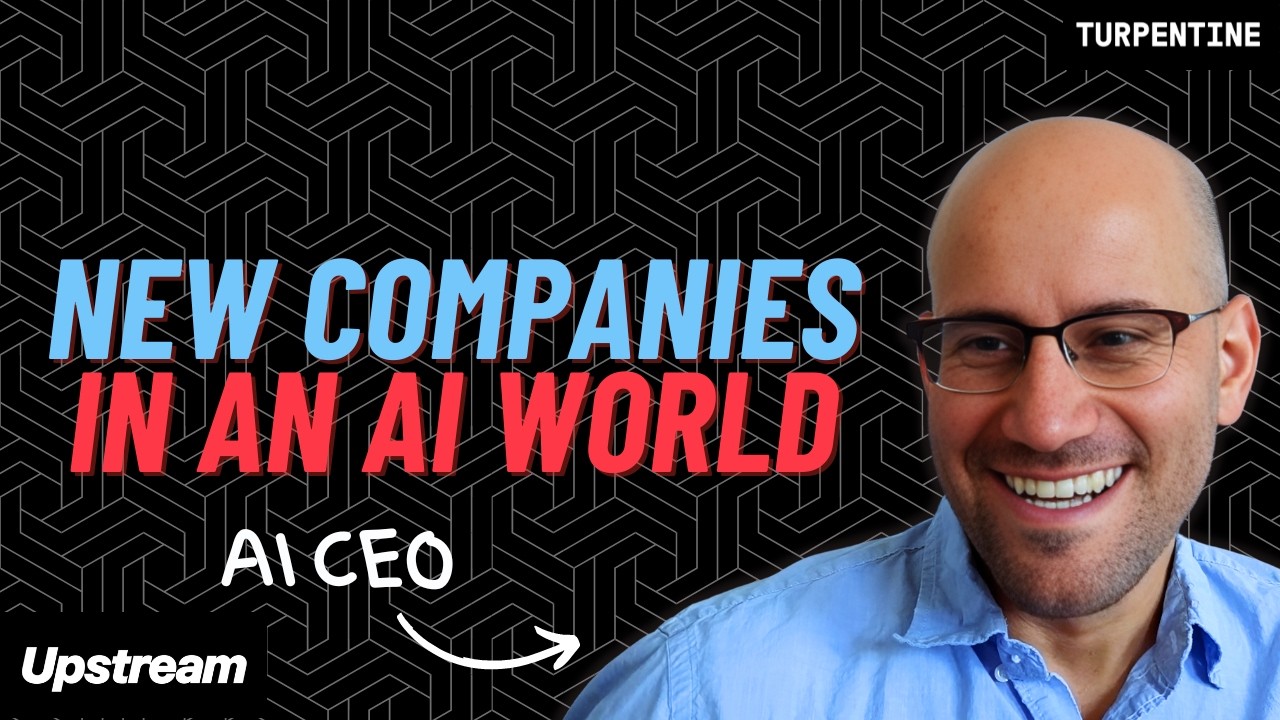
In this episode of The Riff, host Erik Torenberg and co‑host Byrne Hobart interview Omar Shams, CEO of Mutable AI, to explore how generative AI will reshape companies and the broader economy. The conversation begins with an analogy to factory electrification, noting that new technologies often take decades to be fully understood and integrated. They discuss how AI reduces transaction costs, but its effect on firm size is ambiguous: it could enable massive megacorporations or empower a proliferation of one‑person firms. The panel examines how AI will alter pricing models, product design, and the very shape of org charts, suggesting managers may become hybrid contributors who both lead and execute. They debate the feasibility of central planning with powerful AI versus market signals, referencing the book Red Plenty and historical examples of waste in both capitalism and communism. The hosts critique GDP as an incomplete welfare metric and consider alternative measures such as happiness indices. Political implications are explored, including AI‑generated mass lobbying letters, the potential for AI‑driven propaganda, and the role of friction as a proof‑of‑work in legal and insurance processes. The discussion moves to sector‑specific AI adoption, noting rapid uptake in code generation but lagging use in legal work and SaaS integration, and how AI may reshape pricing models and labor hierarchies, potentially marginalising junior workers. Throughout, the guests balance enthusiasm for AI’s productivity gains with caution about societal, cultural, and institutional frictions that may arise as the economy becomes increasingly dematerialised.
Chapters
Hey, Upstream listeners. This is Natalie, one of the producers at Turpentine, the podcast network behind Upstream. We're excited to highlight some of our best content from the network on this feed each week. Today, we're releasing a recent episode of our show, The Riff, with Byrne Hobart and Erik Torenberg. Usually, the show is a conversation between Byrne and Erik, but in this episode, they're also joined by Omar Shams, CEO of Mutable AI. They get into the weeds of how AI will save labor, how companies will have to adapt pricing models in response to AI, whether AI will increase or decrease average company size, and more. If you've never listened to The Riff before, you're in for a treat. Bern is quick on his feet and synthesizes information fluidly. If you enjoy what you hear, please check out some other episodes of The Riff. You can find that show linked in the description. Please enjoy the episode ahead. We'd love to hear your feedback. You can email me at natalie@turpentine.co or leave a comment to let me know what you'd like to hear more of on Upstream and which guests you're most interested in. Without further ado, here's Berne, Erik, and Omar.
Berne, we're lucky to have Omar on today to talk about the AI organization. Do you want to share what intrigued you about his piece and what you wanted to chat with him about?
Yeah, yeah, absolutely. So what actually, what came to mind and what I think about a lot with respect to AI is actually factory electrification because there's this long, complicated backstory where There was a point at which it started to make sense that you should use electricity to power a factory rather than just having it near a body of water that provided enough mechanical force to move all of your machinery around. And then there was about a generation and a half period between when that happened and when factories were mostly electrified and when people understood how you run them differently and how you run companies differently in that context. And AI, you know, you can debate the exact magnitude and there's, you know, wide, wide confidence intervals on both ends from, you This is a nothing burger. This is just like a lot of money to NVIDIA for some cool demos. And, you know, it'll end up petering out. And then the other version is no, they are like some, some lab out there is actually building just the machine god. And this is the end. Like this is the end of history for real this time. But somewhere in the middle, it is a useful labor saving, saving technology of the broad category that we have seen before, but we've seen it before. With, uh, and, and is very small in terms of the number of technologies that have this kind of impact. And when there is a new technology like that, part of the impact, like part of the reason it takes a long time to deploy is that it works, but we haven't figured out how to use it and what context to use it in. And you, there are stories of this from pretty much any technology. Like there was a regulation, I think in, in Britain in the early days of cars where you actually had to hire someone to walk in front of your car waving 2 red flags in order to warn people and horses that a car was coming. So, you know, you could have a car, but your de facto speed limit was a walking pace. And then there's stories of like the first TV shows where it was a group of people all standing in front of microphones, all reading off a script because we know how to do radio and we'll just translate this exact format over to some new medium. And then it takes a while to figure out, okay, what can you do differently in this medium that you couldn't do before? And so, you know, it's a kind of fun thing to speculate on and theorize about from outside the industry. And then Omar is actually in the space looking at both how AI impacts the company he's building and companies that are using Mutable's products. So that's, and then writing about it, which usually, you know, you can, there are a lot of cases where the people doing the thinking are doing that thinking and then the alpha is all theirs. And if you are very, very lucky, you get a sense of what they're thinking and otherwise you don't. And then, you know, there's, then there are people who are writing about the theory but have no direct application experience and don't necessarily know quite what's going on. And so it's nice to have someone who's in the middle of that Venn diagram of seeing what's happening, both from people using AI products and then from using AI products internally. And then also thinking about what are the long-term implications? Like, what does a company look like? Do you need a different kind of org chart? Do you need to throw out, like, will we print, you know, will we create the last org chart at some point in our lifetimes and have some other way of thinking about just how you structure companies and economic relationships?
Yeah, thanks for the intro, Vernon, and thanks again for having me on. This is really exciting. Yeah, I think there's definitely a long process to figure out how we're going to use the AI, and I think people definitely haven't figured it out yet. One thing I'm noticing in the field, and there have been some innovations, but in the beginning at least, it seemed like, okay, this is how our products work today, and let's sprinkle on the AI, let's bolt on the AI, and I think in some many cases that can be really effective and useful. So one example is GitHub Copilot. So GitHub Copilot, for those that don't know, you know, if you're a programmer, you're, you know, writing code in your IDE, your integrated development environment, you're used to getting these autocompletions that tell you, hey, maybe this is the next line of code that you're going to write. And they were based on kind of the syntax of your code. They had some utility. But now the AI can predict maybe the next line of code that you're going to write, and that's very useful. But, and it, I mean, it's a great product and many people use it for a reason. But clearly that's not the only way in which AI will impact programming. And I think people are now moving more towards a model where, you know, maybe you give instructions. It's more like you're managing someone. You're managing maybe a technical junior engineer. And you're giving them instructions and you're like, hey, here's my plan for what I'm going to do. I'm going to write this code to do this, and I'm going to do that, and I'm going to do that. I still think that's not probably the right, the ultimate paradigm or approach that people take. One of the things I think I've been thinking about a lot, at least at the time, the essay's over a year ago now, there was that essay, is how does this impact organizational productivity? So we know kind of maybe how this can start to seep into people's day-to-day workflow, whether it's email, summarizing emails. I saw that Google launched that recently to Google Workspaces, or like writing, you know, the next sentence or something, or doing some proofreading. But how does this change, you know, how, you know, organizations function? Because I think a lot of the reasoning behind the original organization, I think Byrne pointed out the original org chart was literally modeled after a railroad. So if you, yeah, so, and then so— It's a beautiful document.
If you want to, if you Google first org chart, like they, they clearly spent a lot of time on this. Um, the org charts I've seen since then are just, uh, you know, a lot uglier.
Yeah. So for Coase, everything's about transaction costs and, you know, what, what are the transaction costs between individuals, within firms, outside of firms. And it's very clear that the AI will reduce the transaction costs. I don't really have a good sense for how it will change firm sizes. Honestly, because it, it, on one hand, you, it's going to make it so that, you know, the solo, uh, people can be much more effective and they can interface with organizations more effectively. So in that sense, maybe every, you know, everyone is just their own company and, and you could see that world. But on the other hand, it's reducing the transaction costs within companies. So you can see companies be, you know, maybe scale up even more. So I don't really have a good answer to that. Do you, do you, Burn? Actually.
Yeah, like it does actually seem like it justifies both larger than ever companies, especially larger than ever companies that are full of knowledge workers who all need to communicate with one another. Like there's, I forget exactly how many reports Jensen has at NVIDIA. On the other hand, I bet he forgets too, because it's a lot. And it struck me that you could, you could increase that number if you have more efficient communication flows and that actually like. Going back to the org charts, if you think of an, if you look at an org chart, it's also a diagram of information flow. So at that original railroad org chart, it is, you know, the, there, there are people who are on the front lines, they're dealing with customers. So the ticket agent, you know, someone is buying a ticket. So that's information that needs to flow to the train conductor who needs to know which tickets to check. They also need to know how many tickets were sold. So it goes to the accounting team, et cetera. So when you're diagramming those relationships, you're also diagramming information flow. And that means that. You come up with a different optimal diagram if you can send more, if you have higher bandwidth for actual information passing between different nodes. You can have more people per manager, or you can have people, you can have like individual contributors who are also quasi-managers. And I also think that this is one of those underrated things on, on AI is that the fact that you can write lots of boilerplate code really fast increases the value of things like designing a coherent system and understanding things like What is the database schema that you want to be stuck with over the next 5 or 10 years? Because those are just notoriously hard to change once you're actually in operation. So things like that become more valuable. And so you could actually imagine that the AI organization has maybe— could end up with perhaps like a similar number of direct reports per manager, but managers become individual contributors who are spending some fraction of their time managing near peers and some fraction of their time actually doing the same work because they need more of that task knowledge to interpret the information that they're getting. So that's, that's one version of it is that you, you achieve, like, it seems like many, many big tech companies have some vision of we're going to eliminate middle management. We just don't, like, we understand, you know, the CEO understands what the CEO does. And the CEO also understands what a programmer does. But if there is, if there are 5 nodes in the, in the graph between these 2, it's just really hard to conceptualize what those middle nodes are actually accomplishing. And so you have these anecdotes of like, I think, I think there was a story of Google early in its existence, just eliminating engineering management as a job function. And then they realized that their CTO had 200 direct reports and that just didn't work. It was either, you know, it's either, it either collapses into anarchy or authoritarianism. It's either there, there is like just a blanket mandate of, okay, now everyone has to focus on X, or there's just not enough time to tell everyone what to do. And people are doing random stuff and maybe some of it works great, but. Eventually, at a large enough company, there are things that have to get done that are not necessarily anyone's favorite thing to work on. I've heard that this is one of the problems with Valve scaling is just, it's if you do have this kind of anarcho, you know, anarcho whatever commune that happens to be tied to a for-profit business that you get a lot of work done on the cool stuff and then nothing done on things like customer service complaints or, you know, supporting some some operating system that is not super popular, but does have some customers, et cetera.
Yeah.
Yeah.
It's very interesting. And it reminds me that, you know, the story of, I think Brian Chesky, when he spoke to us, to our YC batch, he kind of spoke about refounding Airbnb. Airbnb was going through some trouble through the pandemic. You know, their revenue was plummeting. And he was like, you know what, let me take a step back. Only the things that I can fit in my head are the things that are going to get done. And that's actually a good thing for the obvious reason that I can manage it, but also maybe for the less obvious reason that the customer can only hold so many things in their head. So if our product is too complex for me to manage it day to day, it's definitely too complex for the customer. So I wonder if we can move to a world where the one thing that I kind of, I think I mentioned in the essay is how maybe the AI can become this mecha suit around the executive team. versus AI mecha suit, and they kind of set the direction, they set the objectives, they intervene on occasion on certain tasks, right? But more or less, this system allows them to, you know, kind of, it's an extension of their will, right? And I think that's very intriguing. I think the shape has it. I mean, that's what we're building. I mean, that's one answer is like the shape of how this will work is what we're building. One of the things we're building at Mutable AI. Um, um, and it, your comments about government, uh, Bernie, are also very interesting because I think one of the, the dreams, uh, you probably know this book, uh, in, in, uh, the, you know, at least the early Soviet Union, uh, was, can you like centrally manage things? Can you, can you completely centrally manage things? And I think this book, is it Red Plenty?
Yes. Yeah.
I never, did you read that book? I never, okay. Uh, so maybe you could fill us in, but my understanding of the book is that Um, the book goes into some detail about what the calculation would be like to do, you know, if you don't have prices, right? Because prices are, you know, the, you know, you know, this capitalist, you know, thing that you don't maybe want in your system. How do you, you still need effective prices to be able to allocate resources? So I don't know if you have.
Yeah. Yeah. There, there is this great bit in the book where I forget the exact details, but it's something to the effect of either a farm or a factory needs some new equipment, but, um, I think the, the, the quota for tractor manufacturing is set by tonnage rather than by number of tractors. So when they make a smaller, more efficient tractor, they're missing their quota, but they're also producing too many tractors or something like that. At some point, someone ends up just, I believe, destroying a tractor because that's the only way that they can get a replacement tractor they actually need. So it does introduce a lot of waste if you break these, these signals and You know, I think the, like, the, the answer from optimistic communists was, well, if you are a capitalist, you're, you're one to talk about, you know, huge amounts of waste. Like, look at, one, how rich people spend their money, and two, just how much duplication you have in a capitalist system. Like, how many soda companies do you need? How many fast food chains selling chicken sandwiches do you need? I always felt like it was kind of like, there is, there is this meme that goes around Twitter from time to time that talks, you know, the headline is capitalism breeds innovation. It's just a picture of every fast food chain's variant on the same fried chicken sandwich, which, you know, if I were a communist, I would probably not bring up food abundance as a critique of capitalism. That's just me. But it is true that capitalism has a ton of waste and communism has a ton of waste. And it's a question of one— I guess there are multiple questions, one of which is just which one wastes more? Like, you can definitely come up with anecdotes about waste in either system. Another question is like, which, which system actually has the best, the best immune system for recognizing waste as a problem? And trying to fix it, and which system is better at recognizing when the amount of waste that's happening is actually tolerable compared to the cost of not having that waste. This actually shows up in when David Graeber is talking in David Graeber's book *Bullshit Jobs*, which we talked about a couple episodes back. He talks about he talks a little bit about lawyers and how companies don't need lawyers except that every other company has a lawyer, and so you don't want to be just. Drafting contracts on your own, you know, just firing up Google Docs and saying, you know, throwing a whereas in there or something so it looks official. Like, you do need a lawyer. And then, but the counterargument there is like, lawyers are actually a very cheap substitute to a lawyer-free system where nobody knows what a contract actually means and nobody can look at this legal text and say, okay, in this set of circumstances, I can predict exactly what'll happen. And in that model, you treat lawsuits as like this costly pressure release valve where part of the point of lawsuits is to make it really expensive to have a contract that is ambiguous enough that both parties want to go to court rather than one party just saying, oh, you're right. Like, I didn't think of it that way, but clearly that's what the text of the contract says. So my bad. So I think that that's an important way to frame waste is that there is, there's just going to be some fundamental, just irreducible level of waste in any human activity. And so you should always expect expected to happen. And you always have to ask, is there more or less of it? And it seems like capitalism is really good at creating what you might call like retail waste of there are a lot of individually wasteful processes. And then communism is really good at wholesale waste of like you built, you, you sacrificed a ton of material well-being in order to build something that nobody asked for. And it turns out nobody wanted. And because you didn't have these market signals, you really didn't know that until the thing got built and nobody was happy with it.
We'll continue our interview in a moment after a word from our sponsors. The tech world turns to the Brave browser for its unbeatable privacy protections, but did you know that Brave also has a private ad platform? Brave Ads offers first-party targeting, and it's been cookieless since day one, so you can relax while third-party tracking cookies disappear from the web. Today, millions of people turn to ad blockers to avoid being tracked and pestered online, but Brave's new ad model aligns incentives for users and advertisers. Users earn rewards for viewing ads, which they can save, spend, or pass along to their favorite creators. And advertisers score points for respecting user privacy, generating ROI without invasive tracking. So, whether it's high-impact announcements on the New Tab page or keyword-targeted ads in Brave Search, Brave Search offers diverse, private, future-proof ad formats for all your business goals. Join the future of advertising at brave.com/ads. Mention Turpentine to get 25% off your first campaign. Hey everyone, Erik here. In this environment, founders need to become profitable faster and do more with smaller teams, especially when it comes to engineering. That's why Sean Lanahan started Squad, a specialized global talent firm for top engineers that will seamlessly integrate with your org. Squad offers rigorously vetted top 1% talent that will actually work hard for you every day. Their engineers work in your time zone, follow your processes, and use your tools. Squad has frontend engineers excelling in TypeScript, React, and Next.js ready to onboard to your team today. For backend, Squad engineers are experts at Node.js, Python, Java, and a range of other languages and frameworks. While it may cost more than a freelancer on Upwork, billing you for 40 hours, but working only 2. Squad offers premium quality at a fraction of the typical cost without the headache of assessing for skills and culture fit. Squad takes care of sourcing, legal compliance, and local HR for global talent. Increase your velocity without amping up burn. Visit choosquad.com and mention Turpentine to skip the waitlist.
Yeah, I think that irreducible friction could, yeah, it could be in some ways a feature, like you said, Not a bug. What I was getting at, and I don't actually, I should say, I don't actually believe this, but I think it's an intriguing thesis. I don't know, maybe we can discuss it for a little bit, is if you do have such powerful information processing systems. So I didn't actually read the book. I don't know. I'm talking about that you've read that I haven't. But my understanding is one of the arguments behind Red Plenty is that these effective, you know, these, you know, like fake or pseudo market signals are just too hard to calculate. But if only you had a powerful enough computer, or now we can say, if only we had AI, right? Which we, you know, we have very powerful AI systems. Could you, uh, you know, make another go at it? Could you actually have like effective central planning? Because the AI, you know, if the AI, uh, certainly maybe by the time we get to, you know, AGI, uh, and we can talk about definitions of AGI, but let's say a very sufficiently powerful AGI, could we make this all work? Could we, could we make, uh, you know, central planning work? Because one of the things almost as a critique of my essay, and I was very surprised no one said this, is, you know, this is, you know, in some ways a very centralizing force because you can, you can have these mega scalers, you can have, you know, maybe a million, 10 million person companies now that maybe they will run effectively this time. What would you say to that?
No, I think, I think it's entirely possible that it just, it warps the scale. Like it basically shifts the power law of scaling so that there are handful of just ridiculously huge companies. And then there's also a much larger long tail of one-person companies, or, you know, why one-person companies when you can have one person who runs 20 companies or 50 companies or 100 companies, or like every morning they talk to their AI agent and they say, okay, what new business are we going to start today? And this is actually, and we've talked about this in earlier episodes. This is one of the arguments against the sort of Communism just needed more RAM thesis is that for a static economy with a static set of products and preferences, it is true that given enough RAM, you can actually plan this economy coherently. The practical argument that that's not true is, okay, if predicting consumer demand is solvable given enough computing power, why does Amazon, which has more computing power than almost anybody, why have they not solved it? Like, why do they have a third-party merchant business that's a very substantial part of their business? And why within their retail business is advertising In other words, outsourcing the question of how do you target people? How do you find the right customer for your product? They're outsourcing that to their merchants. So clearly Amazon, despite having a lot of computing power, a lot of the world's computing power under its control, does not believe that it can actually model the market really efficiently. And then the other, like the other version of that counterargument is, okay, if you, you have your very, very powerful AI, it is actually smart enough to plan the economy, to figure out how much of everything needs to get produced. Who should buy it? What should everybody do, et cetera? Well, if you're the only person with that AI, you can probably do that. And, you know, hopefully that is like the thing you decide to do and not something, not something really terrible. But if other people have similarly powerful AIs, what happens when one of them says, okay, I'm going to have my AI scrape all of Amazon and just like aggregate all the world's information on consumer behavior. And we're going to find all the products that should exist, but don't. And then we're going to make all of those products. And then we're going to repeat this process because now that we have more data points, there are more data points between data points. There are more intermediate products between other products. And as we fill out the entire space of potential products, we start to find different lines where you can keep extrapolating that line. And maybe you realize that the faster a car goes and the cooler a car looks, the more people will pay for it. And you extrapolate and you say, well, I'm going to build the world's first billion-dollar car. It's a hypersonic flying car. And I'm sure I can find someone who will want to buy it. And then, you know, or maybe I, yeah. I'd probably sell it to Elon or something. So as long as your AI tools are also helping people actually interact in the economy, the economy is necessarily too complicated for an AI tool of that power to also fully model. Unless there is some kind of crazy game theory equilibrium, there's like some last equilibrium that humanity reaches where we actually, there is not a, there's not a better move for anybody to make. We've, we've finally hit that equilibrium and everyone is perfectly satisfied. And I think. If that happens, it just drives everyone crazy and then, then civilization collapses. So this is, this is kind of like, you could say that Fukuyama, that the, the End of History, you could read it as a metaphor for AI, that if you do actually just find the perfect system that does actually optimize for human happiness as we measure it, well, then your problem is all the action is in the things we can't actually measure. And probably, you know, the more perfectly you optimize for the measurable things, the more you are definitely explicitly optimizing against the things that you're choosing not to measure.
Yeah.
Yeah, I think it's, yeah, it's really interesting how, and on one hand we want, you know, the Star Trek computer or this, uh, you know, thing that can, you know, make any, anything you could possibly want and, and how, you know, we want to reduce friction. But there's a very real sense in which, uh, at least for me, I worry about how it's increasing. It's, I mean, our economy is already abstract enough and technology is already abstract enough for most people. But if it ever gets to the point where, you know, there's maybe like a few of these, you know, operators that you're talking about, uh, you know, uh, uh, and who are, you know, wielding these resources and using this AI mecha suit or whatever analogy, uh, um, you like for this technology. Is everyone doing that? Or is it the case that some people are getting almost like TaskRabbit jobs, Upwork jobs where it's like, Okay, I'm not an operator. I'm not going to exercise human judgment, at least in this domain. I need to earn a living, so I'm going to get this like constant stream of tasks. And you know, it's like okay, do da da da da. You know, and and maybe if it's spec, I guess if it's specific enough, the AI will just do it. But in some cases, it if it's you know, it still involves you still need a human in loop, or the AI isn't powerful enough to do it on its own. If we move to that economy, that kind of system, I worry about, um, not so much the effect on GDP, right? More like what, what, how does that change society? How does that change, how does that change people's spirit? I know, for lack of a better term.
Yeah.
Yeah.
No, I think that is definitely a risk. And we've, I think the transition from an agricultural economy to a mostly manufacturing and services economy. Probably has like a similar kind of craziness to it. Like you have to imagine that if when the world was 95% farming and you know 5% other, the as the other slice started to grow, I'm sure people looked at that and they're like, "Well, this is not this is not actually real human activity." Like why do we you know we know we all have to eat, and we know that that's most of what people do is grow enough calories or hunt enough calories to be able to survive to the next day and survive over the winter. And like, how can we have an economy where 50% of us are in farmer adjacent services and then the only half of us are actually farming? And then as the economy grows and gets more complicated now, you know, in, in, I guess from the perspective of a hypothetical economist writing 500 years ago, like 98% of the economy is farmer productivity enhancement services. And then 2% is farming and the farming has gotten really, really productive.
So.
Yeah. That, that part of the model is working, but it does feel kind of crazy and abstract. And then one way to turn that around is just to say that it turns out people are just very, very good at having new desires that can actually be satisfied, or at least, you know, temporarily sated by the market. And that also we in, in earlier eras just were used to a much, much lower standard of living. And that's actually especially salient if you look at things like square footage per person. But if you also look at, there are these really interesting anecdotes about people who travel to China in the early days of China getting rich, where one of the things that was clear was that in China, time was extremely cheap, and then any physical material good was incredibly precious. So there are multiple stories about someone who visits China on a business trip in the '80s, and they realize at the end of the day, they go back to their hotel, they realize at the end of the day, oh, my sock has a hole in it. So they throw it in the trash. And that if you did that in China at that time, The next day, when you went back to your hotel room, someone would have darned the sock and they would have washed it and you know left it carefully folded on your bed because of course who would who could possibly be so wealthy that they would throw a sock in the trash? Like you've got you know you've got two of them. What are you going to do if you throw away one of your two socks? Now we don't think that way, and now we have all this all this incredible material abundance, and we just you know we we take it for granted, which is you know very very human thing to do is that you immediately get used. to some improvement in your standard of living, it becomes the default, and then you're, you're looking for the next thing. And I think, so I actually recently read Tyler Cowen's Stubborn Attachments, where he says that actually, if you're not sure, and it's very hard to resolve moral arguments on what is humanity for, what is civilization for, if you're not absolutely dead certain that you're right, the best thing you can work for is just higher GDP per capita over time while preserving human rights, because whatever thing you, whatever thing humanity eventually decides it wants to accomplish, or whatever thing individuals decide they want to accomplish, it's all a whole lot easier in a richer country than a poorer country. So if it may be the case that we all should be novelists and poets, that's just a lot easier to achieve if global GDP per capita is a quarter of a million dollars a year. You know, you can, you can work, you know, a month or two out of the year doing whatever extremely lucrative work you do, and then you spend the rest of your time just exploring the arts. If, if humanity's goal is actually conquer the stars, then that's also a whole lot more affordable in a much richer world. There are just very few things where it's easier to accomplish them if you have less wealth, less ability to produce material goods, and less ability to allocate those goods effectively. And I think that, you know, you definitely have to think about the trade-offs there because you can pursue just growth at all costs and then find out that the costs were actually a lot higher than you wanted to pay. But I think it is, it is a pretty good rule of thumb that it is just, it's better to have, have more money than less. And that We should also just expect that future worlds that are wealthier than the current world have to look weird because the past looks plenty weird to us, even though we actually understand the full context. And you have to assume that if someone looked a similar distance in the future, the future that they see would be much, much weirder than they can really get their head around. And it would look, you know, completely wasteful and weird, not just, you know, the way we dress and the way we talk, but The things that people do for a living would just not make sense in that previous context. They need so much, so much information just to understand what these jobs are actually for, who values them, why this person is getting paid. But a lot of the jobs that are also extremely abstract turn out to be really, really valuable. I think if you, you know, if you went back to, went back in time 100 years and told someone about the most, you know, the most valuable skill that you can have in the professional world right now, They'd be really, really confused that it's like linear algebra and then being able to, being able to use like esoteric versions of applied Boolean logic in order to, in order to do binary math really, really fast. Like the fact that those are actually the things that pay people extraordinarily well right now only makes sense in the context of the computer revolution and now of AI. But if you just gave them the bare facts on their own, it would just sound like a joke. Like, why, why that and not, you know, being really good at number theory or being really good at some other abstract domain?
Well, I think, uh, I, I caught a clip of, uh, of Peter Thiel saying something like, um, the returns on, uh, you know, mathematical ability are going to go down and the relative returns on, you know, verbal ability are going to go up. So if you're, if you're, everyone has a fleet of von Neumanns they're managing. It was always useful to have that verbal skill, right? Because you could organize people in the past, you could marshal an army, you could organize a city, what have you. You could create a religion, right? So it's always been useful, but I think that maybe that's due for a mean reversion. And then the second thought, just to go back to why I— part of the reason why I brought up the point about the economy getting more abstract is I worry a little bit. I think the growth is good to be on the record. But I worry that, you know, at some point it becomes too abstract of an organizing principle for people to feel like they have, you know, meaning. And maybe it's fine. Maybe they find like emergent meaning as like writers or podcasters or movie makers. But I think it was like really intriguing to think of like alternative, like alternative, you know, objectives, you know, what do you do with all this wealth? You know, well, well, let's do something that's really, really hard. you know, colonize space, you know, that, that's something that, you know, for the foreseeable future, it would be, you know, it would be hard to imagine how, you know, our, you know, civilization could be advanced enough where that's, you know, trivial feat, right? So, um, do you, do you, uh, do you think that the danger of like, I guess, and, and, you know, uh, this is, I guess, somewhat of a dig on finance, but do you think there's a danger in like relying too much on, you know, these financial metrics? That it's too indeterminate. It's too, you know, you know, again, in Thelian terms, it could be an indeterminate optimist about the future. The GDP is going to go up, you know, but there's no real, like, objective to the GDP. And maybe, you know, again, going back to the, what was the equivalent of GDP in the Soviet Union again? They had like some material surplus thing.
Yeah, I don't know what metric they used. I think, isn't it? They did. Japan has gross national happiness as their metric. Uh huh. Yeah. So, like, people have tried to do alternative metrics. I, yeah, I don't know if the, I don't know if the Soviets explicitly calculated GDP. I know that something like real Soviet GDP and got it wrong. Uh huh.
No, but I think they had something else like this, the amount, you know, the material surplus or anyways, I could, I could be making that up. I remember reading that somewhere.
No, and then of course, yeah, like it's a good question to ask, like, okay, you don't, you don't want to spend all of everyone's effort optimizing what is ultimately an abstraction and an estimate. Like GDP is supposed to be basically the amount of just good that is produced in the world that is purchased in market transactions. And you can kind of tweak that number by saying, okay, there are a lot of non-market transactions. Like if I choose to cook dinner and, you know, serve it to my family instead of ordering dinner from DoorDash. It's a hit to GDP. It's probably a net gain to human happiness. Kind of depends on how much I prefer to cook dinner versus doing other things. And the, that's, that's part of the elegance of partially optimizing for GDP or treating it as, as one of the major things to think about is that you don't have a good sense of what someone's preference is. And actually people don't have a great sense of their preferences at times. And so sometimes just looking at their behavior and treating that as a useful approximate guide to what they actually want. Does tell you more than trying to figure out what what people should specifically want, and and then trying to optimize for that directly. You know that is that is a very libertarian flavored argument, and I think it can it can easily go too far. Like there are plenty of things that are GDP maximizing and just dumb and should go away. But there's also the majority of GDP is still useful stuff being produced by willing workers, being purchased by willing consumers. Everybody's pretty okay with it, and they're way more okay with it than they would be with. just less material abundance and, you know, someone telling them that there is a version of meaning that, that they're now optimizing for and they have more of that thing they didn't necessarily ask for and is not quite what they wanted or is, you know, just like the other way to look. I think another way to think about it is like the only thing worse than optimizing for GDP would be like if you actually had a committee that instead of measuring GDP is trying to measure human happiness. Like, do you really want to outsource that to a small group of people who are going to be arguing about it? Coming to some consensus, I would personally be very, very disturbed by what they decide is actually the ultimate, just like telos of human existence. And, you know, especially if it were a policy guiding thing versus just some abstract metric. I do think, you know, to your point on finance, what's nice about financial systems is they are always doing this 2-track process where one thing they're trying to do is make markets more efficient along whatever axis people are actually paying attention to. But the other thing that is going on is that is making the market less efficient along some axis that nobody's really paying attention to. And so you always have people who are looking for what is the thing, like if, if we're optimizing for X and we're optimizing, that implies eventually we end up optimizing at the expense of Y. Does Y actually matter more than X? And is Y getting worse a whole lot faster than X is getting better? So this is like the kind of thing you could think about in 2008, where you say that Yeah, we are able to funnel a lot of money into durable investment, mostly in housing, but perhaps we could funnel it in a slightly different direction. And, you know, China is not just investing in housing. They were investing in plenty of manufacturing and infrastructure for moving raw materials and manufactured goods around the world and within China. But what we were ultimately optimizing against was just having a stable financial system that wasn't vulnerable to these sudden crises in overnight funding. And the people who figured that out did very, very well for themselves. And so as As long as you have, as long as financial markets actually created an incentive to figure out what is this market misoptimizing for. And sometimes that actually means what is something that every company is doing because it's profitable that they will have to stop doing because eventually the government will say the cost of this is much too high. I wrote a piece on this, I think like a week or two ago, looking at just the history of industry concentration in market indices and how it often reaches a high watermark when that industry is growing really fast. It's really economically important, but then Part of what kills it is actually that those industries just end up on the wrong side of regulation. So railroads used to be most of the U.S. market cap, and that was like in the turn of the 20th century. They were most of U.S. market cap by 1917. They're actually nationalized and just under the control of the federal government for a little while, and then they were a very bad industry for about two generations after that. With in the 19 late 1920s, the electric utilities were the big growth story, and then they became FDR's favorite punching bag, and then turned into something. Totally the basically the opposite of growth. You know, a a utility stock is kind of like a spicy treasury bond at this point, with occasional risk. Like that's that's where the spice comes in. You do have the occasional blowups, but it's you know rates of return are regulated. They're very predictable. People build literally 50-year discounted cash flow models to value these companies sometimes. So it gets boring. And then like 19 1960s, you have a lot of like mass market manufacturing companies that get really valuable, and it turns out a lot of them were basically floating. On this tide of very cheap oil with very predictable prices and predictable supply, that you know it wasn't that the U.S. political system turned around and said these companies can't make so much money anymore, but the geopolitical circumstances—it eventually became unsustainable. And then that meant that oil got really big, and then oil companies got hit with a windfall profits tax, and then they got hit with their own geopolitical stuff when Saudi Arabia in the mid-eighties got really mad that everyone else was ignoring OPEC rules. So the Saudis just. released as much oil as they could make and flooded the market. They were still making money. Basically nobody else was. So like you have this cycle where when an industry gets too big, there is often both an economic reaction against it and a political reaction against it. And it's very tough to be on the other side of that.
Do you see that happening with AI?
Yeah, there's, there's definitely a lot of noise about it. And I don't know how politically savvy the AI companies are, and I don't know how politically aggressive they want to be. There was a paper published a while ago, I think in the GPT-3 days, talking about how GPT-3 marked the end of writing letters to your congressional representative as a way of grassroots lobbying, because now you can write 1,000 letters. So, you know, if Sam Altman decides that he's really, really worried about AI as a national issue, it's very easy for GPT-4o to produce lots of very cogently argued letters and And for those letters to appear to come from legitimate constituents, I don't think he would actually do that. I think it's dumb and high risk. But certainly anytime you have a tool that allows you to consume a lot of information and then produce a lot of content, that is a useful tool for political action. And if the most powerful versions of that tool are owned by a handful of companies, those companies have a, both an ideological motive to make sure that AI persists and grows, but also they have a profit motive to make sure that their business doesn't get decapped by new regulations. They may be very tempted to use it. And it may only take one company that decides that it is going to actively intervene in the political process using its tools. And, you know, there's other companies do that to some degree. Like when net neutrality was a big issue for a while, you had things like Reddit doing a blackout to protest it. You had Google putting on its homepage that this is a bad thing. During the TikTok ban debate, TikTok was telling people, it was identifying, it was geolocating people and then telling them, call your congressman, tell them not to ban TikTok, which To me, it was a little weird that a company whose former CEO had explicitly said that the big problem with this company was they were not doing enough to support socialism with Chinese characteristics, etc. Like, if that company is actively intervening in the political process in a non-communist country, it's a bad look. But I guess it, well, may not work out for them. We'll see. But like, that kind of thing does happen. Companies do try to use the tools they have to affect political outcomes. Uber did this too. They had a de Blasio mode for a while where they were showing how long the waits would be if the number of Uber drivers were restricted and if pricing were set based on parity with taxis. So like, yeah, it happens. I don't know how aggressive they'll be, but there are enough AI companies out there that you care about who is the most aggressive, like who is either the most committed to making a ton of money or just the most committed to doing maximum good for the world as they judge maximum good.
Yeah, I don't find the actual mechanism you propose of the letters plausible, but yeah, certainly you're right. Like you listed like 10 examples of companies using their, you know, basically their technology to like influence events. I think a funnier example, which would be like, hey, if you want to keep talking to your AI girlfriend, you have to continue to vote. Attack your congressman. Sorry, this is—
that would be— it would be incredible. I cannot wait for the first trend story about people who break up with their AI boyfriend or girlfriend over politics. She was— she was just too RLHF to understand why I care so much about lower capital gains rates. It was, uh, couldn't work in the end.
Uh, that could be a strategy for this election. We'll see. Uh, we'll see if people can, uh, can make it happen fast enough.
The other thing you said that was interesting, Byrne, is the strategy, like if previously costly things, like, hey, sending a letter to your congressman is really costly. And if it's easy now, I mean, I guess it is a lot easier now. It certainly, I think certainly responding to certain things with like, an example I actually believe more is like responding to certain legal requests or dealing with like insurance, stuff like that. That is much easier to deal with. And I don't think it's fully priced.
I use, like, that is one of my use cases for ChatGPT is like, anytime I'm like, I, this, I feel brain dead just looking at this document. I will just put it in ChatGPT, get an answer. And for me, sometimes it's just the blocker is if I just started typing a response, it would be fine, but I don't want to do that. And just telling the robot to do the dirty work, you know, it's, it is, it is kind of the, the paperwork equivalent of having a robot that washes your dishes. Like, it's not hard to wash dishes. I'm capable of doing that. It's never the first thing I want to do though. So it gets put off.
But if the whole point, if it, I mean, in some sense, like the old system, which again, I don't think is fully priced in. The whole point was that you have this proof of work. Like if you went through the trouble of like writing, you know, hiring a lawyer and writing this, like reading all the insurance docs and responding, probably, you know, there's a family member with cancer and, you know, you really needed whatever the company to respond. So I could see that. that being bad, where you want some friction in the system, you want some irreducible friction because the friction is kind of like a proof of work. It's like a show of honesty. It's somehow like a real human put in effort to doing this. So I think maybe one theory I have about the post-AGI future or even very soon is that in-person events, in-person interactions will have actually a higher currency because We've been dematerialized, right? I think the broader story, and to be clear, I think it's like broadly a good thing. But I think what Kaczynski was onto is we've been so dematerialized. Like civilization itself is kind of this dematerializing process where things are more and more abstract. And it's kind of this, you know, it's a bargain with the devil. You get all this material surplus, and certainly I would take that side of the bargain. Everyone, you know, in this call would take that side of the bargain. But you lose something. And I think that what you lose about your, you know, this certain human maybe connection or Um, you know, this knowing that someone put in effort into something and someone cares, um, that's going to get shifted into something else. So maybe that's some kind of in-person thing that, you know, maybe there's a great company there, you know, not that everything has to be a company, but yeah.
Yeah. Many, many things do, but not everything. Yeah. I mean, I think like sometimes it is just, um, there, there has to be a gradual reframing in how people think about things. And when I say it has to, I don't mean like you have to mandate this top down, but I mean, When I talk to my kids, I think it is more important than it was historically to emphasize that every impressive thing that you see in the world is the product of someone working really, really hard with the explicit intent of making that thing happen. And it would not have happened if that person hadn't tried. I think, I think it's John Collison who has the line that the world is a museum of passion projects. And that's absolutely true. Like anytime, even things like if you're on the highway, just thinking about the the amount of physical work, most of which was done by machines, not humans, but like the inconceivable amount of work it takes to just build that structure. But this book a couple of months ago about the post-Roman world, and by probably 500 or 600 AD, people in post-Roman England, they, they had no recollection of the Romans. They just assumed that all these big structures were built by the gods. Because it was just like the obvious explanation. Like, how could a human being actually do that? Imagine you'd have to have hundreds, literally hundreds of people all just schlepping blocks of stone to one particular location. And then someone would have to figure out what order do you put these blocks in in order to build an amphitheater rather than just a big pile of rocks, like just inconceivable amounts of effort. But those become pretty conceivable amounts of effort when you have, have more material wealth. I did want to return to a couple points that you made, one of which was on politicians and on, well, on in-person stuff. And I do think that one of the underrecognized effects of AI is that it actually reduces the value of policy and increases the value of personal charisma, that it will be trivial to, you know, and this is already, there's really fun stories about this in Indian elections where you're long ahead.
In other words, you're long on rizz.
Yes, long rizz. Absolutely. That once, once you can have, you know, once you can have a deepfake of Ronald Reagan talking about how great this person is, and once you can run every policy proposal you have through a bunch of chatbots and ask, okay, what are all of the second order consequences? What are the obvious objections to that? Which of these talking points are weaker or stronger? Like that stuff gets more commoditized. And then what's left that is uncommoditized is just how impressive is it to be in a room with this person? How impressive is it to be in, you know, at a rally where this person is speaking? So I actually think that politicians will get taller and dumber in an AI world and that it will actually hopefully matter less. But also, I thought your point of proof of work is really interesting because there are, there are a number of business models where one of the load-bearing features of them is human irrationality. Like the gym business would be a much, much harder business if people actually kept their New Year's resolutions. You'd have to buy a lot more squat racks. You'd have to buy more weights because they'd actually be getting stronger. Just so many things would go wrong with the gym business if people didn't sign up and then give up very, very quickly. And those people do actually subsidize the regular gym users. And there are other businesses that are, that have that kind of cross-subsidy thing. Like mobile games would be much less enticing and addictive if you didn't have A few people getting extremely addicted to them and dropping ludicrous amounts of money on them. Your, you know, your neighborhood, like if you have a neighborhood bar that is a good hangout, one of the things that's subsidizing that is someone with an alcohol problem who is going to that bar way, way too often, drinking way, way too much, and therefore providing a very consistent high margin stream of revenue to the bar, which justifies paying the rent so that you and your friends have a place to go and have a beer or two after work. So like Like a lot of those things, you know, in that case, probably AI is not going to have a big effect on that unless you have like an AI Jordan B. Peterson who's telling you get your life back together. Like don't give up on your New Year's resolutions. Stay, keep going to the gym and stop going to the bar every night. But for other things, there is, there are like, say subscription businesses that don't have one-click cancel. Part of their bidding on is nobody wants to call the New York Times and say, yes, I want to cancel. And okay, we'll talk for 20 minutes about my feelings about this. And then you'll let me cancel. But if you can, you know, train, and I guess I wonder if anyone's doing this now, like you train a bot on your voice or you don't even bother using your voice because it's not like they know your voice and you just give it the prompt, you are canceling your New York Times subscription. And then you feed in the audio from the New York Times person and you produce responses. I wonder if things like canceling subscriptions could be a one-click service. I guess. I should probably check in on the Do Not Pay people because this is exactly the kind of thing that they do. They make it just really easy to cancel stuff that is otherwise hard to cancel. They are the API for IRL. But there's going to be a lot more of that and a lot more people will be able to roll their own for just specific circumstances that they run into. So I do think that that affects a lot of businesses. I suspect there are some businesses that are just not viable without certain human flaws or without that proof of work element and other They may go away, and then there are a lot more where they just have to change their economics. Like they have to, you know, the gym in in the case where people become more consistent with their New Year's resolutions, perhaps that's an Ozempic story rather than an AI story. In that case, the gym actually has to charge more money, or they have to come up; they have to fiddle with their pricing, and it ends up being redistributive, but probably probably net good for the world. Like it is it is probably bad to have. Human irrationality as this load-bearing feature of the economic order. You want it to be a feature that the economy tries to work around, tries to blunt the impact of, but you don't want it to be the thing that keeps the system going.
I've seen people online say that, you know, SaaS is dead and because the reasoning is something like the cost of building software is going to go down. We're going to build all this custom software. So we're going to move more towards a world of services. Wait, do you have any?
I don't know. I think SaaS is hard to kill. Um, and it's, you know, SaaS people are reading these things just like the rest of us and are considering, okay, what do I do if I, I like parts of my business and my customers like that my product exists? Like, how do I have to adapt? And, um, you know, I think right now, right now the main thing is you, you start buying credits from OpenAI or Anthropic and you add a magic wand icon with the little sparkles and then you have an AI feature and You know, that tides you over for a couple months, but it's not enough. I really wish I could charge royalties on the sparkle emoji. I'm sure that would be a lucrative business right now. So I wrote about that thesis a while ago, and my counterargument was, as SaaS companies grow, one of their big costs is creating and maintaining integrations. And that as you have more, as it becomes cheaper to build a SaaS product, you have more integrations to create. So Yes, it is, it is much more competitive to build version 1.0 of Dropbox. But if you're building the current version of Dropbox where it connects to everything, it integrates with everything, and that's all seamless and all has to be maintained all the time, that's actually a lot harder because everything is suddenly a much larger space. So if Dropbox has to connect with your CRM and now there's a CRM for X for every possible X, well, that's a lot more integrations you have to write. Now, maybe everyone is using Mutable to create wikis that make it very easy for someone to understand exactly how to do that integration. Maybe those wikis are being read by software agents rather than by human beings, and it's all happening automatically. My guess is there's still a lot of friction in that process, and some of that friction, it probably just shifts some of the cost structure. And what I really think happens is that the marginal cost of software, of delivering software, goes up, that there are more integrations to do, and also you're paying for more inference than you used to, to deliver unacceptable software experience today. So I do, I don't think that's the end of SaaS. I think that's maybe the end of every SaaS company. You assume that every SaaS company asymptotes at 90% incremental margins and that eventually they get really great operating leverage. Like if they get much less great operating leverage, but are still high margin businesses compared to the average business, that's not the end of the world. And going back to the, the AI organization question and the factory electrification model, It takes a long time for everyone to change their habits and behavior in order to adjust to this. Like, it was just not the case that the first time GPT-3 was able to answer customer service questions about as well as an outsourced call center employee or outsourced customer service chat employee could. It was not the case that all of those jobs instantly went away. It's the case that those jobs are probably not growing nearly as fast as they were. Some companies are laying off their customer service people, but in other cases, companies are just adjusting their team because they realize, okay, we have this group of people who are very used to dealing with customers. Now all the easy tasks are out of the way. Now we can have them focus on the harder questions. And now that they're only talking about difficult questions, they're actually an important part of the product team. Or they're like, they sit somewhere between product and marketing because all of the customer service questions that can't be answered by the chatbot are some combination of your documentation is out of date, your marketing tells people that the product does something it does not actually do, or your product should do something that it does not actually do. And so the engineering team needs to put that on the roadmap as soon as possible. So I think in that case, maybe those, those customer service organizations are actually more valuable, but it's probably the case that, um, even if absolute payroll, like absolute payroll goes up, but it is, uh, a drastic reduction in workforce over time, coupled with much, much higher pay for the people who stick around and have that new skillset.
Yeah, I think, I think it's going to take a longer time maybe than people think for the, you know, the, the effect of AI to meaningfully change organizations. Because as a technology, as standalone technology, you know, for like code generation, you know, for, you know, like even for math proving, you know, proving new, you know, theorems and so on, that's something where there doesn't necessarily have to be a human in the loop, but for anything involving people, it's going to take a while. And in fact, that's what Tyler told me, Tyler Cowen. He said that, yeah, he basically agreed with the essay, but it could take, you know, 100 years or something.
So when you look at the market right now, where is AI adoption surprisingly fast and where is it surprisingly slow? Really? That's a good question.
I mean, I think in what we do in AI for Code, it's very fast. That's good. I think where I don't see it It's hard for me to imagine that, you know, like there's this whole other sector of like tech, right? Just to stick to tech for a second or something, at least tech adjacent where they use, you know, maybe software to plan, you know, to book their, you know, flights for their customers or to do, you know, certain operations. Basically the companies that were, most of the companies that were affected by CrowdStrike I think they seem to be relative laggards. I think legal actually has not, despite some high-profile successes from what I can tell, like our lawyers don't use AI, I think. I mean, I think they maybe use it like you and I would use it to put in a document, but I don't think that they're writing the, doing the actual writing of legal documents with it or Or at least chiefly using it or fully automated.
I mean, I think that— how do you charge for legal services if, if sometimes they're, you know, if one billable hour can be 1,000 times as productive as another? And I think the old model was like, yes, that's absolutely true. The billable hour in which your, your attorney says you should actually not do this is a very, very valuable hour. And the way that you pay for that, you know, potentially multimillion-dollar advice is You have lots of very heavily marked up associates who are reading documents and writing other documents that are also going to be read by very expensive associates on the other side. Like, but I think in a model where there is this sudden jump in potential productivity for individual contributors, it becomes really, really hard to charge hourly rates. But lots of industries have survived changes in how they price things. Like ad agencies used to always just charge 15% of spend. And then in the '80s, one of the ad agencies sold and The amount it sold for was so outrageous to all of its clients and then all the other people who bought ads that basically the entire ad agency business had to switch ironically to hourly billing as like the default way to think about how you charge for advertising services. So like companies have sometimes survived those transitions in pricing, but actually sometimes the pricing model tells you like the last thing you want to do is adopt labor-saving technologies. But that would still imply that maybe litigation-focused law firms would be early adopters and that other, because litigation-focused law firms that have a success fee model would be very early adopters. So it'd be interesting to see if that is, if that's actually the case.
The reasoning being that they're outcome-based?
Yeah. Yeah. So they don't, they are like, they're measuring the inputs internally, but it's not like they're charging for the inputs. You know, it goes back to the tractor quota being set in terms of tonnage of tractors that that is an implicit subsidy for great big inefficient tractors with lots of steel, and it's a tax on the maximally efficient tractor that gets the most out of whatever materials it uses.
Yeah, I mean, I guess it's hard not to imagine how there's not an equal, you know, like a strong, like maybe lawyers as a group would want to not, you know, in some ways would not want to use the technology. I don't know if that's actually true, but you could make that case. But if you defect and you're much more productive, and even if you charge less hours, but you have more clients or something, or you do better work, it's hard to see how it's not a race to the bottom where maybe you're hollowing out like the junior, you know, more junior lawyers, maybe similar to what people, some people, I don't know if I believe that, but I think it's a plausible case. What some people are saying about software engineering jobs where, you know, junior engineers are having a really hard time. Mm-hmm. But the senior, more senior engineers are, you know, if anything, more productive and maybe should be paid even more. So maybe, maybe it could be like more of a winner-takes-all sort of model where, you know, the very senior partners are just much, much more productive, monstrously more productive, and there's not really much need for junior lawyers. You're only productive, your time to like being useful to the firm, let's say, is now that much longer because now the bar you have to clear is, you know, you have to clear GPT-N. You know, whatever N is, and you have to, you know, then you can have come up with funny plots about, you know, like when you expect to graduate from college, from law school and your loan and your, you know, like your interest rate on your loans and when you expect to be. Yeah.
Yeah. You could imagine it moving to like a residency model of you're going to work literally all the time for your first couple of years as a junior software engineer at Meta, and you will make basically no money and, you know, maybe Maybe the company will give you like a company dorm or something to sleep in when they let you go home and sleep. But then after a couple of years, you're suddenly, you know, a member of the upper middle class and will always be until the next big technology transition.
Eric's been really quiet. I feel bad.
I do want to be mindful of time. Is there anything we haven't gotten into that you want to make sure we leave our audience with?
Otherwise, we're We're at time, so I want to just be mindful. I guess we didn't— I didn't quite introduce Omar. I think we just kind of got rolling. But yeah, so I have known Omar for a long time. We've— I don't think I've told you this story, but one time, so a year or two ago, I was thinking about how I would use AI, and I happened to be working out, and I was thinking about how you could use AI to create like a coach, and the coach would motivate you because you're just putting in the numbers, but then the coach can add like a narrative. You could have these different themed coaches. So, maybe you want to be yelled at by a drill sergeant, maybe you want someone who's really peppy and upbeat, maybe you want you're a samurai training to be a samurai warrior, whatever. You could just have all these different voices and modes. And then, I was like, no, you don't just have to do that. You could literally take videos and record the actual motions and see exactly what's wrong with someone's squat, see exactly what accessory exercise they need to do to get to the next level on their bench press, et cetera. And then I realized that Omar had actually pitched this idea to me as a startup like 2 or 3 years before, and I'd completely forgotten about it. So I apologize for independently coming up with your idea much, much later. But yeah, Omar and I have known each other for a while and have talked, been talking about technology trends and startups for a while. And Omar has a company, Mutable AI, which is really cool. If you ever see a random GitHub repo and you wish the person who had written that repo had provided some sort of documentation on how it actually works. Immutable is the solution to that. So I've used it for that. It's very fun. And he's also written that excellent essay on the AI organization. And I think that's also a topic where I think if you were looking at the first working electric motor, you would not have been able to extrapolate to here's how this changes how companies work and here's how this changes the structure of cities, et cetera. Like there's a long gap between here's the new technology and here are all the implications. So, um, I think that trying to figure out exactly what an organization looks like once AI is introduced is really, really hard. But thinking about the fact that those technologies, they don't just mean you are doing exactly the same, you have the same job title, same responsibilities, roughly same level of compensation.
You just happen to have these extra tools. With the magic wand. Now you have a magic wand.
Yeah, it's not just the magic wand, or if it is, it's the Sorcerer's Apprentice kind of magic wand. Like it's, It's going to do some good things. It's going to do some crazy things. And your range of plausible outcomes should be much wider, especially if your job does involve taking in an input as a stream of symbols, applying some set of algorithms and heuristics to those, and then outputting a set of symbols, which I think describes all of us to some extent, perhaps to a very large extent, and probably describes a lot of the audience for this newsletter. Like, you are, you know, there is a new tool that makes that happen very fast. And There, it probably changes not just what you do, but also how you relate to what you do, how you relate to other people at your company, whether or not companies actually continue to exist, et cetera. So very fun to think through some of the implications of that. And, you know, it's always fun to think about, okay, what are, what are the niche weird consequences of AI and what else makes sense in a world where, you know, politicians are taller and dumber and way more charismatic and, you know, where companies are either an org chart of one or an org chart of one person with 1,000 direct reports. who each have 1,000 direct reports themselves.
Maybe that's a good place to wrap. Omar, thank you so much for coming on the podcast.
Thank you for having me.
Upstream with Erik Torenberg is a show from Turpentine, the podcast network behind Moment of Zen and Cognitive Revolution. If you liked the episode, please leave a review in the Apple Store. Hey everyone, Erik here. At Turpentine, we're building the first media outlet for tech people by tech people. We're the network behind the show you're listening to right now. We have a slate of hit shows across a range of topics and industries, from our AI and investing cluster of podcasts to shows that drive the conversation in tech with the most interesting thinkers, founders, investors, and influencers. Like Econ 102 with Noah Smith. We're launching new shows every week, and we're looking for industry-leading sponsors. If you think that might be you and your company, email me at erik@turpentine.co. That's E-R-I-K at turpentine.co, and let's partner together.
More from Erik





Palantir CEO Alex Karp & Rep. Ritchie Torres on Innovation & The West | Hill and Valley Forum 2024


