Tim Urban on Liberalism, Heresy, and Equality
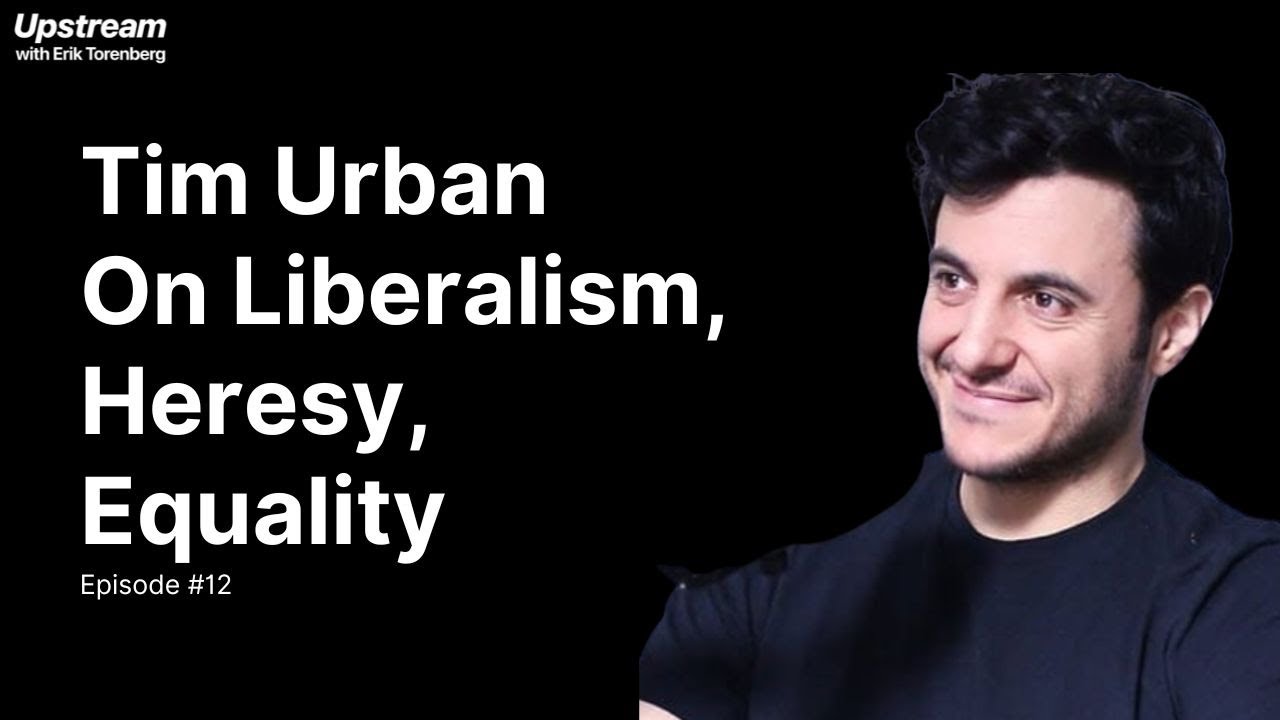
In this Upstream podcast episode, host Erik Torenberg interviews writer Tim Urban about his book What’s Our Problem? – A Self‑Help Guide to Societies. Urban defends classical liberalism, free speech, free markets, and what he calls “high‑rung” thinking – an experimental, evidence‑based, open‑to‑being‑wrong approach to public discourse. He argues that liberal democracy’s “immune system” is the courage of ordinary citizens to speak up, and that without it the system is vulnerable to two distinct illiberal threats. From the right, he points to demagogues, post‑truth politics, election denial, and the erosion of institutional norms. From the left, he describes a “social‑justice fundamentalism” that treats liberalism as oppressive, employs cancel culture, and uses illiberal tactics to enforce group‑based rights. Urban explains the inherent freedom‑equality‑safety compromises of liberal democracy, noting that total freedom leads to extreme inequality and total equality leads to authoritarianism. He frames the current era as a fork in the road, driven by accelerating technology that creates unprecedented existential risks. To protect liberalism, he proposes low‑hanging solutions such as encouraging public courage, tweaking social‑media algorithms, reforming political institutions, and maintaining a vigorous marketplace of ideas. He illustrates his points with concrete cases like the James Damore/Google controversy, the MAGA movement, and historical shifts in public opinion on interracial marriage. The conversation ends with a call for more people to stand up for liberal principles and for continued research on institutional reforms.
Chapters
People need to speak up more, right? Because when you have 100 people and 3 think one thing and 97 think one thing, but only 2 of the 97 are talking and all 3 of these people, it seems like, I just think immediately if you just start having people stand up for what they believe and actually openly, vocally put their neck out a little bit to stand up for liberalism, most people aren't going to get fired. Most people are just going to have some negative social consequences. That I think goes a huge long way. It kind of, that's the immune system of a liberal democracy is Courage of the people. The country has a history of moving forward with wisdom and getting wiser as it goes along. Point of a place like this is it's supposed to be that you sorry, you can't get your way until you create a mind-changing movement and turn your three percent number into twenty or thirty or forty percent. What we see now is this three or four percent of the country, another group, and and they believe they're onto something. They believe they're right and we're all wrong. That's their right. Instead of having to go through and convince everyone, they are saying, "Well, we're not going to do it that way. We're just gonna." We're going to ruin your life if you disagree with us. Regardless of whether inside the house you're on the left, right, or center, everyone should stop and say, wait, this wrecking ball outside the house is shutting down our discourse.
Tim, welcome to the podcast. I'm excited to have you.
Yeah, good. Thanks for having me.
Tim, for the last few years, you've been writing this book, the last 6 years. And I remember a few years ago, you were telling me that you were writing this book and I was like, oh, Tim, you got to write it now. This is the moment. You finally released it. It's The Story of Us. And I see it as a defense of classical liberalism, a defense of free speech, a defense of free markets, a defense of what you call high-rung thinking. And it is really a defense on a few premises. It's a defense of better outcomes. It's a defense of— it's a winning strategy. And what you do in the book is you talk about the threats both on the left and on the right to this high-rung classical liberalism. What would you edit or add to my characterization of what you're trying to get across in your book?
Yeah, I wrote what was supposed to be a blog post on this idea that it was too hard. It was really scary to talk about politics right now.
What's going on?
And then that turned into a giant blog series, which then decided like, this is, can't, I'm not going to have people ask people to read a giant book on a website. So let's make a book. And then once you have that, then now the standards go up and I'm like, I need to, you know, just, just go deeper with my research and fact checking. And it's a book now. It has to, you know, so anyway, now, yes, the book's called What's Our Problem? Um, uh, which I just thought was a more accurate, like, title for what I ended up writing. It's kind of, I think, my take on what liberalism is like, like lowercase l classic liberalism is, and like a liberal democracy, what it even is, and how it works, and how it, how it like protects itself. And then how I think our current liberal democracy in the US and in some other Western countries is not doing such a great job of protecting itself, how that happens, why, and then like what we should do to make it strong and not vulnerable.
Yeah.
And so before we even get to where it's going wrong, where do you get the conviction that it's what we should strive for? Not just on an aesthetic or spiritual or moral lens, but from concrete outcomes. This leads to the best society, or this leads to a winning strategy to defeat illiberalism, given that there is so much illiberalism in the world. How How do we have the conviction to say, hey, liberalism will not only have the best outcomes, but it will defeat illiberalism, given it's not exactly winning at the moment?
So I wouldn't say that I'm positive that this is like the perfect political system. You know, human history is full of eras where people had thought they figured it out, and then later looks like, oh, they were misguided. They didn't, you know, they hadn't figured out this new thing yet. So I would not be surprised at all if I went in a time machine 200 years in the future and they were like, oh yeah, like liberal democracies was like what an old era did. It was like their best, you know, shot at a good government before we like figured out a better way or before like, I don't know, AI was running the show or God knows what's coming. My, basically I would just call it my hypothesis that I share with many people, which is that in today's world, like a liberal democracy is the least bad way to govern people. And I, I actually wouldn't say that I feel confident that it will defeat illiberalism. I think, uh, I feel optimistic actually, but I think I'm not, not really confident in that. Uh, and that we— that's part of why I wrote the book, is that I think we have to earn that. You, you defeat illiberalism if everyone act— you know, behaves in a way that does so. Otherwise you don't, um, and illiberalism wins, which has happened a ton of times in history. You have some You know, I've listened to a lot of history podcasts in the last few years, and you know these you hear about these civilizations, and each one you know they had their their kind of peak when things were kind of most civilized and the golden era, and you have the art and the flourishing, the philosophy, and everything's going well. And each one of them, one after the other, ends up in ashes with what I would call kind of like the power games. You know, the raw state of nature power games, like winning the day, which is whoever has the best weapons is actually in charge now. And Um, and so, uh, I don't feel confident. I feel like we, we, uh, we could definitely be one of these stories. Um, we would have to be actually an anomaly to not be one of these stories. But anyway, as to why I think like the, the underlying premise of the whole book is that if you zoom out and you look at how, um, technology is just exploding in a way that makes this current era a true anomaly compared to the last 100 or 200 years. Is a complete anomaly compared to all the time before it. It, it, everyone feels like their time is an anomaly, but ours actually is. And I have like a diagram in the book that I think lays this out pretty well. But, but the point is that we are creating, we have godlike technology that's just, it's just exploding. And we're, it's, it's, it's like, we're almost like, we're, you know, it's hard to remain, retain our grip on, on our power, on power as a species. And that power has the chance to cure all of our problems easily, make them easy. Just like, you know, we could solve a chimp's problems pretty easily with our enhanced intelligence. And so we have like this, what we would consider a utopia is there waiting for us with all of this technology we're building, where all of our diseases and all of our problems are easily solved. Or we are like little kids playing with a bomb, and we blow up the bomb, and we set ourselves back into the Stone Age. And just, you know, the whole thing, just we can't handle it. And we Um, we, we, we just, just, things collapse. Um, this society is very complex and very fragile actually. And, uh, and, and something starts going wrong, the whole thing can kind of deteriorate. So that's the premise. That's what, you know, made me feel like this book had to be written right now in, in, in my view and, and other books like it. I, I'm, I'm glad are being written because if we're actually, that's kind of a fork in the road. We're headed towards a really good or really bad future, probably not much in between. I don't think. the year 2100 is going to be, we would consider it, if we could go see it, just okay. It's either going to be like, we'd get to 2100 in the time machine and we'd be like, this is incredible. Or we'd be like, oh my God, we don't realize how good we have it. And back in 2023, this is awful. So given that, we have to proceed wisely, right? We have to like have our wits about us right now to try to like, you know, manage this power we're building and like do it wisely together. And the liberal democracy to me is the, gives us the best shot at that. It is the vehicle I think we can use to drive ourselves to the right direction. And I don't see any other system that I think can pull that off. So if our liberal democracy seems to be deteriorating, that is a huge problem because we're headed towards this fork.
Yeah. And if we had done the same exercise at the turn of the last century, uh, you know, 120 years ago, looking 100 years ahead, you would have been both amazed at, oh my God, antibiotics, internet, phone, I don't know, you know, a plethora of, uh, technological innovation and quality of—
Yeah, airplanes, spaceships, like Yeah, all this stuff.
But at the same time, you would have said, holy shit, 2 world wars, nuclear bombs, all these people dead. And, you know, if you fast forward this century, we may not have the luxury because the threats that are, that our new technology has enabled are potentially existential. And we've had existential threats ever since nuclear bombs, but those existential risks have just been accelerating, increasing in number.
Yeah, I mean, 1900s, a 1900s person, you know, that world They had a lot of problems, but they weren't going to go extinct.
Right.
Right? There was nothing anyone would've named then that was like, this might drive everyone extinct in the next decade or whatever.
Yeah.
Today we have those things. Like, what? But also, yeah, it would be a magical utopia to those people in terms of the quality of life and the medical health and the medical tech and all the communications and transportation and everything.
Yeah. You have this great definition in your book for high rung. You call it Experimental, evidence-based, and open to being wrong. And what I see you kind of doing in the positive sense is trying to imitate almost the environment in which Darwinian selection can happen of marketplace of ideas. And you see in economics, or whether in politics, or whether in science, the best ideas or any progress is initially seen as heretical, even in some places. And whether it's the the activism of certain civil rights that were introduced, or, you know, every great company looks like a toy, this famous saying, or, you know, certain scientific breakthroughs. You need an environment that is open to ideas that seem heretical. Otherwise, you won't have breakthrough, you won't have progress. And what you're trying to do is, is just make the case that if we have that on a societal scale, that's how we'll better flourish in all these areas.
Yeah, I mean, it is a good comparison, like in the economic marketplace. Imagine an environment where these— the most powerful corporations could prevent any competitors from launching, right? I mean, that would be— you wouldn't have much progress. You'd have these lazy competitors, these lazy corporations that had no competition, that were probably old and obsolete and were not providing very good services, and nothing would move forward. Innovation would cease, right? And you So of course we want a free market where no one can do that, where you're allowed to, anyone's allowed to, you know, start a business and compete. And that of course turns into this crazy productivity that we've seen in the last couple hundred years. Like this magical world has been built by that game. So now you take that to the world of ideas. Um, the equivalent of that first scenario I was talking about is the most powerful groups and cultural groups. Who simply say any competition to our ideas, any challenges to our ideas are, uh, not, you know, you know, off the table. Now, you know, and of course that's usually the case in a dictatorship. They can very quickly, like, you know, silence any ideas they don't like. But in— we have the First Amendment, so it seems like, oh, okay, so we're all set, right? You know, we have, um, free marketplace of ideas. But there's actually a second thing you need. You need the First Amendment, So the government can't do that. But then you also need a vigorous free speech culture, um, which makes it, you know, again, go back to the economic example. Imagine if, okay, now the government says anyone can start a startup, but anyone who did was shamed and, and their career was destroyed and everyone thought they were an awful person if they started a launch, launched a startup company. No one would do it, right? It's just not worth it. So maybe you're not going to get arrested, but if you're going to be ostracized and you're going to, you know, have people a mob after you for starting a company. You just— it would just also, you know, so you need both things. You need the laws that allow for companies to start, and you also need a culture that says, yeah, good for you, go start a company. Yeah, competition, which is what we have. Which is— so the, the second puzzle piece with speech is, is that, that culture that says, yeah, challenging, you know, uh, dissent is good and argument is good. And, and that, uh, and, and if you don't have that, then inevitably the most powerful cultural groups Will basically will will make it culturally illegal to challenge their ideas, and you might as well not have a First Amendment because no one will be you know all innovation will stop. And so, if the the higher emergent property of the free economic marketplace is productivity, right? We invent things.
We move.
You know, we we we just just create. The emergent property of the idea marketplace is wisdom and knowledge and. So I don't think any one of us is that smart. I don't think any of us alone can figure out how to get, get to that right side of the fork in the road and build a great future. I think that, uh, they, but, but together, if, if there's an open, genuine open marketplace of ideas, I think together that system can yield a super intelligent kind of wisdom that can get us there.
That's well put. The book, What's Our Problem? The subheading is, um, a self-help book for societies because you think this is a societal problem, uh, kind of at large. So why don't you make the case for why the right and the left is, uh, is, is perhaps, uh, not respecting liberalism as much as they could be, but in 2 different ways?
That's a big question. Um, and, you know, part of the reason I wrote a book on this is because these topics require a ton of nuance. And, um, and so it is hard to get across quickly, but I'll give like the best, like, little summary I can. There's, you know, I think A lot of people I know who are kind of left-minded, I think, will have no problem pointing out ways the right is not being such great liberals right now. You've got, you know, the MAGA movement is— it's not that Trump's policies were any, you know, anything I think are particularly unusual or awful or anything. It was just that his, his whole thing was just lying. And we're, we're, and, and, and these institutions, these kind of knowledge-finding institutions that are so important in society, you know, media and academia and science. Um, and you can talk in a second about how they, those, those institutions themselves have deteriorated. But this notion on the right that like those, those are all just pure evil instruments of the left. I mean, that's not true. That's gone. That's going too far. And so this, this idea that All of these liberal institutions, they're all bullshit. And the only people you can trust are conveniently, you know, me, Rush Limbaugh, me, Sean Hannity, me, Donald Trump. And, you know, you're always going to have that mentality, but it's, it's gained a swell of support. It's, it's, and, you know, there's always demagogues, right? What's a demagogue? It's someone who basically, you know, preys on people's, you know, fears and kind of capitalizes on, you know, kind of mob mentality to, to, you know, lie, lie, lie to rise to power at all costs.
Right.
Nothing matters besides like me rising to power. And so there's always demagogues, but one was just the president. That's unusual. Like a full-fledged, like, demagogue won. Right. And so that, again, is a sign to me that, that, that liberalism is not carrying the The the usual kind of respect that it has on the right. So the right is actually supposed to be very classically liberal, right? The conservatives are supposed to be very very into into you know the Constitution and into the idea of the peaceful transition of power. That's like the ultimate American patriotic idea, right? And and you know you just see the immediate willingness to undermine the faith in like the electoral process for. short-term gain.
Hey, we'll continue our interview in a moment after a word from our sponsors. Secureframe is the leading all-in-one platform for security and privacy compliance. Get SOC 2 audit ready in weeks, not months. I believe in Secureframe so much that I invested in it, and I recommend it to all my portfolio companies. Sign up for a free demo and mention Upstream during your demo to get 20% off your first year. Now more than ever, startup founders need a safe place to put their cash. Mercury protects your money and also provides the streamlined user experience that great founders expect. Through partner banks and their sweep networks, Mercury offers up to $5 million in FDIC insurance, which is 20 times the per-bank limit. They also make it easy to invest any cash above the FDIC-insured amount in a money market fund. 100,000 startups trust Mercury with their finances. I've been a happy Mercury customer and have found their team incredibly helpful and responsive. They even got an important wire out of purgatory on Christmas Eve. After all, your Christmas is my opportunity. Visit mercury.com to get started. Mercury is a financial technology company, not a bank. Banking services provided by Choice Financial Group and Evolve Bank and Trust, members FDIC.
Or, you know, you see Mitch McConnell and the Senate doing stuff like not confirming Neil Gorsuch in the last year of Obama's presidency. With this new rule suddenly that you can't do that in the last year because let the people decide. And and so we're no we're not going to confirm anyone. And then four years later, you know, now their candidates in office same thing happens and they suddenly reverse the rule. So there's no principle there. You know, there's no good conservative kind of consistent principle that is just pure like again power games. You know, you know, just kind of going for the short-term gain at the expense of all. These principles, which is very not conservative. It's very not conservative. So, and then, you know, you now you do see, uh, and again, this is very complicated, uh, and that's why I feel like I'm never going to do it the nuance justice in a conversation. But, um, you do see authoritarian, you know, a rise of authoritarian policies in, uh, you know, right-wing legislatures, um, that I think, again, like the distrust in the media, these have some basis for happening, but then they go too far. So I'll leave it at that. Now, on the left, this is the one I spend even more time on just because, as I said, I think most people I know know everything I just said about the right. I don't think there's that much mystery to, wait, really? You think that the Trump movement like is not honest? Oh my God. And like, you know, like I, everyone knows that I know knows that. So I just like, why go and like, just so that I can see balance, like, and so I went and I did that one quickly and then I spent a lot more time on the other story, which is what I would call the rise of social justice fundamentalism. Um, and that's what, you know, is more popularly called wokeness. But that term is problematic because it's got— it's, it's A, it's loaded with baggage. So you say that, you seem like a culture warrior. But also it throws the baby out with the bathwater, and it doesn't distinguish between, you know, what, what I would call social justice fundamentalism and, um, something totally different, which is what I would call liberal social justice. And you don't want to throw the baby out with the bathwater there because you've got 2 things that are fundamentally opposites that are all being categorized as social justice. And that's allowed what I think is the illiberal kind to flourish unnoticed, flourish in disguise a little bit. And so the basic difference that I would say is that liberal social justice is what most people— it's the great history of the US, right? You've got movement after movement, women's suffrage and civil rights, you know, gay marriage, you know, you can name lots of these movements where a group has been not receiving the correct— has been not getting a fair treatment, not been getting their bargain, their part of the constitutional bargain. They've been getting kind of a raw deal. And so basically, that's something illiberal is going on. Like Black Americans are not giving the— getting the same treatment as white Americans because of their skin color, that's not constitutional. That's not liberal. That's very illiberal. So one of these movements would go and commit civil disobedience against illiberal laws to expose their illiberalness. And they would try to build awareness the liberal way with free speech and free assembly and Protest, and they would get a make a you know eventually a mind-changing movement that hits a tipping point and changes policies and changes laws and makes the country more liberal. Right? So if you're if liberalism is a house, these movements are passionate about the house. They're inside the house. They say we love this house. This house has flaws though. There's a support beam that's not working well for a certain group. Let's fix it, and they go and try to fix it. that the house is better. Social justice fundamentalism is a wrecking ball outside the house that is based in originally in Marxism and neo-Marxist kind of lines of thought, that whose premise is liberalism is bad. It's inherently oppressive, exploitative, and it is designed by the powerful to entrench their power and as a way of keeping the oppressed oppressed and also convincing the oppressed that this is— that they're not oppressed. And that's, that's what this thing is, which again, I disagree with it. But in the marketplace of ideas, bring it in, right? Sure. You know, maybe we're all missing something. Maybe, maybe the liberals have to look a little harder at some of them. Okay. Bring it into the discussion. But its goal, its goal is to— it's much more revolutionary. It doesn't just want to change laws and policies to fix the house. It wants to, it wants to level the house, build something new. It thinks that free markets and free speech and all of this is actually not great. Now, my problem with it isn't that it is a radical ideology. Again, as I said, welcome. I think it's interesting. Bring the super radicals into the conversation and like, let them tell us why we might all be missing something. And actually like this whole thing is oppressive and oppression is in the air in ways we can't see. That's probably right in areas, sure, bring them in. The problem is that inherently, if you think liberalism is the problem, you're probably also not going to be that into using liberal tactics to get what you want because you think the whole thing is bad. So liberal tactics is when I think we have a problem here, because now you're not playing actually within the rules of the liberal house. So liberal tactics is basically cancel culture instead of free speech, instead of— we're sorry, instead of refuting an idea you don't like, you try to punish the person, right? That's, that's a very illiberal thing to do. Um, with, of course, always with justification. It's never saying because we're bullies or because we don't, because we want to punish speech. It's saying this is harmful, dangerous speech, and, and this is giving dangerous ideas a platform, and that's putting people in danger. And, and it's, you know, that's always the, the logic. And so there's a hostility towards science and, and free speech. There's kind of an, in a general tendency to use coercion instead of persuasion to get what you want. Um, and very quickly, if the society isn't careful, a group like that can make everyone really scared. Like that, what we talked about, that can quickly take away that second puzzle piece that you need for a true free marketplace of ideas. And everyone gets scared and gets quiet, even though you still have a First Amendment. Um, now no one wants to challenge this group because this group is ruining people's lives. And again, like Trump, it's always going to be demagogues. That's not the problem. It's the problem is that one is, you know, rising to the presidency and there should be more of that probably if we don't change something. Likewise, there's always groups that are illiberal that want to punish people who disagree with them. What's scary is that there's one that has done so well, so it's been so successful at scaring everyone into, and then therefore once have people that are scared to disagree with it. You can kind of go into companies, into universities, into science institutions, and you can kind of rewrite the policies there to turn these things into an instrument of social justice fundamentalism first, and, uh, an instrument of whatever their, their actual mission is second. Um, and so this has been a huge, massive problem. And to me, both of these are, if you zoom out, just part of the same overarching problem, which is, which is that the, the immune system of this liberal democracy is not as strong as it used to be. And, and it's— and in its weakness, you're seeing kind of groups rise up and fill in, fill in, you know, and, and, uh, and take advantage. And that should concern everyone who cares about the liberal democracy.
That's a fantastic overview. Just to repeat some points, so on the right, we have almost a post-truth Era popularized by none other than Trump, but also a subversion of norms of some of these sacred institutions, including things like election denial at scale or subversion of certain things in the Supreme Court, perhaps, but things that people know about. And then also on the left, we see sort of the amplification of this cancel culture that you've just been describing, but also overextension of identity-based policies that lead to things like UBI for a certain race or early vaccines for a certain certain group of person that go against sort of the equality of the law, uh, treatment that liberalism has, uh, has believed in for so long.
Social justice fundamentalism, which I call it that because it is more of— it's almost like a religion in that it doesn't welcome dissenting ideas. It believes with 100% conviction that it's correct about everything. Um, it talks, you know, it talks about whiteness as like the original sin, literally. That's what, you know, Ibram Kendi says, who's, who's a major thinker in this area. Um, you know, Robin DiAngelo, another major thinker, says that like, you know, racism is in, it's like the water. We're fish and it's the water that we live in and it's just everywhere. And you have to, you know, spend 24/7 working to overcome the evil force. It sounds a lot like, like how Christians talk about Satan. Right. And so, um, it is kind of a religion. It is inherently openly, I mean, they would agree that it is anti-liberal. Right? It is super revolutionary. It uses illiberal tactics. And when those tactics work, it creates illiberal norms like shutting down free speech and disinviting campus speakers. That's fully the work of this ideology and its training. And also, like you said, like actual, like bringing segregation back, making everyone, you know, not only, you know, again, it's in the right to, if you If it says that we want to make everyone hyper-conscious about skin color, fine. You're an ideology. You're a political group. If that's your goal, you can do that. But my problem with it is that when then someone says, well, I don't believe in that. I'm more like on the Martin Luther King, like colorblind train. Instead of instead of saying, well, here's why you're wrong, they will say that person actually have a term colorblind racism. That person needs to be fired. You know, they're racist. So again, it's this idea that we have these pretty radical views. Okay. And people who challenge them should be punished. And then the society is in such a weird state that those people are getting punished. And, um, and it's, you know, I hear you remember reading about McCarthyism, you know, the Red Scare and being like, oh my God, I can't believe that was only 50 years ago or whatever. And thinking like, that's so like archaic. Like, what are we like, like basically like witch burning? What is this? This was such like a— I can't believe that was so recent. Well, here we are, right? And it's a good reminder that like when you read about whether it's the Red Scare or worse, you know, things like the witch burners or the Nazis, and you think, yeah, these people are, you know, I don't know who we are, the same exact people. And you change the environment a little and you change the social structure and you change the social incentives. And suddenly that mentality, old, that really kind of ugly mentality in humans can start to prosper.
Yeah, it's fascinating. So There's this great Slate Star Codex post, or Scott Alexander post from many years ago called Mistake Theory versus Conflict Theory. And I just wanted to share it with the audience really quick, which is this idea that mistake theory implies that people are just not on the same page. And if we can get them on the same page, then they'll come to some sort of reconciliation or agreement or better outcome because of it. And so it's just a mistake. They need to be on the same page. Conflict theory states that actually, There's a fundamental conflict here, and the reason why they're not on the same page might actually be to obscure what is the fundamental conflict that can't be reconciled. And the knowledge of the conflict will only lead to potentially worse outcomes. And I see your book, maybe I'm incorrect here, in the spirit of mistake theory, which is, hey, we need to have better conversations. We need to high-rung environments and we have better outcomes. And I sympathize with a lot of that, but I do also wonder if there is just a fundamental conflict in liberalism between liberty and equality. And even the term equality has 2 definitions of it that are contradictory. One is sort of equality of process or equality of law, and the other is kind of equality of outcomes. And even the term equality of opportunity, if you ask anyone whether they believe in equality of opportunity, They say yes. And if you ask anyone, do you believe in equality of outcome? They'll say no. But if you think about it for just a few minutes, you can't actually have equality of opportunity with different outcomes because people, their kids will have better schools. They'll marry smarter people. They'll have better genes. You won't have equality there. You might have a— what people typically mean is some sort of sufficient floor, sufficient opportunity, but that doesn't sound as good. And so people are really into this idea of equality. But I guess what I'm trying to get to this is that this idea that, I mean, one courageous thing you bring up in your book is you bring up the James Damore example. I think if I read it correctly, as an example of someone who was treated unfairly or illiberally perhaps. And he was someone at Google who kind of made a case for, hey, I'm interested in diversity, but here are the reasons why maybe we have some diversity mismatch relative to expectations. And it's not just because we're all flaming racists. It's actually because the situation is harder. He brought up the famous kind of men are interested in things, women are interested in people. There's a pipeline problem, et cetera. But some people say, hey, to explain any differences, this is the Ibram Kendi example, any difference in proportion can only be explained by racism. If there are X amount of Hispanics in the US and not that same amount of Hispanics represented at Google, equal, that's because of racism. And I think what we have to reconcile is this idea that if people are able to freely associate, the percentages are not going to be equal. That's just not going to happen. But there isn't a desire for that same group of people to say that's okay. And so this tension between freedom and equality seems centered to so many things because the more freedom you have, the less equality you have. And the more you try to introduce equality, That, that steps upon freedom. I'm curious if you think that's a false choice, or if you think that's something we have to reconcile with.
Yes, the liberal democracy is a freedom-equality compromise. It's a couple— it's also a freedom-safety compromise, right? Like, I can do whatever I want, but I can't go and rob you. I can't just go in the street and punch you in the face, right? So I don't have full freedom. I have 90% freedom. And we all agree that that last 10%, we don't want people to have those freedoms. because of safety, right? So safety, and then once we're all safe, now you have full freedom, right? That's the idea. Safety-freedom compromise. Well, it's also a freedom-equality compromise, right? In total freedom without any regulations, you will probably end up with incredible inequality. And if you want complete equality, which we've tried, it usually ends up with complete abject poverty as well and total dictatorship because you have no freedom at all, right? The idea is that Uh, everyone, um, is— it doesn't matter what you do, everyone's gonna end up with the same, which is, you know, it's, it's, it's a— yes, it removes any kind of, uh, kind of freedom from the situation, individualism. But also it's— there are all these, you know, studies of little kids who, you know, like toddlers who do this, you know, one does double the work of another on something and they get 2 times the, the thing, you know, the reward. And toddlers get it and they think that's okay. And versus if— If if someone does double the work and everyone gets the same, toddlers think that's unfair, right? Because deep down in the human kind of psyche is this innate notion of fairness, so that you know total equality of outcome given the amount of variables, just an effort in in desire to you know an ambition. If everyone ends up with the same, it inherently feels unfair to us. So the liberal democracy says is. is let's try to find that sweet spot in between. And so the goal is, you know, they even, you know, the equality of opportunity, right? Which is, which is the, uh, I think that goes best, that goes along best with our notion of fairness innately, that, that everyone has a chance to play the game and then that whatever happens in the game though, the rewards will be doled out proportionally. Um, inherently that's, that sounds Of course, like you said, actual achieving equality, what is true equality of opportunity is impossible. If someone succeeds, their kids now have a huge advantage. If someone is connected, their kids have a huge advantage. If someone is born with, uh, a more ambitious, competitive personality, right? Where they, they, they, they, they feel bad if they're not working hard versus to someone else who is pretty lazy and doesn't really want to work hard, and that's not where they get their happiness. Inherently, you know, that's not going to be, that's not going to have the same outcome. You could say that those people were born without the same opportunity to succeed. You could just write, and of course there's different levels of talent. There's different everything, right? Like, uh, was I born with the same opportunity to be in the NBA as Jason Tatum? No. Right. So, so. So basically what you're saying is we will inherently accept a certain level of inequality of opportunity, right? This isn't— you can't have it perfect. Um, but we will try also try to mitigate that a little bit, right? You'll have a lot of these programs that help lift, you know, people from disadvantaged backgrounds up, and you'll have some affirmative action, right, to make up for some historical inequalities that have baggage. And so there are You know, there's there's there's social nets. There's all these different things that basically say we're going to have the print the basic principles of quality of opportunity, except it's going to inherently not be perfect. But we're going to try to mitigate that a little bit without taking away too much freedom because you know a policy like affirmative action well that you are doing something a little bit you know unfair even though someone else could argue that it's actually you know more fair when you consider history gets very complicated. So it's it's a bunch of compromises. And this is why you have the left and the right. That's the nice thing about 2 parties is that each of them inherently will end up pushing hard for more of one thing and the other will push hard for less of that thing. So it ends up the balance in between them ideally ends up kind of expressing a compromise that represents like the will of the people. Like, um, you know, Democrats will want more welfare, um, type programs and Republicans will want less and you'll end up with a balance that reflects the will of the people. So this, this is— it's complicated, but it's like you said, the— there are a lot of people right now who are actually pushing for equality of outcome. And it's this sneaky thing, just like no one says we're against, you know, we're, we're bullying people out of their free speech. They say this is dangerous speech, so we need to protect people, which sounds like a liberal position that's actually defending an illiberal position. Likewise, here No one says we want equality of outcome. What they say is that groups are equal, and therefore, if groups end up with this, you see a group disparity. It must be from discrimination, from something unfair, because if there was nothing like that, these groups would be equally represented, which is a really unscientific and inaccurate and crazy position. As I said right away, like NBA, right? Like why are there not enough Jews in the NBA? Like no one thinks that that's unfair. unfair, right? And, um, there are also a lot of examples that don't fit with the social justice framework. Like, there's, you know, I don't know, some very high percentage of well-paid psychologists are women, right? Or doctors or physicians or, um, college students. Over 60% of college students are now women, right? Suddenly there, there's no argument there that some discrimination has happened. So it's also— it's applied— this principle is applied selectively. And And when it's applied, it doesn't, yeah, it just doesn't map onto reality. So the Google example. So yeah, Damore basically, Google's a situation when there's like 80% of engineers are men. So what Damore says, and which I agree with, is that there are a number of explanations for that disparity. One could be discrimination, right? In fact, almost definitely there's some kind of bro culture there that is not welcoming to women and dudes are going to, you know, maybe be more likely to hire dudes. Um, and so, yeah, you end up with some form of discrimination, but also there's just a giant difference in what women on aggregate are interested in and what men on aggregate are interested in. And there's also the fact that some of these jobs require like really, you know, this is more like the equivalent conversation that happened with Larry Summers at Harvard. You know, he's talking about why are there not more women in STEM? And he pointed out that like these professions that these higher level leadership positions in STEM require people to give up, you know, to work 80 hours a week and more men are willing to make that choice than women. Again, we can ask why it's complicated. Are there societal expectations? Damore pointed out the fact that like 80% of, you know, it's, it's basically the, the Google percentage gender disparity. mirrors the computer science degrees disparity. So you could say, okay, well, if this is unfair, the unfairness is happening before people get to Google. We're just taking a representative thing. So the point is it's very complicated, but it's certainly not as simple as there's a disparity, there's more men than women engineers, therefore sexism, therefore discrimination. And so he puts this paper out, and I went and dug into both happened at Google and the conversation outside Google. And in both cases, you see 2 universes. Universe 1 says, this is a valid opinion and a ton of people disagree with it and a ton of people agree with it and some people agree with parts of it and disagree. And there's a vigorous debate and there's meta-analyses pointing out areas, highlighting in red areas where Damore's statements are not backed up and green where they are. And it's a big discussion. Universe 2 says, That was such a dangerous set of ideas to put out there, and it makes women unsafe at work. He needs to be fired for it. So again, there's 2 debates we can have here. One is this concept of, I agree with Damore regardless of his specifics, which I think I have to do more research to know if I agree with them all, but I agree with the concept that inequality of outcome does not inherently mean inequality of opportunity. And that it's complicated. But I certainly agree with Universe 1, who, regardless of what they thought about the paper, did not think he should be fired for it. And so it is the second arena here that I'm really most concerned about. The concept that he even, regardless of what he said, the fact that he got fired for it, um, is the group— is, is the work of one ideology who has this view on equality of outcome and differences between genders. being able to punish people who challenge the viewpoint or the policies that emerge from the viewpoint. What you have then is a lot of policies not being able to be challenged that are the result of an unscientific ideology with a bunch of unscientific viewpoints.
It's fascinating. A few points there. One is you mentioned the more women are psychologists, uh, example. You know, we're seeing women outperform men on the median level in college, uh, you know, uh, sort of matriculation rates as an example. And there are people like Richard Reeves who wrote a book of Boys and Men, and people like David Brooks and Scott Galloway and others who are kind of, um, you know, starting this conversation around how, uh, the median men or the lower men is struggling relative to women. And it's interesting because they're starting to use like similar language. Uh, and so you might see sort of a Hey, we want diversity too, which is interesting. But I think the broader trend that I see happening is you have one side that is solely dedicated to equalizing group percentages in the economy or in all levels in politics, et cetera. And that group has tens or maybe hundreds of billions. There's a whole class, industries, people's livelihoods at scale Dedicated to this goal. And then you have a number of principled people like yourself who are advocating for some hybrid between freedom and equality. And what I see as a result is that this class is so much more dedicated and so much more incentivized to keep bringing this class over and over to this side. So meaning it's a compromise, but it's only going one way because there's no equivalent force on the other side with enough interest and enough dollars that is dedicated or that will even specify what level of hierarchy is okay in society. And so I worry, while I'm a huge fan of classical liberalism and I think it leads to the best outcomes in terms of winning, I worry that it's just a stopgap or speed bump on the inevitable slide towards more and more equality. And the only actual thing that's preventing it from going all the way is Inequality tends to compound. Charles Murray wrote this great book about how rich people marry other rich people. It's called Coming Apart, not to be conflated with The Bell Curve or other more controversial books, but Coming Apart is just about how wealthy people tend to marry other wealthy people and then over— and be best friends with wealthy other people and smart people. And then over generations, inequality just compounds as a result of that. So that's the only thing kind of pushing it one way. But so I worry that classical liberalism, because it concedes, hey, this is a hard problem and it's trying to be more nuanced, just loses to something that is like— here's pushback. Like in your book, you mentioned you have people that say, hey, it's a simplistic pushback. What about the right? Isn't the right worse? They're illiberal. Why should we focus on being liberal? And to which I think you say something like, hey, why not both? We should both be liberal. Like we both need to work. I think even A more detailed pushback might be something like, hey, you mentioned liberalism has penetrated academia, it's penetrated politics, penetrated corporations. So when the social justice fundamentalists say, hey, look at all the progress we've made over the past decade, we've penetrated everything. Yeah, some people are mad, there's some pushback, but you can't say we haven't done more for affirmative action or for diversity or certain rights. And my worry as a social justice fundamentalist is if you left it up to a liberal process, we'd lose. Like affirmative action might lose, like diversity inclusion, it might not have popular support. And so we need these illiberal actions in order to maintain these social justice fundamentalist goals and kind of the ends justify the means. Otherwise, we might not have the same ends anymore.
I, first of all, I disagree that it's like the 100 million Pete Persson strong group. I mean, this is, if you look at, you know, there's a great report called The Hidden Tribes of America, um, that actually breaks down, you know, into not just left and right, but into kind of 7 different political tribes, breaks down the US. And I think it's 9, 8% or 9% of the country is, you know, a progressive activist, like the farthest left, that all of the social justice fundamentalists fit that description. They would Under that. And that's a bigger group, by the way. So it's a lot of the people in that are progressive activists are liberal progressives, right? Like, um, like the civil rights movement people, people who fought for gay marriage. Most of them were progressive activists and they were also mostly liberal, right? They actually didn't want to overthrow the country. They wanted to stop the unfair discrimination against gay people in this institution of marriage. So it's a subset of a 9% group. You know, and I've estimated it at about 1 in 30 or 1 in 40 Americans actually holds these illiberal views. And so when that group says, you know, has the, if you know, in your counterargument says, you know, we're the only ones holding up these important policies. And if we leave it to the, actually leave it to the free market, then they'll, it's like, well, you know what, like every single group who represents 3% of the country thinks that their policies are good and important and the only way forward, right? The, the, the, the point of a place like this is it's supposed to be that you, sorry, you can't get your way until you create a mind-changing movement and turn your 3% number into 20 or 30 or 40%. Then you can maybe change the country. And the history, the country has a history of moving forward with wisdom and getting wiser as it goes along. And so if your ideas are good enough, Think about how many, you know, there's, um, a stat, you know, uh, interracial marriage was supported by 4% of the country in 1958. So 96% of people thought it was immoral. Those aren't evil, bad people. Most of them are people just like you and me who had grown up at a time when they believed that it was immoral. And today, that same number is down to, I believe, 6% thinks it's— Immoral. Immoral from 94 down to 6. So, in a that's the nice thing about a liberal democracy is that people aren't always right, and they they have a lot. There are always bigotry, and and there there's going to be incorrect assumptions and and foolishness that over time gets better because when you can have an open discussion about it, there's a bunch of people you know there's a bunch of four percent of the country groups that have ideas, and most of them are wrong, and most of them are either too radical or too conservative. Conservative, or they're inaccurate, or they're superstitious. But once in a while, four percent of the country is onto something like interracial marriage is not a bad thing. And the country has a pretty long history of that four percent with you know with free speech and open dialogue creates a mind-changing movement, and the country changes its mind, and all the laws change their mind, and it goes from political suicide for a politician to be pro interracial marriage to political suicide for. Wanted to be against it. Um, and if, if you hadn't, if you would allow the most powerful cultural groups in 1958 to control things, those 4% would never be even allowed to express their viewpoint. Gay marriage, gay rights would never have been made headway if the most powerful cultural groups could get you fired for disagreeing with it. Um, so what we see now is this 3 or 4% of the country, another in, in this group, and, and they believe they're onto something. They believe They're right and we're all wrong. That's their right. Instead of having to go through and convince everyone, they are saying, well, you know, we're not going to do it that way. We're just going to, we're going to ruin your life if you disagree with us. And so, and we're going to go put these policies in and anyone who challenges us, well, you must be an awful racist or a sexist, or you're an awful white supremacist and you have to be fired and ruined and publicly shamed.
Yeah.
So, so that's what I see. I see. And I think if you're a liberal, a lowercase l liberal, it does not matter what the viewpoint is. Again, it's— this happens to be a far left thing. I don't care if it's far left, center left, right, far right. If a group is acting like that and is shutting down the entire debate because they have found a way to get people fired, everyone has to stand up and push back against that group. If you care about the house, if you're inside the liberal house, And you like the liberal house, regardless of whether inside the house you're on the left, right, or center, everyone should stop and say, wait, this wrecking ball outside the house is shutting down our discourse. We all have to push back against that. So, you know, we should— if you're pro-house or anti-house, that's kind of the first question. And then once you answer that, now you can focus on like, if you're okay, now we're all pro-house, now we can talk about what's going on inside the house. Let's argue about it.
So it's well put. I mean, One of the most interesting books I read on this topic was Chris Caldwell's Age of Entitlement. And he talks about how he, in his opinion, and this is a conflict theory book, he talks about how he thinks that the US has 2 constitutions that are in contradiction with each other. One is the original Constitution and one is civil rights. And it's this tension between individual rights and group rights. And he acknowledges how other groups have used the 1964 legislation in order to gain group rights. And there's a difference between negative rights and positive rights, right? Like negative rights, it's kind of the interracial marriage. It's like, or gay marriage, let me be me, let me live. Totally understand. I feel like a lot of the low-hanging fruit on negative rights has been picked. And now people are on to positive rights, which is not just, hey, let me be married, or let me be free, or let me be— it's also now it's let me get a board seat at the Fortune 500, or let my group represent these companies or these governments or whatever in the same way that every other group does, or let my group have a special right that another group doesn't have. And so we need to have a conversation about, hey, is it that these groups should advocate for these special rights and just have better tone about it? Or is it that those special rights actually violate liberalism to some degree. And what I worry about in terms of the vague freedom equality compromise is when you don't specify something specific, the other side will specify something specific and specificity usually wins. And so I want classical liberals to kind of have more stake in the ground over what kind of which one they're going to prioritize, freedom or equality, when rubber hits the road. Otherwise, I worry the people who are more focused on equality with more specificity, and I agree, they're small in numbers. I meant big in dollars, as in it's their job, they get paid to do it, there's funders behind it, it's an ecosystem. They just want it more. If you're doing this because you care about society, But if equality keeps winning, if liberalism keeps winning, you're not going to lose your job, in theory. Whereas a DEI person, if DEI is no longer as big, they will lose their job. They just have more on the line. Anyways, I'll pause there. Do you sympathize with those concerns or do you see them differently?
I think that it should always be kind of like 2 tiers of opinion here. It's like my core opinion, I think, would go along with the classic liberal opinion, which is that individual Individualism, right? Individual rights. People should have the same opportunity. People shouldn't be discriminated against based on their gender or skin color. Now, we look at history and we see, well, there was— there have been 5 consecutive, 5-plus consecutive generations of Black Americans getting unfairly discriminated against, getting held back from gaining generational wealth, from gaining real estate wealth. Um, you know, one thing after another. And so I think you then have to look at the first position and say, well, okay, you can't just go say, oh, now everyone should have individual rights. It's, well, we, maybe we should do something, you know, to try to reverse some of those past wrongs, given how much, you know, things like wealth and connections and success compound over generations. Uh, and I think you could say the same thing, you know, if there's a long history of women, then the norms in society being that women shouldn't have certain jobs or that women shouldn't be leaders, or if there's one of these sticky norms that continues to fester, like a woman who acts like the same exact— a woman boss who acts the same exact way as a male boss, she's seen as a bitch or a bossy versus a male boss is seen as principled and strong. There's a lot of these. And so I think with, you know, very sparingly, if something is just very much like, okay, this has been a giant problem in the past and we're trying to undo it, I think most of society can get, kind of get behind a little bit of, you know, putting your thumb on the scale a little bit to try to help undo a little of the former injustice. You know, there's very specific things. Of course, this is slippery slope because now you say, oh, okay, so we can put the thumb on the scale. Well, every group. has a claim, and, and, and how much do you put the thumb on the scale? So it should be— and again, this is not— liberal democracy is messy. There's no obvious answer. What the best thing is, is that there's a vigorous open discourse about this, about how much— about what's fair here and what makes sense. Um, and both sides of the political spectrum, the whole cross the spectrum, can sit there and argue about it, and you can end up with kind of laws that feel, you know, right, whatever. And then mostly I think the laws should be kind of Spare. And what you should be left with is let the culture figure it out. So if a company has a diverse staff racially and another company doesn't, let the culture decide. If people are saying, this is turning me off, the lack of diversity here, great. The market will penalize that company for it. If the market doesn't seem to care and they care about the products that a company is selling only, then the Market just doesn't care about that, right? And so I think it's kind of like let the mostly I would say it's like let companies and institutions do things the way they want to, and let people and let movements try to build awareness about why certain thing matters, diversity matters, and let it happen. But and but you know the actual laws should be they they they can there can be the asterisk laws. They should just be very well thought out and very well argued and reconsidered every decade. Um, and instead, I think what you've seen a lot of is, is real ideological, um, backing for a lot of laws that is not necessarily, um, again, based on data, not open to debate, um, and is kind of taken as kind of a religious creed versus, um, a practical policy.
Yeah. What, what to you feels unsolved? Like, uh, if you were going to rewrite this book in the next few years, like, what What are the biggest questions that you have leaving this book and going forward on these issues?
I wrote a book called What's Our Problem? because I thought that my role here can be to try to help diagnose the problem, to help clarify what's going wrong. And I think that's the first step. If you can't see what's even at threat, okay, liberalism, what does that mean? What are the Trojan horses being used to undermine liberalism? That are, you know, saying they're one thing but they're actually another, and, and what are the core tenets we need to stand up for even? Okay, then you can't solve any problems. So you need to start there, which is mostly what I focused on. I think the low-hanging— the lowest-hanging fruit for a solution, um, which I did talk about at the end of the book, is, um, as I said, I don't think— I actually think it's that most of the country agrees with me on this. Again, not specific left or right, just on idea that the house is good and that the anti-house wrecking balls are something we should be pushing back against. Um, and many of— many people I talked to, you know, uh, privately, and immediately they say, of course, I've been thinking the same thing. People need to speak up more, right? Because when you have 100 people and 3 think one thing and 97 think one thing, but only 2 of the 97 are talking, and all 3 of these people, it seems like— right? You see? So it's like, I just think immediately, if you just start having people stand up for what they believe and actually openly, vocally put their neck out a little bit to stand up for liberalism, most people aren't going to get fired. Most people are just going to have some negative social consequences. That, I think, does a— goes a huge long way. It kind of— that's the immune system of a liberal democracy, is courage of the people in the face of inevitable illiberal threats to stand up for the country and stand up for the liberal principles. And As far as specifics, I think there's a ton of, you know, part of the reason, you know, so you can ask why, why is the demagogue rising up right now? Why is the illiberal witch burning movement getting so much power right now? I think it goes, it goes to, you know, I don't think that the people, we've gotten worse as people. I think it's that our environment has changed and you put the, you know, this, the constant human nature into a variable environment and different variable behavior is going to come out. So you have social media and you have the media landscape changing from broadcast media to tribal media, and then social media and the ability for, you know, people to start kind of mobs, online mobs. And a lot of, you know, specific things in the political arena have changed. Um, you know, Ezra Klein's book, Why We're Polarized, gets into a lot of things like that. So there are a lot of concrete solutions that I think involve looking at the environment, how it's changed, what kind of behavior it's producing, and then having really intelligent debates and research going into, okay, what kind of tweaks can we make to social media algorithms to maybe keeping media, incentivizing media to go for truth instead of clicks somehow? Maybe it's a credit rating agency, maybe it's algorithms that are assessing them for their accuracy. How can we incentivize better people to run for politics, to run for office? How do we change the— maybe the primary system so it's not producing these really dark red and dark blue candidates, but maybe a little bit bring more general elections back in. I could go on forever with things that I haven't researched that well that I think I hope other people take on. I think, again, the low-hanging fruit is just courage. If people start standing up for what they think, I think right away a lot of these bad movements get marginalized because there's way more people that disagree with them than agree with them. And then I think there's trying to tweak this environment, this environment that we're in. The liberal democracy in general is an artificial environment with gears and springs and levers and to create a certain kind of behavior. And if it's not going well because things have changed, okay, let's get in there and let's actually build a new lever here and, you know, build a floor here and actually try to control that.
Courage is a great place to wrap this podcast. You have a lot of courage in your book. You mentioned a a lot of specific examples. We just spoke about a couple of them, the Larry Summers, the James Damore, that at the time didn't have many people defending them. And you're defending them in the classical liberal approach. Even if you disagree, you agree with maybe their right to say it. And people don't remember, but the ACLU used to defend Nazis. It used to defend the Nazis' right to speak, I should say. It didn't support Nazis' goals, but it defended their right to speech. And I was in I'm inspired by reading your book, the, the book What's Our Problem? A Self-Help Guide to Societies. It's an important book. It's a courageous book. And Tim, thanks for coming on the podcast and talking about it with us.
Thanks, Erik.
Upstream with Erik Torenberg is a show from Turpentine, the podcast network behind Moment of Zen and Cognitive Revolution.
If you liked the episode, please leave a review in the Apple Store.
Secureframe is the leading all-in-one platform for security and privacy compliance. Get SOC 2 audit ready in weeks, not months. I believe in Secureframe so much that I invested in it and I recommend it to all my portfolio companies. Sign up for a free demo and mention Upstream during your demo to get 20% off your first year. Now more than ever, startup founders need a safe place to put their cash. Mercury protects your money and also provides a streamlined user experience. That great founders expect. Through partner banks and their sweep networks, Mercury offers up to $5 million in FDIC insurance, which is 20 times the per-bank limit. They also make it easy to invest any cash above the FDIC-insured amount in a money market fund. 100,000 startups trust Mercury with their finances. I've been a happy Mercury customer and have found their team incredibly helpful and responsive. They even got an important wire out of purgatory on Christmas Eve. After all, your Christmas is my opportunity. Visit mercury.com to get started. Mercury is a financial technology company, not a bank. Banking services provided by Choice Financial Group and Evolve Bank and Trust, members FDIC.
More from Erik





Palantir CEO Alex Karp & Rep. Ritchie Torres on Innovation & The West | Hill and Valley Forum 2024


