Why China's Universities Will Become Harvard with Samo Burja
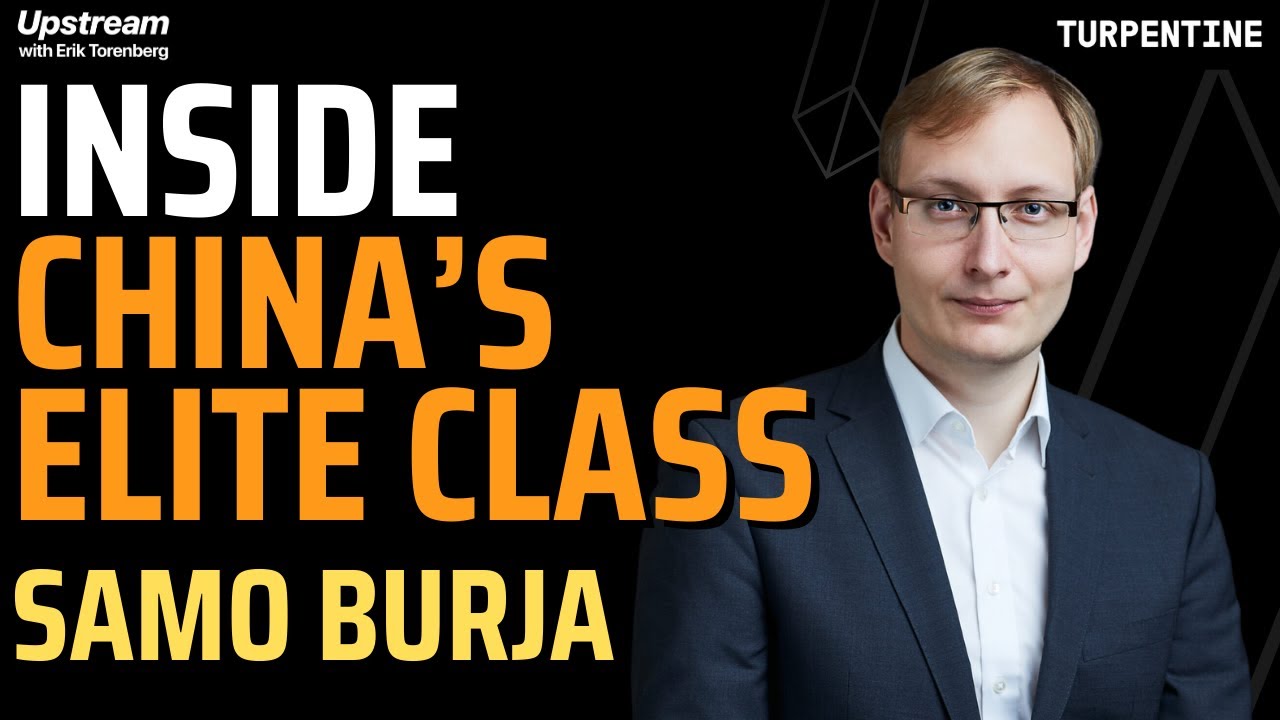
In this Upstream interview, host Erik Torenberg talks with thinker Samo Burja about the rapid rise of Chinese elite universities and their convergence with American institutions. Burja traces the historical shift from a revolutionary elite educated abroad to a new generation of Chinese leaders who graduate from domestic power‑houses such as Peking, Tsinghua, Renmin, Fudan and Shanghai Jiao Tong. He argues that the signaling function of elite education now operates in China just as it does in the United States, turning university credentials into a gate‑keeper for political, legal and economic power. The conversation explores how this creates a ruling class of lawyers and ideologues, the emergence of a uniquely Chinese “woke” movement rooted in Marxist and Maoist texts, and the gender and demographic tensions that may fuel a Chinese‑style feminism. Burja contrasts the US’s law‑centric elite formation with China’s historically technocratic elite, noting the growing prestige of Chinese universities, the decline of US university cachet, and the implications for talent flows, rule of law, journalism, and future state capacity. He warns that while Chinese universities may boost civil‑society actors, an over‑emphasis on non‑technical elites could diminish technical expertise and eventually lead to credential inflation similar to the West.
Chapters
This week on Upstream, we're releasing an episode from Turpentine's show Live Players with Samo Borya. Samo and I compare China's and America's elites, evaluate China as America's mirror, and consider the waning prestige of American universities. Please enjoy the episode.
So US universities have been all over the news with the scandal surrounding Claudine Gay, with Bill Ackman's activist investing applied to universities. But when we were looking at topics to discuss this week, we wanted to talk about Chinese universities. And you have an excellent Bismarck Brief paper on them, which we'll link to in the show notes. What excited you about this topic and made you think, hey, Let's do a debrief on it.
Well, often when I propose that the United States and China are, as societies, still moving in parallel despite being geopolitical rivals and having nominally very different systems of government, I think universities are one of the top examples of this convergence or parallel evolution. We tend to think of the Chinese Communist Party as abstractly technocratic or deeply corrupt and sort of evil, at least in the West. That's how the perception is. And we don't really examine the differences between various forms of technocracy. It's quite different to have basically industrial engineers promoted to various political positions and local party officials to reach certain positions versus using basically the same credentialing system that everyone else uses, uh, which is the elite universities. Now, for the first time in recent years in the entire history of the People's Republic, you have a generation of leaders who have been educated within China's own elite universities. When the original revolutionary class showed up in China in the 1920s, '30s, '40s, even some people joined as late as the '50s, these were often people who were educated abroad. They were sort of intellectuals, kind of picked up Marxism in Western universities, be it Paris or London or elsewhere. After this, it actually became something of a disadvantage to be within China from a humanistic or other kind of educated soft science background. It made you immediately suspicious as somewhat bourgeois, as someone that could be still loyal to the older ways of doing things. This was especially pronounced during the Cultural Revolution. After that, you had this strong focus on economic growth. If someone had worked in any sector of the economy, this was not only an indication that they were this real representative of the proletariat, it wasn't only an indication that they probably weren't involved in the deep power struggles that were taking place in the China of the 1970s, where the sort of chaotic aftermath of Mao's Mao's fall from power and his replacement by this new system that's been sort of governing the Chinese Communist Party for the last 30, 40 years. I think we're now reaching the point though where there's this second, third, fourth generation of leadership. Basically, the kids of a lot of the people in the Chinese Communist Party went to study at these elite universities. Now, most of them in Beijing. To give examples, this would be Peking University, Tsinghua University, Renmin University, but also other places such as Fudan University or the Shanghai Jiao Tong University. These institutions have really grown immensely and have become selective in basically the same way we think of as Harvard or MIT being selective. You can get in if you have really good test scores, and you can get in if your family's in the Communist Party. Now, in America, there is no Communist Party, but we have legacy admissions. So functionally, I think this is very similar. These are basically these kind of familial connections. The interesting thing though is that Communist Party officials, when it was time to get their kids in or time to get their favorite protégés in, they didn't just promote local party workers. They actually checked and made sure that these people were educated at these universities, at least nominally. So what at first might be a fig leaf over political favoritism often becomes the foundation of political advantage and personal advantage. There's this development that happens from pretending to be meritocratic To actually being somewhat bureaucratically driven. So I think these universities, there's of course massive cheating, right? Test prepping and so on. But I think it's undeniable just because of the demand to enter these Chinese universities from Chinese talent, uh, that actually, you know, if someone, uh, manages to make it to one of these schools, it is a positive signal of their intelligence. Now note, there is the so-called signaling theory of education, which proposes that, you know, the value of attending a Stanford, an MIT, or a Harvard isn't anything you learn there, but an indication that you survived the admissions process and that you must be somewhat intelligent, right? I think the signaling function does in fact now operate in China. So what does this mean for China?
Right.
I think on a very fundamental level, this might mean that China will be in the future run by lawyers, much as the United States is, rather than, again, people who had basically peasant backgrounds and were somewhat ruthless politicians, plus the occasional scientifically educated engineer. And you can call both things technocratic. In a way they are, right? They're both bureaucrats. They both have— there's a component at least of powerful people who became such because of their excellence. But I think that the key distinction here is that the cohorts are now educated in the universities rather than in local party centers. So this means that China as such will in the future have a ruling class that is perhaps more similar to the American ruling class.
So does that mean that the equivalent of the Fortune 500 CEOs will all be woke and have all these sort of crazy activist energies? Or is China immune to that?
I think that there is some structural similarity and differences here. And let's investigate them, right? Because I think it's good to think through something that's so oddly similar but oddly different from what we're used to. In a very important sense, I think China can function as the West's mirror, or at least America's mirror. If we, say, talk about, I don't know, tech CEOs getting in trouble with the government, or we talk about limits on free speech online, we might not like China's answers, but they answer some of the same questions we face as a society. So, okay, looking at this, looking at China as, for a second, America's mirror, I think a key difference here is that China already has a woke revolution in its universities. It's just not Western woke, it's Chinese woke. What does Chinese woke look like? It looks like overeducated university students reading Marx, reading Mao, and then going around causing trouble by trying to organize workers unions. Workers unions are a problem if they're not organized by the Communist Party. So there's this very interesting situation where there's a government that nominally is, uh, you know, executing this like Marxist plan for the benefit of the working class, and then you of course need members of the Communist Party to be educated communists But when they read it and they try to apply this idea, they noticed, hey, a lot of these workers don't have real unions representing them because they have paper unions or fake unions, or unions are even outlawed. And then they go and cause trouble. And then you have this very awkward situation where the professors sort of have to say that the students are doing the wrong thing. But they struggle to find a principle in which they do the wrong thing. And I think America itself struggles with this. It sort of enshrines, let's say, civil rights, and it enshrines that clearly we have fallen short of the standards of the era of civil rights. And then we struggle to come up with reasons for why obviously what university students are up to today with their protests and so on, why that's a bad thing. We struggle to come up with good principles, right? Like, I'm sure you've seen this. Different people find different ways to figure out how to express that this has clearly gone in the wrong direction. Now, within China, you know, the Chinese Maoist thing might actually be an interesting corrective to the relatively bad working conditions that we saw in various Chinese factories. over the years. You probably still remember the Foxconn suicides, right? You know, the people building our iPhones being worked, you know, in those, in those facilities. Um, conditions there have improved. So, you know, maybe this social activism undertaken by Chinese students that is a direct consequence of Xi trying to have an ideologically reliable Communist Party that doesn't— I don't know, Doesn't go in favor, doesn't go in the direction of being in favor of democracy or something like this, right? Because she sees the key failing of the Soviet Union having been that the Communist Party in the 1980s in the Soviet Union lost the belief in their own authority to rule the society and run the system. And kind of many of them just stopped believing in communism. And they were only there because it was the ruling party. So the whole thing kind of fell apart by 1991. So that would be Xi's perspective. He wants to make sure that China doesn't fall apart the way the Soviet Union does. So he doubles down on education in Marxism, Maoism, all of these classic texts that he read in a different context in the 1970s and '80s. And then the students sort of go around and they cause trouble for the Communist Party. And, you know, you can discipline them saying, this isn't authorized, you should go into the party. But isn't this telling? In 1991, when, you know, how shall we joke, nothing happened at Tiananmen Square, right? Nothing happened then. Um, you know, in reality, there was a very Uh, there was a suppressed protest, pro-democracy protests at Tiananmen Square, right?
In, in the US, we, we can't call them riots. In China, you can't even call them protesters.
Well, this is one of the censored, uh, search terms. And, you know, it's this, um, you know, I misspoke. It was 1989, not 1991. 1991 is when, uh, the country I'm from, Slovenia, became independent of communist Yugoslavia. But this Tiananmen Square protest in 1989 resulted in this harsh lockdown on universities, harsh crackdown on students. That's part of the reason you didn't need a Chinese elite university background, right? Because it was almost a sign that you were disloyal, that in this critical moment of the late '80s, early '90s, from the perspective of the party, you were advocating for democracy. Right, you're advocating for the party should be, you know, abolished, disassembled, or at least, you know, severely investigated for corruption. So a lot of the anti-corruption campaigns Xi pursues are also him trying to undercut this moral justification for replacing or revising the party, right? And now we are here in the 2020s And students are protesting, and they're not protesting for democracy, and they're running around organizing unions, uh, but, you know, they're doing it on this ideological ground that in theory supports party rule but in practice opposes it. So really, power has already shifted to a significant degree from the administrators and even local party officials to the nominally communist students of China. So student activism is still pretty ineffectual in China, but let's be honest, it's pretty ineffectual here. But it can definitely disrupt things. It can definitely put pressure on universities. It can put pressure on companies. It can put pressure on this or that local politician. So it has some play, it has some role. And, you know, the only way they could really fix this would be to try to aggressively make students non-ideological, but then that doesn't work either. So in a way, the Chinese Communist Party is like now stuck here. It's stuck in this, uh, this catch-22.
We'll continue our interview in a moment after a word from our sponsors. Hey all, Erik Torenberg here. I'm hearing more and more that founders want to get profitable and do more with less, especially with engineering. Listen, I love your 30-year-old ex-Fang senior software engineer as much as the next guy. But honestly, I can't afford them anymore. Founders everywhere are trying to turn to global talent, but boy, is it a hassle to do at scale. From sourcing to interviewing to on-the-ground operations and management. That's why I teamed up with Sean Lanahan, who's been building engineering teams in Vietnam at a very high level for over 5 years, to help you access global engineering without the headache. Squad, Sean's new company, takes care of sourcing, legal compliance, and local HR for global talent. Talent so you don't have to. Their engineers follow your process and use your tools. They work with React, Next.js, or your favorite frontend frameworks. And on the backend, they're experts at Node, Python, Java, and anything under the sun. Full disclosure, it's going to cost more than the random person you found on Upwork that's doing 2 hours of work per week but billing you for 40. But you'll get premium quality at a fraction of the typical cost. Our engineers are vetted 1% talent and actually working hard for you every day. Increase your velocity without amping up burn. Head to choosesquad.com and mention Turpentine to skip the waitlist. That's choosesquad.com. Hey everyone, and we're building the first media outlet for tech people by tech people. We're the network behind the show you're listening to right now. We have a slate of hit shows across a range of topics and industries, from our AI and investing cluster of podcasts to shows that drive the conversation in tech with the most interesting thinkers, founders, investors, and influencers like Econ 102 with Noah Smith. We're launching new shows every week and we're looking for industry-leading sponsors. If you think that might be you and your company, email me at erik@turpentine.co. That's erik@turpentine.co. And let's partner together.
Well, it's interesting because I remember a decade ago, we started to see this rise of student activism in the US. And the Matt Yglesias of the Ezra Kleins of the world were pushing back against critics of the students' activism saying, hey, it's just a few students, it's just a few campuses. Why are you making such a big deal out of this? In fact, it's good for them. They're learning, et cetera. It's a college campus. And what maybe they didn't fully— I think Matt Yglesias did apologize a few years later saying, hey, these students went on to graduate and then they went on to go join the New York Times or went on to go join all these Fortune 500 companies and actually were able to bully or get their sort of way of— actually become kind of influential. So student activism doesn't work. I think millennial, like, you know, mid-20-somethings activism, you know, worked during BLM. It worked during, uh, you know, other sort of social movements as well. And it really changed how, you know, uh, how these corporations function. What, what they— DEI, you know, every company, you know, every Fortune 500 company has a DEI office or whatever, and they didn't have that 10 years ago maybe, or 15 years ago. And so they did implement some level of change. And so there's a question in China, wait, uh, perspective as well, which is what happens when these students graduate and they join these companies? Will they have something similar there? And then another question in terms of whether they're behind the US. My understanding is that the US really, I would say this summarized crudely by saying, dabbled in sort of economic redistribution, populism, Marxism, and that didn't really work here, or it kind of fell after the Soviet Union fell, but then pivoted to sort of this identity-based redistribution or identity-based Marxism, and that was way more successful. And, and has— and maybe, uh, China has, uh, is just further behind. And at some point, those memes, uh, sort of, you know, whether it's on race or gender or other— or sexual orientation— also enter China in a way that it's hard to, uh, you know, put the genie back in the bottle, so to speak.
Yeah, first, to go to your second question, which I think keeps with the theme of having China be America's mirror, right? I suspect that in the United States, because of the country's ethnic diversity and its history, the identity-based politics stuff is this almost blank check for redistribution and is a blank check for political power. Because no matter what you do, if you slice a society that has any class structure at all, let's be clear, any class structure at all, Whether it has discrimination or whether it has zero discrimination, you will find persistent statistical differences in the attainment and achievement of different groups. This would be true, by the way, even if all cultures focused on the same things and achieved the same things, which, by the way, of course, we know is not true, right? Certain communities value, you know, athleticism. Certain communities value engineering, and certain communities value law. Like, if you look at the children of recent immigrants to the United States, they'll tend to focus, even when they're very talented, on different academic majors than, say, the very talented children of second, third-generation immigrants, or even people who have been here since America's founding stock. And there's regional variation. Like, no matter what you do, New Jersey is going to have a lot of people from Italy. And then, you know, who, whose ancestors were eventually from Italy. And, you know, Minnesota might have Swedes or Germans, and California might have Hispanics or people from South Asia. And then inequalities between California and Minnesota and New Jersey suddenly become ethnic inequalities, right? So you see how you can always rederive that no matter what the genesis is of these things, no matter what the origin of these differences are. any sort of regional or class inequality can be translated into an ideological one. And if then you have this key moral criteria of racism, which, to be honest, is a problem in America, it's a problem in all societies, right? It's a source of conflict. I was just talking a minute ago about the breakup of the country that I was technically born in. I was born in Slovenia in 1988, but but until 1991, it was part of Yugoslavia. And we know how the Yugoslav conflict developed in the 1990s because of ethnic tension. So that is something societies have to keep a lid on all over the world, uh, especially diverse societies such as, you know, the former Yugoslavia or the modern United States. Um, and it, it, it— we do not have an ideological solution. In a way, we are as trapped as she is. How do you ban unions when clearly the whole moral foundation of the country is that somewhat Marxist students running around organizing unions is the way things should be and the way the heroes made it happen? And in America, how do you say that, oh, actually, no matter what we do, group differences will persist? There's no way to say that. I feel like I might be canceled. For saying this, even though I'm not endorsing it. I'm just laying out that that's where I think we are. And then this paradox, an ideological paradox, generates a delta, or maybe you could call it an alpha, of political power that can be exploited whenever someone spots this ideological paradox that's unresolvable in the context of organizing human capital, talented young individuals to be political activists and so on.
The—
there you have a source of power. It's almost the, the political ideological paradox generates an opportunity to organize young people against old people. And talking again about China as America's mirror, both China and America are gerontocratic. So you can find any way at all to get the old guy out of his position— his or her, we could say, if, you know, there's some senior officials in both China and America that are from the baby boomer generation that happen to be women. Um, you know, if you can push the baby boomer out of their position on an ideological crime of some kind or failing, well then that job opened up for a millennial or for a younger person. So there's a generation war aspect to this in both China and America. Now this brings me to a difference between China and America. China is more homogeneous It does suppress language groups. So if we started seeing activists for the Cantonese language achieving prominence or political success within China, or activists for the rights of the demographically very small but regionally important minorities, such as in Tibet, such as the Uyghur people, There could be some political power produced by that, but I think the numbers are just too small. Nominally, 90% of the Chinese population is Han. However, gender war in a society that's undergoing low fertility, so men versus women, let alone additional gender identities and so on, which are currently banned in China, basically, like they're not recognized in any serious way, but at least men versus women in China, could develop down very pathological lines, as it arguably already has in nearby South Korea. In South Korea, you have a very politically divided population on gender, and competition between men and women at universities actually generates some of this. Like, if you have economic conditions where the college degree is most valuable and women do better at college than men, and, you know, let's say, uh, the default ideology of the universities is somewhat feminist, then you can have diverging politics then between men and women. And that has happened in millennials and younger people in the Western world, especially first in the United States, but now slowly we're starting to see political divergence, uh, in other Western countries. In China, we don't yet see signs of this, but they are already undergoing their own culture war related to fertility. Like, there are already articles in state, you know, party-approved newspapers about how, oh, you know, low fertility is due to social conditions. Again, an impeccable Marxist argument. And it is wrong to appeal to women to give birth to more children. And then you have male articles written by men who are like, well, actually, you know, uh, you know, in China We have to value the family. We're not like the Western world. We have to raise our fertility, et cetera, et cetera, because we need a young society to be able to build this post-scarcity economy and to restore Chinese national greatness. So you can sometimes come with not necessarily a Christian conservative argument. Christians are, of course, still persecuted in China to a significant degree. But you sometimes have like a pseudo-nationalist argument. And then kind of a welfare, mildly feminist argument, and the two are at it already. That could intensify. So if they did their own form of woke, I think it would be gender-focused, like we see in South Korea, as we see to a lesser extent in aspects of Japanese politics, and it wouldn't be quite as focused on nationalities or ethnic differences or racial conflict.
So it would be the rise of feminism?
Yeah, it would be the rise of Chinese feminism with Chinese characteristics.
More career-oriented, advocating for women in the workplace to have more senior positions, like a DEI-type movement, this kind of thing?
Well, there's also the moral argument. Consider, for example, I think the political nuance would be different. Now, in the Western world, when you look at a tricky question like abortion, it's very politically divided nominally. But when you check polls among, say, Democrats and Republicans, it's not an 80-20 split. It's more like a 60-40 split. So you will have people who were in favor of abortion rights and they vote in the Republican Party, and they might be like 40%, right, of Republicans. And in the Democratic Party, So it's narrativized as ideologically split, but it's not in reality that ideologically split. It's just, it's actually just almost— what would be the term— orthogonal. It's almost orthogonal to it. In China, I think Chinese feminism would not even message itself as fully pro-abortion. Like, they would probably be a position where and I'm not sure they can do this yet, but wait 10 or 20 years. I think 10 or 20 years, the argument in China might be, well, actually, low fertility rates are the fault of patriarchy because they violated the autonomy of women's bodies by forcing abortions on them during the one-child policy. And you can tell that story, and it's somewhat true. So in China, there's a feminist argument that actually you know, ignoring feminism or neglecting feminism with mandatory birth control, state-enforced birth control, right? That caused its demographic problems. And that instead of having women pay that bill again, the correct moral thing would be to enshrine women's rights and make sure wanted fertility rose, right? So that's actually like, how do you defeat that argument if you're in China? There's a real moral weight behind that argument.
Right?
Like, you know, even if you disagree with it. So I prefaced it a little bit by talking about, you know, abortion. I wasn't taking a position necessarily there, but there's a, there's a difference here how the feminism will evolve. And then again, what would career focus be? I think, for example, Hillary Clinton feminism would work very well in China. Isn't it time for the first female Chinese premier— sorry, you know, for the first president?
Right?
And so on. The first head of state, the first head of a university. They've yet to have that culture war. In a way, America preloaded this in the '60s. I don't think anyone's excited by the first woman CEO of this or that anymore. It's normal. Plenty of CEOs of major companies are women, creative industries producers. Any position you can think of in society has this. There's still a little bit of desire to help women in STEM. But for example, in China, the flip side, that's actually been achieved. China, much as in Iran, ironically, and in the old Soviet Union, when it came to the hard sciences, women actually did fairly well. They were often educated as engineers and so on. It's a surprising fact, even though they were less represented in positions of power, they did do well in, like, you know, math and engineering and so on. I think in modern Iran, more women, a greater proportion of college-going women enroll into engineering and science than they do in Sweden. So there's like this, this is an interesting paradox, right? You could say, of people who might propose that You know, the main reason we don't see as much women in STEM around the world is like a lack of women's rights, because then you have these societies where clearly women's rights are violated, but there are lots of women engineers.
Yeah, that's really interesting. Another thing worth noting is that just a quick Google search— I'm not sure if this is entirely accurate— but shows that in the US, there's 97 men for every 100 women. And in China, there's 104 men for every 100 women. And so sex ratios determine some dynamics as well.
I mean, as you can see, feminism with Chinese characteristics writes itself. The Chinese nation, you could say, sinned against its women, and as a result, there are not enough of us. You could literally make this argument. This would be a very 1960s classical, in a technical sense, radical. So not radical in the sense of extreme, but somewhat like, you know, like Andrea Dworkin-style feminist theory. And it could be made compatible with Marxism, so it could be hard to censor as well. Because this is the thing, right? Like, political persecution always finds a way, but in China at least, they put a lot into these ideological arguments being internally consistent. You could almost think of it as a little bit theocratic, right? Like if around, say, in the Vatican around the Pope, there's some power struggles attached to some theological disputes, how the theological disputes are resolved and whether the arguments are internally consistent ends up mattering in the political dispute. It's not like pure, um, expedience, right? It, it's a mix of the two because it's the ideology itself is almost a social technology that you use to coordinate with it. Now, either that is like, you know, an Orthodox Catholic Christian dogma, or it is the dogma of, you know, Xi Jinping thought, right? Or, you know, Deng thought or Mao thought. It serves the same function. It's this shilling point, this coordinating mechanism where people who don't know each other can judge each other's moral character, political allegiances on the basis of which of these political arguments they follow. So the— and also to say a little, a few things. There was a shock, a deep wound to Chinese society when it transitioned from traditional Chinese values to early modernity through the Cultural Revolution. When you impose a one-child policy on a society where the continuation of the male lineage and name is valued, Women were, of course, disproportionately aborted. There is an age structural issue here. In the United States, we might say there are more women than men, but actually you have to check the age cohorts, right? There are significantly more women than men in the very oldest cohort because women live a few years longer on average than men do. So if you look at the 20 to 30 age range, you might see basically parity in the number of men and women, or even slightly more, slightly more men than women, even in the United States. Because I think for various biological factors, slightly more men are, I think, born than women. But I think women have a higher survival rate in very early childhood. And this difference used to be even more pronounced before modern medicine.
Zooming out a little bit, the formation of elites is something you've thought quite a little bit about. I remember listening to a podcast series you did with Wolf from Palladium, your partner there, about sort of the formation of elites. Let's talk about both in the US and China, maybe even half a century ago. How have you seen the difference, sort of the evolution in how we thought about forming elites in those respective countries? change into how we think about it today? And I know it's not always a top-down process. A lot of these behaviors are emergent in terms of how we think about, or even subconscious.
But when you talk about sort of the role of elite formation and how that's evolved in both countries, I mean, we could talk about this in the sense of just concrete examples in China, right, where The current general secretary of the CCP and Xi's second most common traveling companion after, you know, the chief ideologue Wang Huning. The general secretary attended the Northeast Heavy Machinery Institute in central Hua—
Hua— Hua—
Hua Province.
Yeah.
Right.
Like, that's, you know, that's an education, but it's a very, it's very this kind of different kind of technocratic education, right? So I would say that the Chinese Communist Party has more— sometimes it has more physicists, but it also just has literal machinists. Sometimes it has geologists, right? You know, the former premier, Wen Jiabao, attended the Beijing Institute of Geology in the late 1970s, right? So there was a lot of this very practical, materialist-oriented education that was powerful in China of the 1970s. It was not powerful in the United States of the 1970s. America had, in a way— let's put it this way. I think America is an English nation in the sense that it is a nation of laws, not people, we'd say. But when you make a nation of laws, you make a nation of lawyers. So from the very beginning of American history, and in fact, even before it, lawyers were quite powerful. And a legal or judicial education was very powerful. But what was different in 1970s America was that the background from which university you could come and from what kind of background you would reach legal acumen, you would perhaps be from a second-tier university. Or not only from a second-tier university, you could become quite prominent And never have gone to law school. I think there is a— if I remember right, the last Supreme Court justice that didn't go to law school was something like 1910 or 1920. I'll have to look it up after, after this episode. But it's an interesting bit of trivia to consider that it was possible to sit on the Supreme Court without ever having attended law school. And the question is, which law school did you attend? So compared to 1970 or 1920, the America today is much more focused on a small number of elite schools and insists on having gone through those schools rather than, say, passing some sort of alternative qualification. Like you can pass the bar without, you know, going to a law school. Even today, it's not a requirement, strictly speaking. It's just not going to be great for your career. And, uh, we used to be much more open to autodidacticism. In the America of the 1900s. And in the America of the 1970s, I think we were much more open to people coming from second or third-tier universities. Ironically, as you opened up college education to the general population, you made the value, the perceived value or eliteness of the top universities go up compared to just any college degree. If only 5 or 10% of the population go to college, any college degree is an achievement. If 50% of the population go, then you're starting to sort of lose that initial signaling value. I don't know if you read a recent paper that the current average IQ of college graduates is 103. So as of 2022, so that would make it Barely proof of being average. It's hard to imagine this, but in 1945, finishing a high school degree was considered evidence that you are slightly above average in academic aptitude or intelligence. So in a way, perhaps printing university degrees is closer to printing money, whereby you devalue every existing university degree. And people understand this. Imagine how upset the alumni of Harvard would be if, you know, a US administration was to come in and say, you know, we love our American universities so much that we're going to increase the yearly attendance of our top universities, the very best ones, to 100,000 a year. We're just going to produce extension Harvards all over the country. Everyone can go to Harvard. How do existing Harvard graduates feel about this?
Terrible.
They would feel terrible. Even though presumably if you ask them why they value Harvard, they would talk about the great culture, the great teachers they had. And I'm like, well, don't we want other people to have that great culture and those great teachers? And there's been a fight recently over the Harvard Extension School. Have you been following that?
No, only that Chris Rufo claimed to have gone there and some people are sort of throwing shade on that. But what is the fight?
Well, the fight was basically he did go there. It's just other people are now arguing that that's not really Harvard, right? That the Extension School is not really Harvard. So it's sort of like interesting, right? Even though the university itself endorses it as part of the alumni network and so on, to spite someone and to sort of disavow them, you kind of almost have to try to destroy this. So in a way, it's really funny. The Harvard Extension School's brand has been sort of trashed by this. And, uh, you know, that actually is a significant source of revenue, I think, for Harvard University. And it also shows how on a deep level people think of these things as elite clubs. They no longer think of them as the place where I receive knowledge or the place where I have, you know, uh, grown as an individual or grown up. They now think of them as clubs. And there's a different, uh, interesting analysis in 2010, which was that the value of going to an Ivy League university in expected lifetime earnings, the difference between that and a normal college degree is about equal to some college to a finished college degree. So if you went to college for 1 year, dropped out, the difference in expected lifetime earnings for you versus someone that finished college is about the same as the difference between finishing a college degree anywhere and finishing it at Harvard or Yale.
Are you bullish on the American universities having as much power in the next 10 years as they do now? Right now, there's really a reckoning with everything going on. What is your— but there's also tremendous defensibility. What is your thoughts on universities' power and influence going forward?
I'm in favor I'm in favor of scientific research, and I do acknowledge that the for-profit solutions for pure science are kind of not amazing, right? So I don't want to be accidentally seen as like a blank check enemy of the academic system. However, when it comes to gating economic opportunities, Or gaining political opportunities. If you route this through universities, you have created a zero-sum tournament. Unfortunately, these tournaments can be very powerful because if you produce a de facto lock on it, if you've had to gone through a particular university to reach, say, I don't know, a position in the Fed or a position on the Supreme Court, or, uh, uh, you know, become Secretary of this or that, Secretary of Defense, Secretary of State. If you produce that lock for these top positions and you increase radically the number of people going into the funnel, I think politically this will be very hard to dislodge. I think you would have to do something quite radical to prevent the increasing power of America's universities. Uh, you know what, how radical am I talking about? You know, uh, Henry VIII thought that monasteries were locking up land in unproductive ways and that it's kind of silly that they're absolved from taxation. So he banned these monasteries that were centers of Catholic political power opposing the Church of England, literally stripped the roofs off of these monasteries. So I don't know, something like that. Of course, America doesn't have a Henry VIII. So until that happens, uh, these organizations and the students going through them are going to become a more and more powerful establishment. They are an establishment, literally, right? And the origin of these universities started as theological schools, right? And in a way, they are still theological schools. I mentioned earlier the Vatican. I mentioned earlier, uh, you know, these details and nuances of of Marxist debate within China. Whether we want it or not, these are actually the centers that define what American elites think is moral and what they think is immoral. And out of that comes power.
Well said. Maybe shifting to China here, given that China's university system is converging on the US's, what other changes do you expect To be going in terms of, you know, we talked about a couple, but how else do you expect this to influence how China, you know, writ large, um, sort of acts going forward? Or like, what changes do you expect to see?
Well, I think that, uh, in the near future, um, China will perhaps see improvements in terms of things such as rule of law because the status of lawyers is rising. I think you might see a greater respect for journalists because again, journalists working with words, educated at universities with other people who work with words, their power increases. So there will be some positives for human freedom in the academic context. Academia always does have, despite everything, a little bit of a humanistic bent. And I think this will be helpful in curbing some of the excesses of the Chinese, uh, state. If you were to, say, talk about, uh, Uyghur rights in the university context, you could say more critical things of the Chinese Communist Party than you could currently say in almost any other context. Now, this isn't true of all universities, right? And you can have severe censorship there too. But these would be positives. Okay, in China, I think a higher status for journalists, a higher status of lawyers, a higher, a slightly less nationalistic perspective. These are all positives. Now let's talk about the negatives. I think that Chinese elites currently are about as good at business as they ever will be. You still have the occasional Chinese billionaire. By the way, they amended party guidelines, I think. circa 2012 or 2013, uh, to define the proletariat as, uh, to define billionaires as potentially part of the proletariat. So in China, founders are the working class as well. So that's kind of funny to me, right? Like that's almost upside down, but they made the concrete argument that if you create a new company, this is a feat of socialist labor and should be celebrated. So I'm like, okay, okay. That's very interesting.
Right.
Silicon Valley with Chinese characteristics. And of course, some, uh, some tech founders in China like Jack Ma got in trouble, but others just were offered positions in the Communist Party and were like, look, you built a big company, you're very rich, you get to keep your money. Here are the topics you don't get to talk about, and you're now, uh, one of us. You have to join the club or else. And okay, that actually brings in business talent, doesn't it? And then there are people who succeeded at managing companies and became politically powerful after they run these major companies. They go back into the Communist Party. How is this reflected? Well, I think it reflects— it's reflected in a shrewd trade policy. It reflects in a view of regulations that opposes overregulation. So as tyrannical and powerful as the Chinese state is, They don't overregulate stuff at all, or at least they don't enforce their own regulations if they have them on the books excessively. I think it would not be crazy for me to say that manufacturing is currently more regulated in the United States, which nominally has more limited government, than in China, that nominally has more totalitarian government, right? Like, that's partially a result of the kind of people that enter the Politburo in China. These, a lot of them were businessmen, either local businessmen or all the way to modern style tech founders, right? I think that's gonna go away. I think it's going to be replaced by people who have excelled academically, right? So that'll be one negative. The other negative is I think that a technical understanding of the technology of modern society will be less valued in China in the future. I think because the stat— we can talk about, say, elite universities as such, but to use an American metaphor, when China moves towards universities, it's not going to be Chinese MIT that dominates, right? The Geology Institute I mentioned earlier. It's going to be Chinese Harvard that dominates, right? If you empower technical knowledge, the technical universities are overrepresented anyway. If you empower universities as such within the basket of majors, schools, and different faculties, it'll be the lawyers, the ideologues, the masters of words, you could say word cells to use the Rune term, that end up winning.
Well said. We're just at the hour. Is there anything that you didn't get to say on this topic that you want to make sure we get in this podcast. Otherwise, I highly recommend people check out The Brief as well, which we'll link to.
Well, in this conversation, we focused on China as America's mirror. But I will remind everyone that China is its own place. It exists. It exists and is different than the West. And it's fascinating, honestly, to look at a modern industrial society that is different from us. We disagree with them on many things, but there are some things we can learn from them, just as they should probably learn from us. Modern China and its university system has still a billion people. So the difference between the very best Chinese student and the very best American student isn't going to be favoring the American student that much, even though the American student, again, they could be anyone from the whole planet. The US does excel at taking the best people from around the world and putting them into these elite universities that I've been critiquing for the last hour. But, uh, it is good at recruiting. China is not quite as good at recruiting, but more and more Chinese students are now studying within China, not in the United States. So that's another tailwind, another boost to the power of the Chinese university. For the first time ever, it is now competitive for a Chinese student to go to Beijing universities rather than go to American universities and then return. The sheen, the glamour of America's universities is wearing off slowly, and the prestige of the Chinese universities is rising, which means that America in the future can expect to get less Chinese talent, and China can expect to keep more of its own talent. You know, There's also an aspect about the future, right? So if we're analyzing China as its own place, I encourage all listeners to read the Bismarck Brief that focuses much more on the analysis of China as China. So leave everyone with like maybe 2 or 3 sentences on that as well, especially after Xi's inevitable departure, right? Because no matter how long he stays, uh, he is mortal as we all are. This newly strengthened network of elite universities will probably eventually harden into dysfunction where credentials are divorced from real competence. And I think in the long run, China will probably suffer some of the same drops in state capacity that the West has seen.
So I think in the future, China's government might become Uh, these are, uh, strong words to, to, to wrap on. Excited to go deeper in, uh, in future episodes on different, uh, different elements of, uh, of, of, of China's economy and, uh, political, uh, system, uh, many of which you've, you've written briefs about. Uh, Sam, uh, always a pleasure, and until next week.
Thank you, Erik.
Upstream with Erik Torenberg is a show from Turpentine, the podcast network behind Moment of Zen and Cognitive Revolution. If you like the episode, please leave a review in the Apple Store.
More from Erik





Palantir CEO Alex Karp & Rep. Ritchie Torres on Innovation & The West | Hill and Valley Forum 2024


