Creating high performing teams
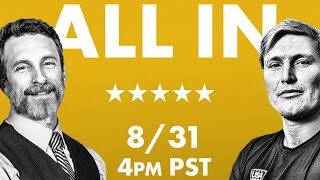
Mike Michalowicz explains how to build companies where employees perform at owner expectations. He introduces the Big Bang, a bold goal that gives intrinsic meaning to every team member, and shares practical tactics like aligning personal goals with company objectives and hiring for intangibles. Leadership capacity plateaus around 7-10 direct reports, so developing leaders, not just skilled workers, is critical.
Chapters
Is showing up real quick.
Well, do you want to stay on while I click Start Webinar and then you can sign off as we can trim it when we. After we have it. Just stay on for a second. Okay, I'm going to click Start webinar. Okay, cool. Here we go. Okay, here we go. This is our 30 second intro. I'm so happy. I got Mike here. If you haven't read Profit First. Oh, we got Danielle. How's it going, Danielle?
We got two of her. If you're seeing the screen the same.
As me, that's almost like Profit first doubling your money, you know?
Right, right. Yeah. Her doppelganger looks just like her.
And that's something I actually wanted to talk to you about today was owners doubling themselves. So we've already done this.
Yeah, right.
We were on track. Does everything look good, Ro? We wanted to make sure we're streaming well.
Everything looks good.
Cool. And, Mike, thank you so much for joining me. We have 30 minutes, and I know that we have a professional audience that values their time, so I kind of want to dive into it. You should introduce yourself. Some people maybe don't know who you are out there. Do you have a quick intro?
Yeah, quick intro. So for anyone who doesn't know me, which I suspect is everybody, my name is Mike Michalowicz. I'm the author of those books that I have strategically positioned behind me for marketing purposes. But what I do is I study small business. So if you do $25 million in revenue or less, that's how the SBA identifies small business. And that's who I serve. And my most popular book is Profit First. I'm also a business owner myself. I own multiple businesses. And what I've been researching on and why we're doing this is what gets people to go all in. Not just us as the owner, but the entire team. And that's where my research is going right now.
Well, that's why I wasn't going to. We did a little pre gaming, but this photo is this guy's no joke. My name's Jesse. I'm a water polo player. I've been doing it five Olympics. You probably don't know me either, but that photo is me executing on what Mike taught me in his book, which I read the book before I met him. That's my first Profit first account. And I'm sorry if you saw the sandals, but, yeah, I'm a water athlete. I just got back from Tokyo, and I'm so lucky to have Mike on here because what he's talking about is something that I've been doing for 20 years of my life. It's how to succeed with teams and. And what Mike's expertise and what I think we need to share. Oh, my gosh. Yeah, we saw the flip flops. You caught me. But the first thing is, is the idea of an all in company where employees, I mean, this is almost metaphorical. We have doppelgangers of Danielle. We made her too. And that's what owners, some seem to want, is to replicate themselves. What is an all in company? What does that mean?
Yeah, so an all in company is where our employees are performing at the level that we expect from ourselves. And so the common refrain I hear is I wish my people would just act like me. I wish I could find more me. I wish I could clone myself. Now, realistically, that's impossible because if you own a business and there's a clone of you out there, guess what she's doing. Or he's doing. They own a business. But there is a way to get all in. And it's simpler than you think. It's not through extraordinary goals. It's not by setting a big, hairy, audacious goal. It's by really leaning into how we as humans behave and the environment we thrive under. And if you simply set that environment, you can more than encourage employees to get all in. You can play into, I don't mean manipulate, but lean into their natural behavior to want to be all in. And when you get there, that's a lean, mean company that will outstrip its competitors that have twice or three times the number of employees that you have.
Okay. I mean, that something you just said, just. I have to tell you that I am a fan. Like I mentioned, I'm a fan of your work. And I was trying to prep for this call, and so I was reading, or I was actually listening to at two times, speed clockwork. And I think what you said about a noble goal, because for me, my whole life has been less financial and more impact and more experience. And I just want to shout that out. How did you.
What.
How did you drive that into that, Bringing that into Collins work? What brought your attention to that?
So there's a popular phraseology that circles in the entrepreneurial world, and I think it was documented by Jim Collins, maybe his Pat Lynchoni, but it was the concept of a bhag. Bhag stands for big hairy, audacious goal. And what the argument was to have a clear vision.
Hungarian guy.
What?
Not to be confused with a big Hungarian Harry Potter.
Right.
This is another 2004 Olympics. So not to be confused with that. My name is Beehive.
I will destroy you. And actually, there's a funny water polo thing, but it's a little bit off color. I have to discuss with you afterwards because it was so funny. But. But nonetheless, we are told to set this. And it makes sense, but it's missing something. In my research, the BHAG is the grand vision for the company. But the problem is this. As an owner, that's compelling because it's serving something that's meaningful to me. My company surpasses $15 million in revenue. That means something to me, for example, but doesn't mean something to my employees. In fact, in my own company, I used to have a forensics business. We did forensic investigations. My company has won the investigative arms in the Enron trial on the defense side. And I remember coming out of the office once we landed Enron as a client, and I said, we're going to go big. We're going to do $10 million in revenue this year to my 30 employees. And you could just hear a cricket and the drum set fall apart because no one cared. And what's going on? My trusted assistant, her name was Patty, she came to me and said, mike, if we do that, you get the new house, the new car. But we. Why should we care? What I learned in that moment is there needs to be intrinsic meaning for everyone. Not the superfluous thing that the boss gets, but we all get. So I came with this concept of the big bang. The big bang is the big, bold, audacious, noble goal. Noble means there's a reason we're walking a path. And if we walk a path collectively to be of great service, that becomes compelling. I think that nobility a key component because we all are seeking meaning in some capacity. And as a business, we can deliver that. And that gets people to go all in.
Okay. I mean, I'm following that. And I think, you know, how you get employees to act like owners, that's of interest, especially as they're growing. I guess our listeners would want to know, like, how do we build up? How do we learn as business owners to get employees to go all in? To act like owners when they don't have equity.
Yeah. So there's a few kind of hacks, if you will. But let me start off with some meaningful structure. The number one way to get people engaged in your business is for you to engage in their goals and commitments for their life. Most businesses, and I've done this for over a decade, would say, here's a goal for the business. This is what we're gonna achieve this quarter. It was what I wanted. But what I started to realize is if I asked Amy and Jeremy and Jenna and our different team members here, what do you want in your life? Then I realized that the business, their job is a conduit to satisfying that. And then if I can align achievement of their personal goals, I want to buy a new house, I want to learn Spanish one more time with my family, Whatever those goals are, if I can align the achievement of those goals in progress or in momentum to the goal that I've set for the company. Now we're marching arm in arm. It becomes very powerful. We, in fact, here at our office, we test out all these concepts. Danielle yourself are giving me feedback and other ideas that we're testing out with this thing we call the tree. And at the beginning of this year, 2021, up went this tree. It's against a wall, so it's like a mural of a tree with no leaves. But every one of us has, outside of our office, poster boards of personal goals we're looking to achieve that the business can help serve, and sometimes the business serves it just by reminding us, you want to exercise more often. We're just going to be here to re ask and how you're progressing. A business doesn't have to actually do the exercise for you. But as we're checking off these personal accomplishments, we're fulfilling the tree. And now there's a sense of we're doing this together and achieving individual goals as a community. And you see this tree flourishing. Everyone wants to contribute to the tree. We want to achieve our own goals. We want to satisfy the company goals as a result. And. And that's getting everyone to be all in.
Okay, I'm following that. I mean, like, you want to have wins. Doesn't matter how big or small you are as an employee, people need to see wins. I see that in my teams. You know, that to get people to buy in to when you encounter a failure to drive above and beyond, you need to see wins. Being on a winning team, everything's good. So if you can show that I can. I can. I can go with that. But why do some employees or some business owners, why do some thrive and some failure? How come we all don't have that? Like, how come that's not obvious?
Cause it's not intrinsic to us. I mean, the first thing is we've never been trained this way. We've been told, build A business recruit, amazing people, tell them what to do and they'll do it. But there's a missing part. It's caring for them. And I'm not saying we don't care, but we don't pay full attention to them. There's another innate element of humanity which is called reciprocity. And reciprocity is what you give to someone you'll receive in kind. So if I saw you in the street, I'm like, hey Jess, what's up? Chances are like hey Mike, what's up? If I said hey Jess, screw you and gave you the bird, you'd probably F you. That's reciprocity. What's given to us return. Many business owners say I want employees I can trust. And until I can trust them, I'm not going to have employees that are going to be successful. Well, the truth is you actually need to win their trust first to form reciprocity. Give them trust and you will get trust. Give your employees loyalty, you'll get loyalty in an all in business by demonstratively caring for your employees, effectively putting your employees first, you'll see that they put the company first in return. It's wired into humanity.
But that's okay. That's something we're hearing from our clients right now. As you know, all in company. It's helping that level of employers. But one thing we're hearing is, and you could probably shed light on it, like systemizing that. These business owners, they're already making several million dollars a year and they have 15 employees. So they've systemized everything. How can they take the time to do a one on one or a daily huddle? Like what do you say to those guys?
So one on one daily huddles. Those are techniques for really building this rapport and integration with employees. There's a real simple math equation you can do. So take, take a five star employee. That's what we deem to be someone that's extraordinary. They ch boxes as you will and then take someone that's middle of road. And Danielle, when we talk offline about this, she compares it to a hotel. There's a, you know the incredible luxury hotels are five stars. And then you have the three stars which is a kind of like. And then you got the one star motel 8 in like you know, next to an alley where a shooting just happened. And what it takes with employees is a five star employee will effectively perform five times the level of a one star employee. But many businesses are just recruiting and hiring based upon ad responses. You meet the Specs, but they're not qualifying them on the intangibles. Cultural fit, intellectual thirst drive, you know, bigger purpose and meaning, alignment. What we're just simply saying is they have the skills or not. Which checks off one of the stars, but doesn't get all the way. And let me also point this out. I'm not saying a one star employee is a one star human. This is not a rating of humanity. I believe in general people are very good and people want to do their best within their capabilities. But what the star ranking is is within regards to the fit for your organization, how many boxes do they check off? I want to get someone that is a five star and they will perform at five times the level of a one star, which means a one star employee. I got to hire five of those people to get one person. When I have a company that's doing a few million dollars in revenue, a, I got 15, 20 employees, whatever that size is. If I'm putting the right people, those five star people in the right roles, they will continue to perform at a higher and higher level. The company can continue to accumulate more sales, can deliver more services, AKA be more profitable, generate more revenue with the same amount of people. As long as it's the best people.
In the best roles and have you, that's okay. There's a lot of numbers. I am a simple guy. I have a bunch of questions.
Now.
The first thing specifically that can benefit me and benefit, I think our target audience is. So to get to that next level, they're going from 15 employees and they need to open another location. They can't replicate themselves. And what are the unseen bottlenecks we've talked about? The employees. Is it just that like identifying it or is there something else that we can do as a group to help that happen? We want small businesses to win. I mean, a lot of my friends here in San Diego are small business owners and they're saying there's a supply shortage. So what you said about the available candidates, what can we do to identify that? If you don't know and you're a business owner, what should I tell my friend? Like, hey, open your eyes, read the book. Or is that what's going on?
Yeah. So what we have to realize is there's only a certain level of direct impact we can have. Research shows that somewhere between seven and 10 people and we start losing our ability to lead. And that's why these companies are in such a precarious position. When I start a business by myself and I bring on some employees I can manage it all, but once I get to that threshold, somewhere between 7 and 10, I start losing my ability to understand all the dynamics that's going on. My leadership can become detrimental. I'll say to one side do this, but the other side, I don't know what they're doing. It's something different, and it starts coalescing and becoming problematic. So this is where you infuse your leadership team, developing leaders. And here's what not to do. Just because someone's good at something doesn't mean they're a good leader. I got a guy that can sell really well. It doesn't mean he's a good sales manager. I got a colleague here. She can service extraordinarily well. Doesn't mean she's a good service manager. For example, leadership is. It's a different skill set, and it doesn't mean it's better. It's just different. So we need to start developing it. Sadly, some businesses too. There's the initial churn, because humanity just kicks in. Jealousy kicks in. I was employee number one. You're now hiring leadership. And I want to be a leader, even though I'm not capable of doing it. So sometimes at this level, there's a precarious position where we see churn, and then companies start becoming resistant to it. The owner's like, I can't go beyond this. I have this loyalty to this employee. But when you have a loyalty to an individual, you're disloyal to a collective, and that becomes dangerous. So we have to navigate it. There are ways to do this that is human centric, but we have to put the right people in the right positions. And leadership is a different position than doing work.
Okay, I gotta ask now, because you opened it up to this, this is a perfect segue. I'm going to start with Kelsey. I met Kelsey. She's a coworker with you. She's amazing. How did you find her?
Okay, so Kelsey was one of the people that could be elevated through as an existing employee. I'm not saying no one can. Some people can. And maybe you're in a circumstance where everyone can elevate up Kelsey. What we did is kind of. It's very atypical, but it's also a technique. I invite people to explore when we run our ads and brought people on. And we don't always do it through ads. We recruit. We have a recruiting pool. We have employees helping recruit where we. We're watching in the wild, we call it. But in this case, we got Kelsey through an ad. And the ad said it spoke to our culture. You know, we said, the first day of employment, if you don't bring a dart gun, we'll provide one to you because a shooting will happen, a dark gun shootout will happen, and, you know, there's different things. And then it said, the pay here sucks. If you're coming because you want the pay, we admit other jobs like Burger King may serve that, but if you're looking to explore and learn a new business position, you will learn more about small business operations, more about leadership in authorship specifically than any other resource. So we're looking for you. And you know, that's called an inoculation. We didn't say, everything's fantastic here. We got the right people to apply. And Kelsey's like, I was looking to change my life. She actually came from social work. She said, I just don't like that, but I like to contribute to society. She's like, this sounded like an opportunity for me to learn. Within three months, it was clear. We didn't hire. I didn't hire a personal assistant. I hired a leader. You could just see people going to Kelsey to ask questions, to get guidance, to connect with her. Within six months, we said, okay, now we're going to normalize her salary. She made the sacrifice upfront. She didn't come for a salary. She came for the experience and for the impact she could have. Then we normalized her salary so she wouldn't have any reason to leave unless something else better presented itself. I never want salary to be consideration. I don't do that up front. I do it once. Once I saw the performance. And then within a year, it was clear, Kelsey, you're leading this organization. There's a social network and there's the traditional hierarchy. She had the social influence not out of gossip and stuff, but just out of caring for people. When we made her president, the company.
That'S her role now she's present.
Yeah. Company. Our company is now collectively like 15 people erupted in excitement. I think. I think people have taken people who have done anything to support me. I really think people take a bullet, though, for Kelsey, including myself. I love working for her.
So the other side gotta ask. No, no, no, no, no. You can't talk about the good. Only we need to know the bad. How do you. My bosses or my. Our CEO? Company CEO. She. She turns it like transitioning to alumni.
Yeah.
Can you share the other side of this coin? How do you. When you move someone on or the. Could you tell us about the last person you had to move on everyone.
Yeah. Yeah. Okay. Yeah. So. So, right, so that's great point. So the challenge, of course, is a business evolves. It doesn't mean everyone evolves with it. So there's certain circumstances where it is in the best interest for someone to leave. And sometimes in a strong culture, they'll choose themselves out. They'll say, I don't fit in here, not their word. And they'll find something else elsewhere. I will tell you this. If you feel someone's not of service to your business and they don't have a role within your company, it is of disservice to keep them employed because you're simply elongating their opportunity to pursue something else. You're chewing up and wasting their time. So we call this alumni status. We've had people that have been of great service to a business for a short period of time or for a long period of time, but are no longer a fit. We tell them we're in a transition. We're going to move you to alumni status and support you in this transition. And listen, it ain't all hunky dory. Not everyone's all lovey lovey about it. It's painful when you love a company and you're being let go. But I know saving one person and retaining them at the compromise of the business is the worst thing I can do. So we move people to alumni status, but there's privileges with this. This means you're always part of the history of the business. We have an annual event that all of our alumni are invited back to to contribute to the business. And we've had that. We. We had one event last year where a person hasn't been employed with us for a long period of time, came back as a contributor just to be at the event, hang out with. With old friends through the business, and gave us some remarkable ideas that we applied to our business for this year.
Okay. No, that. That was a good answer. No, I mean, I wanted to dig a little deeper into it, but. So how did you make a bad hire? I mean, you're an expert in this stuff. How do we make a bad hire that you had, or have you had bad hires?
Listen, we can't avoid bad hires 100%. So there is no perfect system. And if someone promises that, that means you're reading minds and you're reading emotion and feelings and you're reading future circumstances. I could hire someone today and tomorrow. Their life at home has been flipped upside down and they're no longer a fit because of circumstances. So, so we can't fall for that, but we can improve the odds radically. I would argue the biggest opportunity is in the intangibles. Listen, if you're intelligent, if you have drive, you've commitment, the skills I get, that's the only thing I can give to you, is skill. I can show you how to practice, how to improve, but I can't give you the innate. So what we do is all the recruiting around the intangibles, ensure there's alignment within the company and then we'll give them the skills they have them. Ironically, sometimes that works against them because I have to untrain them from skills that are not fit for us and retrain them in our skills.
That's pretty fascinating. One thing I remember, I was on a call with Danielle and she mentioned the virtual bench which you were talking about earlier and how an example was like a checker at the grocery store, exhibited all these characteristics of a five star employee and just in time, maybe he would have the skills to be of value to one of her companies. And I think that's what you're talking about and I appreciate you bringing up personal stuff from your experience. I think that's why your books are so good. Digging in, changing the direction a little bit this morning I was just on a call about Myers Briggs because what you just said about focusing on their skills and focusing on systems, what I'm hearing is systems to evaluate people. And I think that I want to bring in two points. First, Myers Briggs this morning, U.S. olympic Committee has a career development. So I have a career coach and I met with her, I got debriefed. And one thing that we talked about, which I want to get your opinion on was extrovert versus introvert, not changing over time. What do you think? Is that true? Can you debunk that? What's your thoughts?
Yeah, you're leaning toward Carl Jung's research which actually took Freudian, you know, Freud's research and amplified it or, or enhance it, more modernize it. And one of his elements were discussions of extroversion. Introversion. And my understanding, and it's very neophyte was where we derive energy. So the definition of extra virgin is if, if you derive energy by being in a social network, by, by being with other people, by contributing and listening, that's an indication and your battery rises. That's extroversion. Introversion is where we actually recharge in solitude. I actually am an introvert and it doesn't. The miscorrelation that people make is oh Introversion is someone who's shy. Extrovert is someone that's outgoing. Those may be components, but it can actually be reversed. An introvert can be very outgoing, but it's not charging their battery. When you see a great presenter on stage or something like that, a great politician, sometimes that's actually a very introverted person. But they have a dominating presence. And you can see the reverse too. I don't think our innate wiring of where our battery charges can change, but we can build competencies there. So like I know some people who are highly introverted who are extraordinary salesperson, yet everyone thinks most people that compete with these companies say, well, you need to be an extrovert to be a good salesperson. And they're trying to put someone in that frame. So these things like Myers Briggs Predictive Index, there's a lot of these tools out there that will give you insights into where people's strengths are. I was just talking with a guy who came up with a concept called Sparka Type. His name is Jonathan Fields. Really interesting. He identified what gives people growing energy and it was exclusionary of introversion or extroversion. It was the activity, like research based activity, communication activity that, that really identified where people ramp up. And our goal as owners of a business is to align people's innate activities that bring charge to them with a job that needs that. And now you got a winning match.
Okay, that's. I gotta, I gotta plug for a second because that was, is really fascinating to me and I think that that builds into a lot of the topics of performance and team success. But I want to let everyone know if anyone's watching that, you can email Jesseallincompany.com and you can go to our website. And we have a bootcamp coming up September 20th. It's a free boot camp. We're here to help. And you can also email me and I'll connect you with someone from the company that can talk more about this stuff for a free consultation. Jesse, @theallandcompany.com and before we go, Mike, we have five more minutes that we're going to end this call. I wanted to show you, I showed you beforehand. But for me, I love that stuff. It's in my wheelhouse because as an athlete, I Talked to about 232 people this year as I was trying to transition careers. And all of us athletes have the same problem. This ball right here is signed by my teammates from 2001.
Love it.
And this ball is from the Olympics 2016. My teammates that is something for me that I think all your work, especially for entrepreneurs like myself, it's so powerful. So I want to thank you. And they're so easy to read and easy to listen to. I use audible to listen to mine. But I wanted to thank you for your time. Did you have any last minute questions for me? We have four minutes left.
Yeah, well, yeah, I do have a question for you. I want to point out what I love about when you show those balls from, from water polo is you're also showing a frame in people's lives. Those people are not necessarily active Olympians anymore. And some of your high school friends may have gone on to coaching and others went on to entrepreneurship. I think what that points to is we're not all the same. And just because someone is an excellent athlete does not mean that translates to, oh, there will be a perfect leader. I'm just curious, with your team there and as you worked with the Olympians, did you find that people did best when the coach and other teammates were helping them orient toward their strengths or was the goal to overcome weaknesses? What was the better approach or was it kind of cross pollinating?
You know, that's a great question. Before I answer that, I just got a shout out. Thomas Hopkins on here we've got two Navy Seals. I'm not going to show which one. There's four others from the years that are on this, this book but Navy Seals, this guy was my, my mentor for team leadership stuff. Alex's name super awesome. Jamal Mollie. Thomas Hopkins on here just signed up as a co founder to super peer which is he's a CMO for them and I know he's on LinkedIn. So Thomas, if you see this, repost us, baby. Thomas Hopkins, no pressure. Sorry I had to do that. But to answer your question, selecting for character successful teams time and time again. That works because you train up and the skills like you're talking about for the five star employees, character wins 100%. And my job as captain on my last Olympic cycle is the coach's vision. And I'm implementing that vision, keeping it cohesive with my guys. And as a teammate, I have no authority except as persuasion and like authenticity, you know, sharing personal details. And so that's my role even on the all in company. I'm the chief accountability officer. And you and Danielle and all the other profit first professionals are like a shining light that companies are going to follow. And I think your work and even defining the like, I look at it like the glue that's kind of my Role. And, and I don't know if I answered that question, but I tried. Yeah.
Hey, no, I like it how you spoke to something. Actually that was in parallel to what I was asking. And I think it's even more important is that motivation component that you have a designated motivator. One final question for you. I know we gotta wrap things up. I'm just curious. In your role with the all in company and we're doing these workshops and so forth to help businesses, you're doing a role that is unheard of. You're an accountability partner. So what does that mean? How are you going to be helping entrepreneurs as they go through this journey? What are you doing for them?
That's a great question. That's like we're defining it as we go. The first thing that I'm doing is I'm communicating with them. I'm helping them identify stuff that might not be obvious. That's why I asked you those questions. I'm also learning my role. Part of the attraction to being at this company is there's so much potential for growth. My friend Jamal Malak, who I'm going to call out, who's a very successful entrepreneur and also a New York Athletic club member. So I got to shout that out. Since you're in Jersey now, I got you over there. Yeah, getting over there. So we will in September. But he was like, that sounds like a made up role. And I think that, you know, he called me out. He's a Harvard business grad. He's a smart guy. He's like, hey, what's going on with you, man? Jesse, what's up?
And.
And I said, hey, Jamal, he had a, he had a company about dressing. I'm like, I need to get a better suit. No, sorry. So I think that defining that role, I'm going to help customers, our clients connect with experts in, in our company and also like motivating them, getting them to stick to their goals. That's something I do in the Olympics. It's like a great example being we lost a game we played in Italy and one minute and then we'll sign off. Sorry. Are you good for two more minutes?
Yeah. So two more minutes for sure minutes.
Okay, I'll sign this up too. So a quick story is we're in Italy. All of our USA team is sick and water polar. There's 13 guys on a team. Everybody plays. We have like eight people and one's a goalie. So you got one sub. We're in there. Six against six of the Italians. They had all these subs and we hold them to one goal. We're tied at halftime. And how did we do that? Well, what we did is we communicated beforehand. We said, hey, we're going to change our tactics and we said, we don't have as many guys, everyone's sick. So we're going to, we're not going to give up this game. We're going to fight for it. This is our tactics. We followed our coach's plan and we held each other accountable. We use that game all the time because the result was we played the best team in the world. They're world champions. We played the best team in the world to one game. Normally it's like you have long story but 12 goals so each team maybe 12, 11, 10 if you haven't seen water pole game. So it was a really good, good, good game for us. But the takeaway, we communicated the whole time. Short, concise bursts of information. That's what you want in a successful team. That's what I'm going to do as the chief accountability officer for my team with my clients. Jesse@theallincompany.com Reach out. Mike, thank you so much. I hope to see you in September.
Yes, sir.
We'll give Tim Ferriss a run for his money if you're on there. Tim Ferriss, I saw you on the, on our chat. Thanks for watching. Was that you? I don't know. You're the man. Thanks, Mike.
See you, brother. Thanks for doing this.
Bye, everyone. Thank you for joining us. Let's see if I can end this baby. Mike, you can sign off and we are.










