Achieve High-Performance Results through Simple Stress-Reduction Techniques | PODCAST | Eva Vennari
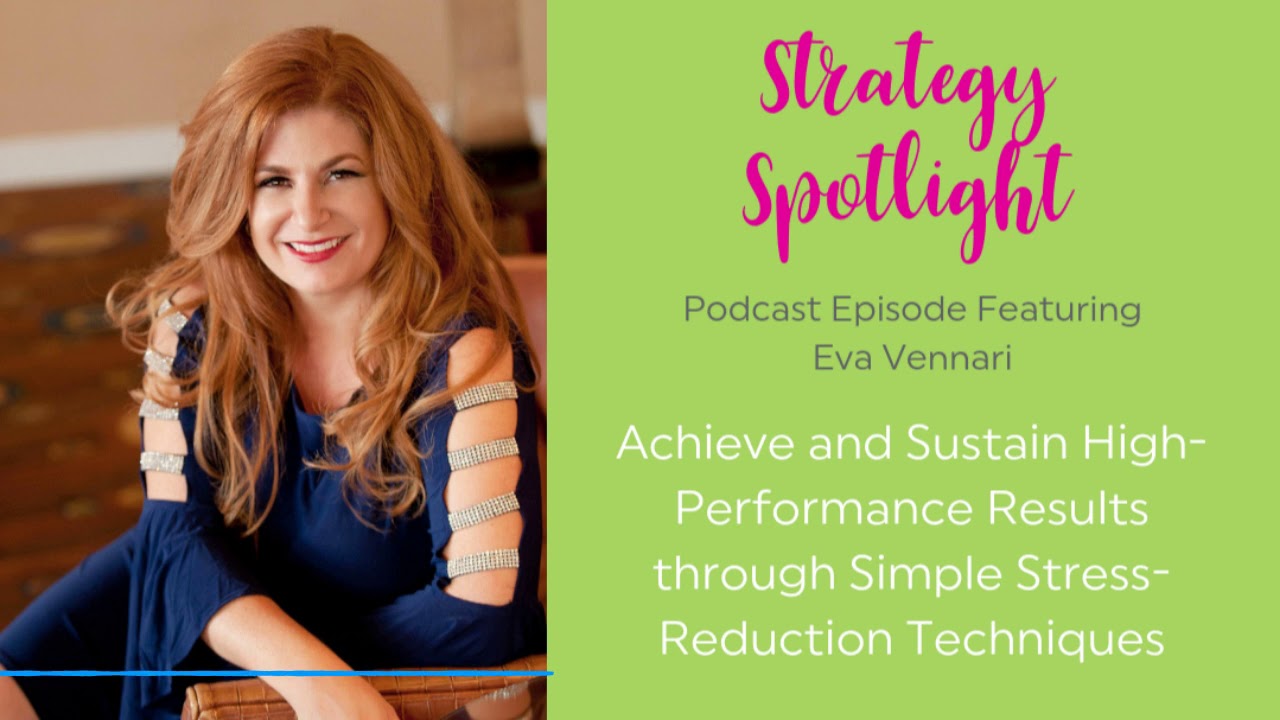
Eva Vennari, founder of The Elevate Institute, explains how chronic stress damages sleep, immunity, and cognition, then shares concrete fixes: consistent sleep, padding your schedule, limiting nighttime screens, and short restorative breaks. She uses hair and nail mineral analysis to uncover hidden imbalances in her Optimal Health Intensive program.
Chapters
Hey there, it's Sarah Clark Williams here, founder of Fab Femmepreneurs and host of the Fab Femmepreneurs podcast show. Welcome to today's episode. We are talking today with Eva Vennari and she is the founder of the Elevate Institute. And we are so excited to talk about our subject today. And, um, our episode focus is a strategy spotlight. So that means we're going to really hone in on a core strategy that you can use to support yourself and your business and get better results. And we all want that no matter what level that we're at, uh, because we are excited about making a bigger difference, making more money and having more fun. So with that, I want to officially welcome Eva to the show.
Thanks, Sarah. So happy to be here. Very exciting. I always love this subject.
Yay. I am, um, this is something that I am personally interested in. I'm always working on, um, this strategy. And, um, and what I want to do though is first have you just introduce yourself and tell us a little bit more about Eva, how you got started. What's the Elevate Institute all about?
Oh gosh, I love that. It's been a, um, a rollercoaster ride and I was an entrepreneur, second, so it's always been a pleasure to be in corporate America and so learning to be successful on an energetic level was a challenge for me, so I kind of, you know, went to the school of hard knocks through all of this and developed all sorts of chronic conditions because I burned myself out.
Oh.
Things that doctors really couldn't couldn't help me with. So anyways, it just turned into a whole series of discoveries about how to heal yourself and support the energetic body so you can be more productive, more, more bringing more of me into the world. And that's what the Elevate Institute is all about. You know, as the founder, I discovered that keep the body clean and able to clean toxic-wise, chemical-wise, you know, all sorts of things that seems to slow us down. And we then go into this state of, I I don't know why this is a problem and I don't know how to fix it became an everyday problem that I've been able to solve for a lot of people so that they can stay in their job. And that's really, stay in their job and stay in their mindset to move forward and bring the best of themselves to the world.
Yeah, absolutely. And there's a lot of things that can get in our way or things that can kind of be that thing that feels like it's preventing us from bringing our full selves or our best selves to the table, so to speak. And so I want to talk about some examples around that so people can start self-identifying, especially if there's something that they're going, maybe I'm not really aware because we go, go, go, go, right? Especially as go-getter women entrepreneurs and business owners, it's easy to kind of keep going and be like, okay, well, I'm tired, but whatever. And before you know it, you're like, wait, how did this get to be such an issue? And if we would have just taken notice sooner and been more mindful to take care of some of those things, I think it would have been much easier. So I can really, I can really relate with that personally and also just seeing that in other people. So I wanna, I wanna talk about the fact that who you primarily work with. So why don't, before we dig in, 'cause I have a specific question, wanna ask around who you work with, but who do you primarily work with? Like, as a— do you call yourself a coach? Do you call yourself— like, what do you— I don't know what you call yourself.
My official title is nutritional counselor, you know.
Okay.
Look at the little piece of paper on the wall, that's what it says.
Okay.
Yeah, it is, it's about coaching, and it's the physicalness of coaching, how to take care of the body, so.
Yeah. So who do you primarily work with? Like, who do you find really benefits the most from what you do and needs you the most? And who do you love working with the most?
Ah, I love working with people who are, I want to say, sensitive in their being. They tend to be professionals who are go-getters, who have, you know, the world on their shoulders because they're so capable. And I resonate with that. You know, people would give me more work to do because I could get it done. And so So at that point, you're kind of taking on more than you typically would and out of expectation of others on you, or at least on me. I found that those people who are the go-getters, the I can't let this person down, that it's the mindset more than anything, is we get ourselves into trouble not learning how to say no.
Yeah.
And then we end up with these, these, well, I should be able to do this. Yeah, it's those people, the pushers, the push myself through it. Yes.
Yes, that's, that's the word that kept coming up as you were explaining them, like pushing ourselves. Just push yourself. Yeah, come on, girl. You know, I mean, we've all said that, and sometimes that's a good thing, like to finish the race, so to speak. But, um, but to be mindful, is it— I think what I'm getting from you already is a really cool power question. You can reword, tell me if you would reword this, but I'm like, There's a power question we can ask ourselves to check in to see, hey, is this something we should keep going forward at or pause and see what's going on and do something about it? The power question might be, might be, should I keep pushing or should I pause?
Well, and most of us do that, keep pushing until we can no longer keep pushing. And one of the key points that I will say in conversation with these individuals is if you find yourself drinking One more cup of coffee every, every so often to get through the day and then go home at night and drink a little bit more and more over time to calm down, you know, you're compensating for something. So it's about looking at and being more aware of the compensating things that you're having to do to get through your day.
Wow. OK, I want to pause. So all of you who are listening and watching, as long as you're not driving, I want you to write that down. So push or pause is one thing that really came to me from what Eva has already shared. And then the other thing that you just said was really, really sticky. And can you repeat that real quick? So yeah, so the— what you said about— oh, I forgot the exact wording.
About push— at some point, these solutions of compensating. Right?
Compensating, yes. So asking yourself, are you compensating for— what would that be? Because I feel like, like I said, I don't think that a lot of people, a lot of us are aware. So what you're saying, I think that's really catchy, is maybe it's a question form. So write this down if you can, if you're not driving. Am I compensating for something? Am I trying to— am I introducing something To make me feel better or keep going because I'm bothered by something or I really don't want to do something or I'm stressed out or whatever. Is that kind of what you're saying?
Yeah, the obligation one is a huge factor, especially during the holidays, either family or with friends, and we're tired or, you know, we feel that sense of I need some me time. And I heard just even yesterday when I was in a networking event and Somebody said, I don't want to go to this family function because I really need the rest. And I said, then don't go. Oh, I can't do that, was the response. I can't do that. That was really stressful just to think about not doing it. And I'm like, I'm beyond that point, beak at rock bottom with my energy. And I know how important it is to take care of me first. So that's a lot.
Yeah. Yeah. Wow. Good stuff. OK. So I know you shared that you work, a little bit ago you shared you work with go-getter women primarily, professionals and business owners, to create lasting shifts to take charge of their health. And as you've said, as I've read, to create a competitive edge. So how is the strategy that we're talking about today, which by the way is stress reduction To sustain or to achieve and sustain lasting high performance. So introducing the core strategy, it's stress reduction to achieve and sustain lasting high performance. So we kind of started talking about that a little bit. So how is, how is this a powerful strategy for entrepreneurs and business owners in their success?
Well, competition is part of our world. And if you are finding yourself in competition with others and feeling like you're having to catch up and do something that maybe you're already tired and you're like, oh my God, I gotta work now 20% more in order to sustain or to get that new contract or to get the next position that I'm looking for.
Yeah.
That burns us out in general. But falling behind on your energy levels and allowing for stress to overcome is detrimental because you're just— you're eventually, it's just going to burn out. You're not going to have that firsthand experience. And I see it all the time. People have to, you know, adjust or they end up with a heart attack or whatever it is that manifests in their world that slows them down. So I'm saying, why not tap into your body's natural healing abilities? Reduce the stress. go into an automatic healing all the time so that your body's always doing that and always supporting you so that you can have a maintained— and I'm not talking about an unrealistic level of energy where you're always on that high, you know, we're not talking about whipping the body into shape. And I think we do, we have this unusual and uncommon expectation of our bodies to hold us there with this like, I'm gonna be on fire, my hair is gonna, you know, and I'm gonna achieve the world, right? We really have to have the compensating integration of our experiences into our lives and allow for things to process. And then, and then you can have that competitive edge.
Yeah.
Clear of mind because you have more productivity because you've taken the break as opposed to pushing through. And I see, I see it all the time in high-level executives.
Yeah. So How can— I feel like this is a— this is tricky. So there's a lot to unpack in what you just said. Let's unpack, because there's a couple things here.
Okay, good.
One, one is, I heard you say that making stress reduction an ongoing strategy that we're conscientious of is going to trigger the automatic healing process. Talk a little bit about why that's important, because I heard you say then that the automatic healing process is what supports sustained health and high performance, that productivity, the focus, the clarity, the energy, blah, blah, blah. Not superhuman strength, but you notice a big difference, right? So talk a little bit about how stress reduction techniques, which we'll get to some of those, how that triggers the automatic healing process.
Well, I mean, think about when you're in a constant state of ongoing stress, what that does To you emotionally. It's like you get to the point where you're at home and you're like, oh, thank God no one's around. I'm just going to collapse on the floor, on the couch. I'm done. You know.
Been there.
I know. Me too. And really what it's about is, is being conscious of in-between moments when you have rest. I should say not when you have it, when you make time for those in-between moments. You're done with something, if you just finished a huge deal, take time to celebrate that. Give it even 5 minutes, you know.
Yes.
Because it's that constant ongoing push, push, push that creates the— now I'm going to get into biology here— the physicalness of stress, which is adrenaline release. Adrenaline releases cortisol. Cortisol is meant to give us that, that push of, I need to get across the street. I need to, you know, it's a stress response. That superhuman strength we've heard of, you know, it's a Burning whatever.
You had to lift up a car.
Right, exactly. But if we keep that in our bodies all the time and not let us calm down and, and reduce that stress, the cortisol actually eats away at the nutrients in our body.
Wow.
Breaks us down. Yeah. Wow.
So I can only imagine then that impacts our immune system, making it easier and more susceptible for us to get sick.
Yes, yeah, that too. Yeah, it breaks down muscle tissue, it breaks down our ability to think clearly. I mean, it breaks down your digestion, and if you don't have proper digestion, if you can't get the minerals out of your food, yeah, utilize it and make more you, how are you ever going to— I mean, love your future self, take care of you now. That's my message.
Yeah, yeah, absolutely. So, okay, so when your body is in its natural healing process because you're taking time regularly To be in tune with managing your stress well, and then also reducing stress when you start feeling it increasing. Um, that then enables you to achieve better performance. So talk a little bit about— maybe give an example. And this is not one of the questions that I'm— that I had written down to ask, but I just feel like I'm really curious. What's an example of how that's maybe helped one of your clients with their results? Because I think it's easy to talk about the concepts, but I'd love to hear an example, if you can think of one, of somebody that maybe was in a state that we— so many of us get in, allow ourselves to get into, and then we end up over time having a lot of, you know, problems because of it, and then it impacts our performance. Well, what about somebody who's You know, dealt with that well and experiencing better results? I would love to hear an example.
Yeah, I mean, I think of one right off the top. Recently, she's another coach here in Los Angeles, found me on Google. She called me up in a panic with— you could hear it, you know, it's like, I've tried everything. I've been to the doctors. I don't want to take medication. I'm noticing that I need more coffee. I'm noticing that I'm jittery. I can't Mm-hmm. The thought between the mind and the heart, it's not connecting. I can't seem to calm down inside. And you can hear like the exasperation was coming through on the phone. She was just like, not in desperation, but desperate for an answer that was in the right direction. So we went through the process of testing her hair, getting her on the right supplements, looking at her food, kind of changing a few lifestyle patterns. Within a month— no, within, within a short while, I want to say within about 3 months, her clients were noticing— she had a large following of her own— and her clients were noticing, gee, you're, you're more present now. You're definitely more calm.
Yeah.
And there was a difference in her demeanor, to communicate much more clearly and from a place of of serenity as opposed to a place of, I don't know what's going on, you know. And from where we communicate, that makes all the difference in how we're received. And I think that has a huge effect on our ability to be productive.
Yeah, yeah, that's, that's huge. And I think a lot of times we don't realize— people don't realize that they're not present, that they're constantly thinking about what's next when they're with people. What are— so get maybe a couple of examples of— you mentioned lifestyle changes. And also some other things. So can you mention a couple of examples of what you guys tweaked or worked on that really helped?
Well, one of them is, and I hear this a lot, somehow we become adults and we think we don't have to get to sleep on time anymore.
Like, eh, 4 hours, 5 hours.
Yeah, I'm good. Yeah, it's grandmother's wisdom and doing things that you learned to do to take care of yourself when you were in kindergarten, you know, take Take a nap if you need it. You can go to bed on time.
Yeah.
So it was, it was that kind of stuff. And then we add the technology of today because we are surrounded by, you know, our lovely devices we love so much. And I say, you know what, take this, do not use it as an alarm clock. Set it at least 10 feet away from you.
Oh.
So that when you're sleeping at night, the waves of this don't interrupt your brainwaves. And that's where you start to have problems is when we use our— Technology to try to take care of us, but we don't need that when we're sleeping anyways.
Okay, so managing our exposure and face time with technology. And so that's one, right? What, what else? What else would be something that we should look at? What's maybe another area that's a typical culprit that is, is, is causing Stress or not is making us— is harming us more than good.
Yeah, I mean, in addition to not getting enough rest, using the computer technology too much, having it next to us, but there's also hydration. Doesn't that seem simple? Drink your water. Yeah, how much water and how often. And sometimes we're dehydrated and that's what gives us the headache or gives us the feeling of hunger. We're not hungry, we're just thirsty. And other— and that can cause problems on many other facets too. But yeah, drinking water with our meals is a huge one.
Don't do it.
Just don't do it.
Okay, wait, don't drink water when we eat?
Yes, don't drink water when you eat. That's a big one.
So drink before, like a half hour before?
Yeah, give yourself a window of time, half hour before, half hour after. Let your food digest. And I was at a corporate wellness training and we were talking about cholesterol and I felt the need to just Bring up hydration. I said, let's talk about this because I think it's really important. And a week later, I heard from one of the attendees and she says, you solved my chronic stomachache problems. I stopped drinking water with my meals and it was distracting me at work. I couldn't, I thought I was gonna have to go to the doctor and I didn't know what was going on. It was really worrying me. Now that problem is gone and over. Little things.
Wow, yeah, yeah. Wow, you never know what that could be. And that's why it's so important To be in tune with what's going on and why we're feeling certain things and not just keep pushing, pushing, pushing while ignoring our body. And as far as we know, we only have one.
Yeah.
And we want to treat it well. And I think sometimes we try to get more from it than it's able to give us. And so I think checking in, because then we can start to be aware of these things and then find out By talking with somebody like you, hey, what's really going on here? And it could be something as simple as switching up some habits that might be causing pain or causing challenges on some level or headaches or whatever.
Yeah, that's absolutely true. I remember being in the thick of my corporate America job and I was starting to come down with headaches. Every day, same symptoms as a migraine, but I was informed by doctors that there's no such thing as a daily migraine. All right, well, I feel like this for what reason then? And they couldn't give me an answer. And it was because it was a— it's an accumulative effect of not taking care of myself. It's not ever just one thing, ever. And that's why one pill or one solution is never enough. It's got to be the whole picture.
Right. Everything.
Yeah.
Right. I can see very much, and I'm sure those of you who are watching or listening, you know, you probably can relate, like, like when you go for a while not getting good sleep. Maybe, you know, you've had some bad habits with diet and all at the same time you're working longer hours and maybe you have higher stress conditions with your, with your work or the type of projects that you're working on. And you can only sustain that for so long. I think That every once in a while, the reality is there's going to be days where we do have— we do push ourselves and it's going to be higher output, maybe a little bit more natural stress related to it than usual. And I think that's normal. But like, I think the problem comes— and you tell me if you agree with this— the problem comes when you keep going with that and you don't pause, you don't give yourself A break and you expect yourself to sustain that on a regular basis rather than periodically.
Yeah, absolutely. It's all about the off time. You know, I was speaking with police officers just recently about how do I keep a handle on my stress when I'm constantly at the call— beck and call of the emergency alert.
Yeah.
You know that at some point you're going to check out. You know you're going to be done for the day. Make sure that you've built in some stress reduction time. I wouldn't imagine a police officer would only need 5 minutes, but—
When they get really, really good at resetting themselves, maybe after practice, but maybe, yeah.
Yeah, yeah, you know, their common complaints are, you know, I don't have time to eat, I can't eat regularly, I don't have time to use the restroom when my body tells me I need to, I don't have, you know, these are things that I know in corporate America we do the same thing. We're sitting in a In a meeting and, or even as an entrepreneur, oh, I've got to make my, my phone call is coming up next and this one ran a little bit long. And so now I can't use the break time in between that next one. Don't be afraid to start asking for that time in between appointments because I started doing that and I started to block out time and a cushion in between. That's a good strategy.
So yes.
Cushion time in between things. So that if something goes long, you're okay and you can, you can use the bathroom and get it.
Yes, absolutely. So absolutely. So definitely start— if you're not, if you're not— if those people who are with us, they're not doing this already, if you're not doing this already, definitely start padding your schedule. So even if it's 15 minutes in between meetings, give yourself a break. To just recollect, transition, get some water, go to the bathroom, grab a snack. And the reality is, I will tell you this, you can't eat lunch in a 15-minute break. You really— because the time it takes to come out of the— off the computer or out of the meeting, actually get to wherever, the other room or down the hall or drive to the next place or whatever.
Mm-hmm.
I mean, that's already 10 minutes, probably. And then you have to get kinda back a few minutes before the next meeting starts. So you really need a solid half hour to eat lunch. And that's not if you have to make it. You know, if you have to make it, it's like an hour probably.
Yeah.
So that's where I have found personally, as a business owner with big goals and a big vision, that I need to do some meal planning on the weekend. So every Sunday I do a little bit of meal planning. I don't have to be neurotic about it where I know every single thing I'm gonna eat The whole week, but what I have found that really supports healthy eating as well as not spending too much time, the reality is I don't have an hour for lunch every day. I don't wanna take an hour for lunch every day. That's just me. A half hour is, I love a half hour. A half hour does what I need most days, but then some days when I have a heavy day, like where I'm really meeting with a lot of clients, And so let's say I have 2 2-hour coaching sessions that day, and then I need to really do some thinking time or follow-up. That sort of day, I need a full hour lunch to manage my energy, reduce stress, you know, recharge, right? So I think it really depends on what the day is gonna be like. So that's kind of a strategy that, or a decision-making factor for me is what's my day gonna look like and how much energy output am I giving? Um, but you know, that meal planning on Sunday and having like a couple— I usually have minimum 2 meals already prepared and cooked. So all I have to do is when I'm working from home in my home office, go to the fridge, get out that portion that I've set aside, heat it up in the microwave. Now I know that's not the perfect way to do it, but it's good. It's better than eating fast food. And it's better than not eating. Right. So it's not about perfection, right? Would you agree with that?
I would agree with that. Yeah, it's about the cumulative effect of everything that you're doing and doing mostly well is good.
That— oh, okay, girl.
It's all about winning, right? We want to feel like we're being productive. And there's, there's always that ideal that we have in our mind about what we think things should be. And then there's the where we are, and that could be way over here and it could be closer. And yeah, it's the everyday little actions that matter that bring us closer to the ideal. You don't have to be ideal. That's too hard.
I love that. I think that's such— that's music to people's ears. That's music to all of our ears, including mine. And something that's actually shifted my perspective with that this year is reading the book The 12-Week Year. And I've always been a planner since I was 16 years old. I've always mapped out my next year. And it was just something that I was driven to do. And one of the things that I found that shifted when I read that book this year, The 12 Week Year by Brian Moran, was to not focus on— so to plan out what is the goal each week, like I've been doing that for a while, but he really has a solid focus on, because it's a 12 week year, you're not focusing on the whole year, you're focusing on the next 12 weeks. And then so every week you're focusing on certain activities towards that 12-week year goal. And so his solid focus is on that, is with tracking. So tracking, okay, so if you want to do this every week, track what you accomplished. And success isn't just 100% of doing what you said you're going to do. And I think This is huge for we go-getter women entrepreneurs, business owners. We think success is, did I do it? Yes or no?
Yes.
And I don't think so. What you just said resonated so strong because it's not about, did I do it, what I said I was going to do 100%? Like, that's great. So if you say, okay, I am going to spend an hour a day on marketing for my business, including follow-up and you know, reaching out via social media. So let's just say, 'cause that's something that a lot of people are doing on a regular basis. Guess what? If there were 4 out of 5 days that you did that, that's exciting! Because you decided that's important and you're tracking that. 4 out of 5, even 3 out of 5 is better than if you were doing none before.
Right.
Right? So with, when it comes to that mindset, I think that's huge in applying that to anything in our business. But also with regards to our health.
Yeah, stress levels, like that cortisol I was talking about, as we push ourselves. And that's that little conversation inside our heads where we think, oh, I'm judging myself. I'm feeling bad about myself. I should have done that. These are all creating what I call cavitations in the body. You know, it's that going back to the mind, and heart connection. If you feel bad about something you're doing, well, let's look at that, because you may— maybe you shouldn't be doing that. Maybe somebody else should be doing that for you. Or maybe if it's not exciting and you don't want to do it and you keep putting it off, there's probably a reason for it. So look at that and then find the solution that works and that you'll feel better. And then we get rid of that cortisol release and we bring back coherence. And that's when we can hear. When we have coherence about something, Mmm. we can hear the intuition that brings us And that's really about being productive right there.
So, um, I love that. I love that. So good. I want to, I want to ask you, I want to ask you this, something, something else that I think really can influence our ability to reduce our stress and, you know, really can hold us back. And that is misconceptions that, misconceptions that we as women have that prevent us from Really fully realizing our results and the best life possible. So what are some of those? I think we kind of touched on a few already. And I think like the whole perfectionistic, you know, idea of it has to be all or nothing. Like we either do it, you know, it has to be perfect. What are, what are some— let's highlight a few. Let's highlight a few, just bring it home.
Well, it's that we can and should and have to do it all. And that's so hard. You know, I was a single mom raising 2 kids, and I was raised by a mother who was a stay-at-home mom. So I was used to the whole idea of, I got to make their lunches, I've got to get them to school on time, I have to help them with their homework, I have to do that, you know, all these things. And, and do a full-time job and bring home the bacon and all of that. And I remember telling my younger daughter Morgan, I said, I'm sorry, Morgan, I just, I can't make your lunch. You're gonna have to do it yourself. She might have been 8 or 9 years old and she looked at me, she goes, Mom, that's okay. We don't know any different. I'll make my own. We have support around us and don't even realize it. So that's part of it is ask for help and don't be afraid who you're asking for help from. That's a big one. We judge ourselves for that. We think, well, if we can't do something at home or at work, then we're showing ourselves as sign of weakness. And I'm thinking, no, why not step into it? The misconception is we should, we should be doing everything regardless of we find joy in it or not.
Yeah.
I say stand on your strengths, you know, find what you enjoy doing and then preach to people, I want to do that. I want to do that and I want to do that, as opposed to I'll do it all. And that's, that's a big misconception that we have to somehow do everything.
Yeah, exactly. What else? I think that's a huge one. I feel like there could be something else that maybe some of us are not aware of.
Not aware of in terms of—
Just, yeah, some like misconceptions just like that, like the whole, I have to do it all, it has to be perfect.
I've seen people even take their health strategies to that degree. I've had individuals who put off working with me because they thought they could get it done first and prove to me how good they were. A misconception oftentimes is that we don't need help.
Yeah.
Yeah, I think that's overlooked quite a bit, quite often.
Yeah, yeah. So I think that something that You know, we've talked about already was an example of one of your clients that you've worked with. What— since we've talked about that, maybe what do you feel— why don't you share a little bit more about how you work with your clients? And yeah, let's hear from you a little bit more. I want to— I want people to get a little bit more of a clear idea of how you work with your clients and how you support them. Because this is, we're talking about real issues, we're talking about real challenges, we're talking about some, you know, stress reduction, stress reduction as a strategy, but also, you know, how, that sounds great, but how would people, you know, how would people even begin to go to start reducing their stress? And maybe talk a little bit also about How you work with people to do that.
And that's a big reason why I created the Optimal Health Intensive was because people didn't know where to start and they needed that more, the more hand-holding of coaching. We all have an ability to make a list of what to do.
Yeah.
And then at some point, it becomes overwhelming and we go exactly what you just said, I don't know where to start. And just like the person in the driver's seat of the car doesn't always see the blind spot that the passenger can, I am sometimes the passenger, or all the time with my clients, and I'm able to see things that they are either ignoring— you're gonna back into that car if you don't pay attention, you know—
Mm-hmm.
Or, you know, ignoring because they're stressed and they think they have to do it and they don't realize that there is a There's another way. And it's that coaching through what is the next step. And I can make that very, very clear when I work with them. And I work with everybody on a one-on-one. I don't have group because I think that gets in the way of the person's personal journey.
Mm-hmm.
So it starts with them. I wanna find out where they are. And it's not just the food. It's not just the supplements. It's the looking at their lifestyles, looking at their belief systems. It's looking at things that— They've had to live with for a long time because they thought there was no other way. My job is to open up a sense of possibility and start getting them to ask the questions, what can be possible when I make these changes, as opposed to I can't do that because, you know, you have that caveat thinking I can't do that because this person's depending on me, I can't do that because— and I'm like, all right, timeout.
Yes.
In working with a person, I can be a little confrontational to them for their own good and that's what it's like, it's about riding that uncomfortable edge of I'm willing to make a little bit of a change and now when you're used to that change, we're gonna make another one and until we get to the point where you feel you can support yourself in making the decisions.
Yeah.
So that's what it's like in working with me, it's like I'll hear the message of what's going on with them and then we'll figure out, is it— it needs to be something that is in the mind? Is it something that's going on internally? Is it a mineral issue? You know, what is going on? And I cover all those facets when I work with someone.
Awesome. I think that's so important to just not come at it from the external perspective but to really run the tests. I know you mentioned to me that you do a hair analysis, nail analysis, and that's part of how you work with people because you want to make sure that you're really understanding what's going on in somebody's body and their makeup in order to determine some things. What would it be that you could determine from those analyses?
Well, there's an interesting conversation around that I've had just recently with individuals who have told me, look, Eva, I feel the sense of depression, but I don't have any circumstantial evidence to support it. And immediately I'm going to, well, I know that when copper starts to come out of the body, that can feel depressing, that can give— so there's that mind-body connection with what we think can create a situation chemically inside of our bodies. And it also stands true in the reverse. And if you think about it, that kind of makes sense. So when you have an imbalance of some kind in the body where the minerals and relationship between those minerals are creating a circumstance of chemistry, they can influence what you're thinking and how you're feeling. Yeah.
Absolutely. Wow. And so that's such a key piece. That's such a key piece. Okay. So I want to, I want to bring this to— well, let's, let's talk about before I, before we give them kind of 1 or 2 action steps that they can take, why don't you share with our audience what, where they can go to connect with you, learn more about you, and really understand, maybe learn a little bit more about that, some of the things that we're talking about today in depth?
Sure. I have a Facebook group. If you're on Facebook, it's called True Holistic Healing Club, and in there I'll do interviews with other health practitioners who have collaborative effects on the health and mind and body that I work with, and introducing those modalities to those members in the group and, and that kind of thing. The other is on my website, so it's at theelevateinstitute.com, and there's a free health assessment right on the homepage. Just scroll down, you'll see, take the free health assessment, and you can find out, get a general idea based on answering those questions if you may have an imbalance that's creating, you know, a dis-ease in your body and it's keeping you back from being able to achieve. And that's, I think, a good place to start. So it's theelevateinstitute.com.
Awesome. Okay, so Go check her out, get connected with her, take that assessment. I think that's a great place to start. You know, as a coach as well, I'm a big believer in understanding where you are and before moving into some next steps and really understanding what are your challenges, what are your strengths, you know, what's the reality right now? Because that's what's also gonna help you to know what your, not only your next steps are, but also to be able to, look back and see where you started to assess your progress, to see the big difference. So I love that. So take that assessment, guys. And I would say, you know, let's give, let's give our listeners, other than taking action by taking your assessment, for people who are feeling like, hey, I really feel like I've been trying to push myself too much, And I don't want to compromise on my goals, but I want to take better care of myself. Um, I want to reduce my stress. I want to understand, you know, are there some underlying issues that are causing me problems that I'm not aware of? Um, how can I start, you know, how can I start reducing, managing my stress today and start there with one or two things?
Yeah, it's— there's something I call body hacks, and there's 2 of them. One comes from another— it's Dr. Bruce Lipton. He talks about crisscrossing. So he takes— if you're not driving, this is easier. So you crisscross your arms, you know, people call this the closed stance.
Uh-huh.
And then crisscross your legs. You don't have to be in crisscross like Andean style, but just Cross your legs and then just breathe.
So cross like this?
Yeah, just you're crossing like—
Okay.
Yeah, that's that closed position where people often will say body language means I'm angry, and it's not. This is an introspective position. And when Dr. Bruce Lipton talks about this, he says that it has to do with the mind. One side, the opposite side, controls your, your, your, your body. And as they cross the hemisphere and they cross over, it forces communication between your left and right hemisphere and calms the body down. So in doing this, in breathing, you're actually reducing your stress. You're allowing for less of the external input to come at you, and you're kind of regrounding. And then kids do this a lot, right? So they do this and they— I'm not going to do that. They close down. This is a great way to just hit the reset button. The other one, also not good for driving, sorry.
But I'll show it.
There is a connection between Each finger and your emotions, and you can simply take a few minutes and reground by hugging. You don't want to squeeze to the point where you see purple at the end of your finger, but you take 4 seconds and you just kind of hug. And then move to the next finger. And depending on what's going on in the body, I breathe, that you may feel a sensation of energy concentrating towards the center, and this brings you to a new place of awareness. So if you've just had a difficult conversation and you find yourself shaking, or, you know, you just want— you notice, oh, I'm a little bit off balance, I'm not sure why, you can just do this. And you start with the left hand or either hand and then move to the other one. Make sure you do the complete. You feel the difference?
I feel the difference. I felt the difference most with the first one.
Okay.
Yeah, like hugely with the first one. Yeah, I don't, I don't know. I think I'm less aware of this one. I'm less aware of this one, but I'm going to incorporate now both of them.
Yeah, to breathe. Simple breathing through it all. So oftentimes we do hold our breath, especially when we're stressed, and that just perpetuates the stress feeling in the body. It actually sends a signal to our brain, I'm stressed out, I shouldn't breathe heavy. So in breathing deeply, it calms the body. I think we all know that one, but we forget it, especially when we're in a state of stress.
Absolutely. So I love that. So 2 physical, simple physical things that we can start doing today to be more calm, to reduce our stress, to be more present, and therefore to not be in a state of stress and anxiety and pushing ourselves, and to give ourselves a chance to pause and transition in between meetings or tasks or projects. And I love— it comes back to what you said a little earlier is something— the phrase that you used was great. It was something about the cumulative effect.
Yeah.
Say that again.
Yeah, yeah. It's the cumulative effect of everything we do that helps bring us to our best ideal at the moment.
So wonderful.
Whatever that is. And it's gone conversely. So for however long you haven't been as kind to yourself or even aware of the non-supportive nature of what you've been doing day to day.
Yeah.
It can— it can have— that has a cumulative effect in a negative. And so the more often you can impose or introduce a stress reduction strategy on a daily basis, the more— the better you'll move the marker on being More stress-free.
I love that. And then that reinforces the idea that you don't have to be perfect. We don't have to do, you know, 5 workout, 1-hour workouts a week and go to, you know, and meditate or pray for an hour every day. Like, seriously.
Right. And in fact, if you've been doing that every day, if you've been meditating every day for an hour or 2 hours, take up something else for a little bit. Circulate that energy, get something else going.
Yeah. Yeah, so, so change it up. But it doesn't have to be like, you know, everything up here. Because I think, like you mentioned earlier, we can get perfectionistic even with good habits.
Yes.
And then that can cause stress. Oh my gosh. Okay, so we're talking about all this stress reduction, stress management, self-care. What is your favorite way to tap into wellness and recharge?
I absolutely love to go— have you ever heard of a sensory deprivation tank? Are you familiar with that?
I have. That sounds scary.
No, I love it. The first time, it's a whole lot of I don't know-ness about it. You're like, oh my God, what is that all about?
Yeah.
But then when you try it, ah, well, let me, let me describe it. So you're in a flotation tank and it's Filled with saline. It's, um, what's that called? The Epsom salt.
Okay.
And enough that when you lie down, you float. Okay, and so the tank itself is room temperature, the air is— I'm sorry, body temperature. The water is body temperature. You're closed off completely to sound. So you're in a capsule, right? Or a room that's closed off. And then there's darkness. So some people that may Create a little bit of anxiety at first, but if you can get used to being with yourself and hearing, hearing that, like, getting back to the nothingness, and that allows for new possibilities. And I have gone into this, like, I call it my think tank. I've gone into my think tank several times with a problem and come out with a solution within an hour and felt completely rejuvenated. So that's what I use that when I need to Deep reset.
Wow, that's a very specific thing that you do. So I've heard of those, and it's not something that I hear about a lot. I was curious to know what that was like. So after you get used to it initially, then it becomes, it becomes really helpful at resetting and getting clarity.
Yeah, so it is, it is something, a practice used to clear the mind in a similar way that A meditation, oftentimes we're told to get to the place of nothingness.
Yeah.
I'm not one of those people where I can get to nothingness.
You're not the only one. You're not the only one.
No. And I discovered to love myself and decide that that was okay.
Okay. Yeah.
And to use it to my advantage, because if I'm overthinking something, it means I haven't gone— I haven't worked it all the way through to the solution yet. So whatever that information is, I allow for it to be fuel to get me to the answer.
Yeah.
And then I can get to nothingness.
Yeah. I love this state. So what I found is, I love the states, for me, of floating, except I've never done that, the tank. But I can create states of where I'm kind of floating and not thinking too much, like, I'm still, and I'm not even, I'm not a meditator. Like, I'm not a traditional meditator, like, where I, you know, I just, I'm not, it just doesn't work for me. I don't, it doesn't resonate. You know, I'm a spiritual, faith-based person. And so I totally love that idea. And I, you know, I pray and I meditate, but I don't get to what you're, the place you were talking about too. So you're not alone.
Yeah.
And instead, I found a different technique works for me with regards to— and that's a whole nother episode— but I'm getting to the place where I'm just kind of mulling over things and just, I get to the place where I lose track of time and I'm just, you know, feeling thoughts and things are just floating around and there's no, there's no attempt to control. Anything. And that space is when brilliance happens.
Yes.
When I feel like creative energy coming to me and I get the best, the best energy, just, I get energized, I get creativity, and I get ideas.
Yeah. And this is the exact space where the body decides to switch from being in the place of stress To being in the space of rejuvenation.
Yeah.
The only time that most people do rejuvenate is during their sleep, if they get a sound sleep. And you are able to, and we should be getting back to that a few times during the day to allow the body to rejuvenate and overcome what it just went through throughout the day. There's nothing wrong with that. I was raised in the belief that if idle hands are the devil's work or something like that.
So like keep moving, don't stop?
Yeah. Yeah, and I used to be made to feel guilty about resting. And now I'm in this place of no, rest is very, very important because that's when the body decides to go through and rejuvenate. I think that's vital and important.
Yeah.
And there's that whole conversation inside that you were just talking about, you know, getting to that place where the thoughts are floating around. I do a practice that's similar, is I take myself and I disconnect like tape From, from my thoughts, and they become a ticker tape, like on a New York Broadway show line, you know? And then they come over there, they're over there. So I know that they're still there. I'm not to the place of nothingness, but at least I'm not always monitoring what it is on that ticker tape, and I can, I can just be. And I think that is the place where we can find brilliance. It's also the place where we find healing. So—
Oh, I love that! Oh my gosh, I'm so So excited because we, you know, so many of us have experienced the opposite of these things. And so when you can start creating these experiences for yourself, even if it's small, even if it's a couple times a week, or even mini, mini recharge sessions a couple times a day, as you just mentioned, that can be so transformative at your experience, at your mindset. With supporting you to feel better and have an accumulative effect in a positive way.
Yeah.
So, so what I really am taking away from today, there's a lot of great stuff, a lot of golden nuggets here around the strategy of using stress reduction very intentionally to get better results personally and in our business. So there's a ton of stuff that we've talked about. So I know everybody has probably been taking notes and taking things from this. If they weren't driving. If you're driving, I'm just, you know, right now just pick something that you want to hang on to, that you want to, you know, take away that really resonated with you, because I'm all about taking action. So I feel like something that really hit home for me today is picking one or two things and doing it every day, even if it's small, and be grateful for that and feel good about it. And allow yourself to do that so that it begins to have that cumulative effect.
Yeah.
Because then it's not feeling like, oh, I'll do this here, I'll do this there, and then it's another to-do. And it becomes a feeling of, I'm not being successful at my health and wellness and fitness goals. Like, that's just BS. We need to just throw that mindset away. You know, we're not saying that goals are not important in tracking your progress. progress towards your goals is important, right? We're saying when it comes to starting new habits and stress reduction techniques, start even just with small steps because it's not about being perfect, right?
It's not about being perfect and it's not about instant gratification either.
Yes.
A cumulative effect means that you're going to have periods of time, if I were to put it on a timeline, And say, most of the time right now I feel this way, that's not so— I'm not happy about. And then you do something like this and you have a moment of time when you feel really great. Then the next time you have a moment where you feel not so great, that's shorter. And then the moment of time when you feel better is a little longer. And you're going to be on this little bit of roller coaster until it gets more, more of I feel great and fewer moments of, all right, I don't feel so good. And you use that as communication tool from your body to do something different. That's when it's time to take a break and make sure that you take care of yourself.
Love it. Oh my gosh, such good stuff. I loved our conversation today and thank you so much for taking the time, Eva, to share with the Fab Fempreneurs community on the Fab Fempreneurs Podcast Show.
My pleasure. It's been a great deal of fun here to talk about all this. I love, I love these conversations. Like I said, this is so much fun.
I love it too. I can tell. I love that about you. And I'm of course looking forward to more conversations I'm sure that you and I are going to have. And so, so everybody, if you are watching, listening, I want you to go to either iTunes or SoundCloud or Stitcher, wherever you like to listen to the Fab Feminist podcast show, and make sure that you add us to your favorites or follow, subscribe, whatever it is. And that way you can stay tuned and be part of the conversation for For all of our episodes, we release our episodes on Tuesdays, typically first and third Tuesdays. So stay tuned for that. And I'm so excited to continue to have amazing people like Eva on the show. And again, if you would like to take her assessment, go to theelevateinstitute.com and get started there. And I feel like I'm just so excited to do this myself. I haven't done it yet. As a way to just really start taking charge of how I'm feeling on a greater level. So thank you so much for being with us. And I can't wait to, to talk to you next. And everybody, we'll see you on the next episode. Bye.









