Kounthea Richards | When Doctors Say, "We Don't Know" Podcast | Episode 304
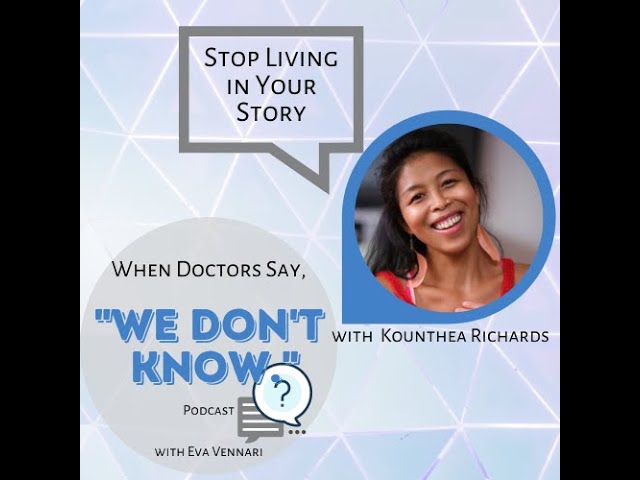
Kounthea Richards recovered from severe lupus through dietary changes, mind-body work with Dr. Joe Dispenza's teachings, and her husband's support. She credits about 50% symptom relief to eliminating gluten, sugar, and dairy, plus addressing emotional beliefs she thinks amplified her illness. Now she coaches others as a comeback coach using NLP and subconscious belief work.
Chapters
Welcome to the show. My name is Eva Vennari, founder of the Elevate Institute, and I'll be your host for today's podcast, When Doctors Say We Don't Know. This is an inclusive conversation, and so many are craving to share their stories and experiences. Today's guest is no exception. Today's honored guest is Kuntir Richards. She's going to share how she beat lupus and is thriving in motherhood. Her story of self-discovery with the result of emotional healing, mindset, lifestyle also included diet changes. Kuntir, welcome to the show.
Hi, Eva. How are you? Thank you for having me on the show.
Absolutely. I mean, who would pass up the opportunity to hear how you beat lupus?
Yeah, yeah. So it's been a long journey for me. So just to kind of give you a quick overview, background information for those who Are not sure what lupus is. Lupus is an autoimmune condition. In my case, it was systemic. So it, it pretty much attacked almost every organ in my body, you know, my, my kidneys, my heart, my brain, my blood, my skin, my bones. So pretty much I was like extremely sick. And if you— if I can give you a quick analogy, it's almost like like your computer catching a virus, right? Where it just completely shut down. So similar in my situation back in 2013, I completely just shut down everything. I couldn't walk, I couldn't think, I couldn't really eat. My body was just rejecting everything. So I was in a very extremely depressing and sick state.
So how long did it take to go from feeling, dare I say, normal into this traumatic state where you're unable to function?
Yeah. So when I was diagnosed back in 2013, so from 2013, it was like a series of roller coaster rides where I was in and out of the hospital. 2013 all the way up to 2016, I was like really sick on and off with relapses.
Jeez.
Yeah, it was very painful because at that time in 2013, I was also pregnant. And it was during my second trimester that they diagnosed me as having lupus. And motherhood for me was a different story of— it was far from excitement because I was extremely sick. So in 2016, That's when I really hit rock bottom. I went through chemo. The doctor mentioned that I would need kidney dialysis. And my left hip, I would need a hip replacement.
A hip replacement? Isn't this something normally reserved for the aged?
Yeah. And for me, what happened was because of the so many— I think from 2013 to 2016, I was on and off on prednisone, which is a type of steroids. And it's used for many autoimmune patients, actually for lupus patients that I know of. I don't know about other autoimmune patients. But I was constantly up and down on a very high dose that what it did to my bone, it pretty much, I guess, what's that word?
Deteriorated? Yes.
Yes. My left hip. So I couldn't even walk either. I couldn't even walk up the steps without holding on to a railing. So that was in like 2016 when things were really, really bad. And then I pretty much took a leave of absence from work, took about almost 2 years off. And then in 2017 into 2018, that, that was when I started getting better. I started doing a lot of I started, you know, the first thing I did was I changed my diet. You know, I removed gluten, sugar, dairy, and I pretty much ate a very sort of clean diet. A lot of it was plant-based and a lot of smoothies.
Now, what gave you the insight to do that? Were you given advice or was this intuition you were following? Where did that come from?
Oh, yeah. So it was my husband. He was pretty much, yeah, he was pretty much playing doctor, researcher, caretaker and everything. You know, I, I feel really blessed to have him because he stuck by me and just took charge of sort of like putting my life in his hand because he knew that if I were to continue down— nothing against conventional treatment, but, you know, in my experience or in our experience, you know, you're, you're not going to get better. You're just going to be functional. but you're not going to feel well. So we did the research, he did the research and he just took it upon himself to say, hey, listen, let's start cleaning up your diet. Let's start eating better. And that really helped a lot. And I can say when I started changing my diet, I had maybe up to 50%. This is really great news. 50% of symptom relief coming from—
That's a big deal.
Yes. Yes. It was like, wow, I felt like it was like night and day, you know?
So yeah, getting rid of the gluten, getting rid of the— you said a few other things.
Sugar and dairy. Yeah, that really completely changed everything. And while that helped to a certain extent, there was like this other component that was kind of missing for me in my experience where I was still feeling depressed. I was still feeling just very triggered. You know, there was a lot of, I guess, emotional suppression that was going on. Like, I was still very anxious, depressed, sad, and my mood would change very sporadically, you know. And I, you know, I didn't think much of it. I just thought that, oh, you know, this is common for lupus patients, you know. So I started doing some more research, and I went down this rabbit hole and discovered discovered this whole new body of knowledge, you know, the mind-body connection. I'm sure you've heard of it.
I have. But so, so for you, there's so many different aspects of it. What was it that attracted you? What rang a bell and said, oh, this makes sense to me?
Yeah. So I started Dr. Joe Dispenza. I don't know if you've heard of him.
I love Joe Dispenza.
Yes, he was, he was actually, he was pretty much the sort of the pillar to my healing journey. Because of his work, that was what took me down this rabbit hole. I read his books. I started doing my own research. I started understanding that you know we we have we have we we do have the power to change any outcome in our lives, right? And it's really about how you react to or how you respond to your circumstances. You know, and I started just incorporating some of his practices into my own life, and I. experience like a mindset shift. You know, I started doing the inner work as well. You know, I started to figure out, you know, what are— why am I so easily triggered? You know, it's not because— not just the medication that's maybe having some sort of impact on it, but I realized that I had a lot of emotional baggage that I was carrying that somehow sort of triggered this diagnosis as well. So that for me was like a game changer when I found this statistic where a study was done where, you know, I think about 80 to 90% of chronic illnesses are due to just emotional repression of emotional wounds, right? And that to me really made me think twice about What did I do? What have I gone through, you know, to have this trigger, right?
So— Yeah. I mean, this is a very common theme that I hear over and over again. I was thinking something in life. I made a decision to do something and I didn't go through with it yet because I had other obligations or I had a limiting belief. So for you, like, what were those beliefs? What were those thoughts that were—
Oh my gosh.
Yeah.
You know, a lot.
It's a lot.
Honestly, for the first— so I was diagnosed in 2013. So for the first couple of years, I was struggling so much with not believing that this was possible. And I think a lot of it comes from because I was in my symptoms, right? I was experiencing it.
Yes.
So I was completely in my story where I played this victim mentality. And because I continued to replay the same story in my head for the last 2, 3 years, it became sort of my identity, right? So when people would— when I would get comments from other people, like my husband, for example, he would say, why do you, you know, why do you allow the doctor's opinion to really get to you? You know, a classic example, before the doctor's appointment, I would feel great and I feel like I'm healthy, right? And then as soon as I walk into the doctor's appointment and I get some feedback from her, I would walk out like I just had like a bad surgery. And he— and what really shifted my perspective was he said the only thing that changed was how you felt about yourself when you walked out. You walked in feeling good, but then you walked out feeling like, you know, there's a dark cloud over your head. And that in itself, you know, for me, like, it spoke volumes because I realized that, wow, you're right. So the mindset is really powerful. You know, how you— what— how you perceive your Your, your story is really, you know, you can take it as in one of two ways, right? You can see it just as like setback and struggles and pain and symptoms, or you can use what you're going through to see what should I be doing to get me better, you know? So that's what I started to— I started to think more of that along that line. I started to think more of, okay, If I'm experiencing a lot of anxiety, instead of me, you know, getting triggered and reactive, I started to just do some self-inquiry and kind of trace back, like, what is causing this? What is the root cause? And I realized that a lot of it has to do with my limiting beliefs, the things that I took on, you know, even as early as a child into my adulthood. And, and again, you know, I, in my own experience, I've, I pretty much, I was a doer in a sense, you know, I was always doing like a high achiever, so I never made time to sit back and, and I guess allow myself to feel any emotions, any difficult emotions, you know, I've been through traumas, right? A series of many traumas, but I never gave myself time to heal or to experience the feeling. And I think that in itself, when you've gone through a lot of it, it's just a matter of time where it can trigger some sort of diagnosis. For me, it just happened to be lupus. And I believe that the emotional component is just as important as the other physical component, you know, to this diagnosis.
Yeah, I mean, this, this sounds very— it's hard to, to take, you know, that's— who was it? Um, You Can Heal Yourself.
Uh, Louise Hay. Yeah, right.
Yeah. And so she was saying, you have in that book, you can take an emotional experience and track it down where it would manifest itself as a, you know, something happening in the body. But you can have the same trauma happen to multiple people and it will manifest itself in different ways, right? Yeah. So the weakness of where, where does lupus attack the body? And you said the immune system, that's, that is systemic. That's the whole thing. So like, how do you know that your immune system is weakened and that you could be at effect if you go through a traumatic incident? It's like, those are huge questions, right? So I'm curious to know, is that all of this? And then also, I wanted to know more about How amazing that your husband was there to support you. And how— what do you think it would have been like had he not been there?
You know what, I don't even think I would have made it. You know, it was a lot. You know, I think I was also dealing with postpartum depression because I was a new mom, right? So I was dealing with a number of things, a number of symptoms. And if he hadn't been there to take care of me, physically and emotionally, I think I probably— I wouldn't probably be having a conversation with you, pretty much. I think I would have been— things would have been bad. I probably would have been on— I think it would have been like a very bleak, gloomy outcome for me. But he was very persistent, persistent. And there was a point in my life where he would make me a lot of smoothies and he would like force me to drink these smoothies, you know, and I was very resistant to it. So he was the one who said, you know, you have a daughter, you know, if it's not for anyone else, do it for her. She's just born. She wants to see her mom well. And I think with all of that made me realize that, you know, I don't want her, my daughter, to have a childhood filled with memories of her mother being sick, always on a couch, always going to the ER, you know. And that in itself was sort of the motivation factor for me. You know, my, my purpose was no longer about me getting better. My purpose was, I want to make sure that I stay well and healthy so I can create beautiful memories with my daughter. And that was pretty much my anchor through all of this, you know.
Yeah, well, that's a valid reason. I mean, you went to the trouble of having a child, you know, creating one, carrying it to term and giving birth to it, which couldn't have been easy while going through the lupus. Was she in any danger as a baby being born while you had lupus?
Yeah, you know what, I gave birth. She was a preemie, and she was actually at 2 pounds and 5 ounces. So She was in the ICU for about 3 months. Thankfully, now she's great. She's healthy and well, and she's thriving. She's 7 years old now. So I'm just so grateful that she's this happy, healthy little girl.
That's amazing. And she doesn't— now, as far as your healing journey, I'm thinking about you didn't want her to see the signs of illness. So how successful were you in that?
So, um, it was, in the beginning, it was sort of a challenge. But because she was still small, I don't want to say she doesn't, she doesn't realize it. But she is aware that her mom was diagnosed with lupus. And leading up to today, she sees me just as this healthy, happy mom. So I don't— maybe in the back of her head, she does. She is aware that I used to be sick, but mommy's not sick anymore. So I think that's sort of her story now. But I think we're pretty successful in terms of keeping this, this lifestyle sustainable for us. It's for, you know, we're really big on making sure that the family eats healthy. So So far, it's been successful.
Yeah, well, and being able to show her how to overcome adversity, even if she doesn't remember, right? So tell us more about what this has done for you professionally.
Yeah, so, you know, you know, my, my personal battle with lupus and just, you know, my own insecurities with motherhood and just feeling like not good enough, it took me down this path of becoming a coach. So now I'm a comeback coach where I help other women pretty much step into their brilliance by helping them break through any limiting beliefs or emotional challenges so they can create a different reality and rewrite their story. So this is where I am right now. And I love what I do. It's a sense of empowerment that I'm providing to the world, and I love it.
Did you say combat coach?
Comeback coach.
Yes. Comeback. Oh, God. Yes. I'm thinking one-on-one combat, hand-to-hand, you know.
Well, you know, you can say that enough. That's actually a good one. I didn't think about that one.
Yeah, you— we might talk about some marketing changes here. Yes, because it is, and I'm thinking that's brilliant. Yeah, even though I heard it wrong.
But yeah.
That really is. It's combating it. But at the same time, there wasn't so much the resistance to it as much as let's get over it.
Yeah, I just feel like, you know, I think when we realize that we have the power to change our perspective, this is when you can change your story, when you can rewrite your narrative, right? A lot of times we don't see that because maybe we're conditioned to think that there's no other way possible, or this is the only way. So it's all about understanding that there's more than one way in getting better. You know, if, you know, to me, success leaves clues, right? So because of Dr. Joe's work and his stories and other people's stories have made me believe that it is possible. So for anyone who's dealing with any chronic illnesses, I say, do some research, you know, look up, you know, find people who are doing well and are healthy and thriving despite their chronic condition. I think this should move someone and this should sort of light a fire under them to say, if she or he can do it, then there's a possibility that I can too. And that's just something I want to share with everyone that, you know, it is possible, but sometimes you just have to change the way you think about your adversity or your, your health, your chronic condition, you know.
Well, yeah, and I love— I've been through Dr. Joe's work, his intensive and the progressive. I haven't gone further than that, but love the meditation practices and the work and how you can create a new reality for yourself, how you can get into that infinite present moment. And those are beautiful for anybody, even if they're not struggling with A chronic illness. But what a relief, you know, having that kind of work out there. So do you incorporate some of those meditations into the coaching that you offer?
I do not. I work more on— I'm also a master NLP practitioner. So I work more— yeah, so I work more on, you know, changing the belief. So pretty much just uncovering what are those thought patterns that are holding you back and dismantling them in a sense where like peeling the onions, right, to understand, you know, what's driving this behavior. Is it this— do we have like a limiting belief that's driving this behavior? So I work more on the subconscious level. In terms of meditation, I don't do— my work doesn't— I don't use— I don't— I mean, I suggest meditation, but I don't say, hey, do my meditation. It's just more of if you want to You know, incorporate meditation to your life. I do say, you know, check out Dr. Joe's work, or, you know, I don't know if you've heard of hard math meditation. I mean, heart brain meditation.
Heart math. Yeah, no, you're right. Heart math, right?
Heart brain coherent meditation.
That's right.
Yes, that's something that I do. I actually did one this morning, and that's something— it's a 10-minute meditation which kind of gets me through the— it's a great morning uplifter where I do it in the morning, and it's great. But pretty much my work just incorporates working on the subconscious level. We're moving and sort of installing, if you want to call it, new beliefs. So you are empowered to believe that, you know, you can get better or you can, you know, live in alignment with your visions and goals, you know.
So what do you work with lupus patients strictly, or who are you seeing right now? Yeah.
So in the past, I used to work with lupus patients. Patients and other autoimmune patients. But now my work is more generally in the mindset arena where it's— I'm not just dealing with people with chronic illnesses, I'm dealing with people or women from different walks of life, from different struggles and adversity. And it's more of just working with them to understand that you don't have to settle with this story of yours, whatever your story may be, whatever your adversity is, right? We can, we can, you know, break through all of this, this, this limitation that you're carrying with you so you can live in alignment with whatever life you choose to live in.
Well, tell me some, like, an example of somebody's story, because it's easy enough to say, oh, you're living in your story, but a person who's in their story doesn't hear that. So, yeah, this is normal for me that I have it, my sister has it, my mom has it, everybody has it. This is normal. But so yeah, so tell it, like, give me an example, give us an example of what you hear. Yeah.
Yeah. So one really recently where I worked with a client where she was having a bad relationship with one of her family members. And when we started doing the work, it was when we started doing the work, we uncovered that it didn't just happen like 10 years ago. It was something that stemmed from childhood experiences. where she didn't realize that she had this— I don't want to say traumatic experience, but this experience with one of her siblings which affect her adulthood life, where she will wake up every morning feeling triggered, feeling angry and sad. And she just thought that it was just something that had to do with a recent incident. So the work that I did with her, we, you know, it's self-inquiry where we just— I just start this dialogue with her, and then we realize that the, you know, the anger and the frustration didn't happen because of the incident that just happened. It was something that triggered her from childhood, and she's even more triggered now because of what's going on, you know, with COVID and just with her daily stressors. So this is just something that surfaced.
I would imagine that COVID has been a trigger for many people.
Yes.
And in different ways, just like we were talking about with any emotion, any event, right, experienced by several people could manifest itself in different ways.
So, so how was this manifesting for her with COVID Yeah, so she was, I think she was also, you know, collectively we're all feeling like the anxiety and the fear, right? So I think for her, She just thought that was more of the incident that happened with her and her family and then with work, you know, someone resigned and she was taking on additional work and that was, you know, causing stress for her. So she didn't think that there was anything that had to do with childhood.
Oh.
Yeah, so it was very interesting to see, and it was interesting to see her response to that, like, oh my gosh, I didn't realize this. So at the time when we were doing the session, she realized that, wow, I would never connect the dot that this is what it is. But once we uncover what was triggering her and release it, she felt great. She was like, wow, I feel great now. So it's very interesting that sometimes what we, what we're experiencing now that we think is a direct correlation, let's say, to work, it's not really work. It's not the work, right? It's It's what's going on even collectively that we're experiencing that's triggering all this to come up right now, you know?
Mm-hmm.
So yeah.
It makes sense. It makes sense to me just based on the work that I do and with the number of stories that I've heard, but as I speak to more and more guests coming on the show, it's a very similar theme. It's the, what do you allow to go from one side of your brain to the other unchecked?
Yes. Yes.
Yeah, what has been there for so long that you're just like, oh, I think that every day, that thought is normal, it belongs there. But if you don't feel good at the end of it, then there's something else that's going to trigger and cause problems.
Exactly.
Cool. So this is about really taking the reins on what you allow in the brain, and that's beautiful.
And I think, yeah, and it's such a beautiful experience because just seeing that, that shift, right? You, when you feel it Autumn, like, just so immediately, it's like, wow, like, like, it was the, you know, you see the changes in the color in the face, right? Yeah, the body, the tense, that, you know, she was no longer tense in a sense, right? And she was like, wow, I feel this expansiveness.
Yes, yes, yeah, that's that generous present moment that Joe Dispenza talks about, right?
Yeah, yeah. So it's like, it's a beautiful thing. It's a beautiful work, you know. So it's even for myself, I experienced that too. Things come up and I didn't realize that, wow, I didn't realize that this was having an impact on this particular situation. So it's like, you know, I see healing as an evolving process. You know, it's, you know, it's something that it's ongoing. So just to understand that, you know, you can get better, you can heal yourself. It doesn't matter. If you're— if it's a manifestation of a chronic illness or maybe some sort of, you know, distant relationship or a divorce, you know, you, you can sort of heal from the situation, right, and thrive again. You know, that's pretty much my message. But you won't know until you start to understand that, you know, different things manifest for different people differently.
Yes. That's a good way to sum it up. And so, and as people are listening into this and resonating with you, how best can they reach out to you? And do you have anything for them today? Yeah.
So you can reach me at my website, which is pretty much www.kintierrichards.com. I'm also on Instagram and it's just Kintier_Richards. And I do have a free ebook, and the ebook, it's called Make Your Nerves Work for You. And this is pretty much— it has a journal section as well to help you cope with, you know, stress and anxiety, especially right now with what's going on. I think anyone can benefit from just getting that release out, you know, and understanding where this trigger is coming from. So that's a free ebook that you can get off from my website.
And I'm going to spell out the website name because your name is beautifully pronounced and differently spelled.
Yes.
And it's K-O-U-N-T-H-E-A. And if you got a spelling BA on that one, I'm going to send you a star in the mail. Just let me know that you— because I mean, what— so I'm now, I'm just curious, what is the origin of Kounture?
Yeah, yeah, Kounture, it's a Cambodian name.
Beautiful.
Thank you.
Uncommon and beautiful. I love it. Well, thank you. We are running out of time, and I always ask the final question. What do you feel is the most important thing to remember when searching for answers?
Yeah, the most important thing is stop living in your story. When you live in your story, you know, all you see is your current circumstances, right? Whatever it is, your pain, your symptoms, your struggles. But when you start to see that there is possibility, this is when you take your power back. And it all starts with what you're believing about your situation. What are you believing about your struggles and your adversity, right? And that's just something that I've used in my healing journey that allowed me to change the trajectory of my health outcome. So my question that I would pose to your audience is, what are you believing about your setback or struggles? And you'll find the answer.
Touché.
Thank you.
Yeah. No, and that's an excellent question to ponder. So take that into meditation.
I highly recommend it.
It all starts with that inner wisdom, doesn't it?
Yes, it does.
So, well, thank you so much for your generosity and time and the sharing of the ebook. Really appreciate all of that.
Awesome. Thank you. Thank you for having me on your show.
Yeah. Looking forward to hearing feedback about this and what people have discovered from your questions. So put your questions. Yeah. Let's hear it. All right. And thank you, all of you who are listening to When Doctors Say We Don't Know. This has been yet another engaging conversation. And I'm hopeful that those of you listening will hear that message of hope so you too can turn your experience of pain into triumph. If you're driving and can't click on the links to the show notes, remember you can always hop onto theelevateinstitute.com. Follow the podcast links for today's show. There's more to talk about. Tune in next week for a new episode of When Doctors Say We Don't Know. This is Eva Vennari reminding you to question everything.









