Anxiety, Depression & Low Energy - My Story - How I Overcame These Symptoms
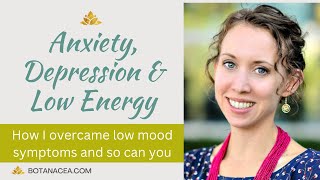
A hosted YouTube interview (May 14, 2024) where Michelle Brown describes her personal recovery from chronic low mood, anxiety and hormonal issues after conventional care failed to resolve her symptoms. She explains that persistent mood problems can reflect physical drivers—especially inflammation, nutrient deficiencies (zinc, magnesium, B vitamins), thyroid dysfunction, gut absorption and genetic metabolism differences—rather than "just" psychological issues. Michelle outlines an assessment approach using symptom-patterns and targeted lab testing, emphasizes rebuilding nervous-system capacity (trauma-informed biological perspective), and offers a free "Mood Reset: 10 tips" guide via her website to help people begin addressing these drivers.
Questions this video answers
May 14, 2024
thetennessea.com
"Mood Reset: 10 tips to help you with your mood" (free guide available on her website)
Chapters
I am super excited today to welcome a guest on camera who, you know, not only is she a very smart young lady, but she has gone through some troubles in her life, tried to go the traditional allopathic method and found out, you know, there was more to this than what was going on because she wasn't getting any relief. So she said, you know what, I'm going to take the reins into my own hands and, and I'm going to figure this stuff out. She's a best selling author and she helps women who deal with anxiety. Let's welcome Michelle Brown. Hey, Michelle, how are you doing today? Thanks for joining us.
I'm doing well, Jeff. Thank you for having me.
You know, Michelle, I mean, I just barely scratched the surface about your background. Can you take just a couple minutes and tell us a little bit more about you and really what got you on this path? Because I don't think you started out in life and said, hey, this is what I want to do for a living, right?
No, it wasn't. And yes, it was definitely through my own struggles with my mood and with my hormones. You know, I had eating disorders in high school and really kind of messed up my hormones and my thyroid especially. And you know, there's an interesting connection between the thyroid and some of the mood challenges that women often experience, like depression and anxiety. And that definitely was true for me. And so, you know, I wasn't getting any answers by talking to my doctor about what I was experiencing. And really I was kind of told, well, sorry, this is just the way it's going to be. And as I started digging into this and realizing there were actually some things that I could do and control in order to shift my mood, my energy, my hormones. And that really led me down a path of working with my own health, but then really becoming passionate about helping other women who are struggling as well, and went on to become a functional nutrition counselor, a clinical herbalist, and even certified as a biology of trauma professional. Helping men and women around the globe with their. Their mood challenges from this trauma informed perspective.
Well, you know, when you talk about, when you talk about mood, mood challenges, you know, what exactly does that mean? Does it mean if I, if I wake up on the wrong side of the bed and I've got a little bit of a bad mood, is that what you're talking about or is something much different than that?
Well, I think that's a great question because, you know, we all have emotions and our emotions fluctuate and that's normal. But you know, for some of Us, there's kind of this over lying low mood kind of symptom that's always hanging over us, kind of like a dark cloud. Right. And we might call that depression or anxiety or just feeling overwhelmed, not really able to engage fully in life. And that's where I really step in and say, hey, what is normal here and what's not? And how can we shift this so that you can experience life more fully? Right. Without feeling kind of overwhelmed, depressed or anxious about everything that happens in life?
Right.
We should be able to move through our emotions and a healthy way and come back to a good baseline of feeling calm and alert and excited about life. And if that's not happening, then we need to do a little digging to figure out what's going on.
You know, you said you started this when you were much when you were younger and you went through that normal path, if you will, and you really didn't get any relief. What does that do to a person's psyche? Because I understand this is more, you know, prevalent with women, but what does that do to the psyche when, you know, you go in and the doctors say, well, you know, we can't find anything wrong with you, so it must be in your head or, you know, you just have to, like, put up with it. What exactly? How do you deal with that?
That's a great question. Because I think when we do take that conventional approach, you know, where we're struggling with depression, we're feeling down and depressed or anxious, we might think, oh, I need to talk to my doctor about this. And that's, you know, a good thing to do. But unfortunately, what we're often offered are medications to kind of just numb our mood, to not really be able to fully feel what we're feeling in our body. And, you know, there are a time and a place for mood medications, but I think we need to look deeper than just kind of medicating the situation. Right. I like to think that our mood is really telling us something about our body. We should get curious about that. It's like, you know, Jeff, if you're running, you're out jogging and you, you know, you fall down and break your leg, then you don't get up and just keep running, right? There's going to be pain, swelling. Your body's telling you, hey, something's wrong here. And I need you to pay attention to this. And you wouldn't just kind of, you know, wrap it in a bandage and go on your way, right. You'd be wanting to figure out what's going on what's broken, what do I need to do to fix it? And I think we, we should take that same approach with our mood. Right? That we need to say, what, what is my mood telling me what's not working right here? What is my body asking me to pay attention to instead of just kind of trying to numb out, you know, medicate the situation and not really address the underlying issues that are driving these low mood symptoms.
I, I often think of what you're talking about. It's like I often, you know, if we get a weed in our yard, in our grass, and we just cut the top of it off, it looks like the weed is gone, but it keeps coming back. Is that what you're talking about? Said, hey, we need to get to the, the bottom of what's causing the mood swings. And what you're saying is before it's like, hey, just cutting it off is just, is just masking the problem. It's not going to go away. Give us an idea of how you dealt with this personally. Kind of give us that, that simplified journey of, hey, you discovered this, you did this and you had this transformation because you're on the other side of this.
Absolutely. And what I discovered is that there are some really key things happening in our body when we're experiencing anxiety or depression or overwhelm, and they have to do with a few kind of key mechanisms in the body. Number one being inflammation. Inflammation actually can drive a lot of symptoms in the body, including again, what I call these low mood symptoms. And so we want to look at that. What's driving that inflammation. And also another piece that I find is almost always a part of the picture for someone who's struggling with their mood are nutrient deficiencies. There's a lot of nutrients that actually play a really important role in keeping our nervous system and our mood regulated. And, and so we're deficient in things like zinc or magnesium and maybe vitamin B6 or other B vitamins that can have a huge impact on how we feel and how things are showing up in terms of our mood. And yet again, if we go to our conventional doctor, they don't even ask that question. Like, let's look at if we're low in these nutrients. Are you looking at your diet and what you're eating? There's just a prescription and you're sent on your way. And while again, there may be a time and place for that, we still want to be backing it up and looking at why are we experiencing this, this disruption in our mood and in our body that's telling us that something's wrong, right? Something's missing, Michelle, isn't it.
Isn't it often the thought of, like, well, what you're saying I might be deficient? Shouldn't I be getting this through my diet? I mean, aren't our foods rich in these nutrients or am I missing that?
Well, that's a great question. I mean, if we think about all of the foods that we eat today, and we have an abundance of food here, you know, in the United States, where you and I live, where most people were really kind of eating too much, right? In many ways. But yet our food is less nutrient dense than it used to be. Even a few generations ago. Even some of the healthy foods we think, you know, we're eating healthy. We're eating our fruits and veggies. Yet studies have found that, you know, our soils are more depleted of minerals, magnesium, zinc, selenium, than they were a few decades ago. And this can have a number of reasons behind it, you know, our modern farming practices and other reasons. But the key takeaway is that, you know, we're not getting the nutrients that we need to really be healthy and maintain a healthy mood eating, even if we're eating a good diet. And there can be another factor here as well in that we may have some genetic issues for how we metabolize nutrients. We may be deficient because of our gut health. If we have inability to absorb nutrients. Well, all of these things can really impact how much of these nutrients we're actually getting from our diet. And then that's going to show up as new challenges or fatigue or other chronic health issues. So anytime, again, our body's really sending us these signals that something is off, you want to tune into that and pay attention and ask, what's driving this?
I'm curious now. Okay, so you've pointed out, hey, some of the things that could be causing the mood swings. Being more aware, quite frankly, is the first thing. But how do you help people find out that they're low or there are some deficiencies or imbalances in their system? Do you have a way to test this?
Yes. So one of the cool things is that there are really specific, like, symptoms or have traits or patterns that can show up that we can assess just with a simple quiz, right? Like an assessment that I give people in order to see, like, are we deficient in zinc? Do we have maybe an elevation of copper in the blood that can actually lead to anxiety and irritability and again, showing up as certain traits. So with low Zinc, for example, poor wound healing, maybe ridges on the fingernails. Just that. Irritability, anxiety, sleep issues. If I start putting together these different symptom patterns for the people I'm working with and I start to see this pattern emerge, then I might start to suspect, oh, we have a deficiency in some of these really specific nutrients. And then ideally, you know, we can do some simple blood work and test to see are we actually low in zinc, are we low in some of these really vital nutrients, or do we have too much of certain nutrients like copper that can actually impact our mood and lead to anxiety and irritability.
You sound a little bit like a modern day Sherlock Holmes. Like, you have to like when you said ridges in my fingernails. Seriously? Really, you can, by seeing that, you know there's something going on there. That's pretty interesting.
Yes, it is really fascinating how, you know, again, it's like there's certain personality traits even, or just patterns around how our mood shows up. You know, someone who's unfocused or anxious, maybe they're low in like dopamine. Right. That chemical in the brain that helps us to stay focused versus someone whose mood issues are showing up more like depression or trouble sleeping or even gut issues, can be related to another neurotransmitter called serotonin. Tend to think of that as kind of our feel good neurotransmitter that helps us feel happy and engaged in life. And so, you know, all of these things, we can start putting together these different patterns that are showing up in a person's life. And then I start knowing these certain nutrients might be low, these certain neurotransmitters, those brain chemicals that help us feel good might be low. Right. I can start assessing where they might need to bring in that attention. So. So we really know where to focus and we're not just kind of throwing spaghetti at the wall, if you will, with trying to address some of these mood challenges.
Well, Michelle, this has been fantastic. I want to ask you, will you come back for more? Because I think we've just barely pulled that first layer off this onion to try to start giving people some insight and that there is help and it's not always a mental issue. It's like there's the mental issue. If I'm hearing you correctly, it's a sign it's not the symptom.
Yes, absolutely right. If we aren't able to really handle the stress in our life, well, this can often be a physical reason in the body for why we don't have that Nervous system capacity, as I like to call it, to handle the things that are going on in our life. And when we address it from this physical side of things, our biological nervous system response, then we can rebuild that capacity to handle the stress in our life, to deal with things that come up and, and move through things successfully without just being overwhelmed by stress or trauma and being successful in handling our mood and our emotions.
Michelle, do me a favor. Before we let you go today, tell us how people can get in touch with you. And I think you have a, you have a download for them today. Can you tell us a little bit about that as well as you let us know how we can contact you?
Absolutely. You can find me online. My website is the tennesseea.com and you can also go there and grab my free guide. It's the mood Reset 10 tips to help you with your mood. And this is really where I start with all of my clients. These top 10 pieces that we need to address in order to shift out of this place of anxiety, overwhelm depression, and get control of our mood. So go check that out, download that and start implementing those tips and you'll see a good improvement with how you're able to handle your mood, your emotions, stay calm and focused and just really support that brain.
Michelle, this has been great. Thank you so much again. I look forward to having you back as a guest and again being that lifeline for those people out there saying, you know what, I've been told that what's going on, there's no, there's nothing to do there. They can't find anything wrong with me. And that's got to be so frustrating. And almost this feeling of, like, just wanting to give up. The nice thing about it is you are their lifeline to get them back on track. And it goes beyond, hey, masking it with drugs and other types of medications. So thank you so much for being here.
Thanks for having me.









