How to Successfully Use Email Marketing For Small Businesses
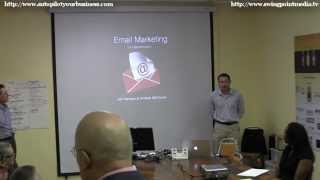
Transcript of a YouTube presentation by Jeff (Jeff For Local Marketing) at a SCORE/Indio Chamber event introducing small-business email marketing strategies. Jeff covers customer lifetime value, list segmentation, surveys and tagging, mobile/text collection, automation and follow-up, and encourages ongoing marketing and local workshops to implement tactics. The session includes attendee introductions, local examples, and calls-to-action for upcoming events and paid workshops.
Questions this video answers
February 18 (breakfast at 7:00; speakers 8:00–9:30).
March 27 at Fantasy Springs Resort, 9:00–11:00 (300 seats; free, chamber members get early registration).
February 27, 2:00–6:00 (chamber members $399; regular $499).
Chapters
Well, first of all, welcome this morning. Thank you all for getting up early. I'm Jeff Harrison and my business partner, Andrew McColley. Yeah. And we're an extension of SCORE. How many of you are familiar with SCORE? Okay, I'm going to give you just a real quick brief overview because they said I have to. No, I'm just kidding. SCORE is an organization, over time, individuals that have an incredible depth of knowledge and skill that they said, you know what, we're not just going to retire and kind of go into the sunset. We're going to give back. And the cool thing about this is they have about 40 people in Palm Desert on Cook, just across from Palm Desert High School, that they devote their time to help you in whatever you're looking for. Now here's the coolest part. If you need somebody for a, let's say you're trying to get a loan and you need help setting that up or writing a business plan or, or you need legal advice, they don't actually give you legal advice, but they have people that are retired attorneys that can help guide you down that road. In other words, whatever you can actually imagine, there are people there. Now here's the coolest part. If you get there and they don't have an answer for you, they have a network of over 13,000 SCORE mentors across the country and they'll connect you and make sure that your answers are given and that their guidance is there. The best part about this is the expense. Expense is free. This is funded by our tax dollars, a small Business Administration. So you can go as often and as long as you like. And there are a lot of success stories. One that pops in mind last year, if anybody went to this, the big breakfast last year that SCORE put on, there was a lady that got up there and she worked with them for about two years and she went from working for Marriott to starting her own business. And now she has a very high end successful catering business in the desert. All of that was guided by SCORE Scores Hands. They met with her and typically what happens is you have two mentors in there because they want to basically match you with. As an example, like you're doing podcasting, right? So they would have somebody in there helping you with saying, hey, I'm looking to get my podcasting more views or more, excuse me, more listens, more downloads. How would I do that? Well, they would be in there and help you and give us some guidance. And if they didn't have that resource, then they would get somebody like maybe Andrew or myself. Who were actually still in the day to day business. And that's where we come in. We're kind of what I call gap education because all these mentors are basically retired and they've been out of business for probably five to seven years. And if you think about what's happened in the last five or seven years, technology has changed a little bit. Right, Danielle? And so we're in it every day. So when we talk about the information today and anytime you come to one of our presentations, because we're applying it and working with it every day we talk about how quickly you technology changes. There's probably going to be something that we talk about today that we put on here this morning that probably by the time we get it out of our mouths, maybe we have to update, but we'll know about that. So we're that today type of information. So you know a little bit about us. I want to get just a little bit about you and why you're here. Danielle, if you want.
Jacqueline and myself are part of inspiring young hearts. We're going to be opening up a teen pregnancy group home for foster youth. And so we both have background in that area working with foster youth teens and have seen a plateau of services for these type of youth. And so we're hoping to open up within the next couple months.
Great. Do me a favor before you leave today, get in touch with me. I'm working with, I have one of my clients that we, that they actually do that we help them promote that process and she has a home that provides that. Maybe there's a synergy there. Okay.
Just what she said.
I have to force everybody to talk.
Hi, Jacqueline.
What a smile. A great smile this morning. Good morning.
I'm Kelly Taylor. I help a couple of local restaurants with their email blasts.
Great blast. I love that one. Blast. Thanks, Kelly. Matt Jordan. Hoping to fulfill a niche in hospitality and tourism. Great. Tell me what that looks like. Adventure tourism combined with independent travel. Great. Get with me after you leave because we just shot some video yesterday. We love to do aerial stuff and we just spent the day with Red Jeep Tours. We're doing an aerial video with them and we're creating about a four minute segment for them. So hey, who knows? We'll connect with Bob. Thank you.
Me, yes.
I'm with Keller Williams Realty and I have clients that refuse to do a business to open the business. So I figured I'd get some information and try to get them into your doors and get that going.
Cool. You know the coolest thing about that is we do some things with score. And we interviewed all their mentors and one of the first things they said is most business people coming in, no matter where they're at in their segment or their growth, is they don't have a business plan. And after about 20 of these, I thought, crap, I don't have a business plan. I've been doing this for four years. And so I started writing it down. You know what it did? It made me more focused and it certainly helped. So you're right on track. Welcome.
Thank you. Hi, my name is Jay. I work for a foster agency here in Indio and I'm really in charge of the marketing advertising. So recruit as much foster families that are needing here in the Coachella Valley.
Great. That's a very heartfelt type program you're in. Is it not very emotional? Very. Video is probably one of the strongest communication pieces you can get right now. It's probably the hottest. Actually. It is the hottest marketing piece in the market going to 2015 by everyone who says, hey, what's going on in 2015? So if you're not using video, consider that it's a tremendous asset. Myra.
I'm Myra Levine and I have a shoe store in Palm Desert, Snooki's Footsies. I've been in business 22 years, but everything's changing now and I don't know how. I'm learning how to email and website and all that.
Cool.
You know, you're right next to one of my favorite offices and that's Town Center Cafe. Right. That's what we tend to do a lot of our business. So yeah, we'll stop in there, talk to you because we'll help you get your foot in the door in that email market. Thank you.
I do podcasting, social media and websites.
Cool. Now you have a podcast specifically. Tell me a little bit about that because that's pretty interesting.
We have a one on one small business mastermind podcast that goes live every Thursday morning. And we help small businesses and sometimes we have them on board with us and we give them advice and other times we have particular topics that we cover. But it's very timely, it's free and it's trendy. In other words, it's up to date, it's not old, so we try to keep up with that.
What was your name?
Peter Busso.
I think that's cool. We were meeting yesterday with Mike Wilson for Benjamin's. Mike Wilson is here in the city of Indio and I presented something to him about two months ago and I said, If I were mayor. Because he was mayor at the time I said, if I were mayor, this is what I do. Using the Internet and social media. And now he's no longer mayor, but it makes more sense to him. And so we're going to meet about doing something like that on a weekly basis, creating a live show that Danielle can say, hey, I'm watching that, and I want to know what's going on. I can call in and interact with him, and he can do it for 15 or 20 minutes. But it's a video. We do video. And so I think you're right on track. That's a great thing. Welcome.
I'm Dick Bentley, and I do the podcast with Peter. And I also have a network marketing business and email marketing.
Topic to know about.
Cool. Yeah. You know, podcasting right now. I was just looking at a new car over the weekend, and one thing I noticed is it had that little symbol in there for itunes. So if you're thinking maybe, hey, I don't know what podcasting is, or it's dead. It's just getting started, gang. It is one of the hottest ways to communicate, because how many things do you do where you have to wait for a commercial and. Or is it on demand? Right. Like, I DVR everything. It was a struggle watching a football game over the weekend. Okay, it wasn't that hard. But the food is great. But anyway, the point is, everything is on demand. Well, the same thing. If you're listening to regular radio, you're probably listening to maybe satellite. Well, now satellite is going to be trump by podcasting. I listen to him all the time. I listen to a program called Entrepreneur on Fire. Phenomenal. It's what these guys do. Except they have 800 episodes behind them. 800 plus episodes. Phenomenal. So I think you guys are right on track. Way to go. Yes, sir. Yeah. I like to introduce myself with a story. Three entrepreneurs walk into a bar. You all think I'm going to tell you a bad joke, but it's not. I just described three small business owners as attending a networking mixer. And just like that, bad joke that has a bad ending. Kind of not a funny ending. Neither does the ending. When these entrepreneurs leave that networking mixer, they talk to their friends, they maybe hand out a few business cards, and they left with no leads. What I do is I teach small business owners how to attend the networking mixer and attract. Attract the people who want them the most and how they can do it.
In 27 seconds or less.
My name is Frank Serake. Thank you, Frank Rey. I Wish I had 27 seconds. I could really just spend some time with French. Thank you. Yes, ma'. Am. Oh, don't be trying to hide back there. I've got really good vision.
Yeah, you'd phone me anyway.
Can you see my sister?
I'm Virginia. Sam. And I came here to find. Find out how to. To do like the email marketing you were talking about to see the rules about it. What's. Because I know sometimes about the junk mail and that I want to learn how to do it correctly.
I love that.
And I just opened up. Not open, but I'm doing a gift basket home based gift basket business which I just started.
Great. Well, welcome. We're going to talk about that and Josh, I'm not done yet. Oh, sorry.
Before we get started, I want to really say thank you to the Indo Chamber. Specifically. Joshua. Joshua, come on. I just want to say thank you and let's give him a hand because he put all this together.
He's treating.
He's treating you like a rookie.
No kidding. Can I talk to you a second?
My name is Josh Vaughn. I'm the president of the Indio Chamber. Just wanted to welcome everyone here this morning. Right now the Indio chamber is at 823 members. We're a very strong organization. We have full time ledge rep. We're one of only two chambers in the entire valley that has that. We're also one of only two chambers that are U.S. chamber accredited. So we're a very strong chamber in Indio. We're very proud of what we do. We're particularly proud of our ability to present you with educational opportunities. Some of you may have been able to attend AFGHAM a few weeks ago where we brought in Twitter, LinkedIn, the creative director for Red Bull North America, some big hitters that came into town to talk about marketing. We're going to duplicate that feat. On March 27, we're bringing Facebook into market. They will be at Fantasy springs resort on March 27 from 9 to 11. We have 300 seats that are open. It's completely free to attend. We will offer a two week registration period to Indio Chamber members first and the second. If there are any seats left after that, we'll open it up to the general public. So by all means, if you can make it, make it. It's not very often that those Silicon Valley boys come into the Valley, so we're very proud to bring them here. But in addition to that, we also understand that there's ongoing need for education on a daily, weekly and Monthly basis. So this is a great partnership with SCORE that we can do this on an ongoing basis. Talk about topics that are interesting to you for marketing your business. So thank you to SCORE for coming out. We appreciate it.
Enjoy the presentation. If you have any questions at all about the Chamber, please come and see me. I would stay for the presentation, but I got a call yesterday to meet with the mayor this morning and when she calls, I pick up the phone. So unfortunately, I will not be able to stick around. I'll have to leave. But again, if I can answer any questions about the Chamber, please let me know. Otherwise, enjoy the presentation.
Thank you so much.
Thanks, Ron. Anybody else? No? Okay, good, good. Before we get started though, on the product, I just want to talk about something that I know SCORE is very, very excited about. And last year it was just an idea and it came together really in six weeks. It went from an idea to over, really a sold out event at Agua Caliente. And it's called the Condration of Breakfast. It's a little bit of a different twist this year and it's going to be on February 18, Wednesday, February 18, and it has a different feel. It's really stepped up to the point now that last year we did the video stuff on like as far as that's concerned. Now the economic or CBEP is getting involved. KMIR is going to be out there, Univision, and it's going to be a big thing. Desert radio groups out there. It's really a place again, not just to network, but to find out from the leaders of our area and our state and also our region to say, hey, what are they doing? What kind of things are they opening up that we can say, you know what, maybe it makes what you're doing with open up your program a little easier, right? And maybe there's some leverage there. So we're going to pass this out towards the end, but keep that on your calendar. September, excuse me, February 18th and we'll be at the Agua Caliente again. So if you haven't noticed by now, it's pretty interactive. Okay. So there's no setting on your hands. Tell me your name again. Frank. Frank. I knew that. Okay. If you do me a favor, take this and what I want you to do, you need to have something to write with. Myra, would you do me a favor and just pass some of those down? Just kind of pass them around a couple up here. Okay, Everybody participates. Now, I'm kind of one of those guys that we don't move forward until we have 100% participation.
I was one of the kids who held their breath until I passed out. So don't try it out. No, just kidding. So on one side, here's what I want you to do. This is where it's individualized. I want you to think of, hey, what is the value of one of my clients?
Like when they walk in my business or I get a new sponsor or whatever your business is, how much is that worth? Not a high and a low, just an average. As giving an example, for about 30 plus years I was in the golf industry, I knew how many per square foot are in our business made, but I also knew every time somebody walked in how much they were worth. Even if as an example, Kelly, you didn't buy anything today, but the next person walking in, on an average, we made X number of dollars. So I can kind of keep my head on straight. Right. So I want you to write on one side of this. How much is one client worth to you on average percentage, right? Nope. Dollars.
I want to know dollars weekly, annually.
Just when you first acquire. And we'll get to the second pad. Okay, first half. So if I come in and you sell a service or a product, right? Or you need a donation, what is it to get you going? How much is it worth? Okay, like I can tell you, for my business, it's about 356, $57. So every time somebody says yes, that's how much it's worth. That's the initial. Hey, they're going to write a check right now. And it's up and down from there, but that's about an average. Okay.
Where'S that music from? What is that, Jeopardy? Yeah. Can you have a few bars? Okay, so how much is that worth? Got it. Good. All set. Everybody got it? Write it down. Everybody got it. Done. Okay, so now on this flip side of that. Oh, by the way, I forgot to tell you, put that on the line side. No, I'm just kidding.
On the other side. Now I want you to think.
Anyway, on the other side, what you want to think about is, hey, how much is that client worth? What's the life cycle of that client? Right now the question is, hey, how much is that worth? Like as an example, if you have somebody who, as an example, Andrew and I, we have continuity programs. So they may be something they sign up for, but then there's a monthly fee. How long do those people stay in our business? Or how often do they come back and use your business and pay for it again? Think about that. Like Myra with Your business, how often do people come in and they're reoccurring clients? Let's say in a year. And then how long do they stay your clients? Sometimes we forget about that. Like as an especially real estate agent, they go up sell one time. But. But I'll tell you what, my agent in La Quinta, Fred Wilson, I'm not pushing Fred, but Fred, we probably bought six or seven properties from him. And we referred just recently he sold our neighbors a big lot in La Mirada because he's kept in touch with us. We weren't just a one time sale. So how much is that client worth for you over the lifetime? Like as an example, our clients typically stay with us two to three years. Okay. So if you took two or three years and they're paying $100 a month, do the math and say, wow, that's how much that client is worth. Okay, this is how much I first made. This is how much made long term. Does everybody have a number down? Yeah. Kelly, does that make sense?
Yeah.
Okay.
Sorry, I forgot Andrews gave me a clue. I was supposed to put this up there.
Do you mind if I age? Can we turn half of the lights off back there? I don't think so because that was me just after I got a nice clean haircut.
Is that too dark? Okay, I think that's too dark. That's all right. We'll just kind of go with it. Okay, so now what we want to do is we want to get the average value of a sale times the number of repeat transactions, times the number of retention in months or years, a typical customer. So as an example would be the lifetime of a gym member who spends $20 every three months for three years. Okay, so $20 times 12 months times three years is $720 in revenue that that gym is worth to that gym. Right. Does that make sense? Okay, the reason I bring this up because I want you to start thinking about, wow, if I just put one name, let's say I own that gym and I just put one name in my database, it could be worth $720. So from that standpoint, how much am I willing to invest to get that right? So I'm going to ask you a question and if you're not comfortable with it, that's okay. Tell me, give me some ideas, some feedback of what your numbers look like. Do you mind sharing? Okay. Like what is the lifetime value of your client? $2,000. $2,000. So, so let me ask you this. Just a little role play. So if it cost you $750 to acquire that client. Are you interested? As long as I don't have to spend $750 more than three times, yes. Okay, so if you only had to spend 750, and every time you gave me 750, I gave you a $2,000 client, would you be in? I would book you every day. Perfect. He gets it. Okay, how much is yours worth? $900 to 1,800. 900 to 1,800. So if I gave you $200 or if you invested $200 and I gave you back $918, would you play? Definitely. Perfect. How about you guys?
Probably about 6,000.
Geez. Let's play.
So really now, my point is now, could you Afford to spend $1,500 a client to get $6,000 back? Yeah. Yeah. This is a quick answer, right? How much are you going to spend in the back?
I'm not sure because my average is like my repeat business is about every three years.
Okay.
Okay. And it's on an average 225,000.
And that keeps me busy and I need to generate new business.
Cool. You're going to love this thing because it's going to fill that gap in. Okay, you might want to hire another assistant. How good is that? Okay, so the reason we put this up here, I just want you to write that down and say, yeah, maybe I haven't thought about it. This is how much I get with everybody that says yes, but maybe I haven't thought about that other side of when they're with me, how much money am I making. Notice it took him no time at all. He knew that. Right. So he's willing to come to these events because how many people do you have to have say yes for this to make it worth for you? But you coming this morning? Two. Two. He just made. So if two people this morning say yes, hopefully everybody brought their checkbooks. Remember, he said two grand. Okay. He makes four grand. And he's happy, right? Ecstatic. Thank you.
All of a sudden he's picking up lunch.
So some things maybe you didn't know. Businesses who continue to market during a recession. Anybody? Was anybody not here the last success, six, seven years, just wake up from a coma. Okay, good. We were in a recession, right? Things have changed. But here's the thing. Those businesses that continued to market outpaced those that did. Now, I know that's not a bombshell, right? That's pretty obvious. But over five year period, it was a difference of 275%. If they were still in business to 19%. Now, this is by Forrester Research. This wasn't something we made up. Although there's some stuff we made up in here. Most of this is with factual research. Okay? So my point is, if you're going to do this, think about in times and especially in our market, are we seasonal?
We're not seasonal. Okay, good. You're see. Okay, but are we, as an environment, somewhat seasonal? Yeah, we have that flow. Right. So here's the mindset when I'd walk in and myra, do me a favor. Let's just play here. I walk into your business and I say, mar, I have this idea. Here's what it is. And you say, you know what? It's May, come see me in October. Right? Because October is when she's going to start making money again. She's hunkering down. She's like a bear. She's going into hibernation for the summer. Right? Because she says, I can't spend any money. You just fall towards that 19%. Then here's what's interesting. I come back and I say, Janie, it's November 1st. Let's start a program. Jeff, I'm so busy, I can't even talk to you. Come back to me in May. Do you kind of see that ugly cycle? You never get off the hamster wheel. Now, yesterday, I think, was Groundhog Day, wasn't it? What was the outcome? I didn't see that. I was busy. I had my head. Six more months a winter. Beautiful.
There was 24 inches of snow with the Groundhog Day.
Awesome. See, that's good for us, right? Extends our season. But here's the point.
If we continue to stay on that hamster wheel, we're living a Groundhog Day life, aren't we? In our business, we're only seeing our boats rise when the tide comes in.
How many want to live that way? You guys don't, right? You don't. Because you've created a way to say, you know what? I don't have to live this seasonal life. That's what email marketing is all about. By the way, if you have any questions, please stop me. Okay.
Can I have a story?
Stories. Long one or short one? Short one. Okay. Shorts are good.
I took over a computer repair company. Stores only making $1,500 a month in the summertime. In 20 days, I took them to 11,200 per month. And they've kept it ever since. You know, the whole concept that we are sick in this valley, that we have to stop during summer. It's just absolutely not true. Yeah, there's a story.
Perfect. And I'm gonna hit you right on. Because about three years ago, after I'd gone to. And I'm just going to use Myra as an example, I'd gone to businesses like Meyer, and they gave me the. Well, come back, come back. Don't come back until this. Because I'm so busy, Janie. I made a video and I said, wait a second. At that point, when I first moved here in, excuse me. 1996, there were 200,000 people living in the desert. There's now, I saw 417,000 people. This was three years ago, live here full time. And I thought, wait a second. If I can't survive on 417,000 people in the desert, what's another 50,000 going to do for me, right? I'm waiting for the Canadians. I'm waiting for. No, no, they're here, man. They're here. They're us.
Yes, sir, another question. Does the Internet sleep during the summer?
Never. It's 24, 7. I love that. Okay, so here's. Did you know the average sale takes place after five contacts? Five contacts. But here's the sad part. Yet less than 5 sec. Five people make it past three. And I used to be in sales. And this is what would happen. I'd walk in, I'd see Kelly, and Kelly's already seen three other. Or five other salespeople or three other salespeople. I come in, she says, yes. I barely get my card out. I'm thinking, man, that was easy. I'm pretty good. It's because they kind of teed her up, right? They've already done the work. But then if you're the first one through the door, all of a sudden, you say no. You say no. You say no. You say no. And I say, forget this. This is hard. You come right in behind. She says, yes, yes, yes, yes. And you say, man, this is easy. So my point is, if you're only contacting people two or three times, and this was a Harvard Business study, that you're leaving a ton of business on the table, you can do it much quicker, much easier, much more professionally, elegantly, and targeted with email marketing. So we're leaving tons of money on the table if you're not using it. Now, before I go forward, I want to ask you a question. How many of you have a database now? Database? Are those emails in your database? Okay, good. All right, good. Do you mind, Kelly, telling me how many you have in there that you're active with.
Okay, Deli on miles. I've got 520.
Cool.
I have no idea. I don't know. I haven't counted them. I appreciate your honesty. Versus saying I got 27,000.
Is that emails? Like, I have an email list, like a business email.
Okay.
I have every 200.
200, good.
I'm not sure because I'm very weak at my. I have a great database with our company and it kind of services itself, and so I let it do that. Okay, I'm bad.
Here's it. Here's the thing, and it just reminds me is when I was at La Quinta Resort in pj, I was director of sales and marketing. When I first got there, I got hired and my boss said, Mike, he said, jeff, you're hired. He says, now here's the deal. You're responsible for over $11 million in generating revenue. I said, great. I said, how much is our budget? And it got about that quiet. And he said, jeff, you can do whatever it takes. Just don't. You don't have any money.
So. Largest facility on the Western Hemisphere. Nine golf courses, 3,500 members, over 400,000 rounds a year, and not one penny was dedicated to driving new business. Because in the golf business, it's build it. And they will come. Well, guess what? In 2007, they ain't coming.
So I was forced to say, I gotta do something that doesn't cost me anything. And I went to email marketing. So I thought, well, wait a minute, there's gotta be names and email address, right? Yes. Well, there were 23,000. But you know, the last time they were contacted two years earlier, those are DOA. I tried. I couldn't get a heartbeat right. So I had to start over, had nothing. So what I did in the next 18 months, I got over a million and a half emails. And through that recession, we actually grew our bottom line because I wasn't depending on the tide to come in. So I'll show you how to do that today.
All right. I was drawing blank. Okay, so what does this mean and how can it help me? Well, the average name and email list that we know is about 250 names in there. Okay, so as an example, let's say David Dick. Dick. Okay, just checking. I thought his first name was David Stick. Okay, so Dick, as an example, if you had 250 names in your database, those 250 will have an average of 2, 250 friends in their database. Right? Because here's the thought, the name and the money is in the email database, you don't have to have thousands. 250. Right. Because if those 250 will know, like and trust you and they share your story, then all of a sudden you have a database potential of 62,500.
Let that sink in a minute. If you had 62,500 people that were in your database you could communicate with that they knew, liked and trusted you, even if you were terrible, you would do really well. Yes or yes, Dick. Yeah. I mean, you could screw up a lot. You can screw up 20,000 times and 42,500 people still say yes. How good is that? That's what I'm depending on. Okay. Would this make a difference in your business if you had 62,500 people that you could say, you know, I got an idea, let me send it out. Because here's the cool thing. On average, 10% of the people in your database that know like and trust, you'll call it a warm market, will say yes at any point.
Do the math. Look at your number, how much that client's worth, and then do the other side of how much the lifetime value is worth. Would that make a difference in your business? Would that make a difference in your gift basket business? Man, talk about gift basket runneth over. Right. So let's talk about this, because I don't want to mislead you, first of all. Can I just be real blunt? Yes. Anybody offended by if I'm just real straightforward with you sometimes, you know, I've been in a lot of these, Andreas, a lot of these. There's all this, you can do this thing. It's easy, gang. It isn't easy. It does take some work. I'm not. We're not going to sugarcoat that for you. What we're talking about, we've been doing for a long time. We make it look easy. But here's the thing. I'm from West Texas. Not a lot of smarts in West Texas. I'm a golf pro. If I can do it, I think you guys can, too. Now, I'm not going to say this in an offensive way. You guys aren't kids. Yes.
I wouldn't say so.
But you're cutting edge in an industry that we think is for kids. Yes or yes.
Yeah, we usually teach the kids.
That's what I'm talking about. Right. They know how to do games, but how to make money is different. Okay, that's different. So I don't want that to offend you, but let's talk about segmentation. Right. So what do you think segmentation is? If we're talking email list, what do you think that means?
Different people that you're dealing with.
Different people you're dealing with. What do you think.
Kelly?
In our case, we've got a list that goes to county employees and we've got a list for city employees. And if we could break out the different age groups, that would be a wonderful. We do birthday every month. We have them segmented out for whose birthday is when.
Cool. So you're think of segmentation as personalizing your database. Now I'm going to give you a real quick story. She's not here today because she's covering for us at the Palm Desert Chamber of Commerce. We're one of the facilitators at their program this morning. So her name is Amy Anderson. She's also a member of Bermuda Dunas Country Club. She gets on average. Andrew, if I'm lying, stop me between three and six emails a day. Now here's the things. Let me know what the average open rate is for an email.
20%. That's all industries. Okay? But here's the thing. If you're getting three to six emails a day, she has stopped. Now what's the open rate?
She stopped opening it. 0. How effective is for me to do email marketing? Very poor. Right? So imagine. Tell me your first name again.
Regina.
Regina. Regina. Reginia. Okay, so let's say, Regina, I call you every hour on the hour and I ask you for money. At what point are you going to stop answering the phone?
How many times you going to open and say, jeff, listen, I'm not interested. I'm not interested in cookies, Jeff, I'm not interested in going to happy hour. You know, and I keep throwing this at you. At what point are you going to stop opening or answer my phone calls and just let it go to the service? How many times?
I don't know. For me it might be like three or five times or something like that.
She's pretty tolerant.
Yeah, good.
I am tolerant because I am in sales.
So like three or five times. Now let's go back to Bermuda Dunes. She gets between three and six emails a day. How long did they keep them opening their emails on that pace?
One day and they lost her. Now, Amy, she's probably in a situation. She can do whatever she wants for as long as she wants with whoever she wants. She does this for fun. And they have, excuse my expression, screwed up. Now, we gave a presentation last week to the PGA of America in Ontario and we were talking about them. About an example. We weren't doing it in a derogatory way. We're just stating facts. Right, Right. Unfortunately. But fortunately, somebody from Bermuda Dunes was there, and he was like. We were embarrassed. He was embarrassed. And we thought we'd see something change. Nothing has changed.
Okay, so you're saying she's getting all those emails from one place?
One place. I'm sorry. From Bermuda Dunes. She's a member there. They're sending her emails three to six times a day, sometimes before noon. She'll get seven or eight. And now it's just a joke. Don't do that. The reason is she's not interested in Men's Day. She's a woman. She's not interested in couples. She's married and her husband plays golf. They don't play together. In other words, find out what their gender is, what their age is, what their likes, what their dislikes. Yes. Right. It's like building rapport and building relationship. Okay.
So when you're doing this, I like to think of it as I'm building my very own soul social media platform. Because here's the thing. Facebook. I know Facebook's going to be coming out here, but the reality is Facebook is not a place to build your platform. It's a place to extract people and guide them to your platform. It's like building a home on rented land. Because this time last year, they changed their algorithm, and all of a sudden, 80% of their traffic that you were getting for free, gone. 2 to 5%. Everything's like a pendulum. You know, we were saying, hey, it's free, free, free, free, free, free. Oh, my God. It's expensive, right? It'll swing back or there'll be another. There'll be another platform for that. Still very effective if you're doing targeted marketing ads. Really tough. If you're saying, hey, I want my. And this is not a slam on Facebook. This is just reality. Okay? I can communicate with them anytime I want. Right. Ask or offer my tribe, I call it tribe. People that are in my group opportunities specific to their wants and needs. So if I know a little bit more about you, I can find out. Hey, you're here because you're trying to get donors for your program to get it going. Right? Okay. You need more. Get faster. You need somebody to put together the actual basket. Right? You have everything. You just need somebody who can make the baskets. Great. You're looking for that. Okay. Does that make sense? So it's a relationship.
Now, here's some facts when you segment your List. Remember? What was our average? What was our average open. Myra. If I just sent out emails across the industry.
20%. Thank you. I like Wig Meier through her voice. 20%.
Jeannie. When we actually use segmentation, we double that to 39%. So you can double your money. That's like saying, hey, hey, what if I could get you clients to pay you four grand? Are you in for the same money? Are you in? I'm in, yeah. What about you? 12,000. Still pay me 1,500. Are you in? Are they overrunning me? Myra? If I'm doubling their return on the same investment, are they in? Yes. Would they run to me or run away from me? Thank you. Don't get up and run yet. I can't do that. Okay. So it lowers your opt outs. Anybody ever opted out of a list?
Sure.
Yeah. You know, I opted out of Best Buy because Best Buy doesn't segment. It's very difficult to do. They send me stuff every day I'm not interested in. I don't want to buy a fire HD monitor. Right. Amazon. The same way. It increases revenue by 24%. Now, why do you think that is, Peter?
Say it again.
They're increasing their revenue because they segment their list. Why are they increasing by 24%?
More people?
No.
They're individualized.
Yes. Because now I'm talking about something you're interested in. Right. You're in my list because you're interested in the same stuff. Stuff. Because if I sent you stuff. Let's say you're playing golf. And I keep saying stuff about this great deal on a seven iron. You're like, man, I don't even play golf. Why is this guy psycho Bang. Opt out. Right? It's a waste of my time. Okay. Customer retention. This is huge. Gang. Increase your retention by 21%. So now when somebody comes in. Kelly. They stay longer at a rate of 21%. And you can see some of this stuff over here. This was by Lyrus. We like to always have a source. A lot of stuff we make up, like I said. But a lot of stuff we always have backup on. Okay.
Here's the reality. Most major companies aren't doing this. And you can see this is for me from Staples. Staples. Man. Is anybody on Staples list?
Don't they? Man. You are. I wasn't. I said I'm out of here. Man. If I were in the day when there was a scout following me, I'd be like Butch Cassidy. I'd look back and say, who are those guys? They won't get off me. You had to see the movie, right? They wouldn't give up. Staples is like this.
This.
I've even opted out and they somehow still get through, right? So this is every day. I don't need this stuff. I already have monitors. I already have computers. I don't need that. But if they would have asked me, hey, do you need a computer? Are you in the market now? Start sending me stuff that makes sense. Okay, 32% intend on dedicating time and money. That's according to HubSpot. If you're familiar with that. They intend to do something. Well, I understand that intention is not the same as attention. Hey, I intend to stop eating donuts. But my attention is on that box of donuts right now. There's a good chance I might have them before I leave. 52% say they need to improve. These are major corporations. So when you're just starting out, you have 250. You can segment this and you can make it happen. This makes sense so far. Okay, now here, I want to show you something. Does everybody have a cell phone? Everybody have a cell phone? Okay, can you get it out for me, please? Okay, now I want to show you how in today's world, you can start building a segmented database list. Okay? So I want you to do is I want you to go to your texting and I want you. And you can opt out of this. This is just an exercise, but you'll want to stay in because there's some great things going on here. Okay, Type the word in sunrise and then send it to 96,000. Okay? Go ahead and do that. Remember about the 100%. If you don't do it, I'm going to stay here and just hold my breath. Okay? I promise your phone won't blow up. I won't be like staples. Okay, Everybody do that. Myra, did you do it?
I can't text. So Myra.
She can't text. Boy. Now, I say that jokingly. While the rest of you do this was it. 72% of the people are living on this stuff. Okay, that was of August 2013. Number still growing. January is 24%. That's how fast we're moving to mobile marketing. So if you're not using text as a way to communicate with your clients and get communication with clients, I would consider doing that somehow, some way just, you know, go from the flip phone to something, you know, that you can text with. Okay, everybody do that. Everybody do it. What happened over there? Tell me. Tell me.
It sent me. I don't Remember what the message was before? But you guys have already sent me a new message. Desert Academy, thank you for joining the Tool Tip Tuesdays. We are all set. Just click here.
Cool. Yeah. Now did anybody notice my name is not David Copperfield. I didn't do any magic. I was still here. Nothing up my sleeve. But you, I've already communicated with you right now, already. I now know exactly where you came from and you started down this process of automation. In my email list we have stuff set up for the next 12 months that will communicate with you on a weekly basis, giving you short 15 to 45 minute video. No, I'm just kidding.
One to three minute videos that say, hey, email marketing, autoresponders, and you name it. So, so we talk about it every week. They're live. Okay, so these are little messages. Now if you don't want to, you can opt out of that, but rarely do people do. People who want to be on the cutting edge never opt out of these. Okay, so that's the way we can do it already. Now there's what, two, four, six, eight, 10, 12, 14 people. And if everybody did that except my 13, my lucky number, okay, then we just added 13 new clients in there. How hard did I have to work then go down? How many hands did I have to shake? 0. 0. Now I have your, if you did it all the way through, right. I have your, your email address and I have your cell phone number. Because when you hit that and you got the download of that video, you should have got your email in there, okay? To get that email or to get the email from us. So then you'll get that. Now here's the cool thing. Remember the follow up issue? How many times that the follow up or how many times was a sale made? Do remember that, Myra?
How many times what?
How many times did I have to make contact with somebody before the average person says yes? Remember that, Janie?
Five times, right? Guess what? I have this set up so I'm going to send you little reminders in an hour. If you didn't put in your email address and get the download, there's going to be a little reminder. Hey, I thought you wanted this. And then it's again. And I'll do that in a day and then in a couple days and I realized, you know what? Probably not good to be on my list anyway. So that's all automated, still personalized, all automated because I knew you were here. Okay, so that's kind of the way that works. Any questions about that? These are the technologies that are with you, that are right available with you today. Imagine if you were driving down the road and you had Tex. 96,000 if you want to be, you know, guest. 96,000 to be on your podcast for free. Business podcast. You got texts coming all the time. You have guests all the time. Yes, ma'. Am.
Yeah, but what did it take for you to do that? Or what did you have to pay to get that?
You have to be a third degree back belt in marketing for this. No, you don't. It's not that it is challenging, but it's not impossible. Where am I from? West Texas. Not just any Texas. West Texas. Has anybody ever been to West Texas? Yeah. You don't want to be from there, do you?
As soon as I learned how to drive, I started seeing later and later out at night, till one day I just didn't come back. And I've never been back since. Okay, so you can use this. There's all kinds of services out there that'll do this for you. Okay.
Now Andrew's going to come up. No, no, come on. I don't know anything about this. Okay, so how do I segment my list? Here's the way it is. The way we segment our list is we ask questions. And here's the thing, Think of your specific industry. Okay? First thing you can segment is age. Then gender, frequency, buying habits, when they travel, average length of trip, depends on your industry. Right. But you want to know, hey, is my ideal customer a man or a woman? Like for you, who's your ideal customer? Pretty much anybody.
I mean, I sell legal shields.
So anybody needed legal protection. So anyone from 18 to 80, is there a stat out there that says the people who tend to get to get sued are in this age bracket, this business? Are they there? If you knew that, would you talk to them? More like likely. Yeah, there is a. I guess I would segment it by, you know, the.
Very rich can have access to lawyers.
And the very poor have legal free will. So my is the middle class. Okay, good. So see, he's already nailed it down to everybody to the middle class. Okay. Because if you're gonna go. Here's the thing. If you went to the mall, how many shores are in Westfield Mall? 100 plus. And you don't know exactly what you're looking for. How long could you wander around? Long time. Yeah. My wife picked me up and said, jeff, you gotta come home. I said, I can't remember why I got in here.
Specifically. I'm from West Texas. That's right. So think of that. How can we do that now? How do we ask questions? Whoops. How do we ask questions? This is the way to do it. Oh, seven emails. A. This is about Amy. This is how I'd show Amy, but her head is covered in emails. Okay.
I want you to think about surveys. Now, if you haven't done a survey. Anybody done a survey? Okay, survey monkey free. Okay, one question. Here's how you get. Because if I start interrogating you, I say, Kelly, let me ask you, are you man or woman? Right? I mean, she's on the email, so I don't know.
That's right.
And Kelly could be a man or woman, right? Right.
Keep it clean now, Peter. Come on now. Okay, so now I say, great. So now if I go through my list and 90% of the people on there are female, I call that a clue. Right? Most of my customers are probably female. I wouldn't disregard talking to you, but I know you're my ideal client. Now, I might follow up another month from now and say, let me ask you, Kelly, you know, I might say, what's your favorite restaurant here in the desert? I say, you know what? Most of my women like Italian. Hey, could that be content for lunch? No, no, no. Content for talking about a restaurant. Maybe you own an Italian restaurant. And I say, you know what? I have this group, they're 250 people. They love Italian. Would you mind? I'll recommend you. Can I send them out a gift certificate to there that there's a slight discount, but I'm going to recommend they come here. Are you in? You're going to say, how much is it going to cost? I said nothing. I want to give it as a gift. Are you likely to open that up? Why.
Thank you. Okay, good.
It starts with free or discount.
15% off.
But here's the thing. Did I ask you to buy anything? No. Have I started building relationship? You bet. Now if, let's say, for instance, I do that two or three times, because maybe now I say, hey, you know what? I got this guy over here, Dick, who has this podcasting program for small businesses. I think you'd be ideal. But he only has room for five. And I sent it to my list of 250. The first five who answered, you're on it for free. And they do all this stuff. Are you in? Bang. All of a sudden, I get this back, I give it to you. You have five new clients. Have I asked you to buy anything yet? How much does it cost me to do that?
Time to write the email.
0. 0. Because all this will be automated. This is not by accident. This will be automated. Right.
Somebody has to write it in the first place, though.
That's what Lanika's for. She's my assistant. Okay, so that's the idea. So make it simple, one question. And start saying, hey, what do I need to learn to do so I can get more gift baskets in the community? Right?
It's build a relationship, not an interrogation. Right. Dick, how long have you been here in the desert? What's your favorite color? How many kids do you have? Feel the difference? I didn't give a chance to answer. But if I ask you one question, Dick, how long have you been here in the desert?
About 18 years.
What in the world made you think about starting a podcast? I mean, it's really technical, isn't it? Well, it is, but he's been my.
Guru for the last two and has taught me.
Peter. Good, important mentors. Thanks. Score. Right? They help get you where you want to be because they're already there. Okay, but didn't that feel a little bit better than me just firing 10 questions at you? When I was a member at Mission Hills Country Club, I remember they sent me a survey, 250 questions that went into the round file real quick. D lead. I wanted to play golf, not answer those questions. I didn't need them to know that much about me. So. So again, one question. Surveys. When we do this, we put tags on it. Like when you fill this little thing out today, there's a tag on there that says sunrise. I know by date you were at this meeting. So if I'm going to send something to you, I'm going to send something to you about Indio Chamber, right? Not Palm Springs, because obviously there's a connection. There's a commonality, right. About Indio. So I'm going to talk about that. So if you ask age, give a range.
Right? 18 to 20, 20, 35. Then tag when they answer. Or separate. Now, when I say tag, we're just going to label it, right? Like, if I'm saying, hey, what kind of business you are, are you doing a business or. Excuse me, a service or a product, Right? Because the comfort, the information I'd send out in the future would be different, right? If you're doing a service and you're selling a product, I'm going to probably sell, send you two different forms of communication. Does that make sense? So because it's relevant to you, it's relevant to you. If I did it the other way around, I don't need to be selling products, I sell services, or vice versa. Okay.
So you want to create a simple survey. Now I'm not going to go through this, but this was a little thing that I put together. We did this from the get go. It took only seven days to put this together. So it's really, really pretty quick. No, actually it's only four minutes from zero to completion. Not having a survey monkey account to. I sent out My First Survey 4 minutes, surveymonkey.com if you're not using that, you should, it's free. Okay, so if you're saying I can't afford it, you can't afford not to do it, right? It's done. Real simple. It comes back to how many people opened it. You know what the average is. So as they start saying yes, if you put multiple questions in there, at some point, you know, do you normally go to dinner in East Valley? Yes, you know, whatever. It'll start segmenting that for you so you'll know. So just to recap, segmentation, good.
Use surveys. One question with ranges open, end questions, have a place.
Content and context. We didn't talk about that, but we kind of did. Like, if you're in the service industry industry, I'm going to send you service industry things that would benefit you. I'm going to send you information, says, hey, you know what, you like Italian? So I'm going to send you stuff that makes sense. Now let me ask you, if I kept doing this with people like.
I'll never forget, what's his name? Jeez, Frank. Frank. If I keep doing this with Frank and Dick and Peter, do you think I'm probably getting more uppermost in their mind? Because, hey, these guys, guys just keep sending me things. They keep helping me get more business. You think at some point they might come back to any and say, hey, you know what? I got this idea, this guy, you know, I don't do video, but we do video. Can you help these people? Have I asked him to buy anything from me? He's in my 250 list. He knows 250. Next thing I know, I've got 62,500 people that I have a relationship, relationship with. Now think of that. This happens in a small town. This happens in. Oh, sorry, no pictures. I'm just kidding. Just kidding.
So the idea is this happens anywhere because where's the Internet?
Everywhere.
Everywhere.
Anybody have any idea how many searches there are a day on Google? 16,425,000. 6.1 billion.
6.1 billion a day. Right. So as an example. Take a look at what you're doing and saying, what problem do I solve? Right. What problem do you solve for your ideal client?
Reaching out to their customers. Bring more people into the restaurant.
Yes, but at the end of the day, do they want more people in the restaurant or more money in the till?
Yeah, that's where the bleeder is, right? You've opened up and say, man, they're bleeding. I want to find the one that really is bleeding. Cut that off. I want to take care of that. Not clean up the mess, but say, let's fix it here. That's where you want to go. I'm sorry, that's a little graphic. But you won't forget about that. About lunchtime, you'll say, why did he say that? I usually use my finger. I nick my finger. Right. I'm looking for a band aid, not curad. Be the band aid for your clients.
You just saved Frank a big amount of money for lunch. You saved much.
That's right. Low lunch. Okay. Better responses in revenue. Remember, what's our response rate? How much does it go up? 39%. It doubles, right? Goes from 20 as average to 40%. What about our retention? Remember that retention number?
21%. Revenues are 24%. Okay, so you're right on both counts. I asked the wrong question. Just making sure everybody's live and listening. Okay, did you guys like this? If you did, we only barely scratch the surface. We actually have a workshop that we're putting on in with a live event. We have three people coming in. Two of them were flying in. Andrew, if you know Andrew, say something, something. Notice he has a little bit of an accent. He's from Australia. His partner, who doesn't live here, she's an American. She lives in Australia. Get that? I don't know. He lives here, has an accent. She lives here. She's an American. She's gonna fly it. She's gonna be with this event. It's for two days and it's totally actionable. We're only allowing 15 people in the program because this is one of those things where we're actually going to dig in. You're gonna bring your laptops, we're gonna dig in and we're gonna help make sure you get this. Okay? So.
Did you do that again, Danielle?
It's six amazing, fun field packed sessions. We identify a target market because here's what happens. A lot of people say, and I was just as guilty. I have a company called My City Business Review and we make business videos for businesses in The Coachella Valley, across the country. And I say, well, everybody's my client. Man, did I beat my head against the wall a lot. Everybody's not my client until I identified my target market. It was a little bit challenging because I'd say I have to meet 10 clients to get one sale. Now I meet three clients to get one sale. But I'm talking to people that are my ideal clients. We'll show you how to do that and what social platform to work on. So if you're saying, you know what, maybe I don't need to be on Snapchat, maybe you do based on who you are. Right. And what you're doing. Six ways to rapidly key rapidly grow your audience using social media. Creating the best content for your business and for your customers. We talked about just a little bit. When you know who your customers are, can you create better content? It's not just random information. It's value, value, value. Right? We'll also get you on page one of Google. This is something we do. This is our specialty, our secret sauce, if you will. When we work with a company. In fact, you can go online right now and you can look up something like, well, I think Rocky's Pawn Shop is right behind us. Right. If you looked on there, you could look up Rockies. He'd be on the first page. But we're not looking for it because that's curad. We may never know who Rockies is, but the best place to pawn your watch, the best place to get money. First page. A company called Vision Roofing. I don't know who Vision Roofing is. You ever heard of them? They're one of the best. So if you looked up the best or licensed contractor and just put a city in there, first page, you'll note that they're there very quickly and they have multiple locations. We do that for them. Okay. And then automation, because that's the deal. Everything we talked about this morning is happening in the background. There's these little hamsters in my phone sending emails out to you, sending texts and those type of things in a relevant manner. Right? We'll show you how to do that because it frees up your time. Because here's the deal. Tell me your name again. Matt. Matt, are your 24 hours different than mine?
Just probably a lot lazier.
Just met me. Call me lazy Dick. Geez.
But the idea is it always blew me away. It's like, man, how can someone get so much done? Do they have this extra. Do they have, like, plug in and they have these extra hours no, they just use some of the tools we use. And we'll show you how to do that. Automation tools, because you can set it up and walk away. Like, we have a program called Etiquette Moments for Golf. We have over 100 videos in there and it's on autopilot. And we get it. We have about a hundred thousand people a week watching those videos. It's all automated. And it's like that for almost two full years. They'll get fun, relevant content and then we ask them to buy things from now on. Okay, generate. This is my favorite part, generating cash. That's supposed to say from your emails, you have a mountain of gold, golden emails. How many names you need?
Two hundred and fifty.
That's it. Because if you do 250, how many you actually have.
Cool. Remember that. Okay, we'll show you how to tap into it. Do you guys like this? Yes. Please give Andrew a hand. He did all this.
Now here's the deal. It's Friday, February 27, from 2 to 6. You've got some time to prepare for. You can start canceling some of those events and then come back on Saturday. We were going to do it a half a day. We said, you know, that's just too much information because again, we want to dive deep into this stuff. So you walk away and say, I didn't just hear it. And now I'm overwhelmed with it. I'm still in this stall mode. You actually took it. We integrate it and you use it. Chamber members only. It's 399. It's normally 499. Just see. Oh, I see why he made me do this. He's going to be in the back of the room. He's in the back. So if you have any questions to that, that's going to be in a couple weeks. We'd love to have you there again. Again, we limit that to 15 because we know even with four of us teaching, it's going to take time for us to walk around and say, hey, this is how you do it on your Mac. This is how you do it on your iPad. This is how you do it on Windows. But we're going to be there helping you, so nobody's left behind. Okay.
This is my favorite quote. Just because I made it up. People, remember, make decisions based on differences, not similarities. Will you be different and stand out because you segment your database? Or just decide to be average and complain? Email marketing does not work.
Right. There's a lot of people out there saying, hey, it doesn't Work, it's because they're just being like everybody else. They're just sending. It's almost imagined. Now there's about 250 envelopes in here. Okay, so let's imagine you send out six of these, six boxes of these every day to your list. Would you spend six, Would you spend the time it takes to email, lick and stamp these and take them to the post office to send out six emails to your database at 250?
No. But you would say, hey, you know what if I sent out 10 and I knew these people were the ideal client and it was a higher rate of return and you only did it once every seven or ten days now it makes your life a lot easier. You've got more time on your hands. Matt, you can go out and play golf because you keep saying you can't make it because you're busy. Okay, gang, thank you very, very much. Again, I want to, I want to also mention again this event with score that's on February 18th. I'll pass these around.
What time is, please? I'm sorry, what time is it? February 18th.
From February, breakfast at 7 o' clock in the morning. In the event with the speakers will be from 8 to about 9:30. Sure. Thank you. We have national, local and state officials will be speaking here and it was a sellout last year. Did you guys like this? Yes. Did it help? Yes. We're very fortunate because Joshua said, when we sat down with him, we said we'd like to present this on a continuous basis. So about every two months we'll do something different. It'll always be something different. And we're going back all the time and freshening these up so it's relevant and fresh at that time. Okay. If you're interested in getting involved in that program on the 26th and 27th or 27th, 28th, please see. Andrew, I want to thank you for being here. Thank you for being such a great group. I really appreciate it. Thank you.
I was just going to say at Buffalo Wild Wings on Thursday, we're raising money for our office supplies and supplies for our group home. So if anyone wants a ticket and want to help, donate for our cost.
Cool.
Oh, oh, I forgot about that. We're also speaking. We just three nights a week, sell out crowds all the time. No, but anyway, Thursday night we're doing another presentation different than this. It's. What is it? Social media trends for 2015 for small businesses. There you go. Just ask Ron. Okay. I was going to ask Andrew, but I think it was like that play in the football where the guy cut in front of him and just intercepted the end. That was brutal. Unless you're. Unless you're a Patriot fan, then it was a really good move, right? Anybody? Patriot fan in here? Everybody gets.
Yeah.
Okay. No, again, thank you guys very much.
Where is it?
Where is it? Where's the event? Oh, it's at Agua Caliente. Oh, excuse me. The other one on Thursday night is from 6 to 8, and it's at La Quinta Chamber of Commerce, if you're familiar with that's on Tampico and in Washington, it's in C Hall. And if you walk in there in the parking lot, you see the sign. It says Chamber to the right, the Chambers to the left. Actually, they did move recently. So.
What was the name of it again?
La Quinta.
No, no, no, no. The event.
Social media marketing in 2015. Yeah. Okay. Is that listed on the score website or this one? Or the SCORE website? And if you also do that, 96,000. We do those little videos and they're fun, they're entertaining. Again, we're not selling anything on there. We're just providing information. All right, thank you guys very.
Much.









