Local Business Owners - Trying To Get More Customers? Stop Doing This...Immediately
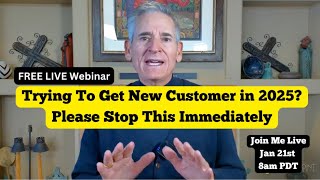
Jeff Harrison (Swing Point Media) addresses local business owners and explains a time-efficient system to create content: record one long-form video (minimum ~10 minutes) that demonstrates solutions for ideal customers; publish it on YouTube as the long-form asset; extract the audio to publish as a podcast; use AI tools (e.g., InVideo AI) to automatically chop the long video into many short-form clips (aim 1–2 minutes each) for social platforms; use transcripts plus ChatGPT to generate social posts and email copy; and outsource editing/scheduling via freelancers (Upwork, Fiverr) to keep the process under an hour of owner time. He emphasizes solution-based content (proof over boasting), repurposing to serve audience preferences, and building owned reach (the “shade tree” metaphor) rather than relying solely on paid ads.
Questions this video answers
January 21, 2025
Minimum 10 minutes (YouTube counts long-form at ~8 minutes+; speaker suggests 10 minutes for buffer).
Between one and two minutes (notes that many platforms consider short-form up to three minutes).
Between 45% and 65% open rates.
About $50 per week (example ROI scenario).
Chapters
If you're still trying to make content in 2025, doing it this way, there's no way, one, you'll have the time and two, you won't compete. Hey, welcome back. My name is Jeff Harrison. I own a company called Swing Point Media and I want to give you an example of what people try to do when they make content and it just doesn't work anymore. Now, the type of people I'm talking about are typically local business owners who understand, hey, I need to make content for my customers and for my business to grow. And not talking about chest beating content like, hey, I'm the greatest, I'm talking about solution based content. Well, here's the thing. In today's fast paced world, you cannot keep up if you think, hey, I'm going to sit down once a week, I'm going to make a video, I'm going to be on a podcast, I'm going to make all these videos for short form and I'm going to put it on YouTube and Facebook and all this kind of, it isn't going to happen. The reason is because as a small business owner, I can tell you it's easy to get caught up in the fact that, you know what? I. In the meantime, I am busy taking care of my customers, I'm working with my staff, I'm learning new things, AI is exploding. And you know what gets pushed down to the very bottom of the list? Me.
Your company. Your growth will be pushed down to the bottom list because the end of the day, you know, it's like a candle. There's only so much wick to go around. So I want to give you this process today to get over that and show you what I've done or share with you what I've done to make all the difference. And what I'm talking now is less than one hour. In fact, you can, if it's at least 10 minutes, you can do this. Now. What am I talking about? I'm talking about coming on camera and I want you to start with a video first. I want you to come on camera and I want you to shoot a video like we're talking about here right now. And this video should be something that is extremely valuable and useful for your ideal customers. In this case.
The pain is, hey, I'm a local business owner. I need to make content to make content, but I just have the time and I need a system to do that. Well, that's what this video is about. So what I'm going to do is I share, you're Going to share. Hey, this is the pain point. Here's the answer. So in this case, I'm talking about 30 minutes to an hour of your time. And here's how it goes. I want you to start out with a platform of video. The reason is, is because from video all things can be created. So what I want you to do is take that video and let's say it's 15 to 20 minutes. But minimum, minimum 10 minutes. Here's why. Because we're talking about long form content. Now YouTube looks at long form content at anything 8 minutes or longer. So I'm saying 10 minutes just to give yourself a buffer. Does it mean if you ramble on? I don't want to say ramble on. If you go on with your product and it takes you 20 minutes to explain and to demonstrate or the solution that you're dealing with, that takes you longer, that's okay, don't freak out. Cause here's what you're gonna do. You're gonna create that one video. You're gonna put it out on the Internet, on YouTube. That's gonna be your long form piece of content. From there, what I want you to do is I want you to take just the audio portion out of that and I want you to create an audio podcast. That means now you're on two different platforms or you have two different pieces of content. One is audio, one is video. Now some of you might say, well, why would I, why would I go from video to audio? I'm gonna give you a per. I love long form content when it comes to consuming. But there's often times where my ideal follower, if you will, the person I'm watching is someone who makes it on video and doesn't make it on audio. So I can't listen to him in the car. But there's another. His name is Omar and he has a company called the Video Department or a podcast called the Video Department. And he does both. He does what we're talking about. He will take that video and he'll strip out the audio. He'll make a podcast. Now when I'm driving, I can turn him on and listen to him. Then if I want to come back, if he's talking about something that says, oh, I need to watch it visually, I'll go back to YouTube. So now I could go back to two places. The key thing is here I'm serving my audience. You're serving your audience where they are best to find you. And you're not just giving them one choice. It's like hey, yes. This peg will fit in this hole and it'll fit in this hole. You're giving them another option. Now let's kick it up a notch. Let's say you have a long four piece of content and it's 10 to 15 minutes at least. Now what you can do, and there are many, there are many different resources out there to do this. We use one called InVideo AI, or you can use video AI and what you're going to do is you're going to upload your video and then using AI within that system, it will chop it up into many different short form videos. Now there's been a little twist on the short form videos. It used to be anything under 60 seconds. I'm not saying you should go longer, but what I am saying is be aware of this because sometimes when you, if you have a platform that you're using and they're cutting them all up to 60 seconds, realize you can go longer than that. Because most platforms now recognize a short video as something that is three minutes or less. Some of them have a little bit more, some have a little bit less. I'm going to try to say, hey, stay in that sweet spot between one and two minutes. So what will happen is your AI on this platform will examine your entire video and it will pick up what it thinks will be the most important parts of that video and it will cut those up. Now typically in that length of a video, you might get anywhere from 10 to maybe as many as 20 shorts that you can use. These can now be pushed out on Instagram, Facebook and YouTube. They can also be used in your emails to drive them, to drive your audience to the longer form content. So now you have all this content, right? But wait, we're not done. We haven't even talked about social media yet. You can take these short form pieces of content and guess what? That becomes something you can put out as social media posts. Now do you have to, do you know all 10 or 20 of them? No. You might say, hey, I'm posting one or two times a day. Which you can use a product like something like later or loomla and you can schedule these. And by the way, I'm not saying you have to do it. Your job was just to get in front of the camera the first time and record this and then you can hand that off to your video editor. Oh, I know sometimes people say, well, I don't have a video editor. Well, go up there to fiverr or upwork something like that and hire somebody to do that. You'd be surprised how inexpensive these people are and how quickly you realize your ROI. If I spend, you know, $50 a week on a video editor who does all this stuff behind the scenes for me, that all of a sudden it's like, hey, gives me one or two new clients because here's what's happening. And then I'm going to get back to the social media process. Here's what's happening. We as consumers, before we make a decision, what do we want? We want proof. We want proof that you know what you're talking about and you can actually help us. We don't necessarily want to hear that you have a 30 year warranty or you've been in business for a decade or that you have. In other words, we don't care. We want to know, can you solve our problem? And when we know you can through the proof of your content, well, guess what? We want to lean in, see where your contact information is and reach out to you, whether it's a text, email or a phone call, and say, hey, I think this is the person who can help me. So as you're making this content, think about that. Am I just boasting about who I am and what I do, or am I actually serving my audience again? My audience are people who are in business, they're local businesses, they're busy, they don't have a big staff to say, hey, we're going to have you as a video editor, you're as my podcaster. No, but they know that they need to create content. Because here's a saying I came up with. You can rent the cabana. You know, like if you're on a pool and it's sunny outside, you say, well, I want to, I want to get out of the sun while I'm around the pool. I can rent that cabana, but you have to rent it every time. Or, or you can plant the oak tree and have the shade that you own for the rest of your life. Well, just like that shade tree, it takes a while for it to grow. So every piece of content you put out becomes another shade tree. And next thing you know, you can go outside and enjoy the pool all you want because you have your own shade. You no longer have to rent the cabana. When I say rent the cabana, I refer to that as, that's paid advertising. Every time you put something out and you say, I want to get some more eyes on it, I'm going to put some ads to it. Now, I'm not saying this bad but it's nice once you have that shade tree, guess what? People want to come and enjoy your shade. So, okay, so let's get back to how do we put it out on social media? You can take something like ChatGPT. And this is what I would do. I would go in, I'd say, okay, I want the transcript of all these videos, or if I want the transcript for my full video and you can get this right it on YouTube, copy and paste it into chat GPT and say, hey, write some scripts or write some posts. And let's say, for instance, you, you on LinkedIn, make sure you tell it. I want to write posts that go with shorts for my video that's on this transcript that I can put on LinkedIn. Please make sure to give me a catchy title as well as put the hashtags that would be appropriate for my business. And this is my customer. This I'm looking for. Now you have that all printed out. Now it's basically copy and paste. Oh, wait, you said, I don't have time, Jeff. Well, now you would just turn this over to your person who's doing this for you, which again, you can get very inexpensively out there on Fiverr or on a place like Upwork. You're not done yet. Guess who else would want to hear about this. These are people in your database. Now, when I say database, I'm talking about in your email list so many times. And I had a conversation earlier this week with another digital marketer in Canada who does the same thing I'm doing. And we're talking about the open rates for email. And he had mentioned he doesn't do a lot of email for his customers because he felt like the emails weren't very effective or as effective as he thought they were. Our customers are getting email open rates between 45 and 65%. Let me say again, between 45 and 65%. Why? Because we take this same mindset of helping and adding value, not of saying, every time they open an email, we're hammering them, trying to get them to buy. I talk in a way when emails. Emails are designed to load your ideal customer's lips. So when they're out having coffee with their friends or playing golf or maybe they're playing pickleball, that when they have a conversation, they're not just saying, hey, check out the weather, or, did you hear about this guy who did this? No, no. Now you're giving them stories that they can have a conversation with. And then this is what happens. How did you find out about that. Your friend says, oh, my guy who does X, Y and Z, he shared this with me and here's it. Well, wait a minute. What do they do? How do they send it? Oh, this is my guy who takes care of my heating and air conditioning. Well, you know, I didn't realize I had to have my air conditioning service twice a year. Maybe I should give them a call. And next thing you know, you have a referral for you. So what you've done is you've given them ammunition. Because here's the thing I think about. If you have a database, you have. You have an excuse, the example. But you have a machine gun with no bullets in it. If all you do is you send out emails that say, buy me, buy me, buy me, and you have an 18 to 20% open rate or worse. Or you have people unsubscribing. But what if every time you send out an email, you're giving them. You're giving your database already know, loves, and trust you. They voted with their wallet, they paid, they gave you the credit card that now you're giving them more information they can talk about. And they don't have to talk about things, just like the weather. So let's recap this. This whole thing for you now is not days of activity. It's less than an hour. The only thing I'd recommend you do is I want you to go out to upwork, and I want you to go to something upwork or fiverr, and say, this is who I'm looking for, and hire somebody. You know, virtual assistants are virtually a dime a dozen, and they're very skilled. You can tell them exactly what you want to do and they'll take care of this. Now, I dare say, and Swingpoint Meet is on the cutting edge of this, is we'll probably create AI agents who will take on these tasks and do them for you automatically. I can just imagine that happening in the not too distant future. We're pushing that envelope. So now what happens is this.
You're at a meeting, whether it's a chamber of commerce meeting or it's a networking meeting like BNI or something like that. And somebody says, wow, I see you're everywhere. I saw you on LinkedIn. I watch your video on YouTube. I got your email. I see you're posting like, you know, twice a day, five days a week. How are you doing all of this? This is omnipresence, a way to do what we call omnipresent marketing. You're everywhere at once. Because here's the reason for this and going to tie a bow on this and call it a day. If you are not marketing in many places, you're missing this opportunity. Imagine you're crossing a stream and you're going from rock to rock and all of a sudden you've taken a couple of rocks across and all of a sudden there's no more rocks. What do you do? You turn back and find another way. Well, here's what your content does. This is the rocks across the stream to take your customer from one side of the stream to the other. And guess who did that. Your content, more and more of us. Our content or our customer journey, our buying journey is not a straight line anymore. It's not one thing. Oh, I looked up one thing and I'm done. Yeah, there are people out there that do that, but there are a lot more of us that say, you know, I saw it on tv, I hit the QR code, then I went to their Google reviews, then I went to their website, then I went to their YouTube channel. And now I feel comfortable going back to the website and filling out a form. You see, it wasn't a straight line. Now raise your hand if you're like me. It takes more convincing because we have more to go from. This is replacing the days where I thought, hey, I saw this in a magazine, I picked up the phone and I called Joe in the office who runs that or offers that service. We don't have to do that anymore. We can do all of our legwork. But now it's so fast and so easy. So here's my recommendation for you. First, reach out and get somebody who can be your virtual assistant and, or your video editor who knows how to do all of these things. And you'd be surprised. This stuff is not difficult, especially, especially on a day. And, and I'm not going to get too deep into this, but the more authentic you are on camera, the more believable you are. In other words, I don't think you need a lot of the cutaways, the music and the fast cuts and things like that. I think people just want to have a conversation and this is what we're doing here. So I'd recommend getting those two people in place. Then what I do is I say, hey, let's make this really easy on you. What if when you decided to make your piece of content, your long form piece of content, you said, well, I've got the camera, I've got the lights up, I'm dressed really nice, why not create four of these at one time and if they're 15 minute videos, you've invested one hour and all of a sudden you're done for the month. So now you have four videos, you have maybe 50 or 60 shorts, you have that many social media post, you have four podcasts, I mean, you're off to the races and you have all this stuff you can send to your database in emails. This will be your building blocks or your platform for the future. As I say, this is your shade tree. It's not a cabana that you have to pay for every time. This is a shade tree that whenever the sun comes up and you want to hang out by the pool, but you don't want to sit in the sun, this is the deal. It's your content. If you have questions about this, please just put your question in the comment. If you like this, I would love for you to click the button and say, hey, let me follow this guy. Sounds like he knows what he's talking about or maybe he's some good information. I'd love that. I'd love your feedback. In the meantime, go out there and make some content, but don't put all the pressure on yourself of saying, I got to know how to do all this stuff. All you have to do is know about your product and service and how you can best serve your customers and that it's solution based. You do that and what will happen is people will be attracted to you and they'll come in, they'll be more prepared to buy, they'll be less likely to probably negotiate on prices because they see the value in what you do and you have a better long term customer base. Thanks for joining me again. My name is Jeff Harrison with Swingco Media. Have a super week.









