Part Two - Debunking The Myth of Anxiety and Low Moods with Michelle Brown
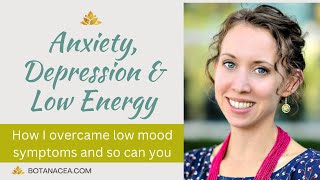
A recorded YouTube interview (Jeff For Local Marketing) with Michelle Brown, a functional nutrition practitioner and herbalist, examining the common belief that anxiety and low moods are solely mental-health issues. Michelle explains how physiological factors — inflammation, nutrient deficiencies, gut health, blood sugar, hormones and methylation — can drive anxiety/depression, describes her assessment and targeted testing approach, and offers free resources (a ‘mood fix’ neurotransmitter assessment and a ‘mood reset’ top-10 strategies) available at botanicia.com.
Chapters
Hey, welcome back. My name is Jeff Harrison, and once again, we're dealing with the issue of anxiety and moods, especially with women, but it happens with men. And we're very, very blessed to have another individual join us today who's going to help us talk about something that, you know, quite frankly, anxiety. We think, well, that's a mental issue. We've been told that all our lives. But is it true or is it false? Well, we're going to bring on Michelle Brown, and she's going to help, kind of help us understand is that real or not? She's going to maybe debunk that. Hey, Michelle, how you doing?
I'm good. How are you, Jeff?
Hey, before we. Good. I'm good. Before we jump into today's topic, I want to have you just tell us a little bit about who you are, and then let's get right into this.
Sounds good. Yeah. I'm so excited to be here. So just. Just a little background about me. You know, I'm a functional nutrition practitioner and an herbalist. And what I love about those two modalities is really bridging the gap between modern functional medicine and these traditional herbal practices that have been around for thousands of years. And I see those two really complementing each other as we bring in, like, cutting edge science with some of these traditional approaches to healing. And. And, you know, I got into this work from my own struggle with my health. I was diagnosed with Hashimoto's, actually not until my 30s, but I struggled with my thyroid for a few decades before that, and that looked like a lot of low energy and depression and just struggling with my digestion. And I didn't get any answers, you know, from. From anyone, really, from my doctor or anything else I was trying to do until I learned about this functional approach where I really recognized that there were some things going on in my body that I could actually address, like nutrient deficiencies, my gut health, my mood, my nervous system response. And I was really amazed at how once I took this approach, I was able to get my health back on track and my mood and. And that just really became a passion for me in helping other men and women around the globe to really just get in control of this situation. That can feel so overwhelming. Right. When we're struggling with our mood, it can feel really, really tough. Right. Really overwhelming. And we can be really just, you know, really down about it. Right. Like, what do we do? We've been looking for answers, and there are answers. And I really love helping my clients to connect the dots between what they're experiencing with their mood and what's actually going on in their body.
Well, I think you're doing amazing work. And you know, when, as you say, when people are suffering with this, it's like the world becomes so much smaller and the options become so few that it's, it's almost a helpless situation. So thank you for doing what you're doing and helping people get from that, that despair to a place where you know what, life is engaging again, there's opportunities, and the sun does come up. It's. It's exciting. So thank you for doing what you do.
Thank you. I appreciate that.
You know, I do want to ask you a couple of questions just to clarify for our audience, because some people may not be familiar with the word functional medicine. Can you give us a broad overview of what that really means?
Sure, I'd love to. Yeah. You know, when we think about, you know, our kind of conventional medicine approach that most of us have experienced and grown up with in our lives, it's really this approach of, you know, you go to the doctor, they give you a medication, right? Whatever. Whether you have depression or an ear infection or, I don't know, whatever. Usually it's just a prescription that you're handed. And in some cases there is a time and place for that. But what we know is that a lot of times, a lot of the current health issues that many people are struggling with are related to nutrient deficiencies in their diet and hormone imbalances, right? Things that take a little bit more work to address than just giving someone a prescription. And that's really where functional medicine is different than what most of us, again, have experienced as kind of our current medical model, where we're looking at a systems based approach to really finding the root cause of reasons why someone's struggling. You know, so many people in our society today really are struggling with chronic health issues, whether that's showing up as the anxiety, the depression and other low mood issues that I help clients with, or chronic gut issues, chronic pain. In fact, these are really common in the clients I work with who are struggling with their mood because there's a common route to, to all of these things. Right? And that's where we want to address things at the root, which is often related to inflammation, right? It's related to lifestyle practices, it's related to blood sugar imbalances, nutrient deficiencies. So by addressing these things at the root, which is what this functional approach does, we're able to really shift things in the body in a way that's Lasting. Right. That really gets to why we're experiencing these issues. So. So we can shift them and stay in a place of really being healthy and free from these chronic issues, which I know is what we all really want.
Yeah. You know, I think about functional medicine is one of those things that's like, you know, what I want to live until I die versus what it seems like is like, you know, people reach a certain age, and then they live the last 10 or 20 years dealing with pains and aches and the inability to. To really enjoy life. I'm excited about what you're about to share, especially when it comes to anxiety. And, you know, we've always kind of hung that shingle on the mental side, but you have a different feeling about that. You want to share some insight to that?
Absolutely. Right. You know, with so many people who are struggling with their mood and anxiety, they might go talk to the therapist about that. Right. And I am all for therapy. I think mental health therapy certainly has its place. Place. But what I want to help people understand is that often there's this biological disconnect happening in the body, right. There's a physiological disconnect, a root cause there with, again, inflammation, nutrient deficiencies, gut health. Right. These all are impacting our mood. And until we address the true root cause reasons for why we had these low mood symptoms, we. We're often gonna keep struggling with them. I have so many clients who have gone the mental health route, right. They've gone to therapy, and they still feel like they're struggling, and they think, why can't I snap out of this? What's wrong with me that I can't just feel happy about my life? Why do I struggle with this? And while, again, there's this mental health component to this, if we don't address the physical health side of it, we. We often find ourselves just kind of stuck, right. Spinning our wheels, staying in this place of feeling just kind of chronically down, depressed or anxious and not being able to really shift that pattern. Even though, you know, we might look at our lives and say, you know, I. Like I have clients who will say, my life is pretty good. Right. Like, I don't really have a lot of, you know, it's not like I've been through really terrible things now. Some of my clients have, and I want to acknowledge that as well. But, you know, even for those who maybe would say, you know, it's not really like I have a stressful life or I've been through a series of stressful events, and yet I'M still in this place of just not being able to really shift my mood and feel, you know, happy and calm in my body. There's just this underlying sense of anxiety that seems to follow me around wherever I go and I can't snap out of it. And that's because it's a physiological response in the body that needs to be addressed.
So are you saying that, you know, it's almost like, it's almost like saying, hey, even though you may be a Ferrari, I'm not calling you a car, but let's use that as an example. You're a Ferrari and you have all the right stuff, but if you put in bad fuel, the quality of how that vehicle is going to run is affected. And instead of examining the fuel, we're actually changing the carburetor.
Right. That's a great.
Is that right? Is that kind of the way that works?
Absolutely. We're like looking in the wrong direction. Right. And we need to make sure, I mean, we need a good carburetor on our Ferrari. I'm sure. I know nothing about cars, but I'm sure they need a carburetor. But that's not going to make a difference if it's the right. If it's the wrong fuel. Right. We need to make sure that. And that's that root cause approach where we're looking at what's really underlying these symptoms that are showing up in my body and how can I shift that so that I can get lasting results. Right. We don't want to just put a band aid on it and just ignore things. Right. I think that's another approach that's really common with our mood struggles. Right. We kind of just try to ignore it, push past it. And, you know, our body, again, it's telling us something's out of balance. So you want to tune into and listen to that and ask, like, what's really driving these low mood symptoms for.
Me in your studies, and I'm not going to call out any particular.
Practitioners that they've done anything wrong. I know that's not, that's not the situation. But in your studies and maybe even in your opinion, how many people are out there that are, are being misdiagnosed with anxiety, that it's a mental issue when it could be physical?
Oh, my goodness. Well, I mean, in my opinion, there's almost always, maybe even it would be true to say 100% of the time, there's always something on the physical level that's behind that anxiety. I'm certainly not saying that there can't be, you know, life stressors and trauma and things that are impacting our mental health and our level of anxiety. But what I think is important to understand is that stress, trauma, overwhelm, they change our physiology. And that's the key there, right? That our hormones will shift in response to stress and overwhelm, we burn through some of our important minerals, like magnesium, more quickly when we're stressed than when we're calm and relaxed. And so there's almost always, if maybe even safe to say always, a physiological component to anxiety and depression.
Do you have a. Do you have a way to test people? Like as an example, you know, as you explain this, I'm thinking, you know, when I've gone to the doctor, they never asked me, hey, what are you eating? Let's do a test and find out with blood, you know, are you low on zinc or magnesium or any other of these components? Do you have a way to test this so we can figure out, hey, is this really the underlying problem? And then can I take different steps to go forward?
Absolutely. I think testing is a really important part of the equation. You know, like we talked about last time, I start with an assessment, right? Just kind of a quiz I can give clients that helps me to start to pinpoint what might be driving their specific low mood symptoms and their physiology around anxiety. Because, you know, there can be different factors here, right? And for one person, they may be low in zinc, they might have a copper excess. Another person might have oxidative stress from poor gut health, right? And so in order to really get to that root cause, I need to understand what's going on with this person and yes, what are they eating? Right. All of these things are so important. So I start by doing a lot of assessing and really just gathering a lot of information from my clients before we go to any testing. And then once I have that assessment back and I've got a better picture of what might be going on, that's where I bring in really targeted testing and looking at nutrient deficiencies, looking at markers for inflammation, blood sugar balance, right? All of these things we can test really easily with some just simple blood work that will help us to guide the steps we take to address those underlying low mood symptoms that they're experiencing.
This first assessment, is that something that someone can access and they do, is it, is it done with you or is it a done. I do it myself and then I submit it to you and then you take it from there. How does that actually work? Do I need to come to your office? Or is this something that you can help women or men across the globe?
Yeah, I do actually work with clients from around the world and I just send them assessments online. So I do everything online and through Zoom, and I usually have them complete the assessment on their own before we meet, just to give them time to think through their answers. You know, we can always talk about it when we meet, but, you know, it's just a simple kind of checkbox type of assessment. And where I'm looking at, do you experience this type of symptom? Do you have that symptom? And it's really fascinating to me, Jeff, how there's like this constellation of, of symptoms and maybe even we could say personality traits or patterns that start showing up with specific imbalances and specific nutrient deficiencies. And you know, for one example, I often assess for methylation issues with clients. And methylation is something that a chemical process that happens in our body and it controls a lot of things, including how our body turns on our DNA and how we detoxify. And it can have a big impact on our mood. And we know people who struggle with chronic mood issues often have methylation issues, but we also know that there are certain traits and patterns that can show up. So for someone who, like me, when I was in high school, I was a very drip person. I was very perfectionistic. I, heaven forbid I get, you know, a B on a test, right. I had to get all straight A's. And you know, these are people who tend to be more prone to depression, which I was, who might be prone to eating disorders, which was me as well. And so I had these under methylation traits. And by recognizing that there's this kind of constellation of traits around these, these specific imbalances, then I know where to kind of target my testing. And we can test for something like methylation imbalances pretty easily, which then guides how we're going to address these specific low mood symptoms that are showing up. So in my case is an under methylator. You know, I needed support to balance my methylation and there are specific nutrients that can help do that as well. As always addressing inflammation, I find that is a key piece in any type of, again, what I just call low mood issues with anxiety or depression, there's this underlying inflammatory mechanism that's often behind a lot of these symptoms.
You know, you've mentioned inflammation a couple times there, and as I understand, you know, a lot of times you think, okay, inflammation comes from an injury or an infection or an illness, but it actually can come from the food we eat, Isn't that correct?
That is very true. Right. A lot of us are eating more inflammatory diets. Right. So if we aren't getting enough protein and healthy fats and fiber, that's going to impact our blood sugar balance. Because what's left, Right, is the carbohydrates. And carbohydrates we know turn into glucose in our blood, which we can use to burn for energy. But if we have too much blood sugar, blood glucose, that amps up a lot of inflammation in the body, and it's really a driving factor in a lot of chronic health issues. Today I see a lot of chronic issues with my clients. Even though they're coming to me to address trauma and mood and mental health concerns, they're often also telling me they have gut issues, they have digestive issues, they have chronic pain, they have autoimmune conditions. So there's that. That link there with the inflammation. Right. It's going to really shift the way the body uses energy, the way that our immune system functions, and going to show up as a lot of these chronic inflammatory conditions that many people are struggling with today.
Well, do me a favor. You said you offer an assessment. How does someone get in touch with you to take that assessment and find out, hey, is there an answer here that I haven't even thought about, which is more physical, not psychological?
Yeah. So, you know, I have an assessment. I call it my mood fix assessment, and I look at neurotransmitters that actually impact our mood. So right when I think of neurotransmitters, these are what I like to call our feel good chemicals in the brain. Right. Serotonin is that feel good chemical that we feel happy and alive and relaxed and not depressed and feeling like there's that black cloud hanging over our head. You know, I think of dopamine as that neurotransmitter that helps with focus, with being alert and able to get things done. I think of GABA as another neurotransmitter that really helps us to feel good. And if it's low, we might experience anxiety. We might have trouble finishing tasks and staying focused as well. So we can actually start assessing these neurotransmitter systems. And again, there's this, like, constellation pattern of symptoms that will show up for each of these in different ways. So you can take that assessment, you can figure out which of your neurotransmitter systems might be low, and then there's really specific targeted ways to support each of these systems and I've seen that really help women shift their, their mood and their ability to stay focused and sometimes even things like struggles with eating patterns. Right. Like reaching for food as a pick me up or just to kind of reaching for food as a way to feel good about themselves. Right. It's sometimes just addressing these neurotransmitter systems can shift some of those behaviors as well. So that is a free assessment that I offer and people can go to my website, botanicia.com and find that there and take that assessment and start figuring out some steps they can get started with to shift their neurotransmitter systems and really support those so they can start feeling that sense of calm and being what I say embodied right in their body and in their nervous system without feeling overwhelmed.
Well, Michelle, this has been a real eye opening experience because we do or we have as in general society taken on the whole idea of anxiety is that is a mental health issue. And boy, it's one of those things. It's like, you know, do I want to tell anybody that I'm anxious because they might think I have some mental issues? When really through your free assessment, which information's on the screen now, you can, you can go to it and excuse me, in the description and you can take this free assessment she's offering to figure out, hey, it has nothing to do with me mentally. That is a side effect. It really goes deeper than that. Michelle, I also understand that, you know, you talked about stress and stress drives some issues in our life. You also have a free giveaway for 10 things to help us reduce our stress. I saw it before we came on air. I have to be honest, I did take a step or two or a couple of those. And you know what? They help. How does somebody get a hold of one of those?
Yeah, so that's just another free offer that I have. It's called my mood reset method, top 10 strategies. And this is where I recommend anyone who's struggling with their mood, really start with resetting their nervous system biology and you know, addressing some of these factors that we talked about that are driving these low mood symptoms. So you can get that the same place you can get the neurotransmitters assessment and check that out and get started. They're really simple ways that you can start supporting your mood and mental health and really see a shift in how you're feeling in your body.
Michelle, I just want to thank you again for being here, taking some time and really helping us kind of, if you will, kind of pull back the curtains on debunking the myth of anxiety. Because I know there's, there's got to be a lot of people out there. And something that I wasn't expecting to say when you said almost 100%, if not everyone should consider, hey, there's a different thing. It's not mental. Let's look at this assessment. If you're dealing with that right now, you're watching this at any point, her website is open 247 and that, that assessment is there free for you to take that. And you know, I have to say she's kind of like a modern day super sleuth, you know, Sherlock Holmes. That assessment helps her understand, hey, are there some issues there? Because I think she's also the type of person, if it is one of those things where it has nothing to do with your, your hormonal imbalance and you're all set there, then she can clearly state, hey, this is something we can't help you with because you have that covered, it may be a mental issue. And that's where you'd say, hey, you need to go see another different person. Is that correct?
Absolutely. And yeah, I mean, you know, there, there are things that we can address from that mental health perspective. Again, like, I think that, you know, therapy, mental health therapy can be valuable. But I just want to emphasize that, you know, unless we address this from a holistic approach where we're also looking at the biology, the physiology of our nervous system, often those really valuable things like therapy and other modalities just don't move the needle the way we want them to. So, you know, it's not an either or approach, but we combine the, these modalities in a way that we're supporting the whole system, the whole person, mind, body, soul, all of that. That's where you're going to see things really shift. So I just want to encourage you, if you are struggling with your mood, not to overlook this nervous system biology piece that's often, almost always playing a role in those low mood symptoms.
Michelle, thank you so much. And for those of you who are watching today, whether it's live or it's another time, and you say, hey, that sounds like these are some things I'm dealing with. Go to the information in the description, click on the link, go take that assessment and find out where you are, that there is an answer. It's not something we just want to say, hey, let's just medicate it. And because that weed will come back, as I've said before, hey, if we just take the top of that weed off. It looks good for a while, but it's still growing underneath and it'll pop out again at weird times. And that's sometimes we say those are mood swings. Well, with Michelle and her assessment, we can get to the bottom of this. Please go to her website today and take that assessment. The link is in the description. Michelle, again, thank you so much for being here. You have been a light when you know, it's almost like you're a lighthouse out there. There is an answer. Thank you so much for joining us today.
Thanks for.
Sam.









