Success Stories of Women Entrepreneurs - Cheryl Cohen - The Local Voice
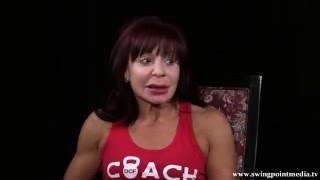
A Local Voice YouTube interview (host Jeff Harrison) with Cheryl Cohen, owner of Desert CrossFit. Cheryl shares a personal success maxim ("Which is why wait for someday? Because someday may never come"), describes a recent serious medical hospitalization and recovery that affected her business, and recounts a notable client success (Jean Stewart — an older woman who progressed from difficulty lifting 20 lb to lifting 153 lb). The interview also explains CrossFit (constantly varied functional movements at individualized intensity), highlights communication and marketing as ongoing business challenges, and gives contact/location details for Desert CrossFit.
Questions this video answers
"Which is why wait for someday? Because someday may never come."
She said she had "some pretty serious, serious medical issues" and was hospitalized (described as happening "last year" in the interview).
Client Jean Stewart lifted 153 pounds; she was about 83 years old at the time (86 at time of interview reference).
"Constantly varied...functional movements...executed at high intensity" (individualized intensity per participant).
desertcrossfit.com
Chapters
Welcome to the new Local Voice. I'm Jeff Harrison, and I am so excited today to have a guest. Before we get started, I want to kind of give you a little bit of a history of what we're doing here. It's not about.
The show. It's not about us. It's really for a selfish reason and one reason only, and that's to help other local businesses who work their fannies off to be successful and then is to share those successes through their trials and tribulations to those people out there that might be just starting out or maybe they're going through a hard spot and they think, you know, it's just them. So today I have a very special guest. Her name is Cheryl Cohen, and she owns the first CrossFit in the desert. It's called Desert CrossFit. Cheryl, welcome.
Hi. Thank you.
Well, Cheryl, I like to always start off with a question, and it's about your favorite success quote and then why.
Sure. This quote actually is my own. I found it. I said it many times. Which is why wait for someday? Because someday may never come. Being in the fitness industry, it's very common that people talk about wanting, I'm going to do it. I want to do it. But yet fitness is very confronting. It actually requires that you get up and do something. And it's very common for people to say, yeah, I'll get to it. I'll do it sometime. But if you want change, you have to take action.
That's powerful. So, you know, we think of our body as. It's almost. It's the last thing we actually take care of. It's our family, our business, you know, spiritual, whatever. But at the end of the day, if we. If our body breaks down, whatever, those other things matter, right?
We can't be there for our family.
And speaking of breaking down, tell us about your most. Your most difficult time in your life when it was business, like when you just felt like, flat on your face. And what you really learned from that.
This actually is physical. Last year, I had some pretty serious, serious medical issues, and I was hospitalized for a bit, and it was really hard to keep my spirit up. Now, you can imagine that being in the fitness industry and being in the eye of people around you, that having someone who is a business owner in fitness to be hospitalized, that doesn't look good. And people talked, and it was really hard to hear about people saying negative things. And I thought that that wasn't ever going to go away. I didn't know that I was one, that I was Going to get better. But I thought that that negative stigma would stick with me forever. And it really took a lot to get up, get out of the hospital and get back on track. And if someone would have promised me, you know what, people are going to forget about it and they're going to look it to what you're going to do and not where you're at right now, something else will come around for them to talk about.
Yeah. So with that, you know, you say it was a tough time in life, but it was. So it was a physical thing, but then it actually became a mental thing.
As well, and it affected my business.
Wow. Wow. So in that situation, take us to that day. I mean, how did that feel? Like, what kind of things were being said about you and your business, if you don't mind sharing that? You said, hey, those are. Those hit me at the core. And did it. Did it make you surrender or, you know, get up and fight a little harder?
People were, I would imagine that they were saying, I didn't know what I was doing. I mean, if I could, if I could get hurt, then I might not be very good at what I do. And that made me sad. I mean, really, truly sad. But as I started to heal and I realized that my ability to change people's lives still resided inside of me. And as I got back to what I love to do, then the world around me started changing and what people were saying started to dissipate. Like I said, they found other things to talk about.
So when you got back into, if you will, if you got back in the gym, you really started presenting provable facts that, hey, you know what? You're back. And that's undeniable. Right. And so that was part of that. That's the physical part. But did you see your. Your emotional part, your mental part growing every day with that? When you got, I'm going to say, physically stronger, and all of a sudden you're saying, hey, look at me, I'm back on track here physically. Did that help you also mentally, emotionally?
Absolutely.
Yeah.
For someone who is active by nature, not being allowed to do so is very hard to tolerate. So as my body started catching up, slowly but surely, that component, and then I felt stronger mentally.
Yeah. Well, let's switch gears just a little bit now. So that was. That was a really low time in your business. Tell us about something you're most proud of when it comes to your business.
This one's pretty near and dear to my heart. As you can tell how much I'm smiling Years ago, and I would say this is probably six plus years ago, an older woman walked into the gym and she had a newspaper tucked under her arm. And it was an article that was written in the paper about Desert crossfit. And I asked her why she was there and she said, I'm tired of being treated like I'm old.
So I asked her what in life she was having trouble with. She told me picking up the 20 pound bag of potting soil and getting up off the ground after pruning her roses.
Wow.
So we started to work on exercises to help her build her strength so that she can do those items. And we started carrying around little weights that were 5 pounds each and suddenly they were 20 pounds each and then they were 35 pounds each. And at some point a picture was taken. This woman's picture has been all over the Internet of her lifting 153 pounds. Wow.
Wow. That's a lot of potting soil.
That's a lot of potting soil. At the time that that happened, I think Jean was 83 years old. She's now 86. The cool part of the story she told me is she went into her doctor, it was her cardiologist, and he told her that when she first came in, when she was first starting the exercise, she, she was the equivalent of a Model T Ford. And now she walked out of that office of Rolls Royce.
How neat is that? That's just got to make your heart stick.
It makes me feel so good.
Wow. Especially for someone like yourself. I mean, obviously looking at your body, you take very good care of your body. But when you, you probably spend most of your time training and teaching others. Yes. And so you gain tremendous reward and satisfaction with. I'm sorry, what was her name again?
Her name is Jean Stewart.
Her name is Jean Stewart. So when Jean has that kind of success, I mean, I can see it in your eyes now, it's just you relive that moment. I mean, that's really. At the end of the day, that's the fun part, isn't it?
It's making a difference in the lives of others, especially for the older population.
Yeah. So I'm curious now, a little off track here, but, you know, what do you do with somebody like that who is, I'm going to say an older person in the population, 83 years old. Right. And I mean, are there some things in our body, I mean, I've heard that our body muscle tissue really never ages. Is that true?
You lose muscle mass, but that doesn't mean that you can't improve that and increase that along with bone density. Ok. I think that's the population really that needs it the most because they need to maintain functional dominance. They need to be able to handle their own lives in all capacities.
Yeah. And most out of strength. And then, you know, you hear like my grandmother, you know, she fell, broke her hip and it made her more immobile. And you know, then that immobility, it just caused a lot of things. Now it sounds like Jean said, hey, I'm not willing to stop.
Absolutely.
And you helped her regain that, like you said, from almost lifting no weight, that 20 pounds of soil to over 153 pound. Wow, that's exciting. So when you give somebody their life back in that manner, I mean, what kind of things did they now see differently in life that you're aware of?
A cute example is her going to Costco and she picks up the 42 pound container of cat litter and they say, ma', am, would you like help with that? And she says no and just picks it up and walks out. Now she does have some serious stenosis of her spine and that's nothing that, that anything can change. But with keeping her core musculature strong, the doctors have said that this program has kept her walking unquestionably. It's not just a younger person's game.
Wow. So again, the whole thing is just because we're older, we don't have to stop keeping our muscles fit.
You don't have to give up.
And CrossFit. Yeah, and CrossFit. Now CrossFit for some of you might be thinking, wow, CrossFit sounds like it's a little bit harder, it's difficult. Can you explain CrossFit in kind of a layman term, if you will, so we can understand exactly what that means?
Sure. CrossFit is defined as constantly varied, meaning ever changing functional movements which are movements that exist in everyday life like squatting, pushing, pulling, throwing, executed at high intensity. The high intensity for you is going to be different than high intensity for Gene.
Yeah. Because it's probably harder for Jean than it is me.
Seeing her. Yeah, maybe, maybe so. So it's all individual and it is catered to what your fitness level is. No one is expected to compete with anyone at any level other than that they're comfortable. And the more you stretch outside that comfort zone, the wider the breadth of the adaptation, the greater your result.
So really it's a very, it's a very safe process from a standpoint. It's like you said, hey, it's Catered to each individual. Like if Jean comes in and she's at that point, she can't get the 20 pounds of soil up. She's not working out like I would. Who maybe I could do 50 pounds of soil, if you will. And are the exercises different or is it just the intensity of the exercises?
The exercises can be different as well.
Okay.
Some people might have some injuries or they just over time have body parts that don't work quite as well as they should. So not only can we alter the load, meaning make it less heavy, but we can also alter the repetition scheme and we can even alter the exercise.
How exciting. So when someone gets into your program, I mean like, you know, they start out like Gene, how soon before they start seeing, you know, some change where they come in and they tell you maybe it's not a physical thing where we can see, like I can see you're very strong, but maybe we can't see that. But they can start pulling saying, hey, you know what? Now, Cheryl, this is what's going on my life. I'm picking up that 20 pound potting.
Soil and within a month's time. Significant. No kidding. No kidding. Especially the people who have done less improve faster.
Exciting. Well, you know, I like to ask because people like you that have a series of success usually have a favorite book or something they go back to as a reference. Can you share with me your favorite favorite book that you use as a resource?
This is especially poignant lately because I've been referring to it a lot is Dale Carnegie's how to Win Friends and Influencers People.
Yeah, how do you, how do you use that book? Like, is there something out there that sticks out of your mind? Sticks in your mind?
Communication is a really big aspect of what I do. I have to be effective with a wide range of people. And what you say to one doesn't get received the same as the. And there's a lot of misinterpretation and interpersonal conflict because people don't receive things the right way. So it's how. Learning how to moderate that and then being the most effective at what I'm trying to do.
So communication is real important.
Huge.
Yeah. I think we forget that sometimes, especially when we get on the Internet and it's really black and white and it can certainly be misunderstood. But you're working with people face on. And sometimes communication is not so much verbally. It's physical as well, isn't it? I mean, you're probably watching their body. How are they performing in that exercise? Isn't that a form of communication?
Also their facial expression, you can say, how are you doing?
Fine.
Yeah. So we don't want to see that.
So I'd like to ask a couple of final questions. And one is, what do you think is the toughest thing you face in business even today?
Cheryl, this is what we're just talking about, communication.
There are so many ways to communicate with people now. And the quickest and the easy, like the text messaging is probably the worst. It really is the best when you can see someone face to face, but sometimes you don't have that opportunity. And taking the ego out of the equation and being able to see things from the other person's point of view, the difficulties they're facing, because people really need to feel related to and understood because they don't care what you want.
Right?
They care about what they want. So I have to be able to understand what that is and solve that problem for them.
Wow. Now, if someone were just starting out, right, and they're maybe they're thinking about opening the studio, it doesn't matter. It doesn't have to be in the physical fitness industry. But if they're just starting out, what kind of piece of advice would you offer to them to kind of keep them on path, if you will?
It's not enough to be a master of your craft. You need to learn the business, you need to learn how to market, and you need to learn how to advertise in fitness. Being a good trainer, being a good coach, it's not enough.
Yeah.
And I learned that way further down the road, but it's not enough. Learn more than just your craft.
So really then you're saying, hey, the marketing piece is really huge because you can be in the gym and be perfectly, like you said, a master, your.
Craft, and no one knows about you.
And that would be sad. That would be sad because you have a gift that you can't share. Well, again, thank you for being here. And I want to, for those of you that are listening, I want to make sure Cheryl gives us all of her contact information. How would somebody get in touch with you?
First of all is our website, which is desertcrossfit.com so that's-e S E R T C R O s as in Sam S as in Sam F as in Frank it.com also DesertCrossfit1 on Facebook, we have Twitter, we have YouTube and then the phone number 760-779-8880.
Now, where are you physically located?
We are located close to the intersection of Dinah Shore and Monterey, just a little bit east of Sam's Club.
Fantastic. Well, thank you so much for being here.
Thank you for having me.
And I want you to reach out to Cheryl. And, you know, she has a lot to give. Don't wrestle with her because she'll probably take it. But I want to, you know, reach out to her. And there's a lot you can learn from Cheryl besides just getting physically fit. But in the same time, you can get physically fit and emotionally fit. Cheryl, thank you so much for joining us.
Thank you.
Thanks for joining us here on the Local Voice. We look forward to having you again next time. I'm Jeff Harrison.









