Success Stories of Women Entrpreneurs - Alexandra Miklosova - The Local Voice
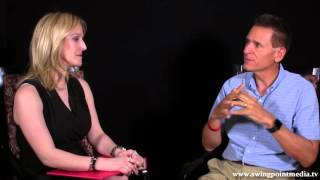
This content was created by Jeff For Local Marketing. This content was uploaded by Jeff For Local Marketing. This is a YouTube video titled "Success Stories of Women Entrepreneurs - Alexandra Miklosova - The Local Voice" featuring an interview with Alexandra Miklosova by Jeff For Local Marketing. The conversation, recorded on February 24, 2016, explores Alexandra's journey from growing up as a Hungarian minority in Czechoslovakia to becoming an entrepreneur in the United States, focusing on her innovative approach to real estate using social media.
Chapters
Welcome to the Local Voice. I'm Jeff Harrison, your host, where we interview people around the Coachella Valley that are interesting and are doing some amazing things. And we kind of peel back the layers and find out, hey, what kind of things have they done to become successful? But also some of the things we kind of take for granted that, you know, they must have just had instant success, and that's usually not true. And today's guest, Alexandra Miklosheva. Alexandra, welcome.
Thank you so very much for having me here. Thank you.
So, Alexandra, you know, before we get started, I always like to ask our guests, you know, their favorite success quote, mainly because it's that thread in their life that they kind of almost use as a guidepost when they make decisions, whether it's business or personal. Share with us your favorite success quote.
Wow. I have many favorite success quotes that help me guide through my success or lack thereof, you know, But I think one of the most important ones that I keep going back to is work hard until you no longer need to introduce yourself.
Don't mean to be so deep.
Tell me about that to you. What does that mean? How do you interpret that?
Of course, I was born in a very tiny village where, you know, dreaming it wasn't really a thing that you would do. You know, everybody pretty much knew from very early on what their life's going to look like and what they're going to end up doing, you know, And.
I always thought if I work hard enough, you know, maybe I can change things. Maybe I can go and live somewhere else. And, you know, I've been laughed at many times growing up, and I felt like that quote, you know, if you work hard, not just that, you can achieve your goals and you can follow your dreams, but people will know that you did that, and it will hopefully inspire others, too.
Wow. That's great. So, you know, obviously, as you say, you grew up in a small village.
That is correct.
Obviously not here in the United States. Tell us where you're from.
I grew up as a Hungarian minority. At that time, it was Czechoslovakia, as you remember, and now it's just Slovakia and Czech Republic. So it was called Galanta. I don't know if it's going to say anything to many of you, but very tiny village, Val Kalmaca. And growing up as a Hungarian minority already.
Showed me a couple of difficulties that I had to overcome at age three.
Wow. So when you say Hungarian minority, what does that really mean?
So back in the day, the entire territory used to be Austrian, Hungarian Empire, and when it Used to. When it became Czechoslovakia, basically my country left me. I never left my country. And I kept speaking Hungarian in my own home, but I was never really allowed to speak that outside of my home. Otherwise I would have been penalized or thrown in a jail. It's actually very heartbreaking that as a child you have to deal with that. As a result of that approaching things on a positive note, it forced me to be multilingual very early on. I speak five languages, and I feel like picking up new languages comes really easy for me, which I'm really grateful for.
Well, you know, with that, I mean, you're young and you're an entrepreneur. You know, a lot of times, and you say already you've kind of let us down to understand that you, you know, life was not always a bowl of cherries for you. So, you know, if you could take us at that time where maybe life was maybe the toughest, you know, whether it's back in your. Back in your native country or even coming to the United States, you know, what was the toughest time that you went through? And then what lessons did you learn from that that our audience would appreciate hearing?
Wow, that is really an excellent question. I feel like there were so many tough.
You know, avenues in my life when. And I really had to learn lessons, and I think one of them would be most recent when in 2014, I think, actually not 2008, when the real estate market started to fall apart. Do you remember that one time? Well, I feel like the reason I came to America is to build something, to create something, ground up. Right. I always feel like I had entrepreneurial spirit inside me. And I was approached by a really nice hospitality company and offered me a salary job, and I let my entrepreneurial skill down. You know, I gave up. I took the easy way out. And I feel like the biggest lesson that I learned that don't ever give up on your dreams. You know, I regretted it. I feel like by the time I realized that, no, you are an entrepreneur that should build things. You know, I'm four or five years setback in a way. Does that make sense?
Absolutely.
So that was my biggest regret. I feel like not believing in me, not believing that entrepreneurial spirit. And if you do have a dream, you know, don't ever give up. Don't take the road less. I mean, take the road less traveled by because, you know, it's not going to be easy. But I think that's what's going to pave that road to success really.
Well, let's talk about, you and your business now tell us a little bit about who you are, what brought you to the United States and really what business are you in?
Well, what brought me to the United States is completely different than what I do now. What brought me here was the weather, believe it or not. I was disabled when I was 19 and I just wanted to recover. I just wanted to walk again, believe it or not. Very little dream, if you will, but the moment I landed in the beautiful California, I started to recover and it was. I felt better, you know, and now I even wear heels sometimes. So it's a huge accomplishment in and of itself. But I had my license, I believe, in 2006, real estate, real estate license. And I took a little detour and I was, you know, in luxury hospitality, which I love. But I feel like my real calling was really to create something, a new approach. And just recently, last year, I decided I will come back and I will come back in a very different way, in a brand new approach, and I will do real estate in a very different way than I did before.
Yeah, because you do real estate really differently, don't you?
Exactly, I do, I do. That's when the idea of the real estate social media strategist really was born. And I basically took a route of utilizing social media to distinguish myself from my competitor, competition and really promote, you know, help buyers and sellers sell their homes.
Like, how does, what does it look like, Alexander? I mean, because I think probably if we think especially here in the Coachella Valley, we have a very, I'm going to say an aging population, but we have a lot of younger people moving in, as you are.
That is true.
But that, that older real estate agent, do you see that they're resistant with that, the social media prospect, you know, using that to actually prosper?
I think resistant is a good word to describe it. I also think it is, you know, we have our routine the way that we used to do business, and it's hard to educate that mindset or break through that mindset that, you know, things could be different if you try a different approach. In my opinion, social media is not so much about your local business. I understand that you have a home here. But what you really try, your buyers are not going to come, not always going to come from locally. Right. They're going to come from Germany, from London, from Hungary, even from Canada. So social media really allows you, that platform to reach them globally. And when you walk somebody through that educational process, I think they do see the benefit.
So do you find because you're using Social media in real estate that more and more your clients are international, not just in Southern California, but they're from any place in the world.
Definitely. I do believe so. And not that you know now because I use social media. I think our client base was always international. It's just how fast we are able to get to them, how quickly we can engage with them on a regular basis, is what the difference, you know, as opposed to if they find me and engage with me before they even come to the country, most likely they will contact me for advice as opposed to just come here and then go and look into print advertising and see who might look knowledgeable within the real estate field.
You kind of highlight yourself as being a brand ambassador. What the heck is a brand ambassador?
Basically, I feel like.
That'S a good question. I use it in separate, in different ways. Brand ambassador to me means that I know what my brand is and I encourage every business owner that I come in contact with to know their brands. So if, let's say a business owner calls me and asks for marketing advice, my first question will be what is your brand and how do you want your story to be told? Because if we don't tell that story, someone else will. Therefore, brand ambassador. I'm encouraging everybody, even if you're an individual behind a cause that you're promoting, what is that brand? So I inspire and drill down, almost annoyingly so with everybody that I work with, to know that, to have that self awareness and know your brand, because that's where it starts.
So would you say that that brand is really knowing your why?
I think that's a really good way of putting it.
Yeah. Have you read or heard Simon Sinek?
I heard, but I haven't read.
Yeah, that's a great start with the why. It's a great book, but that's very nice. That's how you seem to. That's a, that's a message I get from you. When you say about the brand ambassador is the first question you ask is, you know, why in essence. And if you can't define that, it's hard.
Well, if you can't define your why, and that's a brilliant way of putting it, Jeff, then how will you sell that dream to somebody else? Better yet, how can you make other people invest in your dream if you don't know your why, they won't. And that's probably the most amazing velvet glove sale that you will ever have to do, right? Sell yourself, sell your dream, sell your why, your brand.
That's what makes us get up early in the morning. Right. Stay up late and do extra stuff. Well, I can't thank you enough, Alexander for being on our show. You have been a wealth of knowledge. It's been fun. What would be again? Tell us the best way to get a hold of you because I know there's gonna be people that want to say, hey, you know, know what? I like what she says. I want to make sure to get to these meetings.
It's called the desert social media exchange. So just think about our beautiful desert social media and exchange of beautiful ideas. So the desert social media exchange sounds.
Like some branding going on.
I love it.
Well, thank you so much for having me here. I really enjoyed it.
Thank you so much.
Thank you. Thank you so much.
And thanks for joining us at the Local Voice. I'm Jeff Harrison and and we'll be back again next time with more exciting and very interesting guests on the Local Voice. Thank you so much.
It.









