The Best Online Training -Keys to Success as a Seasonal Business
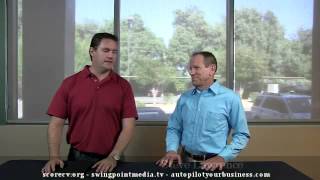
A recorded Business Mastermind session (YouTube) focused on 'Slump Busters'—strategies for seasonal businesses. Hosts Jeff Harrison and Andrew McCauley discuss a golf-showcase video product (including drone videography), recommend the Slingshot screen-sharing app, review a Google search algorithm update (Panda/Payday Loans), and interview guest Steve Lawrence about managing and growing healthcare and other seasonal businesses by nurturing local customers and choosing complementary partners.
Chapters
Hey Andrew, how you doing?
Hey Jeff.
Welcome to this week's Business Mastermind and the season of Slump Busters. I'm Jeff Harrison.
Hey, I'm Andrew McCauley. Welcome to the show. It's a few technical difficulties at the start there, but welcome to the show today we've got a great show lined up. We've got some interesting guests as well coming on live in the studio today. Give us a rundown what's been happening with you. Information that's been shared with you around the traps this week.
It is a, it is a busy, been a busy seven days. In fact. We, you know, we're getting ready which is perfect for our theme of our show, our Slump Busters. And what we're doing is we're creating a program that will air in the fall but it's going to keep us busy all summer long. It'll generate revenue and value for our clients. So we're, we're really, you know, it's like time is of the essence. So it's been a really good week. It's going to be a golf related show where it's going to be what we call the golf showcase. And there's about 130 golf courses in the desert. We only need 39. So if you're, you know, if you're one of those golf course you want to be on there, time and space is limited.
Get on there, get on. What sort of things are you going to be doing for them?
Yeah, we're going to create basically an eight minute video and it's going to be featuring the entire facility instead of just the golf course. Talk about their membership and you know, whatever they, whatever they do, food and beverage. And then that 8 minute segment will be combined with two others for a 28 minute show and then we'll fill that at a 4 minutes with commercials or information on there. They also get a second shorter video that goes on our website where they get exposed to about 1000 to 1100 people a day. And for those who sign up early, they get to be found on the first page of Google. So it's an exciting project.
Now let me guess, you are going to be using one of the BSOs from a few weeks ago, is that right? Yes, yes. When Jeff's face lights up, it means it's his favorite toy. It's a little airborne thing they call the drone and you'll be using that to showcase golf courses and that sort of thing.
Yeah, you know, it's really opened the doors to some amazing opportunities because now we're shooting video. Andrew, that used to have for $750 an hour, you had to hire aircraft. In this case it would be either low flying aircraft or a helicopter. And then you have to spend thousands of dollars for the crew to get in that. Now we can do it and we can control it all right off of our iPad and we can see it's called fpv, first person view. And we can control it. It's exciting.
Sounds very good. In fact, we said last week and we're going to do it again, we're going to still do this. We're going to bring you a show from a drone somewhere. Jeff's going to sit on a drone. I'm going to fly him over a cliff and see how good that drone is.
We'll make sure those batteries are charged and I'll have an extra one in my pocket in case.
Of course, we make sure to adhere to all the FAA rules. You know, we stand below 400ft and that's the coolest thing about the newest technology we have is we know exactly how high we are, how far we are. We can change camera angles, change camera from being a still photo to a video. It's really exciting. And what's really neat about this is it takes what would have been a ten or fifteen thousand or more dollar project per eight minute video and it brings it down to that two thousand five hundred dollar range. And so like I said, for 39 properties here in our desert, that's going to fill up very quickly. I'm going to say an incredible pricing.
Great. Awesome. Looking forward to seeing it.
How about yourself? What have you been up to?
Well, you know, I want to share my BSO with you this week because I came across something really cool and it even could work into what we've just been talking about. Just there. From the drone. Yes. Now, BSO stands for our Bright shiny object. Bright Shiny object. Every week we'll bring you something that it's not. Be silly often and not be silly often, but it can be if you want it to be. Every week we'll bring you a new object or a tool or resource or something that we've found that's come across our desk and we'll share it with you. Whether you want to use it or not is completely up to you. But this week my bright shiny object is an app called Slingshot.
Slingshot.
Slingshot, yeah.
I used to have, when I was.
A kid, that's right. Now Slingshot is nothing like that. It doesn't do anything like that what Slingshot does. And this all goes back to, you know, we're moving into the mobile age. We've all got mobile phones, we've all got tablets and that sort of stuff. So people are doing a lot more work, work on tablets. And Slingshot basically lets you share your screen or connect with other people, members of your group, on your tablet, so that they can see your screen.
How does that work?
Almost like webinars, where you're doing it from a laptop, but now you're running it from your tablet. So let's say, for instance, you and I want to share, let's say I want to tell you about my app, I want to show you what my app's doing. I can share my screen of my tablet directly with your. Whether you're on a tablet, whether you're on a computer or your phone, you can, you get to see this. So it doesn't matter what device it is, it's cross sectional sort of device. So it's a pretty cool little thing. Now how does that work back into your business and what you do with that? Well, you said that you drive that drone from your iPad.
Exactly.
Now, if you had Slingshot, for instance, right. You could actually share what you're seeing on your screen as you're driving the drone to other people. It could be my iPad, it could be even Amy's computer that she's driving the show from, so that she could actually mirror that onto the screen of this very program. So people could watch you drive a drone while you're out in the heat. We could be in here in air conditioning watching what you're doing.
I love that.
So that's just for what your business is. But here's another couple of applications. Let's say you want to do some training for your team. You've got some training you want to run. You can run your training on your Slingshot app through, through all of your connected people that are in your group. So you can run trainings from that as well. So there's a lot of different aspects that you can do and use Slingshot for. And I thought it was a very cool app. I'm going to start digging into it and checking it out a little bit more.
So that particular app, now, is that one of those free apps or is that something you're going to pay for?
No, you'll have to pay for it. They do have a 30 day free trial and after that they have various steps. I think the lowest price is about $10 a month, up to about 30 or $40 for about 10 or 15 people on your team.
But if you have a team that's spread out all over the place, this is an incredible. I mean, it's cheaper to get on an airplane.
Yeah, absolutely. So, I mean, the world's getting closer together now that we're all getting mobile. It's just adapting to that sort of technology and so that people can now do this sort of work on their apps and their tablet. Sorry, on their phones or their tablets.
So tell me again, what is the name of that again?
It's called Slingshot.
Slingshot.
So just do a Slingshot. Look for Slingshot either in the App store or even on a, on the web and you'll see them talking about Slingshot and what it does and how effective it can be for your business too.
That's exciting. Well, let's move into some things that are going on this week. You mentioned before the show, we talked about this, that Google has just updated their algorithm one more time. People are pulling their hair out. You've already gotten comments on it.
Let's talk about how everyone out there, small business, medium, it doesn't make any difference how they can deal with that. Is that going to be like a game changer all of a sudden? It ruins your website. What's going on?
You know what, it's going to ruin your website if you're not doing the right thing. And you and I have been speaking about this for a long time. If you're creating content that is fresh, unique, relevant, it's stuff that people want to see, you're not going to have a problem. This update, they're even calling it the Payday Loans update because Payday Loans is one of those companies that were fully spamming a lot of people from what I, from what I can gather. So if you're creating content on your website that is fresh, unique and relevant, you're doing the right thing and all the stuff we've been talking about in the past, then you're not going to have any problems. In fact, I've noticed out of all the websites that we've been monitoring for us, we've noticed increase in traffic in the last three days just from not doing anything extra, just from this update.
So it's constantly, it's almost like, I'm going to say like a virus scanner, it's going through and saying, hey, this no longer is real relevant. It's not fresh, it's just. It's spamming.
Exactly. Yeah. So that's what Google are doing. They're going to Keep doing it. They'll do it every couple of weeks. Sometimes there's bigger fallout than others. And they're calling this the Panda 4.0 update. Don't stress out about it. I've had people calling me saying, what are we going to do? What are we going to do? Nothing. Just keep doing what you've been doing. And if it's been working great, if you are finding that you've dropped off on the rankings, then you've probably been doing something you shouldn't have been doing.
You know, that brings us to. It's kind of a little bit of a segue into our guest today, and I think he's going to. We're going to talk a little bit about this, and I'm real anxious to hear at the end of the day, at the end of the day, it doesn't matter whether it's today, 20 years ago, 20 years from now. Principles hold up over time. And I hear you saying, hey, just do the right stuff.
Right?
Fresh, relevant, unique content. And any of those updates are not going to hurt you. They're probably only going to enhance you and actually kind of clear the clutter so people can actually see you and find you easier. Is that right?
Absolutely. Yep. Definitely true.
So we have a very unique guest. He's flown in from the East Coast. Not for us, but I'm going to use that. He flew in for us.
Just for us. Just for us. He's going back on the first flight tonight.
Yeah.
And he is a graduate from the Wharton School of Business, which is. That's a pretty hefty title. And that's why I'm not going to interview him.
I can't spell Wharton.
It's bigger than.
I'll just say that it's Wharton.
So, anyway, I'd like to introduce our guest. His name is Steve Lawrence. And, no, not the Steve Lawrence with Edie, but this is a much younger version and very smart. And he's also a smart dresser. He said off camera. He said it's because he's from the East Coast. I said he's probably our first guest besides us, of course, who's the snappiest dresser. So while we're changing things around, we'll talk a little bit about that and we'll get Steve on.
Give us a rundown of Swingpoint Media while I get Steve organized.
Very good.
Okay.
So Swingpoint Media, what we do is we help businesses be found on the web by using video, and we create videos from the ground up that are fresh, unique, and relevant in other Words. We're making videos that people are looking for. They're solution based videos and then we put them on the web to help you on your website as well as like places like our My City Business Review where we have over 250 businesses on there now that are seeing about 1000 to 1100 people a day. Coming through.
All right, welcome back. So it's a great pleasure to have Stephen Lawrence on the show. Thank you. Stephen.
Hi Andrew, how are you?
I am fantastic. Looking forward to having a chat with you. Now give us a little bit of a background. As Jeff mentioned, you went to Wharton Business School. You're focusing on health care. So you don't want to focus on health care. Give us a little rundown of why you got into healthcare and what really does that mean for people out there that are watching?
Well, you know, the thing about the healthcare industry is there are dozens of pundits and you know, you can hear just about anything you want about the direction of the industry. But one thing is very clear about healthcare. It's only going to grow. Now it is true that it is in a state of flux and people who are incumbents, well, they might have things to worry about because they've got businesses that they've run and the rules might be changing for them. But for people, and I put myself in this category, people like me, I'm a new entrant and I get to play by the new rules. And so it allowed me to go and find a couple of ninjas to be playing in that actually work out very nicely for myself.
Interesting you say that because we were talking about Google updates. This that just happened recently and that's a thing that happens on the Internet these days. Facebook changes, Google changes your industry. The healthcare industry seems to change fairly regularly changes some of the rules and regulations. Is it as much as I think it is or is that just a false thing that I'm seeing right now?
No, absolutely. In fact, to be honest with you, one of the businesses that I run, we do the financing and the pre authorization of high priced medical implants. These are items that insurance companies, they just don't even want to pay for. They don't want, they don't want these types of implants put into people that are very expensive. The rules in those industries change at light speed from week to week. And so it's a very difficult business to, it's a very difficult business to manage. It's a business that you run based on making sure that you're doing a good job managing how your cash flows.
Right. So I'm hearing you. I know exactly what that's like. Jeff and I were talking about this just off air earlier today. It's like there's so many things changing that we're in it full time looking at this stuff, and it's changing and it's hard for us to keep up. I don't know how some of these other people keep up that are running businesses at the same time. So give us a couple of ideas about what you're doing. You're helping startup businesses or helping businesses getting into that field. What are some of the pitfalls that you've noticed that these businesses are making early in the piece when they start up?
Yeah, this is a terrific question. I'm glad you asked it. The biggest thing that I find that becomes an issue is people who choose their partners and their key people, their key employees, without doing a very good job at vetting them. Now, I understand that you can vet them in the sense that you run background checks, but that's really not where I am. Where I am is is there a match of skills and aptitudes between the two partners? Very often a partner will choose a partner or a key employee based on being alike. And sometimes that's not too good.
Right, right, right.
Sometimes you need to have complementary people, people who can. People who can come back in with come back to your business and give you different opinions on where you should be going. The second thing is I would say that you need to make sure that you have an open mind to the way your business is being run, especially in healthcare, because the rules that you assumed would be in place when you started the business might not be there two months. You need to be able to course correct and have a team with you that can course correct easily.
Yeah, great advice. I think it's a standard across every industry. You want to be making sure that you've got the right people in the right and the right seats on the right bus. I like to call it.
Talk about the medical profession or the health profession. And a lot of people probably think they don't have a seasonal situation because people are always getting sick. But you look at even just our local area here, we have an off season that's going to affect doctors and the healthcare professionals that are here too. Right. So what sort of things do you. Do you notice that seasonal. What sort of things do you help businesses with? As far as seasonal goes, is there a way to help doctors through that seasonal slump?
This is another good question. First of all, as A little bit of background now. I'm coming into this area now. I lived in Naples, Florida. Both of these are seasonal places. In addition to that, one of the things that I do is I run a business that educates seasoned professionals, professional surgeons, how to do new surgeries. And while you might not think that on the, on the, on the face of it, but that's a seasonal business also. Why? Because surgeons don't like to train on anything in the summer. They like to play golf and have fun like most of us do.
Yep.
The thing that I would say is that the most important aspect of this is treat your. Treat your local customer base as VIPs all year long. It's not, not a case of off season runs around and all of a sudden they become economically valuable to you. They're valued to you, they're valuable to you all year. And so when you do your reward programs, when you do your opt in programs, make sure that what you're doing is you're making, you're calling out those people who are the locals. Make them customers all year long, make them VIPs.
Can you give us an example of someone that's done that really well? You don't have to say names, but what sort of effect did that have on their business and what sort of things were they doing to make that an effective strategy for them?
Actually, I do have an example. It's a local restaurant. I won't name the name of the local restaurant. It's an artesian pizza type of.
Restaurant. And the thing that I noticed that they did that I thought was really, really excellent was that as you walked into the restaurant.
Prompted the children of the local residents to sign in on Facebook. And once that happened, they had a 10% off coupon that they could use time and time again. Now why is that great? That's great. Because you, the kids want to have pizza. Okay, so you just want the kids saying, hey, dad, you know, if I go have pizza here with you and the rest of the family, dad has to buy in and mom buys in.
I get a free dessert. I think that was the opt in offer. And what that did is when I think about locals, I think about those are the family people.
And that was actually a great. I had to actually talk to the owner about how I thought that was.
I like that. You know, I think I come from a hospital background myself. And one of the biggest things that we had in our hotels was a kids playground, you know, and if the kids wanted to go there, you know what, like if you've got, I don't know if you've got kids, but anyone out there that's got kids, you know, 6 year old to 10, 12 year old, they're pedantic about something. I want it, Mummy, I want it. I want it, I want it. And just to shut them up, you give them that thing.
Absolutely.
So we'd have. Sure, we'd make sure. We had this awesome playground. We had a two story playground. It's the best thing you ever saw. It would cost us 3, 300 grand for a playground. But it was the best playground around and every kid wanted to go there and they were our best salespeople because the parents didn't necessarily want to come to our venue. But they knew that shut the kids up, let's go there.
You know, you mentioned the Wharton School. Certainly what happens is they formalize lots of things. Okay. And there is a reason to formalize a lot of things in the marketing world. They basically will teach you how to sub segment everything you're doing from a marketing standpoint to the smallest micro decision maker. And guess what? The children are micro decision makers.
Very often I think they're bigger than micro decision makers sometimes, especially with the amount of pull they have in a family. Especially when you're trying to keep that unit together and the kids are saying, I want to do this just to shut them up and get them to do that. Awesome. So give us a runner. You've just moved over from New York and you here in the Valley, how do people get in contact with you and what sort of things could they expect you to help them with?
All right, I'll give you my contact information in a moment. But my background is one of starting and running businesses. For investors who are usually investing anywhere from five to six digits.
Their investment horizon is about that large. What I bring to the game in that case is that my background is one where I have sat at all sides of the table. I have not only run Internet international companies with, from an operations standpoint, I put sales forces into the field both here and in Asia. And I have also run just about every other department. I can see the world from each side of that table. So what it allows them to do is when you, when you, when you operate in that type of investment framework, you need to have a person that's helping you who can see and do each individual task. And that's what people usually come to me for.
Is that a, is that a specifically to the healthcare industry or is it all industries?
No, actually my specific background includes metals Chemicals and electronics manufacturing, and in fact, actually probably metals and chemicals more to a larger extent than healthcare. I got into healthcare, actually, because I was approached by a series of investors I had helped before, and they asked me if I would start embarking on a couple of these new things that we're doing.
Wow. Awesome. There you go. If you're looking for that sort of assistance with your business, then come and see Steve now, Steve, how do they get in contact with you? What's the best way to do that?
My email address is Steve S T E V etegythink. That's two words. The word strategy and the word think, as in brain.com. and in case you're a cell phone person, I'm at 315-725-9480. And that's 24 7.
24 7. Don't ring him in the middle of the night, even though you may be tempted. Hey, Steve, thank you very much. We really appreciate you coming on the show.
You guys do a great job.
Wealth of knowledge, and we appreciate it. So thanks for. Thanks very much for coming on.
Terrific.
All right, so that was Stephen. Now autopilot your business. My business is all about getting yourself online. If you're looking to get online, you want to get found online, you're looking for strategy around what you need to do about online, then autopilotyourbusiness.com we also have a podcast we do every week, and you can find that on itunes. We also have a magazine that is available on itunes called the Online Footprint Magazine. All right.
What a great interview.
Absolutely. Yeah. You know, I love these interviews. Even whether we're standing here or we're off camera, I'm always learning a lot about our guests, too, and it's just fascinating to hook up with these people. I find it great. What was your biggest takeaway?
Biggest takeaway was when he said, basically, nurture the locals year round. And a few weeks ago, we had a guest on. He was a chamber president, CEO of one of our cities here in the desert, and I was involved with him in a project, and we created these little bands, and we called it Band of Locals.
Show me this moment.
Ow. Snappy. And so what we did is we went out and said, hey, let's take care of our locals. It was an idea. And at the time, I was with a large hotel in Brazil resort here, and we teamed it up, and it made a difference for a lot of those facilities. In fact, even today, some of them are still using their blue band, and it says La Quinta Resort on one side and it says band of locals. And they would give those away to people who came in, but they had to be a local individual. So now whenever they walked into all these facilities, they had that band, they immediately got some kind of a discount or recognition at a VIP level.
It's a great idea. And if you're not doing that sort of activity, especially when you're on season, recognising the locals that that will be there when your off season kicks in, then I highly suggest you look at doing something like that. It doesn't have to be complex either. No, just be something simple, just recognise who they are. Because then I think we've seen here in the desert, I've seen a number of venues that will say, hey, if you're a local, bring in your driver's license and we'll give you a discount or whatever it is. It's a great. And that's all year round. It's not just the high season.
I think it's bright, brilliant year round and, you know, it's one of those things that said, hey, during the season let there be a peak in your revenues, but in off season there shouldn't be a slump. I think that's the way to do it.
Great.
Any parting advice before we hit the slopes?
Hit the slopes? No, you know, I think I love what, as you said, Steve said, just monitoring who's coming into your venue, having a look at what sort of position people are coming in and if they are locals, reward them. But also make sure that your guests want to come back again too. It's important not to forget you do want to say locals only and guests. You're in here. You do want to make sure your guests are well catered for, but if you can create a great experience for those people, they're going to go away and tell other people. It may not be them coming back, but it may be their friends.
Totally. And I think with that little piece, it just made me think of another thing is when you're catering to the locals year round, I think the locals who probably don't come into your venue when they think it's the peak of the season, they have to pay their highest, are now going to come visit year round and I think you're going to get a boost on both ends, on and off season.
Yeah, very true, very true.
Well, next week we have a really exciting guest. It's a little off, but we're getting close to the election season for the primaries and we're going to have a candidate for state senate here and we're going to kind of grill. I mean, we're going to talk to them about what are they doing and what do they see that could affect in a positive way the off season for those seasonal businesses.
Grayling is going to be a fascinating idea. I mean, do you think he'll share some of his ideas that he wants to explore or do you think he's just going to sort of keep it pretty close to his chest?
I think we'll lock the door if we're making talk. We'll be watching that new season 24. I've got some new ideas. No, I think he's going to be pretty open and honest about it because it's going to make a difference in whether he moves on. And I think being open and honest is one of the things that we look for as people that are going to say, hey, who am I going to vote for?
Yeah, right. Awesome. Well, we look forward to that next week. Anything else that's coming up for you over the next couple of days?
I've got a pedicure. No, nothing. Nothing. I'm all set.
I'm about to shoot off and teach people about hangouts. Google Hangouts. Google plus for their business. The mastermind group that I was with in Vegas have asked me to come back and teach them some stuff about Google.
So you're heading back to Vegas?
Yep. I'm going to shoot off to Vegas tonight and I'll be back by 8 o'clock tonight. No, I'm doing it all hangout. I'm doing it all through technology. This is how cool it is. These people will be all over the US Tonight. Dialing in. I'll be in my home. I don't need to go anywhere, but I'm still being able to educate people from wherever I am. That's what we love about technology these days. It's really cool. It's easy for you. If you're a business looking to get your message out to other people. Technology is not that complex anymore. It's made the world so much smaller.
Plug and play. Andrew, before we get off the air, how can people get a hold of you?
Autopilotyourbusiness.com you'll find all of my details there. Andrewtopil pilotyourbusiness.com is my email address. Go and check us out.
And for you, SwingPointMedia TV. Or you can look at us@mycitybusinessreview.com and you can get a hold of me at jeffwingpointmedia.com do us a favor.
Go and let people know about the show. Share the link, share the love. Let them know we'd love to have more people watching the show, as many as we can. And as we embark on growing this, we want you to be a part of it, too. So thank you for watching today. I think that's about it.
See you next week.
See you next week.









