The Local Voice - Today's Guest Destiny Collins - Facing Your Fears!
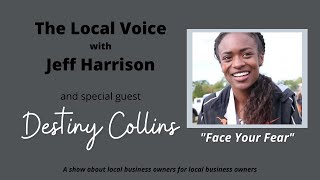
Episode interview (The Local Voice) featuring Destiny Collins, a SoCal native and former college soccer player who transitioned into a financial advisor role with Modern Woodman. The conversation covers her family background (including Salvadoran heritage), athletic past, how she met her managing partner Bennett at a college career fair, reasons she joined Modern Woodman (fraternal support, not-for-profit structure), her focus on helping self-employed people and business owners plan for exits/retirement, mentorship and team-based support, a client-acquisition anecdote (Chino Valley Chamber ribbon-cutting → solar company with 60+ employees, eventual sale), typical sales cycle lengths (self-employed: ~1–2 months; businesses needing benefits: ~2 months; otherwise 3–5 months), key dates (joined Jan 2020, started Feb 2021), personal note about family loss (godfather in Apr 2021) and contact email (destiny.n...@mwarep.org).
Questions this video answers
January 2020 (pre-contract/onboarding began then).
February 2021.
April 2021.
Approximately 3–5 months.
Around 2 months.
Chapters
Hey. Welcome to the Local Voice. I am Jeff Harrison, your host. And today we have a very, very special guest. Today we have Destiny Collins. Now, Destiny is a SoCal native from the Inland Empire. She currently lives in Ontario, which is where she grew up, but spends a lot of time in Chino and Chino Hills because of the root she planted there during her high school years. She's very active in those communities as an ambassador to. For the Chino Hills or, excuse me, Chino Valley Chamber of Commerce. She graduated from Cal State Bernardino with her bachelor's degree in finance and chose to become a financial advisor for Modern Woodman after connecting with her managing partner, Bennett. Shortly before that, Bennett was the financial advisor for BI Chapter because he is risen from Palm Desert, but he asked her to fill his seat now as his team of advisors has grown to the point that it has. In her role with Modern Woodman, she focuses primarily on helping business owners prepare for their lives after they either take a step back from their operations of the business or hand it to someone else entirely because they want to fully retire. She helps them intimate tax saving strategies as well as group benefits and retirement plans for the business. Today's interview is very, very solid. There's some great takeaways. Make sure you have something to write down some notes, because again, even her young career, she is already dropping some value bombs. So let's welcome Destiny Collins. So, Destiny, before we get started here, because I've had the pleasure of meeting with you, you're part of a, you know, a bni, a business meeting group that I'm in, and just let's let the audience know a little bit more about you. So take a second and tell us a little bit more about you, who you are, your family and that type of thing.
Yeah, so I'm from the ie. So I grew up in Ontario, and I spent a lot of time also in Chino and Chino Hills growing up, because I went to Chino Hills High School.
So started playing soccer when I was nine. I still play soccer till this day when I can anyway.
But I kind of returned back to Chino Chino Hills after I graduated because of the roots that I laid down during that time. So I spent a lot of time out there. I have two siblings. I have a little brother, and I have an older sister who just gave me a nephew in May. And our dad's side of the family, he. They're more like spread all around the US Really. But my grandma's from Alabama. My grandfather, who passed away before I was born, he's from California, so that's kind of how they ended up out here.
We and I, you and I kind of talked about this when we met. For our. Where did we meet again? It was Cups.
Yeah. When we met there, we kind of talked about it. But my mom is from El Salvador, so she's a first generation American, so her and her sister are the first ones to come here. So I actually don't really know my mom's side of the family other than my aunt, who is actually my mom's fraternal twin. And we have twins that run very heavily in our family. So knocking on wood that that's not my first if I had kids.
No. But yeah, so that's kind of her background.
And a little bit more about me specifically. I guess I like to work out and play soccer just because that's kind of what I grew up doing. It's kind of what I know and it's just good. We kind of talked about this too, but it's just kind of good for my mind, for my body. It's just a good reset. It kind of helps. It feels almost like meditating to me when I'm working out and even sometimes when I'm playing soccer too.
But yeah, I like to do those things. I like to watch live sports with my friends or my family. I do enjoy traveling and I like to spend out time outside when I get the chance to. As long as I'm dressed appropriately for the weather, like today, I'm fine inside.
But yeah, I like to spend time outside. And if also, if I'm not rushed to, I, I kind of just like to be there, be in the present moment when I spend time out there. And one last thing, I really like to fish. Not great at it, but I really enjoy it.
What, what kind of fish stories do you already have that you could share with us?
I. When I was younger, I think it was for like my 8th birthday, we went deep sea fishing. So I asked my parents to take all of us deep sea fishing and we went on this boat that they were also cooking breakfast at the time, which if you can imagine the smell, smell of all the bait and the fish, already a bad combo. But I had never really been out in the water like that. So once we got out there, it was great. I was excited. And then I got seasick and so did my cousin and so did my sister.
But it was fun. Aside from that.
Now did you, did that stop you from wanting to go back and go deep sea fishing again? Or did you say, hey, that was just one of those things, and I really love the experience, and I want to go back again.
Yeah, I would say that it made me just want to be more prepared. I'll definitely want to take some. Is it called Dramamine?
Yeah, yeah, yeah.
I want to take some of that and maybe put that little patch behind my ear, too, before I go. But, yeah, I definitely would want to go again.
I would think, as somebody who is. Is very active like you, especially soccer, and you're moving around. There's a lot of fast moves. It seems like it wouldn't take long for you to kind of get used to that whole, see, you know, moving around the boat, moving around thing. It wouldn't be a big deal for you.
Well, that was, like, when I. I think that was before I actually started playing soccer, so maybe like a year or two before. So maybe that was why. Maybe it'd be different now.
Yeah, maybe so.
Hey, I have to ask you.
I have to ask you about the. You said you have. Your mother's side is from El Salvador. I'm just curious. What. What one lesson have you been gotten from your mother that's still with you today? And it's kind of almost like that. That string that runs through your life that says, hey, this is what she learned as a child growing up in El Salvador. That really makes a difference in my life.
That's a good question.
I would say to not.
How do I word this? To not underestimate the value of education. Um, and by education, I definitely don't mean just what you learn in college. If anything, I would say that, like, if you come across a challenge in your life and there's an opportunity to learn there, or an opportunity to kind of sink into your fear. Face. Face that. Face the opportunity for what it is. Face the challenge for what it is. And if you fail, then just take the lesson and accept that you're going to be better because you did that. I would say, I think.
I think that's great. What? What? Anything that you can kind of point out, you say, hey, you know what? I've been in that situation. And then I hear my mom's voice, that lesson. And I went ahead and did it anyway, faced my fear, anything. Because let's face it, that is a great, great piece of advice for anyone out there, because it is, you know, the show is for. We call it the local voice for business owners, entrepreneurs, people getting started. And let's face it, there are times where, you know what your back is against the wa. You're a Solo entrepreneur, and it's just you, and it's that fear, and sometimes they close it down and sometimes they go forward. So I'm just curious if you have one of those. Those back against the wall moments you can share with us.
Let's see.
Off of the top of my head, I can't think of one specifically, but I will say that coming into this career, there were a lot of things that I was fearful of, just because it's a completely new territory, right? Like, I spent over a decade playing soccer, and that's what I knew. I knew the athletic world, even if it wasn't soccer. Like, so I had a lot of coaching opportunities coming straight out of college, and so I kind of had to choose.
Whether I was going to do that or whether I was going to be fully engaged with being a financial advisor and just really adopting this role.
So I would say just transitioning from a very familiar world to choosing to do this.
That was very scary. And I've been hearing this phrase over, like, maybe the past year or two kind of here and there, but it just hits a little bit different every time. It's just do it scared. So it doesn't mean that you're not going to feel fearful. It doesn't mean that because you're doing these things like your fear is going to go away.
It's just make an active choice to do it anyway. Even though you might be scared out of your mind. Just do it.
You know, destiny, I got to share with you. You are an elite company when you say that, because I just watched an interview.
Elon Musk, literally one of the richest people on the planet and, you know, sending people to Mars and all the stuff that he does. And the interviewer asked them, do, you know, are you ever scared? It never looks like you're scared. He said, I'm afraid all the time. And he said, but, you know, what the outcome and the possibility of the success and what it means not just to my company, but all the people it impacts. He said, I go for it anyway. And that's kind of what you said is, you know, you faced your fear and you made it happen anyway, so congratulations. Like I said, you're in a very elite company. So, you know, speaking of companies, you know, you said, okay, you were in soccer for 10 years. That was it. Sound like that was really part of your life. How did this modern woodman. And I want you to take a second and tell us, you know, because some people, even though it's been around since 1883, some people may not know who Modern Woodman of America, who they are. So take a second and tell us about who they are. And how did you get involved in that and made that decision of saying, hey? I went from soccer in my vein, taking it straight in the main line, to now I'm. I'm a rep for Modern Woodman.
Yeah. So the first introduction that I had to Modern Woodman was actually on the college campus. So I finished my soccer career in college and I went to a college fair knowing that I wanted to become a financial advisor. Like, that was already in my brain. But there's so many different companies out there, and I hadn't heard of Modern Woodman before. So I was walking through the career fair and I met Bennett, who you met, I believe, once, because he was in our BNI chapter. I took his seat.
Yep.
I remember meeting him. He shook my hand. I almost walked right past him, but he shook my hand and we started talking and he looked at my resume and he's like, oh, you played soccer? I'm like, yeah. He's like, huh, I played soccer at ucr. And then of course, my brain is like, huh, you work for a financial services firm and you play soccer? Like, I'm intrigued now.
So to make a long story short, he started telling me about Modern Woodman, actually. So we kind of branched off from soccer into Modern Woodman, and he started telling me he kind of opened up with the fact that Modern Woodman is a not for profit. And I'm like, huh, what's that? And he started telling me about what that means. So for the people who don't know what a not for profit is, it's. It's kind of in between a non profit and a for profit. So knowing that I had high goals for myself as a financial advisor, but I wanted to do that. I wanted to grow my career with a company that kind of had the same ethics as me.
Knowing those two things, I. I definitely wanted to speak with him further. And I actually met with somebody from General Electric who was like, talking my ear off right after my conversation with Ben. And he's like, oh, yeah, I'm gonna email you. And then I left that like that. I left the career fair kind of knowing that I was going to contact Ben. Ben was going to be like, that was the avenue that I was going to go. So I remember seeing an email from General Electric, the person who I connected with, and don't. This is not advice. Like, don't follow my. I did not answer that email because I. I was already kind of bought into pursuing Modern Woodman. And then Ben called me. To make a long story short, as far as the interview process goes, I was put into pre contract and then.
Started after I believe a year. But what really sold me on Modern Woodman was actually being here and seeing everything firsthand. And that. That's kind of. Yes. Our process with. When we sit down with clients like that, I just like seeing how we do that. Very thorough with the fact finding, treating everybody like the unique people that they are. I mean, creating solutions that way. But also the fraternal side. Like I mentioned.
My God, dad passed away in April of 2021. And I told Ben and I was like, hey, like, is there anything that we can do on that fraternal side to kind of help with the, the funding on that? Because it was sudden and he was like, yeah. And he kind of laid it out for me and made it really easy. So to make a long story short, Modern Woodman actually helped my. My goddad's family pay for his funeral. Yeah. And I'm like, man, I was, I was only here for two months. Like, I haven't even had a chance to prove myself. So to me, that kind of spoke volumes on Modern Woodman. And there's been a lot of other things too. We've faced losses within other districts. Like we've lost a managing partner due to Covid. And just seeing how everybody rallies together, like, I was just. I'm bought in just based on my experiences here, you know, that that's not.
Something you really hear in today's world. It's. It's kind of that dog eat dog. And you know, I'm leaving because there's more money has nothing to do with the relationships we have there. And I have had the opportunity to meet Bennett. You call him Ben. And he is, he's an incredibly nice young man. I say young because he's much younger than I am and very sharp. I think that's, that is, that's neat. I know he just recently lost his mother and I suspect the same rallying around occurred during that time for him, which again makes Modern Woodman very, very unique, I think in the marketplace.
So moving forward, I'm just curious. So you've been with them for how long?
I started with Modern Woodman in January of 2020, and the thought was that I was going to start full time in June of 2020, but I ended up. I had enough credits for school, but I needed to take finance specific classes because that's what I majored. In and I didn't have enough credits for that specifically. So I ended up not starting until February of 2021. Oh yeah.
So about a year then.
2020?
Yeah, yeah. So a little over a year. So I'm curious, during that time, you know, starting a new career in a new field, you know, getting out of college, what would you say has probably been your biggest hurdle that you've had to overcome?
I gave you a different answer when we kind of talked about that, but I thought about it more. So the first thing that I had said was just being a female, a young female in a male dominated industry. I thought that that was my biggest hurdle just off the top of my head. But I thought about it more and really it's just time because after time passes, whether a male, female, the right people, the people that just connect with me authentically, they're going to gravitate towards me in time. And I've experienced that as I've been here longer. So yeah, I would definitely say time on that front. And then also because I primarily help self employed people and business owners who have their own clients to take care of. So trying to coordinate schedules with each other can be quite difficult. And the process takes a little bit more time than if you're just dealing with like somebody who works a regular job. But it's worth it. It's what I enjoy.
Well, let's talk about that for just a second, you know, because I suspect in the, in the whole financial services industry there is a, there are a, of different paths that can be taken. Do you specialize in anything specific within Modern Woman? If so, share what that is and, and who is, who's that ideal client that you would be speaking with?
Yeah, so I kind of touched on that. But I personally focus on helping self employed people and business owners.
The reason being is kind of the mentality similarities between me and them just being an athlete growing up especially as you know, we talked about it again. But the, the financial changes that I experienced throughout my childhood kind of gave me more responsibility to fund my soccer career before I was actually out of high school. So just having that experience and having to drive my own success and advocate for myself and just doing something that I was so passionate about. I just have more of a mental connection with business owners and self employed people. But as far as what I do for them, I kind of help them prepare and you know, they're, they have tunnel vision on just whatever their business is, that's, that's their baby and I can completely relate to that. But just helping them prepare for when they're ready to take that step back, you know, and maybe 40 years, 20 years, 30 years, whatever it is, but just helping them prepare financially for when that time comes. Making sure that they're not just putting all their eggs in their business, which, you know, they should believe in their business, and I believe in their business, but just being prepared for when they're going to take that step back. That's kind of what I help with, in a nutshell. Yeah.
Is that similar to your path in soccer? You know, because you were 10 years into that, that's really kind of what you did. And I know you went to school to be a financial. To. To graduate as finance and do what you're doing now, but you're right. So many times people get. I have. I have a client right now who they're 82 years old, and they're saying, geez, I wish I had someone to buy my business. I mean, they want to retire, but they needed someone like you to start helping them prepare, to say, hey, you know what? You. You're getting to the end of your soccer career. Maybe it's time to be thinking about an exit strategy. Is it. Do you see any similarity in that and stories you can relate to people with?
Man, yes.
Me, after I finished my college career, it wasn't even like I really knew when it was going to end because I didn't even play all of my season. So it just kind of ended. And I'm like, well, you know, what am I going to do now? Even though I knew that I wanted to be in the financial services industry, it was kind of like, how do I make that transition out? So I didn't really have to worry about that financial piece that people. That business owners would have to worry about as they're ready to transition out of their business. But as far as not having that guidance, yes, I can. I can definitely relate to that.
Just I was lucky enough to have a team like I do here. Like, just meeting Ben at the time that I did that, I did have that guidance.
So.
But that was crucial. Having that. That piece there was. That made all the difference.
How important is it to have a mentor? Or do you have a mentor? And what's the importance of having someone like that in your corner?
I kind of touched on it right now, but I wouldn't say that I have a specific. Like, I go to this person for all of my, you know, all of the guidance that I seek out. But I will say that each person in my district like that I work in. Each advisor that's been here longer than I have has helped me in some way. Like, has not just, hey, what do you need on this day? It's like, what throughout this process can I help you with?
So, for example, we have somebody out in Redlands who. He came from the nonprofit realm. And when I came here, I had no idea what a not for profit was. I had no idea what a fraternal was. I had no experience with running my own events, let alone setting them up or anything. So Ben was like, call Ryan. His name's Ryan Volkermer out in Redlands. But yeah, I was like, okay, I've never met this guy, but I'll call him. So I gave him a call and basically he just walked me through all the different types of events that Modern Woodman offers. He's told me stories about some of the ones that he's done personally. And at the end he's like, if you need help with any of this, just give me a call and I'm there. So just having people like that that you can rely on, I mean that I'm doing like two or three fraternal events this weekend. And it's because I've had people like that in my corner.
So it sounds like in this group of people, it's really, it's really a team mentoring program. Is that, I mean, you know, without, I guess, kind of thinking about how this is set up. Like you said, you're reaching out to many people like, hey, who. Who should I reach out to? And they'll say, you need to get ahold of this person. It sounds like the, the whole Modern Woodman of America program is really one big mentoring boiling or, or pot, isn't it?
Yeah, that's. That's been my experience. I mean, maybe it hasn't always been this way, but it's, it's what we're evolving to and I'm very thankful for it because it's been all the difference in my career.
Well, speaking of your career, you know, I know it's. It's a young career so far. You're a year in share with us. Share with us a success. Because we want to know about that. Hey, what's something that you put in place maybe February last year, that now you're starting to reap some of that. That reward.
Again, I'm referencing a lot on our conversation, but I will say that just shifting my focus onto what I. I really have a passion for just focusing on business owners and self employed people. I would say that has definitely reaped the most success. And a more specific example.
There was a business that in my. I'm an ambassador in the Chino Valley Chamber of Commerce, and I missed their ribbon cutting, so I got some donuts. I dropped in on their business, and I was just like, hey, I just wanted to introduce myself. I'm an ambassador in the same chamber that you guys are in, and I missed your guys's ribbon cutting. So I started talking with the owner, and we actually saw each other at another ribbon cutting. So we kind of realized that. And then I. We just got talking about their group benefits and their retirement plans. And then after that, he was a CEO, his wife is. The CFO wasn't there, and he's like, honestly, like, I don't know anything about that, so you're gonna have to contact my wife. But being a business owner that just moved locations, they have 60 or more employees. They were really busy. So I stopped in about three or four times after that, and I wasn't able to contact either of them. But last week, I stopped in one more time and finally caught both of them. So I finally got to meet his wife, and we just had a really authentic conversation about what they do, what the benefits are. It's a solar company. And I left that conversation like, well, I'm completely sold on solar. First of all, like, it doesn't make sense for people not to do it. But second of all, I just got a chance to understand how caring they were about their employees.
So they were telling us about how they enrolled their employees or how they got their employees enrolled on in their benefits, and they have 100% enrollment, which is kind of crazy.
Yeah. So that's just, like, a testament to how they are as employers. But.
I just got talking to them about servicing their benefits and just providing something in addition to what they're doing, which they're already going above and beyond. Beyond. But it was just kind of like, well, we see that you guys care about your employees. So, like, I want to add even further to that. Like, how can I help? And just being consistent with that approach and really trusting my gut with that initial conversation I had with the CEO, I would say that's. That's one of the things that's really paid off, because, I mean, I. I got the. The close, and that's going to be a nice little relationship moving forward. So that's that experience that's kind of a reflection on just the focus on business owners, how it's paying off.
I love how you in your story, you, you took a negative and turned it into a positive where, hey, you missed the ribbon cutting. Where, let's face it, when you go to ribbon cutting sometimes you're just one of many and you don't stand out. But you chose to show up with some. A dozen donuts. That's, that's a really good one. I like that. That should be like you always miss the ribbon cutting donuts because now you are stand. I thought that was fantastic that you did this. The other question I want to ask you is this, what is the typical sales cycle? And I hate to say sales but, but what is a typical cycle that it takes from you just met these people to hey, they probably do become a client? Is it a fairly lengthy one when.
You'Re dealing with business owners that you don't have necessarily like a connection to, like you don't know anybody who knows them and they're not going to make that introduction. I would say that it does take a little bit longer like for this business. I met them, I want to say in October, November and I'm just now getting that close.
So yeah, I would say it takes anywhere from like if it's, if they have no reason to implement anything right off the bat, it will take about three to five months. If they already need benefits, then it's a lot quicker. I would say maybe like two. Two months.
Yeah. Self employed people. That's different. It's more, it's faster. I would say about a month or two.
But yeah, I think that's something. If you're listening and watching this right now, write that down. One is patience and persistence. And look at that, look at that negative. And how can you turn it into a positive like Destiny did? I think it's a great opportunity. Destiny, before we wrap up today, I have a, what we call a speed ground. It's just a, it's just in the word association. And I'm going to give you a word and you, you know, maybe in one sentence, maybe two sentence, tell me what that word means to you and then we're going to wrap up by, hey, how do we get in touch with you? How do we find out more about you? Because this is called a local voice. It's designed to help your business reach out to people, to let them know, hey, Destiny is someone who can really take care of me if I'm a business owner, a solo entrepreneur and I need some help planning my future and maybe my exit strategy. So are you ready?
Yep, ready to go.
Here we go. The first Word is adversity.
Adversity. That's an opportunity to get better.
Boy, listen to that gang. She took something negative and turned it right into positive. How about rejection?
I would use the same thing, but I already used it. Rejection is what's not meant for you.
Okay, how about success?
Setting out to do something and accomplishing it.
Okay, good. And finally, joy. What does joy mean to you?
Oh, sorry, there's motion sensors, but I'm like, what happened?
We just. We just lost our joy. Light.
Joy means.
Contentment.
Contentment. I'm going to ask you, what does contentment mean to you then?
Contentment means I am still pursuing more. Pursuing, getting better. But if something were to happen to me today, I would not feel like I left anything on the table.
I like that. Living life without a regret. Very nice. Very nice. Hey, Destiny, first of all, thank you so much. I know you're busy and you're. You're starting your new career. You're a year into it. You're making things happen. Do us a favor. Tell us how we can get in touch with you. Where? You know, like an email address or social media, whatever you'd like, Please share that with us. We'll make sure to put that on the screen. And I just want to say thank you so much. And when we're done, we'll just say, hey, have a great, great week. Thank you.
Thank you, Jeff. I really appreciate you taking the time out to do this. I know we already kind of connected, but this. This was fun. You made it fun.
And my. The best way to reach me is probably over email, so it's destiny.n as in nickel.collins as at m w a r e p dot org and I'm also in Palm Desert pretty much every Tuesday, so if you want to grab coffee or something, I would love to do that.
Destiny, you're awesome. Thank you so much. Have a great week, and I'll see you Tuesday morning.
Yep. Bright and early. Bye, Jeff. Thank you.









