Year End Predictions for 2026 - What's Really Gonna Happen in 2026 📱
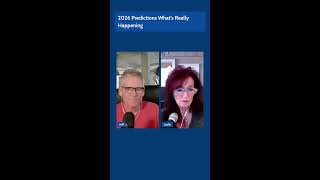
Live episode (recorded Jan 1, 2026) of the "Twisted, Bent and Exhausted Entrepreneur" podcast/YouTube stream with Jeff Harrison and guest Leslie Spore. Leslie gives three main predictions for 2026 for small businesses: 1) operational independence (businesses will measure success by ability to run without the owner through automation, delegation and documented procedures), 2) AI will widen the gap between well-run and chaotic businesses by exposing weak foundations, and 3) trusted, vetted referral networks will outperform search algorithms and unvetted directories as AI-generated content and fake reviews proliferate. The episode also promotes Leslie’s Five Day Freedom Challenge (conciergebusinesssolutions.com/five-day-freedom-challenge) and her software and forthcoming vetted network for lifestyle-management providers.
Chapters
Okay, we are live. We're doing something very rare. We normally don't do live shows. Everything we do is pre recorded. But today's kind of cool. It's the last day of 2025 and I coerced. I mean, I asked Leslie if she would do a, a live broadcast and share her predictions for 2026 when it comes to small business and entrepreneurs. So I want to welcome you to the show and I also want to welcome you if you're joining us live. If you, if you so do that and you have anything that you would like to toss out there around this comment or this conversation, please put them in the comments. And we want to invite you into this, this conversation. So, Leslie, welcome.
Hi. Good morning. It is morning still, isn't it? We had a slow, slow start today.
Yeah, we're quite a bit behind. We had some little bugaboos that we've been working on behind the scenes.
But not podcast related. They were project related.
This was the easy part of my day.
It's kind of fun.
Yeah. So again, we're live. It's very unusual. We're talking about. This is the Twisted, Bent and exhausted entrepreneur podcast. Now if you're not familiar with that, we broadcast on YouTube and also Spotify and we, this is like, I don't know, we're real close to episode 50.
Are we really?
Yeah, we are. We're actually in season two. We're actually in season two now.
So is this season two, episode one?
No.
Season one?
Yeah, no, it's. Well, we might, we might cap this off since it's a live one. We won't, won't really do that. But again, we want to welcome you and we also encourage you to be in today. We're going to, we're really going to talk about something that is kind of interesting, I think, and that's the 2026 prediction. Predictions. When it comes to predictions when it comes to, you know, our businesses, like Leslie, you're in the, I'm going to say the small business world and, and software and lifestyle management. And I'm more in the marketing and tech side of that. And we're going to talk to you about.
We're the AI side.
Yeah, yeah. And what really is happening. So we invite you to jump in at any point. This is, this is one of those things that, you know, it's not going to surprise me if Fox or CNN or somebody like that gets a hold of us afterwards and finds out, you know, ask us. No, it's probably not going to happen.
I Wish.
But anyway, so, yeah, so we're just going to talk about. So. So, Leslie.
Yeah.
You actually shared this with me. I don't have it because again, we had some befuddlement going on. If that's. So tell me, tell me what your predictions are. And the goal was, is like, hey, what's your prediction? Why do you think that's going to happen? And share us. What, what brought you that conclusion?
Well, you know, the business world is ever changing, right. And small business owners are the backbone of this country. And so I really believe that there is going to be an extra emphasis on people going off and starting their own businesses because it's, it's never been easier than it is today to do. Right. It still takes all the same effort and cost and all that stuff as it always has. But I think it's going to be just some of the regulations are being released and things are changing in the world. So my prediction for 2026, number one, I have three. But number one is that operational independence is going to replace growth as the real measure of success. And, you know, I've been preaching this now for a couple of years. Right.
So let me, let me just ask you, so what, what is. For those viewers who sound like, what is she talking about? What is operational independence?
Oh, sorry, I didn't think on the that simple level, operational independence means that your business runs successfully whether you're there or you're not.
Gotcha.
Most small business owners, especially small ones, tend to wear all the hats and do all the jobs and take care of everything, and they get caught in this jail of their business where we. The puzzle metaphor I use for some of my training is that you build the outsides, that everybody can kind of get through that. But then the middle part of the puzzle they have a hard time with, and so they're a slave to their business. They can't leave, they can't take a vacation, they can't do anything. And operational independence simply means that you have the, the key elements in place so that you can take a weekend off, you can go on vacation, you can leave if you need to without worrying that your business will suffer. Because it's different than.
I'm sorry, so is this different than, than somebody who's a, a nomad that can work from anywhere? This is, this is a. Yeah, this is very different. Okay.
Yeah. In, in my case, I'm geographically tied with one business. My lifestyle management business is located in the Coachella Valley. And I can't, I don't run. It doesn't operate anywhere outside the Coachella Valley. We have eight or nine cities that we cover and, and that's it. My other business, concierge Business Solutions, is a national business. I can be anywhere and run that from anywhere. But it's just me in that business that this one, the executive errands, the local one has six employees. So, you know, there, there's, there's billing and employee issues and HR and social media and tech and all these things that you have to do, especially when you have employees, that keeps you tied to one spot. Now, I found out the secret to operational independence few years ago and so I now teach people how to do that. But for the last decade, most people glorified scale over at all costs. That was, you know, how many, how big can I get, how much money can I make? You know, that's the key metric by which we measure the success of a business. And actually especially going forward in 2026 is going to be how can I. Your business needs to be built on reliance, delegation and design. That's the key. And I think that you're going to see more and more of that happening. In fact, some of the bigger coaches than me are already talking along that line. Remember I sent you that link that showed that a very famous, which I'm not going to mention because I want to do the work instead of him, a very famous coach, though, is already preaching operational independence as his new thing for this year. So I, that's one of the reasons I made this. My number one prediction is because it's becoming very mainstream and more people are going to hear those words a lot this year. Operational independence.
Are you, are you predicting this? Because the tools are now starting to, you know, it's almost like this, this convergence of, of tech is, is, is it starting to now allow that foundation, foundational change of like you can have some independence as far as operation is concerned, so you're not wearing all the hats. You're not working 24, seven, six or seven days a week. Is that what's causing this shift? Is this is why your prediction is.
It's part of it. Although if you don't know what the best tools are to use for your particular business is not going to be helpful. Right? Not only do you need to be able to identify the best fit for your particular business, but you also need to be able to understand how these tools work and how they think and how you can leverage them for your business. For example, my Essential Elements software database is completely. It automates all the foundation of Your business, right. It automates everything and streamline, streamlines it into workflows and the training and education comes with it. So when people are trained on how to use this data collection system properly, then all these things that you were doing manually can be automated and saves you a lot of time. And then your people, you push the responsibility for keeping the data accurate to the people that work for you or whoever helps you. Right. And so you can rely on the integrity of the data. Data is key. In this world, everything is about data. Whether it's AI data, whether it's operational data, whether it's financial data. Data is the key to be able to run a successful business. And I always tell my employees, we're really data managers more than we are even concierge or lifestyle manageable, you know, customer service focused. If we don't manage the data, we can't provide good customer service. It's impossible.
Well, you know, when you say that, that reminds me of a conversation I just had was explaining to somebody, you know, we used to say, you're no longer just a plumber, you're no longer just an accountant, you're actually a media company. And when you're a media company, really what you need to make good content is you need data. So it really does. When you, when you say, okay, let's shift it out and see what's really in the, in the content, it's really about data. Because that data helps us decide. You know, do we post on this day, do we make this comment, do we use this language, these colors, whatever. It all comes down to data. And, and I think you're spot on. But I just want to ask you this. When you're talking about operational independence, is that going, what do we see as far as the positive outcome of that? Because all of a sudden it's like, I know for yourself, you reach that operational independence and you're working a couple of hours a week. And without. I probably am going to misstate this, but you seem to be a little bored, like there wasn't enough for you to do.
Probably why I keep creating other things for my other company.
You need to get her busy again.
Yeah, well, it's just I've automated everything so I don't have to work the 36 hour days that I used to work. Right. I had one licensee tell me that if she had to work as hard as I do, she didn't want to do this industry. I mean, and that was an eye opener for me because I never thought about it, you know, when you start out, I started my, that company 20 years ago. And so when you start, it's just a natural progression. You just get into these routines and you don't have time to go back and reassess anything. You just keep going. Until about five years ago. And I went, this is not, not working. You know, and here's why this is happening. This, this gear towards operational independence. First of all, owners are tired of being the bottleneck in their company. You know, I do these five day challenges for people and that's like the number one thing people either admit to me right up front or I point out to them when they don't see it is that they personally are the bottleneck to growth in their business. It's a, it's a constraint that has to be overcome. And there's only two ways to overcome it. And one is to hire people and delegate to them or outsource tasks to people, or you can write policies and procedures so that when you do hire people, you can train them so your systems are consistent and accurate all the time. Burnout also is no longer a badge of honor. You know, you know me, I used to kind of almost brag that I had worked 36 hours in a row. I hate to say it that way, but I'm a realist. I know what I was doing. And it was like being exhausted was like saying, oh, look at me, I'm working harder than anybody else. And that's just not true. That's stupid. Actually, you know, I ascribe to the four Hour Work Week. That's a great book. If you haven't read it and you don't have to work more than four or five hours a week, if your business is, is structured and you have the right foundation and you have the right tools to be able to have that operational independence.
Can I ask you a question on that?
Huh, sure.
You know, when you talk about the four hour work week, is that, is that one of those things? And I, and I kind of snap your chain every now and then about that is like, is that because of where you're at, you're able to do that, but somebody that's brand new, you know, they're, you're going to have to put in some time or are you saying, hey, this operational independence can happen from day one?
I believe it can. You know, there's some effort that you personally have to do. Marketing, networking, brand building. You, those things take time and you have to do them yourself. We've had this conversation on our podcast about how face to Face marketing and networking is so critical because we all kind of got out of it during COVID But it's critical today because people want to get to know who they're working with and they want the experience, they want to feel how things are. We're so divided as far or isolated is the word I'm looking for because of social media, because of doom scrolling, because of being on our phones all the time that as human beings we crave that personal interaction and, and you know, working when you run a business, when you start your own business, you're working in a vacuum. It's just you and the computer. Right. So the in person networking marketing is very, very helpful. But if you lay the proper foundation and you start with the right tools and you start with the documentation you need to structure your business properly, even if you're doing the work all yourself to start with, you're going to be miles ahead of where we were 10 and 20 years ago trying to start these businesses because we were just flying by the seat of our pants and there's no need to do that anymore.
Kind of like it again, I'm just going to break it down real simple for a simple folks here is. It's almost feels like we're in a, in a space and time in our world where we're saying, hey, you can take, you can take the horse and bug if you want to or you can take the car and the car will get you there faster. It won't be. It has air conditioning, heating, you can roll up the windows, you won't get bugs in your teeth and, and it has a really smooth ride or you can do it the other way. Is that kind of where we're at now? And it's still just a choice there. You know, I remember there's a gal, really smart young lady, Cody Sanchez and she, she says, you know, you have a choice. You can work for somebody and that's hard or you can run your own business and that's hard. You just get to choose which hard it is. And so you can take the buggy or you can take the car. But it's not going to be easy. It's just going to be easier. Yes.
Right. It's not going to be easy. No. You know the statistics on failed businesses in the first two years, dismal. I mean it's like 50 or 75% are gone within five years for sure. You know, if you make it to two years you got a good chance. But still a lot of them fail because it takes consistency of effort. It's like teaching your kid to make a bed. If you, if you show them how to do it and then let them try and then they fail and you keep fixing it, they aren't ever going to learn. But that, that kid has to do that, the same thing over and over and over again. And so do you. Right? You have to. You have to build, yes, repetition, consistency, credibility. And you had to put one foot in front of the other, which has always been my thing. Put one foot in front of the other every single day. Even when it's boring, even when you're exhausted, even when you just don't feel like getting out of bed today, every day you have to be doing something to further the business goals or the objectives of your company. And I really believe that the strongest businesses going forward are going to be the ones that aren't the biggest, but they're the least dependent.
Well, there's a. There's this whole thing about, you know, specialized or generalized. And I was just listening to a podcast by Peter Diamantes called Moonshots and they were talking about this and it was very interesting because statistically what happens is a specialist company, let's. Let's use. And I'm not. They didn't say this company, but let's say IBM. They are specialized in what they do. Right. But they're a behemoth. But then there's a generalist who has kind of an idea of how to do what you're talking about or using the AI that can spring up out of nowhere and dwarf them. It's almost like the Netflix and the Blockbuster situation. So sometimes it's like, do you need a specialist or a generalist? And I sometimes think the answer is yes. Right. And we experience that a lot of times where you, like when you're coaching somebody, they're not always exactly doing what you're doing, but you have this generalized and specialized knowledge that can help guide them through the eye of the needle, if you will, and, and really help them.
Well, business, technically business only operates one way. Now there's gonna be people out there that say, that's not true. You don't understand my business. It's different. It's not different. Yeah, they're all the same. There is a. There are industry benchmarks. There are certain things you have to do to. In order for your business to be successful, regardless of what kind of business it is. I don't care if it's retail customer service operations, you know, it does not matter to me. Food service, it doesn't matter to me what kind of business it is as far as running the business itself. There are industry best practices and industry benchmarks and things you absolutely have to do. Now you may vary the tools that you implement because of the kind of business you have. You don't need a POS system, which is a point of sale like a cash register, the old cash register. You don't need that if you're doing customer service, but you definitely need it if you're doing retail. So the tools you implement are going to vary depending on the kind of business you have. And even the procedures may vary, but the need to have procedures is going to be the same regardless. Right? That's kind of what the point I'm trying to make. You're going to need a way to track money, you're going to need a way to automate your processes. You're going to need a way to have visibility to how your business is operating, the success or failure of the operations piece of your business. You're going to have to have some way to manage resources, whether you outsource to a specialist or you hire help inside, right? So these things you have to have regardless of the business type.
But you're saying, but you're saying now with your prediction, the first prediction we're gonna go to the next one here pretty quick is operational independence. So we're not going to have to be working because now it's not like, okay, I'm recording every sale on a receipt and tearing off and give it to the customer and then I've got to, I've got to figure out the receipts at the end of the day. All of this is automated now with the tools that we have that all of a sudden are freeing your time up. It's just like your software. You know, I remember when you said, hey, it's going to save you, you know, X number of hours, 40 hours a week, a week. That now you can say, well, that's putting time back in my life and I'm doing it now for the fraction of what I would pay if I were paying myself or someone like me. So it gives me that operational independence. So I love that. So, so if that's good, let's. Are you, are you good to go to number two?
I just have one more comment to make on number one and that is that when I do these five day challenges, which I talk about on here a lot, because first of all, they're my heart, I love to do them for people, to help them identify opportunities in their Business. But I ask every single company I work with this question. How do you define success? And, and almost 99 of them, I would say 99 of them all say the number of clients I have, the number of dollars I sell, you know, the number of my profit margin, something of that. And, and going forward in 2026, that, that is not my definition of success. And I don't think it's going to be a lot of other people's because the definition of success is going to be how tied to the business am I right? When I can walk away and it still runs properly and it still makes me money, that is success to me.
Right, Yeah, I would think, I would think that would be success for a lot of people. Yeah. Yeah. Think about it.
Yeah. So the more automation you have, the more policies and procedures you have, the more structure you have, the easier it is to walk away, assuming you've trained your people properly so that you can enjoy your life. Freedom is way more important than money. We only get one life, right. And when we started these businesses, we did it with an eye towards autonomy and freedom. And the idea that we didn't have to answer to anybody, but what happens is in almost every case is that you end up answering to yourself, you end up answering to the business, you know, so that was just the cap on the number one prediction there.
Okay, so the first prediction for 2026 is we're going to see operational independence come to more mainstream. Is that fair enough?
Yeah. Okay, so what's your second people? So my second prediction is that AI is going to separate the well run business from the chaotic business. And I say that, and I know that sounds like a weird statement, the people mistake AI as something that is like an app or a software thing that you can implement. They think you, it'll do something for you and you can implement it and it'll work. And when it doesn't, people think this is a failure. Why is everybody talking about AI? And you, you can speak to this better than I can. But what I know is that if your business is poorly structured, poorly ra, you're tied into it, it's a jail cell for you. All AI is going to do is exacerbate that situation and create more chaos for you, Right? If, on the other hand, if you are streamlined and you and you understand the purpose of AI and how to use it properly and how to educate it so that it can be a best tool for you for your particular use, it can take tons of things off your plate, tons of things more Than just writing an email, more than just writing a newsletter. There's all kinds of things it can do for you. And I know you being the AI guru that you are, you can expound on this, but I, I think AI is going to really separate the man from the boys, if you will. It's going to separate the companies that are already smoothly operating and you've got financial, I mean, operational independence from those that are just absolute chaos. It's going to make a huge difference in 2026.
Yeah, I think chaos begets chaos. It's. It's almost like saying, you know what, if you put chocolate in white milk, it will turn chocolatey no matter how many times you stir it up. And if you keep putting those two ingredients together, you keep getting chaos. In this case, I. As you were explaining that it makes me think, you know, if you look at a baby that's learning how to feed itself, it usually uses. We use our hands and it's feeding. And so what happens is you give that baby, let's call it what, one of those spoons that have the rubber on it so nobody gets hurt. And it doesn't know how to use it. It's pounding on the food, it's trying to cut and it's a spoon. And I think we're seeing that a lot when it comes to artificial intelligence or any system. Sometimes software systems is. It's like the baby who thinks, oh, I got the right tool and you're using it incorrectly. And so it just creates more chaos. And now you have food in places you shouldn't have, like on the curtains or, you know, on the back of the microwave on the floor. So I think, think what you're explaining is very good. It's like you, you first better get yourself, your house in order before you do these things.
Yeah. The owners who skip foundational structure, you know, making sure that their business, the foundation of their business is strong and who has implemented the tools to automate as much of their business as possible, will be able to integrate AI much better than somebody who's trying to do it. And actually what AI is going to show a lot of people is that whether or not their business was designed to operate properly or productively or profitably, it's going to expose a lot of the holes. And it's going to do that either through outright saying, yeah, you can't do that, or it's going to just not work right for you, and people are going to get frustrated and throw it away, thinking it's just a fad. And it is not, it is not just a fad.
Yeah, it's, it's, it's not, it's, it's. I look at it as, as one of those things. It's like we move from one one type of economy to another one and it's almost like, you know, there was a day where the majority of people in America worked in on farms and then it moved to the industrial revolution and now it's less than 5% of our total workforce is on a farm. And it took a long time and a lot of infrastructure building to make that shift. This time it's happening much, in my opinion, it's happening much, much faster. And so I say that, you know, if you're a business out there who's not using some of these new tools, before you jump into it, say, as you say, make sure you have some foundations in place to say, first of all, am I running my business on bedrock or sand? Because no matter what you do, you can hire Leslie as an example as a coach who's one of the best in the country if not in the world. And if you don't have the foundation stuff in place, it's still going to be messy.
Yeah.
And so I think that's, that's something that I would highly recommend is before you move forward. So again your prediction, if you restate.
That, again the AI is going to separate the well run businesses from the chaos. If you, if your business is all over the place and you're working 36 hours a day, as I'm ashamed to admit that I used to do, it's going to expose that for you is not here to replace jobs. Okay, yes, there are going to be jobs that do get replaced. You know, I just saw a video the other day about California. You know, we live in such a terrible state politically and I don't care which side of the aisle you're on, it's just the decisions that are made for us are not very helpful. One of which was when they decided to set the minimum wage for food service at $20 an hour. And so, and I'm going to misquote the statistics and I'm not going to go into the whole long thing of that, that policy or that law, but of the companies that were forced to implement that food service companies, they had like a 21 drop of employment because like for example, Pizza Hut. And this is again, I'm, I'm, I'm restating what the video said. So I haven't fact checked this, but Pizza had allegedly fired all of their delivery guys. Right. So they saved all that money for delivery because they didn't want to pay somebody 20 an hour to run pizzas. Yeah, right. And now a lot of the restaurants have kiosks. You don't even get somebody that says, do you? Would you like fries with that? You have to order yourself. And they're not even upselling. Or at least I don't use the Kia. I don't do fast food. So I don't know how the kiosk upsells the way people do when they take your order personally. But they're implementing all this automation to avoid the cost of labor. Sure, that can happen. But somebody has to make those kiosks and somebody has to program those kiosks and somebody has to maintain that as the menu changes or pricing changes. So there are jobs for human beings. Even in that context. It's just what you do has changed.
Well, you know, on that, on that same thing. First of all, if you're just joining us, my name is Jeff Harrison along with Leslie Spore. This is the Twisted, Bent and Exhausted podcast. We're just doing it live today and we're Talking about our 2026 predictions, what really is happening. We're on the second, second phase of this and you know, as Leslie was stating her second one, which was, you know, cutting the, I'm going to say the haves from the have nots because, you know, a well run company is going to only accelerate and a company that's not well run, one of the things about AI is it adds speed. So it's almost like your car is now going downhill with a very sharp turn, now getting faster and harder to control. So that would be the.
No kidding.
Yeah, that'd be the upside or the downside of, you know, now injecting it with adrenaline or AI. So I lost my train of thought on that. I apologize. I had a very, a good point on that. But I wanted to let people know, as we were having more folks just coming on to let us know that, hey, we want you to give your thoughts what we're talking about. And we're talking about how a better company in 2026 using AI versus a company that's already chaotic and trying to put AI in place, it's going to really separate the good from the bad. And you know, one of the things I remember this, and we see this all the time, Leslie. Oh, there's two points. I see this all the time. Where when we have some kind of an economic shift, the best ones always Rise to the top. And it really, it really kind of filters out the weaker. And so I think if you like, you like your business, like my business, you know, we work on making it as sound as possible and we didn't get the 15, 16 years by accident. There's foundational stuff in there and we can always. Yeah, sorry, 20, sorry, 20. They make it better. But one of the things I want to point it out and this was like this phenomenon of oh well, you know, the jobs of the kids graduating college today are going to be so much different. And I heard this, this was interesting that when surveyed graduates from like five years ago, only 25% of them are actually working in the fields that they graduated from. Because we're living like you started very beginning. We're living in an ever shifting world. So I think we have to be somewhat, you know, shape shifter, like and be able to say, you know what, things are changing. We've seen this in our business. You, I know for a long time you said, jeff, stay in your lane. I'm like, I'm trying, but my lane is all over the freaking map to try to figure out how to do this well.
And you know, yeah. And with, for you, with all the AI stuff that you do is if you're listening, Jeff is an AI genius. So if you're looking for somebody to help you implement AI in your business, that is the guy to go to. He helps me every single day. And he's cutting. Unfortunately, the downside of that is that he, he, he's so innovative and he stays up with the newest and latest greatest thing that happens every single day. He says to me, oh, I now I can do this, of course then I want to do that also. And so I have to kind of curb myself back in too, because otherwise I just keep making products and I don't sell anything. So I gotta work on that. But you know what I'm saying is that he's, he's brilliant at this stuff. And there are, there will always be. For example, I just posted a thing on Facebook yesterday. I sent you the link to it. It's, I think it's an Instagram post about what we didn't have in 2000 versus what we have in 2025. And we didn't have Netflix and we didn't have. We did. Tesla wasn't a thing and we didn't have. I'm trying to think of some of the things that would just. We didn't have cell phones, smartphones, we didn't have. I mean, you Might have had a Nokia brick if you were lucky. That's what they said in the video. They didn't have you itunes, they had Napster that everybody tried to steal from, but they didn't have itunes. They didn't have. There was just so many things when you go through this list, it will blow your mind on the things that we use. TikTok X Facebook didn't exist 25 years ago. I mean, that seems incomprehensible to me, but in 2000 there was no Facebook. So if you, if you go through that list on that Instagram and that's on my personal Facebook page, it's shocking. So, and now it's happening faster and faster and faster. I mean, the innovation, you know, when I worked in private industry, we were always doing these continuous process improvement initiatives. So much so that you just go, okay, here's another one. You know, you just kind of, you get used to it. But, but now. And things didn't really change. You know, people would come up with new ideas on how to make things better and everybody would buy into it for a minute and then they go back to the way they used to do it. Today though, you don't, you don't get that it innovates so fast and it's, you're not getting a choice on whether to implement or not, I guess is what I'm trying to say. Because just like the algorithms for social media have completely been turned upside down. We've talked about this a couple of times on this podcast, right. That no longer are paid ads or regular standard SEO enough. And I don't think it's gonna be too long before they're obsolete completely that, that you now have to have aeo, which is, what is that called? Automated Engine Optimization or something?
Well, we, we call it Answer engine optimization.
Answer engine. So it's, it's AI, it's, you know, you can look at you. If you don't believe me, just go to any browser and ask a question, a search question, like you would have done a year ago. What comes up? Not the top paid ad. It comes up an AI answer. It's answers. You know, everything is about answers and experiences and how things feel to you and how, what do you, how do you relate to these things? And so that is a whole brand new, shiny, brand new concept. Kind of like your new car that you just got tiny and new.
Speaking of Tesla. Yeah. Okay, so, so, so what is your third prediction then of 2026?
So my third prediction is that trusted networks are going to outperform algorithms. It's kind of cool how we just segued right into this. So who you can trust is way more important than what you can search. Right. So, and, and so the Google results just, I just, like I just said, they're going to get less reliable. Online reviews are going to become easier to manipulate because there's so many bots out there. AI generated content is flooding social media. You don't even know what's real anymore. Right, but you don't even know what's real. So what you're going to have to rely on is a trusted vetted network of, of services or products that you can believe is real.
Is that what, is that why you again thinking in the future, is that why you've started this and it's not live yet, but you've started a referral network for your five day program? People, people in the, in the industry like yourself who say, you know, do you know somebody in Kansas City or do you know somebody in Winnipeg, Canada?
Yeah.
Is that why you started that?
Well, I wasn't going to disclose that yet, but yes.
Oh, sorry.
I did it. It's okay.
We can wait till next year.
We're, yeah, tomorrow we're ready to launch it anyway. I mean we're very, very close. I just need to seed it with some listings. But directories without betting. There's another directory out there right now that is, says it's similar to what I've created. It is not because it's not vetted at all. You just pay them money and they put you on there and they say here's a directory of people they don't claim any responsibility for good or bad. I'll give you a perfect example of that. We work in country clubs all the time out here, right? And it used to be in the olden days, back when there were dinosaurs, that homeowners associations did not want to be responsible for referring people. They would, you know, homeowners would come and say, who do you know that's a good handyman? Who do you know that can clean windows? Who do you know can do this? And they would say, we don't refer people, but here's a list. And this list is comprised of companies that homeowners have called and said, hey Joe Smith is a good handyman, hey Michael whatever is a good plumber. And they would put them on there. But did they vet them? No. Are they responsible for the quality of their work? No. Right. So I've now created a network where that people are going to have to show their insured and they're going to have to have testimonials from clients and they're going to have to be vetted properly. And we're not going to let just anybody on our network if they aren't running real businesses. I don't care what they're two people or 20. I don't care how the size of the company. I care. They are legitimately a company. Right. Because especially in the lifestyle management industry, this thing is growing so fast, this industry, the projections for up through 2035 are astronomical. It is the perfect industry to get into. But again, going back to number one, prediction, business is business and you have to run it properly. Right. You have to have that infrastructure. You have to have that. The procedures you have to know. You have to have the automation that you need to be efficient and operationally independent so that you have a strong company. Those are the companies that I want in the network because we do get asked constantly, hey, I've got a client that's going to Denver, Colorado. Is there somebody like you up there? Or I, I've got somebody moving, you know, I'm, I have a client who's going here on vacation and they need services. Who do you know? And so I want there to be a network, particularly for the rest of us in this industry, that we can refer other companies for our clients with confidence and feel like, yep, I know this is a trusted vendor. So that's why, and I really believe that, that my kind of network is going to outpace search engines, reviews, content, advertising content, because you can't trust any of it anymore. Even we use AI content. Right. You have an avatar for you. Someday we're going to make one for me. If I ever sit still long enough for you to get my video. They already, you already replicate my voice and my newsletters when we, when we turn those into videos. So all of us are going to be utilizing AI content. Okay, but how do I find somebody that I know is legitimate and real and that's what I'm creating?
Yeah, I think that's going to be important because some people, maybe they don't know how the algorithm works, but basically what the algorithm is doing is it. And you can test this, you can try this on your own. Like you can go to your, you can go in and clean out cookies and clean your history as far as your, say, on your iPhone. And then you can go into a, let's say a YouTube account and choose something that's totally different, search something totally different, and next thing you know, it will start providing you more and more content around that. And it's predicting, hey, what does Leslie like? Let me show her more of it. And so I think by having a referral network, you have a trusted group of people going, hey, it's not just showing me what I happen to look up. It's no different from saying, you know, we were talking about Nike tennis shoes as an example, and next thing you know, I got Nike tennis shoe ads on my phone or my Siri or my Alexa in the kitchen says, hey, I have a new message for you. Nike's running a sale. Do you want to order those? I'm like, wait a second. I don't need you to listen to me all the time. So I think, I think we're talking, what you're talking about with that referral network. Network is really a cool idea and it will not just.
Thank you. It's not just mine. I think referral networks like this are going to become the next big thing because, which is why I started making it, because they, you're not going to be able to trust anything else. You need to be able to go somewhere where there's been vetting done and where us, those of us in the industry can refer with confidence. Because that's one thing that happens to me. People call me up and they say, hey, do you know anybody in Timbuktu? And I'm like, I can look it up, but I can't vouch for them because you can't throw a stone without hitting a lifestyle management company. I don't care if it's a dog walking company or a car wash company or somebody who's providing absentee home care like we do. People that provide move management or travel support services, I mean, they're just a, a plethora of business models for this industry and they're growing by leaps and bounds and people start these businesses every. It's the best industry to get into if you want to start your own business, but you have to know how to run a business.
Well, it sounds like that's almost. I'm sorry, go ahead.
No, it's fine. I was just rambling.
I was just going to say that sounds like that, that kind of piggybacks on your, your thought of, you know, there's going to be more and more people going out on their own and running their own business as we move forward because of what you said early on in your prediction, number one. And I, I think that's, that's only going to. Is the right word. Exacerbate. The good, the bad and the ugly, you know, of exposing those people. So I think it's really good to have that.
Well, think about it. Let me give you another example just for. I was gonna say shits and grins, but I don't think that's appropriate on the.
I think you just did.
Did I say that?
I think you did. This is live, so I, I can't, I can't edit it out.
So I've been doing, you know, I've been doing lots and lots of presentations to real estate professionals. And 10 years ago, even before, before COVID when I would try to pitch to these people, they, they were like polite but not interested. They didn't really kind of understand what we were doing or why they should work with me whatever whatever. Now, 20 years in and since COVID every sort of like Covid's a line in the sand, right? So many things have happened pre and post. They understand what my services are and I've been here so long, they, most of them know me or somebody knows me that can tell. Vouch for the integrity of our company. So selling to them is much easier. And now. And they say, well, I've, I've been using, you know, so and so, but I don't really know them that well and I don't know what kind of service they're providing. However, if they had a place to go so, you know, real estate adjacent services to lifestyle management and say I need somebody who's vetted and I can give them somebody in an. Because some of our real estate agents, like Brenda, she sells, she can connect people in other states, right? Her, her clients in other states to real estate professionals. So if we can also connect a lifestyle management service in another state and know that they're good and we're not putting our reputation on the line, why wouldn't we do that?
Yeah, that's a good point.
You know, so I think that that. So yeah, I think that that's going to be really big in 2026 and going forward I, hopefully I'm on the cutting edge of it because I'm the one that's creating one that fits all that criteria, at least for our industry. And it won't be. I mean even healthcare look at when you sign up for insurance, you get a list of a directory of doctors that are, I'll say preferred, for lack of a better word for that network and they've been vetted for that network. Hopefully they have been. Okay. Again, there's a lot of networks out there where they don't vet people. And I think that is the piece that is going to differentiate what you can trust going forward because it isn't easy to become a part of this new network that I'm doing. We haven't said the name of it and I'm not going to yet because I haven't announced it. But you know what I'm saying is that. Or should I maybe I should say what it's going to be.
It's your call. But I think, I think that's really cool because I think of a platform called Skool S K O O L and it has grown exponentially. I'm in four or five of these groups and there are, you can tell there are some of the groups that will allow anyone in and then there are some of the groups that are, they have, they have gatekeepers. And so the people that get in there have certain level of integrity and business acumen. And you can really tell the difference of that because it's almost like. And we've all had this, right, where someone on a social media platform wants to friend you. And specifically for me, it's on LinkedIn and someone will do their homework and say, I think I want to meet Jeff. But instead of starting out with a conversation, I immediately, as soon as I accept it, almost to the T, seconds later, I get an automated message in my inbox from them and they say things that I'm going. The first thing goes to my head is like, did you even look at my profile?
Yeah, exactly.
They're trying to sell me something that actually I offer. It's almost like saying, I want to sell you milk cows. I have a dairy farm. Did you notice that in my, you know, I don't, but that's the part I'm like, they're not vetted. And so what you're saying, I think, you know, going forward is really going to play a very powerful role in the economy. Going forward is like, I can trust this person.
Yeah. And, and you have to. I mean, it's just the next logical evolution. You know, I've been pushing operational independence for a couple of years. You know, I have my self study program that is like 40 videos of how to, how to do this without hiring me. You can do it yourself and learn how to do this. You can. We do the five day challenge now so that I can help people one on one identify their opportunities and help them create the structure they need. We also have the new network that's coming out and then we have our software. So I mean we have all of the products that we, I've spent, you know, a lifetime feels like creating, but especially in the last couple of years, are all designed for what I see is going to happen for business owners. Right. And so I'm really excited about 2026. I think it is going to be a huge year for business owners, regardless of the kind of industry you're in. And if you don't figure out how to get that strong foundation and automate the right things and utilize AI properly, you're going to get left behind. It's just you won't be able to compete. You know, there's order winners and there's order qualifiers. Are you familiar with that term? Yes, I know you are. I'm just kind of talking to everybody else. So order qualifiers mean you have to have these things in order to even be considered as a contender for XYZ client. Winners are those things that set you apart that they want from you over, over your competition. Right. And so my job as a coach or a consultant or a business owner myself is to help other companies have the order winners. They need to really differentiate themselves in the marketplace so that they can then be as successful as humanly possible. Right. That's, that's the goal.
Yeah. I think I, I think two is, it reminds me of a statement I learned a long, long time ago is people make, make decisions based on differences, not similarities.
Right.
And I, I've come up with a new term called moting. M O A T I N G. And if you think about that back in the lake. Yeah. Back in medieval, medieval times, there was a moat around castles. Not because they wanted a water feature, but that was a form of defense. That was a separation. And so I think when you create a, a differentiator that says, yes, I do X, Y and Z, just like the guy down the street, but I also do abc. And they're going, oh, I didn't know that. That's kind of moating your business. If you're, if you're, you know, somebody like, you know, many, many times, like you said, is, you know, in what you've been talking about, your referral process is you took it one step further and said, I'm vetting these people so that you, it's a trusted network that it's not just a group of people directory in general, but it's a separate separation. And to me, that's molding your idea. That's, that's separating you from others that just say, oh, I'll just be a me too. You Know, I write content, I do emails, I do X, Y and Z. I, I run errands for people. Yeah, but you don't have insurance and you don't have liability and you know, you're driving your own car. And so these are the things that I think that you do so well, that I think people listening or watching this, whether it's live or recorded, to say, hmm, do I do those things? Are there things that I can now do that are not. They don't have to always be very expensive to do that will set you apart in your own category.
Right? That's exactly right. And so we really want to. We designed this or I designed this site so that people or this, this new network so that. Because doing the five day things, I learned a lot. I've learned a ton doing these five day challenges. It's called five day to Freedom Challenge, where I can really help people get that structure they need or at least get clarity on what structure they do need and what they're. And prioritize what their next steps are so that they can, excuse me. Move forward in a, an organized manner as quickly as possible. Right. Because time is of the essence. We don't want to mess around. You don't want to say, oh, I need to do this and do it three years later. You won't be in business three years from now, so you need to do it right now. And sometimes it's hard because there can be a lot of joint parallel priorities that have to happen at the same time. But I'm real proud of one of my licensees on our software. She, she had the oldest version, right. And she's just upgraded. But she came to me and she said, I want to standardize my business. I want consistency. I want to input our data the way you do because it creates a perception of value. You know, she's recognized all these things and so I'm able to help her a lot easier. We just did a training for her this week of teaching her people how to use the new version and, and why things are the way they are. Because, you know, I believe that people make better decisions when they understand the why and not just the how. So there's a lot of good things coming this year and I'm very, very excited for it and I can't wait to. We have a new challenge starting next week, five day. And so I'm hoping we can get at least one more for next week when we'll see if, if anybody is interested. I would love to do that for them. It doesn't cost anything.
So, yeah, I think one of the things that, that the five Day Freedom Challenge does for most business owners, especially for somebody who, you know, we talked about this on many episodes in the past, is as business owners, sometimes we get siloed and we don't know what we don't know because we're working on our own world. Right. And it's almost like living on an island that you don't know that the outside world exists. It's like that saying is like, hey, there were people back in 2008 that never experienced the economic downturn in the world did. These are people living in the jungle. They didn't know. Their life just kept going. Nothing changed. Well, sometimes we can do that on our business. And it's, I think the five Day Freedom Challenge is an opportunity to say, hey, let me expose you some things that maybe you're not doing in your year one or year 10, doesn't matter that somebody has done it for 20 years and done it at a very high level and expose them not to overwhelm them and to let them know. It's almost like saying, hey, here's a buffet of things that could help you and get you there faster. Because here's the thing. Success loves speed. So when they can hook their wagon to you in the five Day Freedom Challenge, it definitely accelerates that. And as you were saying, there's no charge for that. You only do a couple week, don't you?
Yeah, so far I've only been doing two a week and it's been great fun. I don't, I don't know if I can do three. I can try, but the, but I want to give the value to each person. So I'd rather just kind of stay at 2 a week that way because everything is individualized. And what's a priority for this person may not be a priority for that person because it depends on how long they've been in business and whether they have help and whether you know where. How are they the bottleneck in their business? If they are, most of the time they are, but, you know, how are you the bottleneck? What do you need to move forward? And it isn't, you know, like I said, it isn't about new stuff, it's about fundamentals. Industry best practices are the same. So if I say, you know, you've really somebody who's hasn't done their QuickBooks for six months and I say, you know, you need to make this a priority so that you do it every, ideally every week, but at least every month that you review and make sure somebody else I know who's got all their receipts in a shoebox over there. Jeff.
Not mentioning names and they're not in the shoebox.
But, you know, what I'm saying is that, yeah, we. We document that stuff as we go along and we reconcile it every month as we go along, so that because you want to be able to identify a problem when it's small, you don't want to identify a problem when it's big. And so I'm always flattered.
Would you say. Would you say when a problem is identified when it's big, it's a. It's not really the problem you're identifying. You're identifying the weakness in the operator.
Yeah. Or in the business in the process, for sure. You know, I try not to personalize it, although it's hard when they're solopreneurs, but it's really. It's mostly when they don't know. I mean, it's just a fact that they don't understand. They could do it better because you started this business and you're flying by the seat of your pants and you're trying to keep going, and all of a sudden there's, you know, I. I see it as a river and there's all these waves behind you. The. The wakes are behind you, and you don't have time to smooth that out. You just got to keep going. And so having somebody bring into your consciousness some. Any issue or observation or improvement opportunity, once it's in your consciousness, it's easier to affect. You know, it's just like you go to. That's why people go to therapy. You know, they can't see for themselves what issues they have. So you go to therapy and somebody points it out to you. Well, in my case, and I haven't been to therapy in years, but I've spent my time in therapy because I needed it. And when they point out to you something that should have been obvious and bring it into your consciousness, it is much easier to fix or repair or let go of or whatever you need to do with that understanding. So, you know, it's the same with a business. You don't know what you. You're right. You don't know what you don't know. And it isn't through any fault of yours. It may just be that your area of expertise is X and you didn't think about Y. And we just need to get you to do something with Y, too. So it's not that hard you know, and it's not, it's not rocket science, but it does take an understanding of business and business as a whole. You know, I know so many people that go to other coaches and other consultants and they've tried other programs and they come to me and they're like, oh, my gosh, we've got video testimonials of, oh, my gosh. Of people that were like, I didn't realize. This is so much more bang for your buck. And if it's zero, you get a lot of bang for your buck.
The ROI is very high.
Not very high. It's like one minute in. But, but in all seriousness, I'm always happy if somebody learns one thing that makes their business better. They always learn lots of things, but if they learn one, then I succeeded for them.
Sometimes that's all it takes is just one. It's not. You don't. It's. It's sometimes it's just that one thing that makes a world of difference. And, you know, I, I just, I put on the screen there the link to sign up. And, and so the five Day Freedom Challenge. And the cool part about it is it's not audio, it's video today, so you can see it on there. And when you go to that, it takes you to a calendar and then you can look at that and you, it allows you to book out with Leslie in advance and then she gets notification and you start your process. It's a great opportunity. So it's conciergebusinesssolutions.com the Five Day Freedom Challenge. And there's a dash between each word there, as you see on the screen. And Leslie, I just want to wrap up today because this is the twisted, bent and exhausted entrepreneur podcast, and this is a live version. And today we've been Talking about the 2026 predictions and what's really happening when it comes to what's really happening in the trenches. And I think you did a nice job of that as far as predicting the three things. If you do me a favor, before we wrap up, just in very brief, tell us what the predictions are. Don't go through each one of them and just tell them, hey, what your three predictions are.
Again, I have them written down, so I can't forget. So operational independence is going to replace growth. The strongest companies won't be the biggest, they'll be the ones that are least dependent on them. Number two is. Oops. What happened to number two? I lost it. Here it is. Number two is AI is going to separate the strong businesses from the weak. It's going to showcase. If you're in chaos, it's just going to make that chaos worse. So AI won't replace you in 2026, but it will reveal whether your business was designed to run efficiently or not. So that's a key point. And then number three is that trusted networks are going to outperform algorithms. We are going to need a place to go to identify who can help us that we can trust. And that's why a trusted network with vetted professionals is going to be the next big thing.
It's exciting. Well, again, thank you. And Leslie, everything you've done here, I'm just going to put it one more time. The five day Freedom Challenge, please sign up for that. And the spots fill up fast. Like you said, she only does a couple at a time per week and there is no charge. But the value is phenomenal and it is one on one. It's not a big class. I'm not saying in the future it may not evolve to that, but right now it's a one on one type of process. And you're getting one of the best coaches in the country, if not the world, to help you do this because she's bringing her, you know, 30 plus years of being a consultant as well as running businesses and, you know, 5, 0.
I was trying to say 5, 0.
Yeah. So I was trying not to make it sound like, you know, I made you. She was back with the dinosaurs. But anyway, Leslie, thank you so much. This has been fun talking about the predictions for 2025 or, excuse me, 2026. All right, I guess I'll have to say I'll see you next year, Leslie. And thank you for doing a live show today. It's not normally our M.O. but I kind of like this process. Of course, it'll make my job very easy because it requires zero editing. When we hit end the stream, it'll be over. I can go do my thing.
And no music. I'm so sad.
Yeah.
No dancing today.
Yeah. Leslie, Happy New Year. It is the end of another year. We've made another full trip around the sun as. As they say, and here we are, safe again. So take care and I'll see you next year.
Bye, you guys.
Bye. Bye.
Thanks for watching.









