New Connected TV Ads (CTV) with Robert Yanik from LinkedIn
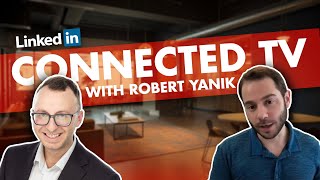
Robert Yanik from LinkedIn explains the company's new Connected TV ads for B2B marketers. LinkedIn partnered with NBCUniversal to place ads on premium content, and the platform offers detailed targeting and measurement tools built for business audiences.
All right. Hello, everyone, and welcome to another episode of LinkedIn Ads Radio. Today I'm very excited to welcome Robert Jannik From LinkedIn to the podcast where we're going to be talking about the new connected TV advertising options through the LinkedIn ads platform. This is both a new channel and a new ad format now available on LinkedIn. I heard about this about a month ago at B2Believe in New York City, and it sounds like there's a lot of very exciting new features and options and capabilities that are going to be rolling out to B2B marketers. So super excited to have Robert here today. Robert, can you start by telling our listeners a little bit about yourself and your role at LinkedIn.
Yeah. First of all, thank you for having me here today. Yeah. My name is Robert Yannick. I am a senior product marketing manager at LinkedIn. I focus on product launches and go to market activities related to them, with my most recent launch being Connected tv. Cool.
That sounds like a fun job. Get to launch new products and bring.
It to market on the marketplace.
That was fun, too. So today we're going to Talk about Connected TV. I was checking out your LinkedIn profile a little bit, and I see you have a lot of video experience. I saw that you've directed and produced music videos, short films, commercials, and kind of all that good stuff. So it seems like you have a lot of experience to kind of draw from. I wanted to start by asking, what's your favorite music genre or artist?
Okay. Well, the artist is a. Is a dead easy one for me. It's Beyonce. It's been Beyonce for years and years and I have seen her on or into her on tour six times, like the. With the Renaissance being the most recent one. So that is by far my like go to. And I'm always listening to Beyonce throughout my work day. I would say follow up with that is probably Megan Thee Stallion, because I think she's just a fun energy and a lot of like, fun to listen to. So I probably put myself between R and B and hip hop is like the areas I tend to gravitate towards. Nice.
I think I overlap with like hip hop and probably rock for myself. I know Beyonce just had that new album come out and it was a lot of like country couple, like country like songs. I think I've been hearing them a lot down here in Texas.
Oh, I bet. I mean also Texas native. So you got a fan base built in.
And then how about on the movie or TV side of things? Any favorites or usual go to genres.
So this Is like a tough one for me because I'm, I consider myself a content fiend and I like. One of the fun facts I give when I'm like introducing myself at work is like I wake up two hours early in the morning to watch tv. Like that's how I do is to like get things going with that. And sometimes it's like dramas, sometimes it's comedies. It's just whatever I'm gravitated towards in the moment right now. I just finished Fallout, the series on Amazon prime and that was very fun. And I was like, I could not stop watching every night. I was like, when my partner would get back from work, I was like, are we watching another episode tonight? Like, I was like, can we, can we do this? And so I honestly, I like a lot of the dramas, but I think my comfort, comfort area is comedy is like the 30 minute work workplace style comedy is like right now I'm rewatching Parks and Recreation for probably the 11th time. So that's generally where I end up going with my TV watching.
And you're lucky, whenever you're, you're in your show, you can be like, I'm working, I'm studying up.
Exactly.
Awesome. So I think that's super cool. You have lots of video experience. So it sounds like you're, you're in the perfect, perfect spot right now to pull from that experience and then be working on Connected tv. So as we've been saying, Connected tv, AKA ctv. Can you start by telling us what that is?
Yeah. So Connected TV as you abbreviated to CTV is think of it like any other TV commercial that you would see on, you know, a network channel or whatever it may be. Except these are commercials or video ads that are playing on streaming networks as a part of like the streaming platform or. So we have different partnerships with all these different content providers. So when you're watching whatever it may be on your connected TV at home, we can now serve LinkedIn ad videos to those devices.
That's awesome to be able to have that connection and be able to connect the platform so you can serve content right there. And then like I mentioned, I just heard about this. Well, I've heard about it for, you know, for recently, but then at B2 believe was when I, you know, really learned a lot more about it that a whole session and it was really cool to learn more about it then. So kind of the next question here is what's new about this offering and how does it aim to help businesses reach their target audience?
So at this point, what's new is like we're offering it to everyone. It's open for all in that like everybody who has a LinkedIn account can buy connected TV at this point. And what's so unique about this offering compared to other CTV offerings in Marketplace right now is you are able to leverage the first party data from LinkedIn. And I like, the thing that I like to think about it in my mind is like, it's the same B2B audiences that advertisers come to us for right now and they're buying their different LinkedIn, you know, ad campaigns, except now they're on TV. Like you can get the exact same B2B audiences on TV devices. So that's what I think is really cool here because a lot of B2B2B marketers before, like you're, there's a lot of different strategies that you can employ to try to like do targeting and different, you know, measuring it into the different audiences you want to hit. There's no other platform that can offer that type of targeting in real time in the marketplace right now.
And the way that I think about it a lot is, you know, we do a lot of our work on, on LinkedIn and you know, there's the LinkedIn Audience Network which helps you reach people off LinkedIn. But you know, for the most part, I'd say a lot of our ads serve on LinkedIn and you're, you know, you're going to be on the LinkedIn platform when you're seeing those ads. So this opens up like a whole new level of scale to be able to reach this audience. You know, the average person uses LinkedIn the most, you know, during the workday, during the work week, but they watch TV at nighttime and on weekends. So it kind of like opens up this whole new both time and like inventory to reach people. I think that adds a whole lot of like, capability and power to the platform and allows you kind of tell the story in different ways to people when they're not on LinkedIn.
Right. And I also think it's also, you know, trying to build in some of that brand consideration set for, especially with B2B buying, when you're trying to influence different buying groups across like different departments and whatnot. A lot of times when people are at work, you know, they're that work mindset and then at home kind of unchart or, you know, trying to unwind and relax a little bit and you know, you might not even realize the ad that you're seeing might be helpful for you and your job and then that sparks an idea, you know, next day or next week and you're like, oh, I just saw an ad about this like when I was at home.
And yeah, and being that different mindset that you mentioned is interesting to think about because when people are online during the day, they're, they usually have lots of things going on in their calendar, they're busy, they're hopping out to do something quickly and maybe they only have short bits of time and maybe are not going to be as able to watch a longer video. But when, when it's at nighttime or weekends and they're, you know, watching something else on tv, they're going be more open to kind of watching a longer video format and then being open to that, some new ideas and stuff like that. So that's interesting to think about too is like the mindset that people are in this different environment. And then the other thing I think about is, or something that they mentioned at B2 believe was kind of the democratization of video advertising because this opens up the connected TV to all the mid size and small businesses that maybe it was a lot harder for them to go do those TV ad buys, but now they can do it right through the LinkedIn platform. So it kind of opens up that capability to get that feature into their hands.
Yeah, I couldn't agree more, couldn't agree more. This is truly a solution for everyone.
And now LinkedIn already has video ads on platform. So what is unique and different about the CTV ad?
Yeah, so I would say like the most unique thing about this is this is the only ad format that we show directly on TVs. It's the largest format, the most immersive. You can have a lot of interactivity that I don't see necessarily employed a lot of times. Like I've seen a lot of CTV ads with like QR codes with like logo banners that they put around the edging of the video, which I don't see a lot of that stuff used in like traditional TV commercials. And so I think there's a little bit that plays into like one obviously it's like on tv, but there's a, when you're in your living room and you're, you have your remote, you're like navigating through your like streaming device or whatever. Like there's a natural interactivity there and like having that QR code with people feeling being able to scan it with their phone or being able to like click from the CTV on to the next thing is something that I think is really Cool and unique to CTV. So I'm just happy that LinkedIn, you know, we got into it and we're able to bring this to all B2B marketers.
And as you say that, I'm thinking about wasn't there a Super bowl commercial this past year and they. Or the year before and all they did was display a QR code and I think everyone raced to pull out their phone and take a picture of it and they, I think it was, I want to say coinbase. And they like crashed the website because, like so many people did that at the exact same time.
Yeah, I'd say that, I mean, that was probably one of the earlier examples, but that's been popping up more and more recently. Like, I mean, I just this weekend when I was watching my own, you know, content, I probably saw like 15 or 16 different car commercials that now have QR codes like for you to learn about the cars and stuff like that. And so I think there's just a lot more that's available to you with the larger format that you don't necessarily get with other smaller video formats.
That's true. I think about like the news feed, you know, the newsfeed and most people being on their mobile phone is a very kind of, you know, shrunk down experience. And usually we design for, you know, we plan for people to be on mobile, design things really big when you want them to be seen. But on a tv, on a big screen, you have a lot more room to work with. So people might be designing their video, probably will be designing their videos in different, different formats to kind of more tell that story and have more space to work with. So that's exciting.
I agree. And I think that people are going to continue experimenting and trying to figure out what works, what doesn't work. Like, I think we're really at the beginning of what is possible for CTV at least.
Yeah, they had a, they had a good 20 commercial that they played at B2 believe it was from the SAS commercial, the drowning and data one. And I thought they did like a great job with it. The guy was in a ball pit and, you know, the balls were the data and he was just like drowning in it and like trying to ask questions. And I thought that was like a funny play on it where you're like, you're watching it, it's like entertaining and it's like engaging you, but you're like also like learning something by watching it. So I think that's a great combo.
Yeah, I agree.
At B2 believe they had NBCUniversal. Trevor Fellows from NBC Universal was out there talking about the partnership, the new partnership with LinkedIn, I think it's called LinkedIn Premier. So wanted to ask you more about that partnership, kind of how it works and what does that now offered LinkedIn advertisers?
Yeah, so the LinkedIn Premiere partnership is a really exciting opportunity for advertisers that want to partner directly with NBC, but also get our LinkedIn targeting features as a part of that campaign. So really what the partnership is, is we've worked it out with NBC that we can offer, like, direct plays to their inventory. So this is a guarantee that when you sign a LinkedIn Premier deal, that you will only run on NBC's inventory. So it can be Peacock, Bravo, CNBC, you know, basically their family of platforms. And then we have it negotiated at a fixed CPM rate. So you're not open to the ad auction or any of those variables that move up and down throughout your campaign. And so this is just going to, you know, give you that fixed CPM guaranteed plays on NBC with the LinkedIn B2B audience targeting layered on top of that. So there's like, you know, there's that premium content with NBC and all those shows that people tend to watch. You'll be able to guarantee your LinkedIn ads get delivered right there.
That's very cool. NBC has like, a lot of great programming and channels and like, that's, that's like premiere content. People are sitting there watching primetime TV and stuff like that. And like, that's pretty cool to be able to like, play an ad during a B2B ad during a primetime show. I'm just like imagining the day where I'm sitting on my couch and one of our ads runs on tv and I could be like, oh, look, we worked on that.
I mean, a little maybe self bias here, but I've already seen our LinkedIn brand campaign run on CTV a couple times, and I'm like, yep, there it is.
Yeah, I'm sure that's a cool experience.
No, it is.
And then next maybe talk a little bit more about targeting. How does that kind of connection with NBC or with the CTV work? So that. How do you make sure that the people that you're targeting on LinkedIn, how. How does it make sure it's reaching those same people through the tv?
Yeah, so it's. The targeting offered through CTV is the same exact targeting, targeting capabilities that we have for the rest of our ad products. And so that's how we're ENS. The targeting is working from platform like our LinkedIn platform to the TV devices themselves.
That's super interesting.
Yeah. And then all of that targeting is verified by our measurement partners and stuff. So we, you know, have third party making sure that we're telling you or that we're not creating our own homework, I should say. Yeah.
Measurement is also a very important topic. So curious. What, what Measurement tools does LinkedIn offer to help advertisers measure the performance and success of their CTV campaigns?
Yeah. So right now you get the exact same demographic reporting that we offer through Campaign Manager Tool as with the rest of your campaigns through ct. And we also offer brand lift studies through Kantar. So you can get standard studies or premium studies if you sign a LinkedIn Premier deal. Those deals come with a brand lift study as a part of them. And then we're also working on a whole suite of additional features and measurement capabilities that will be coming out as we onboard new partners in the future.
Very cool. And then a lot of these will also have kind of the built in, a lot of the same built in metrics that your normal campaigns would have. I'm sure like those ones will be showing up in there. Probably not clicks because no one's going to click through on a CTV ad. But you'll probably see impressions and views, is that right?
Yeah, view rate, impression rate, like video completion rate. I think that's what a lot of people tend to look at when it comes to TV advertising. And like, like I said, the, the standard demographics. So you'll see what types of people you're hitting throughout your campaign.
Very cool. And then the other thing that I think I saw in there was the publisher delivery reports so that you can go back and see all the places that your TV ad did show up and you can go back through and look, look at all those places and then maybe analyze them and decide if you want to stick with those or maybe change up the mix in the next month. I saw that that was a report available in there too.
Yeah, no, that is a relatively newer launch that we've been offering people, but yes, that's exactly right. The publisher reporting allows you to go back, see exactly which platforms you ran on and kind of you can tweak your performance on which ones you want to run on more.
And now, so you mentioned like this is available for setup right inside a LinkedIn campaign manager. So can you walk us through maybe somebody who wants to start their own CTV campaign? Walk us through how they would go about doing that.
Yeah. So this is very, very easy. If you've ever set up a campaign, or even if you haven't, basically you go into your campaign manager tool, you would go to create a new campaign and then from there you would select brand awareness as your objective. And that's, you'd start to select like video creative as your format that you want to use. And then there's literally just one slider button that says connected tv and you just turn that on and then it will run the video ads directly onto TVs. You can have it run just on TVs. You can have it run on a mix of on platform, on tv, in, feed, off, you know, all of that, or you can have no connected tv. It's, it's really up to you, but it is really just one button and no different from how you set up any other video campaign and campaign manager tool. And then once you've selected your creative and you're targeting, you set your budget and hit make it live.
Sounds easy, but I think that's the beauty of having it done through LinkedIn is, you know, I think historically you would think video ad and you're like, oh, that's going to be a lot of work and a lot, you know, a lot of trouble to set up. Now of course you still need to bring your videos, but being able to set it up just as easy through the platform, I think that's a lot of the power of being able to do it right through LinkedIn there and then it's going to live there as a campaign right next to your other campaign campaigns. So I think that's awesome that it's like so easy to do. Now the CTV ads will show up across a network of publishers. There's lots of different places that these can show up. How do advertisers, you talked a little bit about this so far, but how do people, advertisers pick and choose? What options do they have for choosing maybe what those exact placements are going to be?
Yeah, so we offer advertisers the opportunity to upload block lists or allow lists similar to a lot of other platforms. And like whenever you're running most of the other campaigns that you'd be using. And so within those block lists and allow lists, they can specify platforms that they want to run on or don't want to run on. And then, you know, they could even cross cross reference the publisher list that they were, you know, that you just mentioned and they could further add or remove to that list. And so once they in the campaign manager tool, when you're Doing the setup when you add a blocklist or allow list, LinkedIn will honor that and make sure that none of the inventory is delivered to those places.
Very cool. That's like, very precise capabilities. If you're like, I know I only want to run on these certain channels, or maybe you look through the list of all the publishers available and maybe take out a couple that you don't want to. I know, always, like, brand safety, something that people talk a lot about. What, you know, what are other things that people are going to be seeing on this channel? I think there's two parts. Like, number one is like, you know, what else are people going to be seeing? Sometimes you don't want your brand to be seen next to other things. And then also on, like, the affinity side, you want your ads to maybe show to stuff that's most similar to what the app is that you're going to be running. So I think that's great to be able to have those capabilities to both set a allow list or a block list to do that. Now, when you look at brands using video to communicate with their audiences, what are some tips and tricks? You have a lot of experience in the video creation and production department. What are some tips you might have for people who are looking to run video ads?
Yeah, no, so I think for myself, like, as you mentioned, and even myself, I watch a ton of TV and I see a lot of ads. And so I've seen a lot of ads that I wouldn't say their audiences. And so for a brand or a show to feel authentic in the representation, I think is what ends up driving that collective confidence with their audiences and drives them to inspire action, like, buy that thing or, like, have the conversation or whatever it may be. And so it's like, once you have the authenticity and the story that you want, it's then about targeting it and connecting that story to the right audience that it will ring true in terms of that authenticity. And so for me, like, when what I feel is authentic to me when I'm looking at ads is like, I want to see, like, how a product can solve a problem or solve a problem for me or if it's relatable to me, like, the whatever the story is that they're telling me. So when I see ads like this, I recall them longer. And I also know that, like, maybe tooting our own horns here like, that the marketing team is likely sophisticated if they're like, you know, if they're targeting or running a B2B ad, and it's for, like, Marketers, Like, I think, like Monday.com for example. Like, I got inundated with Monday.com ads for like a year and I was like, yes, this is correct. Like, this is a tool that I should be looking at or like, using and this is good targeting on your part that I'm receiving this ad type of thing. But I'd say, like, lastly, on top of like, the authenticity, having the right story and the right target audience for it is like humor, humor, when appropriate. I think we, we even said this at B2 believe and we're going to continue, like, kind of talking about this. But like, B2B ads don't have to be boring. They don't have to be, like, they can be very humorous. They can be very engaging. And I think when it's appropriate, like, humor really makes a lasting impression on like, again, that recall, like just what we were talking about now, like the coinbase one, like, I know that wasn't humor, but that's like the QR code. The humor can create that moment that people will talk about at the water cooler, that people will, you know, ping their friends and be like, did you see this ad? Or, well, that was so silly, you know, type of stuff. And so I just think, like, you can. Humor. Authenticity in the right story is going to win every single time.
Definitely makes for a great combination. And I think, like, just making it more enjoyable to watch. Like, you know, if it's, if it's not an enjoyable commercial, people are like another commercial. But if you at least make it funny, people are going to enjoy that more. And, you know, they're not going to mind sitting through a few seconds of your commercial if it doesn't relate to them. And then if it does, you know, that's even better because it's going to be more, more sticky. So I love all those points that you shared about, like, making it authentic, making it tail to them. I just did a podcast episode with Ty heath from the B2B Institute, and she talked a lot about situational awareness and how do you make somebody remember you when they're in a buying decision. And those things that you just mentioned for tailoring their experience to them, the story to them, that would hit on all those points so that when they are in a buying situation later, they're going to remember you because they remember that ad that was directed right to them. So I think those are great, great tips. Other things I might add in there, just as I think about, like, video ads that I might go run in the social ad space, we Often think about, you know, click through rates and where are you going to click and stuff like that. Well, that's probably not going to happen on a CTV ad. And QR codes, I think that's like a great idea. And people have gotten so used to them over the last few years. We've been, you know, since COVID and menus and stuff. People are used to pulling out their phone to scan QR codes. So I think that's a great addition. And then also kind of saying, like, you know, when someone's on the couch, they might not, might not have their phone next to them. So, you know, focus on your video content. And it's nice if they will go scan that QR code, but it's also maybe a little unlikely that they're going to jump off the couch to go run and get their phone scan QR code. So I think those are all kind of like things, things to mention. But I love all those points that you shared too. So people, people listening have a lot of, like, have a checklist of tips and tricks that they can go follow when they go to create their video ads. Now I'm sure you've seen on your end, you've seen a whole lot of video ads both at LinkedIn and otherwise. Who are some of your favorite ones that you've seen out there in the B2B space?
Like I said, like the Monday.com one that was like, maybe it's a couple of years old now. I think it was like 2022 is when it was running. But that one I thought really hammered on in terms of like what I was talking about earlier. How can it solve a problem? And I think, like, as marketers, you know, like, there's so many different things that you put your, you know, hands into. And like Monday.com is basically a project management tool. And like, I have my own project management style and everyone, you know, that I work with has their own project management style. This like, kind of brought it. Sorry, the ad itself was kind of bringing it all together in terms of like how easy it was, how you can assign tasks out to people, follow up, have those emails like auto send to stuff. And it just like, to me was like, wow, this would be so much easier if we like did this type of thing. And that's why I'm like, it's a good ad, like, and it was well targeted to the right type of people. Because, like, as a project manager for marketing, like with a lot of my stuff, I was like, yeah, no, I, I've dealt with these frustrations at different times in my career. So that was really, really effective.
And like, without like LinkedIn's targeting, you know, if they just ran that broad, you know, maybe 80% of people would be like, I don't really know what they're talking about. But if you're the 20% of people that have used project management tools, then you're like, oh, I know what they're talking about. So that's lots of awesome stuff about CTV that you've shared. Is there anything on the roadmap or kind down the pipeline that you want to mention or let people know about?
Yeah. So as I said, we're going to be continuing to onboard more measurement partners on Twitter. So we're going to be expanding our measurement capabilities. The types of reporting features that you have and reports that you have available to you to the advertisers.
We love having more measurement tools coming. So that's, that's, I'm very excited for that too. So. Awesome. Well, thanks so much, Robert, for coming on today and sharing so much with us. This has been a great episode and great to deep dive on. When some of these new tools come out later this year, maybe we'll have to have you back to talk further about them.
Everything about it is great. So I would be happy to come back and talk anytime.
Amazing. All right, thanks, Robert. We'll talk to you soon.
That you have and reports that you have available to you to the advertisers.
We love having more measurement tools coming, so I'm very excited for that too. So awesome. Well, thanks so much, Robert, for coming on.
More from Farouk








[Masterclass] 7 - Optimizing Your Campaigns Analytics and Performance Tracking


