The 95-5 Rule Will Improve Your B2B Advertising, with Ty Heath from The B2B Institute
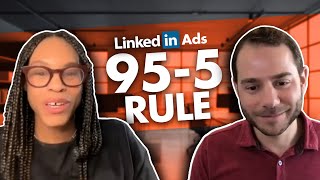
Ty Heath from the B2B Institute explains the 95-5 rule: 95% of potential buyers aren't in the market at any given time, so B2B brands need to build memory and reach them before they're ready to buy, not just chase the 5% actively searching.
All right, welcome to another episode of LinkedIn Ads Radio. Today I'm going to welcome Ty Heath to the podcast. Ty is the director at the B2B Institute as a part of LinkedIn. And today we're going to be talking about a very interesting topic, the 95.5rule in B2B marketing. So Ty, welcome to the podcast. I'm excited to have you here. Can you start us from the top and tell us a little bit about your background, how you got to where you are now and your role at LinkedIn and the B2B Institute?
Absolutely. Thanks for having me. We are obsessed with mental models at the B2B Institute and the 95.5rule is one of them. So looking forward to getting into that. So I would say that serendipitous moments is probably the two words I would use to describe my journey. I actually wasn't even thinking about tech. I studied politics and international economics in school, so. And I was running track and field as well, which is what actually brought me out to the, to the Bay Area. When I graduated from college, I was a top ranked 800 meter runner. So that actually threw me into the heart of the Bay Area because they had a Nike training camp there. You know, naturally when you're in the midst of tech like that, those are the kind of the jobs surrounding you. Most people may not know this when you're, you know, I was on a Nike sponsored team, but that doesn't pay all the bills. You got to figure out, how am I going to eat.
Yeah.
And ultimately I had a brief stint as a teacher, but ultimately, ultimately I ended up at Google. And while I was there, that was my exposure to digital advertising. And I found that you may not see it immediately, but when you think about it, there was a connection to this conversation of when you think about politics moving people, moving ideas, messages forward. And I saw that advertising and behavioral science and that whole conversation was a way to also move ideas and people forward at scale. So I saw the connection between the two things and ended up, you know, staying at Google for some time. Couple different roles between business development and finally doing Google AdWords. And then, you know, from there I, I recognized that I had a foundation in advertising, but did I really understand marketing? Yeah, like the fundamentals of marketing. How do you build a brand? How do brands grow? So I left to get my MBA. And while I was getting my MBA, I found myself just downloading content from HubSpot to look to supplement what I was learning. This was like back, you know, 2010, just downloading downloading content. I'm sitting in a coffee shop one day, get a phone call and someone reached out to me and they said, are you an agency? And I was like, no, I'm just someone who wants to learn, you know.
Because you were downloading so much content.
Downloading so much content, so many forms. At that point that someone reached out to me and they were like, are you interested? And I was like, you know what? I actually am. So that learning about inbound marketing through HubSpot was actually my first step into B2B marketing. I found myself, like, very curious about just the relationship required, relationship building required in B2B, the different elements, the complexity of the decision making and what it would take to move someone to understand what you do and be connected to it and make that decision vision. So that was my first step into it. I ran an agency for three and a half years to be consultancy. And then I found the part that I loved about it the most was actually explaining the concepts. And that actually brought me to LinkedIn, where I started in LinkedIn's agency channel organization, teaching people how to use LinkedIn's marketing products. And throughout, there was a happy crew of us within that team that found we were getting questions about, you know, what are the trends happening in the space of B2B? The four of us, co founders at the time, sought to answer that question. We developed our first thing, which was called B2B trends for the contrarian marketer. And it really answered this question of, you know, not this idea of like, what everyone is doing, but rather, you know, what is the thing that you could be doing that no one else is doing that could deliver a lot of value, right? That's the contrarian lens of it. And that was a hit.
There was a little chart I remember seeing on one of the B2B Institute pages. And it was like, what works and what doesn't work? And then like, what everyone does and what no one does. And it was like the contrarian. And I was like, that's interesting.
That was the. That was. We love mental models. That's. That was actually. That's a core mental model to how we operate at the B2B Institute. That is how we decide what ideas we invest in. It's this idea that you can be consensus with the crowd, contrarian against the crowd, or you can be wrong or right now when you're wrong, there's no value to, to get there because you're wrong, you know, and then when you're consensus and right, there's nothing to get there either and because everyone else is playing there and the value gets competed away.
Right.
So simply put, what you want to do is what no one else is doing and be right about it. So that was the insight we had. And I and ran with that because that's. That is where the. The value is. So that's. Those are the types of ideas we look for when we conduct our research.
You know, these are the opportunities. Like, these are these. This is what no one's doing that works, right?
That's exactly right.
I've read over, like, several of the PA there and like, all of them I remember going through and being like, wow, that is super interesting and like, something that I'm definitely going to go test out and try out. I remember the, the reach maximalism one and then the performance branding one. And like, reading through all those, like, there's like, certain bits and pieces that I'm like, oh, okay, that makes sense. Or I've heard of that before. Then other parts I'm like, oh, I'm definitely going to go test this.
Yeah, I think at this point, I mean, we. We're actually developing a fresh batch of trends. Like, super excited about that. But you know, just over the past five years, if people check out B2B transfer, the contrarian marketer, there's a plethora of different ideas to read and take on. And I think they're fun and funny, too. They're like, we try to make it entertaining.
I love the videos. I saw the Aston Martin video.
Oh, yes. Oh, my God.
How much fun did you have making that?
So much fun. So much fun spot. I mean, like, when. When else do you get to, like, be bond? Like, right?
That.
That was, that was an awesome video. So we'll definitely link to all those in the show notes here. Everyone go check out the Aston Martin commercial.
That's 95. 5 right there. Yeah.
So I think you have, like, the coolest job at LinkedIn and the B2B Institute, getting to find these, like, opportunities and then go research them and create this content that you can share with other marketers to improve their marketing. So I just want to let you know that I think you have, like, the coolest job.
I feel blessed. It's a. It's a great place to be, and.
I love that journey and that you've kind of gone through to get to where you are now. And I always think it's interesting when somebody comes to the marketing world from a different world because you'll have kind of two perspectives that you get to bring to one place and that, that increases your perspective. So I think that's awesome how you went from the politics world into the marketing world. You're bringing those ideas and those ways of thinking about things. And you've seen both the agency side and the, you know, in house, brand side.
I have, I have so much respect for agencies and what you, what they do, what they have to do, and how they have to take in and make things happen for the businesses they serve. I. So much respect.
Yeah.
And we appreciate having your research that we can leverage and implement for clients. And then last question is, do you still do much running?
Yes, I. So I. So I ended up trying out for the Olympics twice. I didn't make it.
Oh, wow.
But you know, it, you know, one of the best things I've ever done. And I still run. Although my knees will say, what are you doing? Why are you. Yeah, but I still run. Now I'm more of like a gym rat than anything else, though. It's. It's the treadmill versus the track at this point.
Point. There you go.
But I still enjoy it.
I was always like a recreational runner kind of growing up. You know, a little bit of exercise. And then maybe like five to seven years ago or so, I joined a running club here in Austin. And then like, kind of got into like doing regular runs and then you start cranking up the miles and then suddenly you've done a handful of marathons and you did.
Okay, you make that sound so easy. I just did a couple marathons. Wow. I've never. That's the one thing I've never done is a marathon.
Ah.
You'll have to add that to your list. Are you in New York? Are you in New York?
I'm in New York. I watched the marathon. Actually, the path, one of the paths goes by my house, like, not too far.
So that, that I haven't done New York yet. That's going to be on my list. I'll let you know when I go to do it and I'll make a.
Sign and I will cheer for you.
Amazing. So let's dive into the 95.5 rule. So this is one of the topics that the B2B Institute has talked a lot about. And I think this is an awesome rule. And I love, like, the research you guys have put together around this. Can you start by telling the listeners what that rule is and then a little bit more about it?
Absolutely. And you know, just to say this goes back to the, to the crux of why we do what we do at the B2B Institute. We're out to build famous B2B brands. Right. And so the concept that underpins how you do that is really understanding this idea of the 955 rule. And the principle starts with just if you think as a marketer about one of the most well known mental models we have, which is the funnel, right. The awareness, consideration, purchase conversation has been a part of the way we talk about marketing forever. We happen to think, going back to what I was saying about the contrarian thinking that that particular model is not particularly customer or finance centric. So there are some issues with the funnel. One of the things is that it leads us as marketers to believe that we are moving people through the funnel with the work that we do with the messaging. But our perspective is that we aren't moving people through the funnel. People move themselves either in market or when, or they move themselves in market rather when there's a particular relevant buying situation that they find themselves. So that you're either in market ready to buy something now or you're out market, you're not ready to buy and frankly you're not even thinking about the brand at all. You're out market. So instead we propose what we call the cash flow funnel. And if you can imagine this, you take the traditional funnel and you turn it on its side and you look at things over time. And so you have, you're either in market and that those in market buyers represent the current cash flow that you can generate from a business. This is the demand capturing that you can doing that, you're doing latent demand that's being captured. And then you also have out market customers that represents future cash flow. So these are future buyers. And the principle of 95, 5 rule says that 95 of your potential buyers, 95% of potential potential buyers are out market at any given time. So what that tells us is that if we're going to build for the future, we have to be thinking about that 95%. We have to be thinking about the future cash flows. And this is a, that model is a more customer and finance centric way for us to be thinking about things.
I think having the numbers to go with that shows people that if only 5 are in market and 95 are out of market, that's a huge difference.
That's right. That's right. And if we want to achieve that long term growth potential, you have to reach that 95% of people that are, are out market. So that when they decide to come in market, that your brand is actually the brand they're thinking about. And, and that out most out market buyers, that's how CFOs are valuing companies.
Yeah.
And that's your ability to build memory with people. Future customers are, are best reached through brand advertising.
Right.
So if you think about the 5%, that's lead generation, but that 95%, that's actually memory generation. And that's the distinction for one of the best things to understand is the fact that we as marketers are actually in the memory business.
I love that. I haven't heard memory generation before, but I love that. And I think that that graphic, I know that graphic that you're referring to and we'll link to that does a great job of just kind of like visually illustrating over time.
Right.
Right now in any market, 5% of people are in market, they're looking for a solution they would consider and maybe you know, get your demo or maybe consider buying. But then 95% of people are out of market. They maybe are a potential future customer, but they're not actively. Look, considering your solution, they're probably not going to be interested in your demo, but maybe they're in your tam and maybe they could be a customer subday. So if you're running just, just those lead gen ads, then 95% of people are probably not going to be interested in that. So are you only then advertising to 5? You know, are you really only talking to 5% of your market then maybe you're wasting 95% of your ad budget if you're doing just that.
Right. Well said. You're actually putting a cap on your potential by only marketing to the 5% of customers. And that is why we believe that B2B brand is actually one of the single biggest opportunities for B2B marketers to unlock.
Right.
Because if everyone else is doing lead gen, then there's a big white space to go do brand marketing.
That's right. That's right. And you know, even thinking about the way that B2B is today, we're not doing very much memory building activity. I'm starting, I'm seeing bright spots. Things are starting to evolve. I think more B2B marketers understand the need to like to build for the future. You know, you've got this idea that the building memory structures so that over time with using distinctive assets, you know, things like, you know, thinking about your logos, colors, characters, music, like emotion, storytelling, these are all the things that are distinct and different from the way you would talk to the 5% or that evolve in B2B.
You make me think of another chart that I remember seeing somewhere on the B2B Institute of like. Like things that benefit your ads and then things that detract, I think, detract from your ads and maybe like the memory recall of it. I want to say it was like having a. Having a brand character, kind of increased recall. And then I'm not going remember all the. All the assets, all the different facets there. But I, like, you guys, kind of broke it down. So, like, this could almost be like a checklist for somebody creating, you know, your next video ad or something. Like, does your video ad take advantage of the things that are going to build memory for people in the future, or does it. Is it going to hinder it? Are they using certain elements that maybe that's not gonna help and just kind of taking up space and, you know, hindering your ads?
Yeah. Yes. Memory's highly situational. People tend to remember things in context. There was a really fun study. It's actually in one of the B2B trends. Check out this trend on situational awareness. But you've got this guy who's doing research about vocabulary retention, and he found that when people are taught vocabulary underwater, if you put them back underwater, that's when they're recalling. I don't know why they're doing this. Who's the vocabulary lessons underwater. But people tend to remember things in the context that they're in. That's why, like, when you study to take an exam, you try to keep the same. You practice in the same conditions that you're actually going to take the test in.
Yeah.
So we have to think about how we want to be remembered. We like to say the brand that's remembered is the brand that's bought. And, you know, human beings tend to remember things in context, color, music, that you think about. The sound of the intel brand. As I say it now I know it's. It's playing in people's minds.
Yeah.
Characters, as you said, are an excellent underutilized device.
In B2B as well, there were some other misconceptions. So you mentioned, like, a lot of really interesting things when you were describing that you said. Or there was something that maybe I read on the page where nobody says, I'm at the bottom of the funnel. So, like, the way that a lot of marketers maybe think about this doesn't match up with how customers think about this. So with that misalignment, the way that you're putting together your marketing is not how People are buying and that's creating a disconnect and then it's making your marketing not perform as well. So if we then reorient our marketing into this way that customers think about it, if you market in the way that they're buying, then you're going to be more likely to have success. So as, as an agency, we have lots of people that come to us and they say, well, we want more demo requests, we want them and we want them yesterday, or we want more users for our app. And again, we want them right away. So, you know, for people that are currently focusing on that 5%, what are some steps they can take to start engaging that 95%?
Yeah, yeah. So to engage the 90, the 95%, we like going back to what I said, the brand that's remembered is the brand that's bought. So now we have to talk about how we're going to market to memory gen. Right. The MEM and most people purchase decision starts with a memory. Like the first search engine you search is the one in your mind. And so the brand that wins the mind in the most buying situation wins the market. So when I talk about buying situations, I'm talking about category entry points, which is another piece of research we've looked into. And simply put, category entry points are. This is this idea of like, what you want to be known for and not just what you want to be known for, but what you can credibly be known for. Something that comes up common enough for you to actually make money from the thing and, and something you can compete on. And you know, it might feel a little abstract to some people, but. So let's, let's try to play it out this way. Do you drink coffee by any chance?
Lots of coffee.
Lots of coffee. Me too. I've actually got a mug here next to me. So if I ask you what is a coffee brand that comes to mind right now? Like, what is, what is a coffee brand that comes to mind?
Folgers.
Folgers. Okay. And you're at home. Okay. Folgers would be like that. So that's something you could say you're in your home right now. Some people would say Starbucks, some people say Dunkin, depending on where they are. But whatever that brand is tends to be the one that has top of mind awareness for you. Now if I ask you, like, what is the coffee brand that you think about when you're walking down the street on your way to the office? Like, what would come to mind for you?
Then it'd be Starbucks Then it would be Starbucks. See the sign.
You can literally see the sign in your mind. And then you know you are at home right now. So maybe the answer is still Folgers. But if you are on your couch like wrapped up in a blanket on a Sunday, like what's the brand that comes to mind for you?
Probably. Probably Folgers because I'm at home.
Probably Folgers because you're at home. Yeah. So for some people it might be Nescafe. But the point I'm, I'm making, like, you know, if you're at a cafe, maybe it's Stumptown. But you can see how like in each of those different situations, the set of brands that you recall is. Could be different. Right, right. And so not only do we need to have a message, that message has to be connected to that particular buying situation so that people can have the rec. That's. So you want to build the memory structures against that particular buying situation. I think that's pretty exciting because it opens up a whole opportunity for brands to think about how they compete. And when you think about it, there are like two levers as you, as you think about those buying situations that make a huge difference. We have another piece of research called the CMO Scorecard and it talks about the marketing inputs that matter most that really move the needle for you. Engaging the 95. 5. The. The 95 percent one is creative and the other one is media. And we like to say creative times media equals outcomes. Because the benefit of having a strong brand actually delivers like outsized outcomes than what you would just expect. It's not just fatter pipeline for your marketing, it's actually doors open for sales.
Yeah.
Actually talent as well. Because people want to work for brands that they, they that resonate with them, that they like and trust. So not only do we have to need to identify the category entry points, we need to put creative against it and we need to put the media against it to get the, the full range.
Here it almost creates like a halo effect. It helps everything, helps your marketing, helps your recruiting.
That's how you kind of build the machine to reach. So even like there are. Indulge me a bit. So there's two, there's two fundamental principles that explain why creative and media are important. Creative is actually the biggest driver. It's the single biggest thing that's going to help you be remembered. And when you look at the research we have with Ehrenberg Bass, like strong creative will get you 10 to 20 times more sales effectiveness than media. Creative even if you have a limited budget, if you nail the creative, it can deliver a lot of impact. And then the other principle when it comes to media is this idea of access, share, voice. And so this comes from our work with Binette and Field. And the idea here is that it's like a fundamental principle of marketing that brands that set their share of voice higher than their share of market tend to grow and those who set their share of voice less than their share of market tend to shrink. And so the, the from a media standpoint, you have to grow your share of voice to grow your share of market.
Yeah.
And so this is why reach Ma. You mentioned reach maximalism earlier. This is why we're reach Max ultimate list.
Interesting.
Yeah, yeah.
So if, if the market, if your share of voice is greater than your market share because people are seeing and hearing you to some percentage higher than what you currently are, you're going to grow to that because that's, that larger percentage of people are hearing about you and probably going to go check out your website, going to go learn more about you, going to be more open to buying when, when that time does come around, right.
You're, you're actively building memory structures with more people with new potential buy.
And then when you said like a good ad creative is like 10 times more impactful or something like that, what.
I just thought about more impactful at creating those memory structures. And so what I think about is.
Like, is like, you know, maybe a non impactful ad, you have that one touch point and maybe you don't remember it, so that one touch point happens and kind of passes. But a good ad that you do remember, you might go think about that several times and then that's almost like the 10x happening. It's like you thought about it 10 more times throughout your week and boom, there's like 10 more, you know, 10.
Times that not only do you remember it, but you remember it against the buying situation.
Right.
And so, you know, we like to say, you know, easy to, it needs to be mentally available to build mental availability, needs to be easy to mind and then it needs to be easy to find. And so you're creative in media is how it gets you there. And we love our acronyms and mental models. So like within creative there we have this framework called able, which is attention times branding times linkage equals equity. And attention by attention it means like putting more media dollars but behind the ads that people are looking at for a longer period of time. So you want to invest in the ads that are commanding people's attention and divest from ads that are not. And then going back to the branding, if you imagine a video ad, you want to brand early and often and this is where you're bringing in some of those distinctive brand assets like the colors, the logos, the fonts, the characters, all those things that build the memory structure and then making sure that's attributed to you, to your company, to your brand. Right. That's not misattributed. And then the linkage is the category entry points. And so this is where you make sure that message is linked to that buying situation and that if you can do that with your creative, that's going to be a more effective piece of creative than to your point. One, that's forgettable when someone doesn't know that that's actually you or your brand.
There's so, so many topics, so many super interesting concepts here. We're gonna need a lot more episodes. But it's like, it's so fascinating because there's like so many topics to like break down here. Like so many things that we can learn from and implement in our, in our campaigns. So yeah, I love all those like frameworks that you just shared. Like the thing that I think about is like the, the situational thing, a lot of like. And when I'm like, when we're creating campaigns, I often think about what does it look like to the, the customer? What does their day to day look like? What are the tools that they're using look like to help put them in that context? Number one, they're going to be more likely, that ad is going to be more likely to grab their attention when they're seeing themselves or seeing their workplace or their type of work. In an ad, that's going to grab their attention and then that then carries the situational. They're going to remember it because when they're back in that situation, they're going to remember your ad because they were in that when they were looking at it. So I think that's like so interesting, the situational awareness concept.
So I wanted to, yeah, it's all about identifying the things that are going to trigger them to, to become in market. Yeah, right. And it could be like, you know, somebody, they need to hire a new leader or it could be, you know, a system broke down and they need to buy a new platform. Now they find themselves in the buying situation. So for you as a business, identifying, you know, what are the most common ones that come up? Where can you actually compete and what, where, what are you credible on are some of the best ways to sort of narrow down which triggers to focus on.
Yeah.
Kind of starts with like a positioning exercise of like what do you want to be known for? What can you stand out for? So next question is like this, this all sounds amazing of like you know, memory structures get people to remember you. How should somebody who's, who's like a marketing leader at a company, how should they think about balancing like short term, maybe lead gen vers some of this long term brand building activities.
Yeah, yeah. So part of it is recognizing like everyone wishes they had unlimited budget but in this timeline that we're living in, we have to face reality. That's not the case. So the good news, the first thing to know is it's not just what you spend, it's how you spend.
Yeah.
You know, so you know, having a clear philosophy in terms of like not just the balance but like how you use the media you have, you know, and that's where you know, thinking about this reach maximalism idea, the share of voice effective campaign is a broad reach campaign. An effective strategy is a reach maximalist strategy because you don't know who is going to come in market and when.
Right.
So if you, you don't want to make assumptions about that. So that's why having a broad strategy overall to make sure you're speaking to the category is an effective strategy for your business. Thinking about how you know, we're not spirit Halloween most business like if you're spirit Halloween listening then you can tune out for a second. If you're not spirit Halloween people can come in market anytime, any point through the year. So you want to have a continuous message so spreading your spend equally through the year. And then here's where the balancing of short and long term we have to balance good. To be efficient we have to think about demand creation and demand capture. But oftentimes the demand creation, the 95, the 95, 955 rule the brand building can deliver more efficiency to your campaign. Right. It's expensive. Bottom of the funnel tactics tend to be more expensive. So the rebalancing and thinking about it's not just reach, it's your cost per reach. And so bringing in more of the brand can help rebalance the efficiency of your campaigns. Now we have some research that says in general B2B brands should be spending at least 50% of their budget on branding. That's going to vary a little bit and it's going to shift based on what's happening in the economy. There's a number of different things that will impact that. But you know the most important thing is for us to take the long view on, on this. Right. So, so that's I would say thinking how to think about the balance of it and start to think about how you can get some efficiency by investing more in brand tactics.
Right.
And I liked your explanation of that of you. You don't know with when you have a 95.5 balance here you never, you don't know who's going to be those 5% and it's probably really hard to find them when you're, when you're, when it's just 5%. A needle in the haystack. So that's why reach is more effective because you need to reach the masses to find that 5%. There was some again somewhere on the B2B Institute was talking about the death hyper targeting and my hunches, that's why that's how that ties in is people who over target are, you know, they're restricting themselves to a very small segment. And then again if you're already searching for a needle in the haystack and you're like over you know, cutting down your audience size then you're even less likely to find that person who's in market because it is just 5%.
Yeah. And I can completely understand, you know why someone ends up there because you know, what gets measured, gets managed.
Right.
And so like that's no, it's true in B2B. So lead generation with the short term outcomes we all have the readily available metrics to talk about and that's why it gets the lion's share of the B2B marketing budgets. And that's why we have the type of research we have to help people understand the impact of brand efforts because both brand and demand support sales activation. So you should be doing both. But brand also gives you pricing power. It builds a competitive moat. It gives you category optionality meaning like if your category shrinks, you can easily pivot into a new category. It gives you the capacity to hire better talent, more cost effectively. So the rewards of in rebalancing and thinking about brand are there. It's just a matter of understanding how to measure and not necessarily looking at brand as like this is a fluffy kind of pie in the sky sort of thing. It's real. It's not just a cost of, of doing business. It's a growth engine.
Yeah.
And I, I do agree with you that that's the challenge is like when you have legion, you can see leads coming in, you have Something very tangible to look at when you're doing brand marketing. It is a little bit more harder to visualize to see that those effects. Is there any advice you'd give to somebody to how, how can a marketer know if their long term efforts are working in the short term?
Yeah, yeah. So I think part of that is understanding that and accepting that the real value of brand is in its effect on future sales. It's in the question is like, what results can I find right now. The reality of it though is that the brand effects last longer and they actually compound over time. So you know, in some instances you're not going to see something for six months. So it's almost like a mindset shift that needs to happen in terms of what we expect in terms of the investment of brand and having a conversation with the other stakeholders in your business, including the finance person and the CEO to help them understand how this works with using a mental model like the 95 play together. We need to balance both of them. You need the sales activations, demand gen to maximize short term sales, but we need to have the patience and the commitment to maximize long term sales with brand. So I just want to be like, clear that in that question itself is a need for us to like reshape our mindset around, you know, how we think about brand and how often we should be measuring it and having the patience to really, you know, stick with and invest for the longer term.
Yeah, I love that mindset shift. I've heard some advice out there in the market of like other people asking for, you know, maybe I just got a new job, how do I educate them on, on this stuff? And a very common piece of feedback given to those people is you either need to educate your CEO or if your CEO is just not buying into it, you need to go get another job.
Yeah, but, but you know, here's the thing that's, that's, that's the thing. Like it's the truth, it's the truth that we're speaking here. You know, what, what you can, what you will start to see, I'll tell you this, which you'll start to see is, is the outcomes that I talked about when, when you put in the right creative, when you put in the right media, you will start to see, you know, your fatter pipelines from a marketing perspective, you will start to see, you know, more doors open. From a sales standpoint. We have slides that show the difference between, you know, people who were primed with ads coming out of the 95% and we also have examples where people were not primed and they were just a cold lead that was shown a demand generation ad. And there's a clear lift when people are warm leads. From a sales standpoint, more in mail opens, more connection acceptance requests. From a talent standpoint, I think there was some chart that showed when someone was exposed to the brand, when talent was warmly primed before there was a 95% uplift. So it's, it's there. You, you will start to see evidence of the brand's presence in people's minds. So perhaps more mentions, more, you know, people starting to be recognized and associate specific like logos and slogans with your brand. But you like these things don't happen overnight. That's the thing.
I'll do a quick plug for LinkedIn's brand lift studies that they now have in platform that you can run along with your ad campaign. So that can be an option for some people. But yeah, part of the pros and cons of the halo effect is it's a halo that it's very hard to measure when people start saying, oh, I've heard of you guys before or I've seen you guys before, like that's what you look for, that's what you have your salespeople look for. But it's so hard to like to measure.
Yeah.
And that's exactly why we set out to create the CMO scorecard because I think it's a universal head scratcher for people like, how do you measure the impact of brand? And we wanted to have a formula to link inputs to outputs and also to give marketers a conversation about our impact and the impact of brand. Our work actually extends beyond the space of marketing to other parts of the business. And therefore we should have a seat at the table in the bigger conversation and how we should be investing in brand to get more done.
All right, Ty, I have two questions left for you. We're almost out of time. I feel like we could talk forever on these topics. So the first of the last two is what are some B2B brands that are doing it right?
Right.
Yeah. So actually this is where I want to do a plug because we are always inspired by brands who are like betting big on the contrarian ideas. And one of the brands that has been with us forever in the journey within our B2B Edge program, this is a consultancy program we have that where we help our customers with strategy, creative distribution and measurement to help build famous B2B brands. So I want to highlight the fact that we started Our Edge case with this company called SaaS. They're amazing and they've been able to transform their organization from a rational performance marketing engine into like a full blown, like creative funnel. So they have a product called SAS Viya. So they help people understand and process and make sense of their data. Wonderful, you know, fun campaign. Running a data. That's right.
I'm just imagining the guy in the ball pit that worked on me.
That's right, that's right, that's right, the ball pit. You asked for an example of a brand that's doing well. So we have our, we have a consultancy program where we support our customers called B2B Edge. And in the program we take our customers through strategy, creative distribution and measurement. And there is a brand that we were very inspired by. They've been with us since the beginning of the Edge program and they bet big on a contrarian idea using the principles that we've been talking about for in this conversation. They have a wonderful campaign. So it's SaaS and they have a wonderful campaign for their Viya product called Drowning in Data. And it shows this man who's just literally drowning in a pit, a ball pit in a cubicle. And it's hilarious. And we feel they really push the envelope on it. It's memorable, it's funny, there's a character, it's great. But the idea here is that they've taken the principles we've talked about today and they transformed their organization from performance marketing to a full funnel brand and demand conversation. Really laying the groundwork for their brand strategy. One of the things that I would say is it's not just the marketing. They've been able to transform the conversation around brand through their whole company. In the video, you see their CFO speaking to the performance of brand and the importance of it. And I'm like, wow, that's a wonderful place to get to where you have key stakeholders being really clear on the value and like the ripple effects it has across your business. Sales, talent acquisition and marketing. Of course.
Amazing. All right, Ty, last question is, is there anything that you want to mention that you're. Or what it. What is something that you're excited for in the future of B2B marketing?
Yeah. So I, I think the future is bright. I think that one of the things that people need to understand, B2B is actually over half of the global economy.
Wow.
And you know, when you think about it, if you really look at it, the biggest B2B categories are actually faster growing than a lot of the Biggest CPG companies like these are companies like Nvidia, companies like Salesforce, huge brands. The challenge is that a lot of people don't know. They don't know that. And they also maybe don't know what those brands do. Right, right, right. So these are some of the. When you think about these brands, this is the future of economic growth, but people haven't heard of them or don't know what they do. So what I'm excited about is, like, the opportunity to build famous brands in this next generation of where this transformational growth is going to come from. And we have, of course we have our obstacles. Like B2B tends to be more complex, less tangible, but that's what makes the job of a marketer even more important. And so that's the work to be done. That's why LinkedIn's investing, and that's why I'm super excited about what that will look like in the next years.
Wow.
If that doesn't get you excited, I don't know what would. So I think that's an amazing point to cap off on. Super excited for all this to come. Thank you so much for coming on the podcast. It was awesome to deep dive on some of these amazing topics. We'll definitely link to everything in the show notes and we're definitely going to have to have you come back and talk more about all these other topics.
Thanks for having me and thanks for what you do as well. I think the future is bright. I think that one of the things that people need to understand, B2B is actually over half of the global economy.
Wow.
And you know, the. When you think about it, if you really look at it, the biggest B2B categories are actually faster growing than a lot of the biggest CPG companies. Like these are companies like Nvidia, companies like Salesforce, huge brands. The challenge is that a lot of people don't know. They don't know that. And they also maybe don't know what those brands do. Right, right, right. So these are some of the. When you think about these brands, this is the future of economic growth, but people haven't heard of them or don't know what they do. So what I'm excited about is, like, the opportunity to build famous brands in this next generation of where this transformational growth is going to come from. And we have, of course we have our obstacles. Like B2B tends to be more complex, less tangible, but that's what makes the job of a marketer even more important. And so that's the work to be done. That's why LinkedIn's investing, and that's why I'm super excited about what that will look like in the next years.
Wow.
If that doesn't get you excited, I don't know what, what would. So I think that's an amazing point to cap off on. Super excited for all this to come. Thank you so much for coming on the podcast. It was awesome to deep dive on some of these amazing topics. We'll definitely link to everything in the show notes, and we're definitely going to have to have you come back and talk more about all these other topics.
Thanks for having me, and thanks for what you do as well.
More from Farouk








[Masterclass] 7 - Optimizing Your Campaigns Analytics and Performance Tracking


