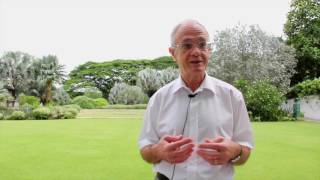
Peter Edwards argues that urban nature, the diversity of living things in cities, matters more than ever. Cities can be biodiversity hotspots through gardens, planned plantings, and spontaneous colonization. Urban nature provides health benefits, material resources like fruit trees for poorer communities, and ecosystem services including flood regulation and air purification.
Chapters
Well, I understand by urban nature the whole diversity of living things that you can find in a city. And I think this urban nature has become more and more important over the last centuries. And today we are really valuing it, not just because it's beautiful, but because it's also useful. And that was what I tried to bring out in my talk.
Yes, well, I mean, one is just.
Health and welfare, well being.
And so as cities get larger, it.
Becomes more difficult to get out to the countryside.
We need to be able to have.
The pleasures of walking, recreation within urban areas, but in a natural setting.
Then another one for many people in poorer countries is that the nature provides something. Maybe it provides food.
Fruit trees, for example. Very important is shade. For people who live in very hot places and they want to set up a little street side stall, then shade is important.
And then more and more we're just.
Realizing that nature provides services. So it helps to regulate flooding, it keeps the air clean, it helps to reduce the temperature. In very hot cities we call those.
Ecosystem services and they come from urban nature. Strangely enough, a city can be real hotspot of biodiversity. And that diversity, all of those species has come into the city in different ways. Some of it was always there. It's just a little fragment, like the.
Rainforest in the Singapore Botanic Gardens.
A little bit of leftover of the original ecosystem, but lots of diversity. Some of it's there because it's been planned.
So streets, trees for example, or parks.
The species we've chosen them, people's gardens. And a lot of the diversity has simply come in by itself. The seeds have come in, the birds.
Have flown in and so on.
But they all add to this extraordinary diversity of species you can find in a city.