The Energy System of the Future: A System of Systems by Dr Christian Schaffner (FCL Lunch Talk)
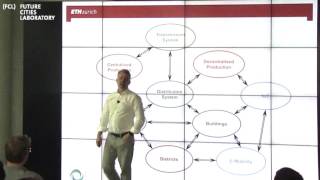
Dr. Christian Schaffner from ETH Zurich argues the future energy system must work as interconnected parts, not one big model. His lab built NEXUS to link grid technology with economics, and IMESS to test neighborhood energy hubs that combine design, operation, and community buy-in.
Chapters
Thank you so much, Arno, for this nice introduction. So, yes, I'm an electric engineer and I think I never really worked as an electrical engineer since I finished my PhD. And of course, like the work I'm doing today is very broad and I'm really trying to also understand what are the different disciplines doing in the energy field. And that's also why I really enjoy this work at the Energy Science Center. We'll talk a little bit more what we actually do and what we are. But also in my previous work at Swiss Federal Office of Energy, as it's officially called the Ministry of Energy, of course, also there already it was very broad and it was clear that energy is not something for just engineers or just economists, or just.
Social scientists, or for the regulatory work. It's really quite complex system. And this is what fascinates me about this topic. And that's also why I call this talk here the Energy System of the Future of Systems. Of course it's a buzzword or let's talk about it. But I think that's what I would like to focus on today, that we have these different system aspects in the energy system and each of you is expert in one or two and maybe linking a couple of them. But I think the big picture we only get if we see everything together. And that's what I'm trying to talk about today, really, also to stimulate discussion and of course open you to ask questions during my talk afterwards and hopefully also during the coming weeks and months. I'm here until early July, well, in Singapore a little bit longer, but I'm taking some vacations at the end. So I really do hope that we get some interactions also until the end. So let me start. What is the Energy Science Center? If you look at energy research at ETH Zurich, you see that about 100 professors are active in the energy field, some of them very little. They have one or two projects, some of them like almost 100%, but it's really a large. So it's basically a fifth of all professors at ETH Zurich have something to do with energy research. So I think energy research is really quite important. And out of these hundred, there's actually now 70 professors are members. I think I have to update the numbers. Actually 70 are members of the Energy Science Center. The Energy Science center is a so called competence center. So we're not a professorship, we have very little staff. It's basically me and then and two, three other people. So what we try to do is bring people together from all these 11 departments that are involved and bring them together in research. Try to come up with research ideas that cannot be tackled by one single department, by one single professor. Also work in the education. The Master of Energy Science and Technology was mentioned. But we also involved in the Master of Integrated Building Systems. That's another master that many of you might know that started quite recently. And of course then also in outreach. So we try also to bring this topic of energy research to the bigger public. We have large events at eth. We work a lot with the administration as well. We have many workshops with them and then also with industry. So we really also try to be a single point of contact within ETH Zurich, but also to the outside, to other universities. If you look then at energy research at eth, you really see that we have all these individual professors that I was talking about and they work in different topics. So they work in. Well, a couple of names are printed here, but they're working in different topics. And as long as they are doing their own stuff, I would say the Energy Science center is not really involved. So each professor has its own projects and etc. We try to get involved. Once we have these so called areas of action or cross cutting themes. I think that's the important part there. Whenever we think there are topics that cannot be tackled, as said before, by one discipline, where we need more disciplines to work together, for example economists and engineers or architects and engineers, then we try to help, we try to be there and try to bring these people together, together. Of course that happens also without the Energy Science Center. But the Energy Science center is a place to really facilitate this. In the last four years we had four areas where we kind of focused on. It was energy and information. I'm going to talk a little bit about this today. Integration of renewables. Of course that's a very important topic. The integrated modeling part. This is also something I'm talking about today. And then something we haven't really explored yet, but we think there's still a lot to explore. It's the energy, water, the land nexus and maybe we even put in climate as well. But of course you might know how this works. So that's basically the part where we work as the Energy Science center and then we have some flagship programs where also out of these research projects we build platforms that we hope will continue to be used in the foreseeable future. These are then the flagship programs. So that's the Energy Science Center. It's really something that we try to, to bring in all the researchers of energy or maybe not all but those interested together and really create added value to the research community in the field of energy. Now, as I told you, as I've seen from the title, I would like to talk about the system, the energy system and what does it encompass? And we are here at the Future Cities laboratory. And.
Of course what you are thinking, or most of you are thinking somehow in the terms of buildings, districts, cities and how they interact. So this is basically what you do here. And as an electrical engineer, when I started with my studies, of course all this part was basically just one arrow, basically meaning a load. So this is the other end. Right. And now I would like to talk a little bit about how these things are coming together. So this has nothing to do with energy yet, it's just like the urban landscape. So what then normally comes into play is a distribution system that can be gas, electricity or heat or cooling. So basically how to distribute energy within a city, but also within buildings. You could also draw an arrow here, but then it would be too many arrows. And of course, like already, this system is very complex and there's a lot of research going on here. Basically with each of these arrows you can have many, many research projects and also many research projects going on and linked to the distribution system. You normally have the decentralized production, which of course also has normally a direct link to the buildings. Maybe I should draw this line as well. So this is then something that is being tackled a lot today and being discussed a lot today. All the distributed energy production within a city, within building, within districts. But of course, you know that that's not all yet. There is more. And one thing that is quite often neglected if you look at the system is the transmission system. Because.
Cities like Singapore, they are not, well, they are an island, but not in terms of energy. Singapore is importing gas, so there is a transmission system that transmits energy over long distances. In Switzerland, of course, you have a distribution system, but then you have a large transmission system within Switzerland, but also linked to the rest of Europe. And this cannot be seen independent. And we'll talk about it a little bit more why this is so important to also see this part. And then linked to transmission system, you of course have the large production units like nuclear power, but also large wind farms. They are not decentralized production, they are really centralized big units. So this is kind of like a picture of how we could see the energy system. Of course there are many ways of looking at it, but now or maybe in the future it becomes more interesting. And I'm just showing Two buzzwords here, but I could add many more in blue. Now we have for example, the E mobility that is suddenly coming in, or at least, or let's put it, we could also call it smart mobility or like the future of mobility.
More and more. This really needs to also to be linked because I mean if you change from fossil.
Based cars to E mobility, it suddenly has a link to the buildings, to the districts, because you need charging stations, but it also influences your system. So you're suddenly moving into a world where there needs to be much more connection than just the roads and parking lots that you had earlier days. But there is even more. There's the whole again a buzzword, but the whole development of Internet of things. We all are using Grab nowadays or Uber or whatever and suddenly you see that there's this link between mobility and the information technology that is coming in. But this could also be demand side management. It could also be that there are many things behind it that just put Internet of things as one of the words, that you can kind of take everything together and you have a strong link to decentralized production as well. You can, when you have all this data of course move in to a direction where you can start optimizing the systems, the energy systems also based on information that is available. And we had the discussion other days that of course, like for example, you could use data from mobile.
Communication to be able to better understand how E mobility will be explored in the future, how this again then influences decentralized production. So this is a whole world that is just starting to become.
Interesting or become explored. And I know quite a few of you are working on there. But I do believe strongly that there is a lot of potential here that has not been explored now. So this kind of is a picture of how this whole energy system that we are all working in could look like. But let's look at how actually researchers or professional people are looking at the system. And this is kind of the view the old utilities had on the energy system. So if you talk to a utility here in Singapore or in Switzerland, quite often they're more or less working in this field here. They know they're either distribution companies or large production units. They knew this system with a transmission system, centralized production and distribution system. That's how it was done. It was a top down approach. You had large units, then transmission system, then distribution system, and somewhere you had the kind of in quotes dumb load. So you have loads, meaning buildings or cars or whatever that just uses the electricity or the gas or whatever the Energy is. So that was. It's kind of the old time. However, I put it in quotes. If you talk to utilities today, you still feel this thing, at least in parts of these companies. Some companies in Germany, for example, they started to kind of have bad banks and good banks in terms of like the old world and the new world. And there are still engineers that are working here. And this is not a trivial system. It's actually very complex and it's becoming more complex as we have more variability in the system due to renewables. So it's not easy for example to really make this link transmission system and distribution system. So it's not that this is all done, but it is kind of a limited view of the world.
Now when you go to engineers. Well, I think they started many power engineers, for example, as also like when I did my PhD, we only looked at centralized production transmission system and made optimizations there. And interesting findings Nowadays I think it's clear that we have to include decent production distribution systems. So this is kind of like the system that engineers and also often economists, if they really want to go into energy, look at the world, but they completely forget this part here, also the whole smart part, right? So they just look at this and again have the, the loads, the cities, the buildings, but also mobility kind of as an external part to their simulation or their view. And this is also how energy systems nowadays are still planned. Quite often they just take this part as kind of given getting numbers from somewhere and then the whole optimization and design and in optimization and also how it's run, that's basically done in this world. Now don't kill me now for the next few slides because it might be a little bit provocative as well.
First I would like to show you one example of this world where we are having a research project right now and also hope that we get some more interactions with you. So the first research project we are looking at and you see that already if I go back already, this system is very complex. So it's called NEXUS Integrated Energy System Modeling. It's a vision of a modeling platform. Because we found that many professors at ETH Zurich, they work in a specific field of energy, for example in hydropower. But they need to have a model for the rest. They need to have a model for the transmission system, maybe even down to the distribution system to understand there or to link that to their special modeling or research they're doing. And so we thought it would be good if we have a platform that everybody could use and then kind of add the modules that the individual researcher is really good at, but then for the rest use a standard platform. And that's why we started with this integrated system modeling platform, we call it Nexus. It's really interdisciplinary work. We have different types of engineers included.
Great experts, production experts, optimization people. We have economists in there to really understand the whole question of who is investing when and what, and also do understand the macroeconomic. So really we have the bottom up engineering based approach there where you look at grids and production units and we have the top down macroeconomic and policy aspects. And this is being linked. And in terms of modeling, this is also the step forward there that we really try to combine bottom up and top down approaches in one heuristic approach.
It's really also the idea that we develop a common understanding of this system because it's not trivial. And when we started this project we had about a one year pre phase. And the most challenging part there was really to get the engineers and the economists talk to each other and to understand each other, what are the issues? What does for example, a dynamic mean in this regard? Because economists, they understand something completely different from the engineers. And of course the time constants are completely different. You have like in the bottom up part, you go down to minutes if you want to look at security of supply. And in the macroeconomic approach, of course, you have years to decades to understand the investment behaviors and how do you bring these together, how do you create the interfaces? So that's what we are working on. And we have a few principles that are very important to us. We want the whole thing to be transparent. So it should not be a black box. It should be really something that everybody that uses it can look into, can look at the code. We want to have not everything in one monolithic model, but we have defined modules, so modularity is very important and combined to that, defined interfaces. So we are not trying to reinvent everything, but we're really working on these data interfaces. And this is something that is also very special in this project in terms of compared to other classical research projects. We spend a lot of time on these interfaces, discussing them, defining them and also documenting them.
So that's the work plan here we started in 2016. For the first time phase we do an applied implementation. What we are looking at is really the effect of variability in the system. So we have more variability due to renewables. And how can you cope with it? What kind of flexibility do you need to match this variability and flexibility in our project here can mean everything from large hydro stations, power, gas, fired stations down to batteries in each household. So really have the whole range of variability providers as we call them in the system. And this is something new. And this exactly shows why you need this complex system because you need centralized and decentralized systems being active in the same field.
So there I really hope with some of you I can go into more details and discussion and to see also how we could link other things that are being developed here at the sec, how we could maybe link that maybe now, maybe in the future to this platform. Okay.
Now to the provocative part. I'm going back to my picture and I've been working in my career at ETH in the Energy Science Center. I've been working with many disciplines and also with architects and of course you again it's provocative. There are some architects who see kind of like don't see the energy system, let's put it like this, who just look at city buildings, district planning, urban planning, of course that's also very complex. But I hope we can also move away from this. That's why I'm here and that's why I'm working for the energy science system. But there are other architects who may be seeing the energy system more like this that they look at one building or maybe a couple of buildings. They look at the distribution system and then decentralized production, but kind of forget that there are other things that also need to be part of it. Again I know that.
Well, that everybody knows the larger picture as well and you have to focus on something. But just when you explore people, that's something that happens quite often and the understanding quite often is not there. What for example, the link between a distribution system and transmission system is just to give you a quick example, in this system quite often you need or people are working with electricity prices and they suddenly go to variable prices because that makes it more interesting, you can optimize more and then you can create interesting results. However, quite often in reality the price that you see as a household is flat over the year and maybe even over a couple of years. So you don't even have these signals that you need to make for example a local.
Battery storage economically feasible. So these are links that need to be understood to make it possible to work with these systems. And I think that's really also where it becomes very interesting. We also work in this field. So I give you another example and we call it integration of sustainable multi energy hub systems at neighborhoods scale imess. It's again a very interdisciplinary project. We have all different kind of engineers. There we have economists, we have even social scientists about acceptance. And here we are not only looking at electricity, we're really looking at electricity, gas and heat. It's based on European funding, so it's more in this hemisphere. So it's not about cooling. We don't have cooling in here. However, the principle could be explored as well. So the idea is really that we have different neighborhoods that all function like an energy hub. So an energy hub is basically a conversion station from different energy carriers to another. So for example, from electricity to heat or from.
Heat to electricity, or also having storage elements in there. And then they are linked through electric and gas grids and maybe a local heat grid as. As well, well, a district heating. And we are looking at these systems using a couple of cases. So we're looking at small cities in Switzerland and parts of larger cities, like a part of Zurich, but never a whole city. So it's really this smaller view there. But it's already very interesting because we're really going down into the details of technologies like how a heat pump works, how a CHP combined heat and power unit works, how batteries work and how they all can work together. And the interesting part is now that we basically have two optimization parts. One is in the design. So we look at a neighborhood, we kind of take the buildings. Again, that's this not linked to neighborhood planning or city planning. We take a neighborhood as it is and then we try to come up with an optimized setup of technologies like how much storage does it need, what kind of pv, how much pv, what kind of other technologies do we need in there? So we have system optimization, system design optimization that uses a hub simulator here. And this data, then this design data is then giving to another control optimization system using a similar hub simulator. But now looking at the operation, so real time operation. So there we have control professors that are involved. And then look how this hopefully optimal design actually works in reality. Does it really work? Does it have problems? Do we have dynamic problems? And there is a feedback between those two. It's a soft link, so it's not a hard link. So feedback to design people saying we need more storage, we need other setup to make it work. So the output of all this then including some economic analysis also on how much actually the costs are, we get an optimized hub system. That's one thing we do there. We also develop this modeling methodology. That's not something that has been done that often. So that would be another output. And then we also have a social assessment. We look at, we Ask really people, would they like to have something in their neighborhood with all these different technologies or what would be the problems there? Okay, so these were just two examples of larger energy science and the projects that involved here. And I don't want to talk too long, so I'm getting back to my picture here. One thing I said before, we are moving more and more into the smart world or smart is being used for everything. Smart buildings, smart cities, smart distribution systems, smart mobility, and then of course Internet of things. So this is kind of like the smart world. And everybody talks about it, everybody wants to enter it. You know that also big players like Apple and Google are trying to enter it. Microsoft of course as well. But what is interesting if you look at this, that if you look at the solutions that start to exist now, they normally only are at one or two of these arrows. So one or two links. So for example, you have maybe a link between mobility and then local storage, for example. Tesla is trying to do that. You have links between decentralized production and distribution systems. So a distribution system. So this is something that utilities start to move into to actually make their distribution system, which are today normally run as a black box, being more intelligent, using data they didn't have before. Trying to understand this.
Of course there are also like links that start to pop up, like how you plan your city, that you don't take energy just as a thing that comes later in the planning of new areas. But this is very difficult. I have been working with the city of Zurich a little bit and even the city of Zurich, who really kind of thinks of themselves as being very advanced, they failed in the development of new areas to actually take the energy aspect into their planning from a very early stage on. But what you see is like there's no really system or approach that kind of encompasses everything here. And I think that's where we would need to move to, that we take all these aspects into, into account to be able to really move into a smart energy system, if you like this term or not. And of course, like normally these, the other two things, transmission system and centralized production, they are not being taken into account at all. And I think this is another thing that needs to be added because only then we understand also development of electricity prices. So I don't know if you follow the news in Switzerland, but in Switzerland we have this issue of low electricity prices at the moment. And they are not due to any local regulations or Swiss system. They are really due to overproduction in Europe. There is too much capacity in Europe right Now, because economic growth was not as expected and you know, these investment cycles, they are more like 10 to 30 years for big units. So there's just too much electricity in Europe, so prices are down. There are a couple of other factors, like CO2, like the renewables in Germany, so the other factors, but all these together really created low energy prices, electricity prices, and they directly influence the production park in Switzerland. And if you only look at this part here, you don't get this information and you don't get this picture which is fundamental to what might happen in Switzerland, might even change the outcome of the referendum that is coming up on May 24th. So to kind of come to the end of my talk and what I would like to really stress here is this, how, right, how do we bring all this together? And I think what doesn't really work is if we take everything like this into one monolithic system, put all the data in there, put all the models in there, and try to run the world model. I think everybody knows here that doesn't work. It probably also doesn't work if you would take one like in reality, if you want to run such a system, you're having one agency that runs the whole thing here with incredible amount of data and try to fix everything. So I think we need to have an approach both in modeling and also in the operation that uses local information, that uses local approaches, but always linked to the other parts. And this linkage, again, like coming back to what I was saying in the Nexus project, this linkage is not trivial, it's very complex. You need to understand what data is needed, at what time, what interval, what accuracy do you need it, et cetera. And I think then if we move there and really always try to look across the fence to the other system, I think that's when it becomes very interesting. And one way of starting to do that could be that we take for example, this part, the classical electrical system in one module, that is kind of feasible to model that together nowadays, but then also have this building distribution system, centralized production in one bubble that could be taken together. And you see already here you have large overlaps. So this is another of these challenges. How do you deal with these overlaps? And then of course, the whole question of city planning, urban planning, together, then with the other parts taking again, like looking at these interfaces and really taking the things together. So I think like this we could really start to explore a more holistic view of the energy system. And of course, as you see here, the kind of modern things that was done on purpose are only partly included. Yet I think there's still much to explore on how the whole data aspect could play a role and how we could take that more into account, both in modeling and design, as well as then in the operation of energy systems.
So that was my brief overview again. For me, also as a food for thought or food for discussion, I'm very happy that I can be here. Thanks again for all the people that made my visit here possible. And with that I would like to finish, and I'm open for questions.
More from FCL










Day 1 - Policy Innovation for Urban Transitions | Future Cities Symposium & Exhibition 2025
