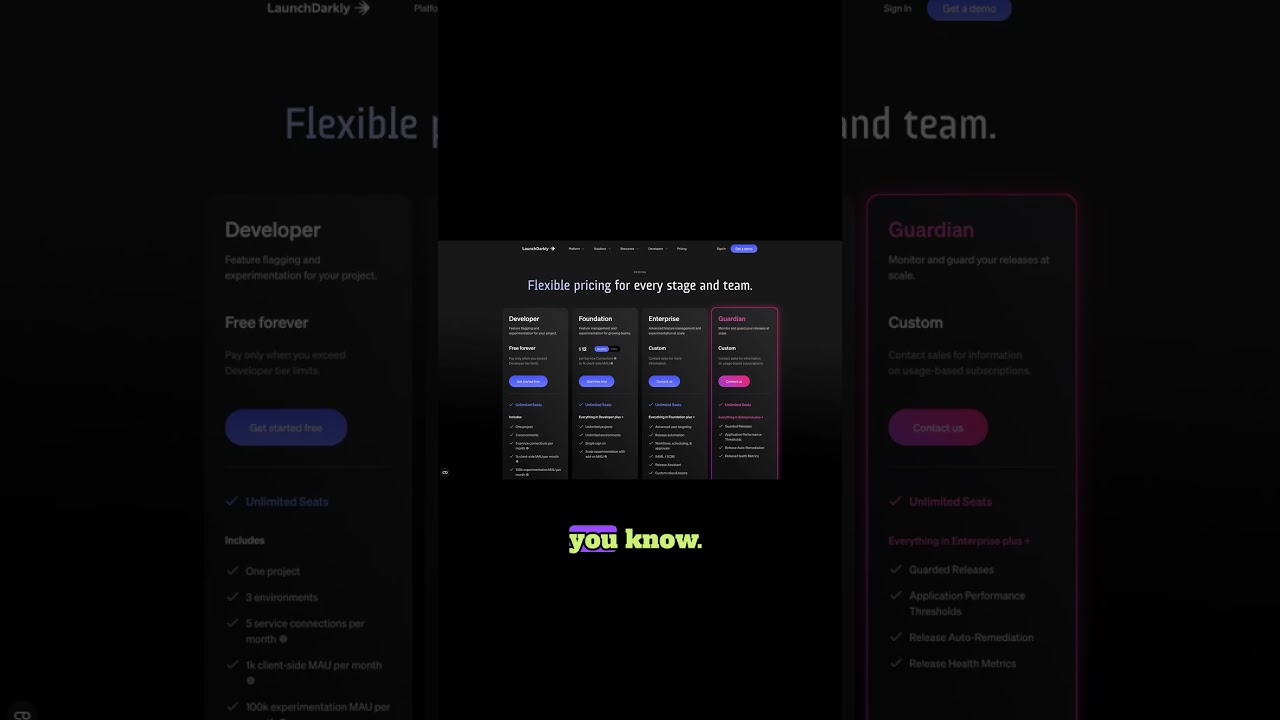
LaunchDarkly switched from charging per developer seat to usage-based pricing over the past year and a half. The old model created friction: teams shared logins to avoid buying extra seats. Usage-based pricing aligns better with actual costs, which come from feature-flag checks and users, not headcount.
Chapters
One thing that I think is notable just right away is like there has been a major change from LaunchDarkly in like the last roughly year, year and a half, moving away from pricing that was predicated on the number of developers using the tool. In other words, seat-based pricing. So Ben, I imagine in many prior companies where you have used LaunchDarkly, you were paying for developer seats. Is that correct?
Yeah, I mean, I think people do kind of find the historical seat-based pricing to be like a complicating thing for using LaunchDarkly. And I've had the experience definitely of LaunchDarkly adoption within an organization being constrained by that. And moving away from that, that does make sense to me. It also aligns with kind of just like a general trend in the SaaS industry. I think it's kind of like the HBO problem or Netflix problem too. Like it's really hard to just you know, it's hard to be— basically you're making a bad customer experience to some extent, and it's hard to kind of like enforce that people aren't just sharing usernames, you know, which a lot of smaller companies would do that. Also, it's like more coupled probably with their costs. Like, I mean, this is like a classic SaaS thing, but like a seat doesn't generally like cost you anything marginally. These service connections or, you know, the amount of users, the amount of checks of flags, things like this, like that's much more correlated with like LaunchDarkly's kind of infrastructure costs, I would guess.