
Monetizing SaaS: Episode 21 with Jon O'Bryan, Co-Founder/CEO of Atlas.so
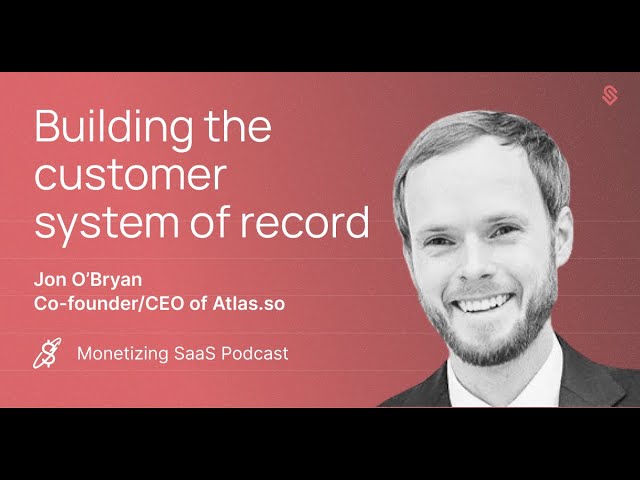
Jon O'Bryan, CEO of Atlas.so, built a customer data platform after founding PadSplit. He learned that emotional attachment to legacy tools blocks CRM adoption more than technical barriers, and that manual spreadsheet billing caused churn. His key pricing rules: keep it simple, use seat-based models, bill early and often, and never hard-code pricing into the product.
Chapters
Dan, thank you so much for being a part of the podcast with us. I'm so excited to talk to you. You have such a cool story and background. You studied math and physics. I think you got your PhD in physics. Then you moved into software and you co-founded several companies in the property tech space, including PadSplit, which is an amazing company. I, you know, for those that don't know, PadSplit is, I think, the largest co-living marketplace. You, you know, you guys kind of currently provide like 8,000 units.
It's like, it's a 13,000-something.
13,000 now. Yeah. So it's incredible. And you did that for a number of years. And then I think after 5 years of being CTO at PadSplit, you left a couple years ago and you, you founded Atlas. I think you raised from YC and you're the CEO and the company's growing. It's just an incredible journey. But tell us, tell us the journey in your own words and how we got to now.
Yeah. So let's see. The Atlas one. So basically Atlas started, yeah, like 2 and a half years ago. I met my co-founder Rahul and he had a lot of thoughts on like what support should look like. Felt like it was too fragmented. And I, from like, from my experience at PadSplit had seen definitely like this was an issue for us. We had, you know, we were like split across tons of different tools. And one of my personal observations was that. A support agent would get a ticket and they would, you know, spend 50% of their time look like bouncing from one tool to the other, trying to play sort of Sherlock Holmes to figure out what was going on in this particular case. That wasn't so like something I should caveat it with. It's not 50% of time for every single ticket, but 50% of time spent on tickets was doing this, right? Because some of the harder tickets required a lot of like digging around. Um, and one of the biggest issues was just like, like it would— an agent would, would look around and then bounce over to an engineer who'd spend a decent amount of time. Um, and the issue was that the information was like siloed in lots of different locations, and you really hadn't seen like a proper, um, aggregation of tooling into a single platform in support in, in a very long time. And so That's kind of what we were aiming to build is basically a modern support platform that was bringing together this information from across the user journey. So imagine you have one place to look at your customer and you can see created an account and then they, you know, went to these pages, you know, maybe like invited teammates and they used, you know, this core feature like installed the chat widget, they set up their email, then they ran into an error and then they submitted a ticket. And then you could go in and watch exactly like what they were doing when that happened and see the front end error on their, you know, on their browser. And so that's kind of like what we were trying to build, right? Because you would put those pieces together naturally, but it would take a lot of time and effort and often many, you know, multiple, multiple hands. And so that's what we were trying to recreate, like construct, because that's the experience that we wanted ourselves. So that was sort of the seed of Atlas, is basically bringing together this information and building the tooling to address customer needs from one spot. So started 2 and a half years ago, Rahul and I, it was, we started off as just, you know, like, hey, let's play this out and see how it goes. And things, you know, we worked well together, we both enjoyed the problem and raised some money. Went into YC. YC was a major pressure cooker, uh, and then, yeah, hired teammates. And, uh, we've been, we've been all remote up until this point. I'm moving to California, um, in, you know, large part to be able to be co-located with Rahul. Um, and, uh, yeah, so that's, that's kind of our story.
It's great. Take us back there. I mean, I want to dig a lot more into Atlas, but how did you go from like a physics PhD into multiple property tech startups? I mean, you've done like 3 or 4 start— like, you're a serial founder for sure at this point. How did that big pivot in your life happen?
Yeah, so probably whenever I started college, I was very passionate about like physics and academia. And then during college, I went to Stanford for undergrad, um, and Stanford for who doesn't know, is like right in the heart of Silicon Valley. And so there's like a lot of people there who worked on startups. And so I was sort of introduced to the world of startups because people around me were like joining them, starting them. Like the— I started in 2004, age me a little bit, but, um, uh, and I remember when I started, Facebook had not been— like the only people that could join Facebook were New England Ivies, and Stanford was just added to Facebook in the fall of 2004. So we joined, like, I was a freshman class, we all joined Facebook. And then I remember reading in the Stanford newspaper, the student newspaper, that like partway through the year that Zuckerberg had moved to Palo Alto. And I believe it was on University Avenue, he, you know, like had moved Facebook. And so it was like a small thing and like you could, you know, go work as an intern or like go work for beans at Facebook with like a small group of people in a room. And, you know, like I had some friends who went and did that and I was like, oh, like this is sort of just what happens here. Like, you know, this thing, which is kind of a cool, like new, like web tool that you can use, um, is in Palo Alto and like all these other things happening. Like I had, then I had another friend who joined Google the next year, like, I think they had just IPO'd right when he joined. And so there was kind of a lot going on at this time. And it was like, it just felt like this was what people did. And so it was exciting to be around all of this. And yeah, so that added sort of like a career option to my path, like, hey, maybe this sort of startup path would be interesting. I liked the energy that was in it and the sort of creating something from nothing. Like was very appealing to me. And, and having like a lot of ownership to like really like build whatever you think should exist in the universe, like a lot of independence. So that was really interesting. I, I started off being interested in, in, um, academia. And the third route was sort of like finance. Was a lot of people from, from physics and math go into finance, um, especially like quantitative finance, like trading and stuff like that. And so those are the three routes that were like interesting to me as an undergrad, and I sort of saw people go under all of those. Because I had, so I ended up going through all three of those routes. I did academia, so for like a second, like I did undergrad in physics and math, and then I did a PhD in theoretical physics. And like, you know, started off in particle theory and then switched over to cosmology. And partway through that, I became super jaded and I was like, hey, this is like a lot of really hardworking smart people chasing after a tiny pot. And the outcomes, like at the very end of it, like maybe you'll work your whole career and like, you know, nudge along this like glacier of knowledge forward. But like, it's pretty freaking hard to be Einstein. And if you don't know that you're Einstein by age, you know, 24, then you're probably not Einstein. And so, you know, I was like, hey, look, you know, like, I'm not Einstein. So like, you know, for the other people in physics, there's not a lot of like glory. There's a lot of hard work. It's not a very great lifestyle, et cetera. And so I was like, okay, screw it. Like, you know, time to try something else. I had sort of lost my fire there for several reasons. Like, I think that the idea of academia, like the intellectual like purity of physics and math was like super interesting. But the problem is that's like solved physics and math, right? And so the research frontier is like a lot more akin to writing fiction than it is to like what you generally think of as like doing math and physics in school. Like basically you're just coming up with like random ideas that could or could not be, you know, valid models of the universe. And then you try to like prove them right or wrong. And it's like, so it's like sort of writing a fiction novel crossed with like being like a very detailed accountant or something.. And so it's like, it's like pretty tedious, pretty like not glorious or glamorous. And most of the time it leads to just like nothing burgers. So anyhow, I did that for 3 years and then I was like—
By the way, by the way, that sounds a lot like startups most of the time.
Yeah. Well, the big difference with startups is your success rate is much higher in startups. It's pretty low in startups, much higher in startups than it is in like theoretical physics.
Interesting.
So, and if you're successful, like you can get a yacht or whatever, right? Like even if you're like semi-successful, you can at least like have a nice house and like eat at nice restaurants, right? Or at least you can eat at nice restaurants in the very least. Like, yeah, you know, if you're successful in physics, like the most successful people, you know, might, and it's just orders of magnitude difference. So needless to say, I was at some point I was super jaded and I was like, okay, let's get out of this. And so I thought about working on a startup and then also I was like interested in finance. I left to go to Georgia to Atlanta because there was a professor on this. I don't know if Coursera is still a thing anymore. I'm assuming it is. But there's a professor at Georgia Tech who taught the largest class on Coursera at the time. And it was this machine learning for stock trading. And it sounded pretty interesting to me, like machine learning I was like definitely into at the time. And stock trading, you know, that like scratched my, my finance itch. And so I didn't— I like worked remotely before that was like even a thing on my PhD because I just had to do research, write papers, whatever. Um, so I did that from Atlanta, uh, while working at this company called Lucina Research. Um, worked there for, uh, 6 months and then I came back for another worked 6 months as an intern, then came back full-time for another, like, I don't know, for like 6 or 9 months. And ultimately decided like that wasn't for me. Met some great people while I was there. Met my wife while I was in Georgia and that turned it from a 6-month internship into like a 7-year period that I stayed there. So, yeah, so basically did that and after doing that, I became pretty jaded with like finance. Like, hey, is this like adding value to the world or are you just sort of like extracting that like money, um, from technicalities? And like, it's basically like playing one big poker game, like, you know, sort of thing was my, was my approach on investing. Is you can be, if you're an invest, if you invest in something because you believe in that company, that's very different from like making money based off of, you know, lots of trades where you don't give a crap about the underlying, you know, asset really. Uh, you're just trying to make money off of like, um, you know, swings in, in value. So, uh, I ultimately— and then also had some like, you know, um, views on like how possible is it and how much is it just luck and like, uh, sort of thing. So, um, anyhow, I left that and I was like, okay, like Option 3 that I'm interested in, let's go like work on startups. So before I did that, I worked for like a year at a company called Athena Health, which is like, had at the time a branch in, um, of their office in, uh, Atlanta. So this was like PCM before it had any of the stuff downstairs. It was just like offices and upstairs. And, um, yeah, and so that was Cool. That was a great experience. I think the nicest thing about that was just realizing, no disrespect to Athena or anything, a lot of great people there, but it was realizing that when you become a large company, things move a lot slower. And so I was like, well, dang, I have a lot more pep in my step at this point. I can really go hard. And so where can I get the most out of the fact that I want to like work hard, put a lot of my energy into something at this point in time. And I was like, hey, like in a startup, like there are no governors on my speed or effort. Like, let me go do that. And I had, you know, I thought I had a lot of cool ideas and whatever, which were like probably pretty terrible. No, not probably, like definitely were pretty terrible ideas at the time, or at least a lot of them. Went and did one of those terrible ideas for 6 months. That was Partage. Why was it terrible? So the idea was basically like Uber for household goods. Terrible idea because unit economics don't work out. Like people aren't willing to, like the value of the item being passed around compared to the effort was just too low. And so that, that one died. Co-founder issues were what really killed it. And then unit economics like made it not worth reviving. So then I had some time and money left over. So I came back. So I did that in the Bay. I came back to Atlanta because my wife was still doing her MD PhD and I wanted to be by her rather than remotely working or rather than working on something 3,000 miles away. I was like, hey, let me go back and be with her. So, I went back to Atlanta and I was like, hey, I've got some money and we'd been running an Airbnb in our apartment. So, we had a 3-bedroom apartment across the street from CDC, Emory, which is like a lot of people come through there for those two things. And so 3-bedroom apartment, we had one of our rooms in the apartment pay for the entire rent for like 9 months. And we're like, this is super easy. Like we have to clean it every so like every few days, like pretty minor cleaning. Everyone coming in is like really low key. They're just here to sleep and go to the conference center or whatever. And so I was like, well, hey, I've got some money and if I can get these sorts of returns, I want to just put that money into 5 or 10 apartments, have someone else manage that, and then live off of that while I'm like trying to figure out another startup. Couldn't find anyone to manage the apartments or to set them up. And so I just did that. And I found a guy on Airbnb who was looking for someone else to like, you know, help manage apartments. And I was like, well, hey dude, how about we just do this together? And we're just going to go like get a whole bunch of— this is before like, this was pretty early days of this particular model of Airbnb, which is, you know, you know, you go in, I believe basically you lease an apartment and then you sublease it on Airbnb. And so there were a lot of things that weren't worked out and it was like super chaotic. Like from an operations standpoint, this is like, I think it one of the worst business models ever because you're running an, you're running a hotel without the efficiencies of a hotel. And so you don't get any of the benefits of scale, but you get all of the pains of like, you know, running this sort of thing. So did that for 3 years. Was incredibly painful and discovered that I hated running ops, like businesses that where you've got really tight margins, not fun to run because like it's stressful as crap. And, um, and you, it requires like operational excellence, like always, like you, you don't get a day off because, um, like if you're running a 24/7 business, like, you know, people are always going to be anyhow. So that was pretty terrible. Um, and I decided I need to do something where I could sort of like leverage my technology capabilities a little bit more or a lot more. And so I was introduced through, any of your Atlanta listeners would probably know, like there's a company called SwitchYards based in Atlanta that does, I don't know, it's like WeWork but local. And a guy there named Dave Payne, who's like a godfather of startups in Atlanta. And I had met him through some folks sort of in my last year at Blanket. And we had been talking startup ideas for a long time, and he's like, hey, there's another guy who's working on something similar, like sort of fractional real estate space, and he's doing it instead of on the space axis, he's doing it on the time axis. Or sorry, instead of on the time axis, like an Airbnb, you rent it out like subunits of time instead of a month at a time or a year at a time, you rent it days. On the space axis, you rent out a room instead of the whole place. And so he's doing that thing, co-living. I wasn't super interested in that, to be honest, but I was like, you know what, this guy's like, you know, seems like he kind of knows what he's doing. He's done real estate development, you know, in Atlanta, had his own company for a while doing that, had got, had just recently like gotten into Techstars and wanted to basically make sort of a technology, like have a technology play here. And so I was like, you know what, I'm familiar enough with the space and then when we had talked about the mission, which was like very much working with like low-income folks and helping them find housing, that really appealed to me. I was like, hey, this is like, in the very least, if PadSplit fails after 3 years, like we will have made a real impact on some people's lives. It's not just like a nice vacation place. It's like an actual place that can help someone get up, you know, and move up in life. And so that, that like all the way through with PadSplit was something that motivated me pretty, pretty heavily. And yeah, that was with Atticus and Frank and built that from, it was the three of us. There was another guy who's still there, Jean, or Jean at the time. And we were working in a garage in, what's that place? There's a, I forget the name of this, but it's over by Adair Park or sort of area.
Yeah.
Like a garage there and we were working in this garage and it was like hot as crap because the window, like the windows are single pane and whatever, you know, it's pretty dank conditions. And then we went into Techstars at a Ponce City Market. We were there for a year and then we moved into this like warehouse across from the Westside MARTA station. And that was pretty interesting. It was like a pretty good workspace. But yeah, we went from, there's a 4 of us, 3 founders and first hire to— and I was CTO there and then built that up from— I think we had like 13 units, which was like 3 houses. And then when I left, we were on the order of— it must have been like 5,000, 6,000 units. And then now they're at 13,000-something units. A unit is a room, a bedroom. And yeah, so it's the largest co-living marketplace in the US. 250 people at the company when I left. It's gotten smaller because every company got smaller in 2022, unfortunately. And yeah, so, and I already gave you the story of Atlas. So sorry, that's like really long, but—
It's a fascinating journey. Thank you for sharing it. So, so go back to Atlas. I understand sort of the initial insight, but Tell us, I'm curious on a couple fronts, but what's the vision of the business? If you achieve what you hope you achieve, what is the next, what does the company look like in 5 years? What's it doing for the world?
Yeah, so in 5 years, I would like to, so this is like the things are working really well scenario. We want to be essentially like your customer system of record. So what does that mean? Basically, like, we are the first point of intake whenever you, a customer comes to your company. Um, and we hold onto their information until they leave. Um, and so that means a lot of things, but like it, you know, initially this means support, right? And so all of their support journey, anything they need help with, what are they doing? Like, how do you get insights from that to use for your product roadmap? How do you get understanding to know where your product is broken from an engineering perspective? Out to success, customer success, which is, you know, like, how do we keep these folks longer, right? Not just like solving their reactive problems, but solving proactively, like proactively helping them. And then the next layer out from there is basically, okay, how do we take folks that aren't yet customers and help them be— help you turn them into customers? So this is sort of like the sales side of things. Like, how do you reach out to folks, new folks, and find them and all of that sort of set of things and sort of handle the sort of like CRM type of thing. So that's like the big picture is essentially handling all of your customer information. And today what that means is support.
Yeah. So attack the CRM market, enter with support is a good way to think about it.
Yeah.
What do you think the world sort of misunderstands around sort of attacking the CRM market today? I mean, it's obviously like enormous. Many companies, many startups probably want to go after it. What do people not understand about that market? And maybe a better question is like, why do you think it's penetrable?
I'm not sure it is, but we'll find out. Uh, um, yeah, I think that basically like Parker Conrad of, of Rippling is like a pretty big inspiration to us. Uh, and I think he, he puts this like super well, which is, which is like the assumption in startup land for at least the last like decade, decade and a half is that like more focus, more better, like the narrower, sharper your, you know, the tip of your sword, the better. And so like that means that and what that translates to is a pretty narrow thing that you do and you just do that one thing pretty well. And it, you know, like his belief in, or the way that he would say this, and this is something we like fully endorse is that actually you get a lot of benefit. Like your users are not like super narrow. They have a pretty wide set of needs. And there's a lot of overlap in these like what has become the vertical silos of SaaS today. If you can bring these silos together, there are like interesting interactions that you can only have if you are natively integrated on the same platform. And so, you know, one such example for us is if you know, you know, what a user is doing on your platform, à la session recording is built in, and you can see their problems, like they report, you know, they submit a bug, then it's much easier to like serve them, right? If I can like watch you doing what you're trying to do, like standing behind you, watch you trying to do it, and then you say, hey, oh, I need help with this. It's like, okay, I have that full context baked in and I can give you a really quick answer. Whereas if you, you know, come to me as like a stranger, from nowhere and you're like, hey, like, I can't, you know, I can't, like, for our platform, like, I'm not able to, you know, email a person. Okay, well, like, what, how are you trying to email them? Like, which email address were you trying to use? Like, did you even set that email address up? Does the customer exist? Like, I can get all that information if I have a session recording and can watch everything up to that point. Whereas you as the customer, because you don't solve support problems for this company, oftentimes don't know the correct information to give or the full context that's needed to be able to solve your problem. And so it's just like a very natural fit. That's like session recording and like ticketing, right? But there are a lot of these, you know, between, call it like, if you already have a presence in someone's app, right? Like I have installed a snippet and I have this widget. It's much more natural to then be able to give them the ability to run surveys, right? And that survey information is oftentimes important, you know, like NPS will tie into is that person going to stick around, right? And that can help with, you know, predicting things like churn, right? So which also like, you know, their NPS report plus their how many tickets they've been, you know, submitting, how, what are their emotions whenever they submit these tickets, like how severe are they, things like this. Tie together to give you a full picture, a more full picture of this customer.
So that's a really, I think that's a really helpful way to think about it. So you've been working on the business for a couple of years, you're adding headcount, you're growing. What have been the 1 or 2 or 3 most surprising learnings over the first couple of years?
One of them is, so this is a little bit counter to the you know, um, building like a platform and going very broad. Like wedges, wedges work. Uh, you can, you can build surprisingly little and make surprise— get surprisingly, um, large amounts of like value.
Yeah.
So that's like thing one. Like if you build a narrow feature that addresses like one sharp pain point, that's a really good way to like get your initial money. It doesn't have— like the problem is staying power. And so I think the staying power is what we were focused on, which I think is still true. Like a broad platform has a lot more staying power, but it's much harder to get in the door. And so wedges are incredibly important and you have to have sort of a combination between a wedge and a platform to get in and then stay in.
Can you tell us more about like how that ended up happening for Atlas? Like what was the wedge feature and had you, did you find that by kind of starting too broad? Tell us more about that.
Man, I wish this was like one of those podcasts where I could say like we did everything right and this is like, you know, and this is like the correct playbook. Like I can tell you more about what not to do than probably what you do.
I think that there's a ton of utility in that. Let's do it.
So what you shouldn't do, so what we like in the very beginning, like our investors told us you shouldn't, or they would always, many of them asked the same question, which is like, how are you going to deal with rip and replace, right? Because the support system, like someone has a support system is pretty established and it's like, pretty big effort to switch over. I think we always minimize that because we're like engineers and we're like, oh, like, you know, technically it's not that difficult. Like we build these migration tools, whatever. And the challenge with rip and replace is not like the technical piece. It's like the human piece. It's how do you get people who are emotionally invested in a tool, whether they love it or hate it, whether it's freaking Jira or Zendesk or, you know, Salesforce, like tools that nobody wants to use, but they end up finding themselves using and trusting only because they're sort of like an institution, right? Like you love it the same way that you love the IRS. Like nobody loves it, but like you trust it because it's been around for 300 years or whatever. So I think that like, that's, that is the piece that you have to rip and replace is like the cycle, the like emotional psychological connection. And that's like hard as crap. And so the way that you get in the door is not saying, hey, like go cold, equivalent to like cold turkey, give up cigarettes, like give up, you know, Zendesk and use this much better thing. The right way to do it is, you know, oh, hey, like you're using, you're supporting your customers on Slack. Cool. Like, um, Zendesk doesn't support Slack as a channel. Intercom doesn't support Slack as a channel. We will integrate with Zendesk and Intercom, um, or, and, and/or Salesforce, um, and let you support them just like you would want to support them on email or live chat. Uh, and so we'll just do that one thing, that very narrow wedge, um, and build into that system that you already have. And hopefully we can do it in such a way that you will really love that particular channel. You'll say, hey, these guys, Now we do that one piece. We're paying, by the way, like probably more. It's this crazy thing that people will often, they would pay more a lot of times just for that piece than they would for the entire platform with that piece. It's like crazy, right? Like I would pay more for like a, you know, a single diamond than I would for a necklace with a bunch of diamonds when I just wanted that diamond.
So anyhow, so the Well, so, so back to the kind of like what was surprising. You start— did you start broad, then realized you needed to go find a wedge that was more acute?
Yes. Yeah. Yeah.
And when you did, and when you did that, you saw a lot more value than you would have expected given the original thesis was the value is going to come from the breadth?
Yeah, 100%.
Was, was there a second surprising learning of the last two years that comes close to that?
Yeah, so the, I'm trying to think of another. The other is just like how non-overlapping people's like needs and preferences are. So like, what do I mean? Like very like concretely, when you build a platform, there are like 100 features that you're going to have. And the assumption going in was most people will need, you know, 20 of those features. And then some, like 80% of people will need 20 of those features. And then 20% of people will need the other 80. But the problem is, so that was like the 80/20 principle. Problem is like 80% of people need 20 features, but the 20 features they need are like not like there's some overlap, but there's a lot of not overlap, right? And so it like the tail, it's instead of the distribution being like this, like a, a, um, what's that called? A, um, I know what you're saying. I'm forgetting the name of this, this distribution in Poisson where there's like a huge spike in the beginning, a long tail. It's like a little bump with like a really long tail that's like about as big. And so what that means is if you're building the platform, you gotta build a lot before you can get anybody on. And that's what we found. So we ended up building for, like, it was a slog for like 18 months where we were just like building features, building features, having a hard time selling. And then the unlock was like at the 58th feature, then people, like, then it clicked into the place where we had enough of those features where we could say yes to, you know, we can completely say yes to most people. So anyhow, that was it. Like Parker compares this to like, it's like peeling an onion and it's sort of like layer, layer, layer. And then eventually like you get there and it's like, boom, like there's this unlock moment. And so that was the other thing is like, if you're building a platform, you need to be you need to be ready for like the long haul.
Is that to say— I want to kind of compare that lesson to the first lesson. The first lesson was original hypothesis was that there needed to be a lot of breadth. We'd build a platform. We found that we could actually deliver a lot more value than we had originally anticipated through a single feature. Learning number 2, we had to build all of those features to actually make the wedge sellable. In other words, because we had this wedge and it was attractive, but behind it was all this other value, people would buy it. Is that—
it's a little— like, for us, it was a little bit more nuanced. Like, so the way that I described the wedge, I described it as we view it today, not as we viewed it at the time.
I see.
Like, the way that you should build that wedge is, is as I described it. So like, you give a channel to an existing platform, so it's like a pure bolt-on., right? The way that we built it was we, we had the wedge onto our system. Well, the problem is like they still have to rip and replace their system to take advantage of it. And so that's like the wrong way. Yeah, that's great. So then we needed, yeah, anyhow, like you, two pieces, different things. Like we were able to sell without the wedge if we built out a ton of features and we're able to sell just the wedge if we don't have the base and it attached to someone else. So.
I want to talk about what you've learned about monetization in the first couple years. And so, you know, for those that are listening, monetization is basically like, how are you monetizing this product? How do you think about pricing and packaging? How do you support pricing and packaging the product? What have you learned about monetization over the first couple years?
What I've learned about monetization over the first couple years is that if you— this is something that we've trailed way back on, which is we still today embarrassingly do manual, like every person we sit down once a month and we like, you know, pull up a spreadsheet and sort of calculate like what they owe and then send an invoice.
Is it a seat-based model or a usage-based model? Can you tell us about that?
Yeah. So it's like, it's like a, it's not, it's not totally trivial, like doing this right. Very manual, pretty painful. The problem with this is, like, there are lots of problems with this, right? Like, A, it's less, it's less clear to a customer, like, at any point in time what they owe. And then it's also less likely that they will, like, pay on time and pay in full and things like this. And it also leads to, like, churn risks, right? Because, like, if you, if it takes you a month to get to charging someone, then they may like, you're essentially asking them to reevaluate your product. Like, do I actually want to have this product, right? Whereas if they'd made the decision initially and had been paying, they would justify why they're, why they're paying, right? And like, I've already got value, I've been paying for this value. So it's bad in a lot of ways. I've learned like almost every way that like is bad to do billing. Um, and so that's what we do and we are building out billing. It's been like for a year now, and hopefully this is the quarter we do it. For a year now, it's basically been like, this quarter we're going to like do billing. We designed billing like super early on, just never, it was low enough priority. So that's what I learned about billing was like, it, it, in addition to being a little bit annoying, it can also cause like churn risk. And you're leaving a lot of money on the table, et cetera. So it's an expensive, it's like one of the more expensive lessons to learn from a dollars perspective.
How did you— what have you learned around like pricing and packaging? In other words, like how to set price and then how to package the product, given this is a product with a lot of value and a lot of breadth?
Yeah, that's very hard. Um, I think that the one of the things that I've learned is like you need to like iterate a lot. So having the ability to shift that around. And like, if you're doing it manually, you're not very like, you're, you're not very, what's the word? Agile.
How do you guys maintain, have you been able to maintain the agility?
Definitely not. No, no, no. Like this is like, this is probably one of our worst areas of like, like I could write, you know, the book of like cautionary tales on the side. We've done maybe everything wrong on this.
So if you had to write the book now, like imagine you've got a bunch of founders listening to you, give them the, here are the 5 lessons I learned that you should avoid.
Yeah. So, um, keep your billing very simple, like as long as you can. Um, people shouldn't, understanding your pricing should be really easy. Someone shouldn't have to break out like a spreadsheet to like figure out how much they're going to pay. That's thing one. And so that actually, like, that's sort of a strike against usage-based models, even though there's like a lot of arguments for usage-based, like it aligns well with like the value actually being delivered. The reality is there's a psychology component. And if people don't know what they're going to be paying, it's like renting a U-Haul truck, right? Like $29.95 a day is super clear. Like $1.19 per mile plus the cost of gas. And you don't know the mileage on driving a freaking tank. Like like it's, it can really like that, that's like the biggest cost. And so anyhow, it has a huge burden which you will pay by not getting those customers. So that's like, so usage-based sounds sexy, but like it's very dangerous. So like make the model simple, and seats are very simple. Um, uh, like you probably shouldn't show like a million things on your pricing page. It should be easy for someone, like the way that people evaluate your pricing is they're gonna do what you which is pull up 3 companies that they're like thinking about and have them like open in different tabs and they're sort of flipping between to see like which checkboxes do these people that they have that they don't. So if you are like in a market with established people in it, you need to like know that that's what your customers are doing and be able to stand up in that analysis, which oftentimes means you're going to have to win on pricing. So your pricing needs to be like easily comparable and like frankly, like competitive until you get enough traction that you can sort of like win out in other areas. What else on pricing? Yeah, like bill early and bill often. I don't know, like you, like this is super basic, but like get someone's credit info and like save it. So recurring is like your friend, definitely have that turned on. Like don't be sending like an invoice every month or quarter.
You mentioned that you guys maybe didn't maintain the agility that you would have wished you had. I want to understand why that is. And many companies I speak to kind of chalk it up to we've hardcoded pricing into the application code. Is that a good way to chalk it up for you guys, or is there a different—
We don't have any pricing in our app, so we haven't even hardcoded it. Um, really easy to change because I just go like change the number of spreadsheet, but the problem is, um, customers have no visibility into it. And so what do I chalk it up to? I chalk it up to, um, we mistakenly assumed that this was very low priority to customers. Why? Because like customers want No, you don't go to any app to like, you don't start using some tool because you're like, oh, like they did pricing really well. Right. It's the thing that you think about because you have to, because they need to exist as a company. So usually you just want the ability, like the pricing needs to make sense for you. And, um, you need to be able to deal with it easily. Like here's the card. Let me see the invoice, whatever. And I think that by not having. The easy step. Like we send people a payment link. So it's like in that sense easy, but like the visibility into it, I think we have undervalued up to this point.
Which sounds like that's especially problematic in a world of usage-based where what I will be billed is a function of what I use. And if I feel like I need to haggle with you on that, have really put the customer experience and the customer's lifetime value at the vendor at stake.
Yeah. Yeah. I think that, I don't think we haven't— trying to think. When someone's paying, it's very unlikely that they'll stop paying because your billing is broken, but it's very likely that a payment method will fail or something like this and that you'll be spending a lot of like your social capital to, to get that money.
I haven't heard someone say it that way before, but I, I have been in that experience. It makes total sense. We have only a few more minutes, but this has been a great, great conversation. Made me laugh throughout it all. Thank you for sharing everything. What is the one experience in your professional career or in your personal life that has had the most formative impact on you professionally?
I think it's probably like my childhood. Um, we grew up like free range, and so I grew up in rural Kentucky, and I had 9 siblings growing up. I have 13 siblings right now— or 8 siblings growing up. I have 13 siblings, so 14 of us now. And I think like a very big thing for us, like the way— without any kids, like you can't be like, you know, a helicopter parent. And so it was sort of like raise yourself sort of thing. Like, food would be there, shelter, the basics of life, but you had to kind of figure out stuff on your own. And I think that made us incredibly independent. And I think that it just sort of taught me life generally is pretty good for most people in this day and age. And the bad, the lows aren't like— you can get through the lows. And like, you can do a lot on your own without other people. And so just teaching sort of like an extreme degree of independence has made it such that like, I, I feel comfortable, you know, it's like, okay, like let's start from absolutely nothing and see if we can make, you know, a startup where we can make money and build a product and whatever and convince people like it's, you know, laborious and tedious and whatever, but like you can do it. And I think most people probably can if you just like grind hard. And it's like, it comes down to this sort of like confidence in yourself and like knowing that you're going to be able to like make it through. So anyway, that's my life lesson.
That's a great one. To some extent, does it also come, I mean, you kind of alluded to this, but this like notion that historically we're living in a really nice time. So like relative to a lot of people in the past, like you can handle the lows and just go be an optimist.
Yeah, I mean, I think that, um, yeah, like, um, most people in like first world countries, which I think today actually the majority of people are in this situation globally, which is like, you're probably going to be able to like eat enough food to not die. You're, um, and you're probably going to be able to find a place to like sleep. Basic stuff in life. And like, you know, and I think whenever you realize like that's all you really need, like go camping or something and you don't have all these other things, like everything else is just icing on the cake. And I think whenever you like mentally are there like, oh, like, you know, I can't afford like a new car. Okay, it's fine. Like I can walk or whatever. Like you're going to make it, like you're going to be okay. And just realizing like, you know, lower your bar and like as to what you need to, like, you know, be comfortable or, like, be happy with life. Um, and then I think that's— that sets you free to do a lot more sort of risky things and, and, uh, you know, try to, like, really, you know, um, do something big. So it's awesome.
Where can people learn more about Atlas and get in touch with you?
Um, atlas.so and, uh, john@atlas.so.
Awesome. John, so much fun to be with you. Thank you for doing this.
Thanks, Fynn Glover. Great talking, man. Take care.
More from Fynn

Schematic at Operators Guild Demo Day 2026: How to bill for AI credits without a surprise bill







Should you move to usage-based pricing because AI is compressing your margins?

Why raising prices every year backfires (a pricing leader on the Mastercard quota model)

