
SaaS Deal Pricing Secrets No One Shares | Expert Insights from DealOps Founder (EP# 38)
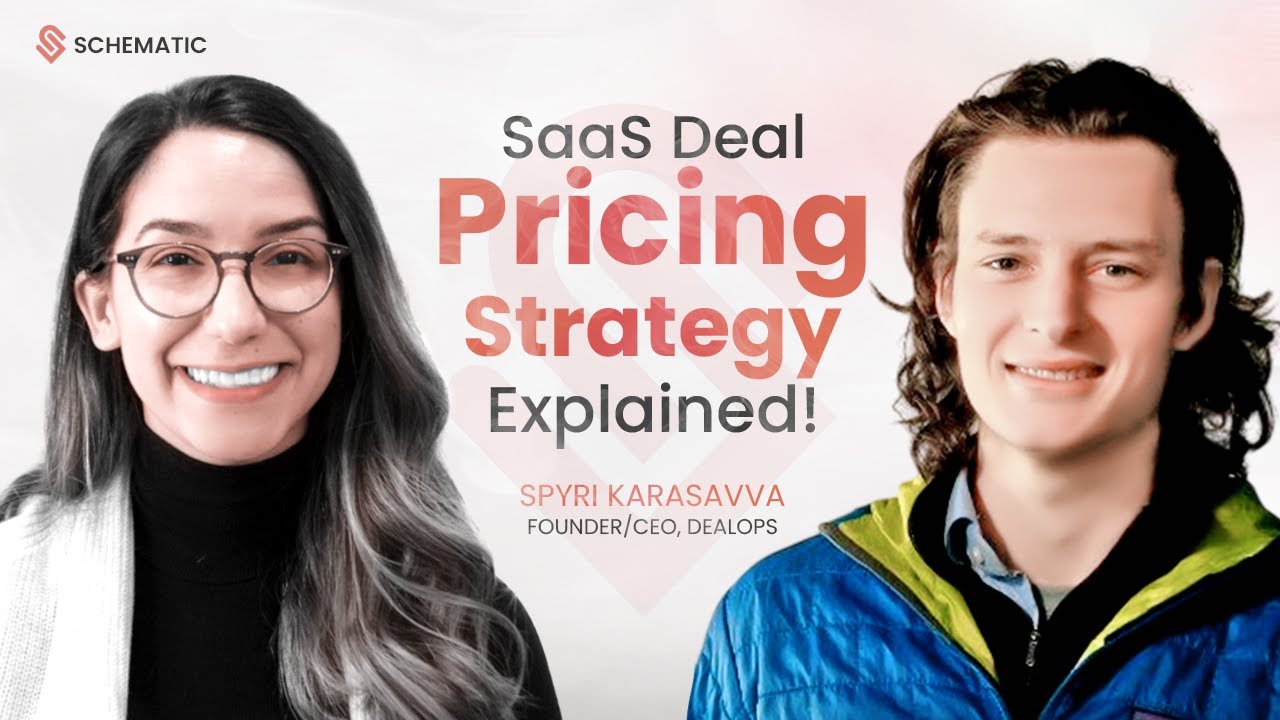
Spiri, founder of DealOps, built software that delivers finance-approved pricing recommendations at quote time, cutting pricing time from 30-45 minutes to 3-4 minutes and lifting revenue 15-20%. He argues pricing strategy belongs in product, deal pricing in finance, and most companies lack real-time data on what they're actually selling.
Chapters
Spiri, we've gotten to know each other over the last few months, um, and it's been such a pleasure getting to speak to you on a number of occasions. We were inter— we were introduced by someone I've learned a lot from, Thomas Sellers from UiPath. You've, you've got such a cool background. You've been a financial analyst, you've worked in product and finance strategy for Stripe, you were the first go-to-market hire for Stitch, you have been an On Deck Fellow, and now you're the founder and CEO of DealOps. And so I would just love it if you could tell us your story in your own words. How did, how did we get to now?
Yeah, of course. And first of all, thanks so much for having me. Really excited about this conversation today. But yeah, so I know a lot of people say that, but definitely I think my story is a little bit non-traditional. So I actually, I grew up in Greece. I didn't really have any plans of originally moving to the US and working in pricing. But what happened was, I'm sure you're familiar with the timelines, but Greece went through a pretty big debt crisis in 2014. And at the time I was a sophomore in college in Greece, and I felt that there weren't a lot of job opportunities for me back home. Um, and the situation in Europe was also a little bit complex with Brexit starting to become a bit of an issue. Um, in Southern Europe, a lot of countries struggling with similar issues as Greece. So at that time, my sister and I made the decision to start over somewhere new. Um, originally moved to Canada. And I ended up getting into finance. Um, it was one of these things that my first week, um, in, uh, in college where I was doing a degree in international business and majoring in Japanese, um, I ended up joining the investment club for an information session. And then since then, I, I got very interested in investing. I did a few internships in the field, and then after I graduated, I actually worked in private equity and private credit for a couple of years before realizing that the whole, the whole like experience wasn't as hands-on and as operational as I would have hoped for. So, at that time, I made the decision to move, to jump to the operating side. So, I actually moved from Canada to San Francisco and I joined Stripe. It was a very, very interesting time to move to the US and join Stripe in general. I moved here in February 2020, and I had 2 weeks in the office before everything shut down because of COVID But it was also a very interesting time in the company's trajectory, because it was at the time that, you know, the company was starting to think a lot about IPO readiness. And as usually happens with companies at that stage, monetization became top of mind for the finance team. So, for me, who originally joined to be a P&L owner for 6 of Stripe products, suddenly 60-70% of my job became pricing. And that included both pricing strategy. So, think of coming up for new pricing for new products and new markets, but also deal pricing. So, pretty much making sure that the sales team signs high-quality deals that finance can stand behind, which was, it was an incredible experience. I learned it on, But then at some point I thought that Stripe had gotten a little bit too big. I wanted to also move to the other side and be part of a GTM team. So I ended up joining Stytch, which at the time it was pre-product, pre-revenue, very, very small team. I was the first GTM hire. My job for the first few months was bringing the first 50 customers, 300,000 users, then moved on to lead growth marketing. And then at some point, I felt that I was ready to do my own thing. I had seen what was best in class at Stripe. I had done the zero to one at Stitch. And I was just excited to go out and try to build my own company.
Well, I want to hear all about the founding of DealOps. But before we get there, take us into that moment in Stripe when your job becomes pricing and how did you effectively accelerate your own skill set and capacity to do that job well? Because I imagine you had all the analytical chops to do it from the time working in investing, but had you been formally trained in pricing and packaging or did you have to learn on the job? Tell us about it.
Yeah, definitely not. And I think there are two profiles of folks that work in pricing. On one side, you have the former consultants that have been actually trained in pricing and packaging, and they have done that for a few years before jumping to tech to do this formally at the company. And then you have the other people, people like me who are more generalists, just people who are very strong, very strong when it comes to analytical skills. And also they're able to influence also the people in the room around them, which I feel like they're the two skills that you need to be able to succeed in pricing because it's such a hot potato topic that everybody has thoughts on. So you need to be able to arm yourself with data and you need to be able to pose a convincing argument. Yeah. To get something done.
What did that experience teach you about, you know, to this idea of influence and persuasion and the cross-functional nature of pricing? What did it teach you or kind of what have you come to believe about where pricing should sit in an organization? Is it totally context specific or have you developed some sort of hot take and specific point of view on that question?
Yeah, I don't know if it's a hot take, but I actually have pretty strong views on where pricing to sit in an organization. And this definitely comes from personal experience, but also, I mean, at this point, you know, I'm running a pricing optimization company. I've talked to hundreds of different pricing teams from companies, you know, Series B companies all the way to pretty big enterprises. And I feel like I've gotten myself pretty familiar with a lot of different setups. So I would say the first thing I would say is that when you think of pricing, you should immediately kind of split it into different buckets. You have like the pricing strategy and the packaging and the more consulting and like project-based kind of work. And then you have the more tactical, more like financial work, which is deal pricing and executing pretty much of the, I guess, day-to-day monetization, if that's how you want to think about it. And then in terms, so in terms of whether these teams can both live under the same umbrella or they can live in under different orgs, but the key there is that they need to be working with each other pretty closely. And when it comes to pricing strategy, the most successful setup I've seen there is that it lives under product. Because pricing, you know, thinking of pricing should be an integral part of the product development process. And the folks that sit in that team are the ones that come up with like the pricing metric and the list price for the company, pretty much like, let's say the unit that you're pricing on, if it should be, for example, priced based on tokens or API calls or number of seats, this, you can't separate that kind of thinking from product development. So that team, I think, needs to live there and they need to be very close with the users and the customers. And then you have the other team, which is the deal pricing team that if you are in the B2B world, you have a sales team. Even if you started in the product, let's say, at some point you do end up having a full sales team. And in that world, it's very, very important to have a deal pricing team that sits under finance. And what the deal pricing team does is that they're responsible for setting the right discounts or setting the right guidance for the sales team on how to go out there and sell the product. And they're responsible for enforcing this guidelines on the day-to-day. These teams, I've seen it, I've seen this team living under product, I've seen it living under finance, I've seen it live under RevOps, and by far it's way more successful when it's under finance.
Why is that?
Yeah, because it's, I think there is an inherent tension between deal pricing and sales. Because if you were to put the sales rep hat on, your number one goal is to get the deal done. And the quality of the deal from your perspective can change depending on how you're being compensated. Most sales reps today are getting compensated on some sort of metric that's tied to revenue. And for them, what really matters is, you know, getting the revenue in and getting it as soon as possible. So pricing and like margins on a deal level, they're secondary factors if they even come to, come to mind during the deal process. So, if you have a deal pricing team that sits in RevOps, but technically is still under the chief revenue officer, what ends up happening is that team becomes really tactical and their entire job becomes to just make the sales reps really happy and really productive, but not necessarily do what's right for the company in terms of holding the line on discounts, protecting gross margin, and also protecting cash flow. So, that's why it's best that team is under finance.
One more question on this front, just because I'm fascinated by it, and it's also, I think, an area where companies can— it's really easy to fail, and that is the communication and the collaboration between these two teams, especially when they sit in different orgs. And so what have you learned about what companies can do to improve the chances of success between pricing and packaging strategy that's sitting in product and deal pricing that's living under finance. How can those two teams maximize their chance of working really well together?
Yeah, I would add the sales team also as a third team, but I think all three teams actually need to work pretty closely together. Yeah, the TL;DR is that this is really hard and it's a problem that hasn't been solved today. It's the biggest reason why I ended up starting DealOps to tackle that problem. But in terms of kind of some tips on how to make that relationship a little bit more efficient and more productive on the day-to-day is I think you need to think of it as, so they, you need to have like on one side, like formal meetings and you need to have some sort of formal cadence that these teams meet and they exchange feedback. I think the feedback loop there is extremely popular, especially when it comes— so from the sales team, the reps in the field have the most feedback in terms of how is the pricing landing with the customers? Are we seeing that the contract sizes are going up or down? Are we seeing a lot of friction when it comes to selling a particular feature or trying, or maybe, you know, there is a lot of competition that has, you know, that has like emerged when it comes to some other part of the product. And it's very, very crucial to take that qualitative feedback from the team and combine this with also a lot of the data that you actually see in Salesforce and the data that a team like a deal pricing team has and owns, like average, you know, average deal size across the board, average discounts by product, by region, by use case, by sales rep, because you should be able to get down to that very granular level. And then you can take, you should take all of this information and share this upwards with the product strategy team to both kind of, as both in terms of both kind of track how the existing pricing strategy is performing, but also inform like new pricing strategy for like either new features or potentially iterations of that for that existing feature. So I know that was a little bit of a long-winded answer. So if I were to summarize that, I think what's really, really important is that You have like, one, you have like, you are able to collect a lot of the data from the field, both qualitative data from reps and quantitative data from your systems. Two, you have some sort of like a recurring cadence, should be at least like a quarterly, like a QBR, that these three teams get together and they share insights. And then the third thing is that you should be actioning this insights. There's no why you're just collecting a lot of pricing data from the field and hearing the reps telling you that the pricing strategy isn't working and they're not doing anything about it.
That's excellent. And so, so now take us to DealOps. Like, what's the story? How, why did you decide to start this company? What was this, a, a moment of epiphany, or was this sort of a long, slow burn of observation and then you kind of realized there might be something here?
It was actually a little bit of both. So, um, so yeah, so after, uh, leaving Stripe, I, you know, and working at Stitch for a while, I decided to, that I wanted to start my own company and I didn't have an idea or a co-founder at the time. I just quit and I gave myself a few months to figure this out. And the first thing I did was that I kind of sat down and reflected on my career and problems I've experienced personally, kind of working at all of these different companies. And it's really funny that pricing non-standard deals and working with a sales team to optimize like discounting on the deal level, this was actually the first idea I had for a company. And then I passed on it because my time working on deal pricing at Stripe, it was just, it was very challenging. Like the hours were really long. The whole experience was just, it was a little bit messy and So I was like, I don't know if I want to get into this. So I passed that idea. I ended up spending a couple of other months exploring different ideas in the quote-to-cash cycle space, which I find fascinating. And then after exploring potentially starting a CPQ, what's it say, a CPQ and billing platform, which is think of it as the software that sales teams use to create quotes and having that being integrated with the, you know, with the software that the back office teams use to bill customers. So after I spent a couple of months actually doing a lot of research on that space, and I think I spoke to 50, 60 different people, I ended up going back to deal pricing. That's amazing. Because that ended up emerging as the kind of core root of the problem. And then an area where some of the problems that I was looking into hadn't been addressed.
Okay, it's so interesting and I have so many questions, but on the billing and quoting side, I mean, that's really interesting, right? Because I think you have a lot of really smart people, a lot of really smart entrepreneurs saying, hey, look, a big reason why quote to cash is so painful and so expensive, especially for larger companies that are dealing with hybrid billing models and multiple go-to-market motions and multi-product offerings is that Quoting and billing being separated often results in multiple product catalogs, and that means it's just very difficult to be really operationally efficient. And so companies have started in that space. What turned you off of that space? What made you say that's not the place to play?
Yeah, so I mean, this has been, I think everybody, it's like a big, it's a known problem that the quote-to-cash cycle is broken. And for that reason, I think there is a graveyard of startups that have tried to go after this opportunity. And they've tried to go after it from two different angles. One, the billing angle, that you start with some sort of niche billing solution, let's say, usage-based billing, and over time, you try to layer on invoicing and CPQ and other components. And then there is the other angle that you try to go after the CPQ space and then later on, layer on billing. So for me, what turned me off this space was one, I fundamentally don't believe that the world needs another billing platform. I think billing is one, this actually might be a hot take, but I think billing is one of these areas that I think is coming back to being done in-house. Yeah. And I'm seeing that across the board from a lot of the, especially the, like some of the a bit larger companies that we work with, it feels everybody has brought billing in-house and there is a reason for that. And it's one of those things that it's very, like, I am not very interested in building a company that has like a huge professional services kind of component involved. So that was one of the things that kind of turned me off the space. And the second is, I think it's really, really crowded. And I don't think that me personally, I could bring in a differentiated view.
I thought you were going to say something effective like billing is solved, which is maybe in some part what you're saying, but that's really interesting. Okay, so pricing strategy. Yeah. Help people who don't know really what that means really understand what the problem is because I think to your kind of like, let's say you work in product or let's say you work in engineering, like you might sort of understand this problem as reps are going to go out and sell what they need to sell, and like, they're probably going to discount based on kind of what they feel from the customer. And then there's going to be a CFO saying yes or no on that, you know, threshold. And that's sort of how I think about it. But help us understand the nuance of this problem space. Yeah, for sure.
Um, I think that the way to think about this is that, um, in the B2B world, it almost doesn't matter what price you have on your website. Like most deals that actually get signed have some sort of custom price or they're considered non-standard. And what a non-standard deal is, a deal that's not vanilla. So it doesn't have like the basic price that's on your website. It doesn't have like the very typical payment terms or invoicing schedule. And then deals like that, usually there are a lot of different decisions that need to get made while you're working on a deal like that. So things like obviously what kind of products to include, what kind of prices and discounts to use by product. What kind of payment terms to go for. And a lot of these deals end up having like very long-term impact on the company's financial situation, both obviously top line, gross margin, and even cash flow. So think like, for example, things like the billing terms and the payment schedule can have like pretty material impact on the company's cash flow. So you're leaving all of these decisions that are very finance-y to the hands of sales reps that one, they're not trained to make decisions like that on the day-to-day. And two, their incentives are not always 100% aligned with the incentives of the company, and especially the long-term incentives of the company. So I personally find that problem so, so interesting. And kind of, and what's really interesting there is that as a pricing leader, you know, you can control the price that's on your website. You know, your team can 100%, they can get very, very fancy, very cool quantitative there. And decide on what's the best price to include, you know, for this particular product on the website. They can A/B test it, it's great, but they can't really control the rep behavior, what goes on in their mind when they're working on a deal, kind of what they're thinking, what's the right guidance to give them and when is the time to enforce that guidance and kind of how hard to push. So that's kind of how you end up with, what a lot of people call like sales teams going rogue with either they don't have enough guidance or they're able to bypass the guidance and do what they think is best on the spot. Okay.
So interesting. Can you just say a little bit more about why you're so interested in this? I agree. It's fascinating, but what really stimulates you intellectually about this problem?
Yeah. So for me, it's actually, it's such a simple problem. If you think about this, It's, there's this relationship between sales incentives, deal economics, and the company's like bottom line. And it's, I think everybody knows that there's one thing that drives like sales rep behavior and that's how they get paid. And I think it's kind of crazy that nobody has really optimized that link. Like every CFO knows that the way you get, the way you compensate your sales team ends up affecting the types of deals that they sign. Which ends up affecting the company's gross margin and like the bottom line. But yeah, I'm kind of, to me, it's kind of crazy that we haven't gotten to the point where not only like we're really kind of focusing on like the specific levers that we can pull both to have like the sales team sign better deals, but also like why aren't we A/B testing these things and, you know, in real time and optimizing some of these levers. Because the marketing teams have already solved this, like the marketing teams like optimize, experiment with every single thing on the website and optimize every single part of their channels. But the sales team is also like a giant channel and we know what are the things that the biggest levers to pull there. So I think it's time to look at this from more of a growth marketing perspective and actually optimize it. Super interesting. Okay.
So, and when you think about solving the problem with software? Have you sort of concluded the solution that is productized is really a solution predicated on how you set up incentives between these two teams? Or do you think about it differently? Like it might include like the training, the training of a rep to be better at price negotiation? Tell us a little bit about how you've thought about coming at the solution.
Yeah, so the short answer is by far the right answer is software. Pricing enablement doesn't work. I've been to the side that I was the one responsible for doing that and putting together all of these fancy spreadsheets and PowerPoint presentations and all of these things for the sales team, Confluence pages. And I'm also now seeing this from all of our customers as well. One, all of these things, like all of these documents gather dust. Nobody really reads them. They quickly become obsolete and outdated. So if a random sales rep opens up an old conference page that has pricing from 6 years ago, you bet that's what they're going to share with the customer. And then once it's out to the customer, you can't really recover that. So the issue, I guess the issue there is twofold. One, people, reps don't like use the enablement material. They don't join the enablement sessions. You can try to have a kickoff and invite 50 or 100 people. They might not show up. And if they do, they're probably doing emails on the side. So they're not really paying attention. And then there's the big lift from the pricing and the finance team to maintain this material. And this doesn't really, this is, I think it's very easy for something to fall through the cracks. And that's why I think the way to do B2B pricing enablement is through the quoting process. It's the only time that an RF cares a lot about pricing. It's actually when they're working on the actual proposal that goes to the customer. So the way we've gone about this is that we, you know, our DealOps is an application layer that sits on top of CBQs. And we serve custom pricing recommendations to reps per product, depending on a bunch of different factors related to the deal they're working on. So for example, that's like the customer segment, the customer geography, the vertical, the competitor they're going against, Product volume. We take all of this into consideration and we give them what we think is the best price for this particular deal. And what we discovered is that almost like 80% of the time, reps actually use our recommendations. And this is because of two things, two reasons. One, a little bit of laziness. It's right there. It's in front of them. It helps them get their job done much faster. Two, they know that all of our recommendations are pre-approved by finance and they know that they wouldn't have to speak to someone like me. That's a huge carrot for them. And so far, we found that by kind of with all of this, by delivering this custom pricing recommendations there during that part of the process, we're able to enforce the finance guidance a lot better. And we immediately see, you know, an up to 15-20% uplift in revenue per deal.
Okay. Amazing. And I just want to make sure I understand one thing, which is, Was the insight that reps only care about this at time of quote, or was that just one of many insights? It wasn't the core insight. Yeah.
So, uh, that's one of the core insights for sure. Um, and the second insight is, um, that's the, the quote is the place that you should be delivering your pricing enablement and your pricing training. There shouldn't be separate documents and like pages and things like that.
Makes sense. And so tell us, tell us about the customers that you serve. What types of companies are these?
Yeah, so right now we're mostly focusing on companies a little bit on the larger side. So, you know, 500,000+ employees, like 100+ sales reps, but we're also starting to work with some like smaller companies. So some Series B companies with like 10, 15 sales reps. The way to think about this is that we are, for any, I guess, we are a good solution for any kind of company that has a bit of a complex pricing model. And they're either at an industry with thin margins or at an industry that's getting a little bit competitive and they're seeing price wars, or it's getting like a little bit commoditized. Any kind of industry where pricing is very important, it's, you can start thinking about a solution like DealOps, like pricing optimization early on. Or if you're at the stage that you're publicly traded, or you're maybe a couple of years before becoming publicly traded, and you're at the spot that you want to unlock additional revenue from monetization and tighten up your system and be ready to be audited, that's also a good time to think of a solution like D-Labs. Makes a lot of sense.
And so how have you thought about your own pricing? Because I mean, I could imagine that if like, if you get in and you're successful a few times in the initial quarter, like you could effectively pay for your software for the year. So, tell us a little bit about how you've thought about your own pricing.
Yeah, it's so funny because we do have that exact metric, one quarter. We're looking, so, actually let me back into this a bit. So, the way I think about pricing is that it comes down to a couple of different rules of thumb that I have in the back of my mind. Number one, we know that best-in-class solutions right now deliver at least 6 to 10x RI to their customers, 6 is a great starting point for you to also, you know, capture some of the value that you create. So in my mind, I was like, okay, we need to deliver at least 6x RI. Second thing that I had in mind from my Stripe pricing days was that kind of this is equal to capturing around, let's say, 15-18% of the value that you create. Just okay, amazing, second. And then the third thing that I had in mind was because we do sell to larger companies, for them, something that they always consider when they buy new software is the payback time for the software. So for us, we did aim to have a 1-quarter payback period. And some of our contracts are a little bit longer term. When I thought about pricing, I had like 2 things in the back of my mind, 2 rules of thumb, was one, best-in-class software, you know, you create 6 to 10 times, 6 to 10x ROI for your customers. And the second rule of thumb I had was that we wanted to do our software to have a 1-quarter payback period, because we're selling to larger teams, a lot of enterprises think about buying software in that way. And in terms of the ROI that we create right now, there are 2 pieces of it. The first one is the revenue uplift. Right now, sales teams are using Dilos because we're able to create better pricing outcomes and we're able to lift revenue by 15 to 20%. And the second piece of ROI there is the time efficiencies that we create for the sales team. Historically, pricing a deal was a pretty time-consuming process. And for companies with a little bit complex pricing models, it could take over 30 to 45 minutes. And with DealOps, we've gotten this down to 3 to 4 minutes. So there are really big time savings there.
Well, for what it's worth, I mean, it just, it feels like such an elegant solution and such a no-brainer because you walk into a business and you say, hey, look, like everybody wants to maximize price. Nobody's very good at like training reps on how to do pricing. Finance is busy, sales is busy. We can layer on top of your existing CPQ. We can eliminate an enormous amount of time spent from a rep having to think through this, give them a recommendation, and then there's revenue uplift. I mean, it just feels like so elegant. What type of challenges have you run into as you've built the business from zero to one? Is it really kind of an integration challenge? Like, I don't integrate with the CPQ yet, or is it something else?
Yeah. So I think our challenges are— so our original challenges when we first started were that our ICP are companies that are a little bit larger and we were a pre-seed startup with two founders based in New York and we're trying to sell— our first customer ended up being Platt. But imagine us two selling to Platt. So that was our original challenge and we ended up having to invest a ton in systems, security, compliance, and that ended up making our product development cycle a little bit longer than what we originally wanted, but ended up paying off huge dividends. And we fully understand that we handle really sensitive customer data and we want all of our partners and customers to be, to feel very confident about our practices. So that was our number one challenge when we first started. And right now, what I would say is our biggest challenge at the moment is, it is actually everyone's like CRM and CPQ setup. What we are discovering is that even if they're all using the same vendor, and this shouldn't be a surprise, but most of the companies that we work with use Salesforce for both CRM and CPQ, and there's the occasional Zuora as well. But even if they're all using the same vendor, their setups end up being so custom and so different, they have all of their own custom objects. They're bringing in data from their own systems in such different ways that what this means is that for us to onboard a new customer, there is always a couple of weeks of heavy implementation work that's required. And we need read-write, read and write access to their systems and we need to be kind of doing, we needed to be doing a little bit of the custom work to always kind of make the DevOps workflow work on top of what they already have.
Yeah, makes complete sense. And so even though you'd hoped to avoid professional services, you probably have to provide some professional services. Yeah. Yeah. Well, I want to go a little bit further into what you've learned about pricing and monetization more broadly, but one last question on the business and that's, you know, what do you think has been the biggest surprise to you since you founded the company? A couple of surprises, both.
So I'll give you maybe one for me as a founder and then one what I've seen from customers and the companies we've worked with. My personal surprise was, I mean, obviously I had some experience with pricing. I'm building a pricing company, but I still found it challenging to price my own product. Yeah, no doubt. I ended up having, um, I ended up having to, um, kind of, um, teach myself a lot of the things that I've been like teaching to everyone else. So you know how like some of the basic— every time that somebody asks you for advice when it comes to pricing, I think you probably end up saying a few things like keep it simple, uh, right, right, kind of, um, share something with like, share a couple of options with the customer and see what the gravitate towards. Don't try to get too fancy too early. Be ready to iterate some, a lot of these things. I made the mistake of trying to get too complex and too fancy too early. And I kind of, our first kind of few customers and prospects were pretty confused about our pricing model. And I'm glad that they gave us very direct feedback. And I can give, and then we ended up like iterating and going with kind of the path of least resistance. But pretty much what I tried to go for originally was that— this is lessons learned for everyone who is thinking of something similar. But I thought, because like the key value prop that we create with DevOps is that we generate additional revenue, like for you that you wouldn't have otherwise because of the pricing uplift. So, and so I thought that we could make a ton of sense to have value-based pricing and charge 20 or 30% of the, let's say, 20% of the uplift that we create. So in theory, this makes a lot of sense because we're very aligned with the customer and we only get paid if we generate value for them. So I thought that this would make DealOps a no-brainer for them. But there are two core issues with that model. One thing that every single prospect and customer brought up was, how do you define uplift? Otherwise, 5 minutes per month about what's up with when it comes to our purchases. And then the second problem was from both, was just a bit internal that we would have to invest in implementation and things like that. And potentially like not, would they have sunk cost, I guess, for each deal without like any kind of line of sight or something into revenue.
Yeah, it's such a great story because it's such a good reminder to everybody that like the only thing we know to be true is that pricing and packaging will change as it interacts with the market. Like the market will teach you and it'll teach you again and again and again. Yeah. What was that?
The set? Was that both learnings? So this is— that was my personal learning as a founder. And then the second learning I had was Kind of what we saw from the customers was that it's just a little bit crazy that nobody really has good pricing performance data. So, and a lot of pricing leaders have gotten used to not having it and having to kind of operate with just with less. I can give you examples of that. I think it's data that you would consider very simple, like your average price by product and average discount by product, by region, by segment for the sales team, by person. That kind of data is just so straightforward to me and it makes a ton of sense that everybody should have it. But I would say from like 100 companies, but I would give you probably like 5 or 10% of this, like 100 companies would have anything that they can use in real time. And then for everyone else, it's either they have to do a ton of manual work and get that data like once a quarter, or they've just gotten comfortable with not having it. And like, and it's gotten to the point that executives have gotten comfortable with not having this kind of data. And the board has gotten comfortable with not having this kind of data, which to me is just extremely bizarre because it's just the second thing that's closest to your revenue, that actual revenue. Let's—
I want to understand this a bit more because when I think of pricing data, and maybe I'd love for you to kind of just take this further from me. I'll riff for a second, but I'm just imagining that like you would expect that a solid Series B, C, D software business has a customer file. And that customer file is many rows and columns and it's got your customers and it's got the plan that they're on and the price that they're paying. And if they're really good, maybe they've figured out how to tie some usage into that, and they're starting to run cohort analysis. And if they get really serious and disciplined around pricing and packaging strategy, maybe they hire an internal pricing and packaging leader, maybe they hire a consultant, but like they have that customer file, and that customer file is like a jumping off point for legitimate analytical work. Why is it so difficult for companies to build, maintain, possess that customer file? What do you think?
Yeah, I think, I think that's actually the core question there. Like this data absolutely exists, right? Clearly it exists because you're invoicing customers based on usage or they have like that, that, you know, they have product usage somewhere. They have revenue usage, revenue data somewhere. So you should be able to marry that to get into your, you know, revenue and price by product and be able to do that for all of your segments. So yeah, why is, I know, I mean, there are some complications with like the systems and the different teams that are involved and it starts with, you know, always everything starts at like the CRM. I think any kind of data that comes from reps or it's related to reps or it's related maybe to self-reporting, things like that are for sure really hard to get. But then I don't have an answer for you. I, it's kind of, it just has been like very puzzling for me how you can talk to really, really large companies and they give you the answer that, yeah, I know I should have this data. I know I should be looking at it, but I don't.
Do you think it's possible that it's just like if that company has gotten so big, they just had such good product market fit that it never really mattered to be super disciplined around that because growth was just happening? Or do you think that's a poor hypothesis?
I think that could be some of the cases. But I think my hypothesis, it's more of a, there have, this is a known problem internally. And there are always like this like hero individuals or like this data-driven analysts that will go in and do this like super, super manually, you know, putting their own queries and things like that. And, you know, these questions don't come like super, super often. So they're able to do this like one-time analysis once every 2 years or like once a year. Here, they're able to satisfy the questions that they get. But this isn't like a true solution. And there is still not like a real-time dashboard that like a leader could be tracking.
I feel like I could talk to you for 2 more hours and I'm realizing we're coming up against it. So let me try to hit a couple more questions that I wanted to ask you. And one is, I think that you've described in the context of how pricing changes, I think you've described a 4-step process, pricing model, list price, discounting, and enforcing discounts. Can you elaborate on that mental model for us? Yeah, for sure.
I think the first thing that you need to think about when you're pricing your product is what's the right unit metric, right? And that is tied to the value that you create for your customers and the value that they perceive that you create for them. So that's kind of where you make a decision whether, for example, you want to price per seat or maybe it's like usage-based pricing and it's tied to you know, minutes or tokens or something like that. And that's a decision usually, if you're a small company, that's a decision that the CEO makes, honestly, and they have very strong feelings and opinions about that. If you're a larger company, the executives are still probably very heavily involved there. And it's, as a pricing leader, I think you have less, like less power on that front. And then the second thing, once you decide on your metric, your pricing metric, then you're deciding on the list price. And there are a few different ways to go about that. You could, you know, it could be a cost-plus methodology. For example, if you're a hardware company and costs are, COGS are really, really important. It could be based on like competitor analysis or competitor insights. Everybody's going to tell you to shy away from doing that. But in real life, I think people do take that into consideration quite a bit. And then there's also like, there are strong thoughts around like, you know, maybe you should be pricing based on value or you should be doing based, you can do a lot of user research, a lot of customer research if you have an existing customer base and things like that. So that's the part that usually pricing strategy team spends most of the time on. And then once that part is decided, that's kind of when you start thinking about the discounts. And there, the first thing to think about when it comes to discounts is, What type of company are you? Are you a company that has high list price and you always discount by 70 or 80%? And there is a reason for that. Maybe you want to convey that you're a premium product to the market. But when it comes down to closing deals, like you will kind of go to a place that the market thinks it's more reasonable. Or maybe you're a company that you decide that you're going to have low list price and you're going to hold the line and not negotiate at all or not discount more than 5%. And there's a huge value to doing that as well. Because then in that case, you have like, your sales cycles can be a lot faster. You have reps closing a ton of like small and like mid-market deals, but they're able to be very, very productive. And the contract negotiations don't take more than like a few minutes at this point, right? So that's kind of the big thinking around discounts. And then when it comes to actually setting the right discounts, you need to spend a lot of time thinking about what are the customer segments that you want to attract and what kind of behavior that you want to incentivize there. Like, do you expect most of your volume to come from like enterprise, maybe growth or like SMBs? And depending on that, you should create like your different discount tiers. Don't do more than like 4 tiers. I think 5, this is pushing it. 4 tiers is probably perfect or like 3, depending on how many segments you have. And there are kind of, think about, depending on kind of what segment you want to attract, you should think about how steep the discount should be from tier to tier. And then once kind of that part is done, and there is a lot of alignment, at least by this point, product strategy, deal pricing, so product, both strategy and pricing strategy, deal pricing, and like executives have all been aligned. And now this point becomes like enforcing. Your guidance on the day-to-day. And that's when you're doing a lot of enablement sessions with the sales team in advance to kind of tell them what's coming and kind of how they should be thinking about discounting. And then when it comes to day-to-day enforcing the guidance, you should think of like the different approval tiers. When you want reps to be fully empowered to make a decision, when you want the managers to be involved, the head of their team, and then finally somebody from finance., and it can go all the way up to the CFO. And that's a decision to make depending on how comfortable you are, like you are, how low are you comfortable with reps going before triggering like some serious like approvals. And this depends on your margins. It depends on your position in the industry. Cause if you are a market leader and you're a price setter, you don't want your reps discounting at all, right? And you want to trigger a finance approval every time they try to go more than 20%. Or if you are, the opposite can also be true. And then after that's kind of set, the goal then becomes like, you know, monitoring that, seeing how that works out in real time. And the first thing to note there is, you know, you should definitely be tracking average prices per product and depending on like the segment and all of these factors, but you should also be checking what are the, I guess, the volume of how different approvals get triggered. Do 80% of your deals go for approval to finance? That seems quite high. That makes your CFO extremely busy approving deals manually every day. And it probably is a signal that your reps are discounting too heavily. And that means maybe your list price is like, it's too high. Or if you're not seeing enough, enough like approval triggers, it probably means that you're— and the sales team is very happy. That means your release price is too low.
It's a really clear framework. I hope that we have another conversation at some point because I have so much more I want to ask you. But a closing question I always like to ask is, was there a specific moment in your career that was most formative for you professionally?
So it would be very early in my career, but pretty much after when I first moved from Greece to Canada, I only had, um, I only had money pretty much to pay for one semester worth of college. And then I knew I had, you know, I would have to figure it out. So I ended up dropping out and I got 3 very random jobs. Um, I was doing call center, uh, door-to-door sales. And then I was also working at the pizza spot. Um, it was, it was great. It wasn't, but anyways, pretty much what ended up happening was that I ended up doing this kind of work for a month and a half. And I went, you know, I went to an alumni event. It was a, as, because I still tried to stay close to the school, even if I wasn't a student at the time. I went to an event, it was a Thursday night, and I met somebody who was a principal at a private equity firm. I kind of told him my story and all these random jobs I was doing and what I was learning from each of them. And he told me that, oh, if I could move to Toronto, um, I lived in Ottawa at the time, that was 5 hours away. He said, if you can move to Toronto over the weekend, you have a job here starting Monday. So I did that, and that's how I broke into private equity.
But that's an unbelievable story. It's incredible how life happens, is it not? I mean, that's amazing. Exactly.
And for me, that was like, um, the huge learnings there were, you know, take the risk, you're gonna figure it out and put yourself in situations that people want to believe in you and people want to help you and then work really, really hard afterwards.
Spiri, where can people learn more about DealOps and reach out to you if they're interested in the product?
Yeah, you can definitely go to dealops.com and you can also find me really easily. I don't think there are many Spiris on LinkedIn. I'm always happy to talk about pricing, starting a company, or anything in between.
Awesome. This has been so much fun. Thank you so much. Thank you so much.
Thank you so much for having me. It was great seeing you.
More from Fynn

Schematic at Operators Guild Demo Day 2026: How to bill for AI credits without a surprise bill







Should you move to usage-based pricing because AI is compressing your margins?

Why raising prices every year backfires (a pricing leader on the Mastercard quota model)

