
SaaS Startups Grow Faster with Pricing & Packaging Experiments!
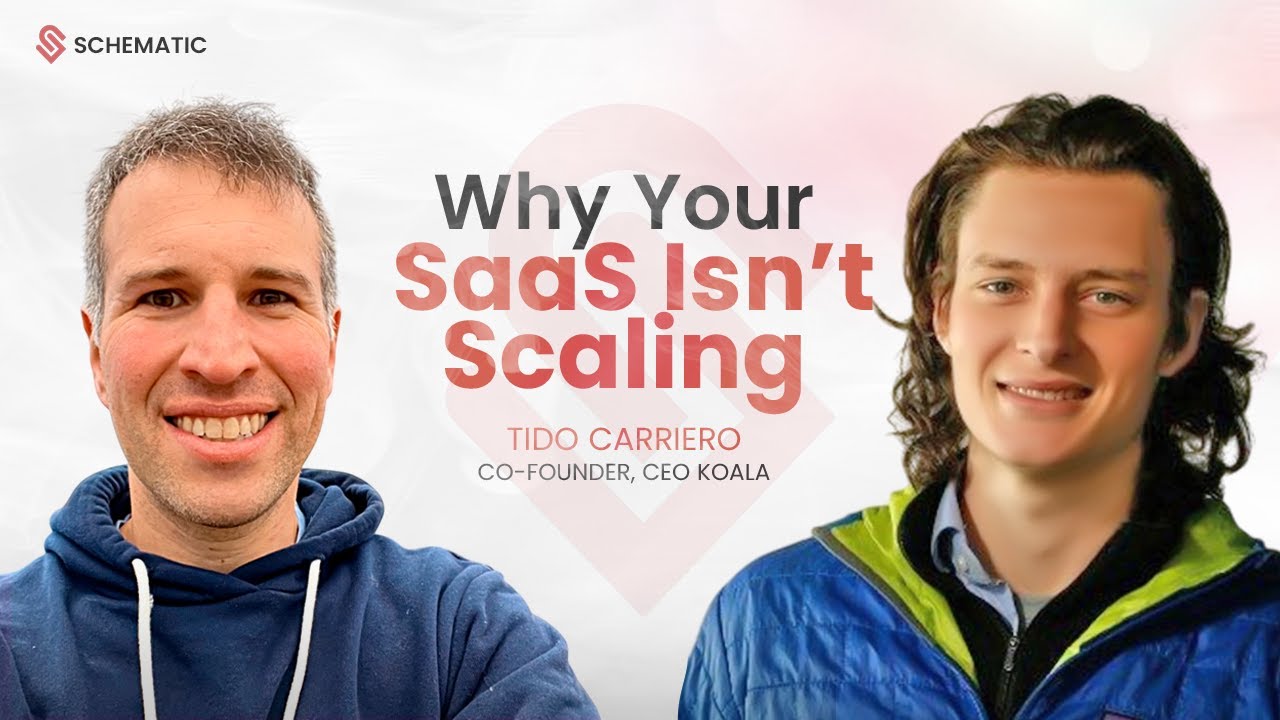
Tito, a former Segment and Twilio executive now running Koala, walks through how SaaS companies should experiment with pricing and packaging. At Segment, shifting to consumption-based pricing unlocked higher margins, but the company waited too long to test changes. He argues founders should run frequent pricing experiments early, align the value metric to what customers actually use, and treat pricing as a core product decision, not an afterthought.
Chapters
Tito, thank you so much for being on our podcast. Um, you've got this really tremendous career in tech. You, you studied computer science in college, you started out at Facebook, you moved to Dropbox, then 6 years at Segment where you, I think, wore a number of different hats— VP of Engineering, Chief Product Development Officer. After the Twilio acquisition, you were SVP GM of Twilio Engage. And then a few years ago, you founded Koala, which we are happy customers of and is, I think, quickly becoming one of the most delightful tools in this, in the sales Tech Stack. Thank you. You know, your, your background, I think, is well known by a lot of people. And I wanted to start off with, you know, a slightly different question than I usually ask. And that's when you look back to college, or maybe even before, did you, did you think that you were going to pursue technology? Was that sort of an obvious path you were excited to take, or were there competing career trajectories at the time?
Yeah, well, first of all, I'm excited to be here. Thanks so much for having me. Yeah, I love that question. You know, it takes me back to 7th grade. I'm in like the back of my, we had a kind of nutty physics teacher. He taught AP Physics in 7th grade. I'm in the back of his classroom and I'm on the computer programming, uh, QBasic. I think I was making like a, a number guessing game where like the computer would like guess the number, or sorry, the computer would come up with a number and then would tell you if it was too high or too low. And I just thought that was like the coolest thing. And so I think I might have known as early as then that this was something I wanted to do. I then, you know, I was good at math in high school, and so I thought maybe I'll do, you know, something with this. And then I got to college and realized like the computer science was like the thing I loved doing. You know, my dad's an academic, so I thought maybe I would like go into sort of the academia half of things. And I think it was the summers after college where I was actually like building stuff that I like really fell in love. And I just, I knew it was for me. I couldn't believe they paid you to like go build production software. I was like, ah, that's even better, but I probably would do it for free. I just loved building stuff. And so it was a gradual progression, but definitely something from, from a pretty early age that I felt a lot of, a lot of passion for.
That's awesome. I mentioned Jazz. You worked with him at Segment after Twilio acquired Segment, and he said that you have a silly side and a serious side, but that mostly you, you you really care about building teams that like to operate with joy. And I wanted to ask you what he's talking about. If you can describe some of the ways you try to go about this.
Yeah, well, I think what he's probably talking about is I showed up to many Twilio all-hands with various different costumes on. You know, it was like the depths of COVID and we were just doing whatever to keep entertained. But I had some funny ones over the years. So I think that's probably what he's referring to. But yeah, no, I mean, I think, uh, I think so much of building something epic is putting together like an epic team, you know, people that you want to work with, that you love working with, that you're excited to like be in a room with solving a hard problem. I had an interesting, um, I did like an energy audit once, which is sort of this advice you get, uh, when you're like at a crossing point. Uh, this was shortly before I ended up leaving Segmento and Twilio, and I color-coded my calendar basically on every single meeting if it gave me energy versus not. It's a good exercise if you've never done it, especially if you're in a spot career-wise where you're not sure you're, you're doing the right thing right now or you're thinking about a change. But the really interesting takeaway for me was I had assumed that like certain types of activities would give me energy, like maybe talking to customers would give me energy and like internal planning meetings wouldn't give me energy. But the actual common pattern I found was that if I really liked 100% of the people in the room, I mean, liked, I don't necessarily mean on a personal level, but like really respected them and enjoyed working with them professionally, and usually it correlates with liking them on a personal level too, that was actually the biggest predictor. So as soon as there was like 1 or 2 people where I like didn't, wasn't excited to go solve a problem with them, that was very draining for me. And so I think a large part of the why behind going and building an epic team is I just find it insanely energizing. Even if you're in a hard spot and you have a huge mountain to climb and whatever, whatever, if you're working with people that you love working with that are giving fresh perspectives, that are having fun, that are showing up to all hands in costumes, that's what it's all about. So I think that's a lot of the ethos there. And the costumes is just a piece of it, but I think it's really about putting together a set of people that you're super stoked to work with. And then I think the other side of that is if you're hiring these incredibly high performers that are early in career, they go do amazing things. I'm just shocked by the careers that the people I've worked with have had. And so I think that's a special thing as a manager. To kind of see that, you know, 5, 10, 15 years later.
You have, you've done an interview, I think with A16z, where you described sort of that getting in the room moment with, I think it was the new CRO or VP of Sales at Segment.
Yes.
Yes.
Yes. I can tell you all about that.
It's a terrific one, but maybe a good segue into Segment. I mean, that was a really rich experience set on so many levels. And I'm curious to dig in with you on some of the really important stories from that experience, particularly around monetization and pricing and packaging. But, you know, I'm really interested to kind of talk about what you learned about monetizing a multi-product offering. I'm really interested to talk about what you learned about monetization as you moved up market. I'm really interested to learn about, you know, talk about what you learned about the evolution from leading engineering to also leading product and what it meant to get really commercial. So maybe you tell us where we should start as it relates to Segment because it was a big chapter in your life and it's just a fascinating story for folks who are trying to figure out how to operate on pricing and packaging.
Yeah, I, you know, it's, I think of Segment as 3 chapters and I actually think those 3 chapters in some ways were most defined by pricing and packaging changes. So I think it's a perfect, it's a perfect topic and a perfect question. Yeah, maybe I'll tell about the 3 kind of different chapters. As I see them. I was at Segment for about 6 years. The first chapter was we had very clear product market fit. I joined right in the middle of like a $2 to $10 million ARR year. So probably right around 5 or 6. We had just raised but not yet announced the Series B. Things were like off to the races. And, you know, I think what people were buying is they were buying this data router. So like you could send Segment the data, Segment would like multiplex the data into 5 different tools and then deliver that data on the other side. And so that was a really cool product that was like ahead of its time. There was all this explosion of tools. There was a lot of pain integrating it. And so we were just having a field day. Selling this thing. But within about 3 months of joining, we had this crisis moment where we realized that all of these like $50K to $100K deals that we had gone and sold, and customers were happy, felt like we were delivering value on them, were suddenly at churn risk. And the reason they were at churn risk is we had a— I don't remember exactly what it was called, but a growth plan or something like this, which was effectively a self-service plan. And it was like $500 a month-ish. I think, no, I think it was $350 a month. It was something in that range. And you could get basically the exact same service that we were selling for the $50K to $100K. I think you didn't get one feature that sounded really cool, but no one ever actually used. And you didn't get a CSM, which was really important to set it up. But once you were set up, a CSM actually wasn't that, that important. To renew. And so we were like, crap, like we're about to go like churn most of our revenue. And so we got a, probably my first like major project. It was like a pricing and packaging project. And our CEO is like, okay, we need to have this shipped in 2 weeks. And we're like, excuse me? And so we totally changed the pricing model. It was actually one of the most important, like longer term arc things. I think we did rush it in some ways, and there were some like pretty meaningful long-term effects that we didn't realize at the time, but the gist was we changed it from like infinity metered API calls to like metering on consumption. It wasn't purely API calls we were metering on. We found that the unit of value that resonated a little bit more was this monthly tracked user. It's not perfect, but it was pretty good. So monthly tracked user was basically like how many end users, both like known and anonymous, are running through Segment's data router. So what effectively happened at the time was people could still get in pretty cheap and then it would like grow pretty quickly for scaled companies. And then like these $50K to $100K contracts would still, would be even more on the self-service plan. And so they felt more like a volume discount. In exchange for an annual contract, which is sort of, you know, pretty standard for consumption. And so felt really good on the surface. We all high-fived ourselves, slapped each other's backs. Life was good, we felt. But something pretty bad had just happened there that we wouldn't realize for a couple of years. So anyway, we're kind of just— I'll get to that, I promise. But we're bopping along for 2 years. Life is good. Things are up and to the right. We do like the 2 to 10 year. 10 to like 20-something-ish, I think 21, you know, 21 to like doubling again. And then at about the 40 to like the next double, uh, things started to slow, slow down a little bit. And, and that was kind of the second, uh, chapter. And second chapter from a product perspective was bringing new products to market. So we realized that this kind of data router thing was powerful, but our most advanced customers, if you actually ask them what they were doing, they were building profiles and then using it for sort of higher level use cases downstream. So one of the most common ones, one of our co-founders, Ilya, discovered was people wanted to improve their return on ad spend by like building retargeting campaigns. In their ad tools. And of course, like, we had this incredibly rich data set and built like a very nice, very rich product around sort of building this like targeting, uh, it's called Personas. And like that product like caught like wildfire, went from 0 to 1 super quickly, then 1 to, I don't know, 5-ish. And then before we knew it, like I would say 2 years into the product, we're like, okay, this thing is the future for us. And like the revenue was a lot healthier because we were solving a more value-oriented problem that was more defensible of like, hey, you have this like return on ad spend problem and we can solve this return on ad spend problem that will save you, you know, $1 billion a year, I think was literally what we were saving our biggest customer. And so, so it allowed us to ladder into like a better, value story. Now, the more sinister thing that had happened was we were pricing out all new entrants at the bottom because we had made the consumption piece too expensive. And so like data volumes were exploding. It was getting easier to like run this kind of queuing system on, you know, AWS or like closer to, closer to the cloud infrastructure. And so like we had what could be an epic lead gen engine for this like sort of better, more vertical product or yeah, more value-oriented kind of vertical product. But we were like cutting off the lead gen engine because we were pricing folks out. And then we weren't like setting up the path to where we really wanted to get people, which were these like, you know, sometimes multimillion dollar annual deals to solve the vertical data problem for the like growth marketing persona. So anyway, that was kind of the middle chapter was bringing some of these new products to market, new pricing and packaging. I think like there was definitely some challenges there. And then the third chapter, and you referenced this earlier, we brought in a new CRO as some of these like challenges started to hit around growth slowing and just, it felt like we were having just a lot more sort of challenges with customers and like the strategy he and I really had was like, we need to get the revenue shifted over to this more sticky vertical, much more value-oriented revenue that we felt really good about because like when we could explain to you that you're going to save this much on your ad audiences by doing this whole data project that we have for you, the eyes would light up and it would be a no-brainer. We could really protect the value. And so we were actually in the process in that kind of final chapter of like figuring out how we could make the data collection piece, uh, have a lot less margin and just be consumption at lower margin to create a nicer path into this value-based selling that we were doing and was really working well to this like marketing growth buyer that was buying this sort of new vertical Act II package. Um, and that was a lot of just kind of getting in the boat together. And we had a lot of like companies that I think had been over, were a little bit over the skis on what kind of what we had sold for the pure consumption thing. But did really want this other thing. And so, you know, we were just trying to figure out a path kind of one by one to get these renewed and sometimes even upsold, but really make sure that they were like instrumented properly and all of the stuff had been done to kind of like really set up that second use case for success. And then in the process of this, we got bought by Twilio. So we never quite finished the consumption project. And I think actually some of the growth today has been hurt by that. But it's really interesting to me how like we're— what are we, like 8, 9 years? Yeah, I think we're 8 years out from when that pricing project shipped. And like you can still see some of the, the long-reaching impact of it today. And what we had thought at the time was a wildly positive change, which it was in some ways. I mean, obviously needed to to protect that revenue had these subtle but very important long-term effects on customer acquisition and growth.
There's sort of a masterclass in all things pricing and packaging as a company scales in that. I want to dig in.
Um, let's do it.
So let's go back to the beginning. You've joined the company. It sounds like you have a cannibalization problem because basically you've sold all these early customers on $50K to $100K deals. I remember listening to a podcast with the CEO who walks into a room with a sales consultant The sales consultant's like, tell him it's $100 grand. He throws $100 grand out. They, they buy it for $12 grand. And so that's sort of the early founder-driven pricing. You come in as the business has found product market fit. You've introduced self-serve. Now there's a cannibalization problem. Your task is to go fix it. Had you ever worked on pricing and packaging before?
I had not. This was very, very unfamiliar.
So he gives you 2 weeks to go figure this relatively consequential thing out, can you walk through like how you actually went about determining where the company would go in that moment?
Yeah, yeah. Sorry, the 2 weeks was an implementation timeline. We had done a decent amount of pricing studies already, and so we had kind of understood the kind of the hotspot of value. But I think we were doing a little bit, and part of the timeline on his end was like we were doing a little bit of feet dragging, right? Because like you know, you get these like really complex surveys back and everyone has like slightly different opinions on like where the value is. And then the pricing consultant gives you like 4 different things to try. And then you're like, ooh, like I don't want to implement 4 different things to go try, but it makes sense that, uh, so, you know, there's a lot of ambiguity there. And so we had done the research. I think it was about making a call. And then hitting an implementation timeline on the call, that was really challenging. And I think we would have actually done a lot better had we been able to sort of A/B test a little bit more the various like approaches, because I think we did make a short-term good, short-term great solution and a long-term actually slightly negative solution. But, you know, Later on, it was very hard to like fix it because every, you know, when we were at $150 million of ARR, every fix looked like just giving up 20% of our revenue in some sense. Like, you know, there's different ways we could do it, but to like really fix the kind of core overcharging for consumption for the future, we had to sort of fix the past and that, that change gets harder and harder, basically the more zeros you have on your ARR number to go to the board and be like, yeah, I'm pretty sure that shedding like $15 to $30 million of ARR is a good idea. They're like, okay, great, show us how it's going to like pay itself back. You're like, well, we think maybe it's going to like cause this growth to happen, but you know, it's a little hard to say. So anyway, I just remember like having an insane amount of like these pricing consultant data and like several recommendations and we kind of made a gut call and then kind of just implemented like the gut call at the end of the day.
And it's 8 years ago, but do you recall how you landed on the value metric that you would meter against? You mentioned that there were kind of two that were in debate. Do you remember how that decision was made and can you walk through it? Yeah.
So the, actually structurally the bigger debate was, do we do a volume-based metric, which is where we landed? I can talk about the couple different volume-based metrics we were deciding between in a second, but actually the other big decision point was like, do we limit the number of sources or like the number or types of destinations? The argument there was like, there's a much higher willingness to pay if you're like loading data into a warehouse. This was like super early days of cloud warehouses, like Redshift had just shipped, this was before Snowflake, before really Redshift was the first like big-ish cloud warehouse on the market. So it was like, if you're loading data into Redshift or you're loading data into like Marketo was like another, just really hard integration to go build. And also like people who had Marketo, like had money, uh, it was clear. So we were, we were basically deciding between like, do we limit more on the, like the features of which integrations you're allowed to use, or do we meter on volume? And Peter actually had a very strong opinion that we shouldn't do the feature-based one. And I think he was right about this because the whole value prop of Segment, zooming out, was you want to get all of your sources into one place and you want to connect to all of the places. And so if you got someone like sending data to like 3 different places, they're actually much bigger churn risk than if you get it sending them to 7 different places. And so if they're sort of like, the pricing is getting in the way of the core value prop, like that's a bad thing. Even if that was, I actually think it seemed like a more natural way to like differentiate the monetization tiers, but we just saw people like, oh, I'm not gonna, not gonna spring for the $7K package because I don't, I don't need Marketo that bad, but Turns out like that's actually where the value and the stickiness comes from. So anyway, we—
he believed that that would disincentivize core usage that would create a stickier customer over time.
Exactly. Exactly. And really because it would disincentivize the core value prop we were offering of like all your stuff in one place and sending it to all of the things. And that was the core value prop of the data router. And so the the pricing would go against some of the stickiness lock-in work, which was setting up all of those integrations and like starting to rely on the data through Segment. So that's how we ended up on the volume metric as opposed to like what could have been the feature packages. You know, you could have packaged each of those integrations as different feature packages. Sorry, you were going to say something.
At the time, would customers— I mean, it sounds like maybe customers would have described the value metric that was more intuitive to them being sources, or would they have agreed with Peter?
Uh, they would have said, yeah, not sources. They would have said destinations, I think, is the, the value metric closer to their heart. Because like, that's where they would see in each additional tool is where they would suddenly see this like rich, good data coming. So like, I getting it in Intercom, I'm now getting it in Marketo, I'm getting it in Adobe Analytics, I'm getting it in my warehouse. Like, you know, that each one of those lights up that tool for that team to go use. But the real value prop of the overall platform is more for the data router is actually more on the engineering side, which is like you write the code once and then your engineers are never asked to integrate it again. And so even though. Yeah, a lot of the buyers, I think, thought of the value as accruing per source and that would have made sense to them. It actually would have been pretty fundamentally flawed for what we were trying to do.
I think it's a really important lesson. It's very instructive because especially for early stage founders who are maybe taking the step to go try to do willingness to pay conversations with early customers, you're often trying to understand what's the value metric that's most intuitive to the customer. And you're like relying on that. I mean, it's an important piece of the puzzle, but this is, this is a great example where like being overly reliant on that and maybe sort of like losing sight of your own product's core value long-term can get you into trouble and you can choose the right, the wrong price metric.
I think, and a great way to debug that is like, imagine each of like the negotiations you'll be having. And so we were kind of imagining negotiations where people didn't want to turn on these 3 enterprise integrations because they didn't want to buy that package. And then we're like, where does that contract end in 2 years? Are we still renewing? We're like, we don't think we're renewing because we haven't actually solved the bulk of their pain. And so we shouldn't offer them this option, even though maybe it'll secure like, you know, $10K of weakish revenue now. Like, That's not a long-term kind of durable thing.
2 years later, you get into chapter 2 of this, which sounds like, for lack of a better term, this is the new product chapter. But was the real problem of new product that you'd outpriced early-stage companies and so were not capitalizing on all the potential lead gen, or would you describe the problem differently?
Yeah, I would say The, yeah, I think that that was one of the problems that maybe I put it slightly differently, which is like the margin we were collecting, like to do the Core Data router problem was like too high and didn't scale well for our largest and what should have been our best customers because like we, you know, we wanted some kind of margin profile and all of the API calls coming through our system. And so like for our biggest cut, which we were starting to get to like much, much larger customers, like there was just sort of this. Misalignment. We played a lot with the idea of like, oh, what if we like did on-prem so we could like have them host and manage their own data thing and they're using us for like the control plane? It's, it seemed really nice from a pricing and packaging theory perspective. Turns out like the reason they're buying a SaaS, SaaS software in the first place is they don't want to manage that infrastructure. But yeah, I would say the problem was like we were charging too much core margin for— and we could fix it with discounting for the smaller customers or packaging startup program, whatever. So it wasn't that as much as like there was like a kind of a misalignment of value happening as customers grew with us and as they became more sophisticated data teams, which is who we wanted to be selling to in the first place. So we had, you know, the DoorDashes of the world that like were some of the most advanced data teams and like awesome, but like they were growing a ton. And so like us charging whatever margin profile on each call, each API call was, was just sort of getting out of whack. So I think it was like at the upper end where like the revenue was, it was starting to feel a little bit more misaligned. And I think we had some problems at the entry point of being discouraging to newcomers too.
Would you, would you reduce it again to the value metric? Like the value metric had become different by that point and needed to shift?
Well, we wanted to uplevel the value metric so that it wasn't the core value metric of the data router is a build versus buy thing. So like, we were like, hey, you shouldn't, you shouldn't go build 16 integrations here. You should build one integration to Segment and then like your integration problems are solved. And that's like a fixed build versus buy, some maintenance costs, et cetera. And that, that is like the the value driver at its core of what the data router did, but the pricing metric we had come up with was a consumption metric, right? So like, as DoorDash grew into like a crazy large company, they were sending more and more data. We needed to charge more and more on the kind of infra side to cover that. And that was how we sort of passed it along. And so we had a fundamental misalignment that the value being realized by the customer was about a build versus buy thing, but the thing we needed to charge was a consumption-y thing that we were trying to take a lot of margin on. So I would actually say Act 2 was more about like, how do we get this sales conversation and this value we provide to the DoorDashes of the world out of the engineering build versus buy land and build them a higher level primitive that is more valuable to them because it solves like a different adjacent business problem for them. And that really worked and worked quite well with a bunch of these customers. But obviously that was packaged very differently and had some interesting interactions because you couldn't buy just that. You needed to buy the data platform as well.
Right. And to your point, it's like, how do we move from you're evaluating this in terms of cost savings versus you're evaluating this in terms of like how much return on ad spend might we generate or might we save, things like that.
Yeah, it was a fundamentally different value framework, which was great for us because we had to like, we had basically gone to a higher level thing than a build versus buy, which just had limits that we were running into. And so that was like the fundamental change that was really healthy for us and why we built the new product in the first place.
The thing that I'm always curious in is like, this is a story of a company that had achieved relatively remarkable product market fit. During the years that we're talking about. And the other thing that's noticeable is like these changes and adjustments to pricing and packaging, these chapters, if you will, they're in some ways reactive, like they are reacting to a problem— cannibalization, fundamentally kind of misaligned value, the need to go offer multi-product. As you reflect on that, are there things that the company could have done around building a pricing and packaging function or discipline that would have helped the, the company grow faster, or does it not really matter given the strength of the company's product-market fit during that, during that?
Yeah, I might answer in a slightly different way, which is I think pricing is like so fundamental to like a company's relationship with their customers. I think it's the only thing at a company that truly touches every single function, and in some ways the CEO actually needs to like shepherd Pricing deeply affects the sales team. It deeply affects the customer success team, the renewals team. It deeply affects how product shows up. It deeply affects the metering you need to do on the engineering side, to name a few. And so I think when you change that relationship with a customer, it needs to be very well thought through. And obviously the more you've tested it, the better. But I think the reason it was reactive was like, we really only felt like we could make these changes every couple of years. I think maybe the retrospect thing is less that these major shifts should have been happening more often. And we did actually have a pricing function and we had a lot of these things. And I think we executed well every 2 years doing a major update. The thing we executed less well on, in my opinion, is we didn't do as much like smaller experimenting. It was so hard to like go launch an experiment and figure out how we were going to like gate it. It was a little easier to do like experiments on the, you know, sales pricing because we could just, you know, not show the pricing and see what happened in 5 or 10 sales calls. But like the, the kind of core metered stuff was really heavy. And even, even the sales stuff was, was pretty heavy to go do experiments on. So yeah, I felt like we were sometimes showing up to the, the big, pricing change every 2 years, like not knowing quite as much what would happen in the field. Maybe back to the earlier thing I was saying about the board, which is just like, we didn't actually know what cutting like 10, 15, 20% of our revenue was going to do. So we didn't, even though we had conviction, I think by the end of a couple quarters of really deliberating, we had conviction. It was probably something we should do. We didn't have like a quantitative thing that felt appropriate to go like pull the trigger on a, you tens of millions of dollars ARR gift back to our customers, which is a hard place to go make a call like that.
In retrospect, do you think the experimentation would have unlocked a material ARR growth if you had experimented more frequently?
Yeah, I think for sure. And I think in particular, it would have been like more of like the slope of the lines. Like we would these pricing changes would always have like some kind of like overall, like slope of line change. You know, that, that first one was like a real slope of line ARR change on like the contraction number started turning into like expansion numbers because we like fiddled with that number so that we could like price toward expansion instead of like contract everyone to a couple hundred dollars a month. The second big pricing change when the new product came along was like it's actually an intentional flattening out of the more commoditized thing and like a new package that was much more defensible and much healthier revenue kind of shot up. And so I think, yeah, pricing changes have the ability to change like slopes of lines like that. If I just think of the ARR graph of the overall like 6 years I was at the company, like, and the slope it had, like, those, those slope changes were often around these pricing changes. I think we would have approached the experimentation framework would have made it much clearer what was about to happen. And we might've been able to predict out 4 different lines and make an informed decision about it. So I still, a lot of work, obviously, to go roll out pricing at the end of the day, but I think we would have like been a little bit smarter about the particular line we would have picked. Uh, cause it always felt like we were closing our eyes and jumping off a cliff a little bit more than one would like for a decision. So, if that makes sense.
Who would have owned that type of experimentation?
Well, the reality is it was always a CEO project because it touched all of the functions and it just, we kind of needed to make a call. We had a pricing function that rolled into, I think it was like a Biz Ops org that rolled into maybe directly to the CEO. Maybe it was the CRO, I forget. But yeah, we had a, we had an ops function, I think. The problem was they would, they did phenomenal work, both like qual and quant work to prepare proposals. But then once these proposals hit, it was like CS thought something, product had some opinions, sales had a ton of opinion. Like, you know, it was just such a, a ground shaking moment for every single function that we, we kind of needed to just put a stake in the ground and, and drive it forward, which is why I say it's sort of a CEO-level thing. So we had a lot of prep work happening, but I think what would have been nice and would have made it more clear is if that prep work happening also had some real meat behind the numbers, because we were always running more like hypothetical simulations or like, oh, we talked to these 3 customers and they think they would have paid the, you know, that kind of stuff that wasn't nearly as satisfying as like, oh, we, you're back at Dropbox, we would just run a new pricing test and Australia was always the place we would go. We were like, okay, let's run it in Australia. It's kind of an island. It's its own area. We bumped up the price by $4 per user per month. Here's an A/B test results of what happened. But we just, we couldn't do those kinds of things.
Take us a little bit into Koala. So 3 years ago you founded the company. Um, can you tell us a little bit about why you founded the company and what the original insight was and the extent to which that insight has changed?
Yeah, so my two co-founders, uh, also Segment engineers, and I were sitting around kind of realizing that we might want to go start a company. And we had this sort of deep expertise in sort of CDP-style data, you know, the data sitting in warehouses, like that was the the thing we had been living and breathing for the better part of the last decade. And so, yeah, we, we were kind of exploring like problems adjacent to that. And one of the things that really struck us is that the state of tooling for SDRs, BDRs, AEs, when it comes to this kind of data is just like frankly unacceptable. And so we're, we're like, why hasn't this problem, like this type of data around CDP, where warehouse, et cetera, is some of the most valuable context to have about your customers, your prospects, et cetera. Like, why is this not the data that the go-to-market teams are living out of? And we even had this one dashboard that we had built during a hack week at Segment. It's called the customer dashboard. It went from not being used at all to a daily active tool for every single member of the go-to-market team within a couple of months. And so we kind of had this proof We're like, why did we have to build that tool from scratch? So that was kind of the initial inspiration was we think this data is really, really valuable. I would say the initial insight hasn't changed a ton. I think it's gotten a lot broader. So there's a lot more data sources that matter. So like if you're a developer company, like understanding what's happening in adjacent GitHub repos is a really interesting signal from the internet. If you're like doing a lot of stuff on LinkedIn, being able to like understand who's interacting with, you know, your LinkedIn posts, your competitors' LinkedIn posts, you know, other LinkedIn posts that are influencers in the space, like that's really helpful. So we've gone a lot broader with the dataset than I think we initially thought we would with just a bunch more integrations, 30 different sort of like external third-party signals. So anyway, it's been broader. And then I think the other big thing is just realizing obviously with what's happening in AI, there's just so much synthesis work that AI can do in the background in terms of like qualifying accounts, figuring out what's interesting to them and just making it easier for reps to not spend, you know, I think we went from an hour of research on an account with the initial version of Koala made it like 10 minutes to like go properly research an account. And I think now AI is making it possible to like proactively alert someone with 3 bullet points that takes more like 30 seconds, uh, to go feel like you have a good insight on the account. So yeah, we're going a lot deeper in sort of the synthesis of all of this data and a lot broader in terms of like the fabric of the data. But, uh, I think it's the same, actually it's the same problem as like the initial insight of like, wow, these poor SDRs have like 6 different tabs open and 4 Chrome extensions and like it's just a mess. We're still solving that, that same problem.
How, when did you start to realize or believe we're really onto something here? The market wants this.
Yeah. So I felt like we were wandering a lot for the first 10 months or so. And I think the reason we were wandering was like, we just hadn't launched anything yet. So like we had design partners, we were working with 5 or so great companies that were giving us like real meaningful data., but we weren't like testing them commercially to think about whether they would pay us for this. Uh, we hadn't turned it on to like a broader set of people. We weren't really trying to acquire that, you know, that many more customers. But at about the 10-month mark, I think it was like October, we started beginning of January. I think it was October of '22. We did our first public launch. That was like the first time we like launched it. I was, it was like the scariest day of Koalas history for me, for sure. Cause like, I was like, we've been working on this for 10 months and I have no idea if anyone wants this. And we put it out there. I think we had like 30 or so businesses like sign up and like at least get some data flowing through. There was like lots of positive feedback. Uh, there was lots of churn as well immediately thereafter. But that felt like the beginning of like, okay, yeah, this is something people want. There's something that strangers from the internet seem excited about and we have a churn problem. And so then it was like, okay, well we got to set up a retention loop here. So then we built a Slack integration that alerts, you know, there's a perfect retention loop, which is when your prospect is on the site, we send you a notification, you come back in, do research, et cetera. And so that was when it felt like, oh, okay, we're now efficiently building on real customers and real customer problems. It was probably midway through 2023 that we started actually charging an initial dollar amount for it. And then this past year has really been our breakout revenue year. We've started a real sales motion, have multiple 5, if not 6-figure deals coming through each month. So it feels like we're starting to be commercially there. Um, but I think the reason we're finding such success being commercially there right now is because we spent so much time like really with the BDRs, SDRs, founders of founders doing the AE role, like figuring out what they needed and what they wanted. Um, and it's still always a work in progress. There's a million other things. Uh, I still think we need to do to build an iconic company, but, uh, it definitely feels like there's a lot more traction.
All right. You cut out for a second, but I got you now. Can you hear me? Yeah.
Yeah. Sorry about that. I, it recorded my thing. So I finished my thought.
Awesome. A, congratulations. B, I'm a happy user. I use the product every day. Go back to the middle of '23, you began charging. I want to know how you thought about pricing. Obviously, I want to know how you thought about pricing and maybe kind of how the lessons from Segment had sort of translated into how you would approach pricing zero to one. Yeah.
You know, I didn't use too many of the lessons from Segment. I just felt like we were so, we were so early. We started, well, that's not entirely true. Actually, our first pricing model was a little bit similar to Segment's. It started super cheap and it was like a volume, a volume would just drive it up kind of price. And the NRR cohorts looked great. The GRR cohorts there though, were not great. And it was like a pretty frustrating thing where people felt they had been baited and switched because like they were not feeling as this consumption went up of their website traffic, they weren't feeling like exceptional additional value. So then, then we made a change. We've done a decent number of pricing revs at this point. We made a change to just make it a flat fee of $500 a month when it used to start at $175 a month and kind of grow. But that $175 a month could grow to like $1,000, $1,500, even $2,000 a month. Which like was such a sticker shock of like, oh, I thought I signed up for this $175 thing. And we disclosed all of this. So it wasn't like, it wasn't like we were lying, but it also like wasn't emotionally resonant with people, which obviously the latter is still wildly important. So then we switched it to like a $500 a month plan. We've actually just started to notice some of the early cannibalization problems. So if you go to our pricing page today, you will see actually there is no starter plan. It is coming back. We're actually right in the middle of rejiggering it a little bit. But yeah, I, a lot of the similar trends, uh, and I think mostly just trying to figure out how people perceive the value. One of the other big things, which actually reminds me a little bit of the segment problem too, which is we really want a lot more data sources coming in. Our product's a lot stickier if people are sending their core product data, getting insights there. If people are connect a couple of these different third-party sources, And so we're trying to figure out how we incentivize like more of that setup. And especially in some of our larger organizations, that means like working with different teams. Like we usually work with a data science team on like modeling the data out of the warehouse. We're working with like a marketing ops team to get like data coming from the website. We're working with an owner of segment or CDP or product analytics to get that type of data coming in. The reps themselves are bringing in data from, uh, from LinkedIn. Uh, the thing on my mind now is like, how do we like really incentivize sort of like the, the actual setup process and getting all of these, these data sources set up? Uh, which we haven't quite figured that out, but anyway, I guess there's lots of similar themes, but I think we've, we've really been pretty willing to experiment. And also like the pricing matched our strategy when we shipped the $175 a month. Like we weren't like, it's time, we need to monetize this immediately. We're like, we want to make sure like people have some skin in the game and like really are serious about using this and getting value. We don't want it to be free, but we just want as much product feedback as possible. And now that revenue has really started to ramp, we're like, okay, yeah, we're starting to— this is, this is going to be a real business and we need to start like really testing kind of where the value is. How people think about the value and how we can like get people fully set up for the full value and make sure that they're putting enough skin in the game that they're setting it up so that it's going to be sticky. And so it just, yeah, it sort of shifts as you like have different objectives for what you're trying to do in each year of the company.
Tactically, did you, you know, as you reflect on kind of the changes that you have so far made, did you go to customers or did you go to prospects beforehand and try to explore willingness to pay and explore the price metrics that they found intuitive? Or did you do that sort of retroactively, where like you came up with your best hypothesis, went to market, and then iterated from there?
I would like to tell you as the former, but I think the truth is, is mostly the latter. Certainly any pricing change, there is some testing we'll do in advance. But, you know, I think for like the shift from the $175 that grew to the $500 a month, like that was because we had like 5 to 10 really frustrated customers that are like, I, you know, I love Koala and I signed up for this and like I'm getting this other thing. This isn't what I thought I was signing up for. And so like you see that sort of emotional pain and you're like, okay, I gotta go solve that. So I think the reality is it ends up being a little bit more reactive, but then you like come up with a new scheme and before you actually go build that whole thing, you're like, okay, yes, I'm so sorry about this. Like let's make this right. This is technically what you signed up for. We were thinking of just like a flat fee. We're thinking of this price. Does that seem fair? If not, like walk us through your logic. So, you know, a little bit of testing, but usually you realize you need to make the change when there's like a wave of feedback that comes in where you're like, ooh, this doesn't feel right.
Thank you so much for this conversation. I think it's going to be super instructive for founders, especially who are thinking about pricing and packaging segment stories. Obviously, it's just incredibly instructive. It's a total case study. The closing question I always like to ask is, of all the moments in your career, is there one that you view as the most formative? I mean, it was a true inflection moment for you and your career.
It's such a hard, such a hard question. Uh, no, I, I, I think of, so I have this, um, this mantra of like stealing superpowers from people. And I, I love this concept that like each time you work with someone, they have superpowers. I think like I have learned different superpowers in each part of my career. So, you know, I think like getting to Facebook and that first week there where I realized I was expected to ship code straight out of college that was going to be on the computers of 100 million people within, uh, you know, 15 minutes of like me, uh, hitting the merge button. That was like a mind-blowing thing there. And then, you know, 2 years into that, I started learning about like people management and I could have this like outsized impact by like guiding other folks. And then Dropbox, I realized like I need to get world-class at recruiting and like that, that was really what mattered to building these A+ teams. To Segment, which was so much more about, you know, all of this like business stuff that we've been talking about, because I had always just been building engineering teams. Uh, to Koala, which is just like, you know, now I'm like the non-technical co-founder, like really figuring out all of the business stuff. So I, yeah, I think of it as like a, a progression. And each, you know, there's parts of each, each chapter of my career that are, are pretty mind-blowing. I couldn't pick just one for you. Sorry.
That's okay. That's a fantastic answer in, in and of itself. Thank you so much again. This has been such, such a blast.
Great talking to you, and, uh, I hope everyone found this interesting. Feel free to find me on LinkedIn. Happy to, to chat pricing or whatever.
More from Fynn

Schematic at Operators Guild Demo Day 2026: How to bill for AI credits without a surprise bill







Should you move to usage-based pricing because AI is compressing your margins?

Why raising prices every year backfires (a pricing leader on the Mastercard quota model)

