
The Future of AI Monetization: How Outreach Navigates Pricing Complexity
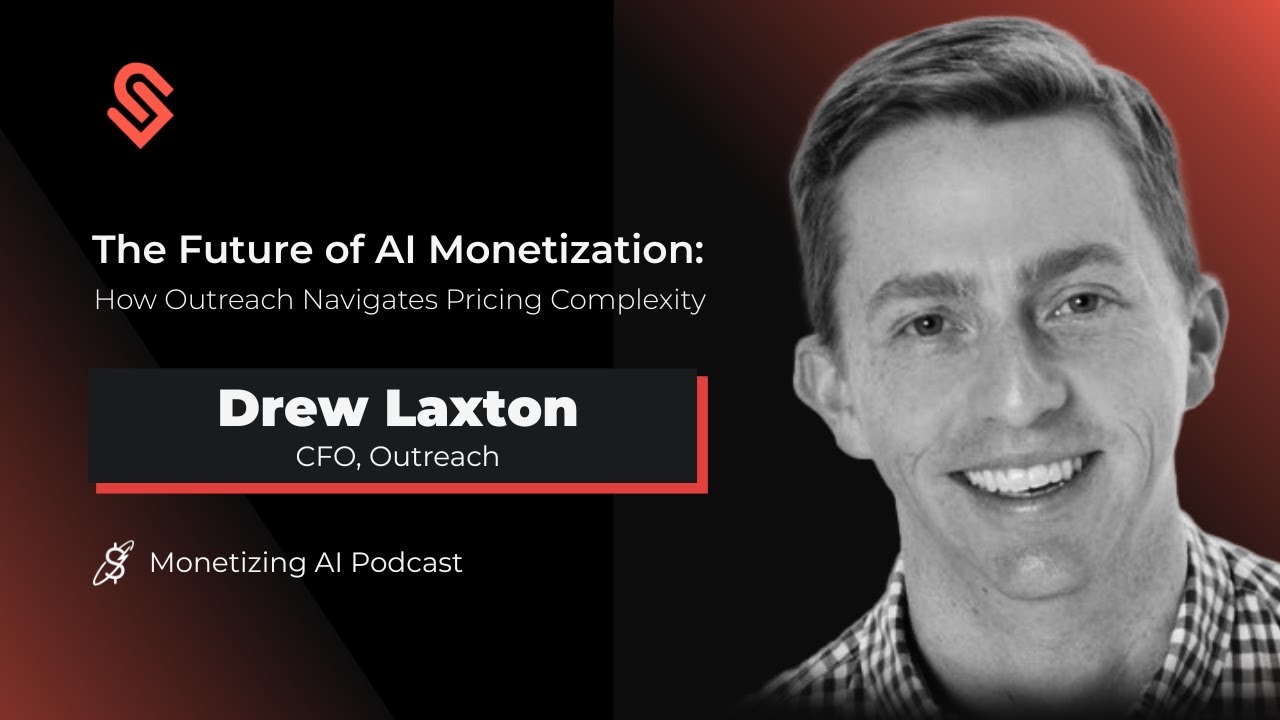
In this interview, Outreach CFO Drew Laxton discusses the company’s shift from traditional seat‑based SaaS pricing to a credit‑based consumption model for its new AI agents. He explains finance’s strategic and controlling role in pricing and packaging, the challenges of defining a single credit unit, and the need for robust governance to prevent misuse. Laxton details the extensive system changes required across product, billing (Zora), quoting (ZQuotes), CRM, provisioning, and analytics tools to support real‑time credit tracking, revenue recognition, and ARR reporting. He highlights the difficulty of forecasting revenue when usage patterns are uncertain, the complexities of pilot pricing, and the importance of cross‑functional collaboration among product, finance, and sales—described as three inter‑connected stacks. The conversation also covers the impact of multi‑product bundling on customer stickiness, the evolving market trend toward consumption‑based revenue, and the necessity of iterative, flexible processes. Laxton concludes with a key takeaway: build adaptable systems and expect to iterate constantly as the market and product usage evolve.
Chapters
The hard part for us is we will have a lot of AI agents and products over time. We've got a roadmap that's publicly available. You can go look at it. It's pretty impressive what the team is doing there. But I imagine with the rate of change here, that's only going to accelerate, right? We're only going to have more things. So getting customers used to a credit-based system is going to be really important also when it's still simple, because when it becomes complex is when you're going to need core systems that sit behind that to to make sure everybody understands what they're doing. I mean, my fear always is the stories you hear of the intern doing a query in Snowflake and just burning down thousands of credits or something along those lines. Like, you need to have the governance in place to make sure that somebody goes, "Are you sure?" in there at some point.
What happens when a CFO becomes the architect of product monetization? And sees pricing not just as numbers on a spreadsheet, but as a critical extension of the customer experience. In this episode of Monetizing AI, I sit down with Drew Laxton, who's the CFO of Outreach, to unpack how one of SaaS's most iconic sales platforms is navigating the messy, high-stakes world of monetizing AI. I was blown away by Drew's clarity on why pricing and packaging can't live in a silo. And how product, finance, and sales must be in lockstep when usage-based monetization enters the picture. Drew shares real hard-earned lessons from launching Outreach's new AI agents, including what it really took to go from SaaS to consumption pricing, the systemic headaches it created for finance and go-to-market, the strategic bets they're making around usage governance and expansion economics, his honesty and the operational messiness of defining value reporting ARR, and retraining a board to think about consumption-based revenue makes this episode a really great listen for anyone wrestling with monetizing AI or multi-product pricing at scale. Drew, it's a pleasure to be with you. Thank you for being on the podcast.
Thanks for having me.
Um, we're going to talk a lot about monetization and pricing at Outreach. Outreach is an important company. Everybody's heard of it. You're the CFO. Um, I believe you own pricing and I believe you own monetization. So Maybe just kind of kick us off there. Let's make that the entry point. How have you come to think about finance's role in pricing and monetization at a company of Outreach's size?
Yeah, and I own it in collaboration with the product team, and we think a lot of back and forth of how we will price and package the individual components of this. But as I think about it, where finance plays is we have both a strategic role in this of How do we go and ensure that both parties, us and our customers, are getting the most value out of the product? And we have a controlling function. We need to make sure that we make our margins and we don't make dumb decisions that would potentially harm the company down the road. And the thing about that, I think a lot about with pricing and packaging is it's really hard to take back a decision for multiple reasons, right? You give customers a benefit, if you remove that benefit from them or you change the structure of that benefit, there's repercussions of it. You have to go manage that relationship. And that's hard. There's a lot of communication that goes into that and a lot of people who aren't necessarily equipped to have those conversations that need to. And there's the operational piece of it too. If you go and change the packaging, and we can get into that because we have changed our packaging a decent amount at Outreach, there's operational issues that it creates on the back end. And it's where my team spends a lot of their lives is trying to figure out the best way to get a system in place so that we can get out to our customers with something that makes sense to them, doesn't confuse them on the back end as we bill them, and it provides the right benefit. We want to make sure that everybody is getting what they think out of it. So, Trying to figure out everything on the front end is the hardest part, honestly, because you roll packages out and you try to move quickly and you try to be nimble, but inevitably there is something that's going to come up that you have to, you know, go jump on a whiteboard and get everybody back together again to figure it out.
I love that there's like this very close collaboration between finance and product. Maybe can you describe a recent pricing or packaging change and how product and finance collaborated? Like, what was the what was the color and structure of that collaboration?
So, you know, we're rolling out our AI agents. They've been in market for about 2 months now. And it's a switch for us because it is a switch to a consumption-based product. We do have a little bit of consumption-based in our voice product. That is a different animal because it's more of a sell-through. It's our dialer and it's something that's very, was a very early product here. So it's minutes packages, but it is, it's very much based on how our reseller prices it to us and we just can sell on a margin there. With the introduction of the agents, having this be consumption-based, we're designing it in a token system where a customer purchases a package of credits and then they burn down the credits based on an action. There was a lot of discussion of how to structure that What is an action? You know, and AI has been through and through the Outreach product quite a few years now. I mean, we've had Smart Email Assist for a while, but that was just part of the SaaS product. This is much, you know, it's a different animal for us as we're doing enrichment, doing outreach via agents, do, you know, we have a long line of products that are coming. We wanted something that was really easy for us to replicate and easy for our customers to understand. And I do feel like the AI market is starting to coalesce around a more credits-based function. You are seeing some outcome-based functions, and I think we're doing an okay job with tying outcomes together with actions. But this is where we had a long conversation, both understanding the cost of this because the margin profile of an AI product is certainly different than a SaaS product. Product. But we also needed something that your sales team can still pitch and help a customer understand. So with enterprise sales, with our larger customers, there's much more downtime helping them understand how we're structuring the pricing and packaging. So you can be a little more creative there. But in our commercial and mid-market customers, we need something that is replicable, that you can get out to a customer, they can understand very quickly that action equals outcome and you're going to burn down a credit against that. And oh, by the way, this is very different than anything that we've done before. So the collaboration happened at the operational layer of one, us needing to bill our customers and help them understand you had credits, now you have less credits. Do you need more credits? Like there is a back and forth between product that has to go on there. The last thing you want is your customers to feel like they're just being metered. They need to understand more about how the outcome is. But we also needed to protect ourselves in this and make sure that, you know, if we had gone with just a pure SaaS model, you could get underwater very quickly. It wouldn't be hard to just run thousands and thousands of iterations on the AI products. And, you know, again, it's not like SaaS where the costs are getting better and it's happening at such a rapid rate. It's amazing how Moore's Law applies across the board, but it is more expensive. It's much easier to measure and we just need to make sure that we're not completely underwater. That said, this is the direction the company is going and frankly, the direction that the market is going. I want to make sure people are using it. So pricing it correctly there is also important and weighs on us a lot as we think through the whole process here.
Really, really interesting. And let's linger on this because I agree the market feels headed towards credit-based burndown, which I kind of view as it's a flavor of usage-based billing, but maybe a very, very important flavor. And if we were to explain this to listeners, I'll kind of give my take on it and see how you would react to it. But to me, credit-based burndown is effectively you're letting users prepay for usage-based features in the form of credits. So a user buys 1,000 credits. Each time they use a premium feature, like let's say an AI call or a database query, credits get burned down and eventually they top up or auto-recharge or there's an overage, right? So is that how you think about credit burn down?
It is exactly how we think about it. And models like this have been in the market for a long time. Snowflake and Databricks are probably the most prominent, well, vendors of ours and frankly customers of ours. That do this and it's a good model for them. It's worked very well. There are other examples of this out there. And, but it does feel like this is where the market is going in general. The hard part for us is we will have a lot of AI agents and products over time. We've got a roadmap that's publicly available. You can go look at it. It's pretty impressive what the team is doing there. But I imagine with the rate of change here, that's only going to accelerate, right? We're only going to have more things. So getting customers used to a credit-based system is going to be really important also when it's still simple, because when it becomes complex is when you're going to need core systems that sit behind that to make sure everybody understands what they're going. I mean, my fear always is the stories you hear of, you know, a the intern doing a query in Snowflake and just burning down thousands of credits or something along those lines. Like, you need to have the governance in place to make sure that somebody goes, "Are you sure?" in there at some point. And so, you have to think through all of those aspects as well. We've had to rethink our billing system because, look, I think as a CFO, like, the most core things that we have to get right is one, pay our employees. You can't ever screw that up. You got to bill our customers and collect from our customers and you've got to pay our vendors. Those 3 things, if you don't do those right, you're not going to have a company very long. And that billing a customer, I imagine your listenership looks a lot, sounds a lot like me and, you know, has very similar background. You don't want to get caught in the round and round of a bill with a customer because it directly impacts your cash flow. And so it needs to be something that we can feed into our systems and feed right back out into our billing system, which has required some work for sure.
Yeah, I mean, I think what's so interesting about this, I mean, like, to me, what you just described is the billing experience that the customer, the experience that the customer has with billing is actually incredibly important, not just for revenue recognition and cash intake, but like their long-term lifetime value with you. Because if you're giving them a terrible billing experience all the time, or it doesn't feel transparent, or it feels confusing, it's just a really fast path to destroying trust.
It's a weird touchpoint with customers that I don't think the average, uh, company thinks through, that it is a very common interface between a customer and a vendor, is the billing system and the billing team. And, uh, we spend a lot of time working and making sure that that works well so that, uh, we don't end up with the bad side on the backend, to your point, because a bad experience or repeat bad experience can really leave a bad taste in people's mouths.
Yeah, I always say like pricing, billing, this should be treated as product. It should feel like an extension of the product. To go back to credit-based burndown for a second, you, you kind of described some of the reasons it's hard. One of the reasons it's hard, I think I'm hearing you say, is like you have to figure out the customer experience. You have to figure out how to deliver transparency in terms of what they're using and what's left in real time. You also have to deliver a sales story that they can consume self-serve, that they can hear from a rep that makes sense and that is not confusing. But then there's a bunch of technical considerations too. Like you have to go define and manage multiple credit types, I would assume. You have to, you know, features have to consume credits at different rates. Credits may expire on different timelines. You know, you want go-to-market teams to be able to grant or top up or revoke credits. So how do you kind of support that type of administration? Like, this is not easy stuff.
It's not at all. And we're trying— again, this is relatively new and I'm sure we'll continue to iterate on it, but we want the unit of measure to be one credit, right? And sometimes it can be multiple actions is one credit, and sometimes it's one-to-one where an action is a credit. And we're trying to keep that value correct. So I think about it just on a line of the things that are going to burn down credits. And if we look at all of those, you say, is the value equal to one credit? And you unitize it there. And if we don't think that is the case, then we want to change what the burndown is. Because what I don't want to get into is multiple types of credit. I think that's what gets really confusing. It's like, I don't want a customer to say, wait, but I have other credits over here. Can't I just use those? And some poor CS manager to have to come in and say, no, no, no, those are different. Like that's— it's just a bad customer experience that I don't think anybody wants. I will tell you one of the harder things though is the governance around this. So if you've got multiple business units all using the credits, who should have visibility into the total amount of credits? Can you share across business units? Units. Like, things like that are complexities, and, and they're corner cases for sure, but we've got to be able to support it somehow.
Okay, so two, two things I'd love to dig into. So how did you— was it easy to come to the unit of value, or was that hard? And can you describe what unit of value you got to? And then on the governance piece, tell us more about that too. For example, like, do you want customer success reps to understand what— where a customer stands with regard to credit usage and be able to administer more credits or remove credits? How have you thought about those two?
Yeah, so, all right, so on the unit of value, it was relatively easy, especially with the initial rollout of our agents. I could see that we, we get to some cases down the road where a customer maybe pulls us in a direction that it becomes a little bit harder for us to define the value of an outcome and then associate that with credits. And so we reserve the right to move those around over time to the extent that it makes sense. And we'll get more learnings as we continue to build on this. So, you know, from that perspective, you know, our initial AI agents are essentially a smart email where you can do a lot of prospecting autonomously and you can just give it some guidance. And it is amazing. We've been using it internally. For quite a few months now, and the work that can be done there at scale is absolutely impressive. It was really easy to use that as, okay, one of these is one credit. So now we've got our base measure. Let's start comparing the other agents that are coming out to this as the base measure. And I think it's lined up pretty well. There has been some— there's some shifting sands in how much a credit costs in trying to figure out the right dollar amount there. So the unitization worked really well. The price of the unit is what's moving a little bit. And I think for the most part, we understand how to do that and we're being smart about it. For the governance and the top-up and that, we actually, we're encouraging our sales teams and our CS teams to get customers using this. And if that requires— look, we need to— I mean, we're rolling out with pilots, but if that requires some free credits or getting them to go do some proof points with the customer and that's some free credits so that they get comfortable that this is something that's going to really add value, we want to do that. That is a good expense for the company to go do just to get this and market and make sure we're staying ahead of the curve. Because like I said, it's impressive stuff. And I think I'm stealing somebody else's words on this, but I think what AI and AI agents can do is so far beyond the average person's expectations of what they want it to do. And so we want to make sure we're out there with customers helping them understand that here's your sales process. Here is where we can insert an agent where a sales rep was just doing manual work and like, we're just going to take that off their plates. You do with that time what you want, but we can solve that for you. And just getting people thinking about that, I think, is the best thing we can do as a company.
You know, something that this brings to mind for me, because you've talked about in some ways, you know, the fluctuating price of the large language models on top of which we're building these services. And probably the expectation that those continue to go down, though they are a moving target. And so that's, that's kind of a cost question that is a moving target, likely to go down, but volatile. You're also describing a product that is quickly getting better, like, and it's going to like quickly get better and better and better. So to me, it's this interesting combination of as we think about monetizing AI: declining costs, maturing products. And so how do you think through that? Does that— first of all, does that reality strike you as true? And if so, how do you think through that in the context of how Outreach approaches pricing and packaging evolution over the next couple years?
We, we're definitely seeing declining costs. I mean, that when the, the initial work got done there, and, you know, I can think back to several years ago when a lot of— you could see a lot of AI companies and a lot of product heading towards AI thinking like, do we need to completely rethink the software model? I mean, my early years in SaaS, we kind of throw out gross margin and just look at things on a revenue basis because gross margin just wasn't a factor. We didn't think about it. It's so funny to think about people who work in an industry where gross margins are very, very small. You really have to think about it all the time. And look, the original LLMs were very expensive. They were very expensive to run. And we've steadily seen— and actually, I mean, I haven't looked at the curve lately, but I assume we've seen some sort of nonlinear curve in the decline in the cost there. I think we're also getting smarter about how to build these models, that you don't always need the best and most expensive thing. There are ways to structure this so that, you know, we know when we're querying our data versus broader data, it's a much less expensive thing. So like, we can think about that as a product. So to answer your question, though, head on, I continue to think about it more as a revenue play and that the margin side of it is going to play out how the margin side plays out. And that doesn't mean we're going to go do dumb deals. I don't want to get myself in a situation where we just know we're underwater from the get-go. But I do think that the more we get people using this, the more they're going to use it, and therefore we'll get scale out of the margin piece of this. Um, I like the consumption model to this also because it gives me some level of predictability in where this is going, because I would still— I still— when we look a lot at product usage to understand where our costs may go and may go up, I mean there is a different margin profile for most of our products. And but I want to make sure that, like I said, I want to just make sure this is in the market, it's being consumed. I do think that there is going to be big advantages to the people who solve this first and become the name brand in this. I say a lot that I really want outreach to be viewed as the CFO world as NetSuite. Like, you come in and you kind of do the, oh, have you put in NetSuite yet? You don't say, have you put in a new modern ERP? It just is the name brand when your companies are my size. It's just like when you've scaled up to that point. I want CROs to walk into companies and say, oh, have you put in Outreach yet? And like, I think that is somewhat true on the sales engagement side, but it should be true across board. We've got a platform that really, I think, sets ourselves apart. And I think the AI side of this is what can set us apart from the rest of the market over the long term.
I'm very interested in how pricing in this moment of AI actually, like how the sausage gets made at a company. And so I'd love it if you could maybe explore the character of a recent conversation you had with your product counterpart. But also your sales counterpart? Because I would imagine those are distinctly unique and interesting conversations.
We, we struggled a lot with how to price pilots, uh, this. And, and customers are really wanting some sort of pilot to get them in and understand how this stuff is going to work, which I— is completely fair and reasonable, right? Um, and so there was a lot of back and forth, and that's— this is exactly who it was between, was, you know, sales leadership, product leadership, How do we go do this? And we were trying to— look, the thing about pilots, if you've ever been in this, is if pilots are free, you don't get engagement from the customer. And that's, I mean, I'm probably being a little too definitive there, but like by making a customer put some money forward to go do a pilot and putting a timeframe on it, you get way better engagement from that customer because their leadership will go, will ask the question of like, how did it go? Because even if it's a nominal amount, it gets them. Um, and so we tried to be really structured about this because the thing about it is it needs to be an efficient process, right? If a customer wants a pilot, we want to just go, here's the paperwork, here's your bill, go. Like, here, here's your professional service person. Like, let's just go. And so we all agreed on how the structure of these pilots, number of credits, timeline, like the most basic level of the what we were going to go do. And it took us less than a week to completely blow that up and start over again because, uh, you know, it just wasn't a one-size-fits-all, uh, issue where you've got some customers that were like, okay, that's perfect, and some customers that go, I will blow through that number of credits in 24 4 hours. Like, tell me more. That is not a pilot. So it was very quickly back to the drawing board and think about, can we— do we need to bifurcate this where our larger customers get kind of a white label, let's go, and then our smaller customers end up more in this structured pilot? And then you run into the problem once you've done that of how do we measure these things? How do we measure success? Because we've got this one where It's very hands-on, very curated. And this other that is a, "Hey, you're on. Here's the basics. Here's a professional services person." And so it's a challenging— it's iterative is the answer here in the end is that you can go in with all of the best intentions and in the end, you've got to be ready to iterate, which is challenging. I say a lot that I'm sure like, company is tired of hearing is, you know, you can either have efficiency or you can have, uh, something that we can iterate on and actually, like, you know, all the operations pieces of it. Um, but it's hard to have both, right? If, if you want something that's efficient, it's got to be very structured so that I can repeat it and I can get systems set up around it. And, uh, that flexibility side is what we need to be more of and and just give up and not give up on efficiency, but just make sure that we're thinking through all the pieces here and then we will get everything to coalesce around what the right structure is. And but yeah, it's, it's never a dull moment on these things.
You know, one thing that's so interesting about Outreach's business is that it's a multi-product offering and you've in some ways kind of created a packaging schema that I view as like It's, it's a suite of products. I wonder if you agree with that. Um, I'm curious if you could just tell a little bit of a story. I mean, you've talked already a little bit about launching the agent, but maybe kind of take us into really the kind of the belly of the beast and launching a new product with a new pricing structure, the type of systems and reporting problems that you had to go solve. And I'm, I'm hoping that what we can do for people is sort of structure What did you run into that you had to solve so that other people who might be about to go do this sort of know what they're in for?
Let's go from the moment that we all agreed that this needed to be a consumption-based product. That is completely different than the rest of the company, right? We have been classically SaaS from the get-go, from the founding of the company. Seats-based, you pay a subscription, you layer on additional products that cost dollars per seat, and we move on from there. There's some nuances there, but by and large, that's how our revenue has worked. When you go to a consumption-based model, it is— there's all sorts of system implications for this that goes, you know, it starts in the product. We need to know how many credits a customer has, how many they have used at a time period. Right. And so I need to be able to grab monthly or even real time, I need to be able to grab how many credits a customer has had because one, I need to feed that back into a billing system. Like I said, we use Zora for our billing. We've almost used it since the inception of the company. That then needs to— it also needs to populate in an order form. And that is very different than how our current order form has worked. So we use ZQuotes. We've used that again for a very long period of time. That looks different on an order form than price times quantity equals amount. So then we have this line that kind of sticks out and looks different as we're, you know, we've got to explain that to customers. That also needs to feed back into Salesforce. How do you manage the pipeline for a product like this that is different than a traditional ARR type product. And I'll table ARR because that's revenue recognition and reporting to the board is a whole different animal here. And so we needed to make sure that was feeding back in and feeding back in a way that was understandable to everybody. There's a host of issues when you line up new SKUs. We use Tableau a lot for our analytics and our sales analytics. We use our own product for how we manage pipeline and manage our forecast. Anytime you create a new SKU, you have to pull it in. But when that SKU suddenly looks different, there's a lot of implications of that. A good example of this is if you've got a customer that bought, you know, we'll call it a $50,000 package of credits. So we'll call that $50K of ARR, to line up with how we think about ARR within the company. What happens if they burn that down in 8 months and they buy another $50K package? Is that now a $100K ARR customer? It's not, right? Like, you have to go do a bunch of math that you never had to do previously. And what I'm really conscious of, and this is the CFO in me, I don't want to misrepresent what the company looks like. Frankly, I think a few AI companies gotten in trouble for exactly this, where they'll have customers, they'll call something ARR, but it's really monthly. Their credit package that was purchased doesn't get renewed. And then their metrics get all screwed up because of that. And I understand where that comes from. I mean, it's just trying to fit SaaS metrics in the consumption model. So I'd have gotten a little bit off path here. So, starts at product, goes through. We also have to think about provisioning. So, our provisioning team needs to make sure they're provisioning the right things to the right people. And the governance side of this is important, where you used to just deploy a SaaS product and it goes and you make sure seats linked to a license key. All of a sudden, you do have to think about, is that person allowed to go burn down credits or not. And so we did have to rethink, or we continue to think about how the governance on this will work. Quick aside, I think that, you know, an AI products person is going to be a common job at companies that probably sits within an operations team to make sure that this is all being managed correctly because it's becoming more complex. But that's an aside. Um, so that's most of the systems pieces of it. The, uh, the, the reporting piece is actually what I've been thinking through a lot, and it's really challenging. So if you think about the traditional ARR models that we report to our board, or we've reported externally, you, you know, you have a starting ARR amount, you add new business, you subtract churn and contraction business, you have an ending ARR. That's not the case anymore with consumption-based product. So again, let's go to my customer that bought $50K of credits. Let's do $60K because it's actually a little bit easier to do the math. If they are perfectly burning down 500 credits per— or 5,000 credits per month, then they're linear and that's going to— they're going to end right on the $60K. However, if they're burning down double that, then is that suddenly a $120K ARR customer or not? And conversely, if they're burning down half that, are they a $30K ARR customer? Because that's kind of what they're lining up to. And so it brings in a reporting problem of do you need to drop your consumption products outside of that loop that is— everybody has seen the snowball of ARR. Or do you need to find a way to put that into the ARR? It's still a relatively immaterial portion of our business, but at some point it is going to be material enough. We need to break it out. But there's some volatility there and just straightlining those contracts doesn't necessarily make sense, especially if they get larger where a customer may, customer may have peaks and valleys in their consumption. We have to get the RevRec right on that. And right now we're thinking about it in a very linear fashion. But again, if it becomes material from a burndown perspective, we have to get that into our revenue where somebody burned down a lot of credits, that's more revenue recognized. Somebody missed, you know, somebody is pacing behind, that means less revenue recognized. Training a board or investors or somebody that this is the new is challenging for sure. Or a company, we try to be really transparent, or I try to be very transparent with the company about how we're doing financially. I think it's good for a company to feel very bought into the overall financials of the company. We're going to have to retrain everybody on how to think about these products as ARR, even though they're a little bit different than how we have been. And I think valuation is going to reflect that eventually where companies need to figure out, like, are we overselling or underselling our customers as they go into these packages?
Are there public market proxies that you're capable of borrowing, or do you have to define this for your board and build alignment with the board that this is the right way to do it for our business? Walk us through the kind of how it—
it's interesting. So, so I, I think about Snowflake a lot. That's the one that— and that's obviously a phenomenal finance team that that was built there. They look at a trailing, I believe it's a trailing 3 months of revenue and multiply that by 4 because of the consumption focus of that company. And they think that that sort of cleans up any anomalies to give you a snapshot of where the company is today. But they don't have the legacy SaaS products as well. So there isn't, I haven't found yet, the real company that has a material amount of SaaS revenue and a material amount of consumption revenue that I can go look at and try to figure out how we're going to report on this. Again, right now, while it is still early, I can recognize this linear and have everybody view it similar to how you would think about a SaaS product. But there will be a point at which we have to talk about, you know, talk about it differently. And I, it, it's always awkward to talk about your business as having two revenue lines. I mean, there's always been services, and it's funny that I think a lot of SaaS companies that, you know, we're like 90/10 software to services, we kind of throw away the services revenue. Not that we don't appreciate it, and like, I'm very glad that we have a good services team, but, you know, it's kind of break-even business for us. It's designed to help customers get usage This is different. This is high margin revenue for us. This is a, you know, will become a disproportionate amount of our growth at some point. Like there's a lot of reasons that we need to talk about it separately. And it'll be interesting to see if public companies start breaking out a third line on their revenue where they have their traditional software revenue, then they'll have a consumption-based revenue and then their services.
To me, I'm hearing this like really interesting emergent challenge around RevRec and reporting on this new type of revenue. I'm also— I mean, is there a similar challenge around forecasting? Like, one of the things that seems so hard to do is you don't know how different customers are going to use your product. So like, how do you do this?
Yeah, you're talking about a huge challenge. Um, yeah, so I, I've heard again Snowflake, uh, keep going back to consumption business is something I heard them talk about, that they have a bunch of data scientists that help them do forecasting revenue, which makes a lot of sense to me because the way I always put it is if you're trying to forecast your revenue and you see that the average customer burns down all their credits in 10 months, you're going to start forecasting your revenue that that booked contract looks like a 12-month contract, right? You're going to extrapolate it out. But you're also— we're learning in real time how many credits a customer might need. And so we'll get better at getting customers right over time and customers will be incentivized to be in the right packages. You don't know that that burndown assumption was wrong until you get to the end of the contract, which is a very scary thing as a CFO. What I'm trying to do is just be very transparent in the way that we're thinking about this with the board, with our investors. We have the luxury of being private that I can have these very transparent conversations that right now, as we book one of these, we're going to think about revenue on a 12-month basis. And we're going to learn as we go how these get burned down, how they renew, what the, what the unit economics looks like on them. Because this is, it's new to all of us. And we're all trying to figure it out. And We're all in agreement what we want to do is get customers using these products. They're transformational and we should have them doing that. And I don't want my lack of forecastability of revenue to inhibit anything along those lines. It's like, we'll learn, we'll get better, we'll continue to do it. Uh, it is funny though to think about when I go to our CEO and say I need 2 data scientists to project revenue and he's going I say, "For what?" I guess so. Yeah. I've been through this before, actually, when I got out of banking and into a corporate career at Aptio. We acquired a company that did cloud cost management on AWS and it was consumption-based. And that was my first foray into that. And it was not an insignificant company. And learning how to do that, it was so terrifying.
So we, we had this problem at my last company, Automox. Our, our price metric was endpoints. And so there would be often, you know, situations where we would land a customer and they would land at sort of a low endpoint volume and they would expand into a high endpoint volume, but there was limited ability to like predict how that expansion would happen.
Mm-hmm.
And you know what, what it's kind of always sort of drawn me back to is this idea that, um, companies must become very, very good at aggregating usage data and billing and pricing data so that they can understand the recency of usage, the frequency of usage, and therefore expansion opportunity and churn risk. And I'm curious the extent to which you think that's true, and B, that Outreach is good at that, that Outreach is good at aggregating those two discrete data sets and using it to be predictive.
Yeah, and we certainly do. We think about that a lot as we think about the company and think about the sales cycle of the company. We want to make sure that our customers are using products, using multiple products. That certainly makes them more sticky because it gets them in the ecosystem and helps a lot as we think about the future of projecting the company and the unit economics there. And so it does, it impacts the way we think about pricing and packaging because of that, right? If we've got an existing customer that's on the platform, adding that incremental product actually has a lot of value to us as a company over and above what it would be if it was just a single product with the customer. And so we price accordingly to that. The expansion products tend to be a little less expensive than just the initial land product. So we, we think about that a lot.
Yeah. One more question, and you kind of mentioned something that I think is very interesting. You started talking about the systems and you said as you move into a usage-based world, it really begins in the product and then it moves into billing and then it moves into provisioning. And I think what starts to kind of cohere there is a picture that pricing and packaging and usage-based software companies is governed by three very discrete stacks: the product stack, the finance stack, and the sales stack. And that's actually quite complex operationally because now a change anywhere is a change everywhere. Yeah, right. Um, and so do you think that that's a good sort of portrait of how pricing works in companies like Outreach, where it's governed by these three discrete stacks?
Without a doubt. Um, And I hate to think about them as discrete stacks because they do all talk to each other. And, you know, it's not 100%, but we've centralized a lot of our business systems under a single leader to try to help with that and make sure that we're not creating conflict among systems, even though they slip through and it's inevitable that things are going to happen that way. You hear companies talk all the time about like the definition of a customer gets really challenging. And that's such a head-scratching thing to people who haven't had to live in these systems. And then you realize like, no, the definition of a customer can get really challenging, really fast. And so you're exactly right. If those systems aren't talking to each other and you don't understand the interconnectivity between the three of them, it's a challenge. And I think, you know, Outreach, we're 10-ish, a little more than that years old now. A lot of our core systems have been in place for 8+ years. There's legacy issues with them. You know, we've got legacy price books that we need to get out of the CPQ, but you've got that one customer that's a hold on and an old price book and it's hard to move things like that. And so you just get this web sometimes and it's very hard to untangle. Or you do something that made a whole lot of sense at the time, and then it just, it's continuing on. And then you wake up one day and realize like, maybe we should turn that off. So, but yeah, it's a constant battle trying to get these systems to all work and work together.
So much fun to talk to you. Thank you so much for spending this time. Just a closing question is, you know, for any, For any person out there leading pricing or monetization in a high-growth SaaS and AI business, what's one thing that you'd leave them with that you've learned over the last year that you think is a really important takeaway?
Yeah, be prepared to iterate, I think, is the most important thing, and, and set your systems up accordingly because you can think you have all of the answers and realize that once you get things out in the market, there's a lot of pushback on what your doing. And so try to not— try to limit the rigidity in your systems and make sure that you're able to really work through things in the market. Because again, you can write something on a whiteboard and it can make the most sense possible. And the moment that a customer looks at it and says, this makes no sense for me, you're back to the whiteboard. So I think it's just remain flexible, keep teams flexible. It's very easy to feel beat down when you're telling everybody we got to run hard to get this thing out the door and then we— it gets pushed back and you've got to go do it all again. And so, but this is, you know, this is company building. It's actually fun stuff and you'll look back on it. It'll, you know, it's what you always call Type 2 fun, right? Like it was, it was painful at the time, but you look back on it, it was actually fun. So it's, it's what we sign up for at companies this size.
Type 2 Fun, the name of this episode.
Perfect.
Alright, Drew, thank you so much again.
Thanks, Ben.
More from Fynn

Schematic at Operators Guild Demo Day 2026: How to bill for AI credits without a surprise bill







Should you move to usage-based pricing because AI is compressing your margins?

Why raising prices every year backfires (a pricing leader on the Mastercard quota model)

