
This SaaS Pricing Genius Has Saved Startups Millions
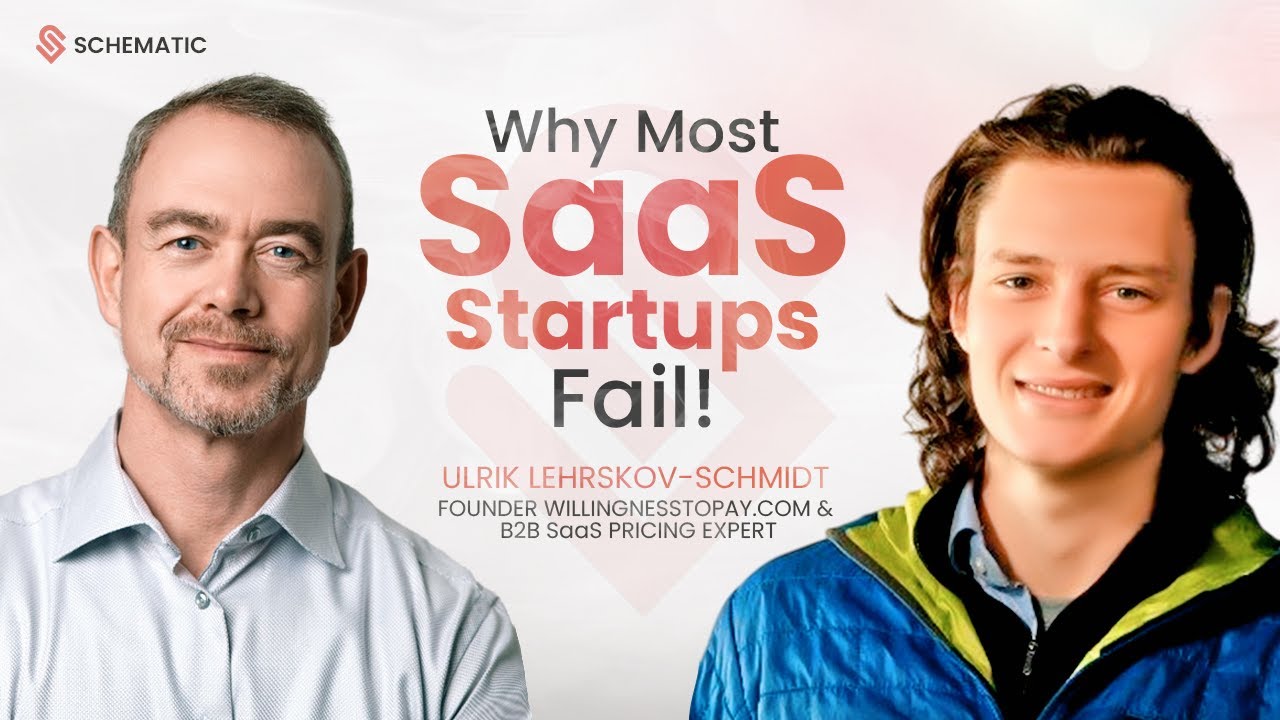
Burek, a pricing consultant who's worked with over 150 SaaS companies, explains how to avoid common mistakes like SKU sprawl and over-complicated tiers. He breaks down who should own pricing decisions as you scale, why more data doesn't always help, and how billing debt can tank your growth and acquisition value.
Chapters
Burek, you have founded multiple companies, you've exited multiple companies, you're an advisor and board member to multiple companies. And over the last 8 years, you've run a B2B SaaS pricing consultancy where you've consulted for over 150 clients ranging from million-dollar startups to billion-dollar enterprises. You've written a bestselling book called The Pricing Roadmap. I think it's very safe to say that you're a global expert in B2B SaaS pricing and packaging and much more than that, really negotiation, company building. M&A, SaaS monetization. So I'm so excited to have this conversation with you. Before we get into it, can you tell us about your journey in your own words, how we got to now?
Thanks, Fynn. So really happy to be here. So, so, um, yeah, sure. So, so I think my journey is largely unplanned, right? So, so, um, I think the first big chunk of my career, I thought that I was going to be a university philosopher. So most of my 20s I spent in a library reading old books. And then I think I was in my late 20s and I had decided that I wanted to get into business and I just started to sort of reading everything. And then serendipity would have it that I had a sort of crazy uncle that had gone bankrupt with a business and then and he was trying to sort of save other businesses that he had. So I just think that he just saw me and then they're like, oh, you're looking for something to do. So he just threw this bankrupt company at me. So my first business was actually doing a turnaround on that. And long story with the crazy uncle and everything, but that essentially turned into sort of my first two exits because I did sort of the local sort of Scandinavian version. I opened up in the UK as well. And then I sold them separately, one of them to the uncle and one and another one to sort of local trade buyers. And then it was, so then that was sort of a lot of cutting my teeth on business. And it was also the business that I had that was sort of most software related because we didn't, it was a real estate and media company, but we built a lot of internal software. So we built our own CMS system. We built our own marketing automation. We, you know, we did a lot of things. And so, so, uh, so I had a development team and outbound sales, email marketing. We had sort of all these things set up. And then I had another venture in, in manufacturing. And then I was, you know, I was, I was starting up like third and fourth business, depending on how you count it. And then, uh, and then I got invited to write a book on pricing psychology because one of my pet interests have been behavioral economics and decision-making and choice architecture and all these things. And then, so I did that. I wrote the book on pricing psychology and then one thing led to another. And then I was the preferred pricing partner of Microsoft Western Europe, I think 6 months after that book came out. Because at that time, this was back in 2017, Microsoft had just sort of really started to push Azure. And they were a couple of years after Google Cloud and AWS sort of into that cloud market space. And they had a lot of large enterprise clients that had old, like, on-prem perpetual software that they, you know, were trying to convince to lift these solutions into the cloud. But their customers were, you know, in principle willing to go into the cloud because, you know, that was sort of the future of the technology. But they needed to know what it was going to cost them. So before they could, Microsoft could tell them what Azure was going to cost them, they weren't able to, you know, create pricing for their customers. So essentially, I just came in and, you know, thought that, you know, this is a problem like everything else. I'm sure I can figure it out. And then I sort of, on behalf of Microsoft, I helped a lot of these clients sort of figure it out with having these sort of very heavy enterprise solutions like map onto the infrastructure and then figuring out how the commercial models would map onto. And this was like, you know, patient management systems for hospitals and, you know, a lot of sort of IoT, like ERP systems to run utilities. So like stuff like, you know, legacy tech. So that was what I started with. And then I did a lot of early stage venture as well. And then, you know, this was, yeah, so this is almost 7 years ago. And then I've been doing it ever since. I think it took me a few years into it before I started to self-identify as a consultant. In the beginning, I was just like, I would just pick up the phone and people would call again and again and again. And then I was always sort of on the brink of starting like my next real business. And then after a few years, I'm like, okay, maybe I'm actually an advisor now and I'm having a lot of fun with it and I get to I get to participate in the thing I like actually most about startups, which is like figuring out how to like create that economic machine that makes money, right? And design it in a way where, you know, the product vision and the market sort of fits together. So, yeah, so, and I get to do that 100 times for everybody else instead of just doing it once for myself and then sitting in it for a day.
I did want to thank you for the story. I did want to ask you how it had felt to move from being the operator of the single business into being the advisor to multiple businesses and why the consulting route had continued to pull you in. And I think you answered the question. It's the breadth. The breadth sort of fulfills a lot of curiosity. Is that fair? It is.
And then, so it's, you know, I have like a little bit of ADHD in terms of work. So I'll sort of, so I think like usually I've swapped careers every 5 years or so. Or businesses. And then this, now I'm sort of sticking with this, at least on year 7, right? And I'm probably going to be here for a few more years. So it scratches that itch that I get to do different things. And then I think on the flip side, I had to figure out how I felt about being the product because you very much are the product when you're an advisor. But in the beginning that bothered me more, but actually I've come to see it as a good thing now. So it takes, at least it did for me, it took sort of 5 years before it suddenly dawned on me that I had a reputation and that it actually was a pretty good reputation. And then suddenly I felt that I didn't have that in the businesses I built because I'd always been sort of far removed and the product had been in the forefront. And then That was actually, that felt surprisingly nice to, you know, instead of product getting all the shine, then suddenly it was me. And then, you know, so, and you know, that has like, it's a double-edged sword, but that is one of the—
You've written big learnings in the latter half of your career happening every 18 months. What's the most interesting thing that you think you've learned over the last 18 months or maybe kind of over the last couple of years, especially post-COVID with building a business?
So I think This is maybe sort of 18 months ago, but what I've sort of really tried to sort of figure out, so I'll tell you sort of the last one and then I'll tell you about sort of the new one that I'm sort of trying to get into. So the last one was theory of constraints. So this idea that any business grows until it hits its constraint or bottleneck, right? So I'll give you an example. So I became an advisor for Assess. It wasn't even a startup. It'd been going for like a decade, but it was a bootstrap company doing maybe $10 million of revenue. Founder was an engineer and it was within oil and gas, so very specialized software. And everybody else on the board was engineers too. So I was the only non-engineer. I was called in and that was pretty much my role, to not be an engineer. And so on my first day of the first board meeting, I got sort of a tour of the office. Here's the backend developer, here's the frontend developer, here's the customer success guys. And then we sort of went around the company and then I was like, where's sales? I was like, well, that's just me. That was just the CEO. So he had like a massive back office function, but just like zero commercial function at all. And, you know, I pretty much identified this beforehand, but basically it was like the reason that he couldn't grow was just because there was not coming in enough business. So, but because he had the ability to deliver, like not everything, but a lot more than he currently did. And he just hadn't, because it wasn't in his nature to really sort of build up a sales function to start. It's more like his network and so forth. So the simple thing with that business was just to like add a sales function and then suddenly, you know, sales started to pick up and then after a while, suddenly we have sales going and now we can see that the constraint now moves to essentially onboarding clients and they have a service function that is now the new constraint and then you go and you fix that and so forth, right? But it really is a good way to just like narrow in to look essentially at a company as a chain of events, like a beginning and an end. And then at one point there's a bottleneck and your job, a manager or CEO or an investor or whatever it is, is to essentially like identify it and then remove it and then reassess and figure out where it moved. Right. So I think, I think that was interesting. And I spent a lot of time both applying it and also, so there's a lot, I think theory of constraint had like a revival. And I've been spending a lot of time on like, there's a lot of old, meaning like '80s management literature from, from manufacturing and construction and theory of constraints, which I So I've geeked out on a lot of that and on inventory capital tied up and so forth that I think is really interesting and has more bearing on SaaS than you'd think. So for example, I think one of the issues I see with SaaS companies is that they hold too much inventory in terms of they hold too much pipeline. Like they have too many leads that they work on, both external, like new leads, but also renewal leads and upsell leads. Leads and everything else. And it sort of, it tends to clog the, the system of the business and not create enough value. So the, the analogy here would be like a factory that just takes in like a bunch of raw materials but really doesn't output a lot. And all the raw materials, they just sit in and they clog up the factory floor, and every process just becomes less smooth, and it ties up a lot of capital. And I think you see the same thing in, in SaaS businesses, that they just it ties up a lot of customer acquisition costs and a lot of bandwidth and a lot of sort of man-hours in the commercial operations to essentially have pipelines where you're constantly working both existing customers and new leads instead of actually sort of moving them through and, and creating, creating a sale. So, so, um, yeah, so I've been spending a lot of time on that over the, over the last couple years, and then My new thing is nonlinear functions. So I'm trying to sort of— but you can invite me in 18 months and I'll tell you what I learned there. But that's the new interest I have.
Thank you for that. First of all, there's the theme of the old books. Your 20s spent with old books and now you're returning to old management books of the '80s and finding parallels. There's something so interesting and interdisciplinary there. I was once taught a framework for constraints by a man named Michael Dearing, and it was basically this— it was called the Drake's equation. And Drake's equation had been utilized for kind of calculations in space, but you could apply Drake's equation to businesses to really kind of very quickly take a very complex business and highlight the 6 or 7 areas where there could be a constraint on growth, isolate the variable that was constraining the growth, and then attack that variable. And to me, it was such an eye-opener when I first heard it, because at the time, businesses just felt like these incredibly complex organisms. Like, where would you focus? And so I love that idea.
Yeah, I think, I think most businesses I see that have growth constraint are they're spreading their execution power across too many options, right? They're not, they're working too many problems at the same time.
Do you think that that is moving too slow in B2B software specifically? Do you think that that is a result of kind of the capital structure that most SaaS companies try to pursue with venture capital? Or is that true of bootstrap SaaS companies as well?
Good point. So, so not as much, at least not, but, but I think you could make the reverse argument as well that bootstrap companies don't really— so the idea is that when you have a bottleneck, you really want to attack it, let's say, aggressively, right? And what you see is the bootstrap companies, they tend to move, they tend to attack not aggressively enough, right? So they toe dip and then they toe dip a little bit more and then they go really slow because, you know, if they fail, they die, right? So So they lack, let's say, a little bit more this ability to really jump on an opportunity when they have it and just like 10x an area and just like hire, you know, whenever something works, that's when you really want to double down on it. Right. And Visa-backed companies are really good at that. They just double down on everything.
Right.
But bootstrap companies can have this sort of other reverse tendency.
Makes sense. So, You named your company Willingness to Pay. Can you tell us why you chose that name?
Yeah, so I originally actually, when I started up, I started up under another name, Behail Strategies, together with a partner. And then it became clear that she wanted to pursue customer journey stuff and something else, and I wanted to pursue the pricing stuff. So I needed sort of a pricing name. And willingness to pay is like, it's a concept within pricing. So a little bit like having strategy.com if you were like a strategy consultant. So, and it was available. It was like a premium domain. So I just said, okay, screw it. I'll just buy it. And because yeah. And I think, you know, I get a little bit of like street credibility from a very narrow group of like pricing nerds for having that name and that everybody else is just a little bit like funny. Right. But, but, you know, I like it. So, so, and I think the most important thing is just like, it's it's relatively memorable, right? People can spell it. So, you know, I guess that's it.
Well, when I saw it, I was just like, that's a brilliant name. And one of— I'll tell you a quick story on that. So in my first company, I felt like one of the biggest mistakes that we made was pricing and packaging and just total immaturity as it related to not only the discipline, but also ever pursuing kind of conversations around willingness to pay with early customers. We've hopefully, we've tried to avoid that mistake in our second business and we picked up willingness to pay at a larger software company over the last few years. And I just found it to be one of the most clarifying and elucidating exercises you could do with prospects and customers. And recently we started to share willingness to pay templates online with other founders. And I've been impressed by how much demand there is for basic templates. On how to have a willingness to pay conversation with the market. It seems like something that many first-time founders especially just don't have any experience with, don't know how to do, maybe are afraid of. And so I think the name is important and compelling.
Yeah. And I think actually I was just, I posted earlier on LinkedIn today that, you know, it's not that late-stage SaaS companies are any better at it. I think actually there is an argument to be made that it's just a survivorship bias. It's just the ones that have sort of happened to have good packaging and pricing that became later stage companies because they grew, right? And then, so, so the attribution isn't necessarily that, you know, you become good at it. Like some people do, some people have a natural talent for like figuring out commercial puzzles and, and, and they, they do really good packaging and pricing. Other people just happen to like create something that just immediately works just a little bit like product market fit. And then they just rolled with it, never realizing that they, they, they got lucky in a sense, right? And, and I think, uh, I think a lot of people actually are in these kinds of businesses and they, oh, we had a great product and we had like great VPs. True. But you also had this like great pricing market fit because the model just really fit the way that customers were thinking about value or whatever it was.
Yeah. So many companies, let's talk about pricing and packaging as deeply as we can. Many companies, I think, appreciate that pricing and packaging is this very important lever., but they, you know, despite them sort of conceptually appreciating that, they struggle to build very good practice and discipline and intentionality around pricing and packaging, maybe until they get quite large. And I'm curious if you feel like that's true or false based on your experience.
Totally true. No, so, so, so, um, so I mean, I think the only reason that I am B2B SaaS pricing consultant is because whenever I opened my mouth and talked about pricing, I wouldn't even talk about SaaS pricing to begin with. It was just about pricing in general. But then SaaS companies would reach out to me and say, hey, can you help? Right? Because it is, let's say, such an obvious driver of value. And a lot of them were, let's say, self-identified as incompetent, right? So like, we have no idea how to do this. It's really important, please help us, right? And then, you know, that's sort of how it started. So I think I got to like, I got pretty far in my career. I think I hit like a million euros a year before I started doing any, I don't, I think even for the first couple of years, I didn't even have a website, right? I didn't, I wouldn't do any posting. I would do nothing, nothing, just referrals, right? So, and I think, so I had sort of product market fit pretty immediately just by saying B2B SaaS pricing and raising my hand, right? And I think that doesn't happen if it isn't something that is, yeah, that has that kind of effect where, and actually, curiously enough, I feel that it's B2C SaaS pricing. There is a higher tendency for people to think that they are in the know because it's more, it's more, much more data-driven in a quantifiable way because pricing conflates much more to conversion optimization. So the whole funnel and all the data and how many click left and right and annual or monthly or whatever is, yeah, you treat it like a funnel much more so than if you have, let's say, I have a client right now with $100 million ARR on 400 clients and that's not an optimization funnel, that's something completely different, right? So they can't do that., and I think so B2B SaaS pricing especially has this, um, you know, Pandora's box approach to pricing where, you know, who the hell knows what's in there.
What are the most common mistakes that you're seeing founders and CEOs make as it relates to pricing and packaging in B2B SaaS?
So, so, um, I think so, so if you get really high level, I think the, the most common mistake is to not work with, right? And just realize that this is like almost as much as product, something that you can work with until you find a model that really lifts everything else. So it's like a force multiplier on everything else you do. So a lot of people reach good enough, they satisfy it instead of maximizing it, right? And so that's sort of maybe the first mistake, and that's more of like a process mistake. In terms of how they actually do it, I think you have a few, a lot of, a lot of people just, you know, they, they overcomplicate things and, and they try to, to create, let's say, a very intricate, like, gamification system around pricing that their customers just don't like, right? And that would be one mistake. Another very common mistake is that they let sales drive it. Which usually leads to rampant discounting, uh, rampant, let's say, bespoke solutions and configurations that then spin off commercial debt, a lot of other things. That can work fine up until about $10 million ARR, at which point it can really make you hit a wall. And so, so I think, yeah, though those two are maybe sort of from a, from a from a technical point of view, the two most common things.
Who should lead? Well, maybe there's no should here, but is there a best practice around ownership of pricing and packaging in a B2B SaaS company?
So I think for a long time, it's the CEO, meaning that you can also sort of consider it like who should own the value proposition to customers. And so when you start up, you're at zero ARR, That is whoever the primary founder or founders are, right? So that's like you, you figure out what is that you're selling. And then owning that together with the pricing and the packaging and how you're selling it, really sort of having that up until I would say way past $30 million ARR. At that point, you start to have very senior VPs in place. Or you could at least. So at that point where you then get very senior VPs that can own it, then I would usually say that you own it on a committee level where the CEO remains as the referee, but the main owners are VP product, VP sales in alignment through the committee. Because really what you want to do is actually you want to create this sort of unbroken line of communication between the product and the customer with sales as an intermediary. So I usually say in my projects, whenever I can, if I can get sales and product into a room together and get them to agree on what they're selling, that's a really good sign. Meaning we figure out some packaging and then product and say, okay, we get this. We know how we can develop new features for this over time without like breaking up the packaging again. So it's robust. I usually do that around jobs to be done. So we're delivering a specific outcome. For the, for the customer, and that outcome makes sense to product, and that outcome or that job to be done also makes sense from sales. So they say, oh, I get this, I can narrate it and go into the market and sell it. And then if they can do it, then marketing can as well, because if they have this, we can also call it like a high-level understanding of the outcome that they're trying to create for the customer. Then, so on the product side, product will not break it as soon as they come with a new feature and sort of place it anywhere, because they will place the new feature where fits into the packaging. And sales, on the other hand, won't have to talk about the features because they can just talk about the outcomes. So if you just have, let's say, a traditional good, better, best type packaging where you just, you create like the best version of the product and then you create less good versions of the same product in like a tiered model, usually what happens is that customers will say, well, you know, I need this solved, what should I buy? And then sales sort of have to say, well, you know, if you really want it solved, then you take the advanced version, but you can also take the pro that's less good. And then the customer asks, well, how is it less good? And then the only way that you can explain that is by going into the feature level, right? So suddenly you have taken the entire value communication and then you have, you have, you have, you have brought it down to just talking about functionality. And then that also means that you're now further removed from the value of the product, the outcome that you generate, right? So if you have this sort of disalignment that forces sales to talk about features and functionality, that means that, let's say, value-based selling and pricing just becomes that much harder, right? So, but it starts in this alignment between sales and product on, on the packaging part. Um, yeah, and it stays there until, you know, at least until you start to break it up into different product lines. When you, you go past at least, let's say, at about $100 million or more, you can start to sort of spread it into sort of divisions or things like that, but that's usually the ownership across stages.
And it seems like that alignment between product and sales, it's coming back to you've got a, you've set up an effective pricing committee refereed by the CEO. Can you just double-click into that? Like what does a really good, very high impact pricing committee do? How do they operate? Because I can imagine you could set up a committee and it could be, you know, very ineffective. On the other hand, it could be massively impactful. What do the best companies do? How do the best companies build pricing committees and operate pricing committees?
I would separate a pricing committee and a pricing function.
Okay.
Like a committee is a group of executives that meet every once in a while and make decisions. And a function, they're the people who actually do the work, right? So meaning that they run the experiments, they collect the data and so forth, right? So, but so the, the, the job of the committee is to own the problem. And insist that it is revisited and reconsidered on an ongoing basis, right? And then sales and products should be able to look each other in the eyes and say, okay, we, you know, we know what we're selling and we like it. So that's it, right? And then whenever— and then the pricing function. So this can be, let's say, someone in product marketing or someone in product or someone in finance maybe even, then can bring ideas and say, hey, The product guys, they want to build these 10 features and we could prioritize them. Sales, they're thinking that Eastern Europe maybe needs different pricing, whatever it is. So they can bring suggestions and then the committee says, "Yes, no, we like that or we don't like that or find out more in this way and bring us this dataset and then we'll make a decision." So that's usually sort of the process where the function are the people that on a day-to-day basis, let's say, source the data and source the issue, source the question and source the suggestions, and then curates them, brings them to committee, a little bit like a board that then makes the decisions that then pushes them back into the function who then executes.
What is, um, I'm just, you know, you've, I think you've written something very important in the past, which is many companies as they try to build pricing practices and as they try to experiment, as they try to learn from the market, they end up believing that they don't have enough data or the data isn't good enough. And I'm curious if you could speak to your perspective on the role of data and building a great pricing muscle. And, you know, what are the misconceptions? What are the best practices? Talk a little bit about everything you've learned on the data side.
So I think if you take a step back, you— the only reason to collect data is because you sort of know what to do with it once you have it, right? So, so you can just run through, through sort of the thought experiment and say, okay, so what kind of data could we collect? Right? So, okay, so we could, we could collect, uh, we could, we could survey customers. We could, we could get usage data on them and so forth. We could ask internal people what they think. So we could ask our salespeople, our product people, and so forth. We could do market analysis. We could do competitor analysis. So you can do all these sort of different data gathering exercises. And then if you just assume, okay, let's assume you have like a really, really good dataset and all this, but you don't have a process to then turn it into good pricing, right? So really what people do is that they just spin their wheels and just keep gathering more and more data, hoping that the answer is just to jump out of the page at them, right? Instead of like figuring out like, well, what is the right process that I would use to turn this data into something, right? And I think once you realize that, you figure out that a lot of the kinds of questions that you want to ask around customer outcomes, for example, actually are not something that you would usually be able to gather in data, right? So I would usually say for the projects that I do is I have like a data request where they answer some questions that just explain how they do sales and these things. And then I get a breakdown of their product. So on a feature level of their services, terms and conditions, so forth. And then I have a list of their customers, what they pay, what they buy, different segmentation data, like country, vertical, whatever they use. Uh, and then some key metrics, the pricing metric they have, the pricing metric that their competitors would use, something that drives cost if it is, and that's it. Like we don't actually need anything more. Then we'll mystery shop or source competitor data if we need it. But usually within the existing executive team, like head of sales, head of product, we already know, for example, what the customer outcomes are. We don't need to do 30 qualitative interviews to figure it out. Like if, especially if you're past like the first $5 million ARR or something, you kind of know what kind of business you're in, right? And you can formulate it relatively quickly or, or like get into a room and figure it out. And then centralizing or taking those ideas and then using it as the center of the packaging just follows as the next step. So, what I don't do, for example, is run MaxDiff or conjoined analyses or feature-driven surveys or any of the sort because that usually is there to create good, better, best models. If that's not what we're trying to do, then why get the data anyways, right? Because because you don't actually— I think on, on, on a very selective basis only are feature-level preferences valid because the utility isn't on the feature, it's on the total outcome that we're delivering. The features are just a source for that, right? So it's, it's about sort of figuring out what your core methodology and process is and then having just enough data to run that., right? And then figure out, and that's sort of the other part is that if your, your methodology says I need to have all the data and then I'll make a perfect decision and then I'll execute it, then you need a lot of data to then have that perfect decision. Where another process would be, I need just enough data to make a really good suggestion that I can then validate and test in the market and improve on. Over time. And that's usually going to be faster and better, right? And then the data actually comes once the market gives you real feedback on your suggestion, on your new design, right? And that's much more— so I usually say that whenever, let's say, if I go to an executive team and say, you have your top 5 clients that are, let's say, 40% of revenue, and I want you to 6x the pricing on those. And then They're not going to do that. And I could have any data set, historical, and they would not do that, right? So instead what I do is I say, okay, so let's imagine just as a thought experiment that I had just 6x the pricing of your 22nd largest accounts. I'd just done that. Would you then be willing to 6x them on your largest accounts? Maybe. Okay, that— okay, fair enough. But in order to then 6x on the 20 largest, what would need to— what, what would make you able to make that decision? Well, before that, we would have to have 6x the pricing on everyone else, right? And then to 6x the pricing on anyone else, what would we need to do before we, we could dare to do that? Well, maybe we had just sold it in the market for 6x the pricing to new clients, right? So, you sort of work backwards. I call this solve for risk, right? So, if the riskiest decision is to taking your one key account and what, like blowing up the pricing on that, then you figure out the incremental steps that would lead you there and then you just start at the other end, right? So, you reverse engineer the process from the beginning and then you go there instead of trying to come up with like a perfect dataset that would just like shine the light on that decision from like day zero.
I have a lot of different ways, kind of questions I want to ask you throughout that, but let me kind of find the one that's most be appropriate. I'm going to riff for a second and maybe we can kind of find some stuff that's valuable. So I've been a part of let's go do packaging exercises where we look at what are the killer, you know, what are the killer features? What are the leader features? What are the filler features? I've been a part of willingness to pay exercises where you're really trying to kind of flesh out price sensitivity and elasticity. I've been a part of cohort analysis where you really look at the discounting rate, and you try to find, you know, kind of the degree to which there is standard deviation across the base, and you might end up finding just rampant discounting that suggests you're giving away the product for far too less. And then I have been in conversations with, you know, executive leaders where the instinct is driving all the decision despite what the data is saying. Um, and If I'm playing back some of what I pulled from what you were describing, that instinct is A, really important to listen to. It's often better to have avoided the feature-level discovery because you've exited a conversation predicated on value and gotten yourself into a place that probably requires a lot of discounting because you're competing on features. Did I capture some of the essence of what you were describing or would you kind of would you replay it in a different way?
I'll riff on your riff, right? So I think you can make a really devil's advocate type argument that the feature-based analysis that you sometimes do with Conjoined and MaxDiff and all this, the whole sort of utility analysis on a feature level is largely academic. It's invented in an academic setting. It's really, really good at driving consulting projects. Like, you know, you can pull in like 1,000 man-hours at a high billable rate for really expensive people and bill them out to, you know, your client. So, and it's really, it sounds and looks scientific, right? Which is a really good way to sell things to executives in large numbers. So, and I would say that for really well-known non-novel products, like if you're selling Coca-Colas, for example, and you're doing a conjoined analysis and say, hey, would you want this Coca-Cola with sugar or this one with zero sugar or this one for 8 ounces and this one for 12, whatever it is, there is actually, the methodology works, right? Because every feature is like super well-known. Everybody knows 8 ounces versus 12 and so forth. If I go into like, would you rather want the reporting dashboard or the compliance alerts? Who the hell knows what any of those things are, right? So, it's like the methodology actually breaks down when you're trying to apply to something that isn't super well-known like a commodity B2C product. And I think like the consultants aren't going to tell you, they're just going to tell you you need more data. So, they're just going to run it more and so forth, right? So, I think I think that's sort of one of the issues with that whole line of inquiry when trying to apply it to B2B settings and to tech products, right? Back to the sort of the intuition part. I think the intuition should also always be there that if you have some sort of dissonance, right? So let's say your salespeople are saying that people don't want to pay more., right? And your product people are saying that the product is immensely valuable and they should pay a lot more, right? Whatever it is, right? And you have a CEO that says, you know, the competitors are killing us, but you know, this other thing, you know, we really should be winning, whatever it is, right? So there are some sort of inconsistency in the different signals that you're getting across the, the organization. Then I think it's The logical conclusion would be that you need to do some sort of integration work. Like you need to sort of figure out what is the truth behind all this. And you're going to have conflicting evidence. Some of it is going to be intuition. Some of it is going to be reported evidence or experiences. And some of it is going to be like one loss conversion rates and so forth. And all of it should be taken into consideration until you, you know, find a more functional truth, like figure something out that has less distance, right? You're never going to create something that's perfect, but you can create something that works better, right? So I think that's really the goal. And so whenever you're sitting with, so I have a client right now, US-based, $100 million ARR, 400 clients, so enterprise clients. The new chairman that's sort of put in by the investor says, you know, we haven't raised prices for 10 years. There's a lot of discounting going on in the customer base. And all the salespeople say that they're really squeezing it as hard as they can. So there's just this like salespeople are saying that we can't do anymore and there's a lot of really good arguments for why we couldn't do anymore. And then some sort of like common sense or gut feeling from the chairman says that we might be able to double this. And then you just have to go in and sort of start to sort of figure out, okay, build the case for and against. And then you might figure out as you do that, that intuitions are driven by different things. Both things can be true at the same time. Maybe you have the bottom end of the customers, like the lowest 50%, they are at sensitivity. They can't pay anything else. They have really good alternatives with competitors and they will churn if you raise prices. But maybe the largest accounts don't have really good alternatives. It's a critical piece of software. There we could forex it, right? So net-net, we'll double pricing, but we'll actually do it by not touching some of the customers and then touching others, let's say, quite a bit, if that makes sense. So if you then— so the investigation can actually turn out that the dissonance was there because people were looking at different parts of the animal. And that's sort of the job that you have when you're trying to figure this out.
I love the idea of finding the dissonance, searching for the dissonance, mitigating the risk so that you can effectively give the company across all the stakeholders the confidence it needs to make the changes. You, you have learned a lot about negotiation. And so I'm curious to kind of talk for a minute about pricing as a negotiation. What is good negotiation? What are the best questions that you see founders and sellers ask as it relates to negotiating effectively and negotiating well?
So I think, I think there's a lot to be said about that. I talk about negotiation a lot also with with my advisor clients and in my content and so forth. And I'm very much a product of the Harvard Negotiation Program. So I just bought that whole thing hook, line, and sinker. And so I don't have a lot of new things to add. I just have like how I apply it across this. And I think one of the things that are really worth remembering when you have B2B SaaS is that you have a recurring relationship. So actually you should see it as a long series of negotiations and not one negotiation, right? So one thing is that you make the sale, but you should also see, well, whatever the sale is, the contract we agree on is going to set up the next negotiation and the next and the next and the next, right? So, so for example, I have a, I have a whole like shtick on, on contract frameworks and how I think a lot of people misuse them and, and and so forth, right? But that is essentially because what you want to do is you want to set yourself up for the best possible series of negotiations going forward. So that's sort of one element that I think is important. It's a perpetual game. The second, whenever you have an encounter, you have a renewal, you have a sale, is that I think people miss that they're on the same side. Like, it has to be a win-win, right? And the more win-win, the larger we can make the common pie, the better over time. So, so for example, in renewal arguments, I, I had a, I had a, I had a, I do, I did some advisory for, for relatively early stage bootstrap CEO, and he had, I think, a, a $30K client and he wanted to lift it to $50K. And so I was giving his feedback and then said, well, I think you should set to a client that your intent is to lift them to $100K over time, right? Not right now, not next year, but you know, Like, we would want a situation, both of us, where you would want to pay $100K for the solution. Because at that point, I would deliver so much more than I am today. I don't know how that solution looks like, neither do you, but that's for us to figure out over the next decade or so, whatever it is, right? So you just set the stage that you're actually aligned in them paying more and getting more. Like, you— both of us want to have a more valuable relationship, not a less valuable relationship, right? And so that's just like the mindset or the framework around it. And then you go in, into that framework with that mindset and say, okay, it has to be a win-win. And we'll, we'll, we'll, we have a series of negotiations going forward where we can both win. So maybe I care a little bit less about whether I win today, as long as we both win a lot long term. And then the individual negotiation should be considered in two phases. One where we trade information and then one where we make an agreement, right? So the first one where we trade information is where I say, well, what do you want? And let me tell you what I want. And so you do these things and you ask questions and you do all these. And you then, once you have a good overview of that and you figure out who the stakeholders are and you've told them where you want to go, then you can start to bring up suggestions for, hey, maybe we could do it this way or 'You know, maybe if you bought this like higher tier or the extra module, I could, et cetera.' And then you sort of find a solution and then you can log it in at the end. I think, and that's what you would call integrative negotiation, which is as opposed to bargaining, which is by far the, I think, the approach to make with continuous customer relationships, right?
I'm reminded of James Kars, you know, this idea of finite games versus infinite games where In a finite game, the goal is to win and beat an opponent. In an infinite game, the goal is to play the game forever with your opponent.
Exactly. And then I think the last thing that is often missed is that if you really want to do well in negotiation, let's say you want to be really hardcore in your renewal negotiations or stand firm and not give a lot of discounts, is really about having a really solid alternative., right? So just do the, you can do the mental exercise. If you have one lead and you need to hit your target, right? You need to close them, right? And if, if your target is, is what if the price is $200 and the target is $50, you're gonna be willing to give them a 75% discount, right? Because then you're on target, right? So what the hell, right? But if you had 10 leads, then you probably would close them much closer to $2,000, right? Because you just say it's 200. And if you don't say yes, then the next one is gonna— and I'm still gonna hit my target, right? So that means that you're now a lot less likely to give in or concede in the negotiation. That has nothing to do with this relationship, like this one negotiation. But that has to do with the set of negotiations you have across customers, right? So if you don't feel that you have a lot of leverage in a negotiation, sometimes the best thing you can do is just to Remove yourself from the negotiation and go build a better alternative, like go build more pipeline or go build something else, and then get back and then do the negotiation again. Because at some point, you just got to admit the weakness that you have and say, hey, I'm going to say yes if he says 50. I know it and he'll figure it out or he'll get close. And there's not a lot I can do about it. And that isn't because I'm a bad negotiator. It's because I didn't prepare my situation well enough to be in a good negotiation position. And I'll fix that next time around with better pipeline or whatever I have. But I lost this one almost before I walked into the room. So the saying is, he who cares less wins negotiations. And essentially sort of a paraphrasing of this effect that the BATNA, the best alternative to negotiated agreement. So what I'm going to do if he says no, is essentially what determines your ability to stand firm.
I love that. I mean, it basically, it's like, have you created the conditions to successfully negotiate for the long term? And if you haven't, you've lost leverage, but it's not only your own leverage, you've lost kind of leverage and kind of the long-term impact of the conversation with the other.
And so, so I think, I think one of the most like apparent ways that a lot of startups see this is, is in is in when they do fundraising, right? So if I do a fundraising round like Series A and I have like, and I'm oversubscribed, like I'm looking for whatever, $10 million and I have like the potential to take on 50, I get to decide on my term sheet and I'm going to pick the investor and everybody's really nice to me and they're paying for dinner, right? So that's how that works. If it's the other way around and I can't get the money and I'm running out of cash and I'll take anything, right? I'll go to a loan shark or get the money from the mob or whatever it is. And I'll just try to raise on whatever terms is there. Right. And so, and it's, it's, it's the same. This is sort of very, um, apparent or clear demonstration of the, of the same dynamic that exists even in small renewal negotiations. Right. So whenever, for example, we do price renewals, it's okay. So we have to whatever, double the pricing for all these accounts. My, I usually say start with the easiest ones first. Like the ones that are, that are, that are less likely to say no, that have the lowest price increase, and so forth. So if you have $10 million of AR and you want to raise it to $20, right, you start with the, with the easiest ones first. So let's say you start with the bottom 5, and let's say that you succeed. So now you're— you raise them to $10, and then the next 5, if they all churn, you're still at $10, right? So you lost nothing, which means that the last 5, the hardest ones, you just care less because you created an environment where you win almost regardless of what happens. So, it's about sort of structuring your set of negotiations across different negotiations that will allow you to actually win them. So, you roll them up from the bottom in a sense.
Quick pause. I could talk to you for hours about this. I'm having so much fun. Do you have a hard stop in 4 minutes or do you want to go past for a few minutes?
We could go past for like 15 minutes or so. Okay.
So 15 more minutes after the hour. Um, all right. Back into the game. Okay. Um, pricing as an architecture is something I'm very interested to talk to you about. You've, you've created some, I think, very exceptional and important videos on YouTube about the misunderstanding that companies often demonstrate around billing systems, especially. But in B2B SaaS, pricing and packaging almost inevitably becomes very expensive and very complex for product and engineering to support. And it seems that this is a systems problem. This is a technical problem. It also seems that there's no standard or pattern that product and engineering can turn to, to implement pricing and packaging into their applications, into their software. And I'm curious to know if A, you agree with that, you think that's true. And if it's true or false, can you talk a little bit about the systems architecture that you often see? Governing pricing and packaging and software?
Yeah, so the billing system is often a hurdle for— so very early in my career, so this is back in maybe 2018, I was doing consulting for a large, let's say, European conglomerate, and they had a piece of software that they were currently charging maybe half a million euros for. And we had, and they had their customers. So we were envisioning a new pricing and product model for them that would, that had a different dynamic. It was another model. I think it was within healthcare. So it was, I think, patients or something. And we had a really strong case that we could lift the pricing to €30 million, right? So going from half up to 30, that's a major win. And then in one of the last meetings, you know, the idea of this, like they actually figured out, okay, so So we're doing this and they're like, but we don't know how to invoice it. We can't actually create a billing flow for it. And then like, it was a real suggestion by a few people in the room, like maybe we should just like scrap it. Maybe we just like keep the old model and we'll just do whatever. Right. So they were actually willing to like throw 29.5 million euros a year of ARR just overboard because they couldn't figure out how to send the invoice. Right. And so, and you know, they were making well north of a billion, but but still like $30 million is money for everyone. And, you know, so I pointed out the error of their ways and, you know, we found a way around it. But I think intuitively the friction exists in a lot of teams because they have no idea how to solve it, right? So they don't even want to touch it with the billing. So it's just easier sometimes to just like keep doing whatever you're doing. And I think, I think you have, you have dual sources of complexity, and, and one is within product and one is in within sales. And I think they're, they're amplifying each other. And, and I think it has to do with, with, with, with not having a very clear monetization strategy. And that can happen in, in a few ways. One way is that you do unbundling, so you you keep increasing the number of SKUs. So more modules, more add-ons, more feature toggling, and so forth, right? And I think within the projects that I do, you know, 10 SKUs is maybe actually a little low. A couple dozen SKUs is pretty normal. Sometimes I see people go into the hundreds and hundreds of SKUs over, especially with, with, like, let's say, legacy software. So it's just grown. And actually what you'll see is that every new SKU is usually, it's put on because the existing customer contracts we have don't allow us to just include the new functionality and then raise prices because the contracts are fixed, right? So the only way that we can monetize this new widget or feature we have is by essentially creating a new SKU for it. And then having our salespeople try and sell it to the, to the customers, right? And usually what, when that happens, you're going to get an attach rate. So a percentage of customers that buys the new functionality that is not 100 and not 0. So it's going to be like some number in between. So it's not everyone or no one that buys it, which then creates this, this complexity situation where some customers needs to be billed for it, others not., right? And then, then you have that. So that, that, that tends to create this very complicated product structure where, oh, we have to have billing for all these different things. Sometimes whatever you're billing for tends to be— sometimes it needs to have a one-off fee, sometimes it needs to have a monthly fee, sometimes an annual fee. So, so different logics from a product perspective can dictate different logics from a billing perspective. And sometimes that actually gets pushed into the pricing model where, oh, this makes total sense to be priced per user, this makes total sense to be priced per gigabyte, this makes total sense to be priced per something else. Some are licenses, some are usage-based, some are credit models, some are flat fees, whatever it is. So you have all these different modalities in the pricing. So If it was just that, then you might be able to survive it. But then you have sales that then have to actually sell it to customers. And they will make, for lack of a better word, exceptions, right? They will say, okay, so this feature that was usually sold with a flat fee and a price per user, we'll like give it away for free for 2 years. And then we'll do this and then we'll do that. And then we'll bundle this with those features, right? So you essentially amplify the entire complexity. As sales then tries to sort of land it with the client. And this can create more versions of everything and versions that need to change over time. So it can be like one model now, one model year 1, and then another model year 2, and then, oh, we have the optionality to do X and Z, and then the price is going to flip on its head and whatever, right? So we have all these, uh, all these scenarios. So you have sales and product doing their thing mainly it happens because of disalignment, right? If they actually got together and figured out what it is that they want to sell to the customer, you could get rid of a lot of that. That's what we do in packaging. On the back end, you have finance that's, you know, tasked with sending the invoice. But, and they can do that if it's 5 customers or 20 or maybe 100, but sooner or later they're going to say, hey, This is complicated and a lot of this stuff runs off of metrics that are in the system. I'll reach out to engineering and help them or get them to help me to develop billing system, right? So what you suddenly have is you have, you have finance being delivering to sales and product as an internal customer with dev team as a subcontractor.
Right.
And the problem is that you have an unscoped project. So it's a little bit like building a software without having a clear scope for what you want to do. And you're just like, we're going to figure it out as we go along. Right.
Yeah.
And that's essentially what happens. How do you—
so when you run into this with clients, how do you talk about this? I hear people talk about this as commercial debt or technical debt or billing debt, but SKU sprawl. How do you try to help people who may not understand the complexity really understand the complexity of this problem in a bite-sized problem description.
Yeah. So, so I, I actually, I think I, I, I spearheaded the term commercial debt a few years ago, uh, uh, and, and as sort of this, you know, the evil twin of technical debt. And actually they, they, so they, they amplify each other. And so, so it's just like the variance across customer contracts that create additional operational load. Um, so, so, um, I think I think you— so whenever you're in debt and you need to get out of debt, you need to stop incurring new debt, number one, and then pay off debt, right? So that's like pretty common finances. So, so, and essentially the same thing, right? So it's to, is to number one, figure out what you want to sell in the future so that you don't incur new debt. So it's like we can sell these things. We have 20 SKUs, we have these pricing models, this is how it's going to run, this is the contract. If they don't want to sign that, good luck finding another one, right? That's it. That's, that's stopping new debt from incurring. So in a lot of my projects where, where we clean up commercial debt or legacy and that, it's like creating that new first for saying, okay, What is it actually that we want to speak up? Because before you have that, because the machine always needs to grow and have new revenue and so forth, until you figure out what the new is, you can't actually stop the incurring of new debt. So you can't actually clean it up. You can never clean it up faster than it can be created. So you need that sort of new structure where we say, okay, this is the product framework that we're going to sell with this pricing model or models or whatever it is. And with this contract structure. And it has a complexity that is balanced with the ACV that we're selling and the product we're selling and so forth. So we have enough complexity to monetize different customers differently, but not too much. Okay, let's lock that in, make sure that it works and so forth. And then when done, then we can go up and clean out the legacy customer base from all the old contracts and so forth. And that might take, you know, 1 or 2 renewal cycles depending on also what kind of technical framework they're on and what kind of negotiations you have and all that, right? But that's the work. So, but it starts with sort of figuring out what you actually want to do and then sticking to that.
That's a great framework. One thing that I'm very curious about right now is the extent to which commercial debt is negatively impacting value creation in the M&A markets. Basically under the premise that companies are buying companies, they're adding complexity to their product catalogs, to their SKU count. They have to find a way to realize synergies that they've forecasted prior to doing the deal, which requires, you know, being good at cross-selling and upselling. Do you know much about the extent to which commercial debt is impacting value creation in the M&A markets?
So, um, yes and no. So, so, so I do. I have a, I have a, uh, a longstanding relationship with a very large international private equity fund that do and thus they do— I do a lot of commercial due diligence for them. So that means I take initial customer data before they buy and sort of make assessments and so forth. And then I make assessments on what kind of expansion is there on the existing customer base and so forth. And we can make the economics of the acquisitions work very often just on the basis on cleaning up existing customer base, just on price increases on what you have.
Right. Interesting.
And so, so what you'll find is that often, so what does commercial debt do? It doesn't just mean that you make less money. It does that too. But also it means that a proportion of the effort that you put forth in running your organization gets swallowed up in sort of like a gravity black hole of just like stuff that needs to be dealt with.
Right.
So if you have like 100% of commercial firepower to grow your business, if 95% of that is spent on like managing and refereeing existing renewal negotiations and just like playing defense with customers that you already have, then you're not growing anymore. Right. So if you could sort of clean that up, like maybe you could get more customers to, to pay more, that would be great. But even if you couldn't, if you just would pay the same, but you could just remove that operational load and say, okay, we're now going to spend 20% of our time like having conversations with existing customers about right-sizing their purchase or their spend, but 80% can now be spent on either getting rid of salespeople because we don't have any more market to pursue, or actually going out and finding net new customers that are now, uh, accretive to the business case, right? So, so I think I think that's clear. And I'll give you a case. So, so I helped, it was a Scandinavian startup. They did maybe, um, they had 300 or so enterprise customers. They were sort of in the learning edtech space. And we had done a pre-project or I had done a pre-project at that time. And it was pretty clear that we could raise prices across this customer base 85%. More or less. The problem was that the 300 or 400, whatever, how many contracts it was, they didn't even have all the contracts because they were written on local PDF files, some of them on hard drives for salespeople that weren't around anymore. And all of them were pretty much done by hand, like, I'll send this person the contract and so forth. So they ended up selling without doing and just saying, we'll let the new owners deal with the repricing because they knew that if they had to do the work, they would have to spend all of their internal sales capacity for at least 2 years just by renegotiating existing contracts, right? So they just essentially, they had a really good access to the founders and so forth, but they would have had a better one if they had, of course, controlled for commercial debt earlier, or if they had sort of gone through the desert of sort of, you know, cleaning it up before they sold, right? Yeah. So there was like a really evident case of when it sort of bit someone in the butt.
Yeah. Super instructive and illustrative. Look, I've had so much fun with this conversation. I hope we do it again. You're such a wealth of knowledge and wisdom. Thank you for sharing all of this. One final question I like to ask is, what was the most formative moment in your career? And hopefully you can tell a story that's very specific, like the key a key moment that really meant a lot to you professionally?
So outside of just jumping out and having my own business in the beginning, I think I'll give you the first one on pricing. So the first monetization model I had back in the real estate media business was we sold conference tickets. So we actually would set up events and we would invite people to like half-day events and just fill those. And so for I think I'll have to do sort of the currency conversion in my head, but let's say that a conference ticket was like €400 for like half a day. And then, you know, someone mentioned like, hey, maybe we could charge whatever, €500. And, you know, we did the math like, oh, if, you know, we charge €500, maybe the signup rate will, if, you know, it could drop 20% and we will be on like a break-even for it. We did all that, right? And we didn't get any smarter. It was just like, We have no idea what the sign of rain is going to do. So I just raised prices at one point. It's just like, okay, now it's €500. And you know, nothing happened except that revenues just went up 25%, which is like, wow, looks great. And it was just like, just felt like really like free money. And then, uh, you know, I didn't have to like, I counted, so maybe 3 Mississippi, and then I thought, hey, maybe we can do it again. Right. So I was like, okay. And then, so 6 months later, whatever it was, we raised to €600 and then actually sign up rates, they dropped quite significantly. So we pulled back to €500 and then I was like, okay, that's the price. I ran the business and then just, I think maybe, I don't know, 6 months or so before I actually sort of sold it, I came up with this because at that point we had a lot of events. I think we put up, I think more than 250 events a year. So it was like, you know, Every day would be like 2 events, different cities and all these things. And we had a lot of like national chains of realtors and banks and so forth that would actually attend a lot of these events. So I thought, hey, maybe we can do like a membership thing where, you know, you sign up, you pay one price for the year, and then you can attend everything you want. And we had just sort of begun to sort of launch this concept. And then I sold the business. And then the new owners, especially in the UK, they sort of took this and ran with it and basically doubled revenue based on the model.
Wow.
So, so it was just, I used it sometimes as an example to say, well, you know, I, I, I, the model that I had, which was like a ticket fee per event, could go from 4 to 500, right? That was sort of it. And then elasticity sort of maxed out and I couldn't take it to 600, right? But what I missed was that there was a better model. There was a better way to monetize the whole, the product was the same, same event, same speaker, same content, same everything., but the way to monetize it, you know, had to change in order for me to unlock another level of value. And I think that aha moment, thinking back, was, you know, that's something that I try to apply for my clients, is that, you know, the max really exists inside of the current model concept that you have. It isn't necessarily tied to the value that your product brings. So maybe we just try to change the model and we can unlock something.
Incredible story. Super instructive. Thank you so much again for doing this. It's been a really, a really great pleasure.
Thanks for having me, Finn.
Thank you.
More from Fynn

Schematic at Operators Guild Demo Day 2026: How to bill for AI credits without a surprise bill







Should you move to usage-based pricing because AI is compressing your margins?

Why raising prices every year backfires (a pricing leader on the Mastercard quota model)

