
Uber & Tango.ai: Pricing Strategies, Product-Market Fit & Growth Lessons
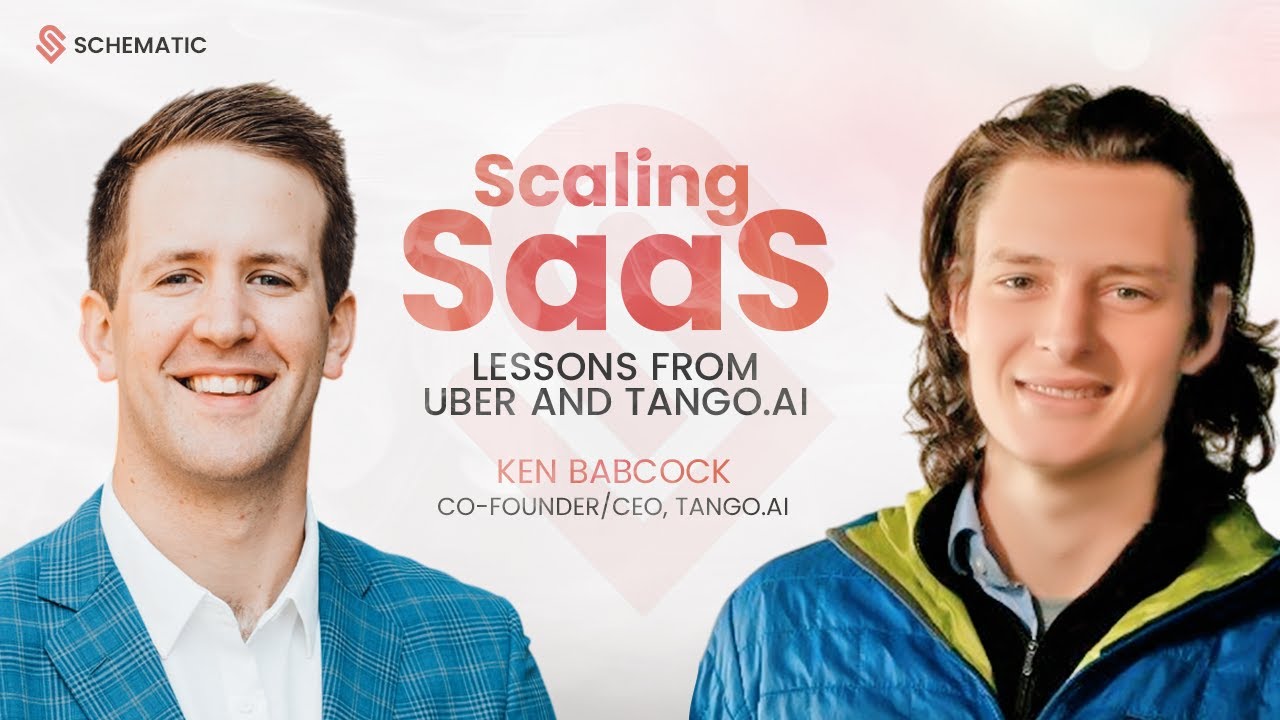
In this podcast episode, host SPEAKER A interviews Ken, founder and former Uber operator, about his journey from an applied economics degree, consulting at Deloitte, and four years at Uber to launching Tango, a digital adoption platform. Ken recounts how Uber’s decentralized market‑entry playbooks taught him the value of operational excellence and documentation, which later inspired Tango’s mission to democratize internal knowledge. He describes the founding story at HBS during the pandemic, early product discovery, the pivotal role of influencer marketing, and the moment when product‑market fit was validated on Product Hunt. The conversation then shifts to pricing and packaging: the evolution from a generous free tier to tiered self‑serve plans, iterative price increases, and the tension between seat‑based and usage‑based models. Ken shares concrete tactics for enterprise negotiations, such as multi‑year discounts and volume‑based pricing, and stresses the importance of simplicity. He reflects on the challenges of constant context‑switching as a founder, the need to align product and pricing roadmaps, and the broader question of how knowledge work will evolve as tools become less burdensome. The episode closes with Ken’s future curiosity about the transformation of knowledge work and contact information for Tango.
Chapters
Ken, thank you so much for being on our podcast. You are a founder, you're an operator, you've got a great story. You studied applied economics in college, you got your start in consulting with Deloitte, 4 years at Uber in ops, data analytics, and strat. And then after Uber, I think what happened is you spent a couple of years going back to school, getting your MBA, and I believe also kind of playing around with a residential real estate idea as well as advising KeepTrucking. I've got a close friend at KeepTrucking, which has been obviously an incredible company. And then in 2020, you founded Tango. You'll talk about it. It's a digital adoption platform, but tell us the story in your own words. How did we get to now?
Oh man, how did we get to now? You know, I like to kind of think about working backwards. Uber was obviously a formative experience. I was there from 2014 to the end of 2018. So it was just, it was a crazy multiple chapters of Uber. We had like the growth at all costs. We had the reckoning. We had like the growing up phase with Dara, the team that I joined— and I was like 23 at the time, so very entry level— but the team that I joined was tasked with how do we create the playbook for all of our operations globally. And so at that point in late 2014, we were probably in like 150 markets. So Uber wasn't new by any means, but we would eventually grow to like 700 markets. And our approach to growth was incredibly decentralized. And I think that's always missing from the Uber story because everyone's like, oh, this thing grew like gangbusters. And it's like, well, there was a lot going on behind the scenes. So every market was really zero to one. We'd be like, okay, we're going to go here. We're going to hire new people. We're going to onboard new drivers. We're going to promote the heck out of getting new riders because there was no benefit to like, hey, if you're live in New York, but you're not live in Austin yet, People probably heard of Uber, but you didn't have an ecosystem set up yet. And like, no one in Austin's requesting a ride to New York. It's just not happening. And so our team was focused on creating that playbook. That playbook was everything from like tactics, strategies, stunt promotions, reporting, dashboards, analytics, like, and so in cobbling that together, I was getting a best-in-class like education and like what documentation and operational excellence can do for a company. So that inspired a lot of what we built with Tango. I think the brief stops along the way, whether it was founder in residence or, you know, my time spent with Keep Truckin' or the MBA that actually I didn't get because we dropped out to start Tango. But all those brief stopping points were like in pursuit of the founding journey, but I hadn't yet figured out what I wanted to do. The residential real estate thing was like, nah, it seems cool. But, you know, when push came to shove, I just wasn't passionate about it. The incubator was, and I was like, I'm good. I'm going to go to HBS. And then going to HBS, it was exploring more ideas. And luckily that's where I found, you know, met my co-founders, Brian and Dan. And we rallied around this idea that too much of institutional knowledge lives in people's heads. Navigating internal systems and software and process is usually like shadowing someone who sits next to you. And like, how could we make that more democratized, more asynchronous. And then that sort of, it was amplified by the pandemic. So the first year we were at school was during the pandemic and it exposed all these issues that organizations had around training and enablement. And so we were like, we should probably go start this company. It's really cool. And that is, that's where we're at, you know, Tango now, 5 years in the making, supporting tens of thousands of customers. Like you said, digital adoption platform, but, you know, really focused on You've got these core internal systems that make your company run. Let's make it run.
I want to talk more deeply about the original insight around Tango and then what you've learned about building the business. But let's go back to college. Why did you choose applied economics?
Why? I don't know, man. You know, honestly, if I'm being totally truthful here, it was the major that gave me the most assurance that I would get a good job coming out of school. And I also, I was like one of these students in high school where I liked a lot of things and I I did well in different classes, but I didn't know if like doing well meant that I should pursue it as like a profession. And I didn't really know if I like— if I like something because I like it because I was good at it. I just didn't know. I was very— I was very— I wouldn't say confused, but just like pulled in a lot of different directions. Going to Cornell, for me, I was— I grew up in upstate New York, and Cornell has 3— 3 of the 7 colleges are land-grant institutions. So if you're a New York State resident, you get like a pretty hefty discount. But even so, it was like, it was going to mean, even with the discount, it was going to mean like taking out loans. And Cornell was somewhere I really wanted to go. And I could have gone to like a SUNY school for free, but I was like, I should probably go to Cornell. This is like my one shot. And so it was a little bit of like, I'm going to study this applied economics major, which at Cornell was the undergraduate business major, because the average salary coming out of school in, you know, 2010 was, $70K. I was like, great, I can pay off my loans. Let's go.
So really practical. I am, I'm also curious at that time, did you have a sense that you wanted to go start companies one day or was that realization to come? It wasn't quite there yet.
It was absolutely not there yet. I think if someone were to be like, you have to go start a company, that would have been pretty daunting back then. But I think the thing that has persisted and is, is, is still true today is like a lot of my entrepreneurial energy comes from building and leading teams. I think there's, we obviously have some unique insights that we put together around Tango and lived experiences, but the stuff that gets me to spring out of the bed in the morning is like, how do we set these goals? How do we rally the team around it? How do you create and preserve a culture? And I think a lot of that comes back to like, I just played a lot of team sports growing up and I loved that part of it. It often didn't even really matter what sport it was. I just, I loved that part of it. And so I wanted to, I wanted to keep that going and I felt like entrepreneurship was a way to do that, and that's still the case.
When you look back on Uber, you mentioned you used the term operational excellence. Can you talk a little bit about what that means to you? And I'm kind of interested if you can kind of take us into a little bit of the world you described where for a while, growth at all costs, like that would've represented a very different definition of operational excellence than what operational excellence probably means post-2021 and certainly kind of before 2000. So can you just riff on operational excellence and what it has meant to you.
Yeah, it's a— I mean, it's a different version every place. At Uber, what it was was just highly ambitious people motivated by a core set of values and optimizing for a singular goal. And so I think there is some beauty in operational excellence where you set the start point and you set the destination and you kind of figure out the in-between. And that was not meant to be an Uber pun, but it kind of was. But if you have a goal that everyone can rally around and understand and knows why that matters. For us, it was trips, trips and bookings. Like, we need to optimize for trips and bookings. The creativity of smart, ambitious people will sort of take hold and define your best practices and processes. And so we eventually had to get there where it was like, this is the best way to set up a market. This is the best way to recruit drivers. This is the best way to like run promotions around like Q4 holidays. Like all of those things happened, but it was because there was this creative license around, hey, we're here, we need to get here.
Just figure it out.
You're You're smart, you're ambitious. And so that operational excellence took shape once we were able to codify those things. But it really started with a shared set of values that everyone rallied around, smart, ambitious people, and a clear objective function, trips and bookings.
Yeah. When you left Uber, what had you become a lot better at? Was it the leading of teams or was it something else?
It's probably leading of teams and also just handling ambiguity. I was thrust into a managerial role pretty early in my time at Uber. I think I was like 24. 4 at the time and I inherited someone's team and I was not equipped to manage that team and most of the people were older than me. And so there are a lot of hard-earned lessons because I was not very good at doing what I was tasked to do.
Can you share one of those, one of the hardest earned? Yeah.
I mean, you know, I think a lot of people feel this way, so it might not be, it might not be totally nuanced, but you know, my reason I was promoted, I felt like, okay, I was really good at that job. So like, Now I'm promoted to like leading people who are in that job. And so how do I stay close to the work that they're doing and, you know, try to like be in the trenches with them, right? It's like your classic example of maybe not micromanagement, but micromanagement, let's call it micromanagement where like you're just in it with them. And I was like, we're not, I'm not your manager. I'm, I'm just someone working with you and helping you. And I've seen these things before. That was just not super productive because it didn't allow me to be strategic thinker. It made my team feel like I was kind of always looking over their shoulder. And, you know, the reality was, is like we were uncovering and learning so much along the way that like my past experience handling a specific problem was actually not going to be super relevant to like net new markets because, you know, now we had an Android app or now we had the ability to like price trips up front. Like, so there were just, there were things that were changing all the time. And so That was a hard-earned lesson. I think the other thing, you know, I mentioned dealing with ambiguity, but then also having this clarity around the objective function. I think the ambiguity really came from the fact that like this was just a crazy roller coaster of a company. And, you know, being able to see that firsthand was incredibly valuable. I just didn't realize it at the time. And what was cool about HBS is like you get in a room with your section, There's 90 people, you're expected to participate. Like that's entirely how you're graded. Not that grades matter when you're getting an MBA, but try telling that to a room of 90 people that got into HBS.
These are people that have cared about grades throughout their life. Yeah.
They don't know what to do if, if where is their self-worth coming from? But no, but, but I mean, participation is part of it. And a lot of people draw on their own experiences. And there were just moments where I was like, wow, I didn't realize that was unique. Or like, I didn't realize that I had something to share from my Uber experience. And then when I did, it was like, you know, you're seeing other people kind of light up. So yeah, it was a wild place. And now it's kind of like, you know, I feel like day to day, it's like there are highs and you celebrate the highs, but the lows, you're like, meh, well, wasn't as bad as when Travis chewed out that driver and the video went live and their whole business was just like over. So yeah.
You know, one of the things that you said is it's a theme that I'm interested in, which is sort of like, what do you do with past experience in an environment that is moving and changing so quickly? Because there's so much value in past experience, but there's also so much danger in blueprinting kind of past experience onto the current situation. And that's a difficult thing to manage, especially as you're hiring executives to come in and like run playbooks. And what if the playbook is different than the one that they've run in the past?
Yeah. You know, And you also see this too, even if you're not sort of tops-down prescribing it, like you see people come into your company and they'll be like, oh, I've been at a 30-person company before and I've done this function. And so like, this is what I do. And I think you're absolutely right in that that is pretty dangerous because I think if we had followed conventional wisdom, like even in our own go-to-market, we wouldn't have unlocked our most valuable channel. Which was and still is influencer marketing. Like no one would've said, oh, for this B2B SaaS application that's largely adopted bottoms up, like you should be on TikTok. No one would've said that at that time, but we were lucky in that we had some people organically posting about us and we were like, wow, what is happening here? And then we created a program around it. And again, even like our investors, advisors were like, are you sure about this thing? Like, I don't know, like is TikTok even going to be around? You know, and it wasn't just TikTok, like we were doing this on Reels and YouTube Shorts. And so I think you do have to, again, coming back to like defining the point A and point B, you have to give yourself some, like, somewhat of a leash to be able to do that and allow smart people to figure things out.
So take us to Tango and help us really understand, like, how you came, how you came to this, right? Like, was it a problem that you experienced or was it an opportunity that you felt wasn't being exploited? What was the insight? How did it evolve? Is it still the same insight?
No, I mean, that initial insight I think was a great way to like kickstart the journey where we were like, oh, shadowing, that seems weird. Like we all shadowed people in our first couple of days and then found out that that wasn't the person you should be shadowing. And now I'm following a process from like, you know, this guy is no longer at the company because he wasn't very good. So we were like, let's fix that. But, you know, I think the more we dug into it and the more we did discovery around this, what changed was we started getting deeper in like What, what does an internal tech stack look like for a company? And like, where do people typically have hiccups? And like, what's the incumbent? What are they doing today? You know, shadowing might be part of it, but then, you know, we also saw Word docs with screenshots and people formatting those and like fighting Word to like get the image cropped the right way. And we're like, oh my gosh, like this is brutal. You know, so early on, like a lot of the feedback we got was like, where was this 5 years ago? Like I wasted weeks of my life, like fighting with these antiquated tools that weren't purpose-built for what I needed to do. And so that was really encouraging. And then, you know, once we started putting that in the hands of folks, you know, it uncovered all these use cases where, you know, it's like, oh, well, you know, yes, I'm creating documentation and I'm wanting people to leverage that, but we've got this massive Salesforce migration happening and we need to create all this enablement content. We don't have a sales enablement team, or if we do, they're focused on like helping people sell, not helping them use the systems. And so who does this fall to? And, you know, and then we just got really good at like being that solution that helps enable specific tooling. So much so that like we're lucky to count Salesforce, HubSpot, Atlassian as investors. You know, they saw the promise of this and, you know, and now where we're going as software changes dramatically, you know, we have to ask ourselves kind of the existential question of like, are how-to guides a huge market in 5 years? Or is software entirely going to be abstracted away? Right? And so the journey has not been without those existential questions. And, you know, I think it's such an overused phrasing, but like, we kind of have to like disrupt ourselves too at some point. And so it's been a fun 5 years.
Can you remember when you first started to really rationally believe in the business's potential? Like it was no longer an irrational belief. It became very rational that this, this could be something meaningful.
Yeah. And I think my co-founders would tell you that I am not the irrational one. I am the extremely objective, overly rational one. I think that's why I always gravitated towards like data and analytics too, because it's like, here's this objective thing that tells us how we're doing.
This makes sense. Yeah.
That's not the full picture, you know, anytime, always, obviously. Uh, I think I, you know, it sort of smacked us in the face from the get-go. We launched on Product Hunt. We did a lot of discovery. We did probably like a year of discovery and design partnerships. Our first design partnership was with Drift actually in January of 2021. We didn't end up launching until September. And so it was like we were constantly refining this thing and we felt like there was something there, but like it wasn't, you know, people weren't like banging down the door for it. But when we launched on Product Hunt, you know, we were like product of the day, product of the week. We were finalists for product of the year. It was just like overwhelming. We got 10,000 users in 2 weeks. We launched bottoms up. And so that's where I was like, whoa, like, and the types of folks that were reviewing us, commenting, the words they were using. I mean, it was, it reminded me a lot of Uber when we would enter a market. I mean, Uber is the most insane product market fit story of all time. Like nobody wants to use a taxi, they want to use the app. So obviously it wasn't quite at that level, but like the reviews were just like effusive. Like it was, you could feel people coming through the screen and that's where I was like, whoa, we got to like get this out to more people. You know, then once you've got that, it's like, okay, well, how do we distribute it? So I think it was like, I mean, honestly, within the first 2 weeks of being public.
So words people use, were they using words like I don't want to shadow someone. Were they using words like, I need a how-to guide? What were those words? Because I think that is, there's sort of this language market fit too that coincides with product market fit. I'm curious what those words were.
Yeah, I'll sort of answer that in two ways. I mean, the thing that we saw, like, and we eventually just baked it into our marketing was game changer. Like people kept using the word game changer and, you know, that was the transformation that they were going through, going from like Word and screenshotting to Tango. It was like, This has changed the game. I have so much time back. So that became part of the ROI story, right? Like if you can get your time back, and then, you know, the more specific, like I think what you were suggesting, the more specific like use case language, you know, it was training, enablement, learning, process, process adoption, SM, you know, we just got kind of synonymous with that whole world. And then, you know, there's more nuanced ones too, where it's like, you learn about specific methods of like documentation or like different frameworks that people use in creating documentation. And they were starting to reference those too. And visual was a big word too, you know, so I think the visual component of what we were creating was, was super valuable. Yeah. But you're totally right in the sense that like you listen to the users, you see what they say and write. And then you just throw it on your website. That's, you know, if they're going to use that language, you should speak to them in that language.
So 5 years in, you've achieved product-market fit. I think you're asking yourself existential questions around reinvention given the moment in time we're living through. Are you asking yourself those questions because there's some signal in the business that is forcing you to, or because you're really out ahead of potential inflection and you're kind of being really proactive?
Yeah. Well, my thinking is like, If the business is telling you that it's time to change, it's probably too late. And if the metrics, which are always lagging indicators, are telling you it's time to change, like it's probably too late. But I think for us, like we've got a great group of investors around the table and obviously they stay close to like what the market is thinking about and where future technology is going. I credit a lot of them with like helping us pick our heads up from the day-to-day and be like, All right, let's talk about this thing in 10 years. What does it look like? And a lot of times when you're a founder, it's like, yeah, you're supposed to be that visionary, but you're also in the like day-to-day, hour-to-hour, minute-to-minute, like trying to support your customers. And so it's hard to pick your head up and do that. So I, I mean, I credit, I mean, not that, you know, not that we figured everything out, but I credit having those conversations to the people that we've just surrounded ourselves and surrounded the business with.
What has been the biggest surprise to you since starting the company?
Man. Just the, you know, I think it's when you're starting a company, especially with co-founders, you know, I don't know if you have a co-founder or did like a founder agreement or like—
I have 3 co-founders, so we are a team of 4. We're a big team.
Oh, wow. You're like the Beatles.
But first time I've been told I'm like the Beatles and I like it. Thank you. Yeah.
The Beatles of SaaS. But no, it's, you know, you go through this exercise in the beginning where it's like, okay, I'll focus on products and I'll focus on go-to-market and I'll do, you know, fundraising and like you try to like create these swim lanes, which I think is still a good exercise. But the thing has surprised me personally the most is just like the context switching that I have to do every single day. And, you know, I think, I think there's this rhetoric just in broadly in work where like people want to be in flow state and they don't want to be distracted and they want to have heads down time and, you know, like long blocks of time to like work and think through things. That's fantastic. If you are a founder, you're just never going to be able to do that. I mean, I like, I literally look at my calendar today and it's like customer conversation, existing customer conversation, prospect conversation, investor conversation, vendor conversation, financing conversation. I mean, it's just, you gotta Yeah, podcasts, right? And you just have to be able to like shape-shift in a way that doesn't, you know, doesn't make you go crazy.
You know, founders are really amazing at a lot of things, and to your point, they're usually really good at shape-shifting. I wonder if you agree with this. One thing that they are not often that great at, at least on first company, is pricing and packaging, which is such a crucial part of product-market fit discovery. Curious if you agree with that, yes or no. And then I'm also curious, kind of maybe the extent to which you feel like you have developed your own pricing muscle and your own skill with pricing and packaging as a lever for the company.
Yeah, uh, it has been a journey for sure. I, I don't think we have perfected it or will perfect it, but I think the pursuit is great. Going back to some of the teams that I was on at Uber, after we were done launching markets, not done, but like launch wasn't as much of a focus. It was more this like marketplace optimization. I then joined the marketplace team in an analytics role where we were basically crafting on a weekly basis like rider promotion levels and like driver incentives. It was this like incredible economic experiment. In fact, we had a bunch of Cornell professors on staff, which was kind of a cool full circle moment for me. And it was like, the purest potential supply-demand curve you could ever imagine in a business. You know, we just, we had the data, we had the volume, you could do it. And so that shaped my initial perspective around pricing. And so when I, when, you know, we were setting out to price Tango, you know, we had a, we were always going to have a free version. We'd have a self-serve version and then an enterprise plan that we would go out and sell. And so it was more of this tension of like, what do we, you know, What do we put in the free plan? What are going to be the triggers to upgrade? And then when they upgrade, like, what's the price point for self-serve? And based on my experience from Uber, I thought we could just like academic this thing out and, and just arrive at a price point and, you know, quickly realized that, that, that just wasn't the case. And what we had to think more about is, you know, for our self-serve customers, who are these people? What are they typically buying? What share of wallet are they allocating to like productivity tools? Even if we don't compete directly, like what does Evernote cost them? What does Loom cost them? And can we live somewhere in there where it's like, that's another productivity tool, amazing. And then over time we prove value and we slowly raise prices, you know, but I think our initial price points for that self-serve plan were like $12 a month if you paid yearly, $16 a month if you wanted to pay monthly. Increments of 4 felt good, felt right. And we got this insight from an investor who spent a lot of time in pricing. You know, she was basically like, you're leaving a bunch of money on the table. Your free plan's too generous. You're not charging enough. I was like, how do you know? We just don't know. And you know, it was, we were talking through just some of the mechanics of our user base and like, what percentage were free, what our overall conversion was, you know, and we were sort of slapping ourselves on the wrist as like, man, we're just not good at like converting people to paid, you know, maybe there's not a value there. It's like, no, you're just, you're giving away too much in your free plan.
So for her, it was like immediately obvious to her that you weren't driving conversion into the middle tier because the free plan was too generous.
She just looked at our pricing and was like, if I put myself in the shoes of like one of your ideal customers, I could probably get away with a lot on the free plan. And feel good about that. And I might just start there anyway. And so yeah, that insight was really helpful. And then in doing that, adjusting the packaging to make the free plan a little less generous, but still give people a flavor of all the features shortly after, then we raised prices and we went to like $20 and $16. So $20 a month or $16 per month if you paid annually. Every time we've done that, I think we're now like 20 and 24. So if you, if you, if you see the trends, maybe we're going to 24 and 28 here soon. Every time that we've done that, I think the fascinating thing about raising prices has been that our overall health metrics have gotten a lot better. And so when you think about net retention, gross retention, you know, the difference of $4 may not seem like a lot, but when we said to a user, hey, your plans are going up by $4, that forces them to kind of have a conversation with themselves of like, all right, is this it? Am I like, am I committed here? And so you see some initial churn, but then, you know, after that initial churn, you've got a healthier paid user base. And so, you know, those metrics for us have improved too, which I think countered a lot of what I learned at Uber. Because at Uber, it was always like lower prices, increased demand. Demand is better for drivers because they're more utilized. They earn more even though we drop prices. That was always kind of like the overall flywheel. So, you know, for us, like raising prices, obviously in a SaaS model, very different, has had some unexpected benefits too.
How sort of considered and thoughtful have you all been around the price increases as opposed to we're just going to go do this and get it done? Where would you kind of place yourself on that spectrum?
In the middle. We always wanted to be able to like justify a price increase. And I don't know where that desire comes from, but if we were increasing prices, we also wanted to show that we were delivering more value. And so it usually coincided with, you know, a significant feature launch or a capability that would be unlocked for a power user that would live in our self-serve plan. And I think that that's gone over well because I think there are always, there are playbooks for just like being like, hey, we're raising prices. That's just what it is. Like take it or leave it. I actually think Spotify does a pretty good job of that if you look at like their email communications. But we never really wanted to do that because it just, I don't know, it just felt like we wanted to be known for continuing to iterate, continuing to ship new, better experiences and basically saying like, hey, let us prove it to you that we're going to deliver value. And then at some point, you know, we'll hope to capture some of that value back.
I've now done close to 50, actually over 50 of these podcasts, and I've been looking for themes. And one of the very clear themes that I've started to pick up on from people who've really started to build experience with pricing from the founder seat is this realization at some point that it's really powerful to align the pricing roadmap with the product roadmap. In fact, if there's really no separation between those roadmaps, it's much better for the business and the customer because it allows you to really, to your point, earn the value.
Yeah. And, and I know we've primarily been talking about free versus our self-serve plan, which is, you know, it's easy to gravitate there, but, you know, there's also an interplay between our self-serve plan and our enterprise plan. We're talking about very different price points, but it's like, hey, we're raising prices for you on Pro. Maybe now there's a time to actually talk about Enterprise because here's what we've shipped on the Enterprise plan. Either you're going to pay more for Pro, our self-serve plan, or why don't we just come over here and talk about what a larger deployment could look like?
What have you learned about negotiating pricing in the context of the enterprise sale?
Where to begin? Yeah, look, I think, I think there's a couple of things. Budgets are usually set for that year. And so you are working with a ceiling. Budgets are not usually set for the following year until maybe you get close to that year. So right about now. And so, you know, one of the negotiation tactics, if you can navigate it, is multi-year deals where there's a step function change in year 2. Okay, great. You've got this budget this year. We can make that work. We'll give you a discount. We expect you to pay for the full go in year 2, at which point, like, Tango is a line item, not like a category that you're trying to squeeze it into. And so that's been one big learning. I think another one on negotiating, finding, you know, finding the right reasons to like help end users unlock like volume-based discounts. So, you know, they might come to you and say, okay, hey, we've got $12K in budget. That's it. And it's like, okay, but let me show you what we could do if we go to $15K. We go to $18K and like what that's going to look like for you longer term. So there's little things like that where, you know, just this like trigger point where it's like, okay, the volume discount now looks like this. That's been compelling to folks. And then, you know, I think there is a tendency within pricing for folks to want to overcomplicate things. There's that There's that System of a Down lyric that's like, smart people outsmart themselves or something like that. Smart people outsmart each other than themselves. That's what happens a lot. And I cannot tell you how many times where we thought we were coming up with like an innovative sales-led pricing scheme where it'd be like, okay, we're going to charge for this over here and then we're going to have a platform fee and then this user will be like this. And you don't realize the amount of selling you're creating. By complicating your pricing because it's like, okay, well now I need to define the platform fee. Now I need to define what that user is. Now I need to define what this user is. Now I need to define like what a multi-year, you know, discount, why we're, why we're doing that. And so I think erring on the side of simplicity can feel like, ah, it's too simple. You know, there's this fallacy of like, if I, if I make it more complex, if I work harder at it, it's going to be better in pricing. Like, these teams, if they want your solution, they want the pricing to be predictable and easy to understand and be able to like match clearly to the value. And we've learned that one the hard way. You know, we started charging for different types of seats and then it became, well, we have to sell the value on that seat. We have to sell the value on this seat and then like the platform fee. And you know, it's just do yourself a favor and simplify your pricing.
What do you think that that means for usage-based billing and usage-based pricing. And I ask maybe against the backdrop of a joke, which was told by a recent guest. She said, you know, effectively my whole philosophy on B2B SaaS pricing is you start with seat-based pricing, then you go to usage-based pricing, then you eventually go back to seat-based pricing and you, you put SSO into your enterprise tier and then you die.
I love that. Uh, I don't fully disagree. You know, I think usage-based pricing. Can be really powerful. You just have to, you have to be super self-aware about your business. If we take a step back and think about pricing as how can the finance team, you're probably not interacting with much in the sale. How can your finance team easily prove the ROI? And so, and how can they make it predictable? How can they build it into their plans? Pretty easy to build seat-based stuff into your plans because you know how much you're going to grow. You know the scope of the Engagement, you know, you know, salaries of individuals and like if that's driving certain productivity that can be measured, like what does that mean? And so think about it in terms of predictability. Where usage can be really powerful is if the value metric tied to usage base, so I pay per, you know, XYZ, if that value metric, that XYZ is really clear and can clearly communicate ROI in some way, then great. Go for it. Um, you know, but for us, like when we debated usage-based pricing, it was like, well, is the value in creating a workflow or is the value in viewing it? Because ultimately, like if a workflow isn't viewed, it doesn't matter. Or is it, you know, like size of the workspace, number of folders, like there, there's just, there's so many things where for us it was like, well, the value is a little bit more complicated than one specific metric. And it was much clearer for us to say. Okay, great. You've got this Salesforce rollout coming up. There's 1,500 people on that Salesforce instance. You're going to need to enable all of them. Let's not cap you on like workflows or viewership. Like, let's just, let's just do it. Let's tie it to how many people you need to serve there. Or if it's two apps, like, let's use the full population there and like scope the deal at that, at that price point. So I don't want to sit in one camp versus the other. I just think your value metric for usage-based needs to be really clear.
Yeah, I really agree with that point. And I think Let's go back to kind of early-stage startups for a second. I think early-stage startups, the self-awareness you mentioned around what your value is, is actually quite difficult for a lot of companies because to your point, like, you might be crossing potentially multiple value metrics. You're looking for the value metric that is most intuitive to the customer. That might not be how you perceive the value. How did you become self-aware around the value metric of Tango? Was it a moment? Was it lots of customer feedback? Or did you just have the the insight correct nearly from the beginning?
Well, I think it was just, we had a desire to explore usage-based and we just couldn't land on one thing that was the clear way every organization was going to get value out of Tango. HubSpot's marketing hub, they charge you based on the contact tier. That's great because you might have like a couple marketers in there. You're not going to charge seat-based, but like the value that those marketers are driving through your end user base, your contacts or your prospects, like that's the right value metric. We have this many contacts, we have this many people we want to reach out to. That's your value metric. Mailchimp, it was, you know, I think it was like email sends. What are you doing with Mailchimp? You're sending emails. And so there's clear value metrics there. For Tango, it was like, it was a little bit of like, okay, well, what do we call a successful workspace. We kind of went through this exercise of like, what's an ideal customer's workspace look like? Is it 500 tangos? Is it 10,000 views of one tango? Do we care? Can we land on one specific metric? You know, and the one metric that we landed on was just, you know, it just, it just comes down to like the scope within the company, which is the seats, which is the number of people. So I think it was more of that.
Yeah, it's instructive. I have two more questions. This has been so much fun. The first is, I think it sounds like you graduated in roughly the 2010 era. That's when I graduated. I don't think I was fully aware of just the incredible moment in time that I was living in and entering at that point. Now I feel like I can't help but feel like I'm just living in one of the most fascinating periods in the history of the world. I'm curious where your energy is going intellectually, physically, mentally as you think about the next 5 years. What is drawing a lot of your curiosity?
I mean, it's— and this relates to Tango. It's How is knowledge work going to change? You know, in the same way that like mobile devices and the internet gave people answers right at their fingertips, knowledge work and the ability to have, you know, a unique viewpoint or perspective, I mean, that's just changing a lot. So the thing that I am excited about and where I think Tango can play a role is like so many people, I can't emphasize this enough, so many people are mired in the tools and processes that they need to execute to just like do their job. You know, I think in sales teams, you call it like non-selling time. You got so much non-selling time that I got like, I got to go do these things, but I don't like, I don't want to do these things. I don't get all that joy of it. I'm not proud of the fact that like, I know how to navigate like this outbound tool. I'm excited for a future of knowledge work where like, people can regain their creativity because they don't have to be mired in systems. They don't have to maybe interact with software. They can just do what they do best and what they're hired to do, and all the other stuff can kind of fall in line. Yeah, that's what gets me excited.
That's an exciting place. I share that. There's so much sort of— the words that I often hear my CTO use are, we just are constantly living in digital toil, and how can you be pulled from that toil is such a Fascinating question to think about.
I was at a conference recently. It was a sales conference. And, you know, I looked around the room and I had this moment where I was like, oh my God, all the people at these booths are salespeople. They're all selling products targeted towards sales. But the reality is, is because they're all sellers, they all could use each other's products. So it was like that Spider-Man meme where everyone's like pointing at each other. And I'm like, look at what we have, look at what we have created. You know, it's like, well, sales exist. You have to sell things. You're going to need tools in order to sell things. Oh, by the way, I'm selling this thing that's for you, seller, to go sell. I mean, it was just like, I was like, I am in the vortex right now. I need to like, I need to escape. So I'm, I'm also excited for a world where that doesn't exist.
Yeah. Yeah. You mentioned that Uber was formative, obviously. Has there been a specific moment in your career, like not, not like a few quarters or a series of years, but like a very specific moment that you say to yourself, that was like a real inflection moment for me in my career personally?
Yeah. I mean, not to go into too much detail, but when I was at Atomic, the incubator, that's when entrepreneurship felt possible. Not that I was like, I wasn't underwhelmed by anybody, but it was just such a cool environment to see that like it can be done. You can do it. And so for me, I think that was the confidence boost that I needed. That idea that we mentioned, the exploring residential real estate, that's now a full-blown company. I'm not a part of it. I'm not a shareholder. We got the idea to the place that Atomic gets their ideas to, and then they were like, great, you want to join the company? I was like, No, I'm good. But they kept running with it. And that also has been live for 6 years. And so that was a really great environment to like build my confidence because I initially went to the incubator because I was like, oh, I think I need to do this like with training wheels on. Like, I don't think I can just like go do this. And so, you know, once I was there, I was like, oh, I think I can do it. So that was a big, that was a big inflection point for me.
I love that story. Where can people learn more about Tango and reach out to you if they want to talk about it?
Tango.us. That's our website. Soon to be actually Tango.io. AI. I don't want to spoil that launch. And then my email is super simple, ken@tango.us. So feel free to reach out.
Awesome. Thank you again, Ken. It's been so much fun.
Thanks, Fynn.
More from Fynn

Schematic at Operators Guild Demo Day 2026: How to bill for AI credits without a surprise bill







Should you move to usage-based pricing because AI is compressing your margins?

Why raising prices every year backfires (a pricing leader on the Mastercard quota model)

