
Why Do Most Community Platforms Fail?
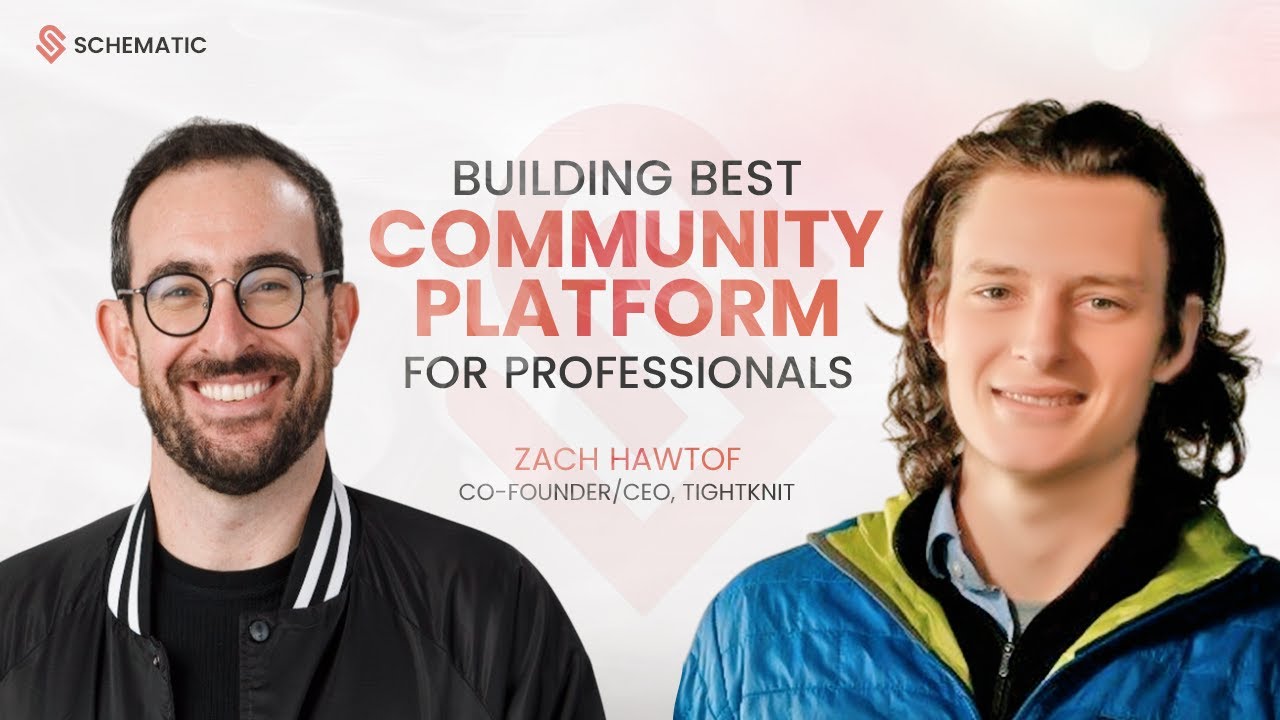
Zach, a former Salesforce director, founded TightKnit, a Slack-based community platform for B2B professionals. Most community platforms fail because founders don't educate the market on value or make creation easy. The market grows 17% yearly but requires layering features like gamification and moderation on top of Slack to drive real engagement.
Chapters
Zach, so good to have you on the podcast. I've gotten to know you over the last few months. We got to meet in person, have lunch recently, and it was awesome to, to riff on product with you. You've had a really interesting and incredible career. You studied CS in college. Out of college, I think you joined Salesforce maybe after an internship where you would do something that I think is kind of rare. You'd go on to work there for nearly 6 years. When you left, you were the director of product management for the Community Cloud. You moved on to be the director of product at a company called Airkit, which turns out was acquired by Salesforce not too long after. And then in 2023, you founded Tightnet. And Tightnet is a really interesting platform that I'm excited to talk about where companies can run their communities on Slack. So that's what I know from our lunch and LinkedIn. Tell us the journey in your own words. How'd we get to now?
Yeah, I mean, I say this all the time, but like, you know, no one ever means to jump into the community space. It doesn't even seem like a real enterprise kind of word when you're like kind of coming out of college. But yeah, I ended up, I mean, the story really goes, yeah, I fell into Salesforce as an intern, had the offer to go to Apple and to Salesforce. And I was like, you know what, I'm going to go jump into B2B SaaS and go right into San Francisco. And I mean, it was, it was a really like eye-opening experience from for me because I had actually like heard of Salesforce before. My dad had like worked in like what as a kid you could never explain to other kids. He had worked in channel sales. Like I was never, I was always confused what that meant. And my mom was in public relations for the movie business. So I like to actually think I kind of found this like middle ground of the most fun and interesting and exciting part of the enterprise side of the world. At Salesforce, got my chops in, you know, as an engineer and then moved into product, was working on these like tiny communities for businesses like Google and Home Depot and, you know, these tiny little mom and pop shops that you've probably never heard of, you know, the Fortune 500 really. But yeah, it was, it was a really good place to get started and then jumped into Airkit, which is, you know, I think I knew I was always going to want to start a company and I was like, I'm never going to learn how to start a company at Salesforce.. And so Airkit just became that like place to kind of just learn what a startup looks like from the inside. And yeah, I mean, I'll pause there because I know I can keep going and talk about the whole journey, but yeah, it's definitely been quite the experience to really get to where we are now. But at this point now, we're, you know, my co-founder Stephen Cook and I have been a decade in the community space. And I think that's given us a lot of, a big pedigree in terms of being able to go after this market.
Let's go back before even Salesforce in college.
I showed up actually as an econ major. I tried to take a CS class in high school and I hated it. And so I think it really does explain like, you know, being with your peers and which teachers you have really can change the course of who you become. So I thought I was going to be an economist. It never ended up working out right. But showed up to Berkeley day one. I was like, there are some of these kids just know what they're doing. And everyone was doing computer science at like in the orientation. And I was like, there's something going on here. And so, um, I, yeah, switched my major day one and then, uh, lived in the Bay for a while. And then moving to New York was, everyone asks like why I'd go just for fun, just try something new. Um, And so that was why I moved to New York about 4 years ago.
When you were in college, did you know at that time that you were interested in founding companies or would that come later while you were at Salesforce?
I mean, I have always gravitated to joining and trying to like lead organizations. It's just like, I just, you know, it was something that I always wanted to do was like build something and grow it. And I just am a, everyone I've ever worked with knows how annoyingly opinionated I can be. And I think just it kind of an inevitably led into that situation of how to grow a business. And it was something I just knew I always wanted to do. It's always been a big check in my world to go and do, and I'm really proud of what we have already done, but I still see so much ahead of us that I want to go out and accomplish.
How aware of were you at that time of the moment in time you were living through? I mean, you described sort of a second wave of innovation. Now, but were you aware of what you were living in then?
Not aware. Definitely not aware. I think, you know, it's like I have these occasional moments of time, very, very few moments of like actually being able to sit back and like reflect on the moment that we're living in. And it's like, you know, I get that everyone talks about this mobile era and the internet era, but we, we do kind of forget it's also just like the ability to have, like nowadays especially. So like, you know, you go back to when the internet kind of first created that first wave of businesses. It took many years before those first, like 1994 is when the internet started and most of the crash happened in 2001. That was a 7-year wave of anybody being able to buy a domain and make $1 million the next day. We're, we're still in that wave and there are going and I, And I hope that founders are well aware that there is going to be— the hottest thing is usually the thing that pops, right? Like it's just how it works because there's all these AI developer tools right now. I don't need 50 of them. I need 1 or 2 of them to really operate. And whoever gets there first is going to be the winner-take-all market. And I really do think, Fynn Glover, like the stuff you're building, the stuff I'm building is around that, right? I do think they're building the jeans, they're building the, you know, that analogy, but we're building the rivets, right? Like you have to get down to this little tiny granular level and go, everyone knows that they got to go build the tools to go build this next wave in this next generation. But like, what are the things that allow those businesses to differentiate is going to be the thing that makes the most difference. Because if there are 50 companies named Prompt Layer AI, you're going to have a very difficult time winning the market unless you have these key unique differences that people can talk about.
So take us to Salesforce because Salesforce is where you spent, you know, 6 years roughly. This is where I imagine you learned everything there is to learn about community and enterprise at scale. Talk about what it really taught you and maybe help us understand how it opened your eyes to there's an opportunity here.
Yeah, I think I should just back up and even explain what is a community.
Yeah, tell us what a community is.
Why would you go build one as a business? Like, what does it actually do for your business? So like, what generally happens is that as people start their companies, it's really a megaphone. It's a lot of businesses speaking out to people and going, hey, here's why you should go use it. Here's Here's how you should use our product. And pretty much across every founder journey, people start realizing we are not, we are not letting our customers talk to us enough. Like we are, we are not scaling the way that we are speaking with our customers. And even better, we're not realizing that most of our customers know each other. They want to learn from each other. They want best practices from each other. And some of those things might have nothing really to do with our product, but they more have generally the problem that we went out to go solve. So if you're a business formed around a problem statement more than a solution, it's a really good way to say, how do I take all of my customers, bring them into one centralized place, and we can go solve a problem together? And this is just for communities of product, right? We'll talk a little bit about other communities as well, but like, this is how, you know, I know your audience is probably thinking, how do I engage with my customers? And it's a really powerful way to do, you know, support. It's a really powerful way to do marketing. It's also just like an ethical way to do business is giving your customer the best and easiest way to go collaborate with you. And it's really how we've built our company is forming a community around the problem, which in this case is community building. And so it's tough. It's not an easy one-click and done. It's also something that pays extreme dividends if it works over time. I like to describe it as the, uh, the like airline points is that, you know, when a market turns on you, if you have a community, you have the ability to pivot, you have the ability to have this social listening tool, this group of highly engaged individuals who want you to succeed and they will tell you what they want, right? And like just listening to what they want and be able to direct your company in the direction of a large group of individuals, you really start forming this movement around what you're solving. Like some of the best companies that do this, I mean, Slack itself, right? And we will, we can talk a little bit about why Slack, but like Notion does this extremely well. You know, building these giant cohorts of Supabase, these avid individuals who realize they can build their businesses around you is a constant, there's constantly new waves of businesses are coming about it. So, yeah, I'll pause there.
I think that's a great sort of foundation to lay for listeners. I'm curious the extent to which you've had to educate the market versus the market already appreciates how valuable this is and they just need better tooling. Can you comment on that?
Yeah. No, it's been really fun to realize that while we, you know, I think every founder jumps into their market and some markets need more education than others. We've realized that the community market is like this sleeping giant in some sense. It is growing at like, you know, everyone has to do their little research and we've figured out it's, you know, it's 17% year over year growth rate and things are growing really fast for kind of a marketing-based tool. And we only see it growing faster as AI really takes hold. But what we have come to realize is like, as I've been working with people and it's been about, you know, a little over a year now. Is that we're getting— people are texting me day one of starting their community and going, hey, how do I set up a Slack workspace for my partners, my customers? I mean, let's be real. You and I were sitting at lunch and you guys were like, look, there's an— we want to start a community because what we want to do is teach people about pricing. We want to be able to be there every step of the journey in a founder's journey through pricing, right? Who cares what Schematic does? You want to, you have a mission in mind. And like even your team was like, how do we start that same base community? And so there definitely is that education that we've been excited about of like, how do we take founders from that zero to one moment of actually building out their first community around their customers? What are the best practices? What should they expect? I run into a lot of community leaders who because this is just the engineer's mindset. It's— it is the one part of your business that you do not build, if that makes any sense. You grow a community. It's like an aquarium. You build the aquarium, you put your community in there, and you hope that it's going to work out, and you tweak things as needed in order to continue blossoming this experience.
So I'm just going to share our journey with community, and you can react to it because I imagine it's relatively representative, but we thought early on we must be in Slack to engage with our customers initially from a support perspective. And then we realized we're having really meaningful conversations with our customers in Slack that go well beyond how they implement or use our product. We're talking about how they think about pricing and packaging, to your point. Then what started to dawn on me was I wanted them not only to ask me and our other co-founders, I wanted them to ask our other customers. Questions. And that's sort of where we are in our journey is how do we kind of take that next step? And I remember, you know, kind of slacking you and saying, how should we think about this? And how should we do this well? And how do we do this with intention? And one of the things you said was something to the effect of, you know, the often, you know, kind of the common refrain is people come for the content and stay for the community. Talk more about like, how do people, how do startups in particular craft and build and grow really good communities?
Yeah, what I tell people when they wanna start a community, there's so many people that I think think of it incorrectly and they're like, how do I scale? How do I scale? How do I grow? And I'm like, look, your first step is to help one person solve their problem, just one. And then you solve two people's problem and then you solve three people's problems. And if you can keep doing that consistently and showing that this is the place to solve this particular problem, people will come back to you. They will continue giving you more of their problems because they believe and they trust you. And you will suddenly realize that you can think when you're building features, you can put the names of those customers on each feature and you will be a better, you will be a better founder, a better product manager, a better engineer just by having the individual as part of the your building process. And I mean, that, that really is what Salesforce did teach me. I mean, there is a massive energy around building customer-first. You can hear it in the marketing as well. And it truly is like the marketing is almost more important than the, the technology. I mean, so the Salesforce team will hate that I say this, but like Salesforce is more of a marketing and relationship and sales company than a technology company. But that I wouldn't say is a bad thing because What happens is like, and most people don't realize that, like even at scale, it is all about the relationship you have. You use marketing and technology to scale the ethos of your business. So people go to you to build the next thing. But like at Salesforce, you can get to the highest level of a Fortune 500 executive suite and say, like when COVID happens, who do you think is the first person that was called when COVID hit. Everyone called their Salesforce rep and said, what is Salesforce doing to get around this? Because people truly think of Salesforce as like the shining light of how do you build a powerful, big B2B business that continues to grow even at its size. Well, if I'm a Fortune 500 CEO and I want to emulate Salesforce in some capacity, I am going to call up my Salesforce rep and say, what is Salesforce doing to survive this?. And so you want to be that same level of community for your business is that when things happen, they go to you and say, how do I get around this? I have a pricing problem, Fynn. It's brand new. It just hit. The Stripe community is way too big, way too generic, way too diverse. But you, Fynn, solve X, Y, and Z for these particular people. And I know that you're going to have the best answer. I'm going to come to you, right? Like that is the level. Literally, you've built that probably with me. I come to you guys and ask those questions because I think I— and maybe, maybe I'm wrong, right? But I still am in my brain, Fynn is building in the exact position I want him to go. And that's the level of trust that you want to build with your customers.
You mentioned there's a little bit of luck here when a startup is considering a community, like have they picked the right problem? Is it painful enough? Talk a little bit about some of the pitfalls that you see startups make in particular, because I've certainly been in what I would describe as dormant communities where like you get there and it kind of feels dead. And that's certainly not the feeling that a young startup wants to deliver to a potential customer. Is that more often than not the startup hasn't found product market fit, they're not operating in an urgent market, or is that more often than not they've not actually cultivated community effectively using the right tooling, using the right kind of commitment to content? What are your reflections on that?
Yeah, I mean, it's funny because it's like, I do really see the future of like product management and community management hitting this, this kind of crux in the next 5 to 10 years. And we're obviously early just being, being, being built in the space, but like every product manager is going to have to think about community because there's, there are still as a, as a founder, there are 3 things that you can change, right? You can change your customer. You can change your product and you can change your messaging. Those are the only 3 things that you have levers on. And if you can't, if any of those are off, your product is going to miss, right? You're going to either find, you're going to solve for the wrong customer. You're going to bring the wrong people in the space and realize that you have the right product and the right messaging. You just found the wrong people to go do it. So go figure out who is the right ICP. You may have gone after a market that just isn't big enough yet. I'm not saying it's not the right thing to solve. It's just not the right thing to solve right now. You know, there maybe there are better and bigger things to go out and, you know, this is probably where we hit our little trap in the first bit. I'll talk about like what Tightenit looked like before Tightenit. And then that third one is messaging is when you have the right product and the right customer, are you pitching it correctly? Like, is it resonating with people? Is it showing them? We have, and this is something we're probably working on more of anything right now, is we have a great product, we have great customers, and we have so many customers that once they've signed up for Tighten.it, they go, I did not even realize I could do this stuff or why I needed this product until I signed up. And that's a problem that we need to go fix now is like, how do we take what our expert customers are experiencing and bring it to the front? And honestly, that is what happens in a community. And I would so highly recommend, don't be scared of a dormant community. You're gonna make perfect the enemy of good. You will always have, if you don't always have 10% of your community, someone asking you or active, people are busy. They are in there. So like, no one has fucking time anymore. Sorry, I don't know how much I can cuss, but like, you can cuss. No one has time. So like, if you're expecting this, your product to suddenly be like the day one community of like, oh my God, people are just in here all the time and posting nonstop. We've solved, we've hit gold. It's just not going to happen. Do not expect that. You're a startup of 5 to 10 people. What do you want? I'm not solving pricing problems every day, Fynn, right? Like I think about it once every 3 weeks when I have a moment to breathe and I go, huh, I wonder what Fynn Glover and Jazz are working on. Let me just see if I can grind away on something and move the needle forward a little bit, right? Like I care passionately about pricing, but it's something that is a foundational problem that I just don't have a lot of time to go solve. So It's where I rely on others like your team to go think about it for me. And that's really where a community comes up. And I know I've started to ramble, but like, that's, that's the way most founders should think about it. Do not be afraid of a dormant, quiet community. Ours was a dormant, quiet community. It's now 400 people. I would say we still have a long way to go in it. But what we're doing is building a place where people can go and ask about community questions. They can come and learn from experts of what they've done in the past. Even just having the, the knowledge that there is an avenue for it, I think, is giving people a lot of trust in our business. And the product itself only adds more to it. And that's the thing that we're really excited about in 2025 is using TightKnit to grow TightKnit, which has always been its intention, to be able to help small communities like ours actually expand and provide so much value using, you know, like all of the ability for us, all of what we've learned at Salesforce of taking great knowledge and bringing it closer to customers, taking great customers and bringing them closer to new customers and just repeating that process over and over.
I love the point, don't be afraid of dormancy early on. I mean, in some ways it reminds me of like great content marketing or even take this podcasting, like the first podcast I ever did, you know, like it's dormant, it's got crickets, but you just keep going and eventually the value starts to materialize for the market that you're targeting.
I mean, consistency is so important, right?
It's so important.
Yeah, I always love the— I'm sure I could roll over. I have Guy Raz's How I Built This on that bookshelf. I freaking love that podcast. That was one of the original podcasts. If you really go back down to like one of the original business podcasts. All of them really started on like NPR, you know, there's This American Life and like those, those early podcasts, who knew that they were onto something? They were just radio shows. And then Guy Raz turned it into a massive podcast, right? It became this thing where he could get access to anyone because the consistency is there. And, and we are in this. So like going on that, and it's actually funny you bring that up. We have a thesis. Fynn Glover, it's a funny moment in time that we're hitting where it's like, okay, podcasting started. It's kind of gone through its, its wave. Everyone started a podcast. It's kind of a table stakes thing now. There's still a lot of room to grow. The next one was newsletters. Everyone saw it, right? Like you see how many newsletters have you signed up for now, right? Like how many are just sitting in your inbox? I was an early listener of The Hustle and this is actually a good example of of the transition that we're seeing. Sam Parr starts The Hustle, phenomenal business newsletter, read it all the time. As time has gone on, I've just trickled off of a lot of my newsletters. And you know what has started to come up are these community spaces where it's not just an audience, it's not just listening to a smart person speak about a smart topic. It's about how do I join other people that are interested in this topic and explore it with them together. And I'll say two things. One is it's why you probably have gone to Reddit way more this year than you have in any other year of your life. It's because you don't care anymore about these well-written reviews on these random websites that you aren't sure if it was written by ChatGPT. You can't tell if it was sponsored. Like, that's just not the world we want to grow up in anymore. We want to be able to go to a place and have trusted people even if we don't know them, but just trusted reviews of like-minded individuals who care passionately about things and be able to join those conversations. And so going back to The Hustle— Hustle was started by Sam Parr. He's even started his own community called Hampton, and Hampton is a founders community. And you can see newsletters turning into communities. It has just become a— we're, we're hitting this new wave just the way Sam was early on The Hustle back in 20 What, 2015? That same progression is now happening where people are going, I've built an audience. My audience wants to engage even more. They want a membership. They want to be able to, and this is not a community product, by the way. I just want to warn founders, do not try to build this as your business. This is a community of practice. This is a space where people join to actually explore their roles. It's an ability to explore even just like ideas. And having a place for a community like that is also growing rapidly. These, these, you know, we're finding there's so many, so many waves that are pushing us. But as people's careers have gotten shorter at businesses, as the 6 and 7 years at Salesforce is becoming rarer and rarer, what you're finding is people are looking to these third spaces to go and learn, whether those are in real life or digital, to go and learn and learn more about particular topics and businesses because the businesses that they are part of are no longer consistent enough in their life to teach them those things. So if you're a, you know, engineer or a lawyer or something, you are looking to third spot, third spaces to go and actually find connection, to build those meaningful relationships that might last longer than the work that you've actually done at a business.
My own experience with this is maybe 2 things really stand out. When I joined Automox, I joined to lead growth and I, this was in 2021 and growth was still being very much like defined as a function. Like I would, I would ask, I asked many of the executives at the company, like, why did we hire a growth person? And what is growth to you? And immediately what I found myself desiring was a place to talk to other growth practitioners. Around what, what it meant at their companies, how they defined it, how they created their own mandate. And so I turned to Reforge, which is sort of a community-led business. And yeah, I'll leave the other example, but I think that that kind of speaks to what you're describing is like, we are constantly in search of these communities to help us grow as professionals, to meet other people who might work with us at some point, et cetera, et cetera.
No, I mean, exactly that, like community is formed at a moment of transition, right? Like I think that's people, when they understand something really well, they're not seeking like the help and advice of others. But when they are, you know, feeling that imposter syndrome or trying to make a transition and they want to do that with others, it's a, it's a trail that people can take with other people, right? It's going from one place to the next and you don't want to go alone. It feels so much more comforting to join other people and go with them. Right. And so I think that's what we're finding is that we are in one of those moments of transition every fricking day. It's like hard to understand where we were 2 and a half years ago. And then look at where we are now. You know, when GPT-3 came out and you and I had that, I'm sure most founders got to play around with it, had that eye-opening moment of shit, this is going to be big. And we're still in it. It's not like the wave stopped. It's just gotten crazier and crazier every few months, right? We're getting a new model that fundamentally destroys and creates brand new businesses. And it goes back to like this whole jeans and rivets thing. It's like, look, if you're gonna keep the analogy going, like the styles of jeans have never changed faster and faster, right? Like we've gone, We've gone from Levi's to Wrangler's and back 800 times and people can't figure out what jeans they want to buy, but all of those things need rivets, right? And so it's like, it's the same problem as like, how do you keep up with the wave of AI? And if you really do want to break out, it's like, how do you take your community of people that actually care about a problem? Not a solution, and you keep the problem in focus, right? And if you can keep the problem in focus, it doesn't matter what ends up coming to destroy, you know, half of your business, because you're going to continue having people that come back to you and say, okay, now that that's gone, what are we going to do next? And they're going to use that word we, not you, because they're going to think of themselves as part of that problem with you.. And that's, that's the point at which you want to get. You want to have your, you know, your biggest advocates texting you and calling you and saying, here's what you, here's, here's what we got to do next to go and solve this problem. Are you guys doing that now? And you better say yes, because they are giving you early warning signals of what the market is about to, you know, to do to you.
Let's shift into how you came to, to TightKnit. Yeah. And maybe just going back one more time, like, is it fair to say that Salesforce teaches you a lot about what community means at relative scale? It gets you interested and excited about like the opportunity that other businesses have with community. And then Airkit is sort of the beginnings of learning zero to one and kind of preparing yourself to go be a founder. Or would you describe kind of the transition from 7 years at Salesforce to founder differently?
Yeah, I mean, okay, so Salesforce, as you probably have seen from like the outside, has, and no, if you're not in the ecosystem, it looks confusing. Why would people use this clunky, antiquated, old cloud product and care about this thing? And then you show up to a Salesforce event and you watch someone who literally goes on stage and cries about how Salesforce was able to take their career from like what they were doing prior, 3x what they're now making. They were able to change how their kids were able to go. They had built their career around the company and it fundamentally gave them the tools to go and be part of this corporate business. And you find a lot of people's first corporate job is as a Salesforce admin or a Salesforce developer. And I mean, you know, again, this goes back to why founders think of it all wrong. Like if you're building a product, you're already thinking of it wrong. If you're thinking of like your company as a product, you've missed the point because what Salesforce has done is it is in the business business, if that almost makes any sense. It is when people think of how do I build business software. That is what Salesforce does. And giving people this community, Trailhead, Trailblazer, the conferences, Dreamforce, the meetups. There's these Dreamin conferences that are locally organized. There's media conglomerates built around Salesforce. Ben is literally a media company built around the company, right? Like it is a lifestyle at this point for people to go out and actually feel like they are part of a movement. And I think that is, that is what every fricking founder wants to go and have. I used to say to my, like my engineering team, we, we, we had a, we were competing with Shopify. So I worked briefly on Commerce Cloud at Salesforce. I, you know, Community Cloud was always tossed around from Service Cloud to Commerce Cloud, Marketing Cloud. And there's a reason why is because it fits, raises all boats and it very rarely is seen in a business as a standalone unit., but we're seeing that change more and more. But either way, going back to that story, Shopify was a big competitor. We saw news, there was an article that came out that someone had gotten a tattoo of Shopify on their leg. And I went, someone was so dedicated to what Shopify was doing for their life that they decided to put this this corporation on their body. And I don't mean this in a bad way. I mean this in a, like this must have, like the same way people stood up on stage at Salesforce and cried about how it changed their entire life trajectory. Someone at Shopify felt that same way, that without this tool, they were missing something. They were not able to experience the things that they wanted to build in Shopify, in commerce, right? And that was always what they seemed like, that's a really big passion of theirs. And I was like, look, that's our job. In 10 years, if we can get someone to tattoo, and I have no tattoos, totally, you know, free of tattoos, but if someone feels so passionate about what we have done as a business that they are putting us on their body and saying this company represents my ideals, then we've done something right, right? We've changed how people are able to perceive of themselves, of their culture, of their work career. Like, then we're moving the needle, we're making a movement, we're actually doing something that someone cares about. And that's really what, what I think every founder should be looking for, is how do you fundamentally shift your, your, the mindset of the individuals you're going after.
I really love this. Um, you know, you could reduce it down to it speaks to kind of the power of brand. You could kind of like— there are a lot of reductive ways to talk about like what these sort of extremely successful businesses accomplish. But when you put a tattoo of a brand on your arm, it really is like the pinnacle of having like moved someone. It really is. It's exceptional.
Yeah. I mean, it's, it is only one way to represent it, but that one's a big one, right?
Like, you know, it's a bit, and I know I've hired Salesforce admins. Like I've seen that firsthand where like you're in the interview process and like you can tell that the person having become a Salesforce admin after, you know, some varied journey in life has been transformative. And it's, and you can see it in the way they talk about it. You can see it in the quality of the work. It's really impressive.
Yeah. And, you know, people love passionate people. Like, you know, people love when they meet someone who is so interested in what they're doing, they're willing to talk about it for an hour. If not more, right? Like, you know, if you don't enjoy talking about the problem that you are trying to go out and solve, you're probably in the wrong business. You have like, everyone wonders like, okay, what is the delusional state of founders, right? Like, how do I get to that? Because you have to be delusional. Most of us are going to fail. It is only when you realize that like, it doesn't matter because the person loved what they were building so much like the way that we're building community, right? Like the whole, I am definitely delusional about it. There are things, you know, even if I get, even if 10% of what I'm saying is right, it's going to be a massive business. But 90% of what I'm saying could be very wrong. Just like every founder out there who has this vision of what they're going to go out and build. It's because you care so much about it and you're so excited to build it with other people that also care about that. That it makes it really fun. You found your niche, you found your like 100 people that want to go out and solve that problem with you. And you're going to go find out if the market exists. You're going to go see what the obstacles are. You're going to hit all sorts of them along the way. But like, wow, is that fun? Because at least you found the right thing. When we first started this company, we were also building a— I've always been passionate about case studies and customer stories. I know that's a weird spot, but like, it's just, it's something I always felt like was a great growth and marketing tool and just being able to take that and push it to the next level. But we were building the wrong tool. We were building a, like an AI marketing automation tool. I knew nothing about the market and I just couldn't talk about it as much as I wish I could have, right? Like I read, I had to read a lot. I'd never really had a lot of these past learned experiences. And so when we started Titan, it was really just like this existential crisis of like, what's the advice I give to founders, especially early on, if you don't know what to go build, it's like build what you know. And you'd be shocked. Everyone always thinks like, oh, I don't know anything. Right? Like I didn't think I knew a lot about the community space, but then I started to talk to other founders who knew actually nothing about the community space. And I realized, wow, I actually do have more than most. And like a shockingly more than most, right? Like what I thought was a little line, this little baseline turns out that I was in the top 1%, right? And I didn't realize that until I said, build what you know, and I thought I knew community and then turns out I do, right? Like it was a shocking moment of discovery for myself of like not many people knew what case deflection was, right? Like if you had never worked in scaled customer support, the growth, like even growth teams working with like SEO. And like thinking about that, again, top 1%, like most people don't get into the nitty-gritty details of it. And you'd be surprised how as a founder, you probably are already in it. You just don't even know.
So, so take us into Tightenit. Sounds like, you know, original idea you moved on from, you're now building what you know, but what is the product? What does it do for your customers? And I'd love it if you could also describe like what you believe the core insight behind the business is.
Yeah, I mean, we are building the best community platform for professionals. And I say professionals because I've always worked in what is called like B2B2C. So business to business to consumer. So like, how do you take business software for a business that actually faces your customer? So I have two relationships. I have a relationship with my customer and I have a relationship with their customer.. And I've always believed that's how business should be done. You should try to take as much as you do internally and push it out to your end customer to really build that story, that journey as part of it. And so that's what we've set out to go build. We've set out to kind of change how business is done in that you can take a business and collaborate with your customer. And it, what, you know, open source is built by this by default, but I still believe even a non-open source business can do this. It's still a viable solution to think of bringing people along the way. So that's the problem statement we set out. Okay, how do we go and solve this? This is a community problem. This is how do you take your customers and engage them? Like we sell the growth, we sell the customer support. It's a terrible problem when you have multiple ICPs that you sell to, but everybody has this kind of like handshake problem of we need more of our customer insight. We did our research, realized we were also at Salesforce during the Slack acquisition. And we got to see like, oh, this amazing collaboration tool is now under our wings. Not a lot of innovation happening in our space, in the community space. So we said we had to go do this outside of it. Slack is to this day still the largest business community platform out there. It's got 25% market share. Only one of the top 10 community products that does not sell itself as a community. And so we're like, all right, this massive community product is winning while saying, do not use us as a community. They say that, they've said it for years, don't use us as a community.
Why are they saying that? I mean, we use Slack for community. Why are they saying that?
Because I think for a long time they needed to focus, right? Like there was a lot of, there were threats from Microsoft, there were threats from external players. I would say we have hit this kind of kind of threshold where there are really, I mean, there are still competitors. I wish them luck, but like there are two options for business communication software. There's Slack, there's Teams. That's it. Like that's basically where we've gotten to today is the, the, the market has hit that point where those are the two options and pretty much their, their next steps are not figuring that out. It's moving people off of text messaging at like construction sites. To one of those platforms. That's the level of edge we've hit. And so for a while, Slack had to really focus on that. And so they said, we can't be a community product. We have to focus on one single vertical. What we have found, and this is something we are actually working with the Slack team on, and they have come to realize it too, is this problem statement that Slack is an incredible tool for your customers, not just for your employees. It's an incredible tool for bringing people together and collaborating. And so that's how we've seen Slack communities pop up. And they've been around for a decade. The entire time of Slack existing, they have existed. And I meet some of these early on communities that have existed there for the entirety of the time. And so we are now building the tools that are needed for Slack to turn from a productivity tool into an engagement and community tool. We're building gamification. We're building SEO and digital forums. We're building moderation. We're building AI self-service. We're building all of the things that we used to build at Salesforce, but now inside of the Slack ecosystem, which is the place where founders want to be. It's where engineers want to be. It's where marketers want to be. And I tell people this all the time. There are other community tools, and I highly recommend them for people that are not what I would say is like these professionals. The problem is that if you go with one of those tools, you're going to be that person's 5 to 5:30. And that is not the way we work anymore. We work from, you know, we have our 9 to 5, we take our breaks, we take our long lunch, we work again at 11. And if you want to be part of that new way of working, you have to be in a tool that someone's using throughout their day. And that is Slack, right? And community has become something that people use in their day to do their job. Or even to experience just their outside interests at work during the day, right? Like, it is becoming more and more part of our life because work has kind of invaded the rest of our time. That 9 to 5 clear structure just doesn't exist anymore. And so neither does community. It's not just at the end of the day or before it. It's throughout it.
So you mentioned earlier the criticality of founder delusion. Founder delusionality. Product-market fit early stage is very much the spectrum. Some might disagree with that. Some might say product-market fit, you know it when you have it, but there's obviously sort of this kind of critical component of building something where you have to suspend belief. Can you talk a little bit about where you are on the spectrum and the kind of when or the extent to which you began to rationally believe and tighten it?
Yeah. Ooh, good question. And I bet you if we have this conversation again in 2 years, which we should, you and I will have very different, we'll be like, wow, we knew nothing. We had not even gotten close to it. But we do, like, I think that's why it is a spectrum, right? You see these hints of it. There are like milestones of product market fit as you go along, right? And the first milestone that I think we hit was like, our first step when we threw out that first old company of story automation, it was called StoryChamp at the time. We're like, no one wanted to pay for the thing. How do we just build something that one person will put their credit card down and go, this is a problem worth paying for? Could we get to that point? And we did. We got there within 9 weeks, way too early for this customer. We ended up winning them back 6 months later. It was clay.com. So Clay, super community-driven, saw they were early in the community space, understood that like growth was, was part of their game here. We talked to Varun when it was like a 25, 30-person company, you know, passionate, like guy thinking about like, how do I grow this business? And so we, you know, got them to put $100 down in 9 weeks. And it was like, that was great. That was a moment of clarity. That was not product market fit. That was just the first point in time that we at least found a market worth solving. And then I think the other points that we have seen in product market fit is not when our— the greatest moment about community is not seeing a community manager trying to like get their wins. It's actually seeing their community seeing the wins for them and sharing back to the community manager. Wow. This product is either so cool, so helpful, they're sharing it without even knowing, like they're taking what we've generated with our gamification tools and taking that content and resharing it to LinkedIn. No one asked them to do that, right? Like, and I'm just finding that on LinkedIn and going, holy crap, we, we were able to build this journey for someone. And that community manager gets to reap the rewards. Like as a PM, and I know we're almost at time, like What I tell every PM, the only job you have, I mean, this is again, just like a B2B product manager. Everything is boiled down. If your only job is to get your customer promoted, if you could just focus on that one goal, don't even think about the product. Just how do I get my customer promoted? Work your way backwards from that. You don't even have to be, if you don't build a product, fine. That's okay. You don't have to build a product. As long as you solve that one goal, they will bring you wherever they go. And then go figure out what product could actually be built to help you solve that problem faster and better. And that, that's how a platform product manager should be thinking is because your job is to accelerate that individual and to make them feel empowered, make them feel like they've got more time, more energy, more ability to go to work and like have more control over their success. Go build that.
You've talked already about willingness to pay, about getting $100. You know, I know we're getting close to time here, but how would you describe Tightenit's journey with pricing and packaging?
Oh, I mean, pricing is, is like the hardest thing, right? Like, it's, you know, it is— everyone says that caching and naming are the two hardest things in software. Pricing is definitely the third, um, because it is— it's always been like the core of commerce and the, the one of the biggest levers that you have on being able to move business, but your product doesn't exist on one level, right? Like, no, everyone, no one has this, this like Stripe level, easy, let's take 3% kind of product. And it's so hard to capture the success of your product. Like, I think at Salesforce, I worked on pricing briefly, briefly in Salesforce world, like a year, got to dive really deep into how Salesforce pricing was operated. There are And I mean this generally, there are thousands of SKUs that you could buy across industry, market, sizing, levers of all sorts in Salesforce. It makes them— it's the reason why there are so many account executives at a company of that size across all these different layers, because it's so hard for one single person to understand. You don't obviously want to build that. You want to build this simple and an easy tool to build and like, and pricing that grows with your customer too, so you can bring on a customer at the best point possible for your ICP and grow with them to their points of success. But you also don't want to steal too much value from them. You don't want to be a completely linear growth pricing tool. You want to be able to provide more and more value as they see more and more success. So it's kind of like as they grow, you're almost like peeling off in some sense. But yeah, we're definitely not perfect. We are rebuilding our pricing right now, as you know. And so it is a learning experience of what fits, what doesn't work. Just, we're super transparent. I just show every customer our entire pricing sheet every time. We're not at the stage of figuring out like hiding things or not. Like a lot of enterprises, we just show it all and say, where do you fit? What do you want? We'll figure it out later when we need to like go and actually try to optimize revenue. But like right now we're just in this phase of how do we find the right fit for our customer at the point in time. So it's a, it's a tough balance.
It is a constantly evolving journey. Like one thing that feels so true is that, you know, if you're successful building a startup, pricing and packaging will always change. So be prepared for that.
100%.
One of the things that you said that stands out to me is when you communicate the growth of your pricing, without concurrently communicating the value that your product will deliver as they grow, you'll run into issues in terms of perception around pricing. I think that's one thing you said. What would you say to other founders who are where you are? They're thinking about their pricing and packaging. They're maybe kind of revising it. They're in kind of a first or second iteration. Are there any things that you would say to them that you have done that you find to be particularly effective? Or are there any things that you would say to them you know, avoid this, we did this and it didn't work.
Yeah, I mean, I do think it depends on your buyer. I don't think enough people think about how their buyer thinks. Like one of the things, one of the problems we had at Salesforce was like the buyer was constantly changing. And, you know, over the years it got dramatically more technical. So what started really well as like a really one-size-fits-all for, you know, marketing teams need very predictable budgets, right? Like I think that's one thing that I've always learned is there are teams that need predictable budgets and teams that need budgets that they can do the math on to see where growth works out. Engineering is literally built on usage-based pricing, right? Like it's, it's just how the tools always kind of worked. You've set up servers, there's energy costs, there's AI costs now, there's all sorts of usage-based pricing. On the marketing side, it's been always very like seats-based, it's platform-based. There's like a clear number. Of what you're going to pay. Those two things are constantly changing even between those buyers. But like, I think understanding your department that you're selling into first and foremost is going to help you build a better pricing unit economic system. Like what, what we realized is we sell primarily to two different departments. We sell either to sales and we sell to marketing and marketing. Wants a clear, this is what it's going to cost us because marketing gets paid on growth upside. So they want to be able to buy something as an experiment and hope that the value doesn't end up here. They hope that it ends up here or here or here. And they get to take this big gain, right? Like engineering doesn't think like that in the same sense. Engineering has a core problem to solve. And so they kind of ride the linear wave. And then support is also very unique in that they have, it's all very transactional in that support is trying to solve a problem for one customer and then the next customer. So having customer-based support, like pricing is a thing for support or like unit economics of it is how much is this going to cost per customer if based on how much we make for that customer. So it really does change. And. It's— you, you gotta— that's the thing that I think most founders don't think about, is they don't think about the buyer first and then think about the, the solution that they're selling. They try to figure out like, oh, our product features and stuff like that. Your product features should align with the, the buyer's problem and the buyer's budget. And that's another thing that a lot of founders discover very early on, is budget. That word pops up a lot, right? Like most of us didn't start or work in sales. Salespeople grew up in this land and they get it. And I had the— I was so lucky in my Airkit land. So when I joined Airkit, I was the sole product manager in New York City. And I was in our office at WeWork here in New York with 6 salespeople, right? Like just around me. I got to just listen to sales all day. I got to feel part of that culture, that environment. And it's so helpful. As a, as a founder as well, to just understand how to go through a sale, enterprise sales motion of like, you don't walk in and you don't, it's, you know, you would, you think everyone thinks like, oh, salespeople, they're just trying to close the deal. But like the best salespeople actually are, what they're doing is they're learning more about the problem and then they're trying to go and figure out how to get the customer to solve that problem with their product. It doesn't always need to be with their product, but that's, that's what salespeople are better at than founders. And I think we could pick something up from that as well is like using pricing that's negotiable. That's— and when I should jump on what negotiable means, trying to find a baseline where 90% of your customer base is going to fit into this one price. And there's still a ton of upside for them, phenomenal. And for the 10% who see extreme value, that's when you want that overage, right? Like, you want to be able to build a, a pricing unit where 90% of your customers just fit, and then when they hit those limits because they've reached overwhelming success with your product, that's when you can really charge more. Those top 10% are going to make you the most amount of money, but the 90% are what going to— it's what's going to drive that, like, mission that you've gone out to solve. We're not pricing someone out just because they need a particular problem. I think go read about Canva. Yeah, I don't know if you've done anyone from Canva yet, Fynn Glover, but I love how they've approached it. They have a whole— I'll find it and send it to you. And I know I'm just rambling now, 10 minutes over, but like Canva, love what they did because they said we're going to leave a ton of value on the table. Obviously they went after a massive market, but they said, we're going to leave a ton of value on the table and we're going to be a ubiquitous tool. And then when those customers inevitably hit that cap, they were able to expand on the next, you know, 100 users on top of that because people got addicted to solving it so early on. I'm addicted to Canva. We build all of our slides in Canva. Like I can't see a world now where I'll ever not use it because it's just become a day-to-day part of my tool, but it's only it's so affordable. At least I know they're changing their pricing now, but so affordable for us that I'm here talking about it. Like, what a good situation that is. So I think that's, you know, there's no, there's no one-size-fits-all for any business, but like, that's how we've— some of these, like, just things that we've learned over the years are how we're building pricing, is trying to make it simple, trying to make it for the 90% that someone can just jump in, afford it, and can see how their growth will grow into that business. And then continue providing a lot of value left over as they continue.
What you're describing sort of implicates what your price metric is. Like if you're selling engineering and it's going to be usage-based, your price metric is going to be something that is usage-based, like API calls or whatever. If you're selling into finance and it needs to be highly predictable, you know, maybe that price metric becomes something traditional like seats. What have you learned about your price metric selling largely right now to marketing and to support and success?
Good question. I think what I've learned, I mean, what we are learning, because it's still a learning process, is like what we're trying to mix together is a little bit of both bucket-based seats. So not selling per seat, but selling per 100, if not 1,000 seats. So actually this is a good example. I sell a community product on Slack. It's very worth saying, like, 80% of our customers are on Slack Free and 20% of them are on Slack Pro. The reason is because Slack itself has its own pricing problem around communities. I'll be the first to admit it. You see it everywhere. Slack is $7 per user per month. And that's built around this employee cost, right? But you would never pay $7 per customer per month. For as a communication tool. Most businesses can't afford Slack.
For example, we tried to bring one of our newest customers into our Slack community recently. They are on the free version of Slack, so they couldn't accept the invite. So we can't engage with them the way we engage with all of our other customers.
Right. With Slack Connect, right? So like you were trying to do a Slack Connect. Yeah, you can't do that. But that's where community does play in is like you can, you can create a free Slack community and that's been the thing that's really grown Slack as a community product. Yes, there are a ton of limitations, and that's why a lot of people come to us. It's also why we've started to work with the Slack team to build a SKU that is community-based, right? Something that's more, you know, a dollar per user per month. And even that's still too expensive for most communities, right? But you can see how larger enterprise businesses could get to that point. And so Slack's community sales problem is, is what we've tried to build. Pricing has to be part of our conversation because what we've done is changed it from per seat pricing to per 100, if not 1,000 seat pricing, right? Like you're thinking in the community wave, not in the employee, employee, employee. You're thinking in 1,000 customers, 1,000 customers, 1,000 customers, right? By changing that dynamic to fit the buyer's mindset, like the way growth marketing thinks about, right? Like, or Ray Support thinks about it. Support and marketing are not thinking in individual customers. They're thinking in massive groups of customers. How do we solve this 1,000 customers problem, whether it's engagement or support? And so that's what we've, we fit the business model back to. And then for us, because our product has is just so— it's got so much to it. We've started to realize that we can't just do this one-size-fits-all. We have to be able to get people in early and then get people in as they grow. So building, you know, these bucket tiers that then grow into different features, you know, larger and larger feature sets as you kind of scale with us as a business. And then that enterprise cost, right? Just being able to work with us, have like— people forget. I think it's so important to have in your pricing that working with the team and having their access and customer support and feature prioritization and the Slack Connect channels and, and just being able to like have their time is worth money, right? And enterprises are willing to pay more for that. And you should be able to put that in your pricing and you should put it in there and be very clear that this is what you get with actually like the business that isn't related to the product. That's, that's what enterprises are paying for.
That's fantastic learning. Thank you. The closing question I always like to ask is, is there a moment, like a very specific, discrete moment that you look back on in the course of your career and say, that was the inflection point for me?
I mean, so I always wanted to start a business, but I'm a pretty risk-averse person. Which is so funny. And I do take a lot of, I think of myself as a risk-averse person. No one will tell you that because like I'm doing all sorts of crazy things to go after this massive market, right? Like there's all sorts of stuff we're trying and configuring and all. I'm a yes man to the T, but I do think of myself as a risk-averse person. So starting a business kind of was a kick in the pants. So like I, So like at Airkit, I joined, I mean, this is part of my story for sure. And it's something that is so interesting is I always knew even at Airkit, I wanted to start this company. I was working, you know, late nights trying to like get something going off the ground. And I was calling my dad like, when should I leave and go full time? He's like, you should probably wait because you're nothing yet. And I'm like, oh, hold off, I'll hold off. And even though you could look at it as a downside, I see it as like the upside that I always needed. When the market tanked, AirKit had to squeeze and let go of pretty expensive employees like myself. Like I was, you know, a very expensive product manager. And I was part of this RIF. I was part of this big reduction in force and got laid off, which actually was amazing for me in that I got unemployment insurance. And that alone is a market that if anyone's going to go out and solve, teach people about unemployment insurance, because there's a massive opportunity there to just like make someone an extra $30,000. But man, is it a tough process. Like having that moment to go, all right, this is the universe telling me now is a good time. You've hit basically the best possible point to start a business in that it's terrible timing. No one wants to give you any money. You truly, like, you've got all this. Airkit went on to go get acquired by Salesforce as like the fundamentals now for what is now Agentforce. So like my old boss is now the CEO of Salesforce AI, right? Like Adam Evans is running that there. And I was like, all right, AI was so something I was learning on the job and trying to go and configure. And I was able to pick it up really quick. And I was like, all right, I've got the best tools in the world. I've got all the time in the world. Let's go fricking do this thing. That is what I needed, right? That was the inflection point for me. I don't know how I, like, I have done always a very good job at business. I was one of the youngest directors of product at Salesforce at 27 years old, right? Like, I was a very young— most of this, that's a post-MBA role usually to get product manager. I got to director of product at 27, very young, too early for sure. But it was because I was working so hard at the business. It's so hard to leave that. It is so hard to take those golden handcuffs off and go, look, money is not the thing anymore. It's the excitement I get showing up to work that gets me going all the time. I make so little money now, Fynn Glover. We're a bootstrap business because we just said fuck it, let's go do this thing. Let's drown ourselves in customer problems and force our way up to the surface. And, you know, being able to generate revenue and seeing the growth of the business has been so exciting, knowing that we did that without this big cash infusion. Not saying it won't take money at some point, but like, that has been just the, like, the kick in the fucking pants that we needed. And then what, and I mean, this is another good inflection point. Just being able to call Stephen, who has been like a close friend, close work friend since day one. We were interns together at Salesforce. And I was like, Stephen, do you want to come do this with me? And he was just like a hell yeah. And it's just so nice to have a hell yeah guy on your side. He is my rock when I'm this like chaos of like, let's go do something next. Stephen keeps me contained and being able to do that every day. Gets me excited. And then like the community that we have built, just like being able to meet the people that I now text on a regular basis about this shit. I wasn't texting people about community a year ago, but now it's just become like part of my world. It gets me energized to go like help founders go solve their problems. And I don't just work with like product founders. I work with like people that are starting businesses for like You know, I mean, what, women in sales and support leaders that are trying to like teach people how to build better careers out of their jobs. We just met a woman working on like neurodivergence later in life. Like there are so many people that want to build these communities of people around the globe that just want to feel connection. And I get to just ride that wave of excitement. And you know what, actually, I will say one final inflection point. I think the, the thing that I got excited about at Salesforce, I worked on a product for 4 years before it launched. Not ideal, but great for a big enterprise, right? 4 years, super long time, super innovative. It's now being used by Disney and massive corporations to power their entire customer support and community process on the product that we built called Lightning Web Runtime. But like, the moment that I felt really excited about it was I worked on it from 0 to 100 to getting that thing out the door. I got to watch a company, I mean, I'm not there anymore. It's a company called Urala, which was building basically a platform for people with disabilities to go and live their lives. And we built a AAA accessible platform for these individuals to go out and solve this very hard problem on a digital platform. And I got literal tingles that like I could go and do this at a larger scale with my own vision, right? Like TightKnit gives me those tingles every other month where I see a founder go, our community has never looked better and we're able to see these new experiences grow out of it. And that's what gets me up. You can tell that's why I like running 20 minutes over on a podcast because it's just like any chance I get to go and do that gets me fucking amped, right? Why I work late Friday nights, just like trying to go and find the best way to build that. And that, that gets me up. That's where no amount of money could ever like get you going. You want to be able to make enough money that you get to continue doing it. That's the That's the only thing you should be seeking out.
Yeah. The reward for great work is more work is the idea. Yeah, totally. Those are great stories. You know, another theme that I've noticed in these interviews is that the inflection moments for people are often when they take risks, when they've failed, or when they've seen something they've created provide value for another person. Yeah, it's really cool.
If you're a builder, there's no better feeling than someone seeing what you wanted, that wanted to go out and build, and them having that reward themselves. Like that, it's, it's the giving part that feels so good that you get to see others succeed and you were part of that story.
Yep. Zach, where can people learn more about Titanet and reach out to you if they want to learn about using the product?
Yeah, I mean, I always point people to community.titanit.ai. You can go to titanit.ai and learn about the product, but wouldn't you rather join a community and be able to be part of a group of founders and community leaders who want to go build what we've talked about, right? So definitely go join the community. If you're interested in starting your own community, go in there. I'm in Slack. Feel free to reach out. Let's get you going. And that's what I tell people to go do.
So much fun to speak with you. Thank you so much for all the time. Thank you for going over.
No, of course, Fynn. Yeah. Thank you for having me. A ton of fun. And yeah, I mean, I'm just, by the way, this is not a pitch for Schematic, but I just want to say that their team is so passionate about this problem that like, it's exciting to work and see what you guys are doing because I have always felt that pricing and being able to like pricing is part of a founder's journey of like, how do you reward people for doing more on your platform? And just being able to give that and be able to like, you're literally building the product that helps me imagine what I'm going to do in the future is like, how do I reward people for just being good on our product, giving them things when they didn't ask for them, just because they're doing great things on the tool. I could see Schematic being the tool that I use for that. And that's why I'm so excited for you guys as well.
That's such a cool, um, vision for the product. Thank you so much for the kind words.
Of course. Thank you.
Let's do this again in another year when we're further along.
Yes, exactly. When we're like, those idiots knew nothing.
All right, bye.
More from Fynn

Schematic at Operators Guild Demo Day 2026: How to bill for AI credits without a surprise bill







Should you move to usage-based pricing because AI is compressing your margins?

Why raising prices every year backfires (a pricing leader on the Mastercard quota model)

