Beth Hendler Grunt on The Next Great Step
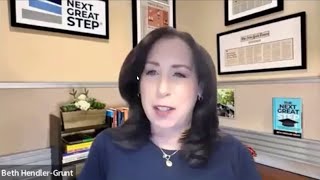
Career coach Beth Hendler-Brunt discusses her book The Next Great Step, which addresses mismatched expectations between parents, students, and employers during the college-to-career transition. She recommends self-assessment, informational interviews, strategic LinkedIn use, and mandatory internships. Employers want ready-to-contribute talent but won't "babysit" recent grads.
Chapters
Welcome back to another episode of This Week in College Viability. My name is Gary Stocker. This morning we welcome Beth Hendler-Brunt, who has just recently published the book Next Great Step, and it's intended for students and their families as they move from college into that first career job and even jobs down the road from that. Beth, good morning. Thanks for joining us.
Thanks so much for having me.
Let's just jump right into the first question. And, and the first 3 chapters in your book focus on the job search perspective of 3 different groups. It focuses on parents, students, and employers. And the content you cover in your book, Next Great Step, is different for all 3 groups. What are the biggest challenges each of these 3 groups face from their individual perspectives?
So first of all, thanks for having me. Yeah, so everyone involved in this process has their own expectations and their own desires as to what will happen when they go to college and when they graduate. I think for parents, and I'll speak for myself, I'm one of you, one of them. I have a recent grad, class of 2021, and I have a son who's a sophomore in college now. So I'm living this real time. And I think one of the things as parents we think is like, okay, collectively we've made this huge effort to get our kids into college, right? It's a family effort. And we also go on all the tours and we think, well, they promised me on the campus tour that my kid is not only gonna have a great education, but it's also gonna result in a great job when they graduate. And there's that expectation that we come into as with parents, and it just doesn't always happen the way we thought, or our kids don't take advantage of all the things that the campus has to offer the way we thought. So I think that's the first piece from a parent perspective of, I thought these things were going to happen. They're not happening. How do we readjust? There's been this huge investment, whether parents are helping to fund or the loans taken out, you know, how do we navigate this now that our kids are nearing or ending their college career and it's just not what we thought? So that's kind of from the first perspective from parents. Students come in, you know, pretty optimistic. They think, okay, I've seen people get jobs, I've seen people be successful and shouldn't be too difficult, or I know some people, or my parents know people, or I'm going to use the university. And then they start applying, and then they don't hear back, or it's much more competitive than they thought, and it's just a lot harder than they thought it was going to be. They just saw, oh, well, this person has this great job, that must be really easy. And when they start getting into it, either they can't get an interview, or they get an interview and then they don't hear back. And it really starts to weigh on their own ability to think like, wow, am I good enough? Am I smart enough? Did I study the right thing? Maybe I chose the wrong major. I don't even know if I like what I'm doing right now. It kind of makes them question everything. And from the employer's perspective, they want young, vibrant, you know, motivated talent. The challenge is that there's this disconnect between what students think they're prepared for and capable of and what employers actually need. And they want to hire them, but they don't want to babysit, and they don't want to hear a young candidate come in and say, I want this job because this is great for me, or that I want your job in a year, or I want to be promoted, or I deserve this. Like, that's kind of a turnoff to employers. You know, they want to hear from a candidate how this candidate can help them or the company be successful because of their skills, not that they deserve it. So I think everybody kind of has a different thought and expectation, and that's what I address in the book about what everyone's thinking. And then we get into how do we, how do we bridge that all together.
Interesting, interesting. In the next question, in Section 12, you ask the question to the students, What should I do with my life? Don't we all ask that, huh? And there will be many that argue that college seniors still really don't know what they want and are not really yet prepared to answer that question. What guidance can you give parents and other family members to help that college junior, senior, whatever age, to really help define what they really want out of their career and their life?
Yeah. So the very first thing, and I'll just say as a parent too, sometimes we are so ready to give advice, be like, go do this, go talk to this person, go apply here, or you know, you should, you know, right? You should do this, you should do that. And I'm not a therapist. I'm also a mom who's totally guilty of all that too. But I think what I've learned is that we really need to stop and ask more questions and listen before we give direction on telling them what to go do. And I think our kids are also sometimes really nervous and afraid to tell us that, you know what, I know I studied this, I don't really love it, or I think I want to go in a different direction. And I think we need to give them the space to verbalize what they're really thinking. Like, what is it that you're excited about? Or what are you thinking about? And it may not match to your major, and that's okay. Like, let's work from where you're at because I'm sure there's skills that you learned in school that we can still apply or pivot. And I think you just start off with asking good questions and really listening. And the whole thing of what do I do with my life, you know, one of the first places that I kind of say is, let's take a look at yourself, right? You got to take a look at who you are, versus trying to match yourself to a job on a job board, or what you think your best friend is doing, and that what you should do is, what are the skills that you have? And I teach this concept about what are your core skills? What are the top 3 things that you are the most competent, most skilled at, and you really enjoy doing? And when you start thinking about what those are, not only can you say these are the skills I have, but you need to have examples of where you've done it, whether it's in a group project or volunteering or in a club, a sport, anywhere. But once you get clarity on the skills that you have and that the ones that you'd like to be using, the rest of the search process gets easier because then you can start looking for opportunities that leverage those skills or looking for areas or types of jobs. And it also gives you such a great, uh, clarity about yourself. So people that you speak with are really not only impressed, but appreciative that you have some real clear direction of who you are and, and where you wanna go. And I think once you start to understand your skills and what you have to offer, the rest of the process gets easier.
And there are countless industries out there. Let me just give you a couple of examples of some and see if there's any kind of experience you have had and what you talked about in your book about helping for specific careers. And I'll give a couple, but feel free, Beth, to take whatever industries you like. But industries like education and healthcare, IT, accounting, finance, business— what are some of the areas that specific skill sets are required that you address in the book or can address even in this video?
Well, I think, you know, there's a combination right now. People say, well, who's hiring, right? Or where should I go? Where are the jobs? And that's a moving target, right? Things I would've said 2 years ago, or I'd be like, oh, take a look at streaming and tech. You know, now we're in 2023 and streaming and tech are not what it was in 2020. And I think we're seeing those shifts and changes with big name companies. However, things like healthcare is still huge. Education, there's huge demand. In the housing market, construction, real estate, there's still big demand. So I think it's a combination of what are the skills that you have matching up to what is in need right now. But I think don't, don't do something just because it's in vogue. I had this whole thing where I know a lot of people study STEM because they're like, oh, if I'm a STEM major and I go in computer science, like I'm going to have this great job. Well, you need to really enjoy math and coding and all the analytics that go with it. And if you don't like that, then don't do it just because you think it's going to give you the paycheck. I think sometimes we get misguided too, like, well, let me go into finance, or let me go here. But if you're not happy doing it, it doesn't mean that you're going to make money doing it. So I really think that you've got to start with your skills, and then you got to look at the industries of where there's the need. And you have to talk to a lot of people. Here's the thing, there's no answers or no, there's nothing in a bubble. Nothing's going to magically come to you or Google like, what is the best industry to go into? That's not really— I know people do that. To me, you have to speak to a lot of people who are doing some different things to get a better understanding. And that the best way to do that is through informational interviews and direct networking. So it doesn't matter how much you, you know, search it online, you have to talk to a real person who's actually doing it. And I think that helps get those answers.
You know, they probably move from Googling that to doing chat AI to search for what's the best.
Yes, yes, for sure. Right. ChatGPT, tell me what I should do with my life.
Yeah. So in Chapter 5, we talk about some skills that new grads bring to the market and just share some of the highlights of those skills. And then if you have a handle, are there some colleges doing a better job than others or standing out in the way they help prepare those students for the skills you talk about?
Yeah, I mean, the skills that employers want, I mean, they wanna see someone who can problem solve, someone who can communicate, someone who's adaptable, leadership, you know, even like great writing skills. I think we sometimes don't give that enough credit to be able to write a great letter, copy, you know, follow up. I mean, it's just that ability never leaves. And just tell me, and the second question was?
Are there some colleges that stand out in terms of preparing students?
Yeah, I mean, I think, you know, it's a really interesting time for the universities right now in terms of the value of college and what people are doing and how involved they are, whether they think their mission is just to educate. And there is definitely a lot of schools that think that is their job, just to be focused on academia, and others are more focused on the career and the job. The schools who integrate a co-op where you have the chance, or it's part of your curriculum that you need to get an internship and they're giving you credit for it. Those do really well in helping to set up students and the, that preparation because employers do wanna see that you've had practice in the workplace and that you know how to navigate it working for a boss or in a team or understanding a company culture. So schools that make it mandatory to have an internship as part of the program tend to yield results of students having better experience all around. So you're getting the academics and you've had the internship as part of the required piece of your education. That's just— but there's a really kind of few, very few schools who do that. I'd love to see more schools do that or really integrate real-world experience into the curriculum as part of the requirement for graduation.
So let's, let's envision a scenario where you have— you're standing on a stage and you have every college president, public and private, in the country in your audience, and you can give them one piece of advice that you would send them back to do to help make their students better prepared for the job market. What one piece of guidance would you give those 5,000 college presidents?
That's a great question. That the process of searching for a job, whether it's, you know, clarity on yourself or your skills or how to network, it needs to be a requirement in order to graduate. It cannot be optional anymore. It should not be, well, you should go to career services, or you should take this class. Class. I think the biggest challenge is that so many of our kids do not understand how to do this. They do not understand how to effectively connect with people and build relationships in the work world and how to actually get a job. And I think you have to make it part of the curriculum. It has to be credit-based in order to force everyone to go, and you need someone who's in the workforce now or someone who really understands it to teach it as well. That would be my advice.
So they have to get a grade out of the whole thing, right?
They do. I mean, that's the— it's funny, I've spoken with lots of heads of like career services or different deans, and it's all optional. That's the thing. They're just like encouraging, they're marketing it, they're trying to get kids to go, but it's not required.
Interesting, interesting. I could change the, the, the tone of the conversation with a couple questions here. And as you know from our previous conversations, I focus on the financial health and viability of colleges. From your perspective and your expertise, are students in general getting kind of a bum deal from their college experiences because colleges don't have the resources to help them prepare for those post-college jobs and careers?
I don't think so. I think there's also, um, there's a lot of the feeling of like, all right, I made it into this school. Like, what are you gonna do for me? You know, there's a lot of like, what are you gonna do for me? And I think what their mistake is that there's tremendous opportunity on a college campus. It's how are you leveraging that and taking advantage of it? And I think the, I hear this too often from parents and from students saying, I wish I knew, or I wish I went, or I wish I got involved, or I wish I took advantage of it. And I think that we're in such a, I don't know if it's a society where we're like, okay, here I am, I've worked really hard, you know, all my, you know, high school years and I got in. Now what are you gonna do for me? It doesn't end. You have to still really take advantage of what they have to offer, of meeting people, meeting your professors, getting involved. There are the resources. Again, they're all optional, they're not required. But I think if you take advantage of what's there, I think the opportunity can be, I mean, I— tremendous. Those who really seek it out, I think you can do it. So of course everyone's going to come away from college with a different feeling of like, well, I didn't really get what I deserved or what I thought was going to happen. And you find out they didn't really take advantage of a lot of things either. They just thought it would be brought to them. And I think students need to come into it and families need to come into it as like, you need to not only come into it that you're excited to be there, but you have to take advantage of what they have to offer.
Okay, and then in kind of in conjunction with the book, and again we're speaking with Beth Handler-Grunt, um, who wrote the book The Next Great Step, and it gives guidance to parents and families and to some extent employers on how to get ready for that first and probably second and third college job. And of course LinkedIn, Beth, has become ubiquitous in the last decade or so. What are your thoughts on encouraging students to be a little bit more creative in terms of using video and audio to promote themselves using LinkedIn and other job search services like that?
I love LinkedIn. I'm a big fan. I am not sponsored, but I just think it's like such a hidden gem of how you can filter and search for people who have similar interests or similar alumni who went to the same school, who are very willing and very friendly and are more than happy to speak to you about their own experience when they went to school. I think there's lots of opportunity. I mean, video right now is— look at like TikTok and Instagramming. People are just, you know, the more you put yourself out there, I think in a professional way. So I think, you know, it could be a double-edged sword. What's the persona, right? If you're really searching for a job and you really want something, you have to assume if you're gonna put out a video for yourself sharing who you are, but someone's then gonna look you up, they're gonna go Google you. And you got to figure out what other videos you have of yourself or images or pictures. So it's all about being consistent. If you want to have, you know, some party pics mixed in with your video to look for a job, you have to make a decision because you can't— I think it has to be one or the other. I'm all for creative ways to communicate with people. But I just love the more simplified— if you've applied to a job, reaching out to the hiring manager or someone who's the company saying, just want to reach out and let you know I just applied and I'm very excited. And I feel confident that my skills of X and Y could add value to your company, and I look forward to speaking. I mean, those simple things start to put you at the top of the pile when there's hundreds and hundreds of applications. Employers and recruiters really appreciate that. So I think there's ways to stand out that way.
So it kind of helps narrow the employer's funnel a little bit if they can actually see and hear you.
Yeah, absolutely.
Okay. And I, I know I have done many, many practice interview sessions with college juniors and seniors over the years. I presume you find value in those, but what's your approach when working with these college, upperclass college students in doing practice interviews for any job, first job, important job, any of those?
Practice is everything, right? Being prepared, feeling confident, feeling, you know, it's one thing that's funny. We, we spend a lot of time like making sure you write down the answers to, um, the answer to tell me about yourself or how you'd introduce yourself, or all these interview questions, the written word is so very different from when you actually say it. So very different. So I'm all about practicing and real time on the spot in front of a person, in front of a video. We actually are fortunate enough, we have a partnership with HireVue, which is an online actually screening that a lot of people use, a lot of companies use, where they actually— most jobs now you apply via an one-way interview, and they screen you that way, and then they determine whether they get you another one. So we actually use that to share with our clients as a means for helping them give feedback and to be familiar with the platform. So when they have an opportunity, they've seen it before. So I'm all about the practice. You cannot do it in a bubble. You cannot say, I know it in my head, and I know what it's going to sound like. I guarantee you, if you don't practice, it will not sound as good as if you did.
And then my final question is, it's kind of a detailed one, and I'm interested in your thoughts on this. And when I look at resumes for students, I always encourage them not to put their street and city address because it might introduce bias to the reviewer. What are your thoughts on that?
Yeah, that's a newer philosophy in the last few years, and I, I agree. I think you don't need to share your exact address, or you can say, you know, greater metropolitan area, whatever city that you're at. Especially now with so many things being virtual, I think it depends on the job. You know, if you're local to the area, I think you can put the town and the state, you don't have to put the exact street address that you're in. But yeah, I don't think you need to share all that personal information. It really shouldn't play into them making a decision about you. And yeah, you need to be protective the same way companies are protective of themselves and their information, I think we need to be the same as well. And for candidates when they apply and, you know, be careful of what you want to put out there.
So one follow-up. So mental health has been an issue we have seen really across the board, but our focus today is on college students. Have you seen any impact on mental health impacting these upperclass college students in that job search?
Yeah, absolutely. You know, if you think about it now, even the class that we have now, so class of 2023, they were impacted by COVID starting from freshman year. So all 4 years of school, there was some kind of implication on their college life having to do with, with this. And I think we're seeing this more and more where I think there's a statistic that over 40% of our young adults have some type of mental challenge, whether it's been anxiety, depression, Sometimes as parents we might think, well, my kid doesn't seem very motivated or they're not doing what I told them to do or I don't understand what's going on. I think we just need to really make sure that our eyes are wide open to looking at all things of, is my kid okay? Maybe it's not that they're not lazy or they don't lack motivation. Maybe they're actually dealing with some mental health issue and you just need to make sure that you're talking to them, getting them help. Because it doesn't matter how much you push them to have a great resume or apply, if they don't feel good about themselves and they're lacking confidence, which is a big thing that I see, you need to make sure you're just getting them the right help and having that conversation.
Well, our guest today has been Beth Hendler-Grundt. She has recently published the book The Next Great Step. I encourage all the listeners and viewers to take a look at that on Amazon, Beth, and I presume other retail outlets as well. Beth, thanks for your time and feedback today. It's good stuff. Students need guidance. There's no other way to look at it. And you provide some exceptional guidance on getting ready for that first job. So my thanks, and I'll speak on behalf of the audience, their thanks as well.
Thank you so much for having me.
More from Gary


What does it look like when a college increases both total revenue and total expenses?



College Financial Crisis? We look at the financial health of Bay Path U. (MA) and Coe College (IA)


Private College Financial Crisis? We look at the financial health of Hobart William Smith College


Financial Compass tutorial (Private college version.) Financial statements compiled 2016-2025.

