Speaker Session | Gary MacDermid
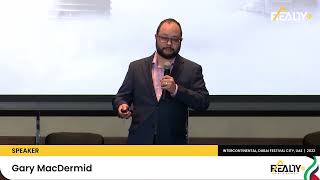
Gary MacDermid, president of USA Private Equities, walks through strategies for building passive income through real estate. The session covers the investment model and process, with audience questions.
Chapters
All right, so before I get started, I just want to say thank you to the sponsors and the promoters for this event. It's been a day and a half, and it's just been amazing. The food, the energy, all the preparation, the booklets, and everything that put this all together. Give everybody a round of applause, please. Thank you. So my name is Gary McDermott. I'm a former Navy veteran, former professional engineer, and now president of USA Private Equities. And what I want to share with you today is how we maximize passive income and real estate while helping others. So at USA Private equities, we are experts in creating passive income through real estate. We also invest in select businesses and. And we do a little bit of land investing. Before I get started, I just want to share a little bit about the journey of how I learned about passive income, because passive income is one of those things that's so important and everybody should have, but it's not taught in schools. It's unattainable for most people. And why is that? So the way that I learned about this was a very difficult one, but it was life changing. When I grew up, my parents didn't have any passive income, so they wouldn't be the ones to teach me. In fact, my senior year in high school, my mother. Actually, it was my father that woke me up one day, my senior year in high school, and he told me that he had good news and bad news. I was a little bit confused. And I heard him out. He said, the bad news is that there's no money for college. But the good news is I have a plan. And so next thing I know, he put me in the car and we drove to the military recruiting station. And he opened the door and he said, army, Navy, Air Force and Marines, take your pick. I recommend Navy so you can see the world. And that was his plan, and that's what I did. Now, what does that have to do with passive income? I would have had the first clue, nor did I know what it was. But thankfully, by just sheer luck, in one of my early classes after boot camp, there was a master chief that addressed the class. And I remember looking at him wondering, who is this guy with all these fancy medals and stars and. And he told everybody. He looked at all of us and he said, look, I'm going to give everybody here some advice, and I want you all to listen. And he said, buy real estate everywhere that you get stationed, and you will make more money than the Navy will ever pay you. Now, what am I supposed to do with something like that, I had no clue, but I tried. If there's anything that I learned from my parents, it's save your money, don't spend. So that's exactly what I did. And by 21, I did buy my first house. And then I tried to do exactly what that master chief said. And I bought real estate as many places as I could, where I got stationed, even internationally. And so I really started to learn the power of passive income. And as time grew on and I got a little bit, life got a little harder. Traveling all the time, being in the Navy and then afterwards as being an engineer. And the passive income really started to look more opportunistic. So I tried to do tried to scale it, but it wasn't easy. And there were times that the money would just be spent. All the money that you made would be spent on repairs. Maybe you bought in the wrong neighborhood. All these things that you don't know. So what do you do if you learn something and you understand it, but you want to be great, you want to take it to the next level? Well, what we're all doing here today, just by coming to a conference like Realty 2.0, is exactly the way that you can get those new ideas and refresh and try something new. And so if you find somebody that's doing something at a level above where you're at, that's the best way that you can scale. And so as I attended some of these conferences, I did finally find somebody that did passive income. He took the rental property model, but because of his background in Wall street, he was able to add certain things that just optimized it and made it better. And so I studied from him. See, he did this for 30 years. And the way that he looked at real estate was life changing. Even though I thought I'd known quite a bit about what we do with rental property, this took a whole new aspect and made it better. Now, over the 30 years that he did this, it even works internationally because it really focuses on adding value to the people that you do business with. See, as Zig Ziglar said, you can have everything in life that you want if you will just help other people get what they want. And so this is what this model of passive income investing revolves around. It's adding value. Just like any business, a business is profitable because it solves a problem or it fills a need. If you solve a bigger problem, you will have a more profitable business. And so when you look at real estate and passive income, and you look at it with that lens and, and you try to just look at the people that are in this equation of business, and you try to add as much value as possible. So it's not just who you do business with, but you want to find the people that can benefit the most from what you have to offer. And so let's break that down a little bit. When we're working, we work with capital partners, investors, and then we work with families. And so what sets us apart is we're working with families that want to own their own home, but currently can't because of credit or other reasons. You see the way that mortgage banks work in financing and the areas that we're investing in, there's inherent flaws somebody could have had. The credit system is just some of these problems. If you're a new immigrant family and you just came to America and you want to buy a house, you will have no credit and the bank won't let you have any money. You may have great jobs, great capabilities, but the banks don't look at that. So it's not fair. Somebody needs to help them. And so if you're an entrepreneur and you have your own business, and maybe you write off all your expenses and you don't really show much income on your taxes, you will also have a problem. So maybe you have great income. And then something happened, a medical bill that you couldn't pay, and now your credit is hurt, and you no longer can have the ability to get a loan to qualify for a mortgage. These are the families that we help. Somebody that really wants to own their own home but just can't. And if we can solve that problem, wouldn't they most likely take better care of the home? Wouldn't they most likely pay on time and show pride of ownership, take care of repairs? Just that alone is the difference in mindset between a regular tenant and a homeowner. And that's what we focus on. So now let's look at the other half of this business equation. Let's take a look at the investors or the capital partners. So we're going to look for capital partners that really understand that want to maximize their own passive income. So somebody that wants safety, security, hard assets. Inflation right now is going up. So why not put investment in hard assets? Cash flow? Cash flow is also important. This could be an income source. So unlike the stock market, which maybe some stocks will pay dividends, nothing pales in comparison to real cash flow. Real rents every month, long term, we want to place, it's a fit. If somebody's looking for a long Term investment. There's a lot of people that do real estate short term and they just want the quick burn. But what we're looking for and what we want to help are those that understand the value of long term. This is something that can even transfer to generations through inheritance. Do you want to give your children a lump sum of cash or do you want to give them income or a salary that they can't liquidate or spend very easily? Tax benefits. This is by far one of the most beneficial parts of this type of investing. You can show quite a bit of income that goes through the bank and you can also offset that with many different tax benefits and strategies. Rate of return. This is the stuff that we'll talk more about in detail when we go through the examples. And then capital growth. And so we'll talk a little bit more about how we create that, how we force that equity in this type of investment. So the way that we work to set this up, to create this win win situation for the families that want to own their own home and for capital partners that want to maximize their, their cash flow and passive income, what we do is basically we set up a new company. So with our capital partners, we're starting a company together, we're doing business together, we're owning the properties together, and we're sharing in the cash flow. So the way it's set up, we'll have the new entity and we'll have each the managing partner and the capital partner. Capital partner will primarily be responsible for funding the property purchases. The managing partner will take care of all of the details, all of the hard stuff of knowing which neighborhoods to invest, knowing which houses to buy, knowing what to fix, what not to fix, how to market the property, how to find that motivated family that wants to own this home, that is committed to that journey of home ownership. And so let's take a quick look at just some of the numbers here. So this is just an example of one house the first year. Cash on cash is the way that we set this up. So just this will be approximately, let's see, so $85,000 down payment, we have about a $250,000 house. And so with the down payment, the closing costs and everything, you'll be about $85,000 all in for the purchase. And so the rents on this for this example will be about 1995, just under $2,000 a month. The debt service is going to be about $1,100 a month. So in about, for the first year, that'll be about $10,000, just a little over $10,000. The way that we set these properties up is with a lease, with an option to buy. Some of you may have heard of rent to own, lease to own. That's what we're doing here. We're giving the family a 10 year option so that they don't have to worry about finding another home. Maybe their current landlord wants to sell because the prices are high. None of that. They get the exclusive option to purchase this home. And this is everything that they do is protected by that. So they know without any question that this is their home and this could be their forever home. So we take this. That's what this move in is about 6,500 is the option fee. Some look at it as a down payment, but it's the option fee plus the first month's rent. So in that first year, there's $17,000 of income for that house, that home. And so if we split that with our investors, that's about a little over 8,000 between the managing partner and the capital partner. And so that's just one example of what this looks like with first year cash on cash. Now let's look at this over a 10 year period because remember, we're maximizing this. It's not just one, two, three years. We want to do this for the whole time. So with, let's take the one year for example, we just talked about a little over $10,000 in one year. Now there's a couple of things that we can do right now with the tax benefits. So there's the regular depreciation, which for about a $250,000 house will be about $8,000. That's first year depreciation. And then up until between 2018 and 2023, there's also some bonus depreciation thanks to the Tax Cuts and Jobs act and what that allows us to do. And this is not tax advice, but this is just an example of what some are able to do with that law. And that's to take accelerated depreciation in year one. So that could add potentially another $30,000 in depreciation. And then so if you're looking at the one year, we're also going to build in annual rent increases. So all the families that move in on the front page of the lease, it specifically says that there are annual rent increases. Now that's going to make up, as you'll see over the 10 years. So that takes place in year two. But so that's just a summary of year one. Now let's just multiply everything by 10. So that'll generate a cash flow of 107,000, the principal reduction because remember, the residents of this new home are paying down the mortgage. So that's another $25,000 over 10 years. On a $250,000 house. The tax benefits, the 8,000 over 10 years is 80,000. If we take the bonus, accelerated depreciation, that stays the same. Now with a lease with option to buy, we're forcing the equity. So the fit for this family is they know that they won't be able to buy the home because they can't qualify for a mortgage in the short term. So this is a long term play for that family. So we're going to set an option price much higher than what the current market value is. So that could be something, you know, it's hard to tell because the markets are unpredictable. But what we could best guess to be five to seven years out, we're going to fix the price for 10 years and that forces the equity. In this model we're going to say $100,000 for 10 years. And so now let's get back to the annual rent. So if we, even if we did 50 bucks a month every year for 10 years, that could be easily over 20,000. So if you just take a quick look at this, it'll be about that $85,000 that we put into this is now going to make $369,000 in the bank for about a 434% if you just divide the two numbers together. So I just want to share this too because this is a concept that I didn't. It took me years to figure this out because when you look at the common adage of buy low, sell high, what's counterintuitive about this model, it's a long term cash flow model. So the price really doesn't matter. It's irrelevant. And that's not to say that we're not doing everything that we can to get the off market deals below market value, because we are doing that. But this is just to put to paper what it really looks like. If you accidentally or had to overpay for a home, how much of a difference does it make over 10 years? Because remember for majority of these properties we're financing them because the rates are very low right now. So if you take a $250,000 house and you look at plus or minus 50,000. So that's what this example is. So if you look on the left side, you see that when all is said and done, it's 107,000 over 10 years. So it's the same example that we just looked at. That's going to be that 434% return. So what happens if we overpay for the home? So we pay 300,000 with the same terms, 25% down at 4%. So if you kind of look how the numbers change, so the piti, the debt service is going to be a little higher and the down payment's gonna be a little higher. So instead of 85,000, we're putting 97,500 down. So you do all that, and after 10 years, you're only making 357% ROI. Now, is that really that bad? So what that enables us to do is we're always gonna be able to find something, provided that the numbers work and we're not speculating. We will always run that calculation. Because when we're buying in neighborhoods, we have several properties in this neighborhood, so we already know what the rents are going to be. And when you know what the mortgage rates are going to be, you can calculate this. And so that's exactly what we do. And here's a couple of quick examples, and I'll try to leave some time for question. So this is just basic three, two, little over 1500 square feet purchased for 265,000. This was a creative finance deal. It was a seller carry back $20,000 all in. Now, if you look, it says the rehab is zero. Why is the rehab zero? Because with what we're offering, we're adding value by having a program for somebody that really wanted to own their own home, that couldn't. So in this example, that family was not interested in having any. They just wanted the opportunity and nothing needed to be repaired. Most often, the things that you fix first in a rental property, like paint and carpet are the things that a new homeowner wants to take care of on their own. And so just adding through the math, the $6,000 down payment that we mentioned, and 1825 is the monthly rent for this. And then the debt service being about. So there it is, 14,000 that first year. So, see, you take the lease option down payment, add the monthly rent and subtract the debt service, and you get 13,000 in first year in income off of the $20,000 that you spent to purchase that property. There's another one, 177,000. Again, no rehab, this one conventional financing, 25% down. So it was 46,000 on that $177,000. House, $5,000 down payment, 1595 rent per month. The debt service on that for one year is just under 10,000. So if you add all the income up, subtract the debt Service, you're at $14,000 on 46,000. So a first year cash on cash of 31. And so just a couple more examples, but in the interest of time, I'll skip through that and just pause for any questions. Thank you.
That was very interesting. Gary. My question is that we already know that these buyers, potential homeowners, they are not able to qualify during as part of the normal process. But how do you qualify them?
So we qualify them exactly the same way that a conventional mortgage would, except that we don't care about the FICO score or the credit score. We look at the story, we look at the family, and we make the common sense business decision as long as they have the income to afford the home. Thank you.
Looks pretty interesting. I just got lost a little bit in the, in the model itself. Like the family actually owns the home, but you lease it for 10 years. Like I just got lost a little bit in the actual model. So if you can just in a nutshell, repeat it, like how do you get to own it, then sure.
So the question in this case, the family does not own the home yet. What we're doing is we're reserving it for them essentially until they're able to repair their FICO score or build their FICO score so that they can obtain conventional financing through a bank. So I'm sorry, for 10 years they.
Are renting the house with you.
So it is an option that expires in 10 years. So basically, anytime from now until 10 years from now, whenever that family is ready, they can exercise the option of and get the loan and complete the purchase and eliminate the. It'll terminate the lease and it becomes their own home. Thank you. Question in the back.
Hi. So correct me if I'm wrong. You just want to explain that as a owner or as a property owner, I will have to give only the down payment. Then you will involve yourself and the property will be with, in agreement with you for 10 years where it will be rented. 50%, I will get 50%. You will get sort of thing right.
From an investor perspective? Yes, that's. That's correct. So it's the, the idea. So if there was, if you look back, I don't know if it'll let me go back to the slide, but it's the down payment plus any repairs, if there's anything necessary and then the closing costs. And so the idea is that over time, we'll leave a reserve amount. So the idea is it'll be self funded, meaning that the portfolio will take care of itself, but in general, that's the expectation. So we just have to set the reserve amount to plan for that so that there shouldn't be any other cash calls in an ideal situation.
Okay.
Thank you, everyone.
More from Gary
How To Develop A Vacant Lot, Part 2 - Manufactured Homes & Septic Tanks with Gary MacDermid's
Speak UP S3 | Gary MacDermid - Set Your Goals, or Someone Else Will | FULL EPISODE


Superbrand Audience Accelerator: Gary MacDermid’s Game-Changing Tool For Entrepreneurs And Author