Fireside Chat with Daniel Liebeskind of Topia
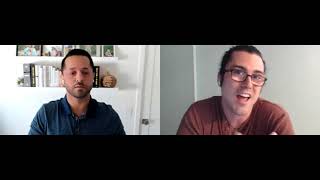
This is a YouTube video titled "Fireside Chat with Daniel Liebeskind of Topia" recorded in December 2021. It features a conversational interview between George Bandarian, founder of Untapped Ventures, and Daniel Liebeskind, founder of Topia. The discussion covers Daniel's entrepreneurial journey, the development and vision of Topia as a metaverse platform for real-time social experiences, fundraising insights including their seed round led by notable investors, and the unique value proposition of Topia. The video also includes a walkthrough of the Topia platform and an invitation for audience interaction within the virtual space.
I'll do that after I introduce Daniel. So from Wall street to Silicon Valley, Daniel's mission is to foster human connection through technology. So we'll learn more about that mission. He's been building offline communities his whole life and originally became an entrepreneur that helped people manage their own personal community. So it sounds like you're a big communities guy. He's a product creator and engineer, having coded nearly 30 applications over the last six years. Years. He's built community platforms, contact managers, Slack bots, real estate systems, trading platforms, knowledge ecosystems and browser VR and mobile games. And when he started Topia, you know, I was like, hey, come build a studio with me. And so, you know, I was just kind of reflecting on that and we'll come back to that. But that's Daniel's intro. So Daniel, welcome. How are you feeling today?
Great, thanks for having me. Excited to answer all these questions and help people think through being an entrepreneur. I don't have all the answers, far from it. But I'll do my best to lay some foundation. Just talk about my own experience and hopefully that could be helpful to people.
Awesome, awesome. That'd be great.
All right, great.
Well, we introduced our esteemed panelists. Let me just introduce myself real quick. For those of you that don't know, I'm George Van Darien, founder of Untapped Ventures. We're two main things. On one hand we're a venture studio, so we actively build ventures, both our ideas with founders and with corporates. And we're also a venture fund, so we invest directly in just regular pre seed and seed startups as well as the fund invests in the studio ventures. Our thesis is around helping people live their best lives personally and professionally. And that really comes from my life purpose which is to help millions and eventually add some more zeros to that over the course of a few decade run. If everything goes as planned, really help the world have breakthroughs and self actualize, help humanity self actualize and really just help people increase their consciousness and live their best lives. So that's what we're doing, that's what we're actively building and investing in. The thesis is a little hard describe, but hopefully that makes sense. We really just invest and build in areas that are going to help people live the best version of themselves. So when I sold my company and I was figuring out what to do, I started to fall in love with this venture studio model and I saw Daniel. Right. I saw you in January of 2019 at Peter's, a 360 mastermind. I said, hey, let's build a venture studio together. You're like, what's that? I sent you a white paper and then I followed up with you and you said, no, I haven't had a chance to read it. I've kind of been busy with this one little Topia tool. It seems to be taking off. And I was like, well, whatever. Like, you build a lot of tools, come do the studio with me. And then I talked to you a few months later. You're like, we just did Burning man. And like, we have a bunch of paying customers. I think I'm going to do this. And I said, okay, well, why don't I invest in you? And so, like, it's interesting how both of us were at like zero, like kind of starting points and thinking about even doing something together back in January of 2019, and here we are, I guess, two years later, and I've gone on to start untapped, but you've gone on to create Topia and raise a pre seed round. Raise a seed round and really make this a thing. So it's really exciting. Congratulations to you and, and I would love to just kind of dive into that moment of when I last saw you. And then the next time we talk, what happened, how did this start? And like, just like share with us that origin story.
Yeah, that was a great intro. Thank you, George, for setting the stage there. So, you know, I think the reality is that it does take a lot of hard work to get to a point of having something actually take off. So like you said, you know, I built. I don't know whether the number is 30. It's between 20 and 30 somewhere in there, applications for clients, for myself, you know, some paid, some not that kind of thing, over basically six years, like George said. But, you know, I actually built in 2015 a company called Bodi that was actually very similar to Topia. And so in there, it was. It was basically a. It was essentially a metaverse, right? It was a platform for fitness instructors to come in, create their own virtual fitness studios with their own branding, set their own schedules, and then teach live interactive classes where they could see the participants and participants could see each other. And so a lot of these things that we talk about, the coming metaverse and the power of real time experiences online, we were doing that back in 2015. It was not really successful. It was way ahead of its time. People are like, why would I want to see people? It was even before Zoom was a thing. And so, you know, from there, you know, I was building a Lot of different things. Many were in the community space. Often they were around real time connection. And so it may seem like Topia kind of came out of nowhere, but the reality is I've actually been building this towards this for many years. And even Topia itself, when you and I were talking, I think Maybe it was 2018 the first time we met actually. And even then I was building, I was using different, what are now called Web3 Technologies. I was an Ethereum developer. I was also building VR applications. And the original version of Topia was actually a VR platform built on top of something called Mozilla Hubs. And it was a way for people to basically have a WordPress of VR where you could design your own spaces, put in your own branding, your own logos, and then bring people together for social experiences inside of this VR space space. I was simultaneously. One of the reasons that the studio model is attracted to me is I was simultaneously, first of all, I was the chief product officer of Everpedia and rebuilt that whole, whole platform. They were one of our clients. Then I became the CPO there. But I was also building a Bitcoin lightning game that was about microtransactions, how to empower people to actually essentially it's a Play to Earn model, probably not one of the first, but it was before Play to Earn was really even a thing. And when the pandemic hit, I realized that the opportunity to build this thing that I'd imagined over the next decade, my original plan was that this idea of the metaverse, this was inevitable. From my perspective, we have more remote tools than we've ever had before. They're constantly being invented and refined. Improved people's necessity to actually be in person was already reducing satellite, Internet everywhere. The pandemic basically just accelerated all this. And so I realized that this dream I had for the 2000 and 20s of basically building this space originally going to be in VR for people to be able to create their own experiences, social experiences, and then bring people together around that and empower creators to earn money by creating these, co creating and collaborating and creating these really interesting experiences. That opportunity was not a decade opportunity, it was a right now everybody actually needs this immediately. Zoom, for all of its benefits and awesomeness, is not really great for bringing hundreds of people together to have real time experiences where they have the agency to move around like they do in real life. And so I basically, throughout everything I'd been doing, stopped building the game throughout the VR technology. Restarted from scratch in April of 2020 with Topia first line of code written then. And we had our first event a month later. So it was kind of a mad, so scrambled to build out a prototype of this. And then, you know, we hosted, like you said, we hosted Burning man in 2020, which was in August. And so, you know, just navigating through that, refining the product and you know, rest is history. We can talk more about it if you want.
Yeah, no, that's, that's awesome. Because I was, you know, I was going to ask you about. I think that founder market fit is so important, you know, when, as a vc, when we, when we get pitched by founders, right. It's. It's why now? Like, why this idea?
Why now?
And then why you? And so though you started to touch on that, which is the why you. It's while you started topia and took off, it's kind of like you had been like the dots connected, as Steve Jobs said, right? When you look back, those dots connected the last five years before that, like teed you up for that. So, you know, for the founders, like, that's kind of one takeaway right there is like, what is, you know, what is it that. The thing that you're the best person in the world to do. So that's really fascinating that how perfectly that lines up for you. Okay, got it. So it started that way. And so where are we at now, a year and a half later? Where's the product at and where do you see it going?
Yeah, well, before I even answer that, George, I just want to also point out that, you know, you and I, we met at a Peter Diamandis event. And Peter talks a lot about massively transformative purposes. And so I think when you're trying to figure out what to build, really thinking about what resonates with you based on your experience, based on the things you actually want to manifest in the world. And so for me, you know, even at one of The Peter's at Abundance360, where we met, my massively transformative purpose. I don't remember the exact wording, but it was basically to empower creative people to build businesses online and bring people together, right? And I didn't know exactly how I was going to do that. Um, but you know, that was my MTP for, for many years. And so that sort of forced me. It gave me like a goal or a guiding light for myself. And so I think that for people, you know, if you're, if you're just looking for ideas randomly to build, it's going to be really hard to have the energy for it. Right. And when I talk about Topia, people can, like, feel the energy I have for it because it's something I've been thinking about for many years. It's part of my massively transformative purpose, like my life purpose. Right. And so, you know, I just wanted to point that out and then what was. Sorry, what was the actual question?
Yeah, yeah, And I totally agree with you on that. And that's what untapped this for me. Right. It's like, you know, my. My personal massively transformative purpose is around breakthroughs and transformation. I love the moment where somebody can learn an insight and change their life forever. And so now I've built a whole venture fund in the studio around that. So I agree with you totally on that. And I love coaching people through that. And I think that that's a huge part of the awakening consciousness, is for people to tap into why they believe they're on this planet and how they can have then and then create companies or do things as a result from that. So start with why and go there. So thank you for elaborating on that and showing how Topia is a manifestation of your massively transformative purpose. Yeah. So then I guess bring us up to speed. You know, what's happened since then? Where are we at today with the product and what's your vision going forward? Especially as, you know, like you said, you already touched on the metaverse. And, you know, for me, it was like, wow, like, you guys got the metaverse right before, you know, Mark wanted to kind of stake claim to the term, and you guys did it outside of VR, which I know was by design. And so it was really. This is going to be an easier way for people to be in the metaverse without needing the goggles yet. But, yeah, we'd love to hear your take gone all that well.
One of the funny things that you just touched on there is the metaverse, to me, is a combination of a few different things, but one of the really major elements of it is that the Internet was asynchronous. Right. So you'd send a message. Social media send a message. Later on, somebody replies, it's not real time. And I've always been a big proponent. Like, my company in 2015 was all about synchronous connection. Real. You know, there was writing on the wall that that's how you. Or just in general, I have conviction that that's how you can. Bashing those together is kind of what people refer to as metaverse. So, you know, just as a Fun anecdote. You know, this has been a journey that I, and not alone a lot of people have been, been on towards this like real time, more authentic human connection, Internet. And in terms of, you know, where we're at over the last couple of years, you know, we, we've hosted Burning man each year and by the way, Burning man each year.
Sorry to cut you off. I just realized we haven't really mentioned. So for the people that don't know what TOPIA is, maybe you could explain what it is a little bit about the business model, the customer, what is it?
Right.
What's the unique value prop? And then continue, because I just realized we hadn't really defined that for people.
Good, good point. Yeah. So Topia really is a way, it's a platform and it's a way for you to create your own social experiences where you can bring people together for real time connection and play. That's kind of like our tagline, that's the key statement of what we're doing. But essentially it's like you have these big open gaming worlds that you can customize pretty endlessly. They can be really expansive, they can be small and intimate and you can bring people into that. It can be 10 people, it can be hundred. We had an event last week that had thousands at a single event. And you might have a thousand people in one of these big spaces, but you're actually only connecting to the people that are immediately around you. So you may have a thousand people around you and just like in real life, you could be at a convention where there's a thousand people, but you're only talking to two or three or four people at a time. And then you have the agency to actually move. You click and you move around the space. And so people call this like proximity chat, spatial chat. But that's, that's at its core what TOPIA is. And we have a few different business models, we have a few different revenue generators for us. People can subscribe to worlds to unlock some features. We also have an organizational model where, you know, big companies are using TOPIA to bring people together around IPO announcements, to have virtual office place for holiday parties, for all hands, for standups, for various use cases, recruiting events, conferences, all those kinds of things. And so those people are paying more of a recurring revenue or one off revenue for individual events. And one of the interesting things about Topia is we have this very robust creator ecosystem of people that are creating these experiences. We consider people that create an experience in a world and then bring people together to also be a creator. We call them Confluencers. It's kind of like our version of an influencer, but it's a person or an entity that brings people together to become a community, which is kind of a confluence in nature, is when a bunch of different rivers come together to become one river. And so we have confluencers, and we pay 30% of our revenue out to our creator ecosystem. And so as our revenue from organizations is scaling, our payouts to our creator ecosystem is also scaling in the kind of flywheel. That's quite interesting. That's at its core, what we're doing.
Yeah, I love that. So I know, like, one of the big use cases initially was just the Zoom burnout. And this is a cooler, funner, more interactive, more social, more immersive alternative to Zoom. And then as time has gone on, have any other interesting use cases emerged, like any other anecdotes that are interesting? That was not maybe what you were thinking about that, of how people are using it to create meaningful social interactions that are a little different.
Yeah. So just as an example for people that are listening to this webinar right now, we can't see you, right? You can't even see each other. You're just seeing us. If this was happening in Topia, which, you know, which it will be in about 10 minutes. So, as you'll see, you know, you can have people broadcasting to the entire group, but then you can actually see each other and you could interact with each other while a broadcast is happening. Kind of like again, like in real life, right, where you could be listening to a panel, but talking to the person next to you, or even just having body language, seeing them, feeling the energy of the crowd around you. So, you know, Topia empowers those kinds of things in a business setting. You know, we have birthday parties, we have things like Burning man, we have career fairs are really interesting. One of the challenges with something like Zoom is that it's really one to many, right? So one person at a time in the whole space can be talking. In Topia, there can be a hundred different simultaneous conversations going on. So at a career fair, you know, just like in real life, you're walking from booth to booth, talking to people, having intimate conversations. And so there's. You know, one of the interesting things we found is that a lot of people try to imagine how to make the real world happen in the metaverse. And the reality is that with the metaverse, you actually don't have the same constraints that you have in physical world. And so it's going to. There are a lot of interesting use cases that are coming up. Just as an example, conferences that you might go to typically are like, you know, three to five day events. You know, they're blocked out, they're very expensive. And the reason for that is because everybody needs to fly there. Right. It wouldn't make sense to fly there for a two hour event. But in the Metaverse, a conference could actually be two hours, you know, on 10 different days, spread out across a month. And that would actually make sense because people aren't flying there, they're just tuning in. And so you just think about all the possibilities for how the physical world's events can translate into the digital world and actually change. Right. And not have those same constraints. Just another random interesting thing. We've seen a lot of hybrid events. So Product Hunt as an example is a company that helps people find early products before they're released or as they're being released. They've been using Topia to have in person events where they have maybe 100 people at an in person event in New York or San Francisco or LA, and then they'll have 20 to 50 people in Topia and they actually have screens in the physical world with a webcam and a couple different stations. And people that are at the physical event can be interacting with people that are at the virtual event. And what it basically means is you don't need to fly to San Francisco to participate in this thing. You can be all over the world. So the accessibility of communities and of events, you know, we're really like tearing down location based constraints.
Got it. Okay. So I think that for everybody listening, you could hear the clear problems that it solves. And on one hand you could say, okay, well sounds really good, that must have been easy. On the other hand, I'm sure there's a lot of competition and you know, there's different competition from different angles. But let's get into the meat of today's discussion because we're already at 9:25. Somehow, you know, time flies when you're having fun. So let's talk about this fundraising. So basically, I guess to go back to our story, so. So we invested when you gave me that update and you know, you were telling me the month over month users and everything was going up into the right. And I was like, okay, like let me put some money in. And then, and then we talked again. And you're like, well, I'm talking to some pretty big name VCs, I can't say anything yet. But I'm doing like dozens of pitches and stuff like that. And then all of a sudden, you know. You then closed $5 million seed round at a $25 million valuation with Alexis Ohanian with 776, the Reddit founder. For those of you that aren't familiar, Bonfire ventures, one of LA's big VCs, a sports star who we won't name right now, and his venture fund ourselves, obviously we doubled down at seed along with some other investors. So I think it'd be really valuable if you kind of break down. What were your expectations going in? From what I remember, like, you were not looking, you were not thinking about 25. Right. It was like a much lower number. But so how did we get to where we got to love for you to break that down with in all its glory, the good, bad and the ugly and share some of those battle scars. Clearly you were victorious in that battle, but I'm sure there was some battle scars along the way. So give us the reels so we could learn what we need to. If I'm a founder and I'm somewhere before and I'd like to replicate that success, what do I need to understand about your journey and how it could apply to me?
Yeah. So another interesting thing about me that I don't think was actually in my bio is that I actually worked at a VC. I was an investor at a VC. I was an investment banker. I was at a VC. And so I didn't know that. Yeah. Back in 2011-2013, before I quit, to just start building things, which I had done when I was a kid. And so anyway, my only point in bringing that up is part of it is kind of understanding what. Understanding that there are a few different elements that go into successfully pitching your company, not just to investors, but also to customers and to really any stakeholder, to your employees as well. And one is proof of existing traction. And that's important for having product market fit. And traction doesn't necessarily need to be like sales. It can be any kind of interest. So it depends on where you are in your journey, but some sort of proof that you know what you're doing. Even if it's like a prototype of some sort that shows what you have in mind, you know, those kinds of things are really helpful. The second piece that's really critical is thinking about where. What the possibility of this thing could be. Whatever it is that you're building and at its most successful, you need to have a big enough market for that to be exciting to people. Right. And so if you're building something, and there's a lot of elements that go into successfully having a good idea, pitching this to different stakeholders. So I'm not trying to say that there's only two things, but one of the things that people often get lost in is not having a big enough idea, a big enough market. Right. And if you pitch to people an idea that really resonates with you, but there's no path to it becoming something that's really, really huge. The way VCs typically works is they're not looking for a 2 or 3x return, they're looking for the hundred or the thousand x, especially early, early stage. The earlier stage it is, the higher the multiple. They need to be able to imagine for this to be useful to them or a good investment for them, because they're looking to. They're expecting that 98% of their investments, especially at the very early stage, are going to go to zero. And so they need 2% of them to return the entire fund and generate all the returns. Right. And the math probably isn't exactly like that. Depends on the state.
It's not exactly like that for us.
But yeah, right, right.
Generally speaking, yeah.
So the point is that you picking your valuation, picking how you're presenting what your opportunity is, you need to just do the math because the investors will be doing the math. And, you know, so for us, it's not, you know, we could, for example, have said that we are going to be building like Metaverse, you know, Metaverse experiences for a very narrow niche and that this is where we think all of our time is going to go and we have no interest in expanding beyond that. And then you could look at that market opportunity and see what that's worth, an estimate of what that's worth. And if it's, you know, if that's like a 5x return, even if you're successful, you're only returning 5x. That's just not that interesting. And so one of the things with DOPI is that we've architected it in a way where it can be for anything. And in fact, it can be essentially like a metaverse experience creation engine, kind of like an unreal or a unity. And that idea is really huge. Right. And so just having that huge idea isn't enough. You need to have a path to get there. And, you know, so that's what you try to refine in as you're sort of figuring out what your experiments are going to be. But being able to, you know, if you can lay out. Sort of, here's the traction that we have that proves what we're trying to do, and here's the paths that we think we're even, you know, a couple different pads that we think we're going to be able to take to something that's really huge. That's the kind of thing that investors are going to find interesting. Um, and so, you know, that's. That's part of what we were able to do. And, you know, we're. We're riding that, right? That we're then following through on, on that plan. And there's been some deviations along the way, a little bit, you know, and some little changes. But, you know, one of the interesting things is that going through the fundraising process actually helps you refine your concepts themselves, right? And so that can actually be quite helpful. And you get a lot of advice. Like George mentioned, you know, I talked to 30 different VCs, and they all gave me advice. And some advice I take, some I don't. Some helps me evolve the way that I'm thinking about things. Some I'm like, they just don't get it. And that's fine. Right? I think you also just need to be able to handle not just rejection, but people telling you your idea doesn't make sense or that they just don't get it, or that they just don't invest in this sort of thing, because you're going to get a lot of that. And the reality is people won't invest for a lot of different reasons. They invest often for a few different reasons. Right. There's a small sliver of reasons they do invest, but there's a ton of reasons they don't invest, including that they may be already invested in something that they consider to be similar to yours, or they don't have a conviction that this entire space makes any sense for them, or they just, this is the three verticals we invested and you're not in one of those. And so just don't be disheartened by it. It often takes lots and lots of conversations. It's also, you know, it's really hard if you're just reaching out cold to investors. So I would also recommend. This is hard to do, but it's kind of like throughout your life, you're going to be an entrepreneur, go to things where you can meet investors and just meet them. Right? Don't meet people before you even ask for them and become friends, help them if you can. And then when it comes time for you to have an ask like, hey, can you introduce me to other investors? You actually have these people that are friends that you've helped, that you've collaborated with. And so it's really hard if you're like, okay, it is quite difficult to be like, I've never been in the tech scene, I've never been interested in entrepreneurship. I don't know anybody. And to build something, and especially if you don't really have much traction to then be able to navigate into VCs is hard. And that's just the reality. It's an unfair part of the system. And some people are folks like George and untapped, I think, are trying to help with that and make it easier to access investment and fundraising. And there are others in the space that are doing the same. Yeah, I'll stop there.
So let's make that. Yeah, let's make that tangible. You kind of, you gave the advice, let's back up though, to what happened that is leading you to that advice. So you're saying you pitched about 30 VCs, like, I guess, tell us about the takedown with Alexis and Bonfire. How did that happen? How did you get in touch with them? How many meetings did they, what, what did they buy about your vision that you were saying? And you're mentioning traction. Where was your traction at at time? What vision did you paint for these guys? What ultimately led Alexis to write a $4 million check and bonfire to write a million dollar check? And again, guys, it might sound obvious right now, in December of 2021, again after like, you know, Mark Zuckerberg blew up Meta and they changed their name to Meta. But this is back in, you know, they raised their round in May, which back then, like metaverse was not a common word. Like it is now. Like, it was not on Fox News and cnn and, you know, like today it's. Back then it wasn't. So clearly they saw what was coming and they picked early, those investors. So it was not as easy as it might have been. Now, though, maybe it's even harder now because there's a lot of competition. But take us back to those and tell us about some of those specific stories. Because a lot of founders that haven't had a big lead vc, they don't know what that's like. They don't know how to approach them, talk to them and what to expect. And does it take 10 meetings within Alexis? Does Alexis tell you in half an hour? I love it. Let's do this. And he just signs a check on the spot. Like, what is that?
Like, oh, Man. All right, I'll try to. I'll try to remember back to those days. It feels like an entire lifetime since then. So, you know, leading up to it, we had been growing pretty steadily. I think by. By February, we had something like 12,000 unique people having at least one conversation a week, or maybe, sorry, maybe that was monthly number. And we had some really interesting numbers. And as you said, the charts were going up and to the right. People are starting to hear about Topia. We had just posted Burning man, which was very successful. Despite. When we hosted Burning man, our company was like four months old. We actually laugh now that we have no idea how the tech even really worked for Burning man that first year. It's just come such. It's been, you know, it's come such a far way since then. But, you know, we had. We had good traction, we had good indications. We had a big dream. We were pretty alone in the space. The whole metaverse thing, you know, wasn't really a topic yet, although we. We knew it was. I actually was telling people not to call us a metaverse company because I thought that there was going to be some weird stigma around it. So I was actually distancing myself from the idea of the metaverse for various reasons at the time, which is kind of interesting. And started to do. We raised friends and family round right after Burning Man. What really happened is in 2020, we had Burning man four months after we started this thing. Tons of people came. Lots of people were like, wow, this is amazing. This is the most fun I've had since the pandemic online. Most fun online I've had since the pandemic started. How do I get involved? How do I invest? And so we raised a friends and family round. I think it was 600,000, something like that. And so we had some fuel. We weren't really paying ourselves salaries at the time, which you get mixed messaging on that. I think if you can not pay yourself, that makes things easier because your burn rate is high. I think it's one of the unfair things about being an entrepreneur, though, is that you're expected to basically not make money for a huge amount of time, which is not something that everybody can do. And so I think it is reasonable to pay yourself when you can. You raise your friends and family. It's totally reasonable to pay yourself and you should. I think that we probably should have earlier than we did, and we did start paying ourselves prior to actually closing the next round. So I just want to point that out too, is that, you know, by I think February, we were starting to pay ourselves. There was a little bit of a lag on that anyway, you know, so we raised in. In probably October of 2020. We then started fundraising again, basically pretty, pretty quickly at the end of. Really, I guess it was the beginning of February. And, you know, I just was. I was spending a lot of my time. We were, you know, I was also. It was a very small team, so I was building a lot of the code. There were two of us that were engineers, so I was spending half my time coding, half my time talking to VCs and basically doing nothing. And had something like 30 conversations, actually found Alexis. I talked to Bonfire first. I think that took maybe four meetings before they were interested in investing, before they proposed an investment with Alexis. I met him in the morning and he sent me an email that afternoon saying, hey, let's do this. We're in. Wow.
I was right.
Yeah. So it just depends on the vc, you know, And I had lots of different meetings and sometimes second, third meetings with people. We had. We had a bunch of interest outside of just those folks as well. But, you know, I. I really resonate with Alexis. He kind of, when he came in, he pitched me Topia. He, like, understood it kind of immediately and pitched me my own vision before I could even tell him. So I was blown away by that. And then similarly, Bonfire, you know, they were. They were almost like aggressively telling me that I need to follow the path that I was already planning on following. And so when you're. When VCs come in and they're more fired up, or like, they're fired up about your vision even before you fully describe it, and they're starting to, like, imagine where this can go. That's kind of what happened with both of them. And, you know, I also wanted this. This mix of. Alex Ohanian is founder of Reddit. He's like the mayor of the Internet. You know, he's a community builder. His partner, Caitlin, also is amazing. She ran HR for Reddit. And so I recommend or I really resonate with that side. And it's more like the social, more the consumer. The Think Big have billions of people using this. And then Bonfire, historically, they've done more on the, like, B2B side, on the business models, on the sales motions. And so Topia actually is kind of a hybrid of those two different strategies. And so for me, having those two as our lead investors really was going to put us in a position where we're thinking big. We're going for the evolving how people socialize online, but then also having a real business model and not just becoming like an ad based system and being able to build out a sales motion and be really thoughtful. Also, Lex is very busy. He's got a lot going on. Bonfire has just got in the weeds with me and that's been incredible. So I'm very grateful for that for their team.
That's awesome. Thanks for breaking that down. That was great to hear the backstory. A lot more questions, but I think this is a good time to now continue the conversation in Topia. So I'm gonna tell. I'm gonna share my screen and just kind of walk everybody through what's gonna happen now and then we'll all go over there. So let's see. Share my screen here. Google Slides. It's not that hard.
There we go.
It was a simple slide. All right, so we're going to go over there. By the way, if for those of you guys that are on the line, if we don't get to talk there, feel free to reach out. Our marketing team has been working hard on launching a new website. You guys could check that out. Nelda is going to drop some links if you want to pitch us for investment. If you want to become a co founder with us and build on the studio, if you're an investor and you like what we're up to, or if you just want to join our team, all of that is available. And those are some links on our website, so you can go check that out. But here's the world we're about to go into, so I just want to walk everybody through it so nobody gets lost. And especially because we're running a little bit late on time, we were able to do that. So as soon as you guys land, you'll jump into the world here. You'll be basically portaled into this area. There's a lot of things that you could just click and explore on your own, like our logos and stuff. But immediately come to this main stage. That's where Daniel and I will go. We'll take these mics right here and then you guys could come up one by one and ask a question at this question mic right here. So we'll do that. By the way, Daniel, do you have a hard stop?
I do, I do. I think I have a 10am yeah, yeah. That I need to go to, unfortunately.
Okay, no problem. So we'll do that until 10. And then will somebody from your team be able to hang around or are you guys busy?
We actually have a team. All hands.
Oh, you Have a team meeting.
Yeah, okay.
All right, no problem. So we'll do the Q and A there. We went a little bit longer here, but, you know, I thought that there was just a ton of value that Daniel dropped. So I think it was worthwhile. We were going to have Daniel go to this room here, and I was gonna go here. But what we'll do is we'll all just go here into the main place, do the Q and A there. Just like you would like if we were in a. In a room together. And then when that's done at 10 and Daniel has to leave, what we'll do is I'll go over here to the untapped room and you guys could come up one by one. If you want to chat with me, you want to pitch, you want to do whatever, but you guys can also. The whole point is it's a place to explore. So you could go around and explore. I think, like, there's some cool music spots. There's like couches here. I recommend you guys just network. These are private zone kind of couches. Just think of this as like if you're a Burning man, there's like a little hangout area. Four people here. So four of you at a time could get on one of these couches. Or rugs, I should say blankets. There's another room here. I'm not sure what that does. There's some other cool stuff. You could jump on a Twitch stream here, playing some EDM music. You could play some arcades up here. You could. This is an interactive game on the top, right? This is just one example of a world, right? You can imagine they did Burning Man. They did like the Asana. All hands. Like they've done so many cool events and all these worlds can be customized. But this is our world. This is where we're all going to go now. So we're going to end the zoom meeting. Nelda, can you drop that link? If you haven't already? Make sure you guys grab this link. It's basically Topia IO untapped. What'll happen is when I end this, it'll pop up like just a simple two question survey. Fill that out real quick and then. And then come on over to Topia. Or you could even probably fill out the survey afterwards. But let's go there now. And then whoever has questions, just walk up right to the stage and we'll just get going right away. So hopefully that sounds good. Turn your mic and your video on. It's a real social, interactive space. And let's go do this. Anything you want to add to that, Daniel?
No, sounds great. I'm already in there. Okay.
All right, see you guys there.
All right.
More from George

The AI Agent Getting More Supplier Data in 5 Weeks Than a Team Did in 2 Years








