How These 2 AI Startups Broke Into Y Combinator | Harper & Woz
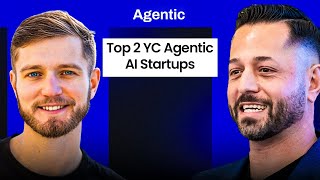
This is a YouTube video titled "How These 2 AI Startups Broke Into Y Combinator | Harper & Woz" created in March 2025. It features a conversational podcast-style discussion hosted by George Bandarian, who interviews Ben Collins, co-founder and CEO of Woz, and Dakota Tushar, co-founder of Harper. The conversation centers on their AI-driven startups participating in Y Combinator, exploring how Woz enables non-technical entrepreneurs to build software products using agentic AI, and how Harper leverages AI to transform the commercial insurance brokerage industry. The dialogue covers their business models, technology, market opportunities, and future visions, with multiple speakers contributing insights throughout the session.
Foreign hey everyone, I'm Ben Collins, co founder, CEO of Woz. Woz is an AI platform that enables non technical entrepreneurs to build and scale high quality software products without needing to build an internal engineering team.
My name is Dakota. I am a co founder with Tushar of Harper. Harper is an AI native commercial insurance agency and we essentially make money by helping businesses, especially the more complex ones, get the insurance coverage they need.
They are both in the middle of Y Combinator and they have some demo days coming up. Who here has ever wanted to create software? Most hands should go up, right? Who here is non technical? So what you had to do is you had a few options. If it was for your business, you had to hire a dev shop and there's many, many dev shops. The other alternative is you have to hire people and bring them in house. Woz is replacing all of that with agentic AI.
I think the biggest things that have started to change are the focus of the large model providers on more reasoning chain of thought modeling. It's funny to even talk about the companies in the past because the past can even be like six months ago. It's just kind of funny the quickness that it goes.
I believe that you're going to see is more and more compute infrastructure being built out. You can see the Stargate project that came out recently, which OpenAI and Oracle and everybody's working on. You see the mega cluster that Elon's built with xai, the energy infrastructure that is being now starting to be built out. So I'm very bullish on the fact that Nvidia here is going to be increasing its compute. Of course they're probably going to have different bands of products that are going to build out for this chip infrastructure not just in the US but also in the Middle east and it's just accelerating at this moment.
Welcome to the Agentic podcast where we dive deep with the pioneer AI founders reimagining business and investors betting on them. We bring you the war stories, insights and perspectives you won't hear anywhere else. I'm your host George Van Darrien, the general partner of Untapped Ventures, a VC fund that is invests in early stage AI startups. Let's go. Would like to welcome Ben Collins, the co founder and CEO of Woz as well as Dakota Tushar, the CEO and CTO of Harper. And why don't we just start off with some intros, maybe kick it off. Ben, can you guys just take a minute, introduce yourselves, tell us a little bit about yourself and your company. Please.
Yeah, for sure. Thanks George. Happy to be here. Hey everyone, I'm Ben Collins, co founder, CEO of woz. WOZ is an AI platform that enables non technical entrepreneurs to build and scale high quality software products without needing to build an internal engineering team. We're starting by helping entrepreneurs launch customer ready mobile applications directly to the App store. I co founded this company with actually one of my longtime friends, my roommate from MIT who we met 13 years ago when we were both undergrads studying engineering, have both been early stage company builders for the last decade and came together because.
You guys met at mit, right?
We met at mit, yeah, we were roommates. We were roommates. Too many people living in too small of an apartment. So you get to know someone pretty well that way. And yeah, we came together. It was just apparent that the pace at which LLMs were developing was going to create some big step changes. And then even within the last year the progress in LLMs, particularly Sonnet 3.5 just made things possible that weren't possible before and we knew it was the time to start building a big enabling platform. Happy to dive into more detail later but great to being able to reason.
About where to submit those applications and then being able to review that information as it comes back from underwriters. You can have agentic systems that can manage all of that workflows and before you would have to put in a lot more effort in a sense of that fine tuning capabilities to get that output.
And where do you guys. Before we go to Ben, where do you guys see it going? What's the future of agentic?
I from my perspective I would just say the infrastructure will just keep getting better and better and I think the implication of that is like very beneficial. And this is my hot take. I think it's very beneficial for end customers like you know, the actual brokerage in our case. And it's also very beneficial to folks who are building more horizontal solutions like in my view, like what Ben is building with Woz. I think it does leave some questions about the moats around value at the vertical vertical AI layer because if the models are getting better and better and you can apply them with sort of vertical applications out of the jump. I do have some questions about whether this is exactly the same as vertical SaaS or whether this time around all of the value kind of accrues to the customer with more self service tools and interfaces being added onto something like an OpenAI, anthropic system systems, et cetera. And then of course people who are building more of These horizontal solutions. But that's more of a hot take and just a reflection about what I think on the future.
Yeah, it's interesting. We might want to double click on that later. Ben, how about you? What are your thoughts on the past, present and future?
Yeah, I think in a sentence basically the two points that were mentioned so far, I would just echo that the models are getting better. That's the foundational models are getting better and so that allows us to do more complicated things. And then obviously the ecosystems maturing, right. So the tools and frameworks and everything that exists around the models that you kind of need to build these agentic workflows is maturing, which just makes it easier, barrier to entry lower and kind of the top of the limitations of what you can do higher. I would say. Yeah, there's some interesting stuff going on. Right. Like I think a lot of the earliest tools we saw and use cases for adoption are using LLMs to automate workflows that are human workflows. Right? Workflows that humans would be using in the past. For example, tasks in the browser on the desktop. And the direction where this going is that if agents are actually performing these tasks and not humans, then you don't really need those interfaces anymore. So you can design kind of like agentic systems with, with new interfaces designed only for LLMs. And I can say like as an example, our system that we build, we kind of replicate, we're building you know, end to end software stacks and our code bases aren't even human readable.
I think the biggest things that have started to change are the focus of the large model providers on more reasoning and chain of thought bot modeling. I think that what that's allowed folks to have is something off the shelf that is much better at creating agentic workflows versus before you had to like have huge GPU clusters in order to be able to fine tune everything and make it a lot better. So I do think that like step function and off the shelf models that have more advanced chain of thought capabilities have made us able to go to market much faster. It's funny to even talk about then companies in the past because the past can even be like six months ago. It's just kind of funny the quickness that it goes. I think what it forces organizations to do is to think about like hey, there's going to be more step function changes. We can't build and have too much fidelity to one specific thing because the world is changing around us every single day. So it might have been for example that like a few months ago even folks were making something and they fine tuned everything and then now they don't need to use that same system so they have to sub it out. So I think building with the future in mind has become increasingly important because of the step function changes that we're seeing in the landscape.
Yeah, I can add on to what Dakota is saying. I think I see two parts of it. One is just the evolution of how you even build these systems, which is a lot of these coding platforms commoditizing, the ability to really build out applications and especially more complex applications. For example we use replit cursor and a lot of these different tooling that allows you to commoditize that build. And alongside of these reasoning models that Dakota has mentioned, you get the step function change where you're now able to take on not just one single step action agents but now multi step agents where you can take on entire workflows. And especially in the world of insurance where you work with a lot of unstructured data, especially from filling out applications to being able to reason about where to submit those applications and then being able to review that information as it comes back from underwriters, you can have agentic systems that can manage all of that workflows. And before you would have to put in a lot more effort in a sense of that fine tuning capabilities to get that output.
And where do you guys, before we go to Ben, where do you guys see it going? What's the future of agentic?
From my perspective, I would just say the infrastructure will just keep getting better and better. And I think the implication of that is very beneficial. And this is my hot take. I think it's very beneficial for end customers like you know, the actual brokerage in our case. And it's also very beneficial to folks who are building more horizontal solutions. Like in my view like what Ben is building with was, I think it does leave some questions about the moats around value at the vertical like very vertical AI layer. Because if the models are getting better and better and you can apply them with sort of vertical applications out of the jump. I do have some questions about like whether this is exactly the same as vertical SaaS or whether this time around all of the value kind of accrues to the customer with more self service tools and interfaces being added onto something like an open air anthropic systems, etc. And then of course people who are building more of these horizontal solutions. But that's more of a hot take and just a reflection about What I think on the future.
Yeah, it's interesting. We might want to double click on that later. Ben, how about you? What are your thoughts on the past, present and future?
Yeah, I think in a sentence, basically the two points that were mentioned so far, I would just echo that. The models are getting better. That's the, the foundational models are getting better and so that, that allows us to do more complicated things. And then obviously the ecosystem is maturing. Right. So the tools and frameworks and everything that exists around the models that you kind of need to build these agentic workflows is, is maturing, which just makes it, it easier, barrier to entry lower and kind of the, you know, top of the limitations of what you can do higher, I would say. Yeah, there's some interesting stuff going on. Right. Like I think a lot of the earliest tools we saw and use cases for adoption are using LLMs to automate workflows that are human workflows. Right. Workflows that humans would be doing using in the past. For example, tasks in the browser on the desktop. And like the direction where this is going is that if agents are actually performing these tasks and not humans, then you don't really need those interfaces anymore. Right. So you can design kind of like agentic systems with new interfaces designed only for LLMs. And I can say like as an example, our system that we build, we kind of replicate. We're building end to end software stacks and our code bases aren't even human readable because they're designed and built in a way that's meant only to be built with LLM. So I think we'll just continue for some applications to go even further down that path.
Yeah, so to maybe help illustrate the point a little bit more, Ben, maybe we can drill down into what you guys actually are building at wasm, so maybe you know, go a little deeper on who your customer is and what the product and solution is and what makes it unique and maybe tie in the Shopify reference.
Yeah, yeah, yeah, sure. So who's our customer? Our customer is really a non technical entrepreneur who has kind of domain expertise, you know, insight about a market or a product. They want to launch a high quality software product. Like I said, we're starting with mobile applications, but that's just a starting point. But they don't necessarily, they're not technical, they don't necessarily want to hire or build out an engineering team to get a product off the ground, but they really care about things that are important for a business quality product. Right. That's like Security, scalability, you know, uptime bugs, fix bug fixes, etc. So what we do at was is we essentially build a kind of modular backend that is rooted in industry best practice. Right. There are industry best practices that have been established over the last 10 to 15 years for, for really good reasons. And so we don't ask LLMs to do anything related to those. We simply ask LLMs to kind of be connective tissue between industry standard building blocks and then provide like a layer of customization around the edge. And by doing that, we allow non technical folks to go from kind of like description of a business, let's call it a business plan to a fully functioning application without having to kind of learn how to use a new tool or even begin to like educate themselves on like what are best practices, what are the best vendors to use, all of that. We're a totally end to end solution and totally designed for business use cases. Right. And you kind of mentioned the Shopify analogy. That is our vision. We see what Shopify did for kind of E commerce enabling a new class of E commerce business to emerge. We see a ton of parallels into what we're doing here at woz. We think we can enable, you know, a new operating model for software businesses where that today what's kind of a core function of a software business, that what's done by like that kind of full stack engineering team no longer needs to be done in house on a company by company basis, but can be done and hosted externally on one centralized platform. So we're really, really excited about it. AI obviously massively lowers the barrier to company building and our ambition is to kind of be that platform where millions of new businesses are built.
So I just want to provide some color and make sure this is landing the way I want it to. So who here has ever wanted to create software? Most hands should go up, right? Either it was a mobile app or a web app. Right. And who here is non technical, including myself? Right. I'm not an engineer by degree, so. So what you had to do is you had a few options, right? If it was for your business, you had to hire a dev shop. And there's many, many dev shops. Rajeev here has an excellent dev shop based in the Bay Area and not Rajeev's firm, but a lot of other firms get a lot of heat, right? You work with dev shops. If you go offshore, that has its issues. You stay here, it's expensive. The other alternative is you have to hire people and bring them in house. Was is Replacing all of that with agentic AI. So you can go in not as simple as with the prompt, but with some design sketches of what you're looking to build and then put that in. And then the system that they've built and they're building can then build not just a MVP level app, but a production level that could handle hundreds and thousands of users. And then eventually their vision is to take it to the Shopify level, where Shopify, if you wanted to sell something online, they provided you the storefront, but then they added billing, they added this, they added that, they took care of everything and in the process became a very, very valuable company. They want to do Shopify. For any entrepreneur wanting to build software, mobile and web, that make a lot more sense. Right. So that's a very, very big, exciting mission and I love what they're doing there. All right, Dakota, so maybe we can go to you and so tell us a little bit more about Harper. And you know, when we invested, it was called tat. And in the beginning you guys were using agentic AI for insurance and servicing insurance agencies. And then you were able to go to carriers, you got noticed by the carriers, and then you came to the realization that, hey, we can just do this for ourselves and build possibly the fastest growing, most profitable insurance agency of all time if it's entirely using agentic AI and it doesn't require humans like a traditional counterpart would. So maybe you could tell us a little bit more about provide some color on that tee up.
Yeah, of course. So I'm actually from a family of insurance brokers. And so as Tashara and I exited our last business and thought about what to do next, I thought that people were confusing like AI with AGI and everybody thought that AI was going to do every single job in the world. And I didn't think that that was the case, but I did think back to my childhood when I was like in high school and I would go to my family's business and I would hear the phones were kind of going everywhere and paper was everywhere and there were emails and it was just kind of insane. And so I kind of thought back to like, what is kind of like, I like to say this, like blue or white collar work. And in my view, I think insurance brokerage is a really great in sales is a good example of some of that blue or white collar work. And so it felt like a place where I could not fully replace the human per se early on, but that there were a lot of the workflows that were happening that would free people up to be able to focus on their clients. And so to that point we thought through business models of this and we thought at first maybe the best way to do this was to sell AI to insurance brokers. But I also then put my investor hat on at some point and said there's never been a unicorn outcome from selling things to insurance brokers in a lot of verticals. There's like CRMs that blew up in a lot of things, but you don't really see that in insurance. And so over time, where we basically realized after working with some of these brokerages was that it was going to be very hard to get their whole workforces to adopt AI and to fully transform into realizing all the capabilities of what you could do with regular and agentic AI. And so basically what we started to do was to think, okay, maybe we could do this ourselves. And so that's what we did. So we registered the brokerage back in August 28th as a brokerage, started like doing insurance the traditional way so that we could understand all of the workflows because and you know a lot of mistakes that founders made and we're second time, so we saw this the first time we did this we would make products and not really know that people wanted them. And like, you know, you just kind of start building. So we said hey, let's take some of the stuff that we've done, but let's start the insurance agency from scratch. And so ultimately you kind of fast forward October we turned, you know, had $5,000, we made maybe at like 10 or so clients. But over time where we started to find this interesting intersection was really with like mid size solid middle America businesses, manufacturing companies that did like we have one client that's like a missile part manufacturer for Tomahawk missiles, pharma manufacturers that are smaller and do ointments and gauze. We found like a bunch of like multi location bars and restaurants that had trouble. And basically what we started to see was that when you have a level of complexity that requires you not to just get a slip and fall general liability policy, but workers comp, commercial Property, product liability, etc. You enter this interesting dynamic where it's really hard for local agents, which are most of the market, to really service you because of the level of complexity of the policies, the amount of time it takes them to push this, you know, you can spend four hours putting together a proper application for a manufacturing company to carriers. And truly brokerage at this stage is more like real back and forth brokering with Underwriters, a lot of data transmission and collection. And so it seems very prime. So that's sort of, you know, where that focus was. I, you know, today we have the 472 clients, you know, we're run rating $1.2 million of ARR. So we've progressed a lot since then by finding this sweet spot in the middle. But the core of what we believe about the world is that especially as you start to look to more complex businesses, there's a really inefficient market. That reminds me a lot of my days, well, the early days of the stock market. I'm a beneficiary of starting in hedge fund land when things were much more automated. But the same way that once upon a time you relied on people to be able to broker transactions because of inefficient information flows, it's really well primed for AI to come and take those, those flows over. And so that's been a lot of the early work that we do. If you're ever going to get to a fully autonomous brokerage, you're going to have to have humans in the loop massively training this system. And also a system being able to track the different workflows that humans are doing. Because an insurance brokerage, a lot of the concepts are able to be done by AI today, but the workflows in these minute little discrete points are a lot more difficult for systems to be able to do even as reasoning models have advanced. And so that's sort of the future that we see for Harper, where you can really serve any of the 33 or so million businesses across the country, giving them the best, highest NPS brokerage experience that they've ever had. And so that's really what our goal is with Harper.
And one of the things that I just realized we didn't mention is a big superpower, a big unfair advantage in their system is the voice AI. Right. You want to talk about that just for a minute real quick about. And I have the phone number. If you guys want, when we're outside having drinks and sushi, we can call that phone number and. But yeah, go ahead, Dakota.
I think what I.
Because they're designed and built in a way that's like meant only to be built with LLM. So I think we'll just continue for some applications to go even further, further down that path.
Yeah. So to maybe help illustrate the point a little bit more, Ben, maybe we can drill down into what you guys actually are building at wasm. So maybe, you know, go a Little deeper on who your customer is and what the product and solution is and what makes it unique and maybe tie in the Shopify reference.
Yeah, yeah, yeah, sure. So who's our customer? Our customer is really a non technical entrepreneur who has kind of domain expertise, you know, insight about a market or a product. They want to launch a high quality software product. Like I said, we're starting with mobile applications, but that's just a starting point. But they don't necessarily, they're not technical, they don't necessarily want to hire or build out an engineering team to get a product off the ground. But they really care about things that are important for a business quality product. Right. That's like security, scalability, you know, uptime, bug fixes, et cetera. So what we do at was is we essentially build a kind of modular back end that is rooted in industry best practice. Right. There are industry best practices that have been established over the last 10 to 15 years for really good reasons. And so we don't ask LLMs to do anything related to those. We simply ask LLMs to kind of be connective tissue between industry standard building blocks and then provide like a layer of customization around the edge. And by doing that we allow non technical folks to go from kind of like description of a business, let's call it a business plan to a fully functioning application without having to kind of learn how to use a new tool or even begin to like educate themselves on like what are best practices, what are the best vendors to use, all of that. We're a totally end to end solution and totally designed for business use cases. Right. And you kind of mentioned the Shopify analogy. That is our vision. We see what Shopify did for kind of E commerce enabling a new class of E commerce business to emerge. We see a ton of parallels into what we're doing here at woz. We think we can enable, you know, a new operating model for software businesses where that today what's kind of a core function of a software business, that what's done by like that kind of full stack engineering team no longer needs to be done in house on a company by company basis, but can be done and hosted externally on one centralized platform. So we're really, really excited about it. AI obviously massively lowers the barrier to company building and our ambition is to kind of be that platform where millions of new businesses are built.
So I just want to provide some color and make sure this is landing the way I want it to. So who here has ever wanted to create software? Most hands should go Up. Right. Either it was a mobile app or a web app. Right. And who here is non technical, including myself. Right. I'm not an engineer by degree. So what you had to do is you had a few options, right. If it was for your business, you had to hire a dev shop. And there's many, many dev shops. Rajeev here has an excellent dev shop based in the Bay Area and not Rajeev's firm, but a lot of other firms get a lot of heat. Right. You work with dev shops. If you go offshore, that has its issues. You stay here, it's expensive. The other alternative is you have to hire people and bring them in house. Was is replacing all of that with agentic AI. So you can go in not as simple as with the prompt, but with some design sketches of what you're looking to build and then put that in. And then the system that they've built and they're building can then build not just a MVP level app, but a production level that could handle hundreds and thousands of users. And then eventually their vision is to take it to the Shopify level, where Shopify, if you wanted to sell something online, they provided you the storefront, but then they added billing, they added this, they added that, they took care of everything and in the process became a very, very valuable company. They want to do Shopify. For any entrepreneur wanting to build software, mobile and web, does that make a lot more sense? Right, so that's a very, very big, exciting mission, and I love what they're doing there. All right, Dakota, so maybe we can go to you and so tell us a little bit more about. Make a lot more sense. Right, so that's a very, very big, exciting mission. So. And I love what they're doing there. All right, Dakota, so maybe we can go to you and so tell us a little bit more about the. About Harper. And you know, when we invested, it was called Tatch. And in the beginning you guys were using agentic AI for insurance and servicing insurance agencies. And then you were able to go to carriers, you got noticed by the carriers, and then you came to the realization that, hey, we can just do this for ourselves and build the, you know, possibly the fastest growing, most profitable insurance about Harper. And you know, when we invested, it was called Tatch. And in the beginning agency of all time, if it's entirely using agentic AI and it doesn't require humans like a traditional counterpart would. So maybe you could tell us a little bit more about. Provide some color on that tee up.
Yeah, of course. So I'm actually from a family of insurance brokers. And so as Tishar and I exited our last business and thought about what to do next, I thought that people were confusing like AI with AGI and everybody thought that I was going to do every single job in the world. And I didn't think that that was the case. But I did think back to my childhood when I was like in high school and I would go to my family's business and I would hear the phones were kind of going everywhere and paper was everywhere and there were emails and it was just kind of insane. And so I kind of thought back to like, what is kind of like, I like to say this, like blue or white collar work. And in my view, I think insurance brokerage is a really great in sales, is a good example of some of that blue or white collar work. And so it felt like a place where I could not fully replace the human per se early on, but that there were a lot of the workflows that were happening that would free people up to be able to focus on their clients. And so to that point we thought through business models of this and we thought at first maybe the best way to do this was to sell AI to insurance brokers. But I also then put my investor hat on at some point and said there's never been a unicorn outcome from selling things to insurance brokers in a lot of verticals. There's like CRMs that blew up in a lot of things, but you don't really see that in insurance. And so over time, where we basically realized after working with some of these brokerages was that it was going to be very hard to get their whole workforces to adopt AI and to fully transform into realizing all the capabilities of what you could do with regular and agentic AI. And so basically what we started to do was to think, okay, maybe we could do this ourselves. And so that's what we did. So we registered the brokerage back in August 28 as a brokerage started like doing insurance the traditional way so that we could understand all the workflows because. Cause then, you know, a lot of mistakes that founders made. Second time. So we saw this the first time we did this, we would make products and not really know that people wanted them. And like, you know, you just kind of start building. So we said, hey, let's take some of the stuff that we've done, but let's start the insurance agency from scratch. And so ultimately you kind of fast forward October we turned, you know, had $5,000, we made maybe at like 10 or so clients. But over time where we started to find this interesting intersection was really with like mid size solid middle America businesses. Manufacturing companies that did like we have one client that's like a missile part manufacturer for Tomahawk missiles, pharma manufacturers that are smaller and do ointments and gauze. We found like a bunch of like multi location bars and restaurants that had trouble. And basically what we started to see was that when you have a level of complexity that requires you not to just get a slip and fall general liability policy, but workers comp, commercial property, product liability, et cetera, and you interest, you enter this interesting dynamic where it's really hard for local agents, which are most of the market to really service you because of the level of complexity of the policies, the amount of time it takes them to push this. You know, you can spend four hours putting together a proper application for a manufacturing company to carriers. And truly brokerage at this stage is more like real back and forth brokering with underwriters, a lot of data transmission and collection. And so it seemed very prime. So that's sort of where that focus was. I you know today we have the 472 clients, you know, we're run rating $1.2 million of AR. So we've progressed a lot since then by finding this sweet spot in the middle. But the core of what we believe about the world is that especially as you start to look to more complex businesses, there's a really inefficient market that reminds me a lot of my days, well the early days of the stock market. I'm a beneficiary of starting in hedge fund land when things were much more automated. But the same way that once upon a time you relied on people to be able to broker transactions because of inefficient information flows, it's really well primed for AI to come and take those, those flows over. And so that's been a lot of the early work that we do. If you're ever going to get to a fully autonomous brokerage, you're going to have to have humans in the loop massively training this system. And also a system being able to track the different workflows that humans are doing. Because an insurance brokerage, a lot of the concepts are able to be done by AI today, but the workflows in these minute little discrete points are a lot more difficult for systems to be able to do even as reasoning models have advanced. And so that's sort of the future that we see for Harper, where You can really serve any of the 33 or so million businesses across the country, giving them the best, highest NPS brokerage experience that they've ever had. And so that's really what our goal is with Harper.
And one of the things that I just realized we didn't mention is a big superpower, a big unfair advantage in their system is the voice AI. Right. You want to talk about that just for a minute real quick about. And I have the phone number. If you guys want, when we're outside having drinks and sushi, we can call that phone number. But. Yeah, go ahead, Dakota.
I think what I would say is that the very powerful thing that we have is that we speak to thousands of people. And so if you think about training voice AI to be really high quality, you need to have proprietary data sets, which again, was one of the other things we saw as a bottleneck when we were going out and trying to see sell to other insurance brokerages. You know, getting access to the data, their comfort with it. They're real good, really good collection of transcripts. And that sort of thing from the beginning was just not there. And so from the beginning, in the origin of Harper, every transfer, every call has a transcript, every email has paying too much of their insurance or that they're up for renewal. It doesn't matter if it's complex DNO policies. It doesn't matter if we're talking about like, you know, five different locations for manufacturing plants. And you have to have an umbrella policy that gets you to 10 million, 20 million. You know, let us know. You can email us at Harper, Harper, Harper Insure.com.
Awesome.
Every text is logged in our system, every interaction that you have with somebody, every document that got sent over. And so all of that is. Serves as really great context for the system. But really where the voice AI starts to come into play is if you think about making an infinitely scalable brokerage, there's a few parts. One of the most important parts is being able to take throughput, like take information from somebody and transmit it to underwriters. And a lot of that is done through voice as a modality today. And so what we basically are able to do over time, Some of the early work we did was good. It's gotten much better. And what we're starting to see now is as we release these voice agents into the wild to do some of.
The work that we have time for. One question for each of them. Is there any burning questions?
How does it work to become involved with you? If you've got if you're non technical and you've got a project and you think the project has legs, how does it work? Could you explain to us for. I think I saw several hands come up here that would fit that category.
Finance our human agents do today on intake and for insurance folks in the room, we're very compliant. On the back end when you go present the quote, obviously you need the license and the whole thing but in the beginning, you know, today sometimes people will hire call centers in different countries to do intakes for these clients. And so we basically believe that like if we can unlock more of that first level of throughput, that's how you start to go. You know, once upon a time we can only submit five or so of these a day. At this point we're doing more like 60 in our view by the end of the year is to be in somewhere in the range of 500 per day. Right. And so now actually.
How does the share work? How does the, how does the setup work? Assuming that we know what we're doing on the non technical side we know.
More people and more bodies but because of the unlocks that we're seeing from AI and so that's really how we start to measure that scale of our brokerage really hitting efficiency metrics that we're talking about.
Yeah, so. So think about it. Instead of a 10 person insurance agency, they have one or two kind of AI people running the technically our business but.
But we have no clue about software.
Yeah, happy to answer that. So our business model, it's a agent.
And the agent is talking to customers by voice, by email, by text and you know, qualifying, getting, gathering all the information, binding the policy and then servicing that. Well, I know you guys are in the middle of yc, maybe you guys can, Ben, maybe you could tell us a little bit about what's the YC experience been like.
And monthly subscription fee and it's tied with a baseline and then it's tied to the number of monthly active users. So that's one of the kind of.
Like any asks for our community. You know, everybody here is our investors. How can we be helpful to you guys on your journey?
Yeah, sure, yeah. Big advantages we see in our platform is that you know, unlike building out a team, YC has been fantastic. My co founder Brad was, this is actually his second time we're hiring a dev shop. We can avoid that kind of, you know, big upfront. I'm doing YC so he was a YC founder summer 2017 and the reason we decided to do it for Woz was just because he had such a positive experience doing it with his last company. It, it sets you up on a, on a really payment and so right now Our customers pay $3,000 a month baseline and that's everything. So right, that's like all your vendors, all your cloud hosting, storage, fast development cycle and we thought that would be valuable for our team. And then in terms of just providing a platform and a massive kind of library of best in class resources as well as all included under one line item. And then how it works is essentially you kind of have an online dashboard where you network of investors and operators. I think it's kind of a no brainer if you're trying to build a big company to go through the Y Combinator program if you're fortunate enough to be accepted. So we've had a great batch as you mentioned, kind of just went through one of the kind of craziest weeks of our lives with you know, 70 plus investor meetings maintain or you can make make tweaks and see kind of the performance and analytics related to your product but it lives totally on our, on our platform. So, so you don't have to worry about anything there. We take care of you know, all of the maintenance, hosting, deploying to the app Store back to back to back to back from you know, 9:00am till 9:00pm every day. And the fundraising went, went very well. So so we're, we're happy about that and you know look looking forward to, to wrapping up the, the cohort in the next couple weeks and, and kind of starting to, to grow the team and and grow the customer base all.
Of that and so yeah, if you guys are interested I can go ahead and provide.
So yeah, we're, we're really excited. We're, we're thankful we were admitted to the program and yeah, really really grateful and got a ton of value out of it.
I would say my more info Opera. You guys have the sign up link, right? So I'll provide your sign up link. Ben.
Yeah, and provide and you can provide my, my email.
Okay, perfect.
Ask to the community. Yeah look we're going to be rolling out to a lot more customers in the coming months. I would say George, as you described if you.
And then is there any quick questions for Harper? Yeah.
You'Re a non technical person with you know a non tech business or you want to start a net new business and, and have an idea for a software product particularly a mobile.
It seems to me like there's an explosion in agentic app for the Next.
Couple months, please get my info from George. I. I would love to connect and, and see if it's a fit to build it on our platform.
Yeah, I can say for us, I can echo everything about the YC experience has been fantastic.
AI horizontally across possibly every field. Everything that could be applied to it will be applied to. What are the implications for companies like.
And I think that one of the most amazing parts of it is also the community of other founders that you.
Really get to build with Nvidia for the amount of compute that's going to be required to meet that growing demand.
I think one of the biggest things that we're demystified about for me about why YC is so amazing, you really take these great leaders like CEO of Coinbase, CEO of Gusto, Airbnb, you put them in front of you.
I can jump.
And they really break down the journey to know things like, yeah, Coinbase struggled to raise $700,000 during YC and it really kind of shows you that like persistence is key and it gives you really great examples of like how you can kind of push through harder times which inevitably every business faces. So I think there's something like very, very great about the experience that I've been, I've enjoyed a lot. We similarly have gone through the fundraising process over the past week have.
So in a sense, if you look at, you know, just high level macros, what's, what's going on and changing is.
That, you know, been up all day and it's gone well as well. So we're excited for the next phase of growth and kind of, if you.
Look at like the, the compute workload that's been happening from Nvidia, a lot of it was initially in the back of the day was meant for pre training which meant like hey, like you're training these base models and then you spend a lot of compute training it and then people trying to retake take.
The same time to exit and then go on to, to do all the rest of the stuff we will do. If I think about what are the biggest things that folks can kind of help us with. If you think about our business, we're basically, basically trying to become Marsh or Gallagher, but compute and put that back.
Into inference, which is basically meaning that whenever you ask a question, it needs to churn.
And basically Instead of having 90,000 people like Marsh, we think we'll be at like 5,000 or so people. And so what can you do to help us? Well, if you yourself as a business owner, which a lot of you are are coming up for renewal soon.
Get calculated things and come back right now what we're seeing with in memory.
Learning or you feel like you're paying too much for your insurance or you know anybody which a lot of people probably feel this, that feel like they're paying too much of their insurance or that they're up for renewal. It doesn't matter if it's complex DNO policies.
It does as an example with reasoning models is that you're going to end up using more and more compute.
Doesn't matter if we're talking about like you know, five different locations or manufacturing plants and you have to have an umbrella policy.
So what I believe that you're going to see is more and more compute infrastructure being built out.
That gets you to 10 million, 20 million, you know, let us know. You can email us at Harper Harper Harper Insure.com.
Awesome. We have time for one question for each of them. Is there any, any burning questions?
How does it work to become involved with you if you've got it, if you're non technical and you, you can.
See the Stargate project that came out recently, which OpenAI and Oracle and everybody's working on. You see the mega cluster that Elon's built with XAI and the energy got.
A project and you think the project has legs. How does it work? Could you explain to us for. I think I saw several hands come up here that would fit that category.
Financial infrastructure that is being now starting to be built out. So I am very bullish on the fact that Nvidia here is going to be increasing its compute. Of course they're probably going to have.
Differentially how, how does the share work? How does the, how does the setup work? Assuming that we know what we're doing on the non technical side, we know technically our business but. But we have no clue about the.
Software from bands of products that are going to build out for this. And you also have new age chip manufacturer that are coming out for example I think Groq with the. Not with the cable, the queue.
Yeah, happy to answer that. So our business model, it's a monthly subscription fee and it's tied with a baseline and then it's tied to the number of monthly active users. So that's one of the kind of like big advantages we see in our platform is that unlike building out a team or hiring a dev shop, we can avoid that kind of, you know, big upfront payment. And so right now Our customers pay $3,000 a month baseline and that's everything so right, that's like all your vendors, all your cloud hosting, storage, all included under one line item. And then how it works is essentially you kind of have an online dashboard where you maintain or you can make tweaks and see kind of the performance and analytics related to your product. But it lives totally on our platform, so you don't have to worry about anything there. We take care of all of the maintenance, hosting, deploying to the app store, all of that.
If you guys are interested, I can go ahead and provide more info. You guys have the sign up link, right? So I'll provide your sign up link, Ben.
Yeah, and provide. And you can provide my email.
Okay, perfect. And then is there any quick questions for Harper? Yeah.
It seems to me like there's an explosion in agentic AI horizontally across possibly every field. Everything that could be, it could be applied to, it will be applied to. What are the implications for companies like Nvidia for the amount of compute that's going to be required to meet that growing demand?
I can jump. So in a sense if you look at just high level macros, what's going on and changing is that if you look at the compute workload that's been happening from Nvidia, a lot of it was initially in the back of the day was meant for pre training, which meant, hey, you're training these base models and then you spend a lot of compute training it and then people are trying to retake, take the same compute and put that back into inference, which is basically meaning that whenever you ask a question it needs to churn and calculate things and come back. Right now what we're seeing with in memory learning as an example with reasoning models, is that you're going to end up using more and more compute. So what I believe that you're going to see is more and more compute infrastructure being built out. You can see the Stargate project that came out recently, which OpenAI and Oracle and everybody's working on. You see the mega cluster that Elon's built with XAI and the energy, the energy infrastructure that is being now starting to be built out. So I am very bullish on the fact that Nvidia here is going to be increasing its compute. Of course they're probably going to have different bands of products that are going to build out for this. And you also have new age chip manufacturers that are coming out. For example, I think Grok with the, not with the K but with the Q which is for fast inference is also doing a really great job and they're building out energy. They're building energy and chip infrastructure not in. Just in the US but also in the Middle East. So you can start seeing that. I don't see this not stop. It's just accelerating at this moment.
Awesome. Well, why don't we give Waz and Harper a round of applause? Thank you so much, guys.
Thank you so much for having us. We appreciate you.
Thanks, everyone. Enjoy the agm.
Good luck tomorrow. I'm sure you guys will crush it. And good luck on Wednesday's big demo day. And congrats, Ben, for raising your round already. And I'm sure Harper's is right around the corner, so text me when that's done, and if we can help in any way, let me know.
Thank you so much.
Awesome. Thanks, George.
Thanks, guys.
Take care.
More from George

The AI Agent Getting More Supplier Data in 5 Weeks Than a Team Did in 2 Years








